

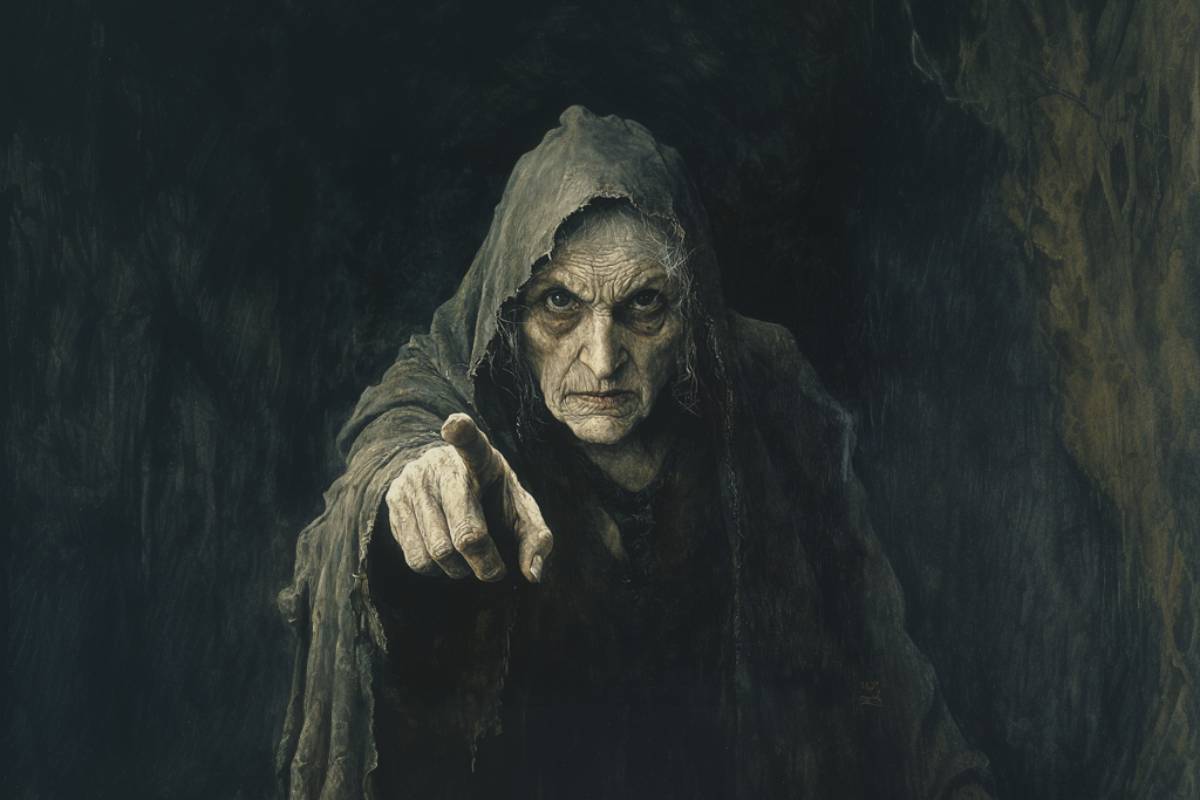
At the beginning of the Poetic Edda lies one of the most celebrated yet debated poems in the rich tapestry of Norse literature, The Völuspá.
This poem, with its title translating into English as something akin to the Prophecy of the Völva, deals with the prophetic visions of the völva, a seeress whose wisdom and guidance the mighty All-Father of Norse mythology, Odin, seeks out.
The Norse sagas are littered with stories of the cost Odin is willing to pay to gain knowledge and seek out eternal truths, and The Völuspá is his attempt to gain an understanding of the destiny of the entire cosmos.
Yet, seeking answers to eternal truths is something that is not just reserved for Norse deities; it has fueled much of humanity’s history, especially its arts and culture, since time immemorial.
As Sigurður Nordal, B. S. Benedikz, and J. S. McKinnelle write in their 1973 article in the journal Saga-Book, the poem is world famous because “the subject is exalted and of universal application: the destiny of the world, of gods and men...”
The most famous edition of The Völuspá arises from the Codex Regius. Written in Iceland in the c. 1270s CE, this codex contains many of the Old Norse poems from the Poetic Edda.
These 31 poems have been the most important source of knowledge for gaining an understanding of the rich tapestry of Norse cosmology and mythology.
We do not know who compiled the codex, but all the poems contained therein were based upon the oral sagas and stories that people from Viking societies told one another since the early medieval period.
With Odin as our noble guide, let us delve into The Völuspá and try to understand the deeper meaning behind the seeress’s prophecy of the end of the world.
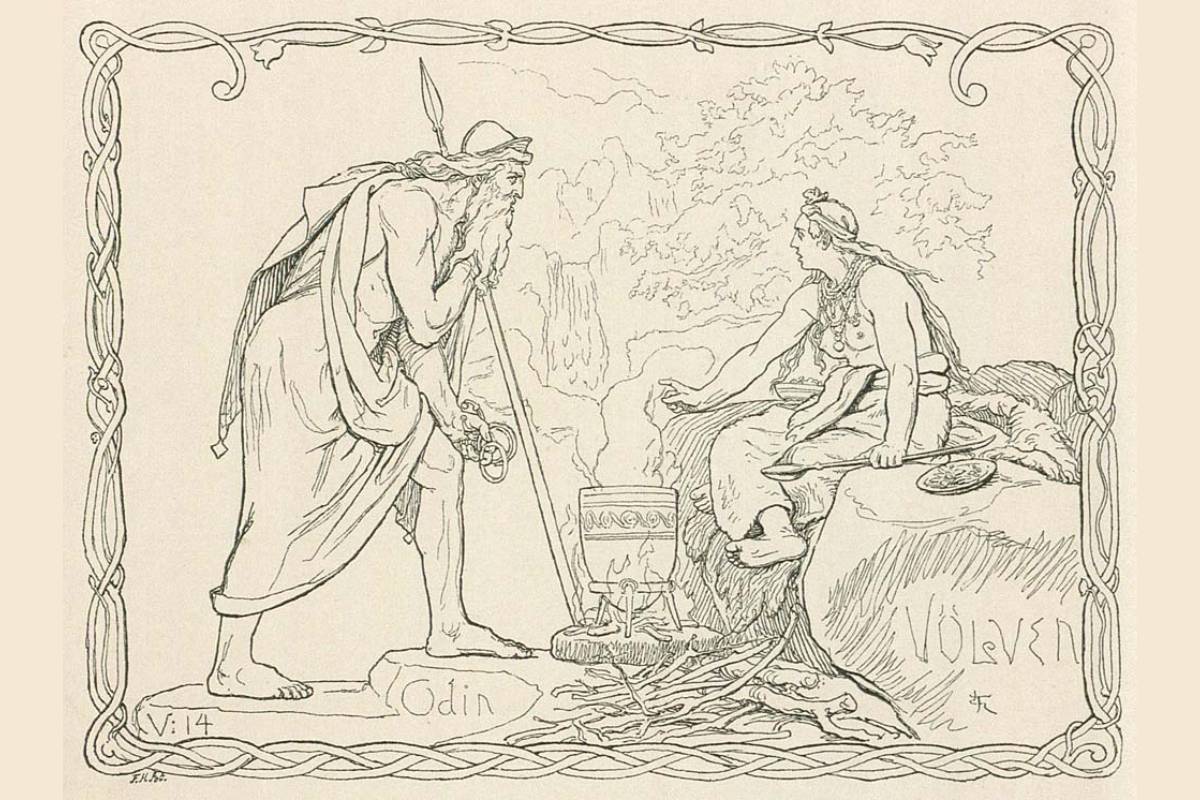
A 19th-century illustration showing Odin consulting the völva for knowledge of the Norse world's fate. Author: Lorenz Frølich (1820–1908)
Cosmic beginnings and insight into the All-Father himself
The first part of the poem deals with a sort of creation myth. Using an online version of the 1923 English translation of the Poetic Edda by Henry Adams Bellows, we find that the völva appears to have knowledge of the very creation times of the Norse cosmos.
She speaks of Yggdrasil, the giant world tree that was at the literal and metaphorical center of the Norse cosmos. She also speaks of the first being created, Ymir. The völva assures Odin that:
Thou wilt, Valfather, that well I relate
Old tales I remember of men long ago.
I remember yet the giants of yore,
Who gave me bread in the days gone by;
Nine worlds I knew, the nine in the tree
With mighty roots beneath the mold.
Of old was the age when Ymir lived;
Sea nor cool waves nor sand there were;
Earth had not been, nor heaven above,
But a yawning gap, and grass nowhere.
[Stanzas 1–3]
We then delve into the creation of the sun and the moon, the earth and its green pastures, as well as the creation of “the holy ones”: the Norse deities.
For our purposes, stanzas 9–18 can be largely overlooked, as they deal with the creation of the dwarves (no offense meant to any dwarf lovers out there reading this).
The völva then regales us with details about the famed Æsir–Vanir war (“the first in the world”). However, it is the chilling knowledge of the nature of the All-Father himself that sets this völva apart in her prophetic insight and wisdom. She claims:
I know where Othin’s eye is hidden,
Deep in the wide-famed well of Mimir;
Mead from the pledge of Othin each morn
Does Mimir drink: would you know yet more?
[Stanza 28]
Luckily for us, Odin does want to know more. Yet it is from about stanza 30 onwards that the poem takes a dark, disturbing, and apocalyptic turn, for the völva starts to describe the end of the Norse cosmos, the events we know as The Twilight of the Gods, or, in the Old Norse tongue, Ragnarök.
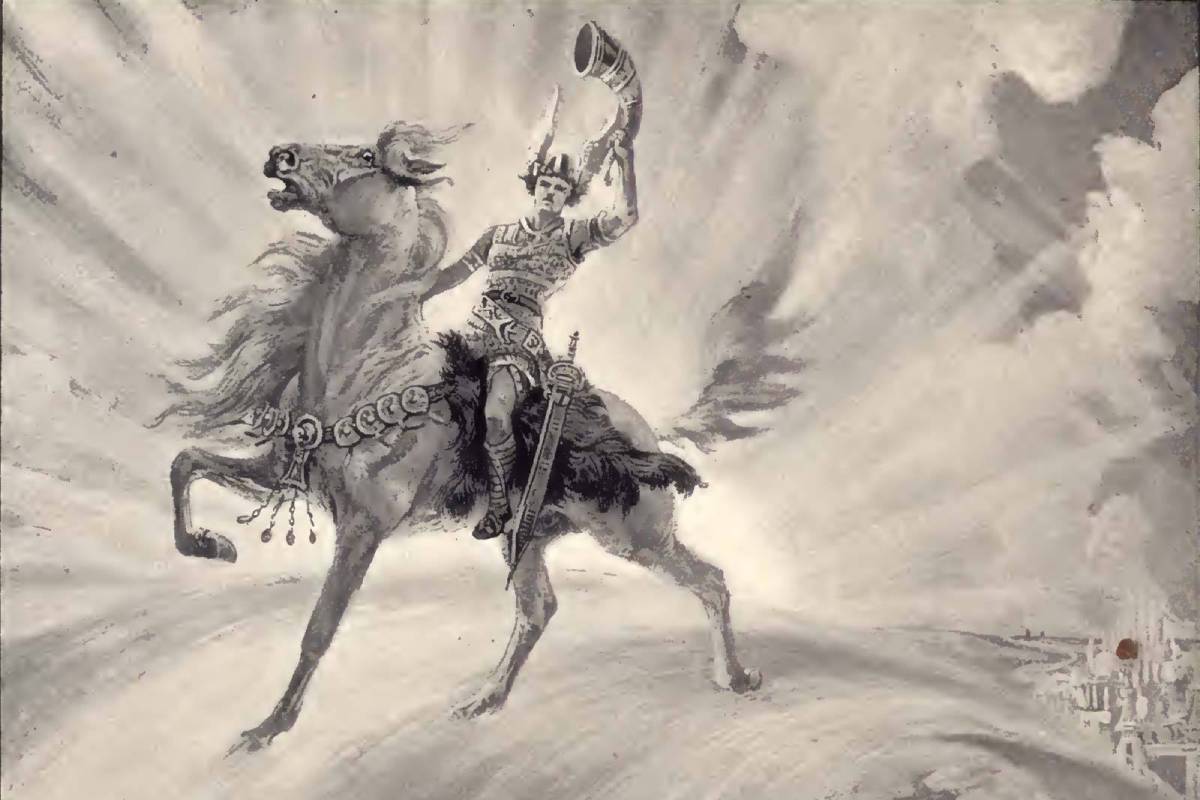
Heimdall signals the beginning of Ragnarök by blowing his mighty horn, Gjallarhorn, calling gods and foes to the final battle. Illustration: Dorothy Hardy (1868–1937)
Darkness and the apocalypse begin
Stanza 38 kicks this apocalyptic vision straight off with what many believe is the most chilling description of a volcanic eruption in Norse literature. Here, “far from the sun,” creating a sense of dread and darkness, we find that:
On Nastrond it stands, and the doors face north,
Venom drops through the smoke-vent down,
For around the walls do serpents wind.
[Stanza 38]
The venom is believed to be a reference to the boiling hot molten lava that spews forth from a volcano.
Some academics have worked with geologists who have tried to use this to estimate when the poem may have been compiled by analyzing the geological record in Iceland for major eruptions during the early medieval period. However, this remains guesswork, at best.
To add to this darkness, we also have mention of monsters stealing the sun, and thus total darkness reigns over the realm of mere mortals.
If we continue through the poem, we now reach the part that deals with Ragnarök. Heimdall, known as the watchman of the gods and a guardian of the famed Bifrost bridge, signals the start of Ragnarök by blowing his horn, Gjallarhorn.
...and fate is heard in the note of the Gjallarhorn;
Loud blows Heimdall, the horn is aloft,
In fear quake all who on Hel-roads are.
[Stanza 46]
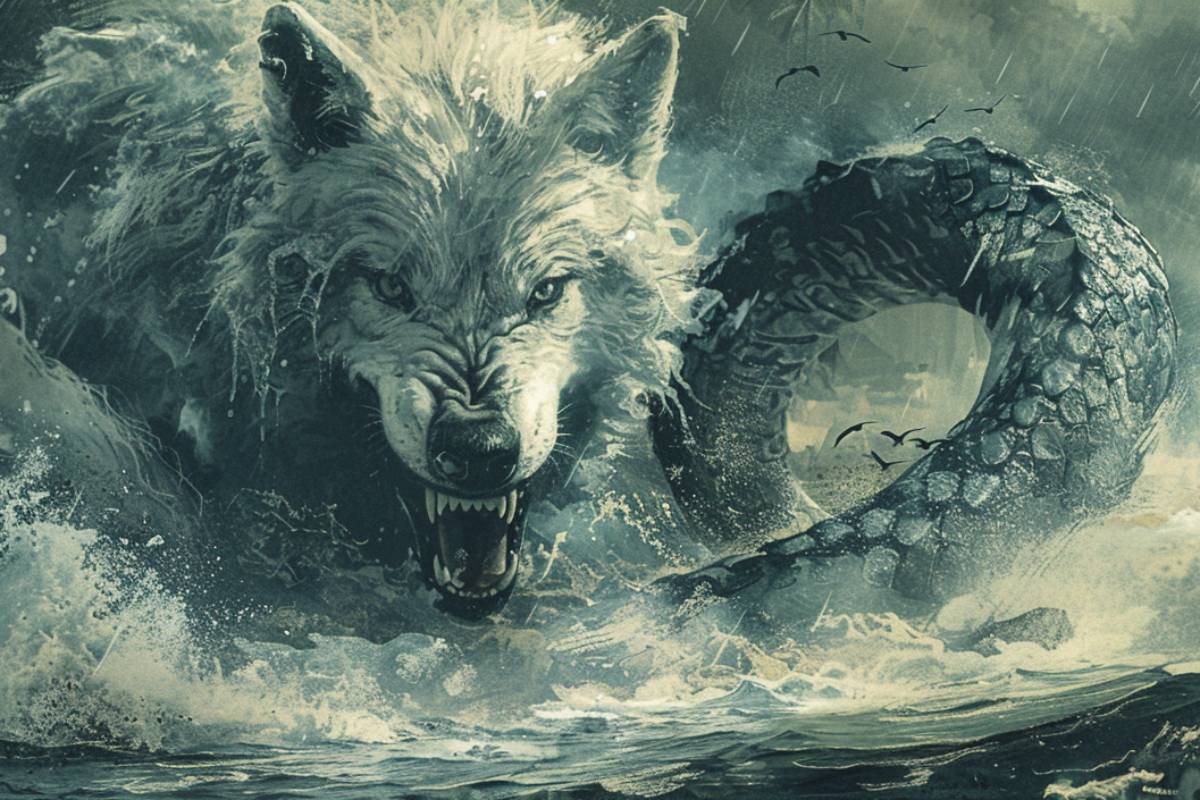
The giant wolf Fenrir and the world serpent Jörmungandr are among the monsters that bring destruction at Ragnarök. Illustration: The Viking Herald
Ghastly ghouls, bloodshed, and a dark inferno
We now turn to the bloody climax of the poem, Ragnarök. What has been dubbed the Twilight of the Gods is a celestial showdown between many of the Norse gods and the forces of darkness.
We have references to a whole horde of ghoulies and ghastly beasts and creatures, including wolves, serpents, and eagles—namely Fenrir, Jörmungandr, and a jötunn known as Hry.
To add to this gruesome scene, the Naglfar, a ship made from the fingernails and toenails of the dead, carries a huge army of monsters and jötnar (giants) to battle the Norse gods.
Adding to this nasty army, we also find that a second ship, carrying the fire giants from Muspelheim, joins the forces keen to wage war with the Norse gods. Stanza 51 explains how:
O’er the sea from the east there sails a ship
With the people of Muspell, at the helm stands Loki;
[Stanza 51]
The giant wolf—and scion of Loki—Fenrir breaks free from his chains and kills Odin in a major coup for the forces of darkness. However, his son Víðarr—sadly known only for his silence and discretion—fights Fenrir and kills him.
Then comes Sigfather’s mighty son,
Vithar, to fight with the foaming wolf;
In the giant’s son does he thrust his sword
Full to the heart: his father is avenged.
[Stanza 54]
The mighty All-Father, Odin, has fallen. Adding to this bloody duel, Thor fights the great world serpent Jörmungandr, and both die in the battle. Next, after all the bloodshed and death, fire consumes all.
The sun turns black, earth sinks in the sea,
The hot stars down from heaven are whirled;
Fierce grows the steam and the life-feeding flame,
Till fire leaps high about heaven itself.
[Stanza 57]
The earth engulfed in fire and flame, with the sun turning black, is one of the most apocalyptic visions that humanity has ever dreamed of. However, all hope is not lost. Despite all the bloodshed and the raging inferno, hope springs eternal.
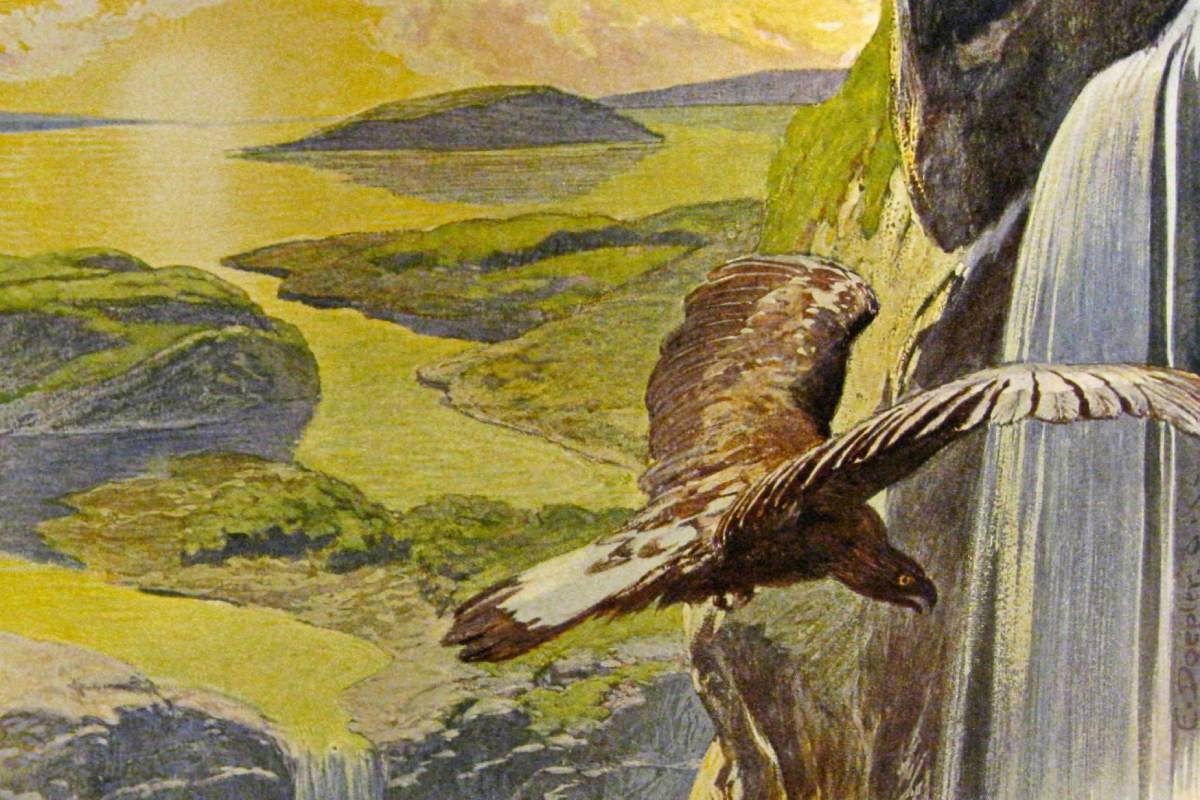
An early 20th-century painting depicts stanza 59 of Völuspá, illustrating the restoration of life after Ragnarök. Source: Emil Doepler (1855–1922)
Rebirth, renewal, and possible Christian overtones
The final part of the poem deals with the rebirth of Midgard, the realm of mere mortals. The völva, at the beginning of stanza 59, tells Odin that she does see a new beginning as:
Now do I see the earth anew
Rise all green from the waves again;
The cataracts fall, and the eagle flies,
And fish he catches beneath the cliffs.
[Stanza 59]
To add to this bucolic image, we find, in stanza 62, the völva regales Odin in a far more positive tone, explaining that following this rebirth:
Then fields unsowed bear ripened fruit,
All ills grow better, and Baldr comes back.
[Stanza 62]
Finally, after this bloodshed, destruction, and rebirth, the völva tells Odin, in stanza 65, that:
There comes on high, all power to hold,
A mighty lord, all lands he rules.
[Stanza 65]
The current academic consensus is that this part may not have been part of the original oral tale but a later insertion.
Whilst it was compiled in late 13th century Iceland, it was, as Teodoro Manrique Antón writes in his chapter for Narrating the Beginnings (Universal– und kulturhistorische Studien. Studies in Universal and Cultural History), “most likely conceived around the year 1000, the approximate date of Iceland’s conversion.”
At that time, many inhabitants were still culturally, if not spiritually, tied to the old ways. The obvious Christian overtone in this passage, like the notion of the Christian God ruling in heaven and being a powerful (spiritual) ruler, may have been inserted to please later Christian audiences.
By the time that, for example, the codex was transcribed, the supremacy of Christianity over elements of the Old Norse religion was complete, and the society on the island was predominantly Christian.
If this were the case, it would not be the first instance of later insertions into Norse sagas or stories of overtly Christian symbolism, motives, themes, or tones.
The cosmic dance continues
For those wanting a potted introduction to the rich and colorful world of Norse mythology, The Völuspá is a great start.
Only 66 stanzas in length—short enough to read whilst sipping a cup of your favorite joe (or perhaps mead)—the poem explains in detail the beginnings of the Norse cosmos, some of the major characters, and the bloody Twilight of the Gods.
It ends, however, on a hopeful note of rebirth and renewal and echoes the common belief that people in Viking societies believed in a cosmic dance between darkness and light, good and evil, hope and despair.
For more information on how a volcanic eruption may have influenced Iceland’s adoption of Christianity, visit Smithsonian Magazine here.
We get to provide readers with original coverage thanks to our loyal supporters. Do you enjoy our work? You can become a PATRON here or via our Patreon page. You'll get access to exclusive content and early access.
Feel free to reach out to discuss potential stories that may be in the public interest. You can reach us via email at hello@thevikingherald.com with the understanding that the information you provide might be used in our reporting and stories.