

Marvel fans, look away. This article will involve many spoiler alerts, so if you don't want to know what will happen in the 126th edition of the Marvel franchise, then it is probably best to stop reading, switch off your laptop, and put down your phone.
This rambunctious God of Thunder is one of Norse mythology's most celebrated, known, and popular deities, and his character and exploits continue to speak to us in the 21st century, almost a millennium after he was last worshipped as a God.
As Martin Arnold writes in his 2011 book Thor: Myth to Marvel (available on Amazon here), Thor enjoys literary immortality and immense popularity today – thanks in no small part to the recent Marvel movie franchise, where he is a central character.
Yet, if we delve into the sagas, we find that Thor, with all his brawn and bravado, has a tragic destiny.
I'm afraid, dear reader, that this Norse God of Thunder (as well as of fertility, lightning, storms, sacred groves, and immense strength) does die.
Thor is killed during the tumultuous events of the Norse apocalypse, the fabled Ragnarök.
Dramatic events, characters, and the apocalypse
Over the centuries, countless lovers of great literature have been drawn to the rich tapestry of the Norse sagas, captivated by the dramatic and larger-than-life characters and events that seem to burst from every page.
Many of these characters and events are drawn from what we moderns call the Old Norse religion.
Whilst it was never a structured religion as we would think of one now (like Christianity or Islam), it was more a varied collection of spiritual beliefs and practices that included elements of animist shamanism, ancestor worship, and, of course, reverence for two pantheons of gods.
The Norse gods – though deities – were endowed with all the human qualities, both good and bad, that once made them revered and now make them popular.
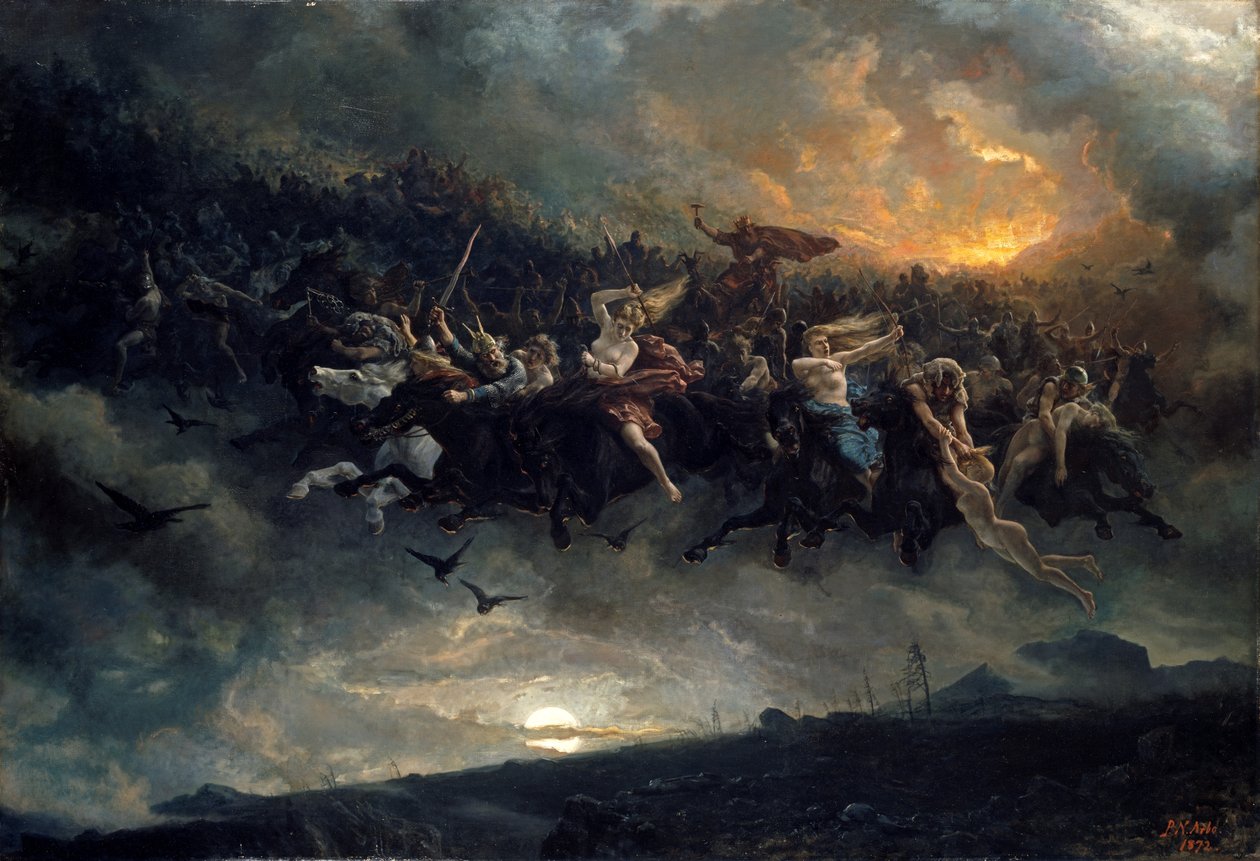
Perhaps the most dramatic of all the sagas and stories associated with Norse literature is Ragnarök – Old Norse for the "Twilight of the Gods."
Whilst many other religions have visions of an apocalypse (such as the Book of Revelation in the Christian Bible, Frashokereti in Zoroastrianism, or the Mayan calendar), it is the apocalyptic Ragnarök that has captured the imagination of countless generations.
Why has this prophesied apocalypse, which marks the end of the world and the demise of many Norse gods, proved so popular?
The answer lies in the fact that it is a great battle, a cosmic brawl between many of the Norse gods and countless demonic and mythical creatures.
This battle will not only result in cosmic destruction (boo!) but will also bring about natural disasters that submerge the earth, paving the way for rebirth and renewal (yay!).
The battle between gods and beasts, causing cosmic destruction and renewal, is a theme that resonates throughout many historical and current belief systems worldwide.
Yet it is the role that Thor plays in these events that will ultimately lead to his dramatic downfall.
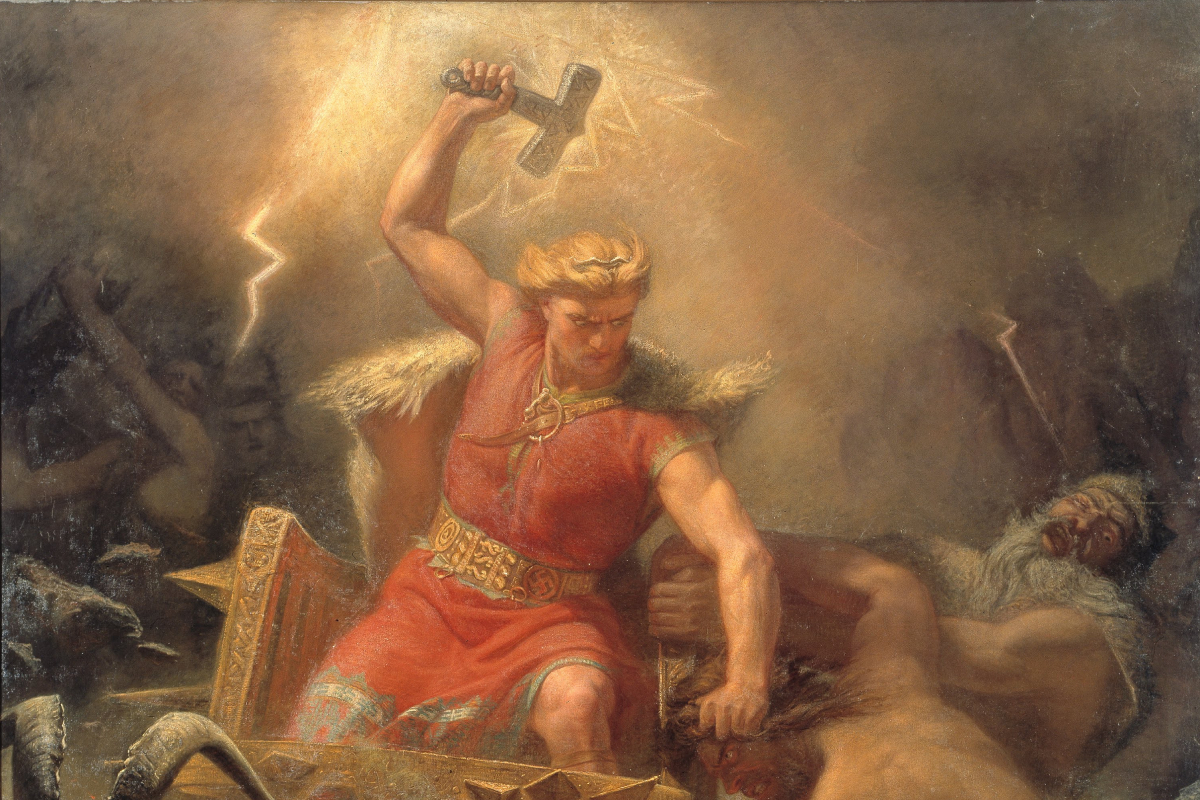
This detail shows Thor clashing with giants (jötnar), unleashing lightning and thunder in the chaos of Ragnarök. Source: Mårten Eskil Winge (1825–1896)
The death of Thor
In a series of events, each more dramatic than the last, the death of Thor is one of the most memorable outcomes of Ragnarök.
Whilst the world will be consumed by fire and water and then born anew, it is the death of the Norse God of Thunder that will herald this cosmic destruction.
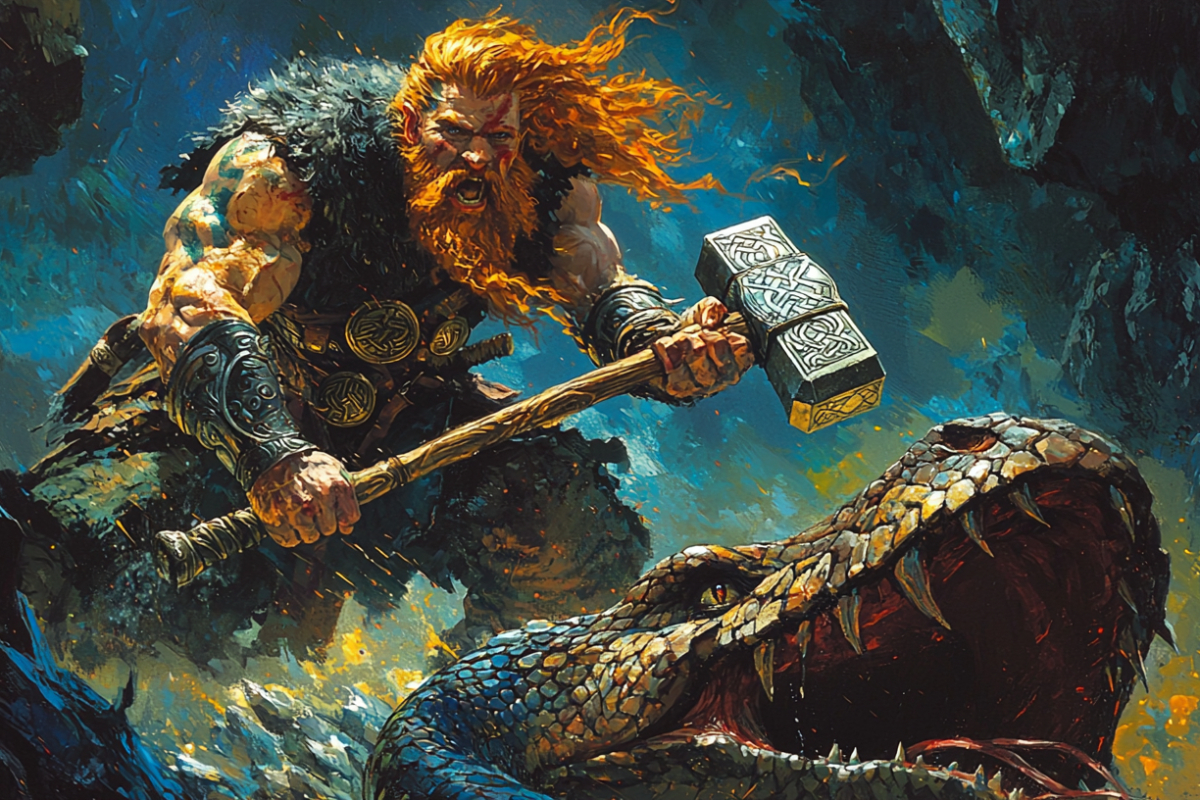
During Ragnarök, Thor faces his longtime nemesis, Jörmungandr, in a fierce battle.
Before we delve into this battle, you might be wondering: how did Thor and the giant serpent become enemies?
Their rivalry harks back to an earlier tale where Thor, disguised as a fisherman, attempts to catch Jörmungandr. Although he is ultimately unsuccessful – thanks to the interference of a giant – this encounter creates a simmering tension between the two.
Fast forward now to Ragnarök, where the two will battle it out. While Thor will ultimately slay the giant World Serpent with his mighty hammer, Mjöllnir, Jörmungandr manages to land a venomous bite on the Norse God of Thunder.
There is no doubt that Thor has superhuman strength, but not even he is immune to the poison in this deadly bite. Taking nine steps, he succumbs to the poison's effects, collapses, and dies.
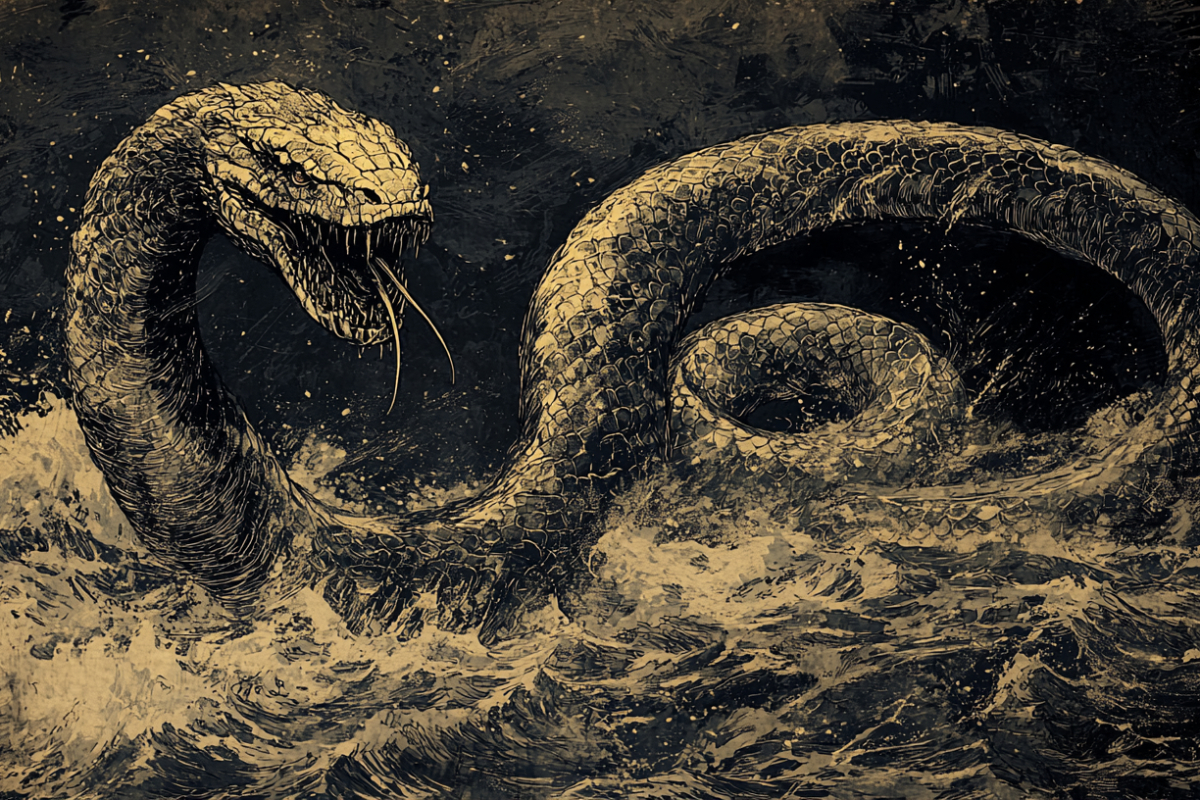
The World Serpent embodies chaos, and Thor’s death in their final battle symbolizes the end of the gods and the start of cosmic renewal. Illustration: The Viking Herald
The symbolism of Thor's death
Now, the sagas wouldn't be considered great works of world literature if they weren't deeply embedded with nuance and symbolism.
The tale of Thor's death is no different. The nine steps that Thor takes after slaying his foe hold special significance.
Aside from the fact that there were said to be nine different realms in the Norse cosmos – of which we humans only inhabit one, Midgard – nine also symbolizes completeness or the end of a cycle.
These final steps can be seen as a metaphor for Thor's role in ending the era of the gods and paving the way for a new age to emerge after the chaos of Ragnarök.
The fight itself carries heavy symbolic meaning. Author Declan Taggart discusses, in his 2011 book How Thor Lost His Thunder: The Changing Faces of an Old Norse God, how Thor stands as the protector of us mere mortals and embodies order and strength, a powerful symbol for people in Viking societies.
He is constantly battling mythical beasts and creatures as the defender of both the gods and humanity. Jörmungandr, conversely, represents the primal forces of chaos and disorder.
The fact that Midgard is encompassed by this great World Serpent, full of venom and danger, reflects how people in Viking societies viewed danger and death as omnipresent, often lurking around the next corner.
Their battle can be seen as the great cosmic dance between order and chaos. Order gives way to chaos as Thor is slain, only to reign again as the world is engulfed in flames and water and renewed.
The adversarial relationship between Thor and Jörmungandr represents a duality essential for the cosmic balance of order and chaos.
Thor's legacy lives on
Whilst Thor does perish in the cataclysmic events of Ragnarök, he is survived by his sons, Magni and Modi. They inherit Mjolnir and will continue his legacy.
Marvel fans take note: while Thor dies, the adventures of Modi and Magni could very well feature in a future installment of the Thor franchise.
In the meantime, as always, the greatest stories are found not on the silver screen but in the pages of the Norse sagas.
For more information on recent depictions of Thor versus those in the Norse sagas, visit WIRED here.
We get to provide readers with original coverage thanks to our loyal supporters. Do you enjoy our work? You can become a PATRON here or via our Patreon page. You'll get access to exclusive content and early access.
Feel free to reach out to discuss potential stories that may be in the public interest. You can reach us via email at hello@thevikingherald.com with the understanding that the information you provide might be used in our reporting and stories.