

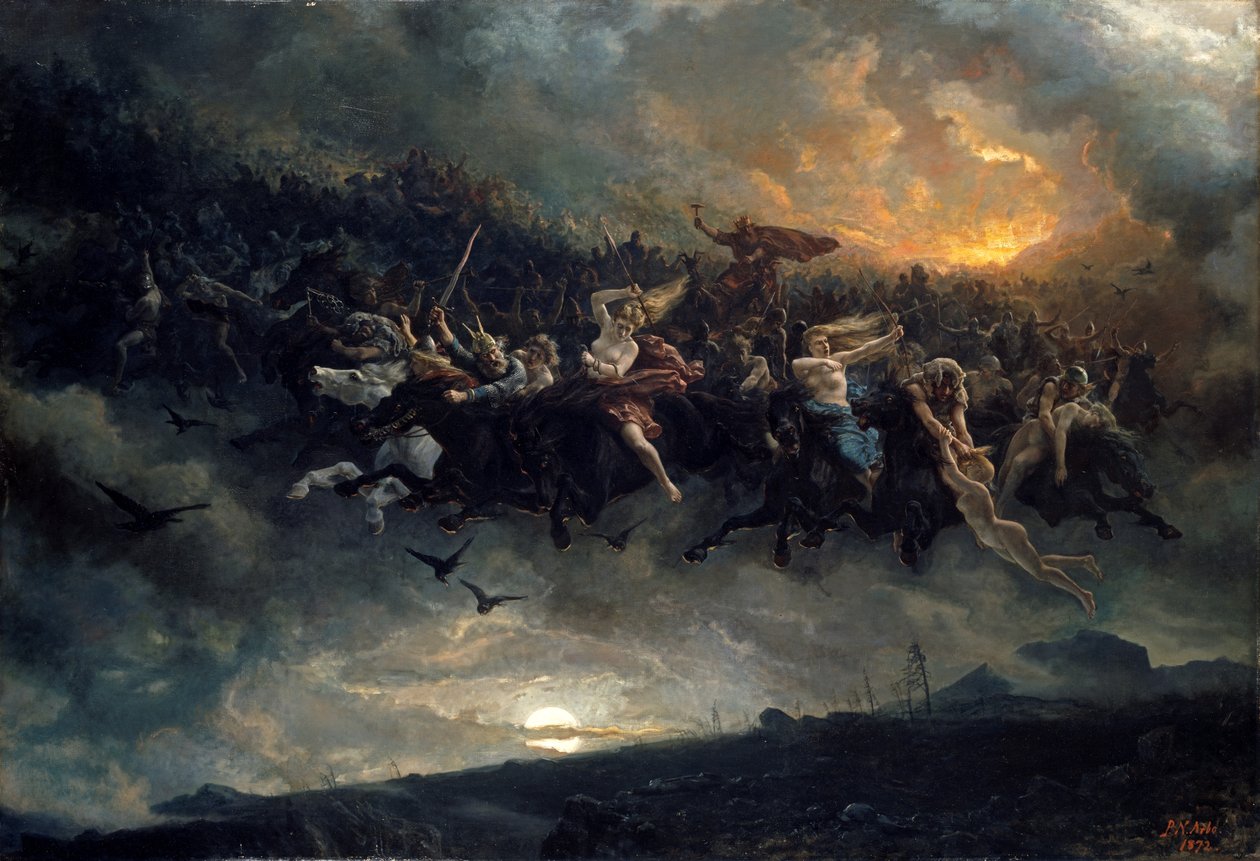
When we talk about beliefs in Viking Age Scandinavia, there is a tendency to divide them neatly into two camps: Norse paganism* and Christianity. From there, it is easy to assume that pre-Christian Norse populations shared a single set of beliefs. And that then, region by region and kingdom by kingdom, the Norse went from “heathen” to Christian in a single, simple step. But is this accurate?
By the 13th century, it is reasonable to say that a well-defined, relatively uniform version of Christianity was prevalent throughout Scandinavia. Yet throughout the Viking Age period (c. 793-1066), we can see far greater diversity of thought, religious practice and rituals.
As we shall see, it perhaps makes more sense to divide the changing world of religious beliefs among the Norse into three separate stages. The first, in what we can term the pagan era, sees a wide range of religious concepts and customs that are disparate, yet do have common elements.
The second sees a mixed form, where new Christian beliefs exist alongside pagan ones. Finally, Christianity begins to take over, and the old customs and mythology of the Norse begin to fall away.
*The term “paganism” is viewed negatively in some quarters. At The Viking Herald, however, we do not view this as a derogatory label (as it was often used in the past). Instead, we see it as an imperfect but useful word that refers to a broad and complex set of beliefs.
Untouched by the Christian wave
At the beginning of the Viking Age – towards the end of the 8th century CE – Christianity was essentially unknown to most of the inhabitants of Scandinavia, despite its spread through the rest of Europe in the preceding centuries. Except for sporadic encounters with Christian groups to the south and in some trading hubs, such as Ribe, the Norse were – largely for geographical reasons – isolated from this dramatic change in the belief system among the people of Europe.
In very general terms, we can say that at the start of the Viking Age, the Norse followed a polytheistic set of rituals and beliefs of Germanic origin. As we shall see, these beliefs had many common features across the region – features we can also observe in earlier cultures across much of Northern Europe, including what the regions of present-day Germany and England.
Norse paganism was not only a different religion to Christianity, it also represented a completely different approach to both belief itself, and how belief should be regulated. Unlike, for example, the Christian England or France that the Vikings would encounter on their raids and trading ventures in the coming centuries, in Scandinavia there was no unified church, no enforcement of beliefs and no clear figurehead – such as the Pope – to shape religious behavior.
There was also no book – like the Bible, or the Koran – to summarize shared stories, standardize behavior or dictate dogma. Instead, Viking Age societies in Scandinavia relied almost entirely on oral traditions that were passed down from generation to generation.
Perhaps unsurprisingly, this meant that – as the historical and archaeological records show – the Scandinavian region presented a decentralized collection of customs and beliefs that did clearly share a common heritage, but that were also subject to regional variations. As a result, we can clearly see a wide disparity in the representations of gods and myths in the records of both the Norse and other people of Germanic origin.
The limitations of our knowledge
At this point, however, we should acknowledge that our understanding of the religious practices and superstitions of the people of Viking Age Scandinavia are necessarily limited. In terms of historic records in this field, almost all of our written sources are not contemporary to the Viking Age.
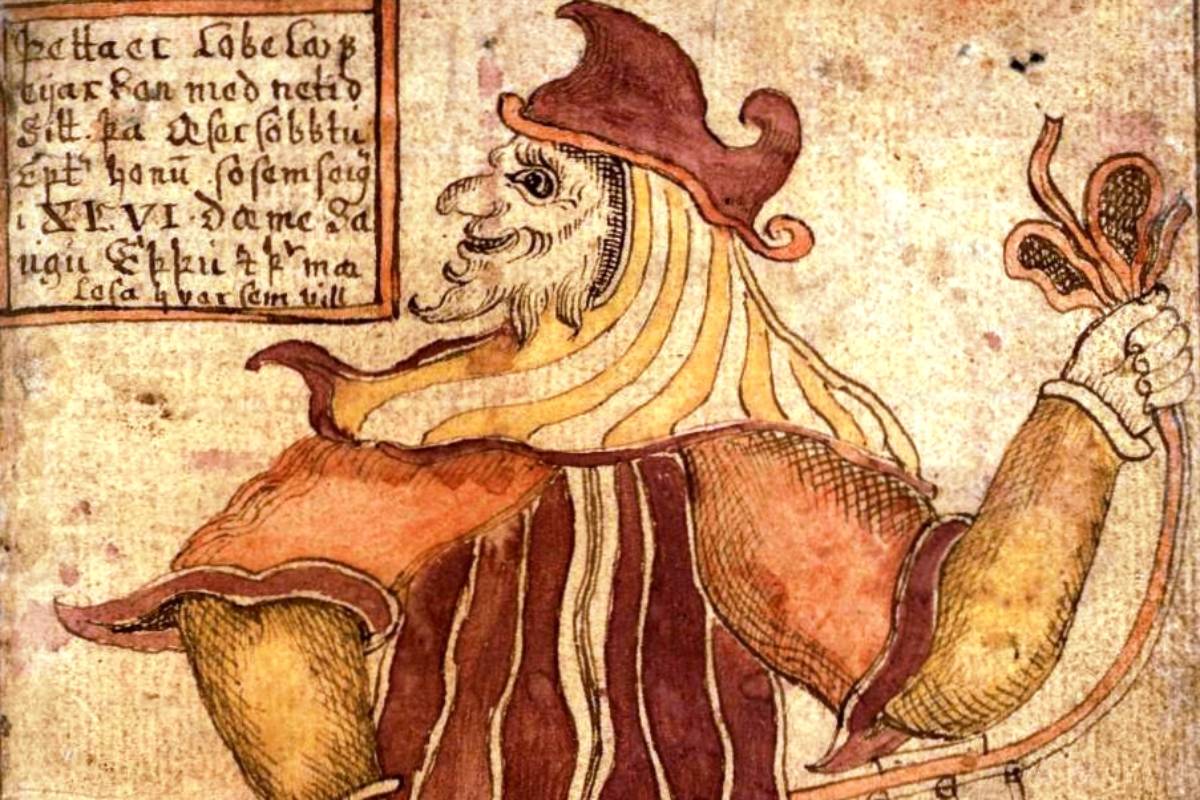
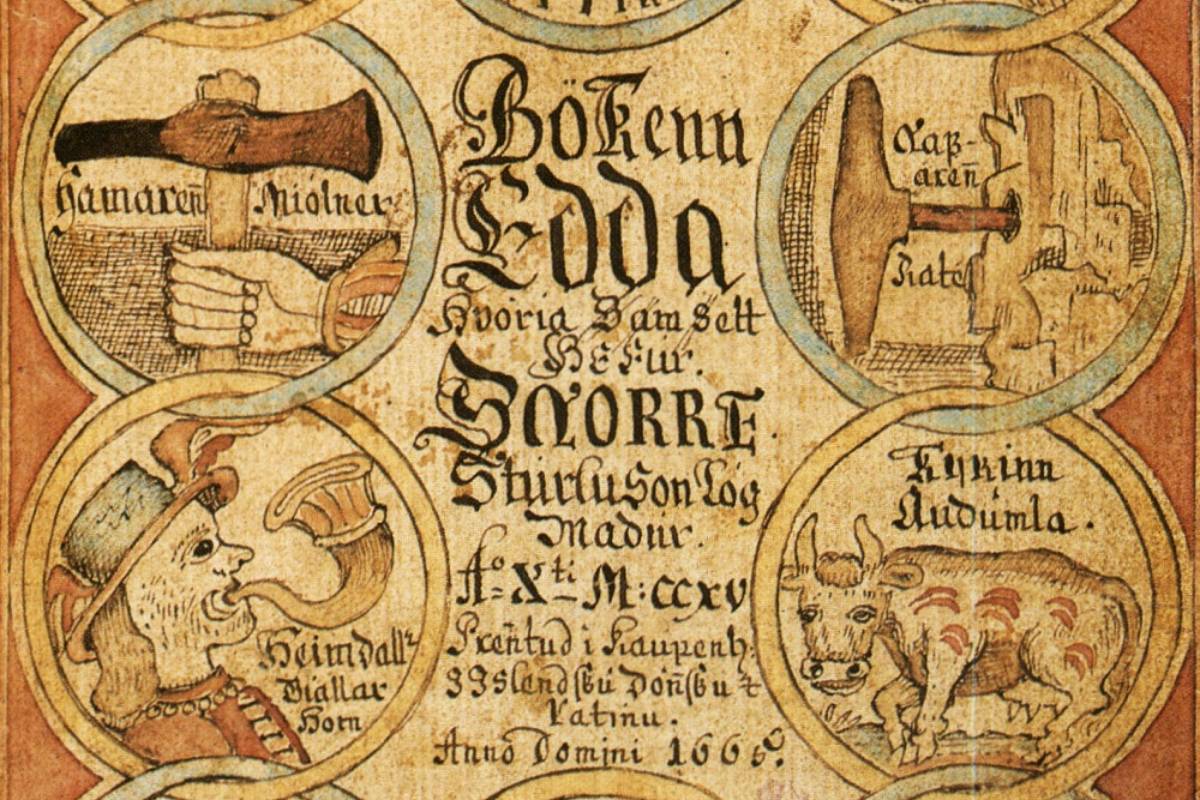
In some instances – such as the Icelandic Sagas and Poetic Edda – we are also dealing with works of art that are intended as much to entertain as to inform. This means that while they can provide us with a glimpse of Norse religion, myth and belief, this insight is by its very nature imperfect.
Even those works that were written at the time of the Viking Age, such as Ibn Fadlan's account of the Rus, or just after, like Saxo Grammaticus's Gesta Danorum, were composed by outsiders. In other words, these accounts did not present direct religious or cultural experience, but rather an interpretation of observed events.
This means that in our attempts to form a picture of Norse practices, we are forced to rely largely on unreliable texts – often written from a Christian perspective – and archeological evidence that can only give us a fragment of the truth.
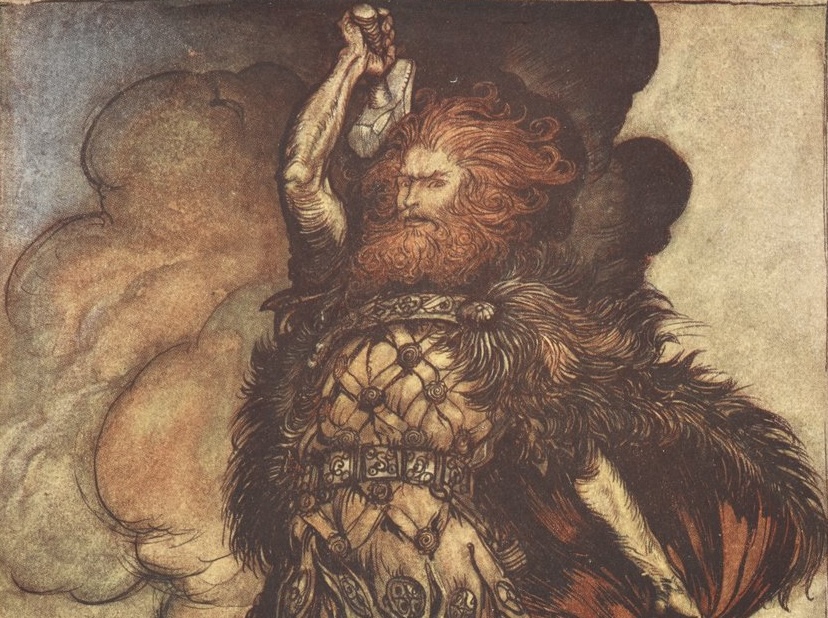
Thor Raises His Hammer (cropped), by Arthur Rackham. Source: Public domain
What is shared
This is not to say, however, that scholars have been unable to identify recurring themes in Norse religious practices and mythology. Across Scandinavia, it seems that each Norse community recognized two broad groups of deities, the Aesir and the Vanir, who were opposed by the Jotnar, a set of fearsome giants.
The Aesir were a warlike tribe, led by Odin. As far as we can tell, both Odin, the god of war and wisdom, and Thor, the protector, were recognized throughout Scandinavia in this period. The Vanir, on the other hand, were focused more on fertility, agriculture and magic. This group, as depicted in both the Poetic Edda and the Heimskringla, included the god Njörðr and his children Freyr and Freyja.
In addition to shared deities , there was also a broad mythological framework across Scandinavia with themes that would likely be familiar to all. These include the Yggdrasil, a cosmic ash tree that linked nine distinct realms; Ragnarök, the final unavoidable apocalyptic battle where the gods and the world be destroyed and then reborn; and the Norns, three powerful female entities who spun the threads of fate.
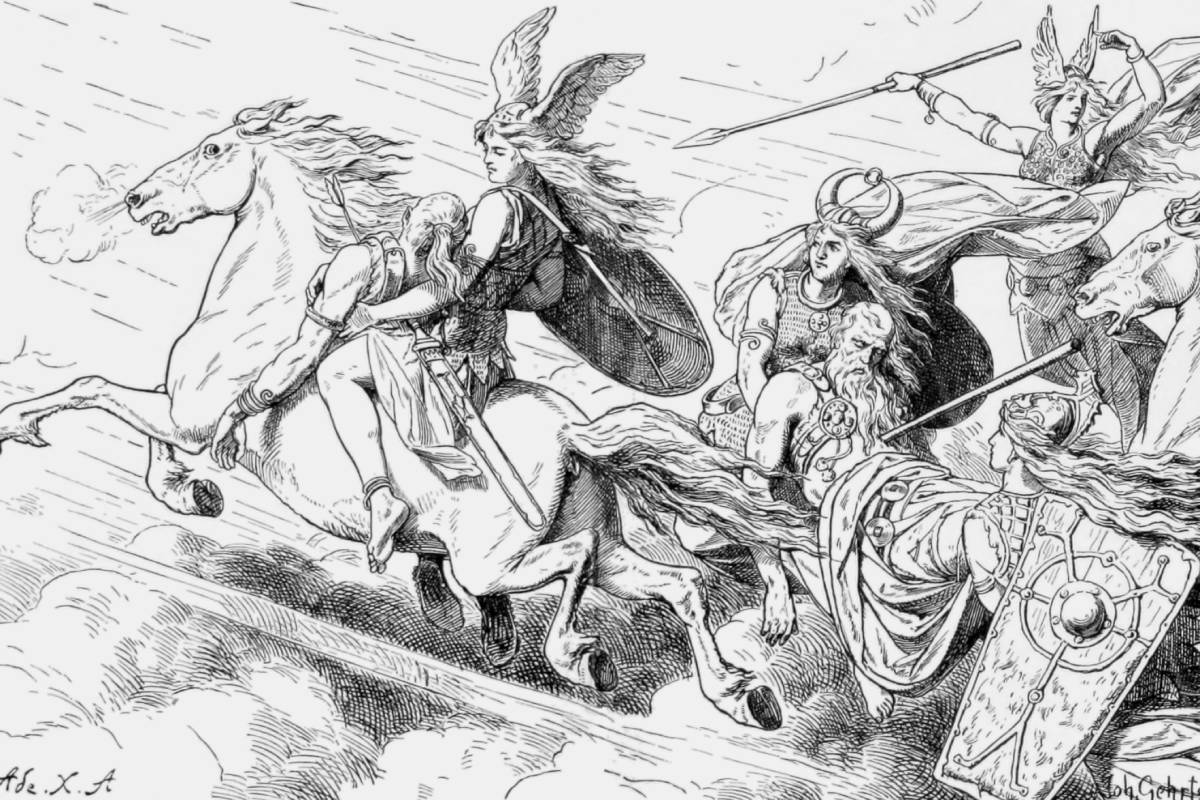
Blót ceremonies, where animals or items were sacrificed to the gods, were common across all Norse societies in the Viking Age. And then, of course, there was Valhalla, the famed “hall of the slain” in Asgard, the realm of the Aesir, where warriors slain in battle are welcomed to sup and dine with the gods.
While the pronunciations may have changed from place to place, we can assume that at the start of the Viking Age, wherever you roamed in Scandinavia, these ideas, in some form or another, would have been familiar to all the Norse people that you encountered.
Regional variations
So what was different, what variations can we observe? What sort of changes might you see if you traveled from one corner of the Norse world to another?
Examinations of artifacts – including jewelry, weapons, burial goods and even runestones – indicate that the gods Thor and Freyr were most prominent in Western Norway and Iceland. The prevalence of Thor, in particular, is also evidenced by hundreds of sites or settlements that carried his name.
In Sweden – the home of the royal cult center of Gamla Uppsala – it seems there was a greater focus on themes of fertility, the harvest and agricultural prosperity. Here too, however, Freyr was a prominent deity. In all likelihood, this variation is linked to the even more central importance of farming in Sweden compared to its neighboring regions at this time.
In Denmark, there was a more pronounced focus on Odin. This is thought to be due to Denmark’s proximity to continental Europe – Odin’s prominent role likely mirrored the concentrated power of the royal seat and martial elites in this region.
To the north, particularly in northern Norway, there was a tangible influence from the Sámi populations. Here, shamanic Seiðr practices were more common, with magic a powerful influence. There is even a goddess, Skadi – an expert in skiing and hunting – who is said to have been modeled on Sámi women.
Changes over time
It is also possible to detect alterations in Norse religious practices over the centuries. While all religion evolves over time, the tumultuous Viking Age saw particularly dramatic alterations that reflected the rapidly changing political, military and social climate of the Scandinavian region.
Even before the arrival of Christianity, the Scandinavian world in this period saw a move away from more spirit and nature-based beliefs and ancient sky deities such as Tyr and Ullr. In parallel, Odin began to be elevated as supreme among deities, becoming an increasingly powerful leader who could directly influence the fate of all. In the same period, we can also observe a transition of sacred rites taking place in open-air bogs and groves towards purpose-built chieftain halls.
In each case, these developments tended to mirror changes in society as a whole. In some ways, we can see this as a reflection of the rise of the individual, the world-historical figure. Then, within a short period of time, as key figures across Scandinavia – Harald Bluetooth, Harald Sigurdsson, Cnut the Great – began to seize control of increasingly larger swathes of land, they would begin to make use of a new religion that promised even greater unification.
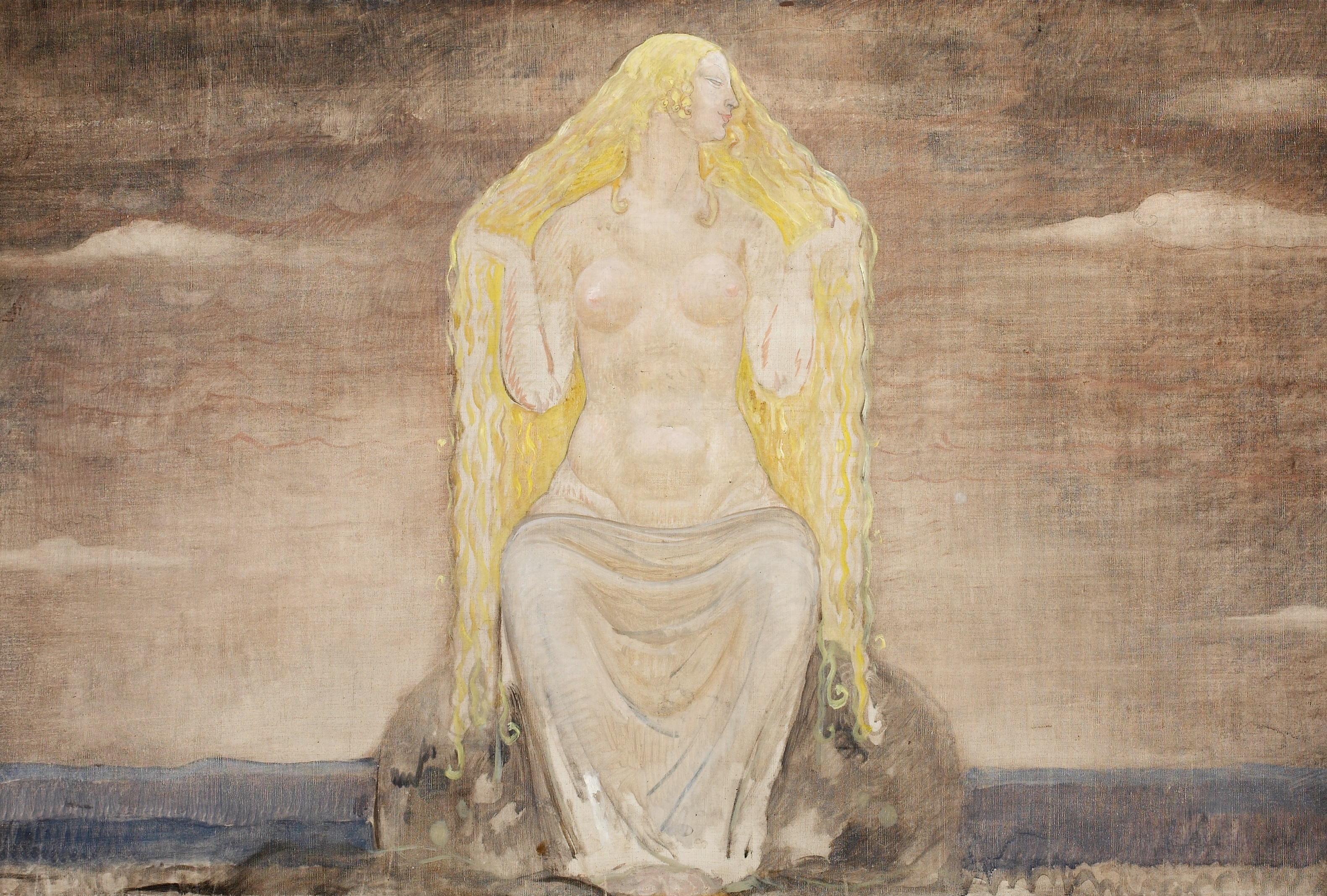
Freja, by John Bauer. Source: Public domain
The dying of the light
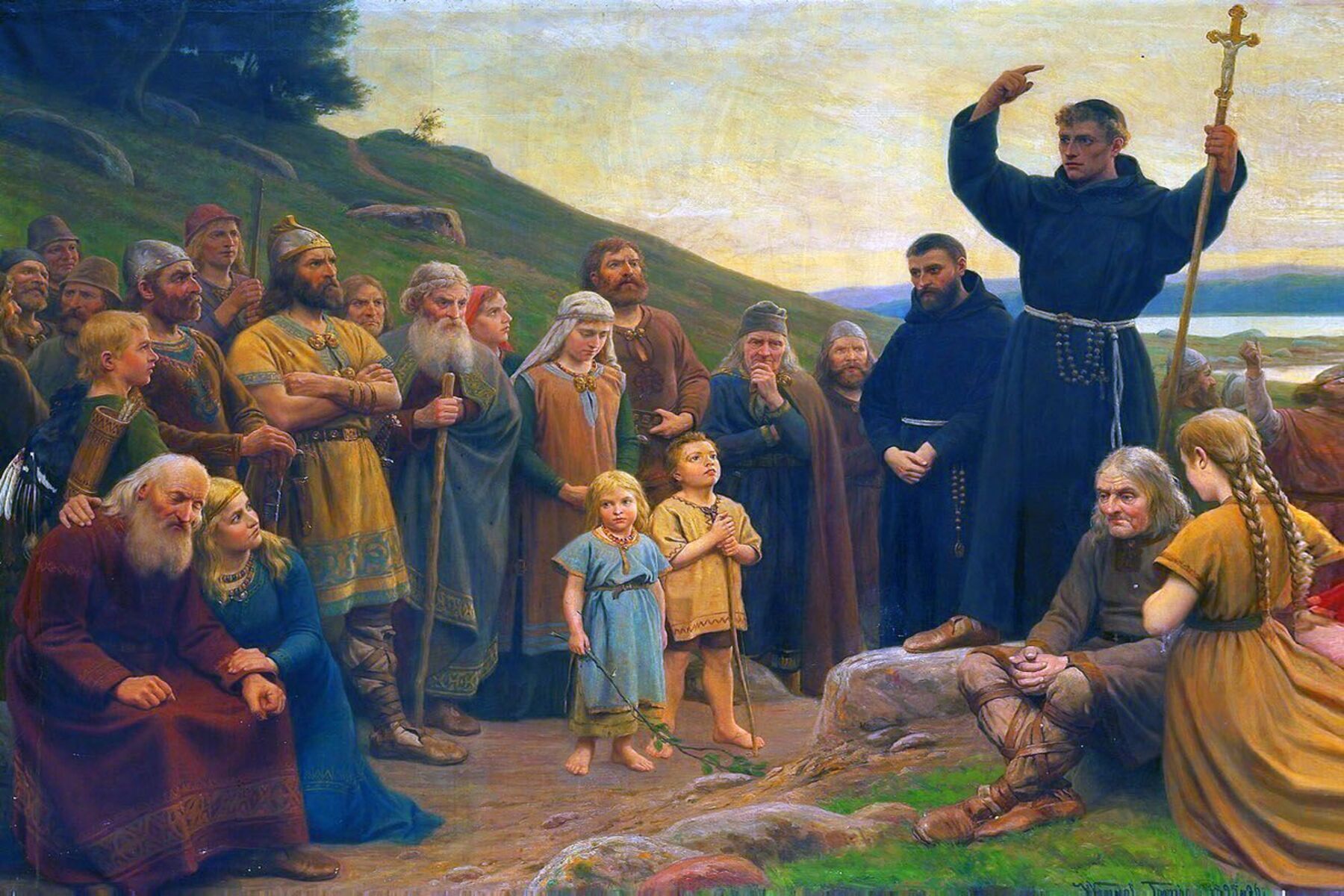
Christianity, of course, did not arrive in Scandinavia all at once. The process essentially began with the early missionaries – such as Ansgar – that visited the region in the 9th century. In the 10th, Bluetooth’s conversion to the new religion brought much of Denmark under the sway of Christianity.
Next, Norway experienced an aggressive campaign of Christianization, led by monarchs such as Olaf Tryggvason and Saint Olaf. Iceland adopted Christianity at the Althing assembly around 1000 CE. Sweden was the relative latecomer – here, Christianity was only firmly established only after the end of the Viking Age, in the mid-12th century.
Yet each of these regions also saw an interim period where Christianity competed with old Norse religions for the hearts and minds of the people. Some instances, such as the explosion in Thor’s hammer (Mjolnir) amulets throughout Scandinavia, can be seen as a clear counter-response to the threat of Christianity.
Other artifacts appear to represent an expression of a genuine mixed identity, an attempt to find some kind of balance in a changing world. Thorwald’s Cross on the Isle of Man, for instance, depicts a clear Christian figure on one side and an image of the Norse god Odin being devoured by the wolf Fenrir at Ragnarök on the other. There are countless other examples.
There was, of course, also another cultural element to this – as the Norse found themselves building homes in new lands, and integrating with local communities, so their religious practices morphed in new directions.
One true god?
Backed by powerful leaders, Christianity inevitably began to emerge supreme. Though the old pagan religions persisted for longer in Greenland, in Scandinavia they were virtually extinct by the 13th century.
But not quite. There were always tiny pockets of people who maintained some belief in the old ways. Over the past few decades, there has been a great reflowering of interest in Norse mythology, religious practices and customs. In many cases, this interest is more about the chance to get in touch with a slice of Scandinavian cultural history – such as the midsummer and the autumn ceremonies that take place at the Birka Viking Center every year.
Yet there are also fervent believers and serious organizations, such as those of Ásatrú and Forn Siðr, who practice official communal rituals centered on nature, ancestors and the pantheon of Nordic deities. Indeed, you can today find a number of official groups that conduct legally recognized pagan weddings – handfastings – and open-air funerals on designated pagan burial grounds.
And whether you are Christian, atheist, “heathen” or something else entirely, it makes sense to view this development with a certain degree of optimism. Because a thousand years down the line, one thing remains the same: diversity of thought, freedom of practice and a fundamental desire to connect with ancient ancestral roots remain central to the idea of Norse paganism.
We get to provide readers with original coverage thanks to our loyal supporters. Do you enjoy our work? You can become a PATRON here or via our Patreon page. You'll get access to exclusive content and early access.
Feel free to reach out to discuss potential stories that may be in the public interest. You can reach us via email at hello@thevikingherald.com with the understanding that the information you provide might be used in our reporting and stories.