

Two seismic dates in history. 793 and 1066 CE. The first, of course, represents the year of the famous Lindisfarne raid. The latter was the year in which England had three kings and one of them, Harold Godwinson, was defeated by the Norman usurper, William, Duke of Normandy. A few weeks before Hastings, Harald Hardrada, perhaps the most brilliant warrior of his age, fell at Stamford Bridge in an attempt to seize Godwinson’s crown.
These two dates were traditionally used to bookend the so-called “Viking Age”, that period of early medieval European history dominated by our favorite raiders, pirates and ne'er-do-wells. At one end, we have numerous historical records (albeit written with a heavy bias) about the bloody nature and heathen practices of people from Norse societies.
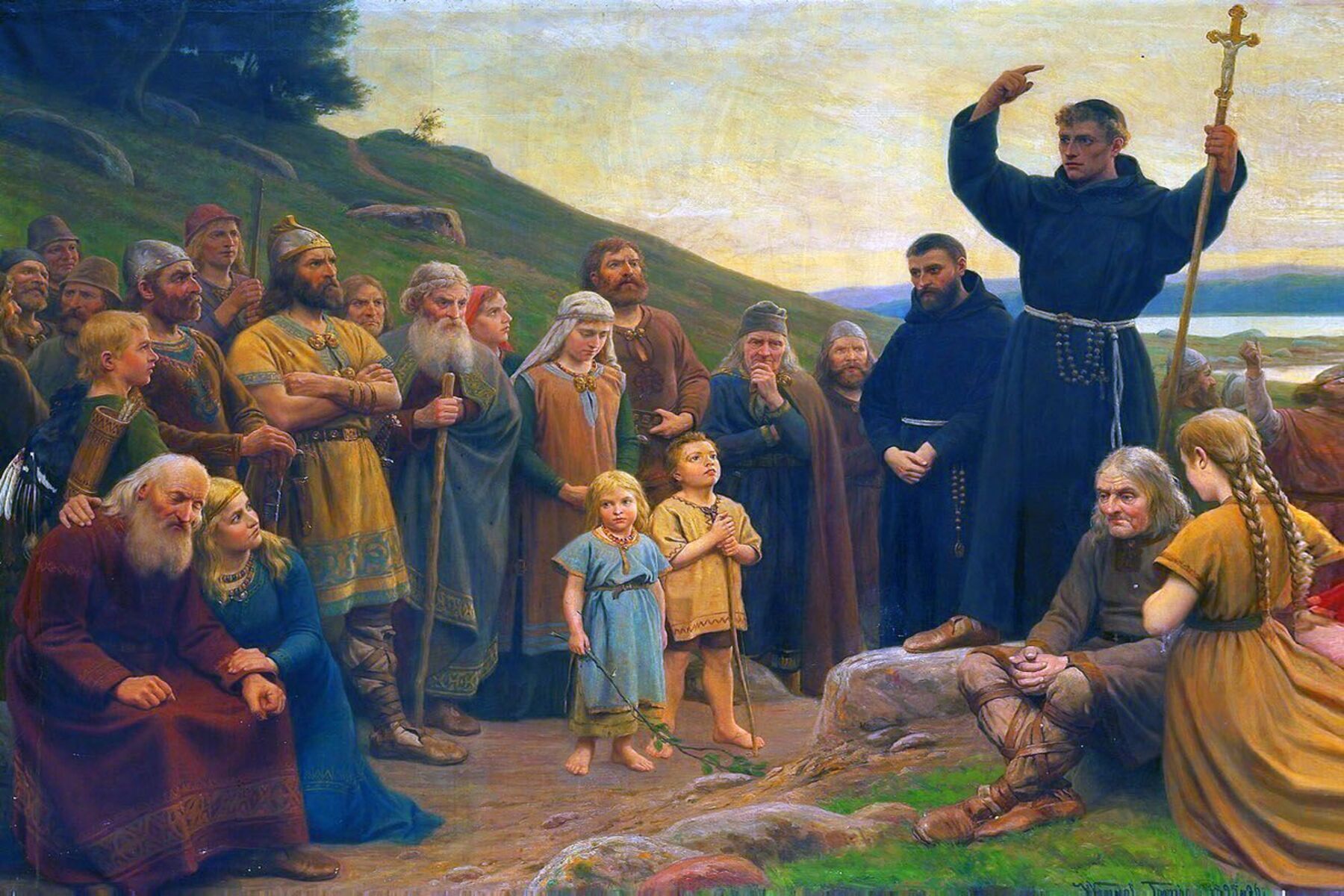
At the other end of the age, much was made about the good Christian nature of the medieval Scandinavian monarchs and their subjects. What caused this change? The answer was the widespread adoption of a new religion, Christianity.
Running concurrently with the age of Viking raids was the centuries-long process of the Christianization of Scandinavia. However, the moment when, say, a Viking chieftain or warrior was baptized into the Christian faith did not simply stop the raiding and military expeditions. New faith may have been obtained, but old habits die hard.
We look at why conversion to Christianity did not halt the raiding activities of people from Norse societies.
Centuries long process
First, we turn to the fact that Scandinavia did not go to bed one night, in the early medieval period, with a myriad of different spiritual and religious beliefs, then wake up the next day with all its inhabitants God-fearing Christians. The Christianization of the Scandinavian peninsula and surrounds, from the Arctic Circle to the Danevirke, took centuries.
It began long before the famous raid on Lindisfarne (or events surrounding the Salme ship burial) and continued long after Harald Hardrada was felled in northern England. In areas of Scandinavia, particularly in parts of Sweden, the old ways, the old traditions (what some academics may call ‘heathen’ or ‘pagan’ practices) continued well into the 14th century.
Given that this conversion took centuries, business did indeed go on as usual. Individuals may very well be baptised, particularly powerful individuals, say a chieftain or later a monarch, but their families or community may not. Powerful elites often promoted this new Christian religion as a way to link into broader medieval European views on authority, governance and legitimacy, but often traditional practices and beliefs stayed firm.
As Søren M. Sindbæk writes about in his chapter, in the 2023 book, A History of Denmark from the Viking Age to the 21st Century, a religious change of heart was not always evident for these elites as, for example, "there is a high probability that power politics” was the key factor behind Harald Bluetooth’s decision to convert to Christianity in the mid-10th century. This decision was seen as a watershed moment in the Christianization of Scandinavia.
For many people in Norse societies, the conversion to Christianity was underpinned by military or political motives rather than spiritual awakenings. The only difference between Viking raids in the early and later Viking Age was that the spiritual makeup of some of the crew changed slightly to include more Christians.
PLEASE NOTE: The rest of this article is only available to our paid Patreon subscribers, here.
The topic was selected by our Patrons in a weekly poll. Support The Viking Herald on Patreon to read the full article and help choose future topics.
If you would like to learn more about Patreon and why we have decided to restrict access to some content, please take a look at this article.
Feel free to reach out to discuss potential stories that may be in the public interest. You can reach us via email at hello@thevikingherald.com with the understanding that the information you provide might be used in our reporting and stories.