

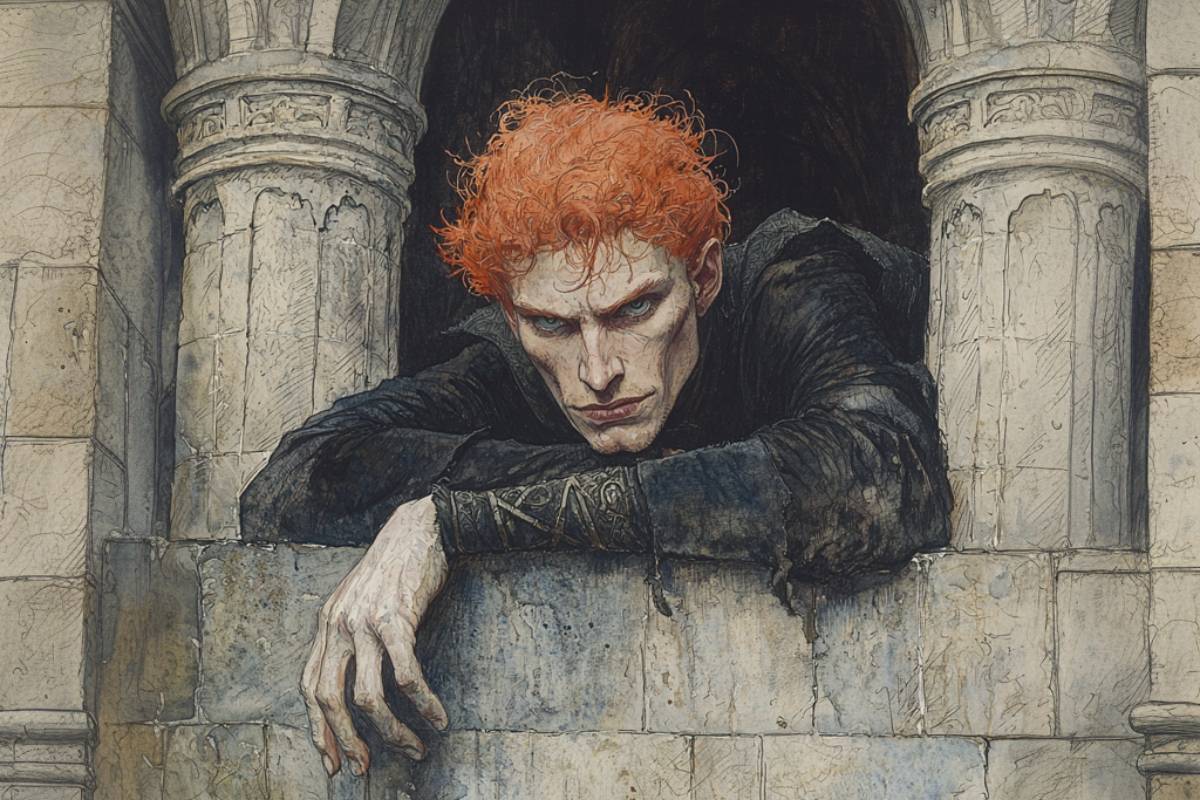
Loki, a mischievous Norse god, is seeing something of a resurgence in popularity almost a millennium after the last remnants of the Old Norse religion were stamped out by the Catholic Church.
Recent Hollywood adaptations of the Marvel comic books about Thor, the Norse God of Thunder, featured Loki as a main character and have seen a spinoff series on streaming platforms.
However, this supposed resurgence in popularity is misleading as, thanks to the rich tapestry of the Norse sagas, Loki was never really out of fashion.
Read any of the sagas, myths, or legends of Norse mythology, and you will find that Loki seems to pop up everywhere, in one of his many forms, sometimes aiding a fellow Norse deity or human, sometimes casting a malign hand.
One of the most enigmatic figures in Norse mythology, Loki embodies the complexities of both divine and chaotic forces in the Norse pantheons (yes, pantheons—there are two in Norse mythology).
He was said to be born of the union between two giants, Farbauti and Laufey, which connects him to the primal forces of nature that exist outside the realm of the Æsir gods.
Despite this heritage, however, he is accepted as a member of the Æsir thanks to his close association with the mighty Norse All-Father, Odin. This makes him one of the most central figures in the Norse mythological tradition.
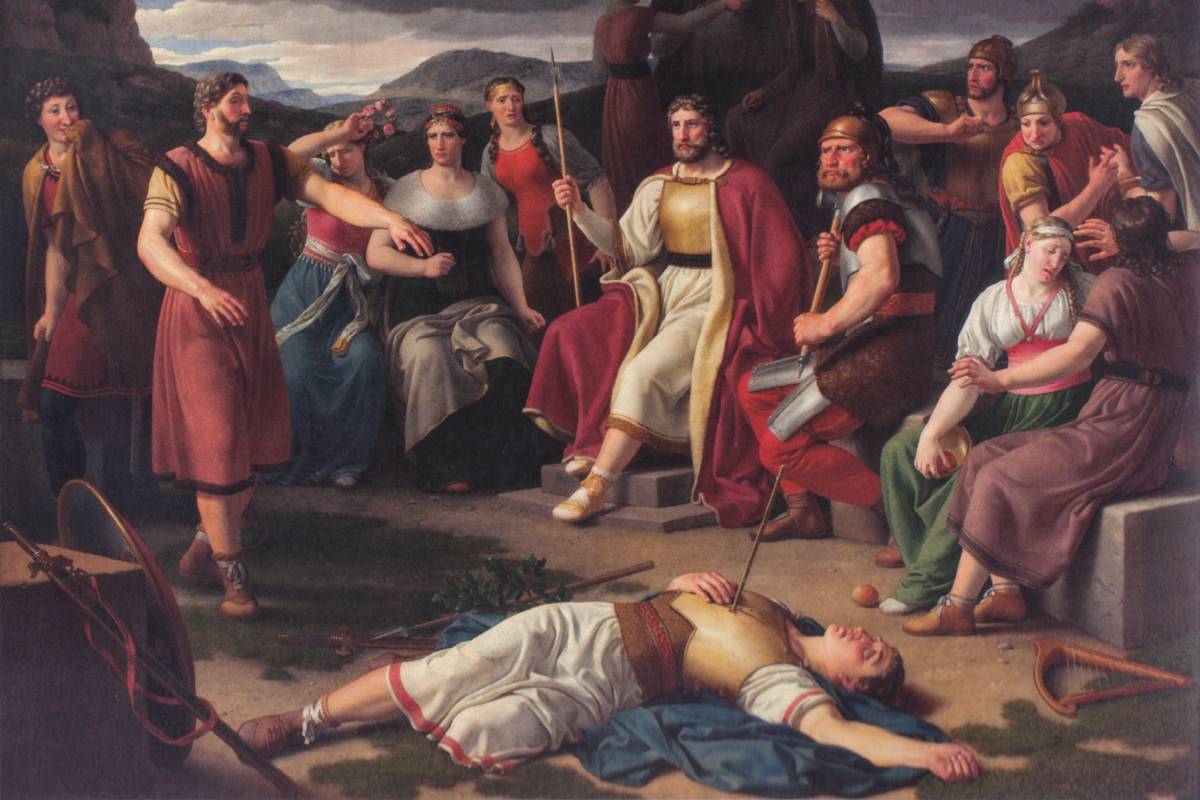
The Æsir, the principal gods of Norse mythology, are shown here gathered around the fallen Baldur. Author: Christoffer Wilhelm Eckersberg (1783–1853)
Parentage and Æsir insider outsider
Certain modern historians and academics have postulated that the depictions of Loki as a trickster god come from his "outsider" lineage.
Though he is accepted as a member of the Æsir, he is not cut from the same cloth as his other Norse deities. Loki was said to be the product of a union between two giants (jötnar).
Born of these two giants, father Farbauti (whose name modern linguists often translate to something akin to "dangerous hitter") and mother Laufey ("leafy island"), it suggests a connection to the fierce and often unpredictable forces of nature that people in Viking societies knew so well.
This was reflected in his enigmatic nature, where Loki was often depicted as an agent of chaos.
Aside from his biological parents, Loki also had something of a close association with the chieftain of the Norse gods, mighty Odin. Some sagas portray these two swearing a pact and becoming blood brothers.
Such pacts were a somewhat common occurrence for Vikings, who had to live, travel, and fight alongside their colleagues for extended periods. These bonds transcended familial or geographic ties, fostering greater cohesion and the strong esprit de corps for which the Vikings were renowned.
Given that mere mortals did it, why then should not the Norse deities undertake such a pact? It was this bond that allowed Loki to move freely among the Æsir and participate (often annoyingly) in their affairs despite his "outsider" status.
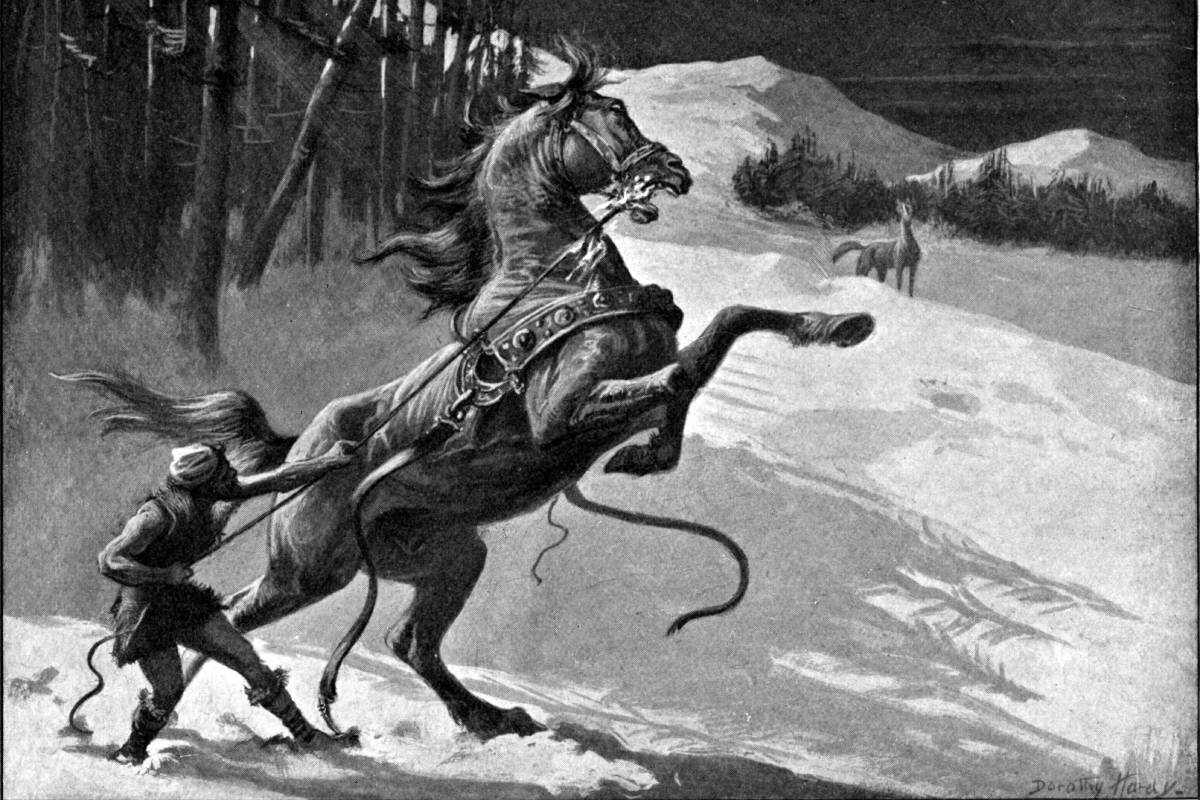
While father to Fenrir, Jörmungandr, and Hel, Loki also became the mother of Sleipnir after distracting Svaðilfari in mare form. Author: Dorothy Hardy (1868–1937)
Parent to many a mythological creature
Loki's complex lineage extends far beyond his parents to many of his offspring. There is no character in the rich tapestry of Norse mythology who not only sired more children but such a diversity of children as Loki.
Among his most famous children are the monstrous wolf Fenrir, the great world serpent Jörmungandr, and the goddess Hel, ruler of the Norse underworld.
These three offspring embody the darker and more destructive aspects of Loki's nature, reflecting his role as a catalyst for the Norse end of times, Ragnarök.
Ragnarök was an apocalyptic battle between Norse deities and creatures that resulted in the destruction and rebirth of the entire Norse cosmos, thanks in part to Loki's children.
Loki's close association with Odin also extended to another of his children, as he was said to have given birth to Sleipnir, an eight-legged horse. Odin chose Sleipnir as his noble steed, further bonding the two Norse deities together.
According to the sagas, Loki was said to have shapeshifted into a mare and then mated with a stallion, Svaðilfari. This rather bizarre dalliance resulted in the birth of Sleipnir, whom Odin then chose as one of the most interesting modes of transport in Norse mythology.
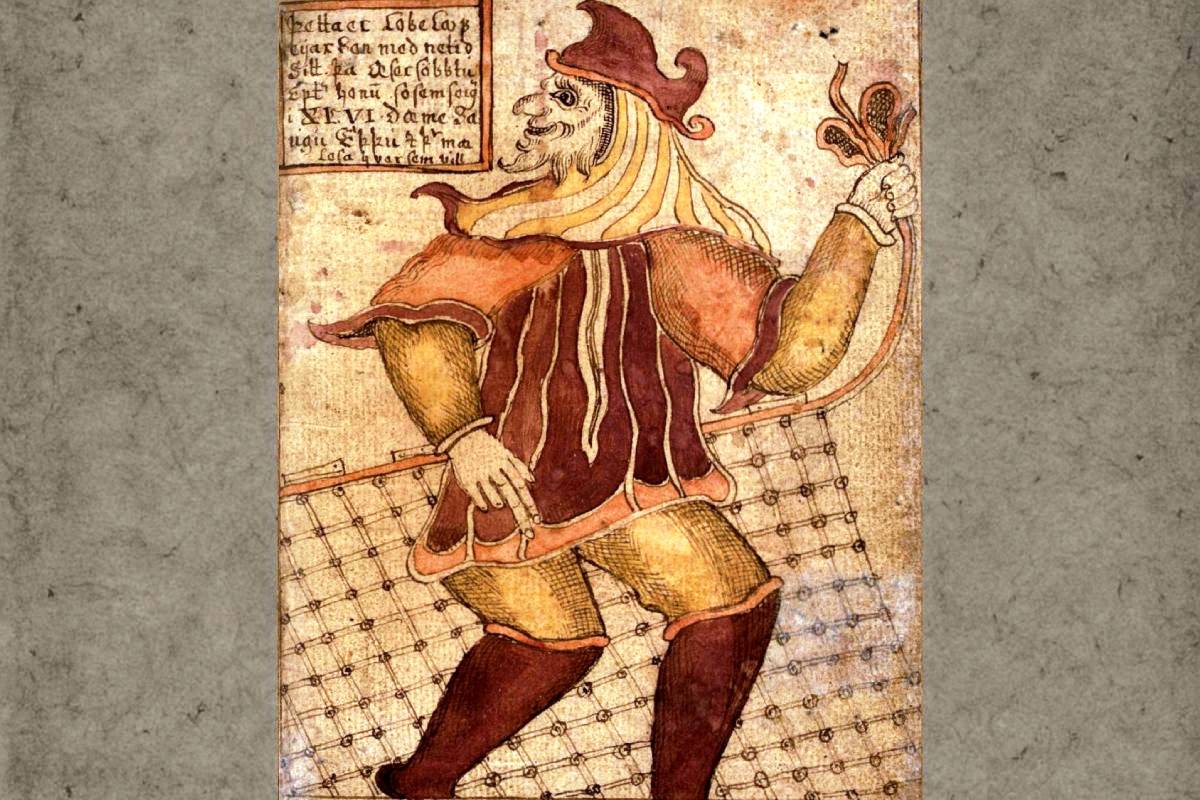
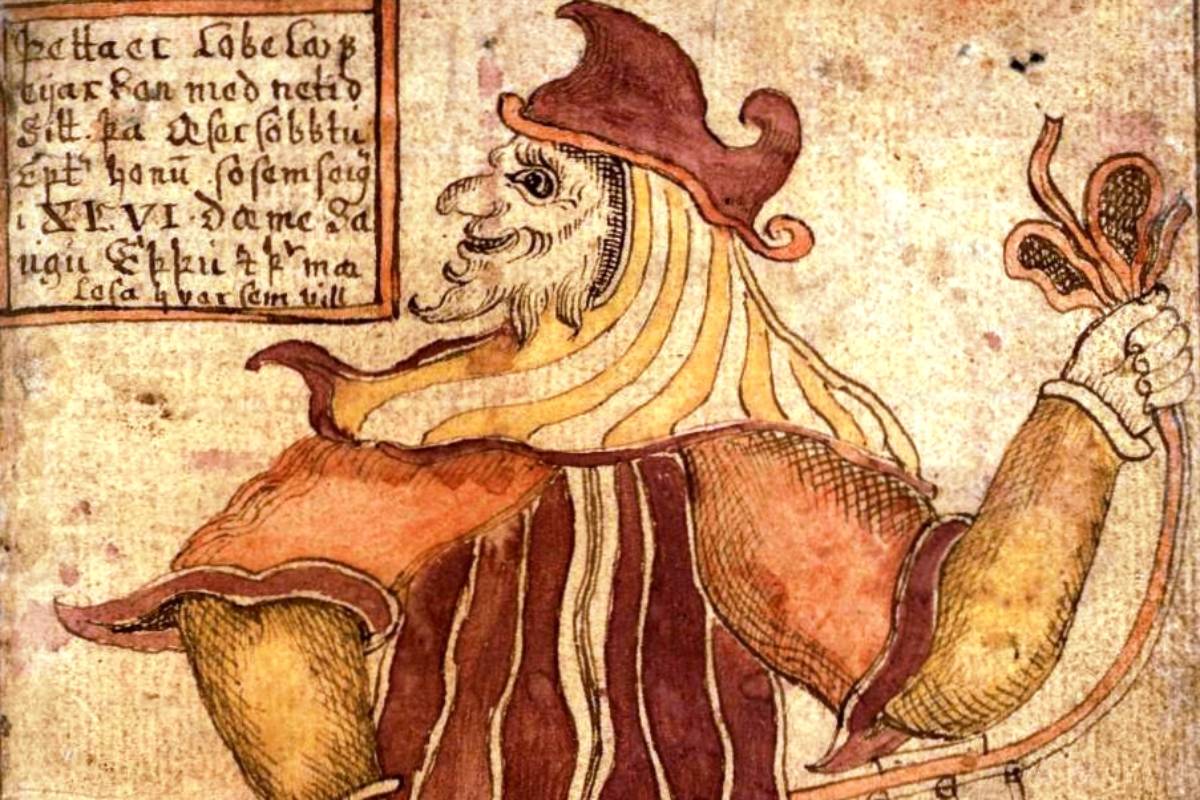
This image from an 18th-century Icelandic manuscript shows Loki with a fishing net, an episode found in the poem Reginsmál. Illustration: Public domain
The complex nature of Loki
Part of Loki's popularity is his multifaceted nature. He is both very much a mythological "insider," a key member of the Æsir and yet concurrently an outsider, not born of a divine nature.
In countless sagas, myths, and legends, he teams up with Thor, the son of Odin, to aid and abet him in his many exploits and adventures. Conversely, he is also responsible for malignant acts, including being the mastermind of the death of Baldur, the beloved son of Odin.
This dichotomy between good and evil, and his mixed morality, is perhaps part of the reason for his popularity. In the balance between his fatal flaws and his occasional good deeds, people in Viking societies saw themselves.
He is a mirror of the complex everyday morals and decisions that people in Viking societies had to make.
Loki's complex lineage is a reflection of nature as both a divine prankster and a chaotic force of death and destruction. Born of giant parents yet accepted as a member of the Æsir, Loki embodies the tension between order and chaos that is rife in one of the Norse pantheons.
His diverse brood of offspring further illustrates the multifaceted nature of his character, representing the destructive forces of Ragnarök and the potential for renewal and transformation in the wake of destruction.
Finally, it is in his morally ambiguous nature that we see a reflection of ourselves, who have the ability to both harm and help.
For more information on Norse mythology, visit the BBC History Extra website here.
We get to provide readers with original coverage thanks to our loyal supporters. Do you enjoy our work? You can become a PATRON here or via our Patreon page. You'll get access to exclusive content and early access.
Feel free to reach out to discuss potential stories that may be in the public interest. You can reach us via email at hello@thevikingherald.com with the understanding that the information you provide might be used in our reporting and stories.