

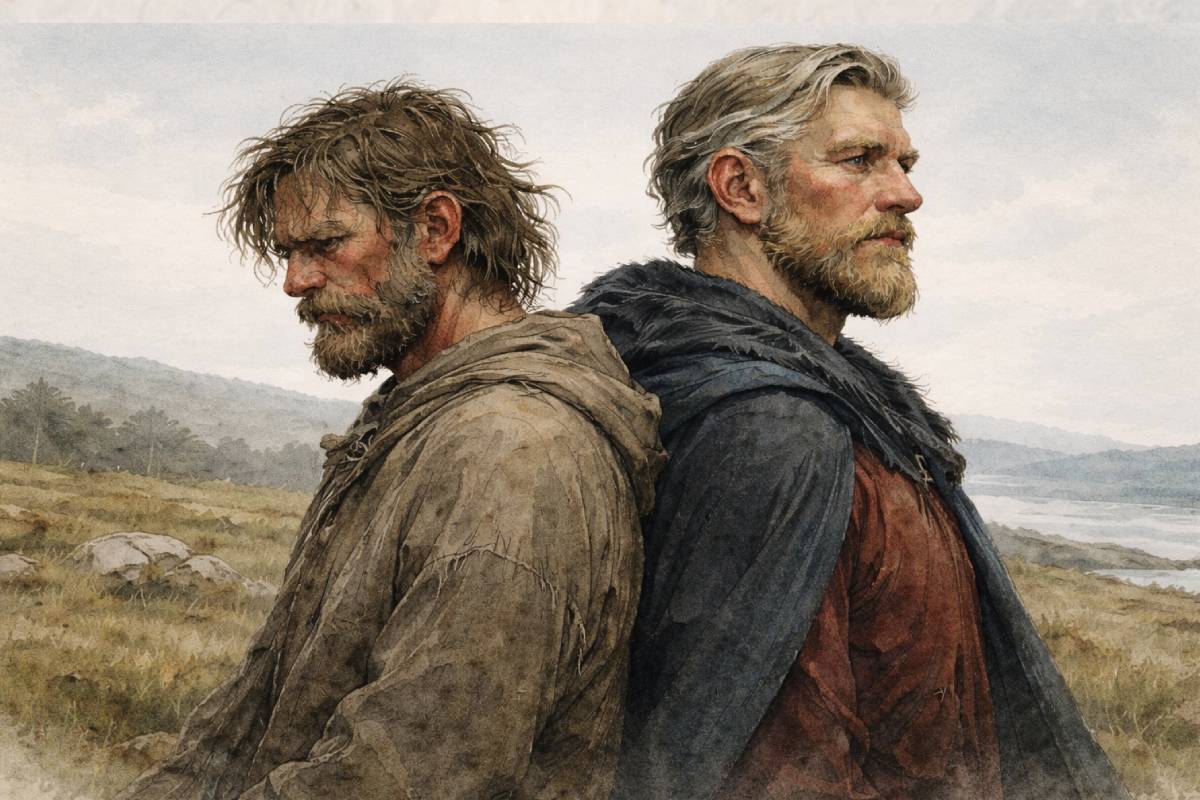
Given that the festive season is here in many countries, many of our dear readers will no doubt take on host duties and share some merry cheer with great hospitality.
However, a good host, generous with food, wine, and a good time, is certainly nothing modern. We know that for the Norse, hosting was serious business, as shown by what they passed down in literature and lore.
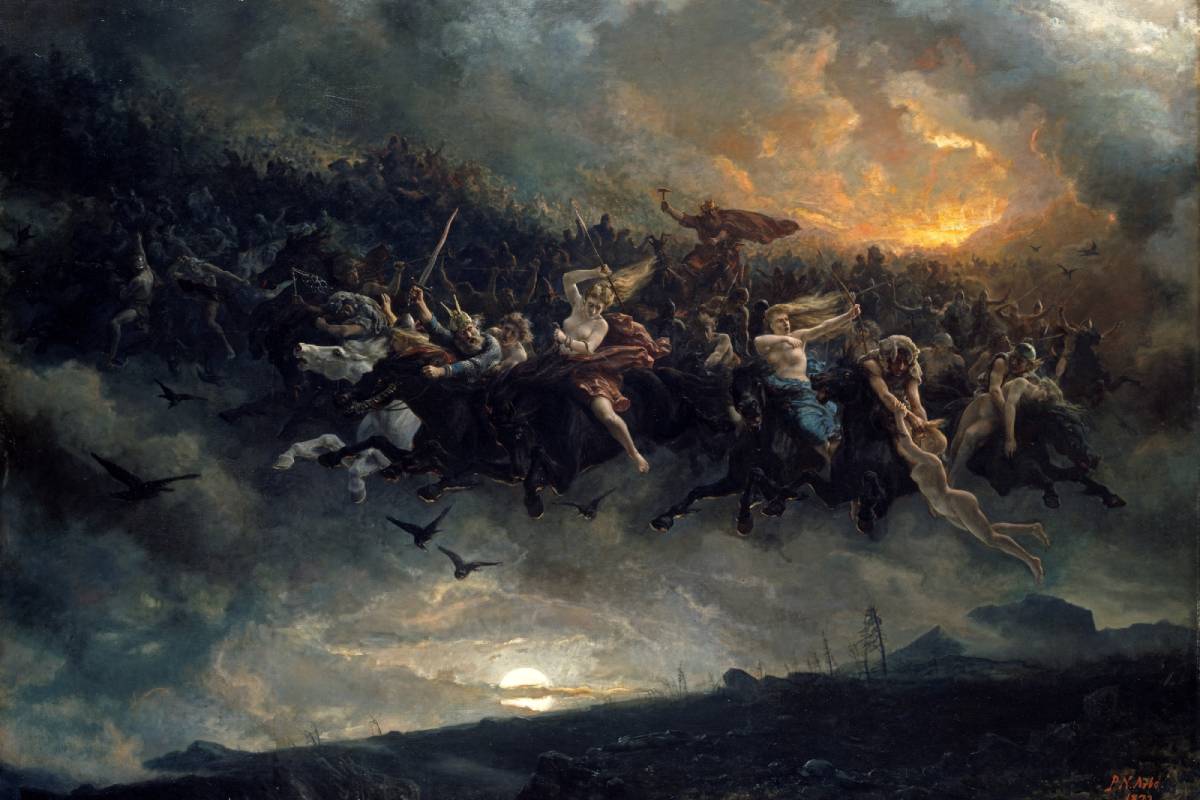
Think of the vivid descriptions of the great mead hall in Beowulf, the sky-bound feasting that Odin and his chosen few were said to enjoy, or the warmth offered to travelers in the Hávamál.
Turning to the Poetic Edda, we find a tale steeped in hospitality: Rígsþula (The Song of Rig). The eponymous hero of the tale, Ríg (Old Norse Rígr), wanders through the world and receives hospitality from three homes.
How does our hero Ríg repay these generous hosts? Well, if you said with good table manners or a firm handshake and a sincere thank you, you'd be oh so wrong.
Our hero repays the hospitality he received and fathers a child with the wife in each home. These children are presented as the ancestors and embodiments of the three social classes found in Viking society.
Let us delve into this poem that helps to explain the strict hierarchical nature of Viking society.
The origins of Viking slavery
Whilst the author of the Rígsþula is unknown, it was included in a rough collection of poems we now call the Poetic Edda.
There is wide academic speculation on when this poem was first penned (rather, quilled), with estimates ranging across the early medieval period and beyond, from anywhere between the 10th and the 14th centuries CE.
Regardless of when it was first put to paper, it was likely performed orally for many centuries before.
Using an online version of the 1936 English translation by a dear friend of The Viking Herald (though we never met him), Henry Adams Bellows, we find the beginning of the poem starting gently enough:
"Mighty and strong did Ríg go striding." [Stanza 1]
With this bounding introduction to the eponymous character, we know that we are set for a tall tale, no doubt full of adventure.
Speaking of the eponymous hero of the poem, there is some academic debate on his true identity. Trying our best to narrow down a long-winded academic debate, we can say that there are essentially two schools of thought on Ríg's identity.
One (the vast majority of academics and scholars) believes that Ríg is just another pseudonym for the Norse god Heimdall. Conversely, a smaller minority appears to believe that it is not Heimdall but the mighty Norse All-Father Odin. Being a sucker for democracy (or the mob), we'll side with the majority this time.
Having set off, Ríg soon encounters a house where he is greeted with great hospitality:
"A loaf of bread did Edda bring... set the fare,
And broth for the meal... Calf's flesh boiled was the best of the dainties." [Stanza 4]
Having eaten his fill of this delicious feast, Ríg is then allowed the rare privilege of snuggling in between husband and wife in their bed:
"Soon in the bed himself did he lie,
And on either side the others were." [Stanza 5]
After "nine months had passed by," this act of nocturnal hospitality (some would say encroachment):
"A son bore Edda... Thraell, they named him..." [Stanza 7]
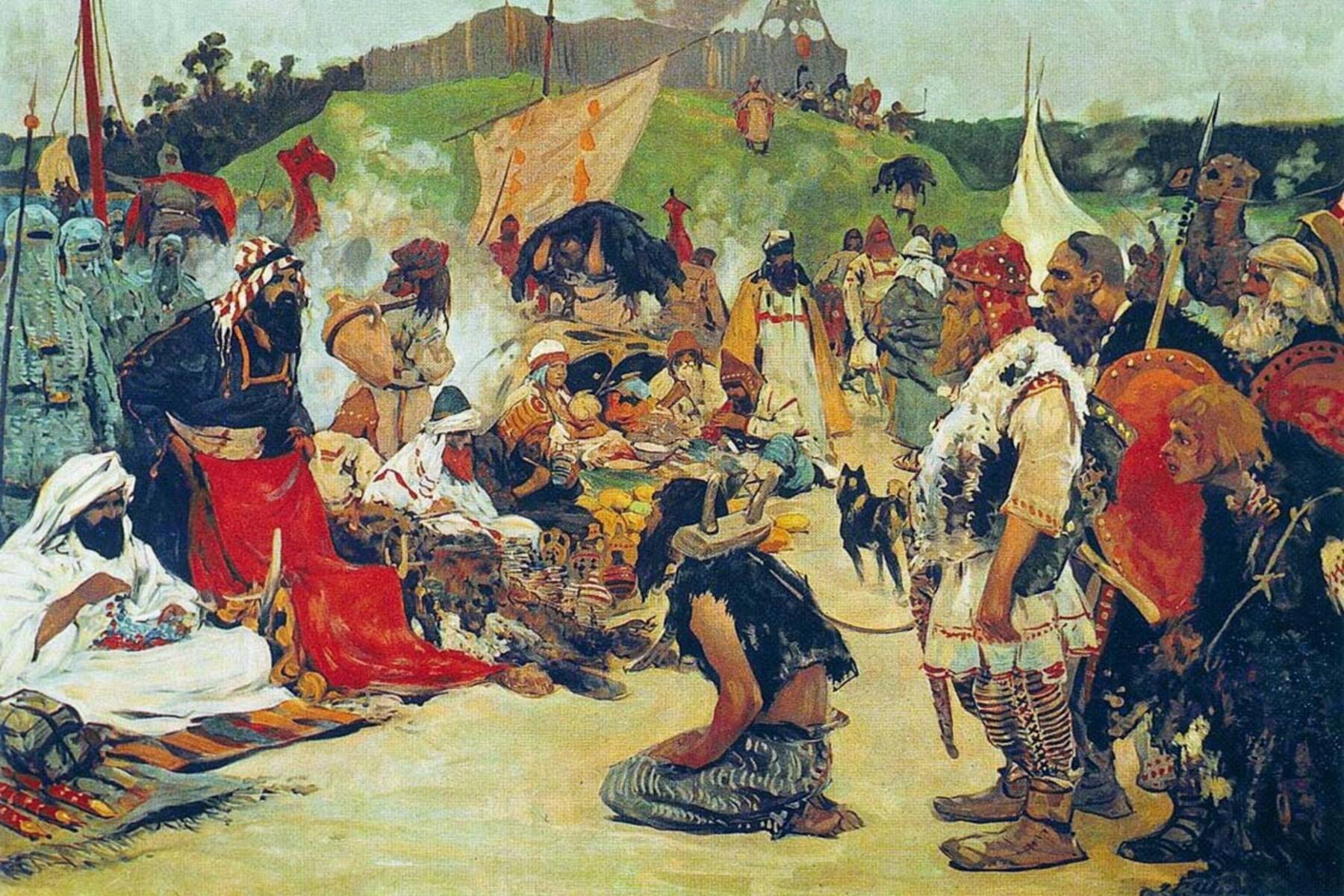
The child's name, Thraell, was, of course, the name for the very Viking form of slavery, which was not only a key feature of Viking society but also a huge part of their economy.
It has also been suggested as one of the underlying "pull" factors in explaining the sudden Viking expansion from the mid-8th century CE onwards.
Sadly, however, Thraell is presented as not an attractive child due to his twisted fingers, ugly face, and rough hands. However, he was coupled with great strength, presented in the poem as utilitarian.
Here, the poem links outward appearance to status and role; the gnarled features and brute strength of Thraell mirror the indentured labor and physical punishment that thralls suffered in Viking societies.
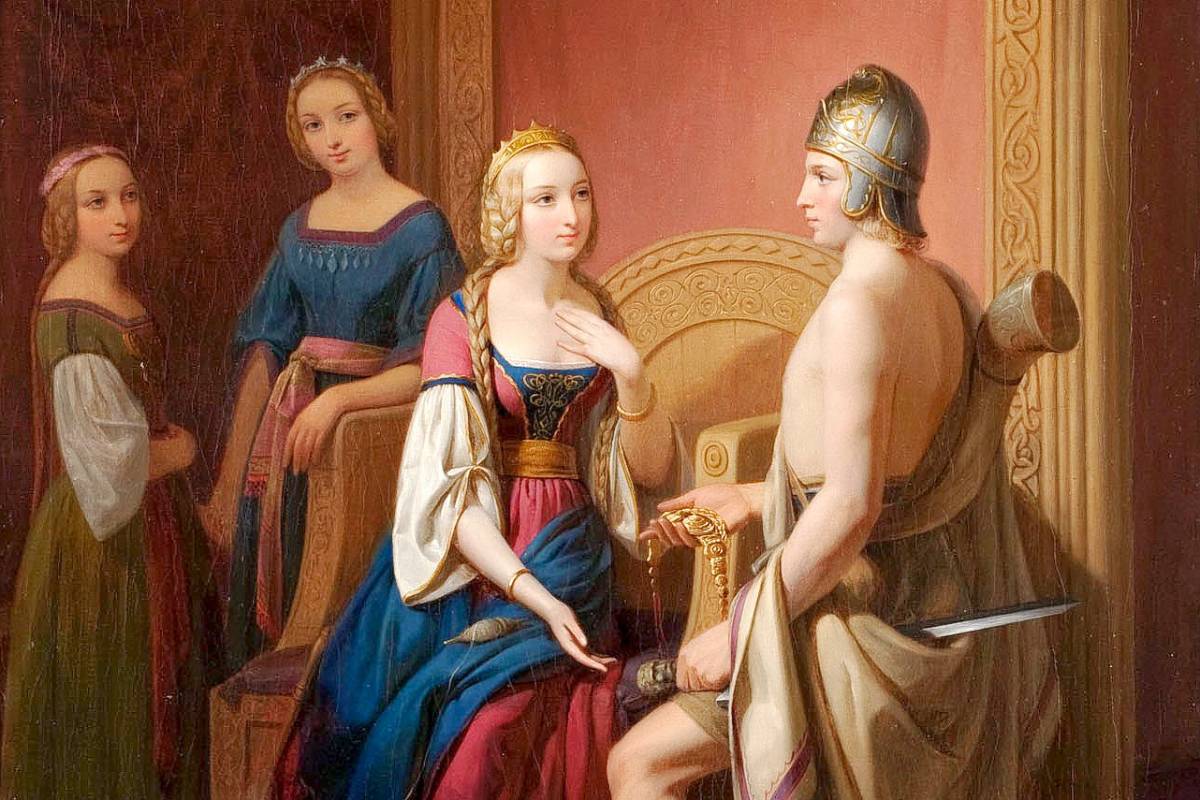
Most scholars identify Ríg in Rígsþula as the Norse god Heimdall, which makes the poem's social order a divine origin story. Author: Nils Blommér (1816–1853)
Free folk, farmers, and Vikings
The poem then recounts how Ríg continues on his merry way until he stops at a second house, the home of Afi and Amma.
Again, he is treated to hospitality and a great feast, "the vessel full" and "calf's flesh boiled" (boiled veal is delicious, I'm sure...if you're into that sort of thing).
Similar to the first house, Ríg sweet-talks his way into the marital bed for three nights. Nine months later, a son, Karl, was born. Unlike Thraell, Karl seems to have fared better in the appearance stakes, as he has a ruddy complexion:
"He began to grow and to gain in strength,
Oxen he ruled, and plows made ready,
Houses he built, and barns he fashioned,
Carts he made, and the plow he managed." [Stanza 22]
Karl here is seen as the ancestor and embodiment of the Karls: the free, landowning farmers and artisans who were the backbone of Viking society.
The virtues that Karl is endowed with are productivity, a great work ethic, and self-sufficiency, all of which are necessary for a stable and successful society.
The majority of the feared Viking warriors were Karls, free men, mostly engaged in agricultural work, who took up the opportunity for a bit of raiding and pillaging when either obliged to do so by their social superior or when the opportunity arose.
The top of the pyramid
We have now seen how the two classes that made up most of Viking societies were said to be created. Yet there is another class, the very small minority, the elite, the powerful, the Jarls. Now the poem recounts how Ríg wandered further and came to the house of Fathir and Mothir, who reside in a hall.
Mothir has an immaculate dress sense, as she is described as wearing a "gay cap," clasps on her chest, and a stunning blue gown, along with a complexion that was "whiter than the newly fallen snow."
You can already imagine what will happen next. Eat. Sleep. Repeat. A son is born after Ríg's nighttime "sleepover," and is this time called Jarl.
Unlike the other two boys, Jarl is marked from the outset for leadership and war, as:
"...Shields he brandished, and bow-strings wound,
Bows he shot, and shafts he fashioned,
Arrows he loosened, and lances wielded,
Horses he rode, and hounds unleashed,
Swords he handled, and sounds he swam." [Stanza 35]
Whilst Thraell toils and Karl builds, Jarl is presented as having a more strategic role. The skills he is endowed with relate to martial and leadership roles and point to the nobility's assumed role as the natural-born movers and shakers of Viking societies.
They are, as the Rígsþula points out, quite literally born to command, fight, lead, and protect.
Whilst much of the manpower of Viking expeditions and raids was made up of the lower classes, it was the Jarls who had the means, skills, and position to organize and lead expeditions that would later be heralded throughout Norse literature and lore.
As Stephen P. Ashby writes about in his 2015 article in the journal Archaeological Dialogues, these expeditions and raids allowed individuals, mostly Jarls but not always, the chance of "winning and preserving power through the enchantment of travel and the doing of deeds."
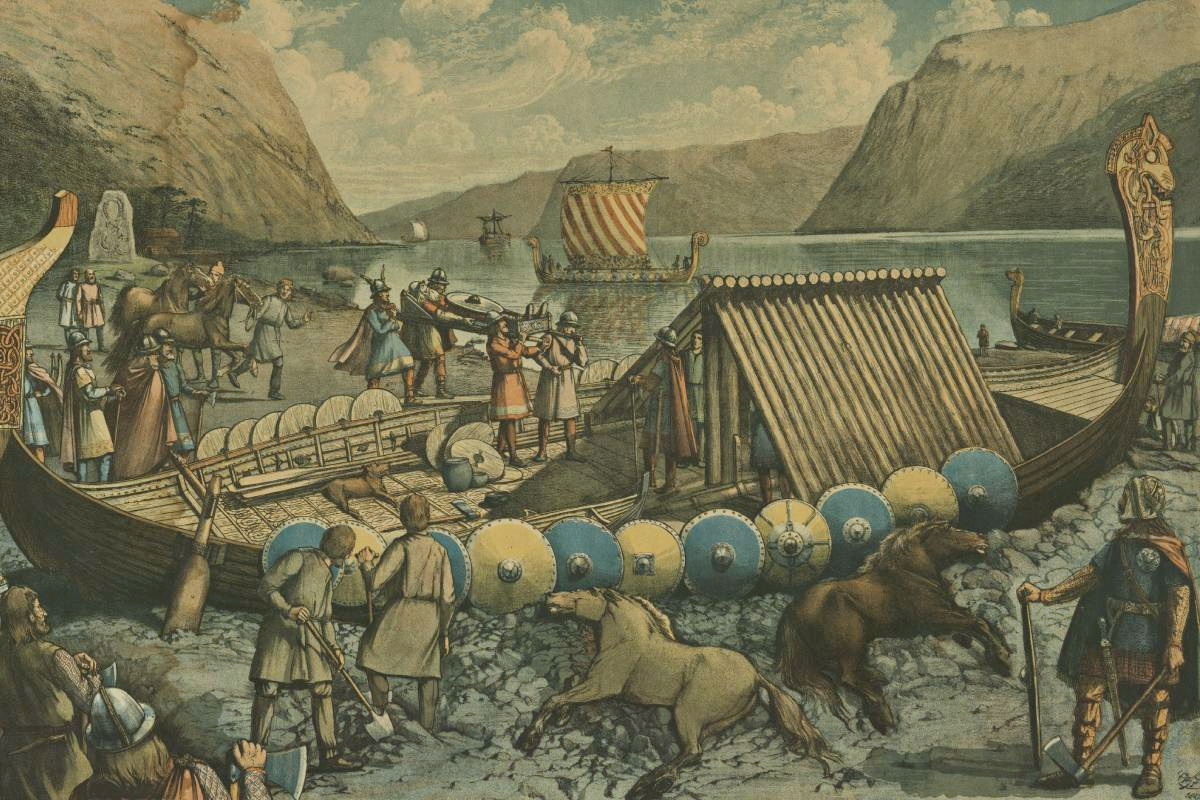
A late 19th-century teaching print that presents a Viking jarl's burial as a public rite of rank. Author: Carl Schmidt (1858–1923)
Society transformed
The Rígsþula presents the strictly hierarchical nature of Viking society as ordained divinely (each of the three children is said to be "sprinkled with water," i.e., baptized) rather than socially constructed.
Through the adventures that Ríg undertakes, namely that of fathering three children, Thraell, Karl, and Jarl, the poem attempts to explain the inequitable nature of Viking society through birth, appearance, labor, and skill.
One wonders what the author of the Rígsþula would think when the modern ancestors of those who lived in hierarchical Viking societies have gone about forging some of the most equitable societies found in the world today. Now that transformation is surely worthy of a poem, another adventure for Ríg.
For more information on the long shadow that Viking societies have cast over their Scandinavian ancestors today, visit The Copenhagen Post here.
We get to provide readers with original coverage thanks to our loyal supporters. Do you enjoy our work? You can become a PATRON here or via our Patreon page. You'll get access to exclusive content and early access.
Feel free to reach out to discuss potential stories that may be in the public interest. You can reach us via email at hello@thevikingherald.com with the understanding that the information you provide might be used in our reporting and stories.