


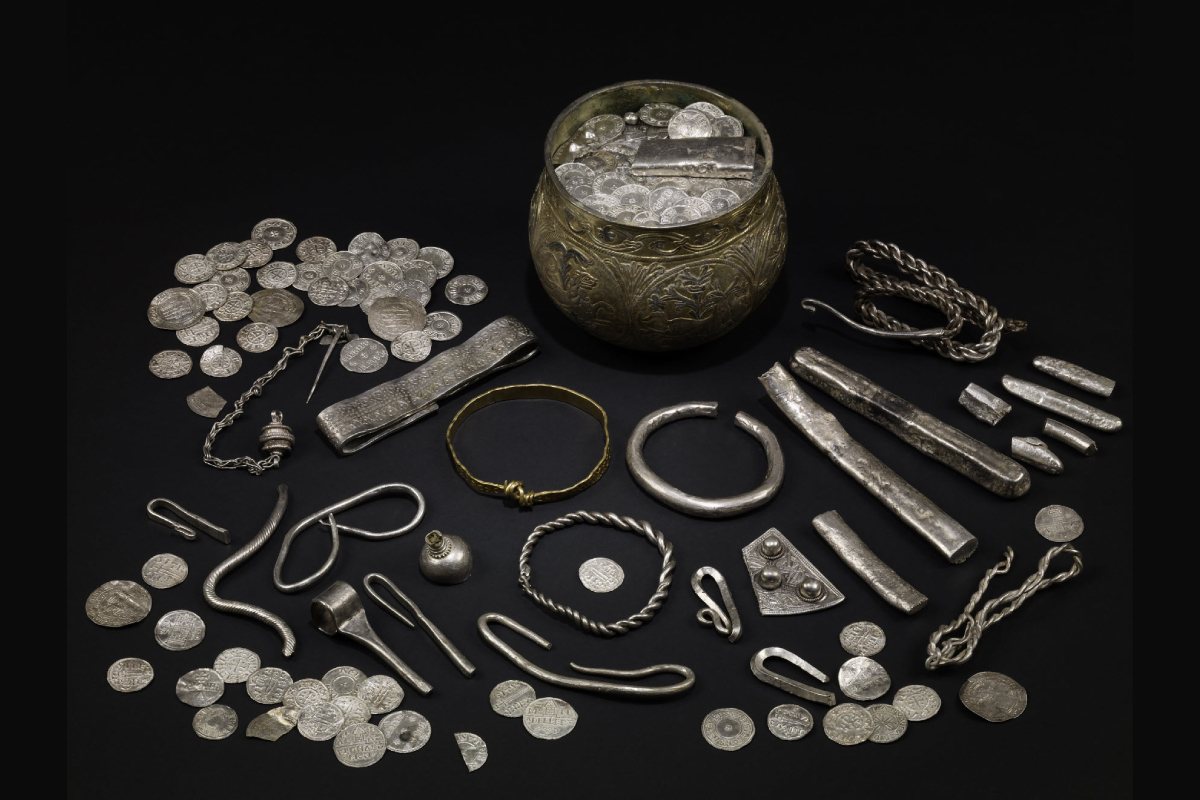
"Never before has such terror appeared in Britain, as we have now suffered from a pagan race. Behold, the church of St. Cuthbert is splattered with the blood of God's priests, robbed of its ornaments."
[Alcuin of York, Letter to King Æthelred, 793]
So decries the Anglo-Saxon scholar and exile in the court of Charlemagne, Alcuin, in his contemporary account of the great Viking raid on Lindisfarne in 793 CE.
This bloody raid so shocked early medieval Europe that an entire historical age that we all know and love here at The Viking Herald, and probably you do too, dear reader, was defined by these "pagan" attackers.
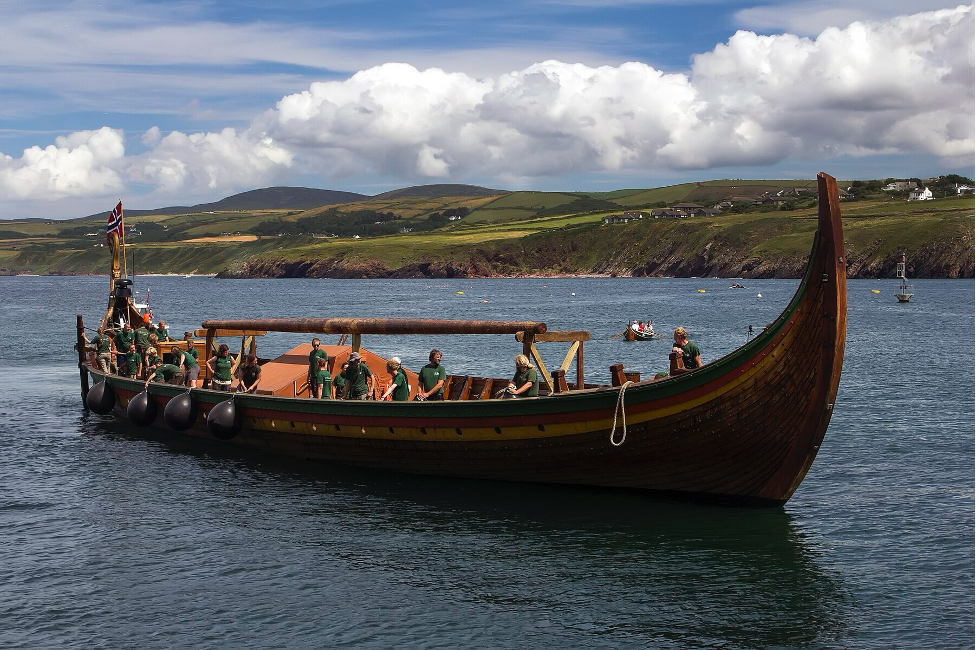
Yes, the sight of a longship on the horizon was common throughout the early medieval period in coastal and river-bound communities from the Iberian Peninsula to the shores of the Caspian Sea and seemingly everywhere in between.
Despite this lurid description of a Viking raid by Alcuin, where bloody violence was most frequent and deadly, these raids were often underpinned by the profit motive.
Part of our modern misconception of the Vikings comes from Anglo-Saxon sources like Alcuin, which were, as Clare Downham discusses in her 2017 article in the journal English Historical Review, "regarded as an unproblematic guide to... Viking raids."
Yet they are problematic due to obvious bias and prejudice.
Whilst some were in the early medieval form of "smash and grabs," predatory raids on remote and rich locations like Lindisfarne, most were carefully planned and thought-out economic exploits.
These raids offered high returns in societies where there was little upward social or economic mobility. The best way to get ahead in the Viking Age was to seize wealth with the pointy end of a sword.
Let us look at the economics of Viking raids and why, despite the violence, these could be used as ventures to secure wealth and then invest this wealth in local economies, societies, and households.
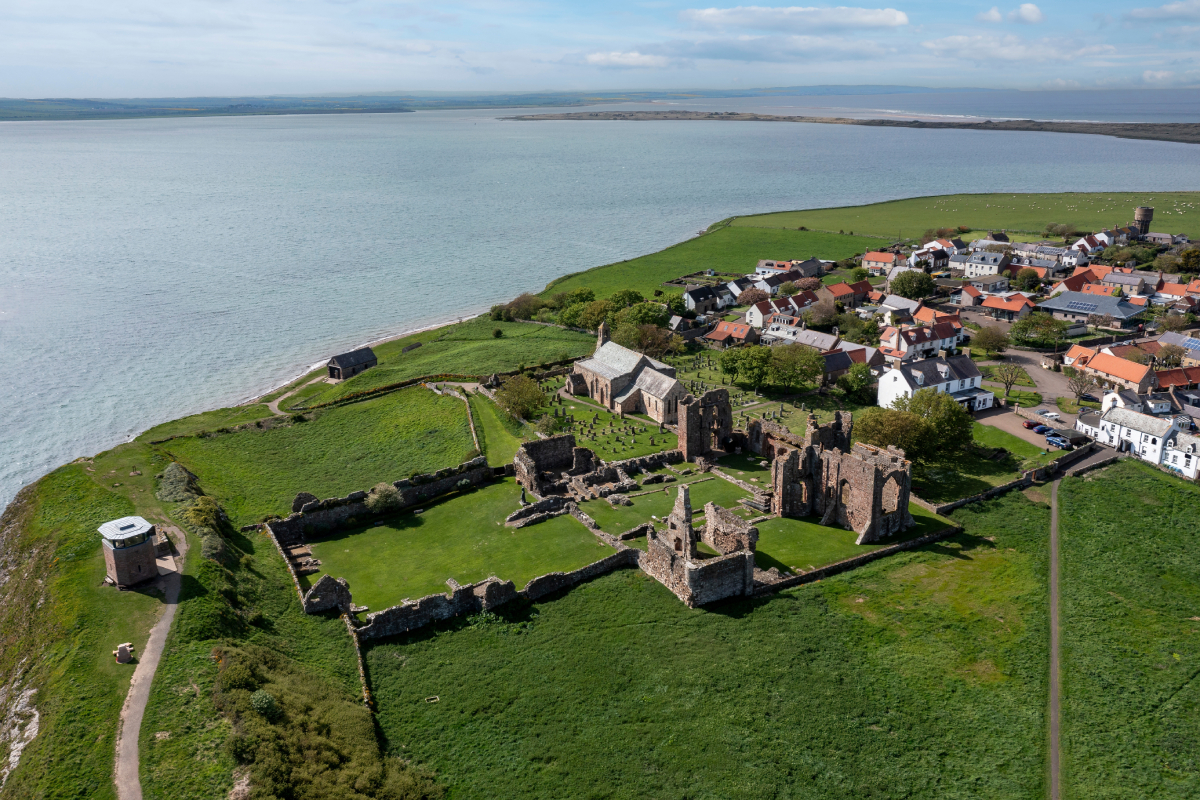
The raid on Lindisfarne in 793 CE targeted a wealthy island monastery off the northeast coast of England. Photo: GrahamMoore999 / Shutterstock
A movable treasure meant upward mobility
Many of us in Western countries live cozy lives. If we get sick, become unemployed, or when we reach old age, the steady hand of the government is there to figuratively pat us on the back and take care of us.
Yet for the majority of humans alive today, and in the early medieval period, this was not the case.
Viking societies were notorious for their lack of both social mobility—they had a largely three-tiered system that had more downward movement than upward—and for a lack of state planning or care.
Households, villages, and communities were often left to their own devices in an era where there was widespread personal and institutional violence, from brigands on the road to marauding armies tramping nearby.
How, then, did people get ahead? The answer lay in raiding.
For those who had some means, for a relatively short outlay—say enough coin to hire a small crew and purchase or construct a longship (a sizeable amount but not impossible)—huge returns could be made.
For those lower down the financial food chain, often simply toiling in the fields, should they be sprightly, relatively young, and able to wield an axe or sword, they could join a Viking raid and gain wealth beyond their wildest dreams.
Going on a Viking raid could be life-changing for a member of the raiding party. Should a member of the party come back alive, they could often have enough wealth to set themselves, or their family, for life by buying a farm or many thralls.
They could even buy their way into positions of power and influence within their local communities.
Viking raids, which often targeted, in the early stages of the Viking Age, remote and isolated monasteries laden with rich treasure—think Lindisfarne in 793 or Iona in 795—were just very muscular and violent forms of early medieval entrepreneurship.
For the organizer of the raid, often a powerful chieftain, men were hired temporarily and the riches were divided among the men but not equally. The chieftain (or later the monarch) often claimed the largest share.
As Steven P. Ashby discusses in his 2015 article in the journal Archaeological Dialogues, "The lure of the raid was thus more than booty; it was about winning and preserving power." Then, as now, wealth and power often went hand in hand.
This wealth was often directly invested back into the community and could change the fortunes of households for generations.
For many people in Viking societies, the wealth generated by a Viking raid allowed them a certain amount of financial security and social mobility in an era of widespread violence, political insecurity, and social immobility.
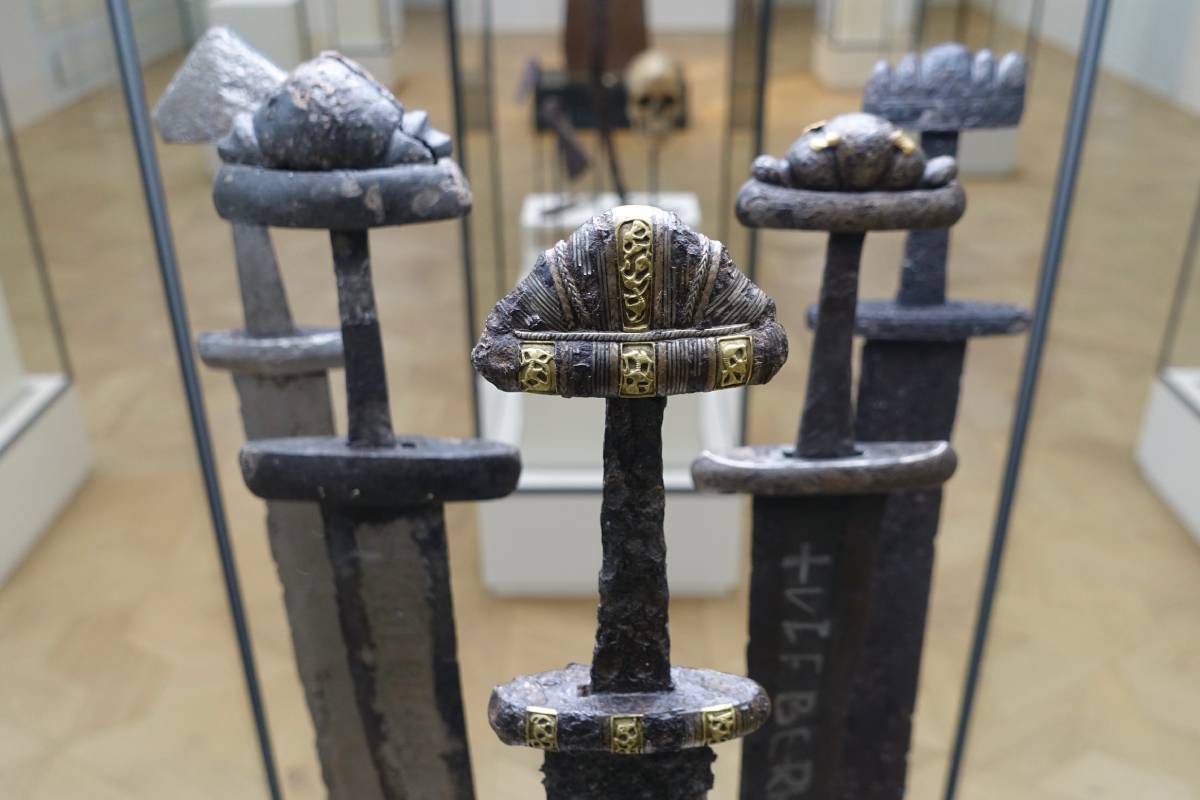
Viking swords on display in Oslo's Museum of Cultural History include decorated hilts and blades made between 800 and 1000 CE. Photo: Wolfmann (CC BY-SA 4.0)
Supply and demand
Simple supply and demand economics underpin the next phase of the economics of Viking raids.
There is a heated ongoing debate among scholars (well, about as heated as scholars can get, so think a lot of keyboard warfare) as to whether the Viking Age was triggered by push or pull factors.
Was it the riches of isolated monasteries that drew Vikings to raid, or was it simply a means to keep a glut of young, fit, and active men busy rather than hacking each other?
Add to this population pressure. Whilst there is much speculation about the early medieval population of the Scandinavian Peninsula before the first Viking ship ever sailed, we do know that this is a region where fertile land is in very short supply.
Arable land was in short supply, and there was a great demand for it from the population in Viking societies.
Another aspect of demand came from the extensive trade networks that were being pieced together throughout the early medieval period.
Whilst Europe was suffering its so-called "Dark Ages," other regions of the world, including much of Western, Central, and Eastern Asia, were not.
Closer to home, the Byzantine Empire ruled supreme throughout much of southern Europe, whilst the Islamic world extended from the Hindu Kush to the Pyrenees.
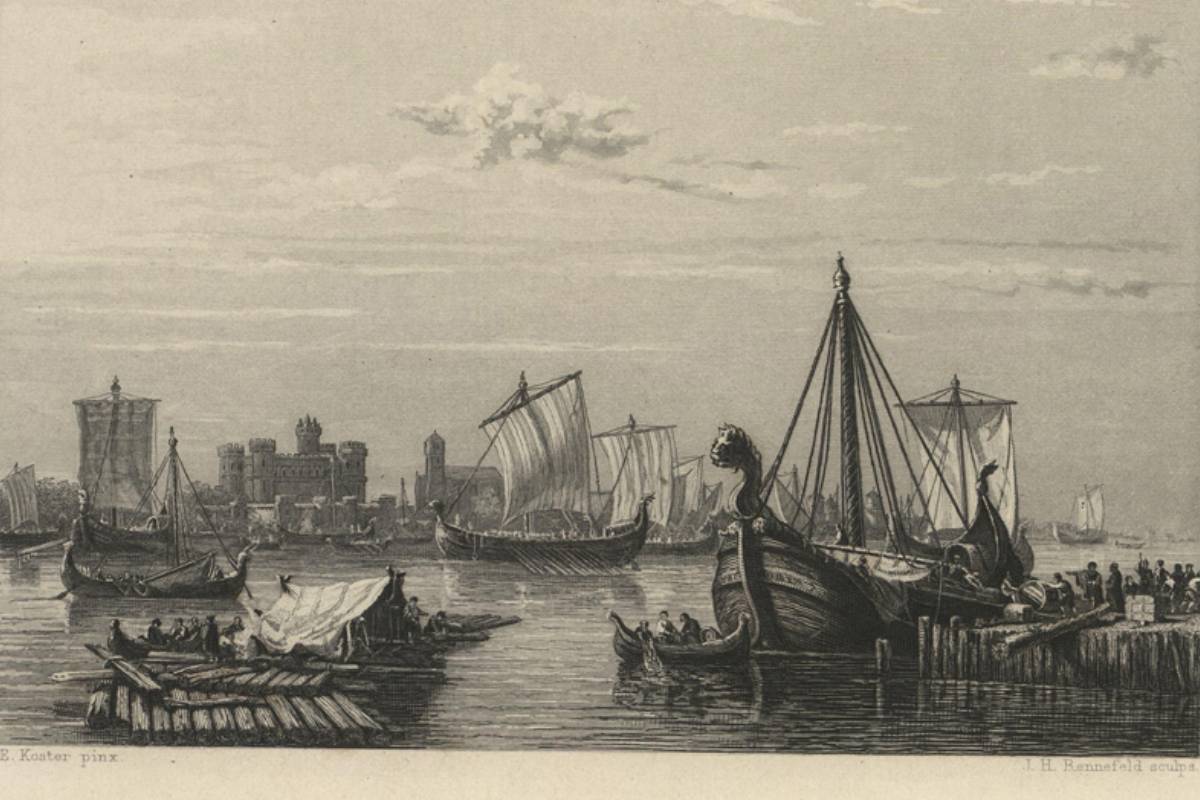
The sordid trade in human bondage was booming thanks, in part, to Viking raids. Here, unsuspecting and unprotected people were taken from coastal or river-bound communities to be sold in Viking trading ports like Dublin and Novgorod or in distant markets such as Baghdad or Constantinople.
Supply and demand were the invisible hand that sparked much of the Viking activity, including raids, throughout the early medieval period.
Whether this was an inbound demand by Viking societies for precious jewels and enslaved people or an outward oversupply of young, active men, pull and push factors underpinned the economics of Viking raids.
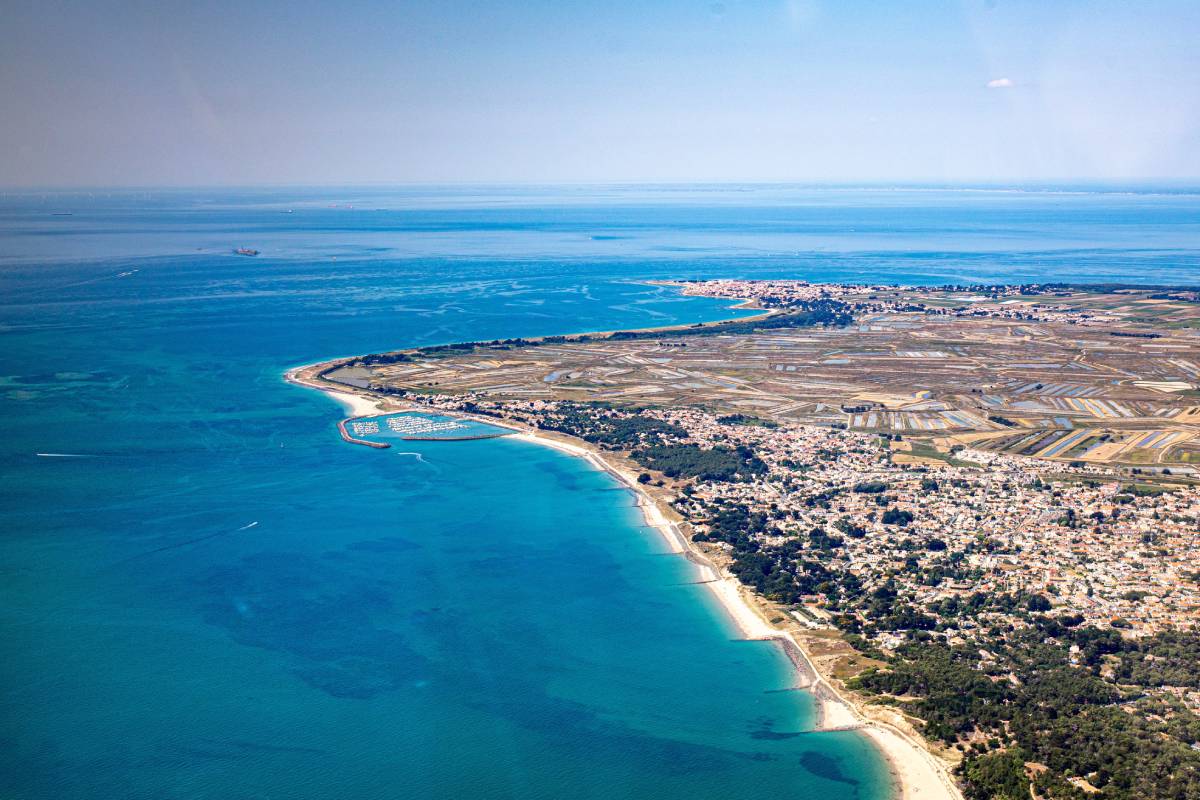
An exposed island off the French coast, Noirmoutier was raided more than better-known sites like Lindisfarne or Iona. Photo: Olivier Malard / Shutterstock
Economic motive loomed large
Let there be no doubt that violence and death stalked every Viking raid.
As people from Viking societies rubbed up against larger civilizations throughout Europe and its surrounds—think the inhabitants of the Byzantine Empire, Frankish realms, or Al-Andalus—during the span of the Viking Age, there was plenty of opportunity for deadly duels.
However, underpinning the Viking raid was an economic motive that has largely been overlooked due to popular misconceptions about Vikings as mere brainless barbarians.
These raids, for a short outlay in both men and treasure, could return huge profits that could transform individuals, households, and indeed whole communities.
Raids were also meant to acquire goods—often slaves—to then be traded onward throughout networks that linked Scandinavia with broader Europe and onto the famed Silk Roads.
Finally, supply and demand factors, including a population glut in Scandinavia, a lack of arable land, and many "soft" yet richly adorned targets, ultimately influenced the number and scope of these Viking raids.
Modern depictions may paint Viking raids as mere predatory raids whereby violence was the means and the end, but to paraphrase former U.S. President Bill Clinton a little, we know that what motivated many of these raids was "the economy, stupid!"
For more information on the debate surrounding Viking violence, visit Live Science here.
We get to provide readers with original coverage thanks to our loyal supporters. Do you enjoy our work? You can become a PATRON here or via our Patreon page. You'll get access to exclusive content and early access.
Feel free to reach out to discuss potential stories that may be in the public interest. You can reach us via email at hello@thevikingherald.com with the understanding that the information you provide might be used in our reporting and stories.



_Museum_Oslo._VIKINGR_Norwegian_Viking-Age_Exhibition_11_Elaborate_swords,_decorated_hilts,_ornated_blades,_home-forged_and_foreign-made,_ca_800-1000._Found_in_Telemark,_Nordland,_Hedmark._4706.jpg)