

Thanks to a whole new generation of scholars and historians, the Western world is rethinking centuries-old, assumed history, information, and knowledge about people from Viking societies.
Due to the supremacy of mainly Western European societies in the early modern period, a very Eurocentric history was spread throughout the world.
Furthermore, Britain's role, especially from the 19th to early 20th century, in forging the world's largest empire ensured that this Eurocentrism had a particularly British vibe to it.
Take, for example, the Vikings. Whilst these early medieval warriors were just a small minority from Scandinavian societies, they caused countless deaths and the subjugation of the peoples of the British Isles.
We therefore tend to think that the story of Viking expansion, from the late 8th century onwards, was in a westward direction.
In her recent tome, Dr. Cat Jarman hopes to shatter this centuries-old bias by pointing out that as soon as the first raid on Lindisfarne occurred, Viking ships and trading vessels were headed in the opposite direction, across the Baltic Sea to Eastern Europe.
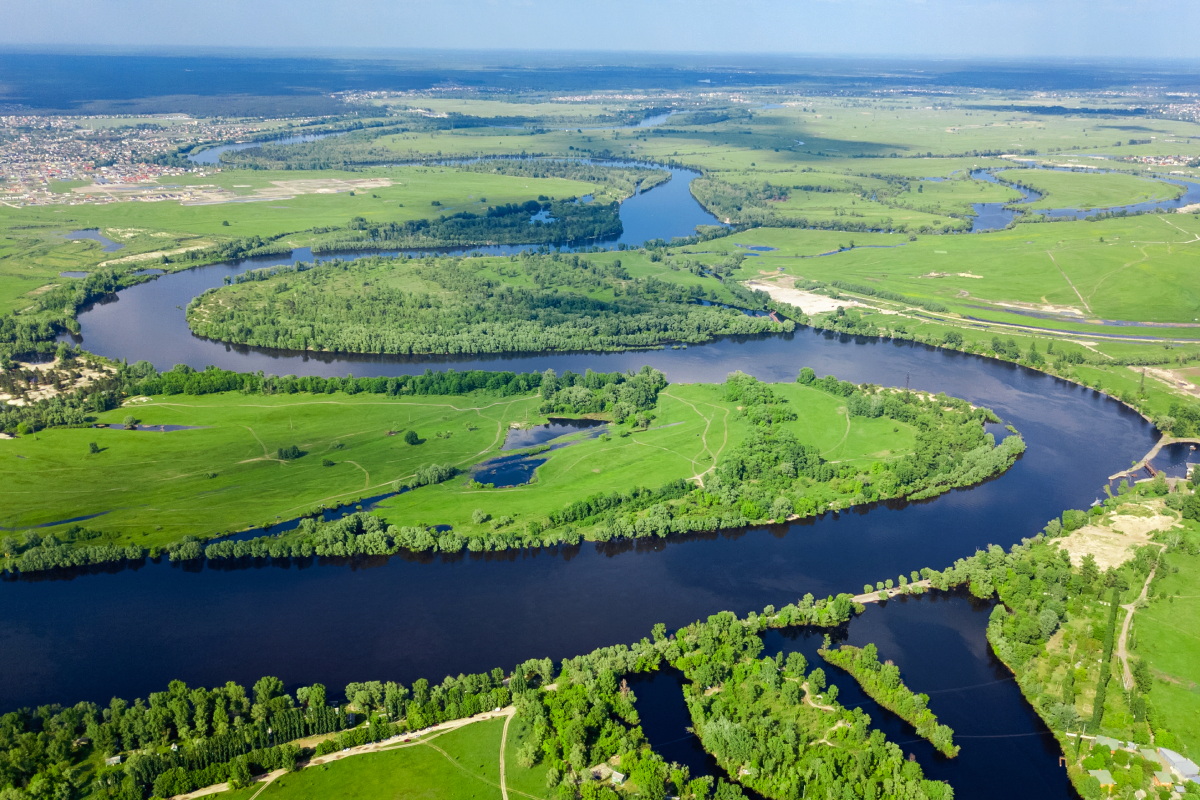
Viking traders and raiders used the Dnieper River as a primary waterway to reach the Black Sea, providing access to Constantinople. Photo: JaySi / Shutterstock
Taking the river to the Great City
The eastern adventures of Vikings have, in recent times, sprung back into the popular imagination with Vladimir Putin, in a pre-invasion of Ukraine rant, noting that the nations of Belarus, Russia, and Ukraine do indeed share some common Viking heritage.
This was about the only part of his diatribe that was historically accurate, with the rest merely being his own twisted view of history used to justify launching an invasion of Ukraine.
So, having crossed the Baltic Sea – a virtual Viking Pond in the early medieval period – our intrepid Viking settlers, traders, and raiders utilized the many river systems that snaked through Eastern Europe, eventually emptying into the Black Sea.
From here, it was just a short sail to what was, during the early medieval period, a colossal metropolis: the capital of the (Eastern) Roman Empire, Constantinople.
Founded in 330 by the Roman Emperor Constantine on the site of an old Greek town, Byzantium, it had survived the collapse of the Western Roman Empire to emerge as Europe's predominant city, a giant in culture, religion, power, and might.
For people from Viking societies, who had only a mere smattering of small towns established throughout what is now the Nordic region, this giant city was simply known as Miklagard, "the Great City."
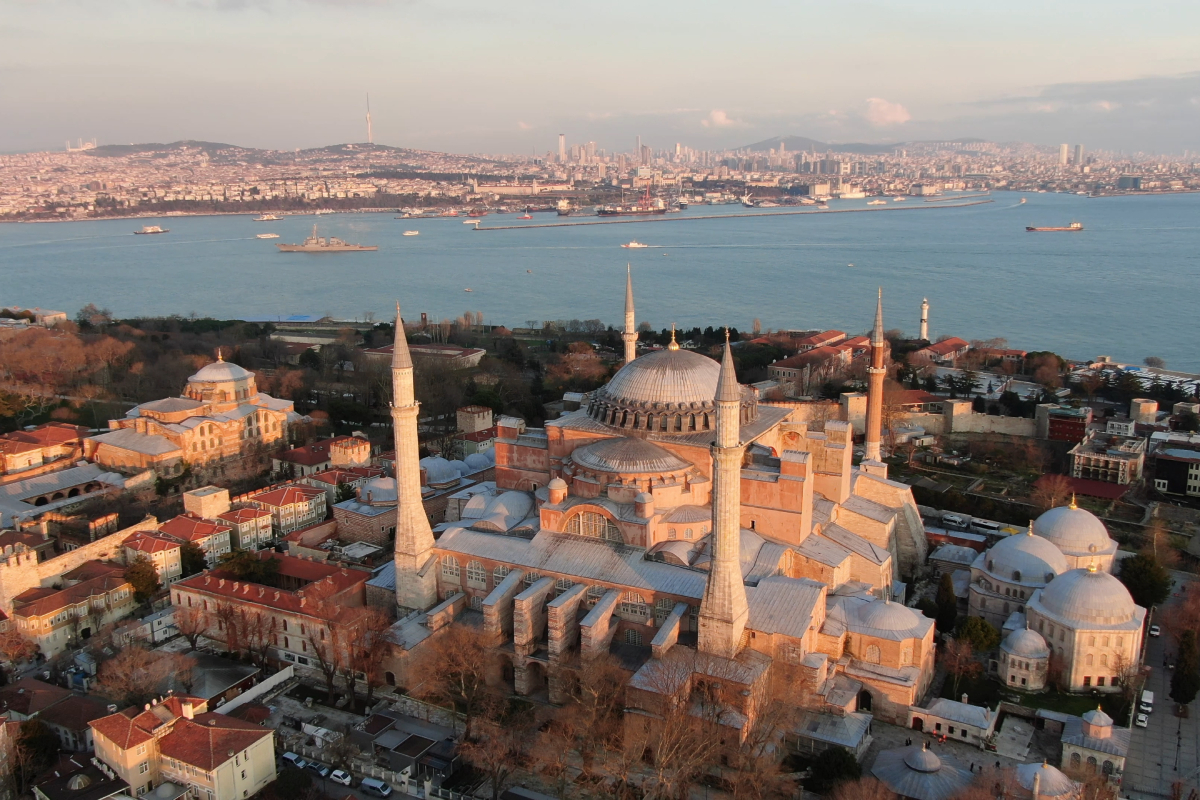
From the great city walls facing land and sea to the medieval marvel of the Hagia Sophia, Constantinople was truly a great city.
Its population, which at its height numbered 500,000 in an era when London or Paris were lucky to have a few thousand inhabitants, marked a societal high point in what was a cultural backwater of Europe during the early medieval period.
Located at the lucrative crossroads of the Mediterranean and Black Seas, Europe and Asia, connecting Western Europe with the Islamic world and beyond, the city was an economic hub that saw a diverse range of humanity flood into its walls to make a fortune.
So, what impact did a bunch of scruffy Scandinavians leave on this New Rome?

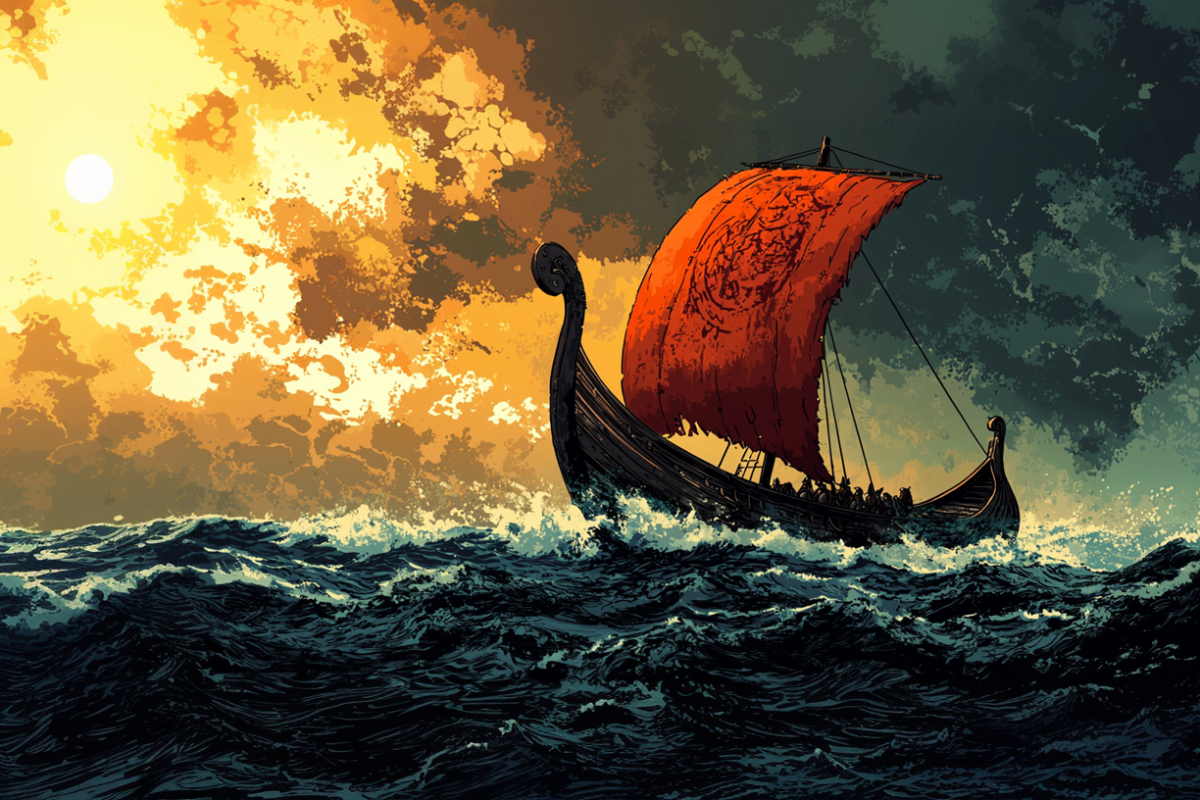
Vikings flocked to Miklagard not only for raiding but also for trading, establishing themselves as prominent merchants in the bustling markets of Constantinople. Illustration: The Viking Herald
More trading than raiding
The Viking expansion of the early medieval period was underpinned by violence and force but also by economic motives, profit, and greed.
The Vikings had already established themselves as some of the most successful slave traders of the period, and, in Miklagard, they could often ply a lucrative trade in their pounds of human flesh.
Constantinople was a slavery hub with markets for the purchase and sale of slaves from around the world, from Central and East Asia – who had journeyed there on the famous Silk Roads – or from the Islamic world that stretched from North Africa to the Hindu Kush.
Aside from stealing riches during their raids, Vikings would also capture inhabitants from the coastal or riverine communities they attacked, especially those from the British Isles and what is now Eastern Europe.
They flocked to Miklagard to sell their human wares.
Aside from those dealing in human flesh, many other traders and merchants from Viking societies made their way to Miklagard to ply their wares and hope to make a small fortune.
Like all great economic entrepôts, people from Viking societies were just one of a large number of people from different cultures, religions, and societies that found themselves trying to get rich quickly in New Rome.
- READ MORE: What did Vikings trade?
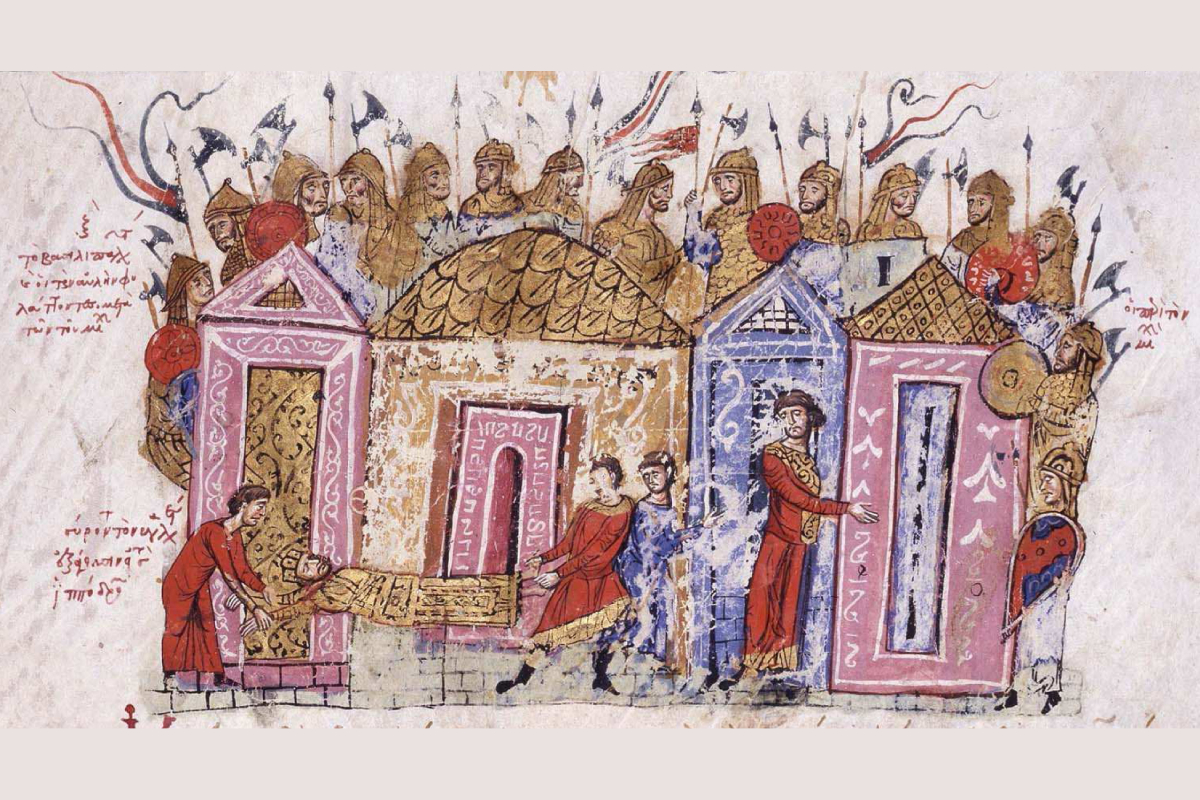
In the 11th-century illustration by John Skylitzes, the Varangian Guard can be seen as Leo V's body is being dragged to the Hippodrome. Illustration: Public domain
The Varangians
As Olof Heilo and Ingela Nilsson write in their 2019 article Constantinople as a Center and a Crossroad, the relationship between Vikings and the inhabitants of Constantinople did not start well.
If we are to believe later Russian chronicles, those Vikings who headed into Eastern Europe soon began to dominate a huge swathe of land between the Baltic and the Black Sea.
The Byzantines (a confusing modern term for the inhabitants of the Eastern Roman Empire, aka Byzantium), as Europe's preeminent military force, soon saw Viking raids and battles from what they called the Varangians.
Over the course of the 9th and 10th centuries, these Varangians – many from the Viking-established Kievan Rus – continued to raid and battle against the Byzantines, even supposedly laying siege to Miklagard itself.
P.H. Sawyer writes in his 2001 book, The Oxford Illustrated History of the Vikings (available for purchase on Amazon here), how this centuries-long war, the struggle between the Byzantines and Varangians, would eventually lead to the Christianization of the Kievan Rus and, following one battle, a peace treaty in 988.
Signed by the Byzantine Emperor Basil II and Vladimir I of Kiev, it sent more than 6,000 Viking warriors southward to help the Byzantine emperor with border troubles.
Over the next century, this would morph into the Varangian Guard. This elite military unit oversaw the personal protection of the Byzantine Emperor, a sort of Viking version of the former Roman Praetorian Guard.
Many Viking warriors would serve in this elite guard, often leaving a written record behind back home, including the "Thunderbolt of the North," Harald Hardrada.
Not only did this King of Norway serve in the guard as a youth, but he also managed to climb the ranks and govern it before heading back northward to claim the thrones of England and Norway.
Following Hardrada's defeat at Stamford Bridge, and the Norman conquest of England, many Viking warriors headed south to live out their days in the Varangian Guard.
Conflict and cooperation
When Vikings reached Miklagard, their legacy was one of both conflict and cooperation.
The same people who oversaw bloody raids and military expeditions against the inhabitants of Constantinople would become integral parts of the later economic and military success of the Byzantine Empire.
Trading routes established by Viking merchants and traders connected Scandinavia, the Baltic, and Nordic regions with southern Europe, western Asia, and, via the Silk Roads, Central and Eastern Asia.
Should you be lucky enough to visit Istanbul today, head to the Hagia Sophia, where you can see some Viking graffiti etched into this centuries-old medieval marvel.
A cheeky reminder that the echoes of history can be heard loud today, centuries after the last Viking ship sailed.
More information on the Varangian Guard can be found on BBC History Extra here.
We get to provide readers with original coverage thanks to our loyal supporters. Do you enjoy our work? You can become a PATRON here or via our Patreon page. You'll get access to exclusive content and early access.
Feel free to reach out to discuss potential stories that may be in the public interest. You can reach us via email at hello@thevikingherald.com with the understanding that the information you provide might be used in our reporting and stories.