

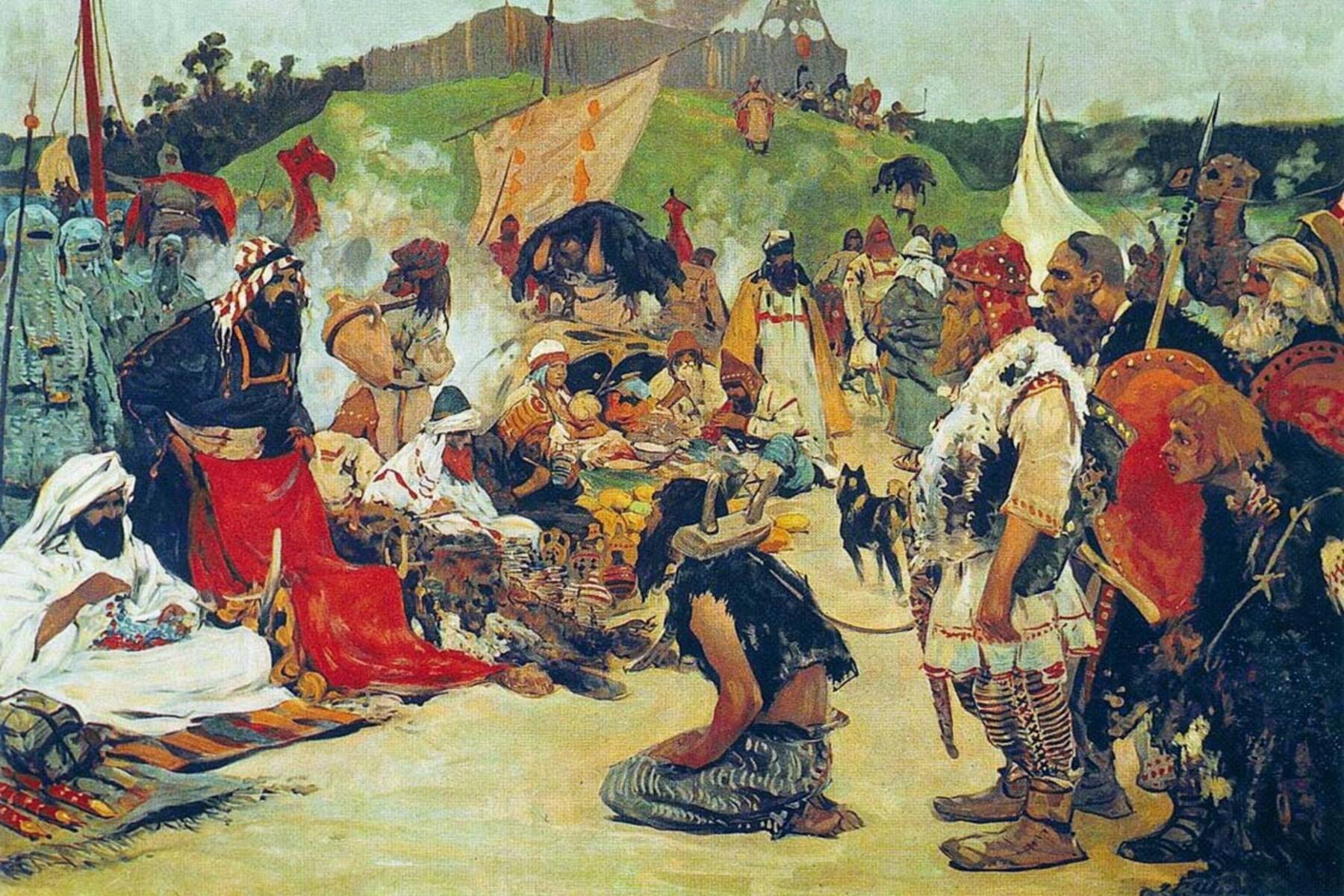
In recent years, there has been a growing interest in discovering the complicated and controversial history of the slave trade. Most focus has been on the exchanges conducted during the early modern period, which fueled the colonial expansion of many European empires.
At the same time, we also know that the dealing in human bondage has been going on since time immemorial. It has touched almost every civilization and culture through history and across the globe.
In early medieval Europe, it was people from Norse societies that emerged as some of the most successful slave traders.
Viking warriors conducted raids from the mid-8th century CE onwards. The slave trade helped fuel this outward expansion of violence and plunder. Whilst precious materials and other treasure were highly valued, so too were humans.
A coastal community may be sacked, houses burnt, livestock stolen, treasures looted and, to add to the misery, men and women carted off to be sold into slavery. Aside from aiding Viking chieftains and rulers, these slaves would be instrumental in forging new settlements in Norse settlements throughout Northern Europe.
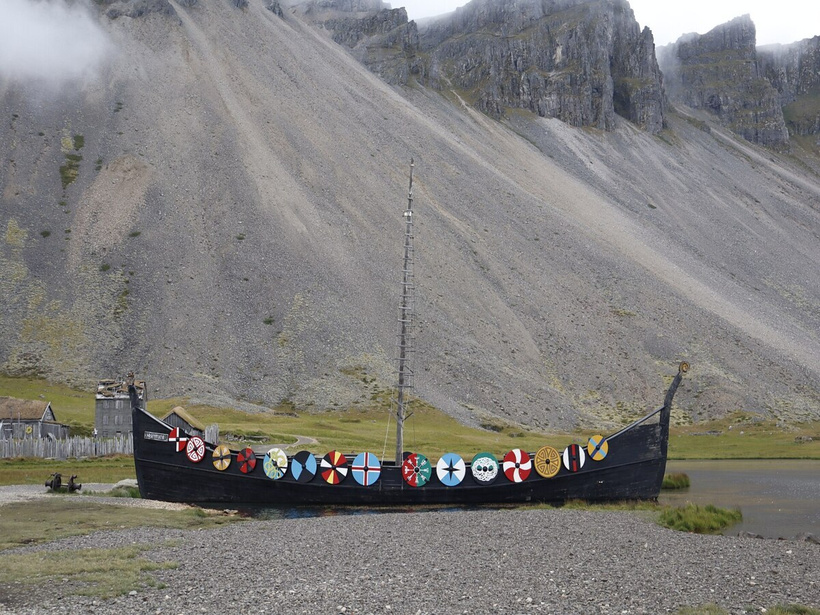
The settlement of Iceland
“Then said Hoskuld, "What is the price of that woman if I should wish to buy her?" Gilli replied, "Three silver pieces is what you must weigh me out for her." "It seems to me," said Hoskuld, "that you charge very highly for this bonds-woman...”
[Chapter 12, Laxdale Saga]
This scene, featuring the sale of a woman, is taken straight from a key literary text that can help us understand early medieval Iceland: the Laxdale Saga. Whilst it may be more famous for its depiction of a tragic and violent love triangle, the saga is set against the backdrop of Iceland during the Viking Age.
People from throughout Scandinavia, and particularly Norway, headed west across the North Atlantic Ocean to settle Iceland from the late 9th century onwards. Tradition states that many of these settlers were malcontents unhappy with Harald Fairhair's unification of Norway under an iron grip.
Yet this settlement was certainly not on the scale that later European civilizations would attempt. Trying to estimate population figures from more than a millennium ago is notoriously tricky, but by the turn of the second millennium, Iceland may have had somewhere around 20,000-60,000 people.
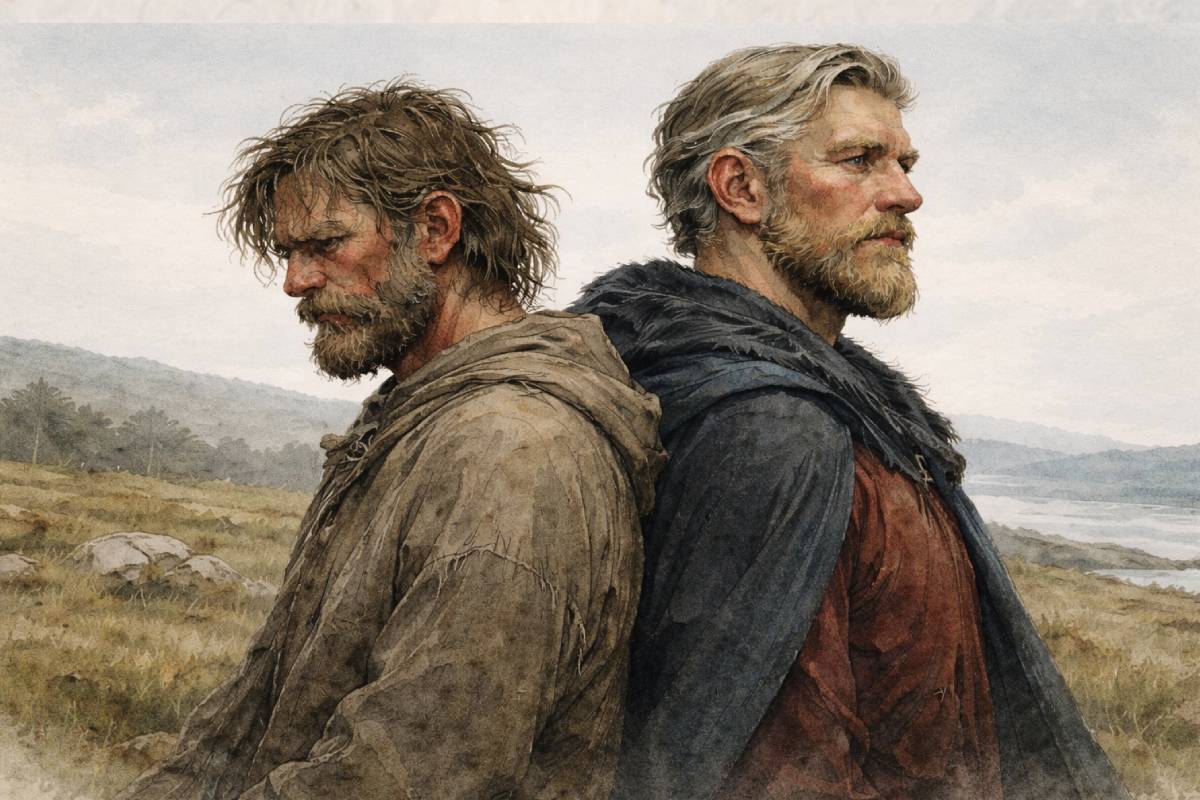
Over the course of the early medieval period, this small settler society grew in size, scale, and confidence. Yet much of the foundations of early medieval Iceland was built upon indebted servitude. Slaves – known as thralls – provided the free labor needed to establish a foothold on this rocky outcrop of Norse culture in the North Atlantic Ocean.
From construction to domestic services, slavery was an integral part of daily life in early medieval Iceland. In other words, this was a society and economy that was constructed upon the physical and psychological suffering of human bondage. And many of these slaves had been seized from another island further south.
The early story of Vikings in Ireland
Very close to the traditional start of the Viking Age and the 793 raid on the holy island of Lindisfarne, Norse ships began arriving on the shores of Ireland. The first phase of Viking history in Ireland followed a familiar pattern, with predatory raids on isolated communities, be they coastal or river bound.
Yet the wealth generated in these raids and the untold treasure looted also involved the procurement of humans to be shipped off and sold in the era’s great slave markets, such as in Baghdad or Constantinople.
The impact of these raids is described in the Annals of Ulster, one of the most important historical sources of early medieval Irish history. Turning to the entry for the year 821 (we use an online version produced by University College Cork), we find that:
“Étar was plundered by the heathens, and they carried off a great number of women into captivity.”
This particular location, Étar, is of significant importance for early medieval Irish history. Now an outer suburb of Dublin, it was around here, in 841, that the Norse established a settlement at the mouth of the River Liffey. This settlement, called Dyflin in the Old Norse tongue, would grow in size and economic scale during the early medieval period thanks to its lucrative trade in Viking slaves.
The growth of Dyflin occurred due to the strategic position of this port, nestled on the eastern Irish coast. The location enabled merchants and traders, as well as Viking warriors, to connect easily with nearby societies in the British Isles, Scandinavia, and as far away as continental Europe.
PLEASE NOTE: The rest of this article is only available to our paid Patreon subscribers.
The topic was selected by our Patrons in a weekly poll. Support The Viking Herald on Patreon to read the full article and help choose future topics.
If you would like to learn more about Patreon and why we have decided to restrict access to some content, please take a look at this article.
Feel free to reach out to discuss potential stories that may be in the public interest. You can reach us via email at hello@thevikingherald.com with the understanding that the information you provide might be used in our reporting and stories.