

In recent times, it seems that the world has gone mad for all adaptations ripped straight from the pages of the Norse sagas—think the Thor movie franchise or the groundbreaking series Vikings.
From Loki to Leif Erikson, it seems that every character from the sagas has been given the old Hollywood shine and sparkle. Sadly, however, female characters are few and far between.
Yes, technically Natalie Portman does play a female Thor in one of the recent Marvel movies, but this speaks more to modern sensibilities than anything the saga scribes wrote.
Yet, trawling through the Norse sagas, there are plentiful female beings, creatures, and deities to keep even the scriptwriters in Hollywood busy for decades.
Whilst some of the women with godly powers, like Freyja or Idunn, or indeed the mighty Valkyries, may get all the attention, as well as brave warriors like the shieldmaiden Lagertha, there are subtler, more enigmatic characters too.
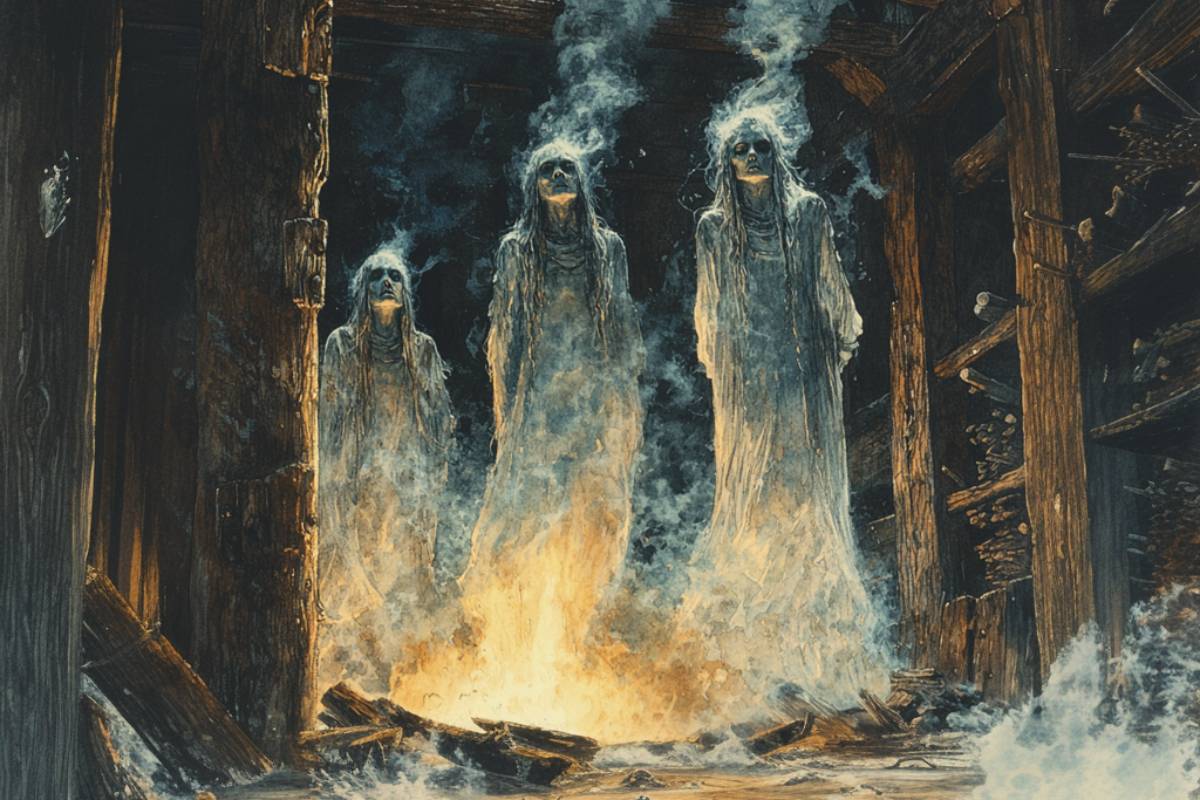
Blurring the boundaries between helpful and harmful, between the mortal and the divine, are the dísir, a collective of mysterious female spirits of fate and kin.
Scholars continue to debate exactly what they were: protective spirits, fate goddesses, or ancestral figures, and some even suggest they overlapped with Valkyries or Norns. This uncertainty highlights the fluid and complex nature of their role in the Norse imagination.
Language and role
The language that people in the Viking Age largely spoke, though not exclusively, was what we moderns call Old Norse. As the ancestor of all the modern Scandinavian languages, including Icelandic, it gradually developed into several modern languages now spoken by more than 20 million people.
As Michael Barnes discusses in his 2008 book A New Introduction to Old Norse, thanks to the Old Norse language, there was "...an essential unity of language in the...Scandinavian [i.e., Viking] world" throughout the early medieval period.
Because of this long evolution, some Old Norse words are difficult to translate directly, especially in the Anglosphere.
The word dís in Old Norse literally means “lady” or “woman,” but in mythological contexts both the singular (dís) and plural (dísir) could also refer to supernatural female beings. In surviving sources, the plural form is more common, describing the dísir as a collective force linked with fate, fertility, protection, and death.
Similar spirits appear in Germanic and Anglo-Saxon traditions, but the dísir stand out in Old Norse belief as more closely tied to families and local communities, even individual households.
Their dual nature made them especially powerful in the Norse imagination: they could act as benevolent protectors or as malevolent figures who brought death, embodying both help and harm.
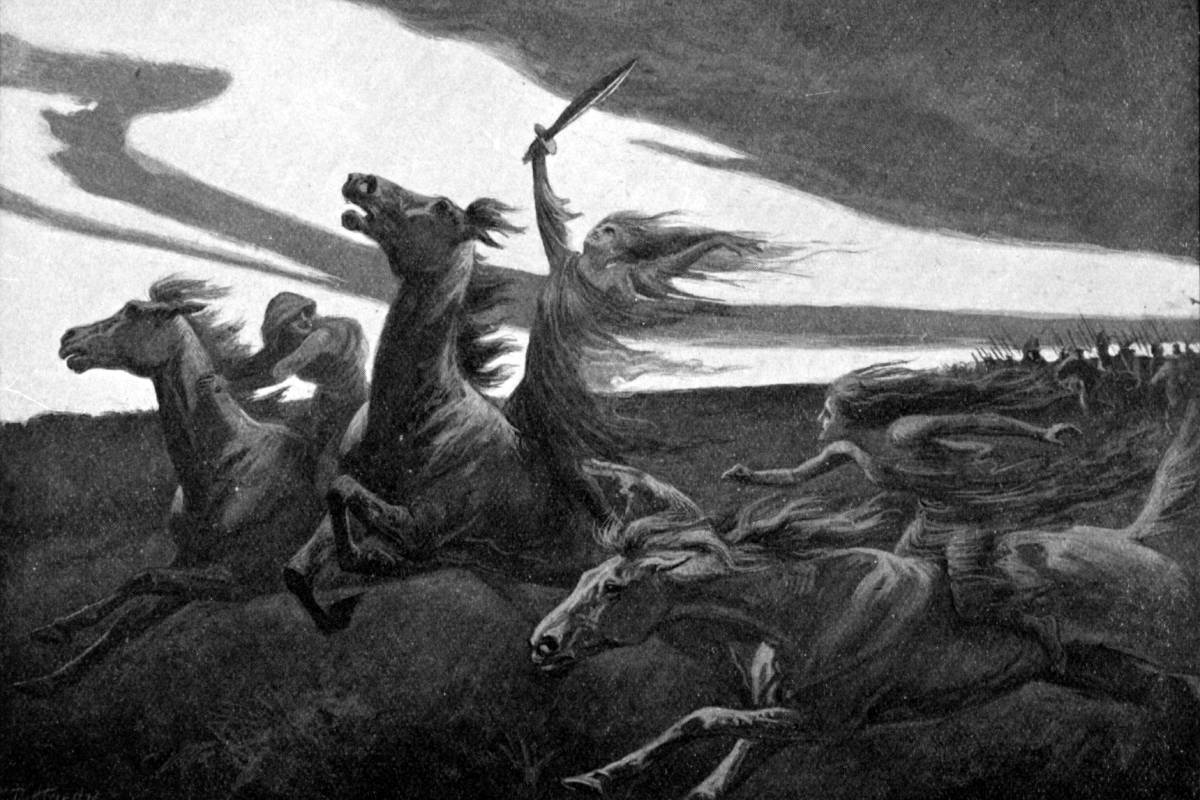
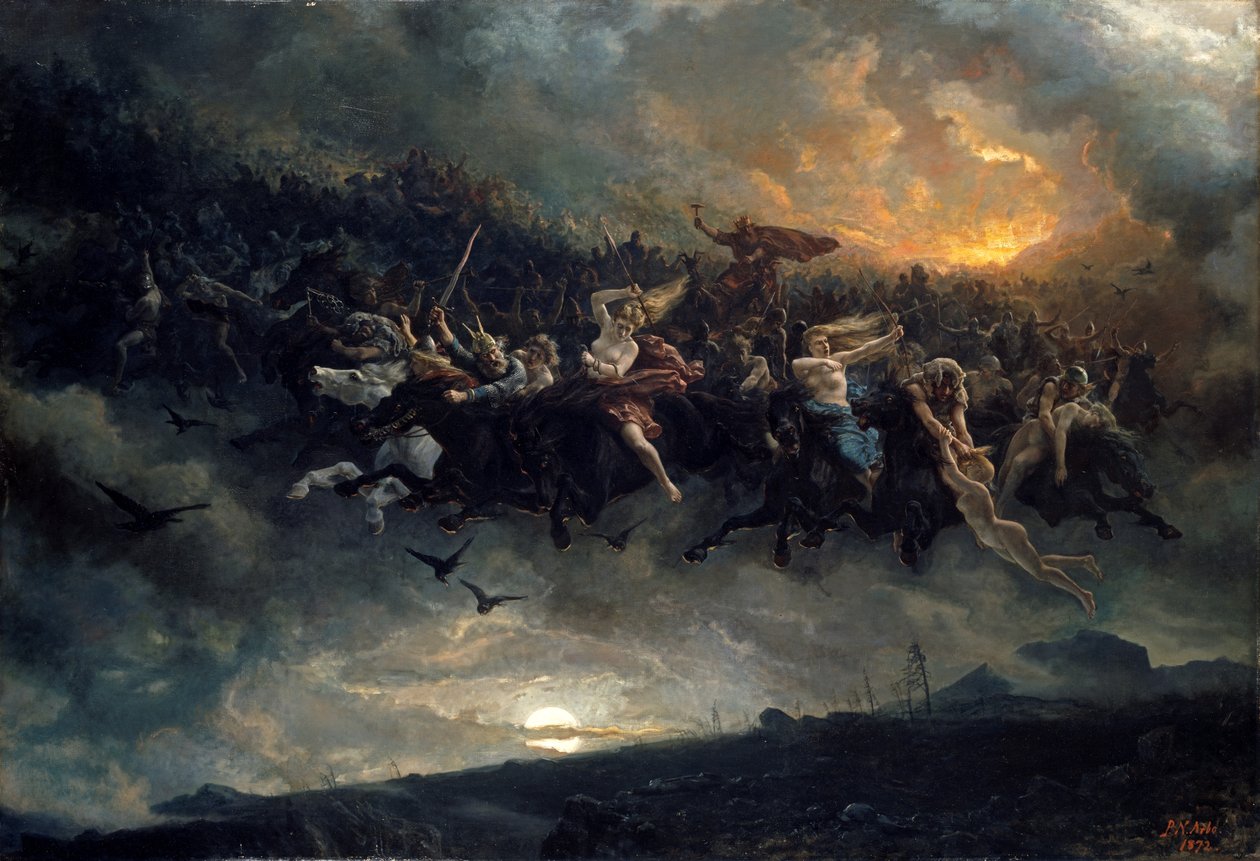
This early 20th-century artwork imagines the dísir, sometimes seen as guardians, sometimes as bringers of death. Author: Dorothy Hardy (fl. 1891–1925)
Dual role in the sagas
If we turn to the rich tapestry of Norse sagas, we find a handful of references to the dísir that highlight their ambiguous role.
Turning to the Poetic Edda, we find the epic poem Sigrdrífumál (The Ballad of the Victory-Bringer). It deals with the famed meeting between Sigurd and Brynhildr. In stanza 8, there is a reference to the helpful nature of the dísir. In the Old Norse:
Bjargrúnar skaltu kunna,
ef þú bjarga vilt
ok leysa kind frá konum;
á lófum þær skal rísta
ok of liðu spenna
ok biðja þá dísir duga.
In English, using Henry Adams Bellows’ 1936 translation:
“Birth-runes learn, if help thou wilt lend,
The babe from the mother to bring;
On thy palms shalt write them, and round thy joints,
And ask the fates to aid.”
This stanza is a guide for how pregnant women can protect their child during pregnancy by not only carving special runes on their limbs but also asking the dísir to protect mother and child.
Turning now to the dying words of legendary Viking warrior Ragnar Lothbrok, the poem Krákumál is essentially a monologue delivered as Ragnar meets his slippery death. It speaks to the welcoming nature of the dísir. At the end of the poem, in stanza 29, we find a reference to them:
Fýsumk hins at hætta,
heim bjóða mér dísir,
sem frá Herjans höllu
hefr Óðinn mér sendar.
Glaðr skalk öl með ásum
í öndvegi drekka,
lífs eru liðnar stundr,
læjandi skalk deyja.
In English, using the Skaldic Project's translation:
“Dísir are welcoming me home, the ones Óðinn has sent me from the hall of Herjan … I shall gladly drink ale with the gods in the high seat; hopes of life are past; I’ll die laughing.”
It is interesting here that we find an overlapping of the dísir with the role of the Valkyries. In this poem, they are the female spirits sent by Odin to guide the dying Ragnar to that place of eternal feasting and fighting, Valhalla.
Not only does this poem deal with Ragnar’s reluctant acceptance of his death, but also the transition to the eternal afterlife, aided by the dísir. However, their association with the afterlife also speaks to their role as harbingers of death.
Using these two sagas, we can see that the dísir have an enigmatic relationship with mortals, sometimes providing protection and guidance, yet at other times bringing destruction or death.
This dual nature is central to their role, as they can both safeguard and threaten human lives.
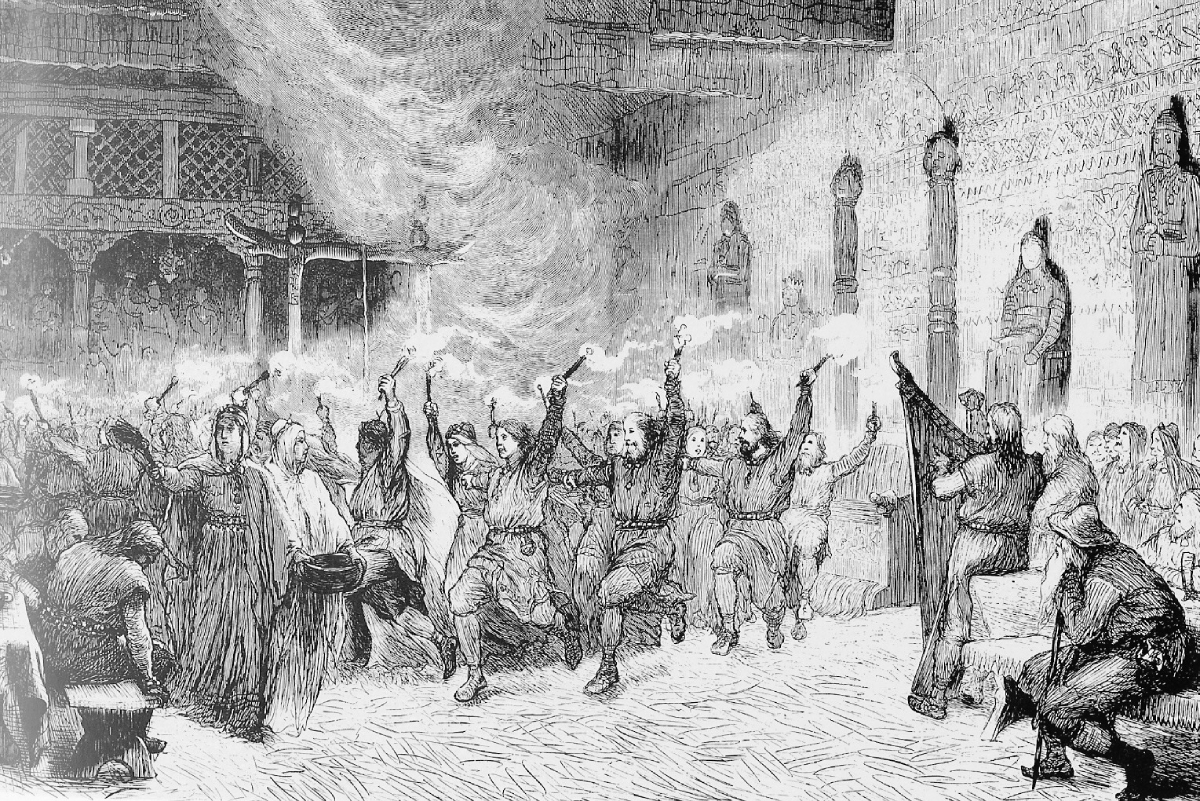
A 19th-century imagining of the dísablót, a seasonal festival tied to fate and fertility. Author: August Malmström (1829–1901)
Dísablót
Aside from these sagas, there is a far more visceral reference we have of the dísir.
More than mere literary creations, the dísir are associated with the cultic practices of the Old Norse religion, specifically the dísablót (which roughly translates as something akin to "sacrifice to the dísir" in English).
Modern historians have but scraps of information on exactly what took place during a dísablót, but it was believed to have been conducted by a female, possibly a powerful religious figure in the community.
Like other ritual sacrifices, the dísablót was a seasonal festival, held normally in winter, to hopefully intensify the coming harvest by worshiping and placating the dísir.
For people in the Viking Age in what is now Sweden, this dísablót was especially revered, and it is believed that it may have taken place around what is now Gamla Uppsala.
We know that this was the site of a great pre-Christian temple to some of the Norse deities, and we do have references to great sacrifices held here by contemporary chroniclers like Adam of Bremen.
However, it should be noted, as Anders Hultgård discusses in his 2022 article in the journal Religionsvidenskabeligt Tidsskrift, that this "description of the pre-Christian sacrificial ritual at Uppsala is hotly debated."
Regardless, the tradition still lives on in Sweden with the Disting Festival, an annual fair that takes place in Uppsala every year.
Revered and should be remembered
The dísir have remained largely unknown characters, at least to modern audiences, of Norse mythology.
Like many other characters in the rich tapestry of Norse literature, the dísir have a dual role: they are both protectors of life and harbingers of death.
Sacrificially revered by people in the Viking Age, especially around what is now Gamla Uppsala in Sweden, they were more than just bit-part characters in the Norse sagas.
They were a celebrated, revered, and worshiped aspect of the Old Norse religion and thus an integral part of Norse culture during the early medieval period.
For more information on the pre-Christian beliefs of Norway, visit Science Norway here.
We get to provide readers with original coverage thanks to our loyal supporters. Do you enjoy our work? You can become a PATRON here or via our Patreon page. You'll get access to exclusive content and early access.
Feel free to reach out to discuss potential stories that may be in the public interest. You can reach us via email at hello@thevikingherald.com with the understanding that the information you provide might be used in our reporting and stories.