

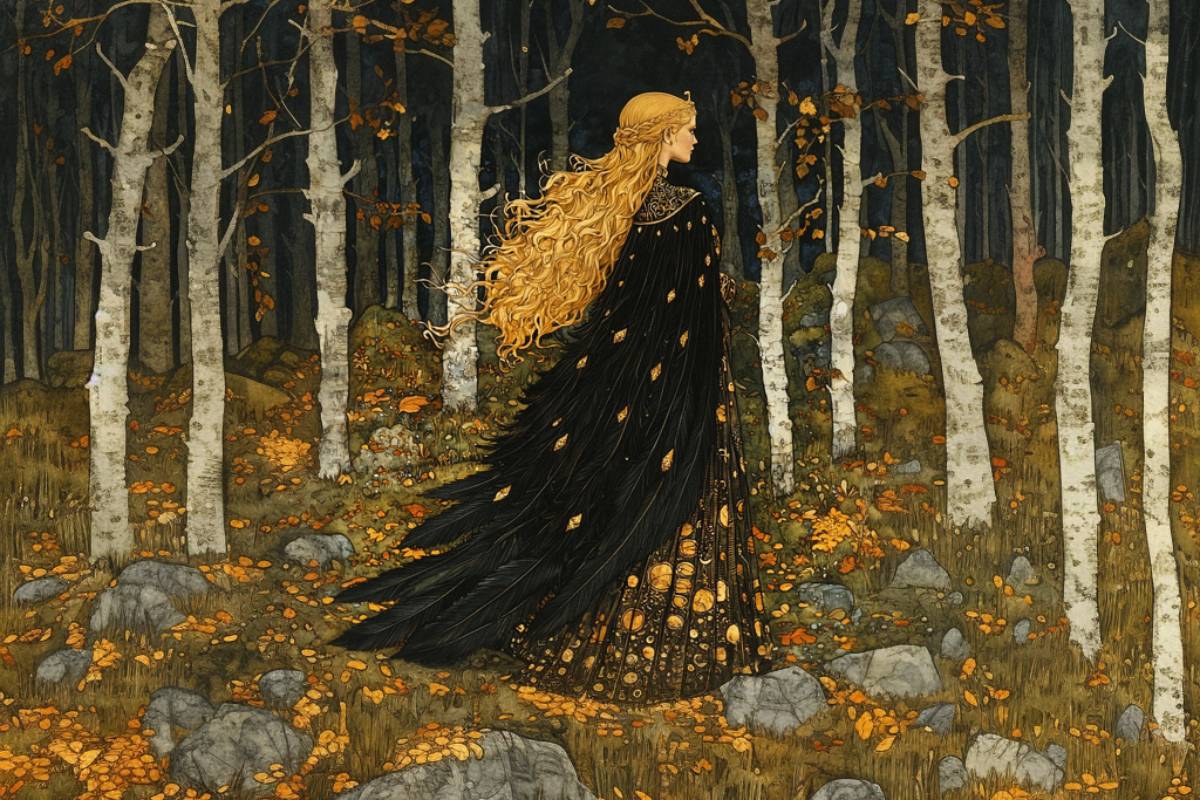
More than a mere accessory, the cloak was central to one of the best-loved Norse sagas that has endured through the ages.
A stroll down the Gate
Stride down Karl Johans Gate, the main street of downtown Oslo, and you'll see a glittering reference to a Norse deity upon high. About halfway down the street, just past Stortinget (the National Parliament), is an advertising sign, complete with a clock embedded in it, for Freyja chocolate.
The sign has been there for generations, erected in the early 20th century, and for many Norwegians and tourists alike, is their only daily reference to the Norse goddess of light, fertility, and magic, Freyja.
Luckily for you, dear reader, you are reading a publication that takes delight in deep diving into this Norse mythical deity. Now, our expertise here at The Viking Herald lies in, you know, researching and writing about the Viking Age and not in dissecting fashionable clothes or trends.
However, when we came across the fact that Freyja was said to possess a fine feather cloak that also had magical abilities, well, we knew that we had to dig into this story a little deeper.
So, it seems that aside from her usual associations with beauty, love, magic, war, and sex (not a bad résumé), Freyja is also associated with fashionable garb.
If we scour the sagas, we can also see that Freyja wasn't alone in possessing a fine feathered cloak, as her fellow goddess, Frigg, was said to possess one too.
However, it is Freyja's we are concerned with here, and it is to the sagas we turn to find out more about this clothing item that is equal parts magical and practical.
- READ MORE: The legendary goddesses of Norse mythology
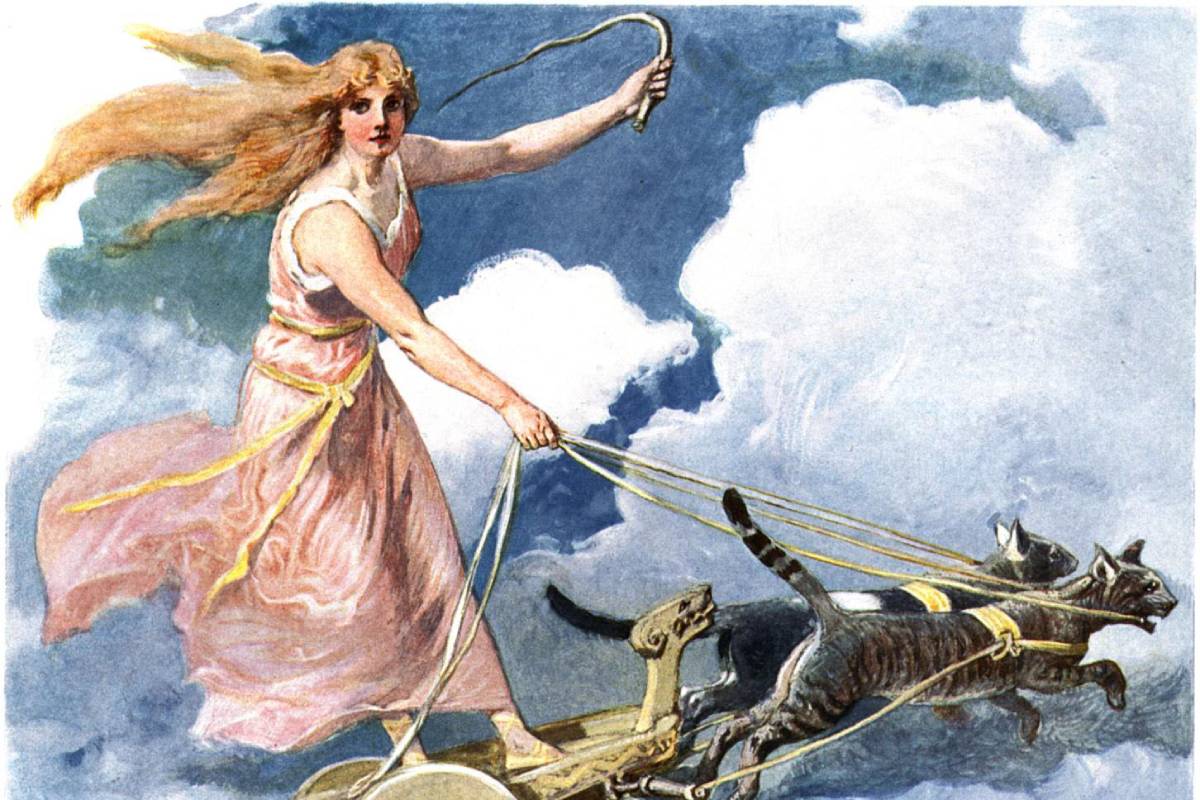
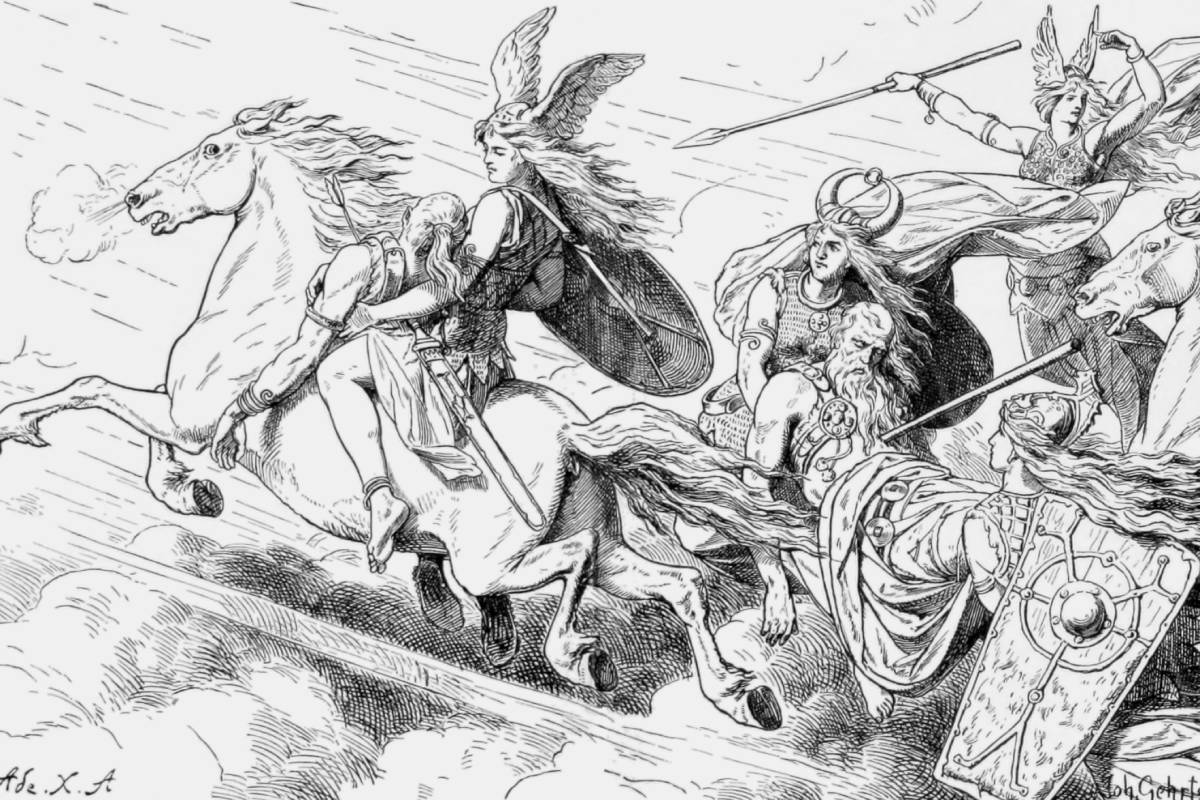
Freyja stands out in Norse mythology for her blend of beauty, independence, and mastery of magic. Illustration: Emil Doepler (1855–1922)
Fiery Freyja
We know that Freyja is one of the most renowned and popular deities in the vast Norse mythological pantheons (yes, there are two). As she was associated with love and beauty, people have often wrongly assumed she is a sort of Venus of the North.
However, this would be a misreading of her unique character, for Freyja was also associated with vengeance, desire, and the potent form of magic, seiðr, that people in Viking societies believed in.
It was this magic that saw her, as Stephen Grundy writes about in his chapter of the 1997 book The Concept of Goddess (available on Amazon here), "...firmly outside the sphere of normal society; she might be called the 'wild woman' of Northern myth." She was very much the antithesis of a Venus.
To add to her powerful nature is a magical cloak known as fjaðrhamr (Old Norse for something akin to "feather skin"). This falcon-feathered cloak is said to possess the ability for Freyja to shapeshift into a falcon and, for others, the ability for flight when worn.
This cloak, then, is an extension of her fiery and independent spirit, giving her, unlike many women in Viking societies, a degree of autonomy and mobility. Similar to a witch's broom, it is a signal of her magical role and authority and an object that allows cosmological and spiritual travel as well as magical transformation.
- READ MORE: Who was Freyja's husband Óðr?
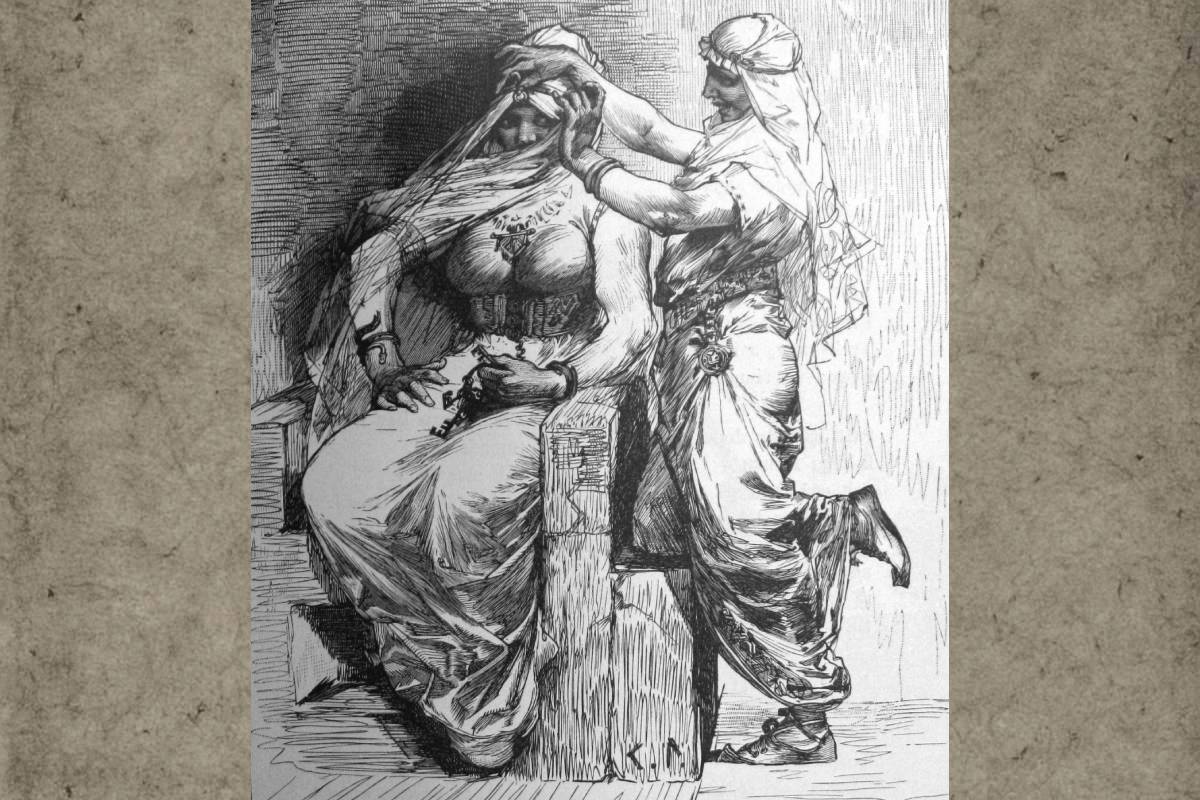
Thor is disguised as a bride, with Loki as his bridesmaid, as part of their plan to recover Mjöllnir in Þrymskviða. Illustration: Carl Larsson (1853–1919)
An appearance in a madcap scheme by Loki and Thor
Is there anything more iconic in Norse mythology than the mighty hammer of the Norse God of Thunder, Thor?
Magical Mjöllnir, fashioned by dwarves, has become an instant symbol not only of the brute force and power of Thor himself but also of the inherent martial skill and valor that people from Viking societies held in high regard.
If we turn to the sagas, we find a tale that regards this mighty and magical hammer being stolen and Thor and Loki's quest to reclaim it. It is in Þrymskviða (The Lay of Thrym) that we have much detail about this magical cloak.
Using an online version of the 1902 English translation of this poem by Frank E. Bryant, we find that Loki has teamed up with Thor to try to retrieve Mjöllnir from Thrym, who would relinquish the hammer for the price of Freyja's hand in marriage.
In preparation for the journey to meet Thrym, we find the following lines:
Went they to Freyja's
fair abode then;
First of all said he
the following word:
Wilt to me, Freyja,
thy feather coat lend,
If my hammer
maybe recovered?
Freyja says:
I should give it thee,
gold though it were;
You might have it
even though of silver.
[Þrymskviða, stanzas 4 & 5]
So, we have the first glimpse of the cloak's ability for swift and speedy flight. Loki then uses this to whizz around the Norse cosmos, including Jotunheim, the realm of the famous jötnar (giants), often the foe of the Norse gods.
In Stanza 5, we see Freyja's sharp and spirited response, showing her independence and biting sense of humor.
Unwilling to be a part of the plan of the dynamic duo (Thor and Loki) to retrieve Mjöllnir, she would much rather offer up her magical coat—be it made of gold, silver, or something equally valuable—than offer herself up as a mere marital pawn.
This stanza can often be read in a sarcastic tone and underscores her fiery spirit and independent nature. In the end, Thor and Mjöllnir are reunited after a madcap scheme of shenanigans that involves Thor donning a dress and pretending to be Freyja to fool Thrym.
Freyja's cloak plays an important role in one of the most memorable and genuinely funny sagas in the Norse canon.
The cloak's appearance in the Norse sagas is something that Sara Ann Knutson writes about in her 2019 article in the journal Temenos.
In it, Knutson explains how these magical accessories are more than mere side props. They play an important role as "the stories they color are informed by everyday objects of Iron Age life, spun with the magic, belief, and narrative traditions that made them icons."
Nothing is more iconic than a falcon-feathered flying cloak!
Powerful symbol
What then can we make of Freyja's magical cloak, fjaðrhamr? Aside from being an uber-chic accessory, this cloak allowed transformation and travel, underscoring Freyja's autonomy, mobility, and thus her power.
Associated with magic, the cloak also speaks to Freyja's importance as a figure who can transcend the limits of her body and role and allow cosmic travel.
Similar to the use of bear skins by berserkers, Freyja's feathered cloak allowed her to undergo a metamorphosis that spoke of the blurring of human and animal, the mortal and the magical.
Whilst other deities' accessories—namely Thor's hammer, Mjöllnir—may receive more attention and indeed worship, Freyja's magical cloak fjaðrhamr is more than a mere bunch of feathers, as it is a symbol of her immense power and freedom.
For more information on Norse deities, visit BBC History Extra here.
We get to provide readers with original coverage thanks to our loyal supporters. Do you enjoy our work? You can become a PATRON here or via our Patreon page. You'll get access to exclusive content and early access.
Feel free to reach out to discuss potential stories that may be in the public interest. You can reach us via email at hello@thevikingherald.com with the understanding that the information you provide might be used in our reporting and stories.