

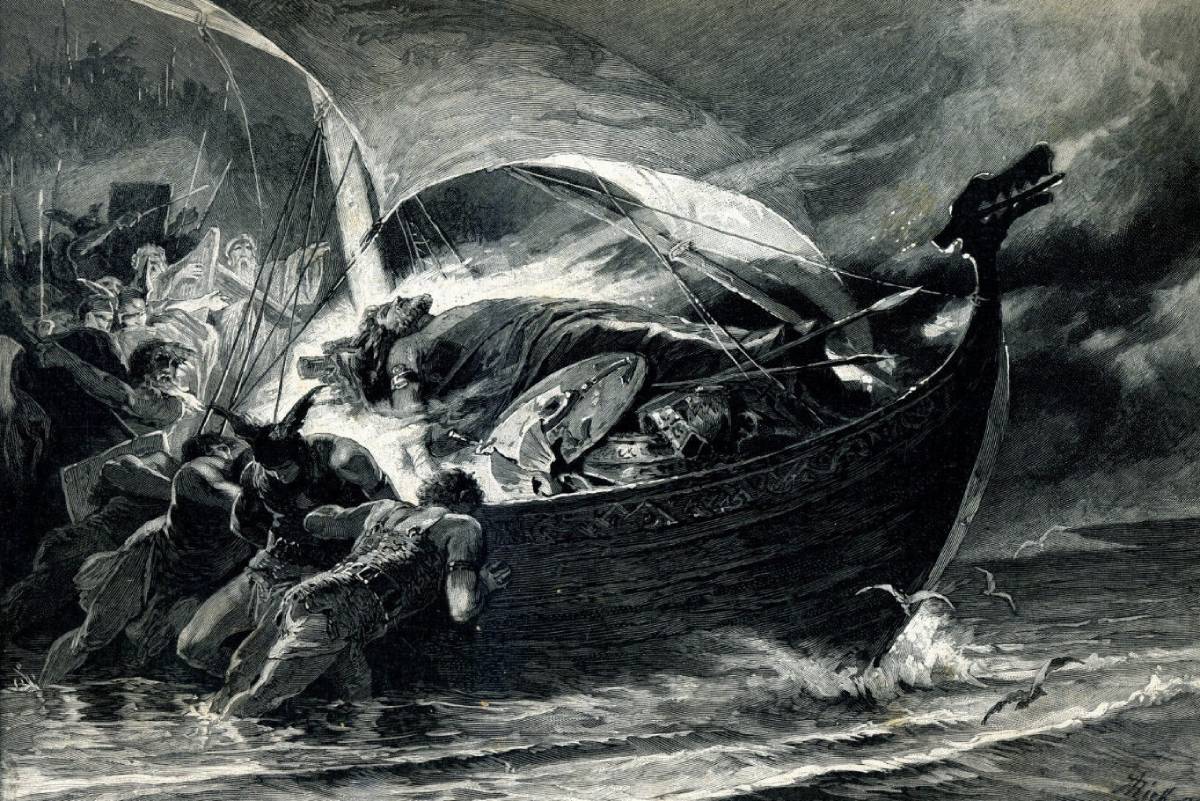
This misconception lies more with 20th-century Hollywood than with any archeological or literary evidence bequeathed to us from the Viking era.
Modern false depictions
We are all guilty of it. Every time we switch on a Viking-themed series or movie, be it Robert Eggers' excellent film, The Northman, or the seminal series, Vikings, we are fascinated; some may even say enthralled (pardon the Viking pun) by the bloody, glorious, and downright gory battle scenes.
We've all seen them a million times where a bearded Viking is charging at some poor Anglo-Saxon / Frank / insert your favored early medieval European people here, brandishing a mighty battle axe, foaming at the mouth, and ready to enter Valhalla.
So many of our modern depictions of Vikings depend on the fact that we, the viewers, know that they are ready to die a glorious death.
The same idea can slide into a broader claim that Viking societies held a "cult of death" that spurred on their warriors to conquer much of Europe and its surroundings during the early medieval period. Or did they?
How did a society where the majority were small tenant farmers come to be associated with a societal death wish that has echoed down through the ages?
The archeological and literary evidence suggests that many Vikings feared death and did not cherish it.
It also points to a range of afterlife ideas rather than one concept shared by everyone, and, most importantly, it was the very present living of one's life, not the afterthought of death, that dominated actions, interactions, and thought.
Join us now as we debunk the supposed Viking "cult of death."
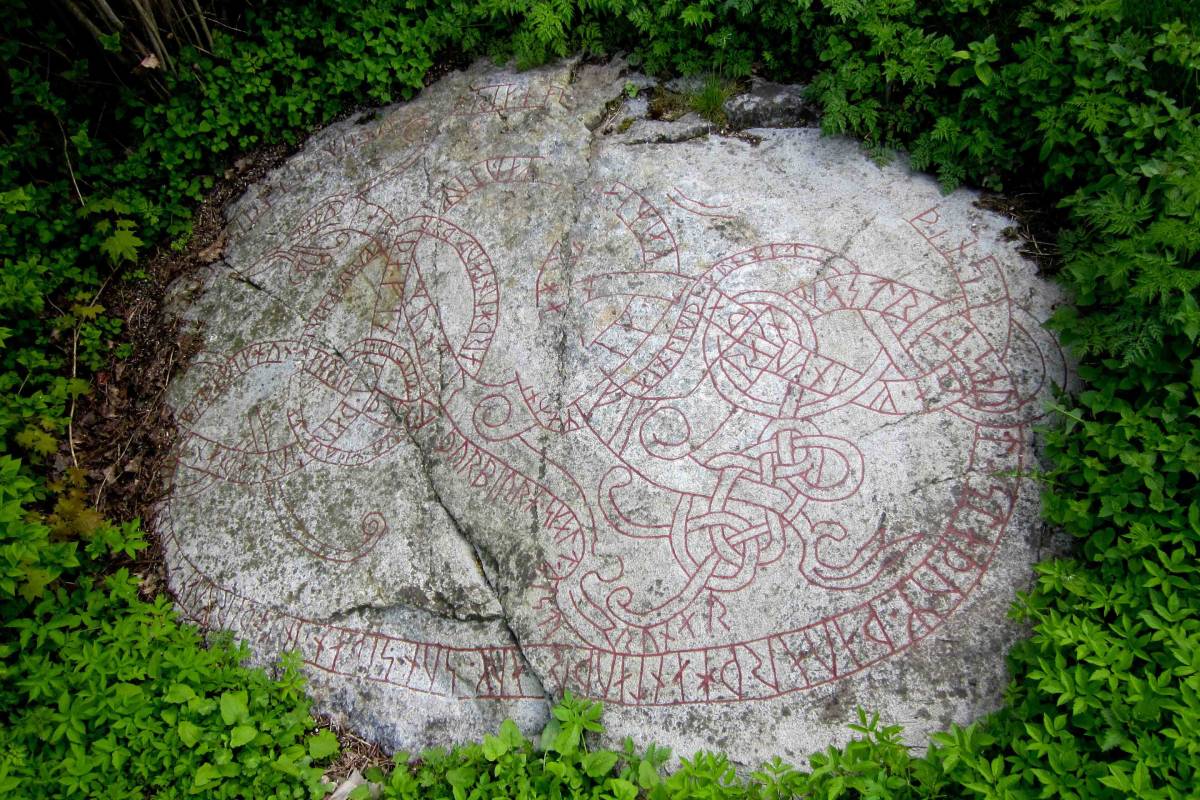
The Hillersjo runestone (U 29) at Hillersjo in Uppland, Sweden, is an 11th-century memorial focused on deaths and inheritance. Photo: Ofeig (CC BY-SA 3.0)
Vikings feared death
We know from Norse literature, historical accounts, and archeological evidence that people in Viking societies did not worship death but feared it.
We have numerous examples of the sagas describing the less glorious aspects of death: the societal fear of it, the precautions one had to take, either on the battlefield or off it, to avoid it, and, when it did occur, the depression, guilt, and sorrow it caused to loved ones.
One of the most poignant examples of the destructive nature of death comes to us from Njáls saga. In an online version based on the 1861 English translation by Sir George Webbe Dasent, The story of burnt Njal, Runolf, a respected chieftain, speaks about the death of the son of a friend as a tragedy, not a glorious triumph.
"There is no good in mincing the matter," said Runolf, "but we must say outright that he has been slain for less than no cause; and his death is a great grief to all men..." [Chapter 114]
Here, the emphasis is placed upon loss and sorrow, not any sort of romanticized idea of a heroic or glorious death. A quote that very much contradicts any notion of a Viking "cult of death."
Turning to another source, we find an emphasis on living life gloriously rather than dying a supposedly heroic death.
In the Poetic Edda, we find the poem Hávamál, which centers mostly on a sort of Viking-era guide to a life well lived as told by Odin himself. Here, using an online version of Henry Adams Bellows' translation (published 1936), the Viking fear of death is fleshed out.
"Cattle die, and kinsmen die
And so one dies oneself
One thing now that never dies
The fame of a dead man's deeds." [Stanza 78]
Whilst fame for people from Viking societies, from glorious deeds, is indeed eternal, this passage speaks to the inevitability of death as it happens to all (both humans and animals).
What is eternal are the actions and deeds that one has earned in life, rather than the act of dying (however glorious or gory).
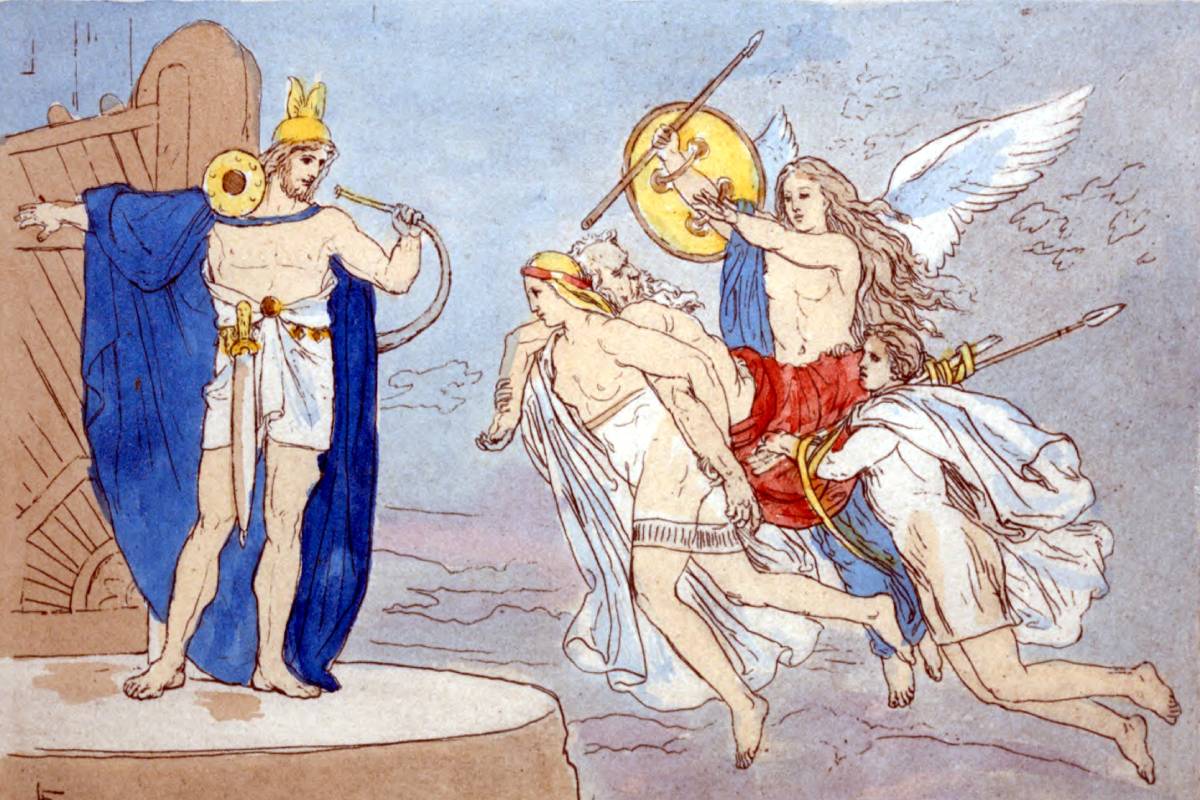
A fallen warrior reaches Valhalla under the care of three valkyries, with Heimdall shown as the figure who receives them. Author: Lorenz Frølich (1820–1908)
Religious and spiritual beliefs
Turning away from the literary sources and zooming out a little, let us look at the religious and spiritual beliefs of people from Viking societies.
For much of the early medieval period, people from Viking societies believed in a myriad of beliefs that we moderns rather clumpily label as the "Old Norse religion."
Whilst a heroic death on the battlefield was a part of this "religion," gaining entry to Odin's great feasting hall, there was no singular belief in the afterlife.
Some brave warriors who died on the battlefield may be selected by the Valkyries to join Odin in Valhalla, whilst others may be selected by Freyja to reside in Fólkvangr.
Many who died outside battle, from sickness, old age, or misfortune, were believed to go to Hel and her realm.
When Christianity started to gain a foothold in the Viking world, notions of charity and kindness to one's enemies were introduced, and death meant entry for everlasting life in heaven, assuming you had been a good Christian.
Some communities also held animist and shamanic traditions, and in certain regions, these beliefs may have developed through contact and exchange with Sámi neighbors.
As we can see from this mixture of religious and spiritual beliefs, none contained a "cult of death."
Indeed, as Davide M. Zori writes about in his 2018 book, Viking death: Pre-Christian rites of passage and funerary feasting, "the Viking view on death was heterogeneous," and never amounted to a cult-like worship of death itself.
Whilst heroic deeds on the battlefield were celebrated, martyrdom was not. Honor in Viking society was often tied to resilience (on and off the battlefield, these were a hardy people) and not the recklessness of actively seeking out death.
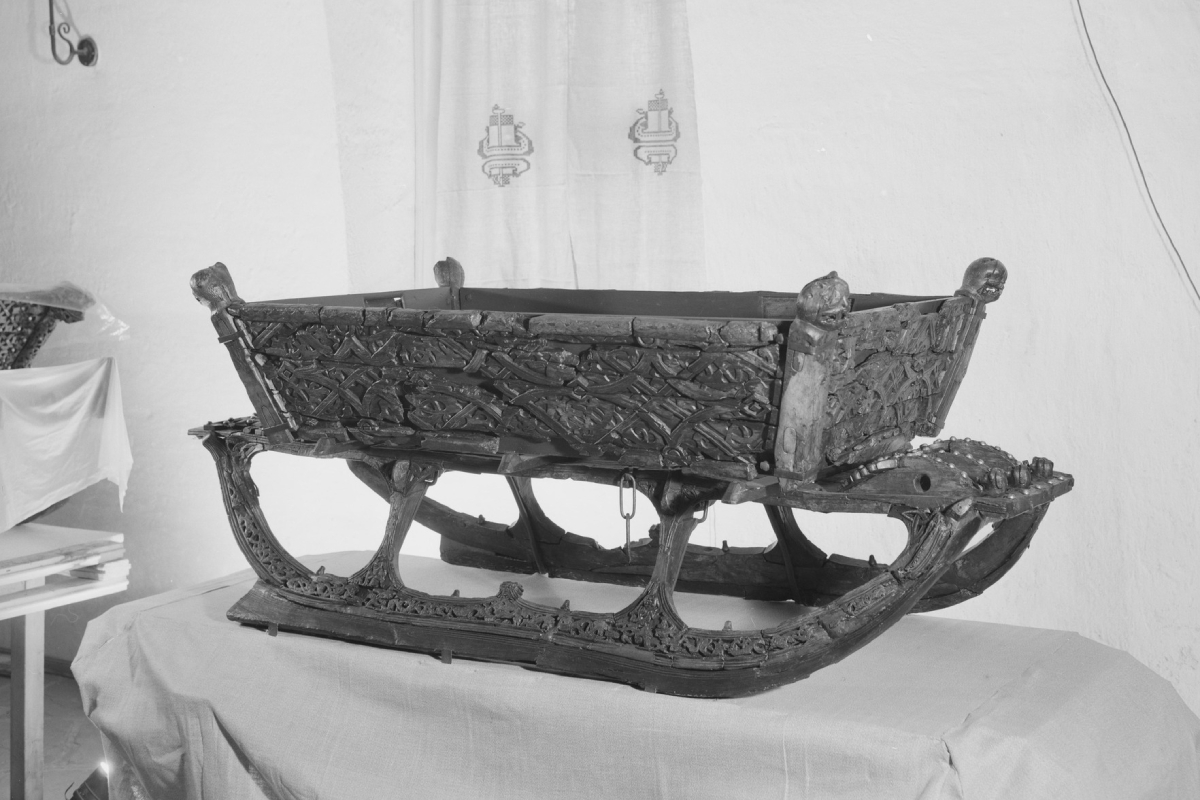
The Oseberg ship burial in Norway contained an extraordinary collection of elite grave goods, including this richly carved sleigh. Photo: Jac Brun (1921–1995)
Archeological evidence
Finally, we are going to get our hands dirty and look at the archeological evidence that helps disprove any notion that people from Viking societies had a "cult of death."
It is true that archeologists throughout Scandinavia and the surrounding areas have uncovered a large amount of Viking weaponry. However, Viking societies were, like their contemporaries, not necessarily obsessed with death and warfare.
Whilst Viking axes, swords, and even a helmet have become symbols of this age, people from Viking societies have bequeathed us a marvelous array of artifacts that have nothing to do with death.
From farming tools to weights and scales used for commerce, from gaming pieces to the remains of settlements built for multiple generations, a society that was obsessed with death would not produce any of these.
Furthermore, the fact that these societies produced not one but six(!) different artistic styles speaks to their imagination and creative flair, very much the antithesis of a "death cult."
Death was not an obsession
Like all pre-modern societies, death stalked every aspect of Viking society. However, the people who expanded outward from the Viking heartland of Scandinavia during the early medieval period were not a people obsessed with death.
It was indeed a sad fact of life, and yes, some warriors may have indeed had a death wish, but there simply was not a "cult of death" in Viking societies.
For the members of Viking societies, family, survival, and reputation mattered far more than a reckless death.
For more on Viking funerals, visit the BBC History Extra website here.
We get to provide readers with original coverage thanks to our loyal supporters. Do you enjoy our work? You can become a PATRON here or via our Patreon page. You'll get access to exclusive content and early access.
Feel free to reach out to discuss potential stories that may be in the public interest. You can reach us via email at hello@thevikingherald.com with the understanding that the information you provide might be used in our reporting and stories.