

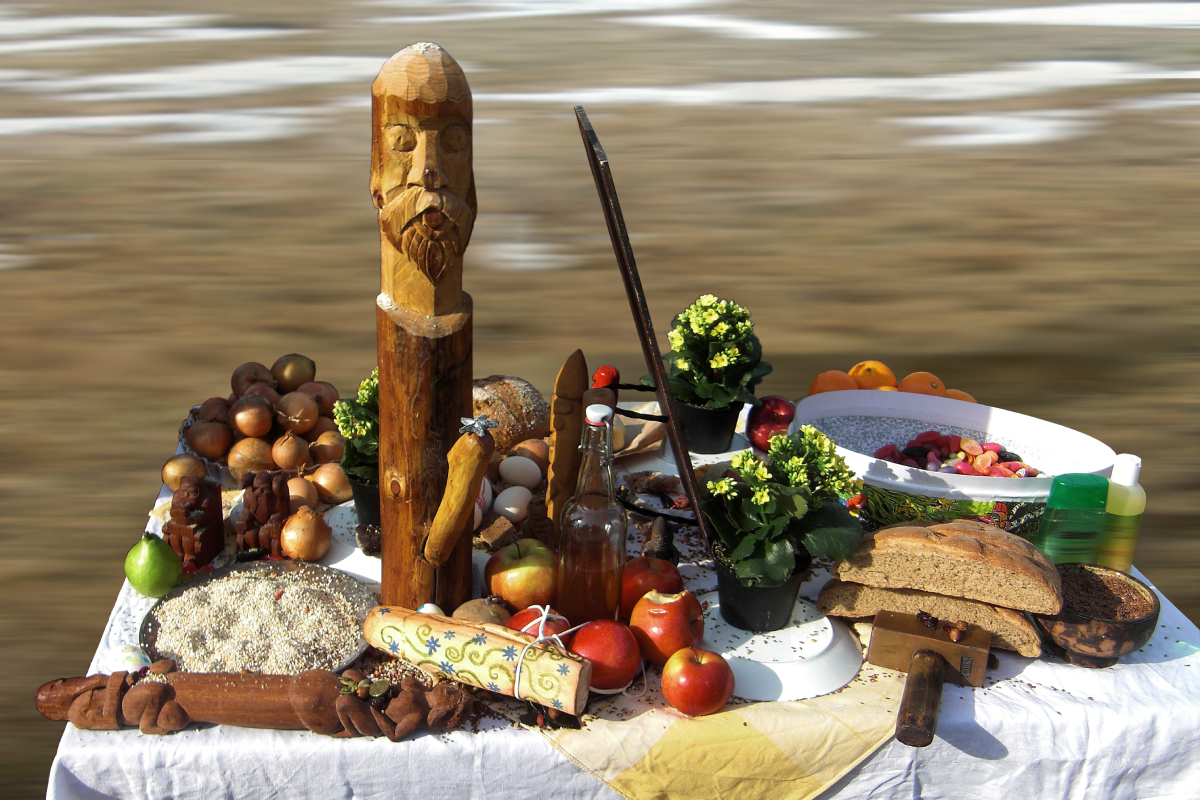
If you are curious about joining one of these groups, we break down what you need to know.
Never a single set of religious beliefs
It was only with the supremacy of Christianity, by the end of the early medieval period, that people in Viking societies had, for the first time, a single and agreed-upon set of spiritual beliefs.
In the centuries before Christianity's supremacy, there was a wide variety of belief systems and religions that encompassed what we moderns call the Old Norse religion, Sámi shamanism, Celtic Christianity, and Slavic "paganism," along with some indirect influence from Islam.
However, it was the pre-Christian polytheist beliefs, which we clumsily call the Old Norse religion, that were the dominant indigenous religion throughout many Viking societies.
This was a polytheistic belief system that centered on two pantheons of deities, including Odin, Thor, and Freyja. Some of the features of this belief system were ancestor worship, ritual sacrifice, a martial ethos, and complex and varied views on the afterlife.
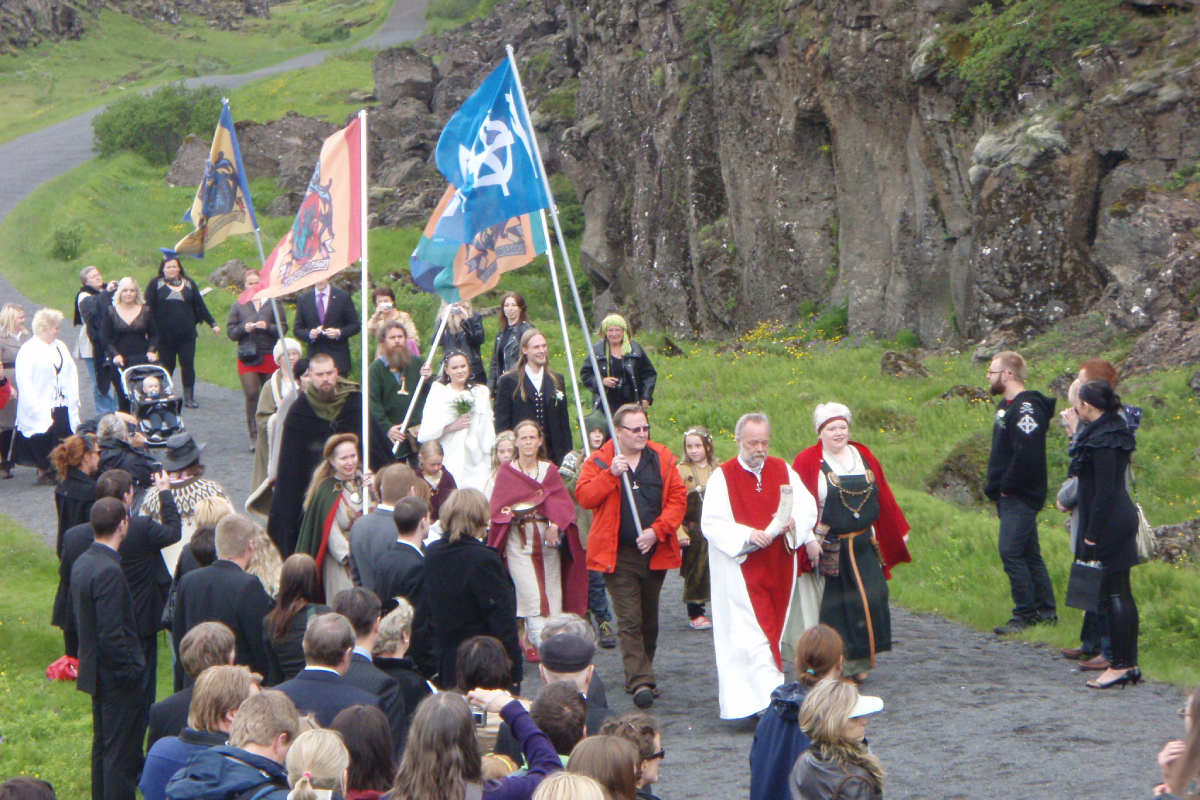
Members of Ásatrúarfélagið gather for a modern Norse pagan ritual at Þingvellir, the historic site of Iceland’s ancient parliament. Photo: Lenka Kovářová
Later developments
By the turn of the 11th century CE, Christianity had gained supremacy throughout Viking societies, and though these other religious practices and beliefs were not dead, they were terminally ill.
Some of the old ways and beliefs persisted into the later medieval period and were transformed into folk tales and cultural traditions by the early modern period. Yet the latter 20th century saw a revival in religion and spirituality that helped fuel modern Norse "heathenry."
A landmark year for this revival was 1972, when the Ásatrúarfélagið (Ásatrú Fellowship) was founded. It became the first legally recognized Norse heathen religious organization in the world and has become an intrinsic part of modern Icelandic culture.
The Fellowship led the way for other Norse heathen groups to follow, including the Troth, Forn Sed, and Eldaring.
According to Michael F. Strmiska’s 2005 book Modern Paganism in World Cultures: Comparative Perspectives, modern paganism has experienced rapid growth in recent years and is now considered one of the fastest-growing religions in the United States.
So now you know the potted history of the movement, what do you need to know if you want to join a group?
Diversity
The one thing that unites many of these modern heathen groups is variety. Groups vary widely in their beliefs and practices. Essentially, we can break many of these groups down into three types.
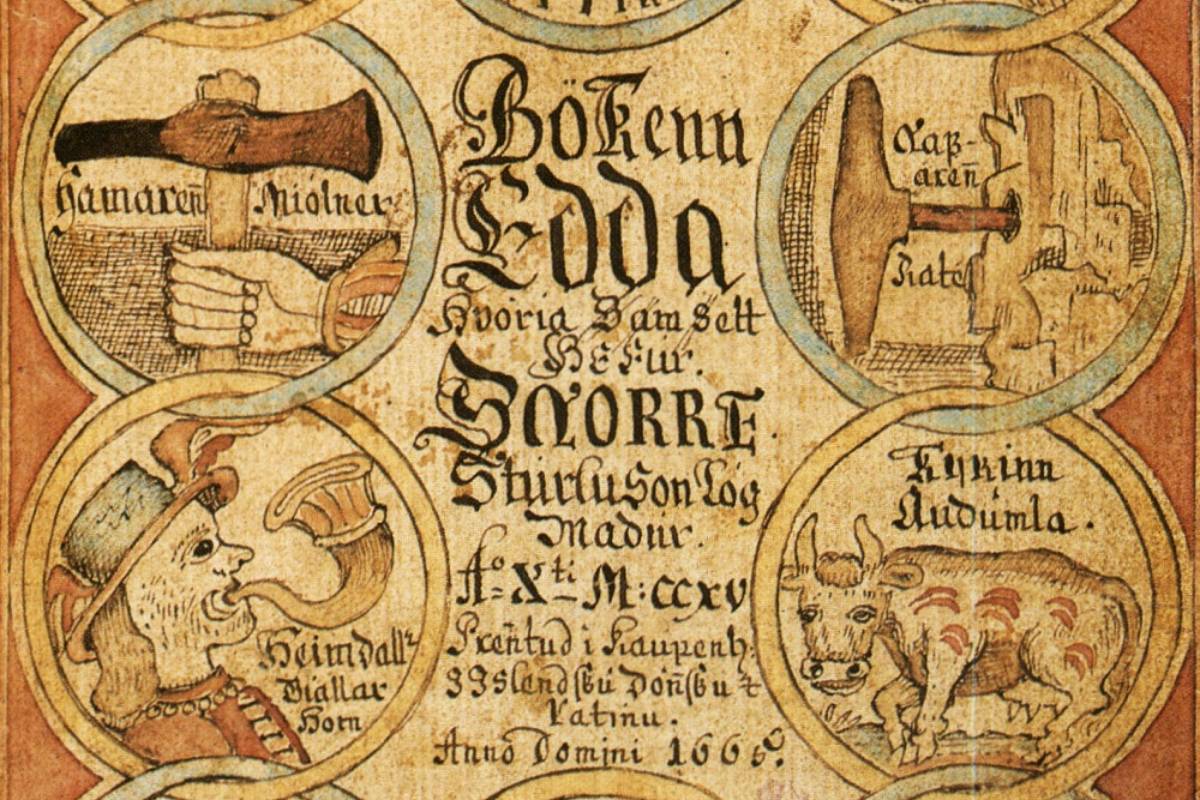
The first are what we call "Reconstructionist" and deal with practices derived from historical sources, like the Eddas or what has been unearthed through archeology.
A second strand combines the historical with the modern and thus is dubbed "Modernist." The third category includes groups that are more ritual- and community-focused, emphasizing ceremonies, festivals, and social bonding (such as the Ásatrú Fellowship).
The first question, then, that you need to ask yourself is which group (or indeed groups) cater to your interests.
Are you, like the current author, a stickler for historical accuracy and tradition? Or are you more interested in the social aspect of the movement and love a good festival?
Modern Norse heathenry, like the religious beliefs that inspired it, isn't monolithic and caters to a widespread segment of beliefs, ideas, and motivations.
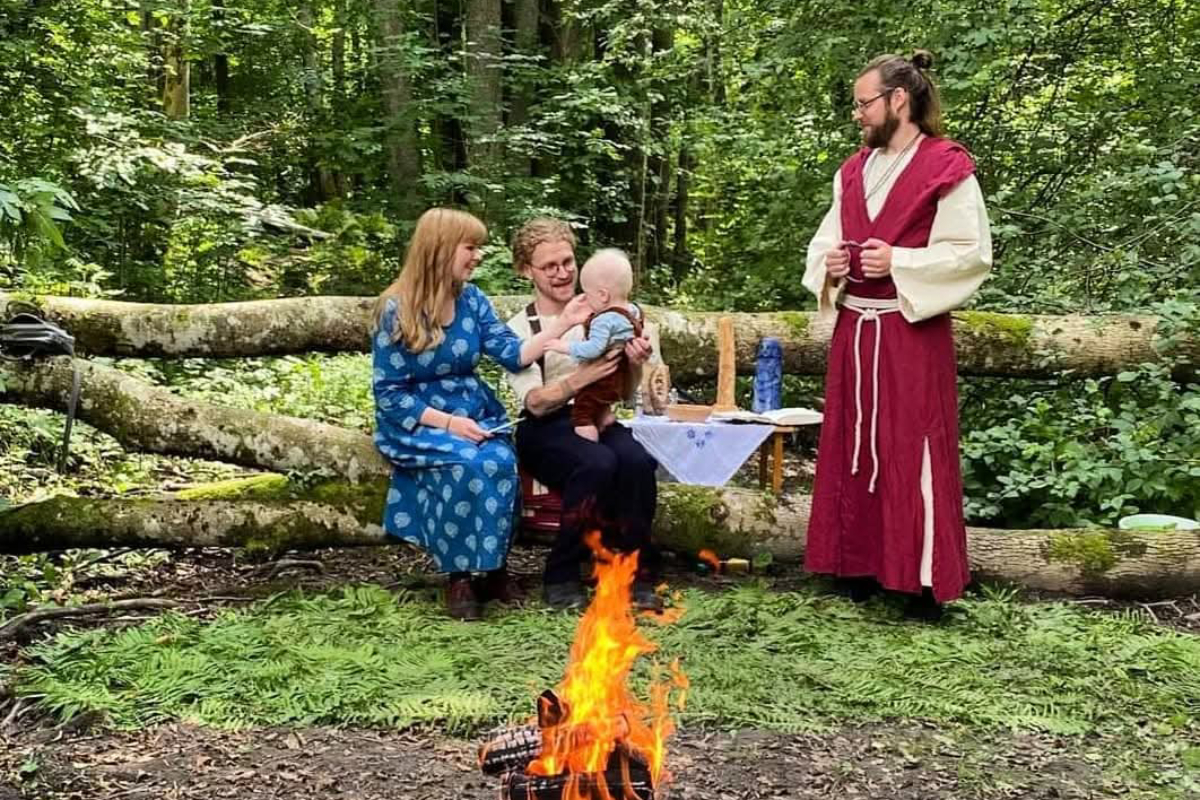
A family takes part in knäsättning, a modern Norse pagan child-blessing ceremony led by the Forn Sed Society of Sweden. Photo: Whakomago (CC BY-SA 4.0)
Research: Find one that aligns with your views
The next step, as with so much in life, is to roll up your sleeves and get down to the nitty-gritty of researching. Before joining any group, it is best to take a thorough look into the group and research some of its core values.
Some of these groups may be very inclusive, welcoming a broad segment of society. Their views may be gender and LGBTQI+ inclusive, whilst others may have more conservative views. Do your research and find one that aligns with your beliefs and views.
For those who border on the conservative side, there may be an exclusive tone to their group. Now, this isn’t a problem, but be extremely wary of any so-called "folkish" groups.
Ones that stress ancestry (e.g., "only those of Nordic blood can join") can often harbor nationalist overtones and racist and xenophobic attitudes.
Following the Nazis' besmirching of Norse mythology, right-wing extremists in recent times have taken an interest in Norse history and mythology and have twisted it for their own nefarious ends.
In Norway, an example of such a group would be Vigrid. Egil Asprem writes about this group in his 2008 article in the journal Pomegranate and explains how it is "...an organization which blends a racist, anti-Semitic, conspiracy theorist and millenarian neo-Nazi political agenda with an Odinist religious outlook."
Find a group that has signed "Declaration 127." According to the website for the Troth, this is a declaration that publicly states that:
"...signatories shall not promote, associate, or do business with any organization or entity so long as they practice discriminatory policies and exclusionary ideologies. Discriminatory organizations do not represent our communities."
When doing your research, ask yourself what their core values are and whether these align with yours. Whilst they might love Norse heathenry as much as you do, their values might feel like they came from a much darker corner of the longhouse.
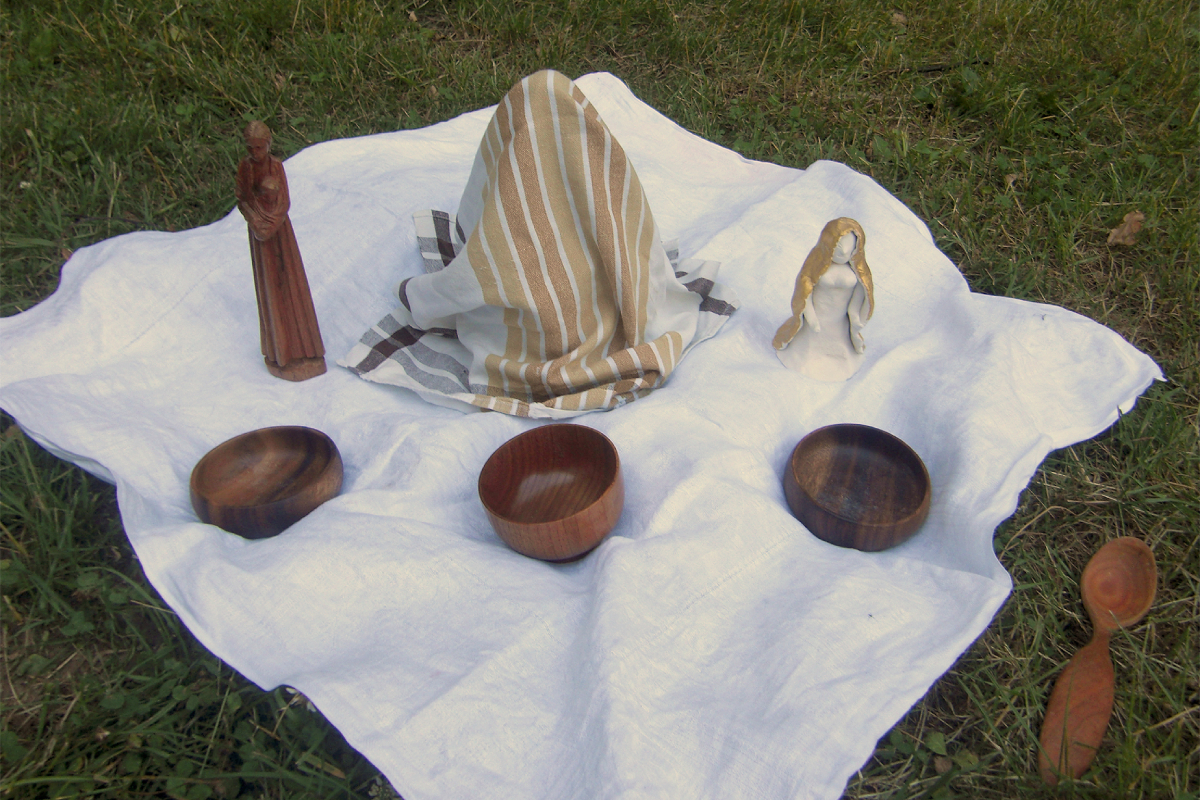
Wooden figures of the Norse goddesses Frigg, Nerthus and Sif on an altar during a harvest ceremony by the Forn Sed Society of Sweden. Photo: Gunnar Creutz
Practices and leadership
Following on from this general research, dig a little deeper. It might be a good idea to reach out and consider having a chat with a member to see what the day-to-day activities of the group are.
What are some of the rituals or practices they undertake? Are there seasonal festivals, like ones to celebrate Yule or Midsummer? Do they worship specific deities—think Thor or Odin—or are they more in touch with environmental and nature-based spirituality?
It is also worth finding out the structure and leadership of the group. Is it hierarchical or egalitarian?
If the former, who are the people in charge? Is respectful discourse and discussion welcome? If the latter, how are decisions made? Your two guiding spirits (pardon the pun) should be transparency and respect.
Ethics and other considerations
Given the spirituality of many of these groups, some ethical and legal issues may be worth musing over. Is there a particular guiding code of conduct that the group has for its members? Is this a formal written document or more of a guiding spirit as to how members interact?
Another solid bit of advice would be to look through local media reports of the group and how they are presented. Are there any reports of financial abuse or cult-like behavior? If the structure of the group is hierarchical, what have been the public comments of the leader(s)?
The final question to ask yourself, having done all this thorough research, is whether you can commit to their expectations.
It is one thing to join a group, but quite another to be an active member. How do your own beliefs, ethics, identity, and outlook compare with those of the group you’re interested in becoming a member of?
We here at The Viking Herald are all for people taking a renewed interest in beliefs and practices that trace their ancestry back to Viking societies. However, as with most important decisions in life, time spent in reconnaissance (and research) is seldom wasted.
For more information on modern Norse heathenry, visit the ABC here.
We get to provide readers with original coverage thanks to our loyal supporters. Do you enjoy our work? You can become a PATRON here or via our Patreon page. You'll get access to exclusive content and early access.
Feel free to reach out to discuss potential stories that may be in the public interest. You can reach us via email at hello@thevikingherald.com with the understanding that the information you provide might be used in our reporting and stories.