


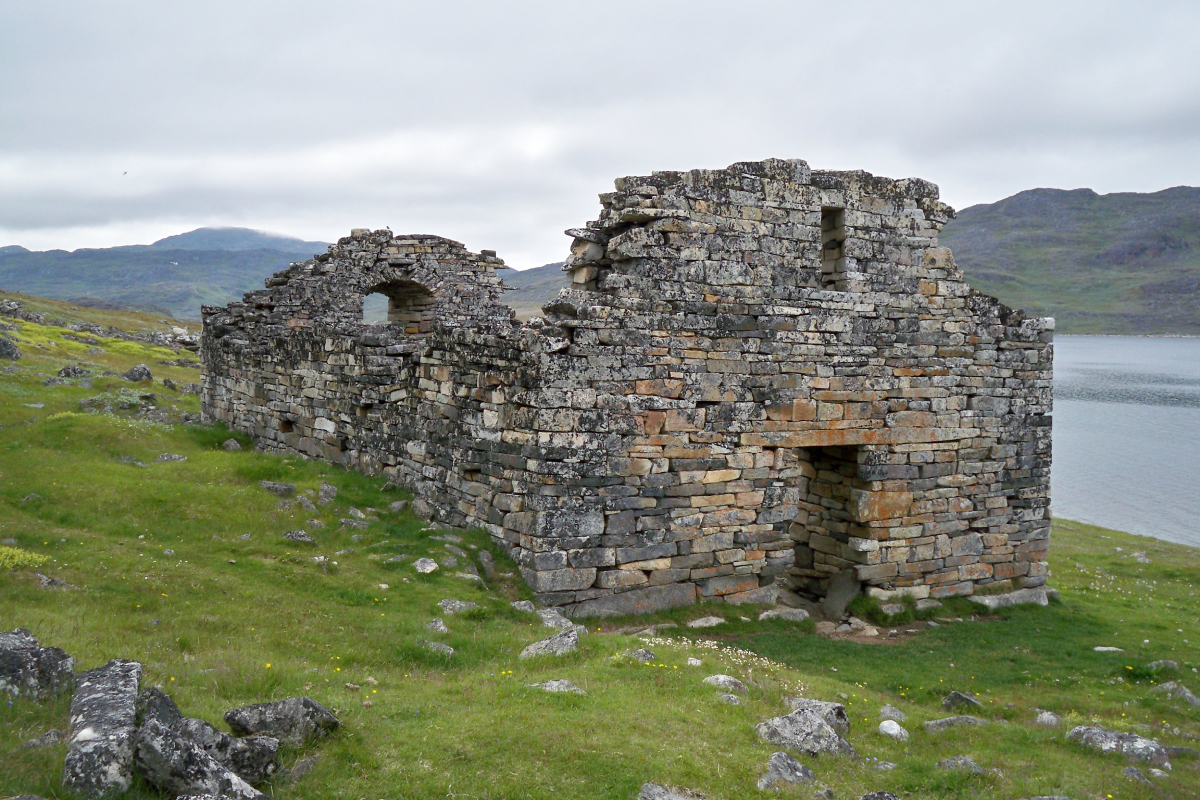
Greenland is today an autonomous territory of the Kingdom of Denmark. But were the lands initially settled by Danish Vikings?
And how did the Danish nation take ownership of the territory after the original Norse colony came to an end? The Viking Herald takes a look.
Ancient lands
It should first be noted that Greenland was inhabited long before the arrival of the Norse.
Archeological and genetic research has indicated that the island experienced several waves of migration from the North American mainland from around 2500 BCE, including people from the Saqqaq and Early Dorset cultures.
However, these settlers struggled with the inhospitable conditions and eventually either abandoned the area or died out.
In fact, it is thought that Greenland remained largely uninhabited for around seven centuries until the Late Dorset people settled there in approximately 700 CE.
Soon, of course, it would be the turn of the Vikings. Gunnbjörn Ulfsson is said to have been the first to sight the land (or a nearby island) after being blown off course on a voyage from Norway to Iceland in the second half of the 10th century.
After being exiled from Iceland for murder, Erik the Red led a team of explorers to the southwest coast of the island in the 980s.
After naming his new home Greenland in an attempt to make it sound attractive to settlers – and despite the notable paucity of greenery – Erik succeeded in convincing hundreds of Scandinavians to move to the barren lands.
But did any of these initial settlers come from Denmark?

The painting "Summer in the Greenland Coast circa year 1000" portrays Norse settlers in a summer scene on Greenland's rugged coastline. Source: Carl Rasmussen (1875)
From Norway to Iceland and Greenland
Given the lack of written records contemporary to the initial Norse settlement of Greenland, it is impossible to determine the precise origin of the people who went there.
However, most historians believe the majority of the first wave of Norse settlers in Greenland came from Iceland, which had, in turn, received many of its Scandinavian settlers from Norway.
DNA evidence has suggested there were also a number of people in Iceland (and presumably also Greenland) that had come from the British Isles, with many likely brought there as slaves.
Though there may have been settlers in Greenland who had been born in Denmark, there is no evidence of significant numbers of Danish settlers in either Iceland or Greenland at this time.
This is probably partly due to geographic factors. Given the relative proximity of the different lands, it would arguably make more sense for people from Denmark to move south across the European mainland or west to the British Isles than across to Greenland.
Denmark is also thought to have been more prosperous economically in the early Viking Age, which means that the pressure to migrate would have been less acute.
Third, and perhaps most notably, colonies tend to be built on the principle of individuals convincing their families and friends to join – for this reason, it makes sense that most of the Norse who later came to Greenland arrived from either Iceland or Norway.
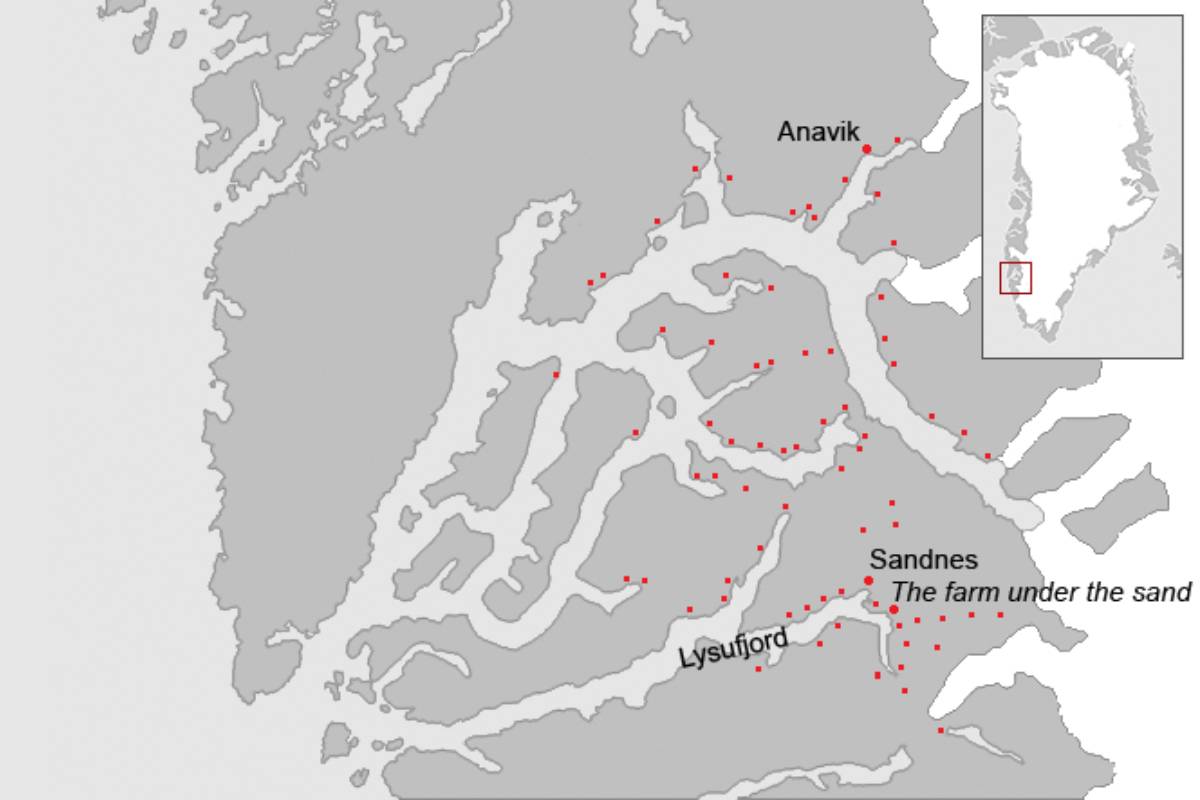
The map illustrates the Western Settlement of the Norse in Greenland, with red dots marking farm ruins in the region of present-day Nuuk. Source: Masae (CC BY-SA 3.0)
End of story?
However, there is one important Danish link to Greenland from the original Norse colonies.
The noted Danish cartographer Claudius Clavus is believed to have visited Greenland in 1420 and is said to be the first cartographer to place Greenland on a map.
In the 20th century, two Danish scholars found two manuscripts that appear to contain the second chart of a map from Clavus that showed his journey to Greenland.
The Norse colony in Greenland came to an end in mysterious circumstances sometime in the 15th century (or, at the latest, the 16th century).
Indeed, Clavus's visit remains one of the last records of any visit to Greenland from mainland Europe before the later recolonization.
The colony in Greenland had initially managed to support several trips further westward to the shores of North America and had persisted for several centuries. However, it seems that like many that had come before them, the Norse struggled to truly thrive in the harsh climate.
The basis for Danish rule over Greenland was first established in the time of this first period of colonization when the territory passed from Norwegian to Danish rule, thanks to the Kalmar Union of 1397.
Yet Greenland's close relationship with Denmark would only truly begin several centuries later, in the period of resettlement. 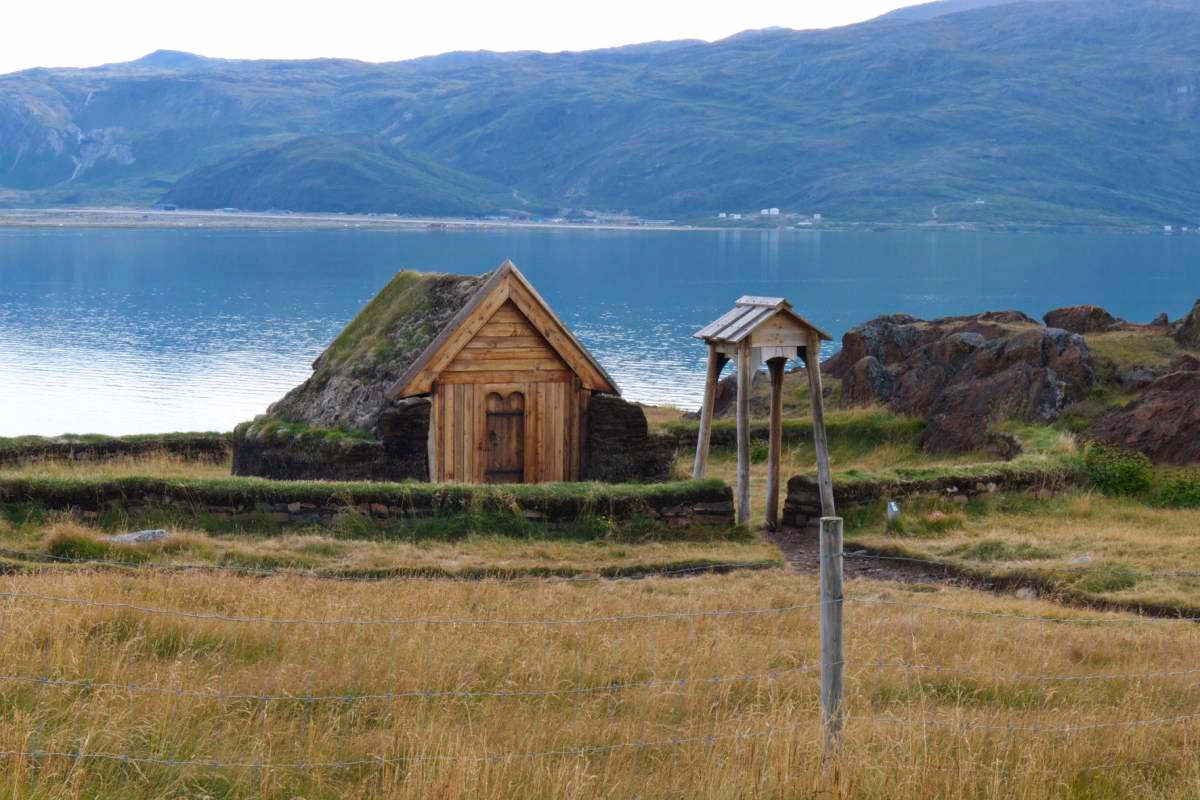
A replica of Thjodhild’s Church, considered the first European church in the Americas, stands near its original site at Brattahlid. Source: Claire Rowland (CC BY-SA 2.0)
Try and try again
In the early 17th century, King Christian IV of Denmark-Norway (a union of the two countries that lasted for nearly 300 years) sent three expeditions to recolonize Greenland.
Although these expeditions floundered – mainly due to the difficult climatic conditions – it was nevertheless a signal of the Scandinavian intent to return and reclaim the land.
However, it was only in the 18th century that a series of further expeditions finally helped establish a more permanent presence in the territory.
Once again, many Norwegians relocated to Greenland under the Denmark-Norway entity. Yet when the union of the two countries came to an end with the Treaty of Kiel in 1814, Denmark retained Greenland as part of the agreement.
The territory has belonged to the Danes ever since.
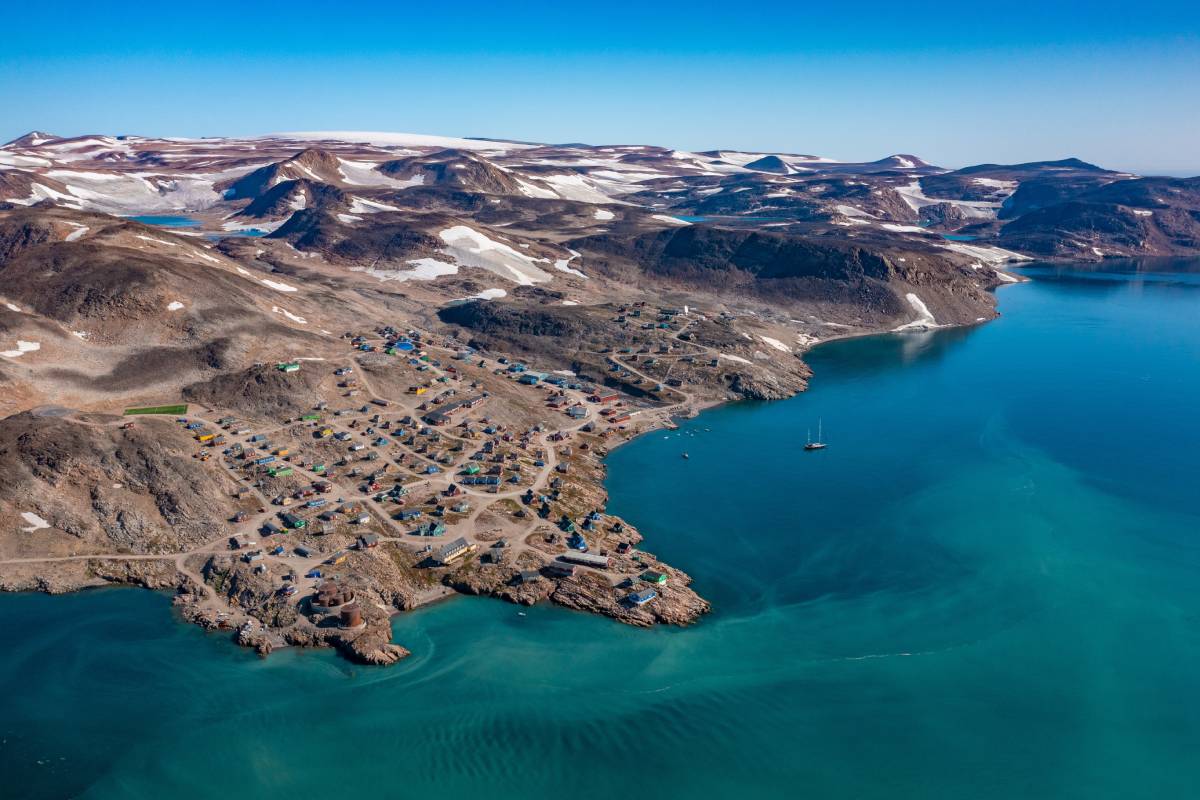
Greenland, home to an Inuit majority speaking Kalaallisut, maintains ties to Denmark but has strong aspirations for greater self-rule. Source: jyrgen / Shutterstock
Still in demand
Even still, the ownership of Greenland has not been without dispute in the following centuries – perhaps unsurprisingly, given its strategic usefulness in terms of both trade and selected natural resources.
Most notably, Norway attempted to claim the former lands of Erik the Red in eastern Greenland in 1931. However, the Permanent Court of International Justice ruled against Norway and backed Danish sovereignty.
The United States has also made several attempts to purchase the island from Denmark, yet each one has been unsuccessful.
Although Greenland did become an American protectorate during World War II, and the country still maintains a defense base on the island, Greenland formally joined the Kingdom of Denmark in 1953.
Today, Greenland is an autonomous territory with its own government and a strong political desire among many residents for even greater independence.
The majority of the population is Inuit, and the most common language is not Danish but Greenlandic or Kalaallisut.
Nevertheless, it is thought that many Greenlanders remain proud of the island's fascinating Viking history.
We get to provide readers with original coverage thanks to our loyal supporters. Do you enjoy our work? You can become a PATRON here or via our Patreon page. You'll get access to exclusive content and early access.
Feel free to reach out to discuss potential stories that may be in the public interest. You can reach us via email at hello@thevikingherald.com with the understanding that the information you provide might be used in our reporting and stories.



.jpg)