


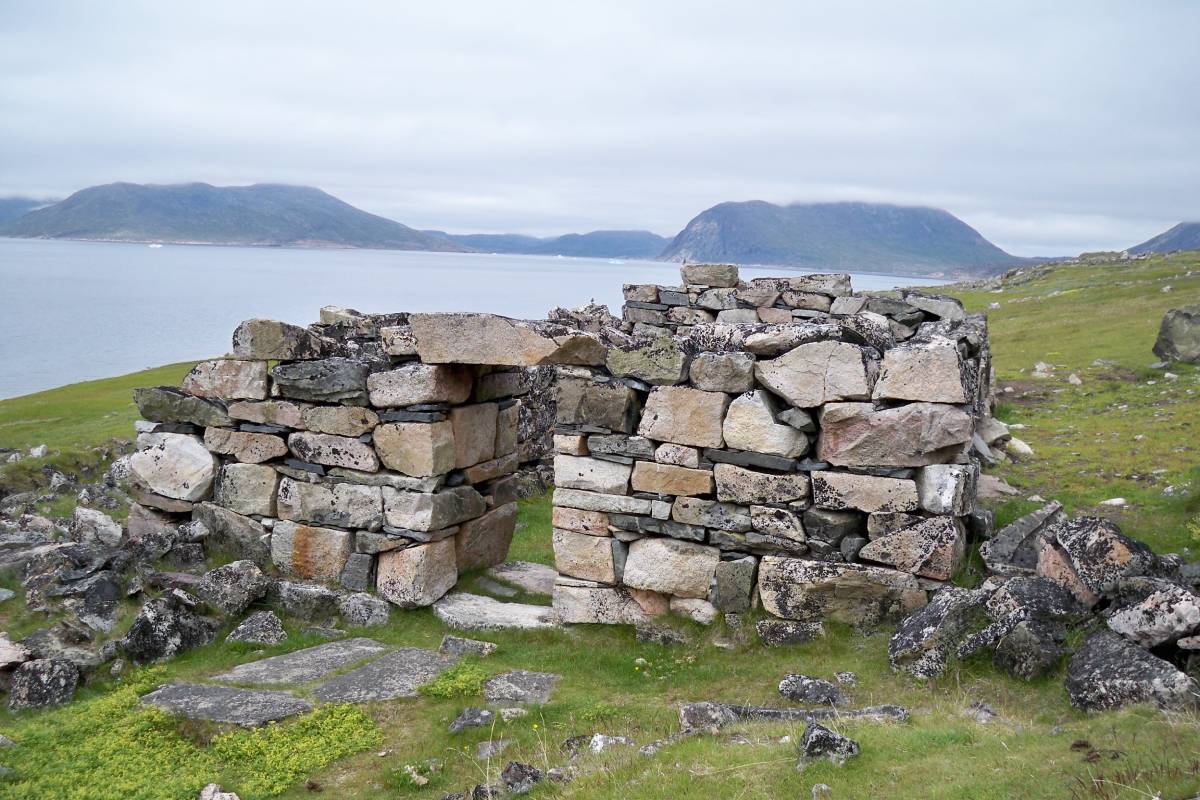
A new study has highlighted the difficulties of establishing what really happened to the Norse colony in Greenland. The research, carried out by Rowan Jackson and Andrew Dugmore of the University of Edinburgh, encompasses interviews with 15 specialists in the field.
While the two authors found broad agreement on what might have caused the decline of the Norse settlements, there is no consensus on the final fate of the colonists.
Gone without a trace
The Norse first began colonizing the island of Greenland in the late 10th century, when, as the sagas state, Erik the Red sought out a new land to the west after being driven away from first Norway and then Iceland.
Despite the inhospitable conditions, which included dark winters, a freezing climate, and a lack of wood for construction, the Norse were able to establish two main sites of occupation, at the so-called Western and Eastern Settlements.
Over time, the Norse Greenlanders became skilled traders of walrus ivory, furs, and hides. Traders from Norway, in particular, were eager to offer significant sums for the goods.
At the same time, the Norse population of the island is thought to have been between 3,000 and 6,000 people. Then, by the middle of the 15th century, even this small population had disappeared.
The mysterious fate of the Norse Greenlanders has fascinated and perplexed people ever since. In recent decades, many experts have attempted to construct theories about what might have happened to cause the end of the colony, yet opinions remain divided.
Now, a study by Rowan Jackson and Andrew Dugmore of the University of Edinburgh explores the contrasting ideas of various scholars, while also attempting to understand why their conclusions vary so significantly.
The results have been published in the article Interpreting Collapse in Norse Greenland: Why Similar Data Produces Different Conclusions, available online.

Engraving from 1897 depicting the arrival of the first Norse colony in Greenland, part of Erik the Red's settlement around 985 CE. Source: Internet Archive Book Images
Known hazards
Jackson and Dugmore's study centers on 15 in-depth interviews with experts who have explored the settlement and depopulation in Norse Greenland.
The two researchers note that a general consensus has been formed about the probable drivers of the decline of the Norse colony in Greenland.
Most of the experts agree, for example, that social inequality and difficulty adapting to changing conditions could have made it hard for the colonists to thrive in the long term. Some also cite the presence of the Thule Inuit as a possible threat to survival, particularly given the scarcity of resources.
Here, there is plenty of evidence, both historical and archeological, that can enable us to form a picture of how the Norse lived in Greenland.
As Jackson and Dugmore point out, we know much about where the Norse lived, who they were, what their habits were, and what kind of activities they undertook. When we also take into account the climatic conditions, it is clear that Greenland was not an easy place to live.
At the same time, we also know that the Norse Greenlanders did survive on the island for several centuries. So what could have dealt the final blow to the colony?
As the authors of the study explain, with this question the weight of evidence does not lend itself to easy explanations.
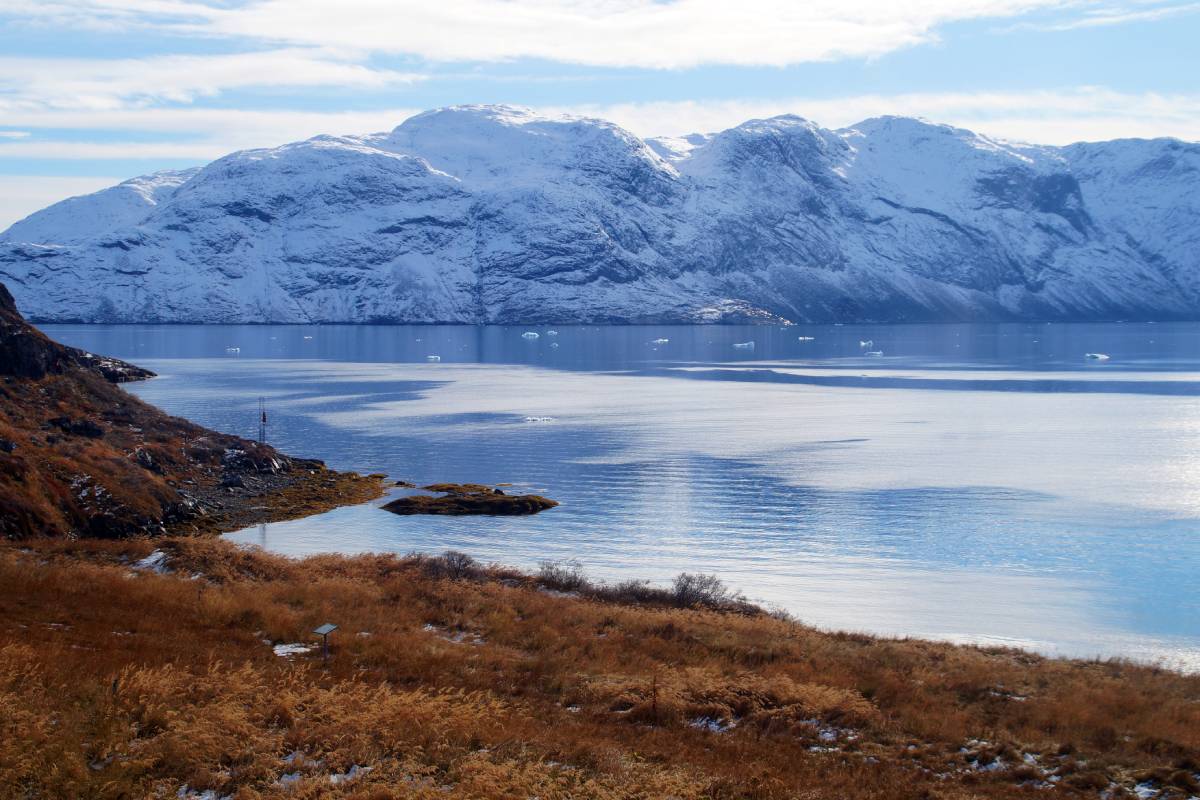
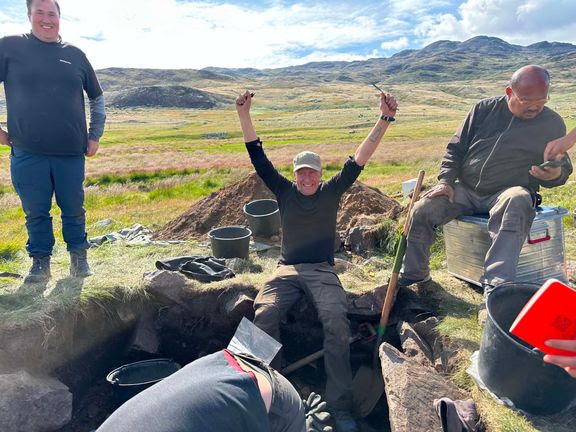
View of the Narsaq archeological site, where excavations uncovered a Viking Age farm and runic inscription. Photo: Melissa Cherry Villumsen (CC BY-SA 4.0)
Building on absence of evidence
Here, the fundamental question is whether the last Norse Greenlanders consciously chose to abandon their settlements or whether the population died out on the island itself.
Unfortunately, there are no known historical records or archeological finds that provide a convincing explanation of what could have happened.
As Jackson and Dugmore explain, this lack of information means most theories are based not on the presence of evidence but on its absence.
Some researchers, for instance, argue the lack of evidence for widespread starvation or a major disease outbreak suggests the Norse must have chosen to leave Greenland.
Others, however, note there is no indication of Norse ships in Greenland that would have been capable of crossing the ocean. In other words, even if the Norse had wanted to escape Greenland and go in search of better prospects in another country, it would not have been practically possible to do so.
It is also pointed out that there are no historical records of Greenlanders arriving in other Scandinavian countries. If there had been a significant movement of Norse from Greenland to Norway, for example, surely there would be some record of it?
On the other hand, another scholar, acknowledging there is no clear evidence of a starving colony or arrivals in Scandinavia, suggests there may have been a mass death at sea.
Or perhaps, goes another argument, the younger members of the colony could simply have sought out better opportunities elsewhere.
If just a handful of young Greenlanders had left by ship to Norway every year, for example, it could eventually have led to the extinction of such a small population.
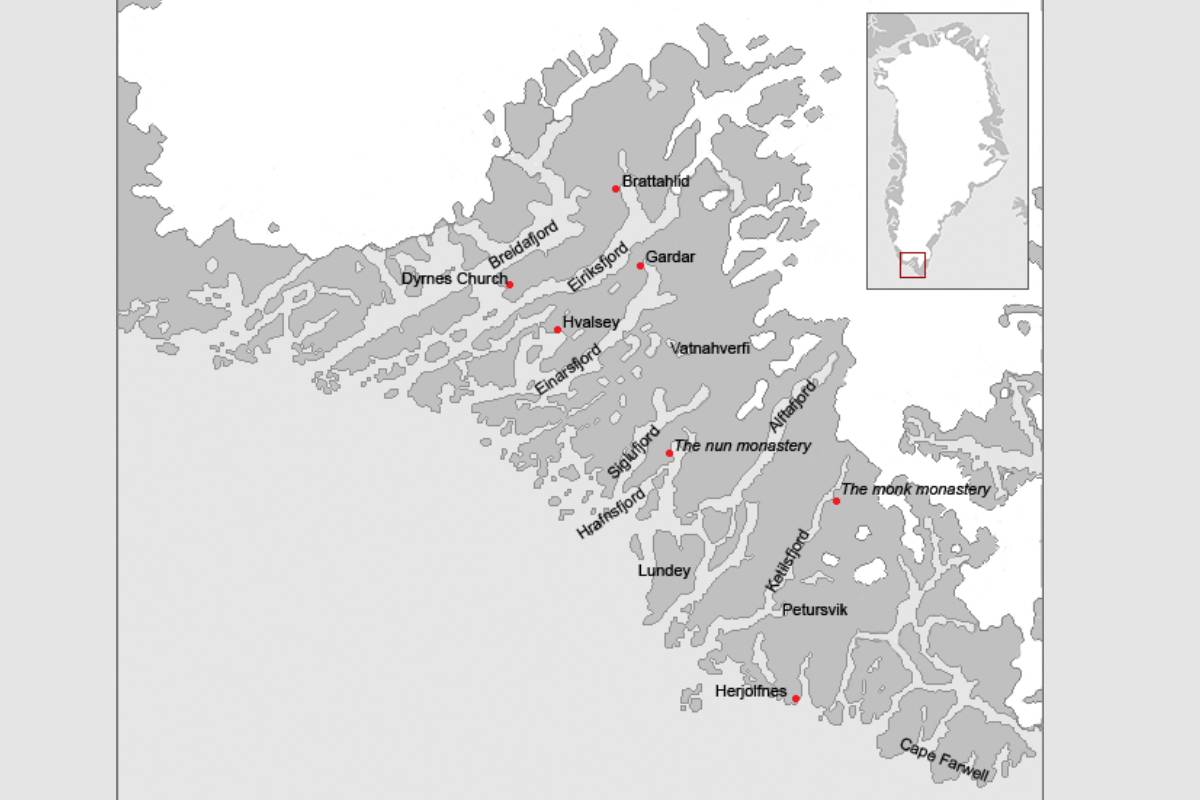
Map of the Eastern Settlement, the largest Viking Age colony on the island, showing major farms, churches, and place names. Image: Masae (CC BY-SA 3.0)
Guided by assumption
As they assessed these theories, Jackson and Dugmore felt that some of the experts appeared to be influenced by their academic background.
As one of the interviewees suggests, Danish and Anglo-American academics, for instance, are perhaps more likely to stress the inhospitable nature of the landscape due to their own relative inexperience in hostile environments.
Researchers from North America could also be more likely to identify anthropological explanations, as the importance of anthropology is stressed more strongly in North American disciplines.
In each case, the experts take the same archeological and environmental data but process them in the context of their own disciplinary training, national research traditions, and use of theory.
In other words, the absence of overwhelming evidence leaves the researchers trying to fill the gap with a series of "what-if" scenarios. Here, they almost inevitably meet our existing knowledge with their own assumptions.
In all likelihood, it will never be possible to achieve a true consensus about what happened to the Norse Greenlanders, at least unless new evidence one day arises.
In the meantime, the two authors call for a new, more collaborative approach: "Perhaps it is time to facilitate a more open dialogue on how researchers from multiple disciplines and research traditions are interpreting the past," they comment in the article.
"From there, it will be possible to identify new research questions to ask and hypotheses to test in the future."
We get to provide readers with original coverage thanks to our loyal supporters. Do you enjoy our work? You can become a PATRON here or via our Patreon page. You'll get access to exclusive content and early access.
Feel free to reach out to discuss potential stories that may be in the public interest. You can reach us via email at hello@thevikingherald.com with the understanding that the information you provide might be used in our reporting and stories.




.jpg)

