


One of the defining characteristics of the Viking Age was the movement of Norse people toward a series of nearby and far-flung locations, from the British Isles and Iceland to the Iberian Peninsula, North Africa, and America.
Yet as the Norse invaded, explored, and often settled in other countries, many other people also moved in the opposite direction.
Much has been written about the Norse influence on other cultures, of course, but we know relatively little about the immigrants who made their way to Scandinavia.
So what kind of people relocated to the north, and why? In this article, The Viking Herald takes a look at one 2023 study that explored this question through detailed DNA analysis.
Mapping movement
The research described in the article The genetic history of Scandinavia from the Roman Iron Age to the present, published in the journal Cell, was led by an international team of analysts working in association with Stockholm University.
The study focused on mapping the extent of migration and ancestry in Scandinavia not only during the Viking Age but also over the last 2,000 years.
The researchers used a set of nearly 300 historical genomes taken from burial sites ranging from the 1st to the 19th century CE.
These were combined with genotypes – i.e., the genetic makeup of the individual – of more than 16,000 modern individuals from Denmark, Norway, and Sweden.
By then comparing the genomes of these individuals, the team was able to build a picture of how the ancestry of the respective populations of the three countries has varied over time. So what did they find?

Dublin was established as a Viking Age settlement and became a major center for the slave trade in the 9th and 10th centuries. Photo: Alexey Fedorenko
The British-Irish connection
Although the researchers studied a wide range of historical periods, they found the Viking Age, in particular, saw extensive migration toward Scandinavia – perhaps more than at any other point in the last 2,000 years.
One of the most significant inward flows during this era came from people with British or Irish ancestry.
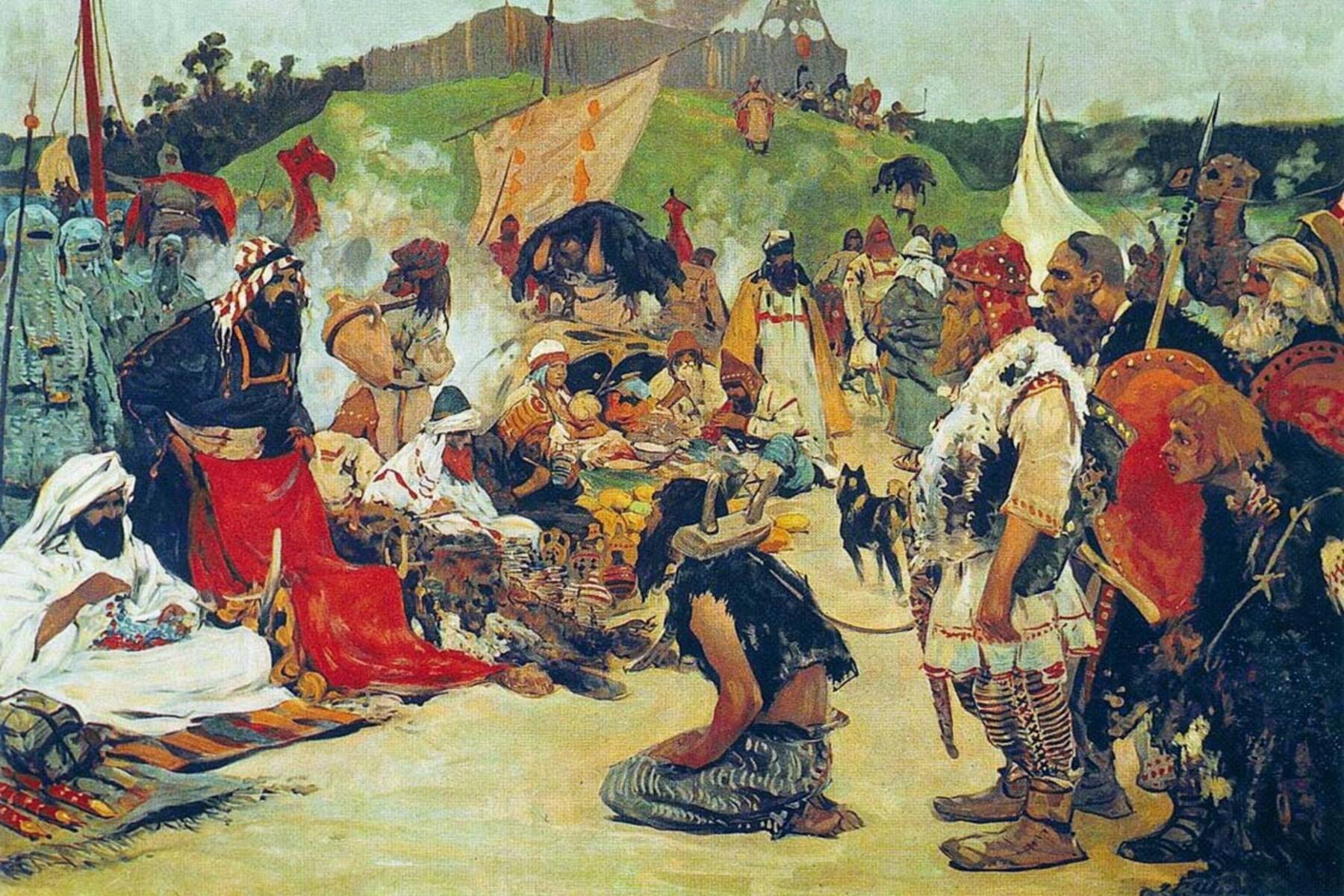
These results are, to a certain extent, in line with historical records. We know, for example, that there were many Irish thralls, or slaves, brought to Scandinavia during the Viking Age.
The rise of Christianity in Scandinavia also saw an increase in the number of clergymen, missionaries, and monks who traveled from the British Isles to spread the word of God.
Olaf Haraldsson, for example, was canonized by an Anglo-Saxon bishop and advisor.
Yet the research could also indicate that there may have been a broader wave of migration from the British Isles toward Scandinavia than previously thought.
It is easy to imagine, for example, that others could have moved for other practical purposes, such as trade or commerce, given the close relations between the Anglo-Saxon, Celtic, and Norse cultures in this period.
- READ MORE: The Viking history of Ireland – A primer
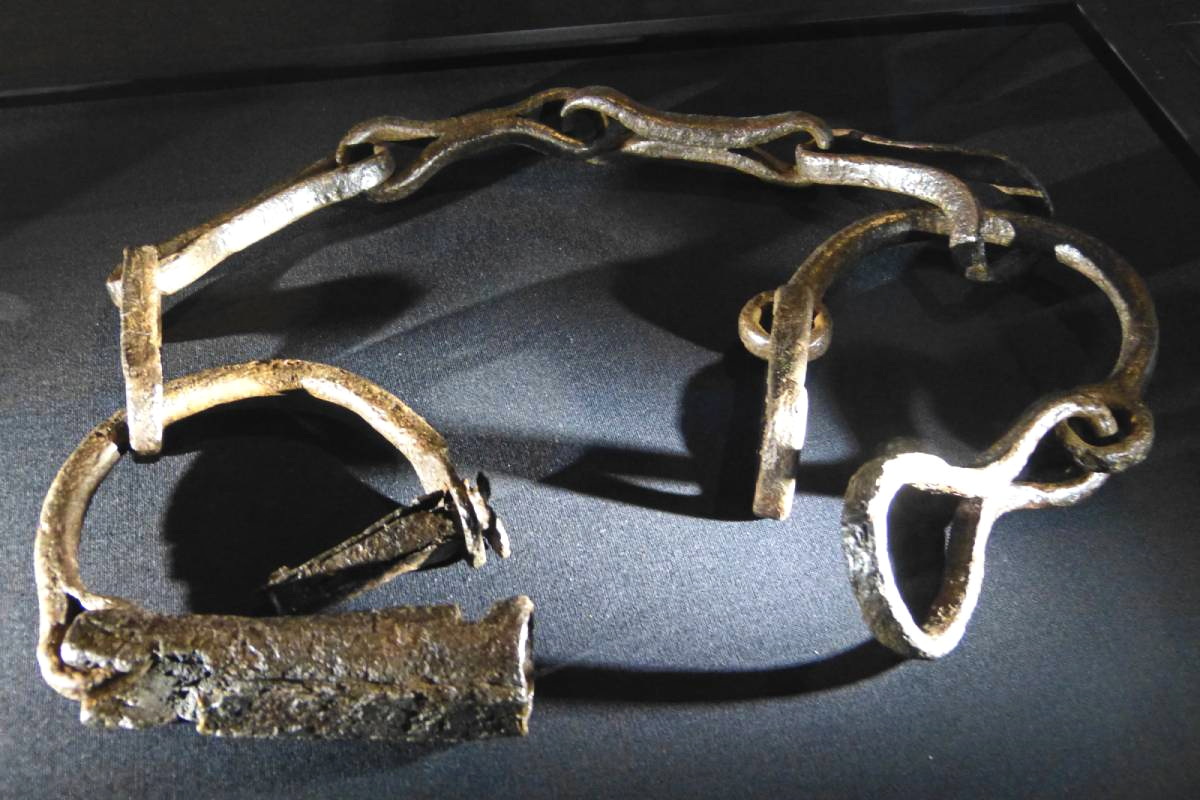
The Viking Age slave chain from Breest, displayed at the Lokschuppen exhibition in 2016, illustrates the harsh realities of slavery. Photo: Wolfgang Sauber (CC BY-SA 4.0)
Baltic migration flows
The other significant migration flow described in the study came from the eastern Baltics.
Unlike the wide distribution of people of British and Irish ancestry, however, the analysis found that the Baltic people settled primarily on Gotland Island and in central Sweden.
Just as with the British Isles, it makes sense that people from the Baltic region would have relocated to Scandinavia either as slaves or possibly to work in trade or commerce.
It is also known that the Vikings often raided the east as well as the west and south.
Most notably, a discovery on the Estonian island of Saaremaa in 2008 revealed the presence of two clinker-built ships of Scandinavian origin and 41 warriors from the 8th century CE.
Later, trade routes were developed that extended from many parts of Scandinavia to the Baltics and beyond.
In all likelihood, the proximity of Sweden – and in particular Gotland – to the present-day Baltic countries of Lithuania, Latvia, and Estonia would explain why Baltic ancestry was identified in this area in particular.

A 2008 discovery on Saaremaa Island in Estonia revealed two Scandinavian clinker-built ships and 41 warriors from the 8th century. Photo: Rsaage (CC BY-SA 3.0)
Almost without a trace
The researchers also noted that while the British-Irish genotypes were, to a certain extent, still present in the genes of modern individuals in Scandinavia, there appears to have been a marked decrease in eastern Baltic ancestry over time.
In other words, the research suggests that while the people of British-Irish ancestry became a permanent part of the population in Scandinavia, the Baltic thread appears to have fizzled out.
The researchers present several possibilities for this unusual finding.
One is that the change could have been due to a simple increase in gene flow from other regions that diluted the Baltic factor.
Another is that there may have been some kind of restriction on reproduction that was connected to ancestry, just as the early Norse settlers in Iceland discouraged relations with the people of Gaelic ancestry also residing there.
Lastly, the researchers admit that it may be that in Sweden, most individuals in the early Viking Age were cremated.
Those that were buried – and can thus be found today – are the exception. In other words, different burial practices could have resulted in an overrepresentation of people of Baltic ancestry in the samples analyzed.

Missionaries from the British Isles and the Holy Roman Empire played a significant role in introducing Christianity to Scandinavia. Photo: Nationalmuseet (CC BY-SA 2.0)
The unknown influence
It should be noted that this latter point highlights the obvious limitations of studying the DNA of a restricted number of people from the distant past: when faced with limited and distorted sample size, it is not easy to draw any firm conclusions.
Yet, while there is still clearly much to be learned in this field, the study reminds us that the Norse not only helped shape the history of the countries around them during the Viking Age, but were also transformed themselves.
Indeed, by the end of the 11th century, it was arguably the countries of Denmark, Norway, and Sweden that had experienced the greatest change of all.
Across Scandinavia, people were leaving the old religion behind and embracing Christianity, trade was thriving, and a literate class was beginning to emerge.
Naturally, the experiences of the Norse people abroad will have impacted their culture at home, too.
But there is also no question that the people who came to Scandinavia from abroad would also have helped to shape these momentous transformations.
Relatively little is known about how these immigrants helped shape this new world, but this landmark study arguably presents an excellent platform for us to start finding out.
We get to provide readers with original coverage thanks to our loyal supporters. Do you enjoy our work? You can become a PATRON here or via our Patreon page. You'll get access to exclusive content and early access.
Feel free to reach out to discuss potential stories that may be in the public interest. You can reach us via email at hello@thevikingherald.com with the understanding that the information you provide might be used in our reporting and stories.



.jpg)