

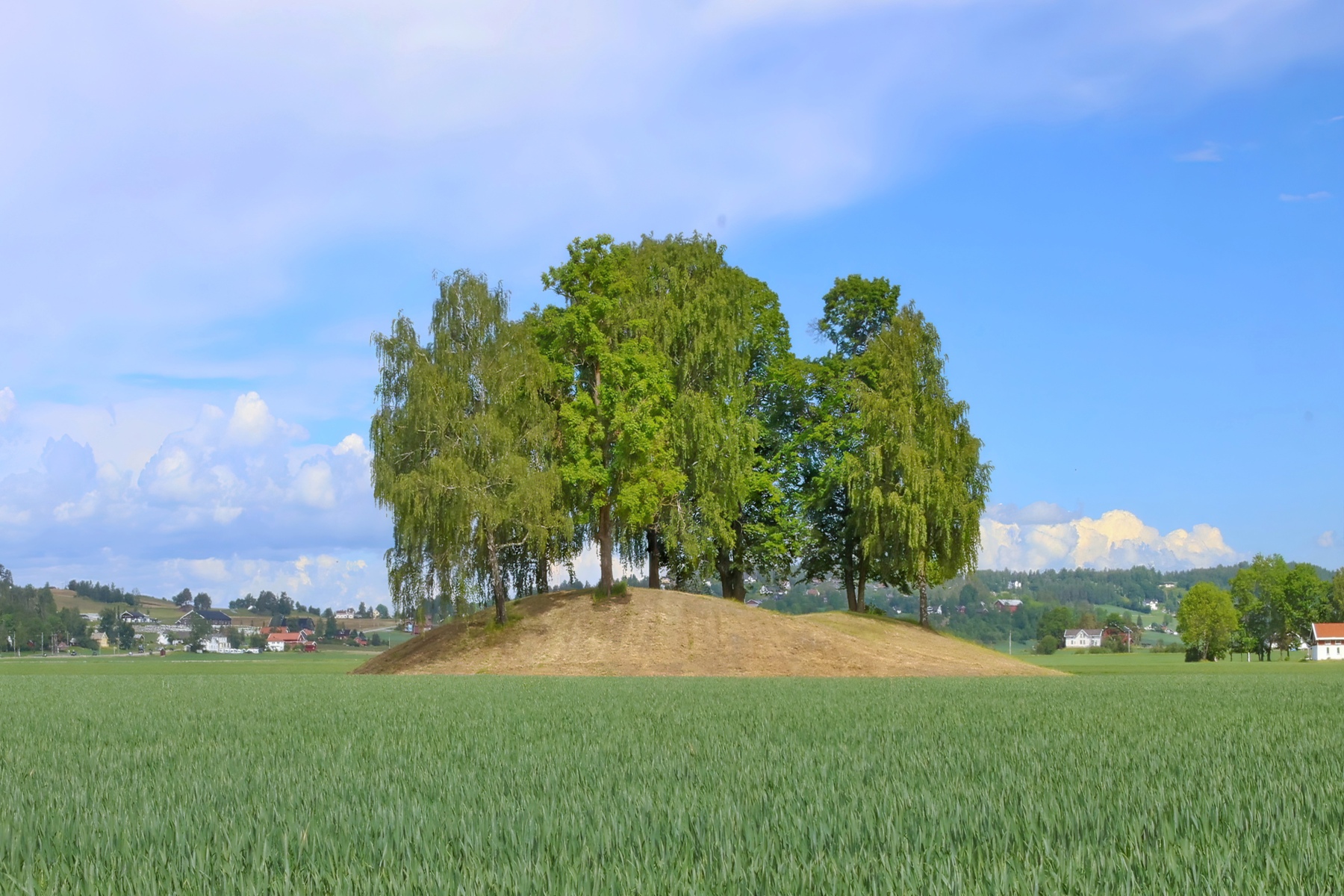
Ringerike, a bucolic municipality situated in Buskerud County, southern-central Norway, is located approximately 85 kilometers north of Oslo. It’s a scenic region, consisting of forested hills, large cultivated landscapes, rugged low-lying mountains, and two large inland fjords, Tyrifjorden and Steinsfjorden.
When I first arrived in Norway in the early 1980s, I had the pleasure of living in Ringerike for several years in a quaint place called Åsbygda, located between the towns of Hønefoss and Jevnaker. It wasn’t until many years later that I learned Ringerike was a major hub of Viking activity, featuring a colorful array of local kingdoms, and was also the home of several of Norway’s most famous Viking kings, including Harald Fairhair and Harald Sigurdsson.
Waiting to be explored
Viking Ringerike is also known for its many outstanding archeological finds, including the world’s oldest known runestone, and as the place of origin for a famous artistic approach of the late Viking Age: the Ringerike style.
While researching Ringerike’s Viking history for this article, I downloaded an assortment of photos to use as illustrations. However, on finishing the first draft, it occurred to me that Oslo’s Historical Museum was no more than 20 minutes away by public transportation, and Ringerike itself was less than an hour away by car.
With this in mind, I decided to replace as many of the downloaded photos as possible with my own, first with a visit to the Historical Museum, and then by driving up to Ringerike itself in the hope of experiencing its past history on a more personal level.
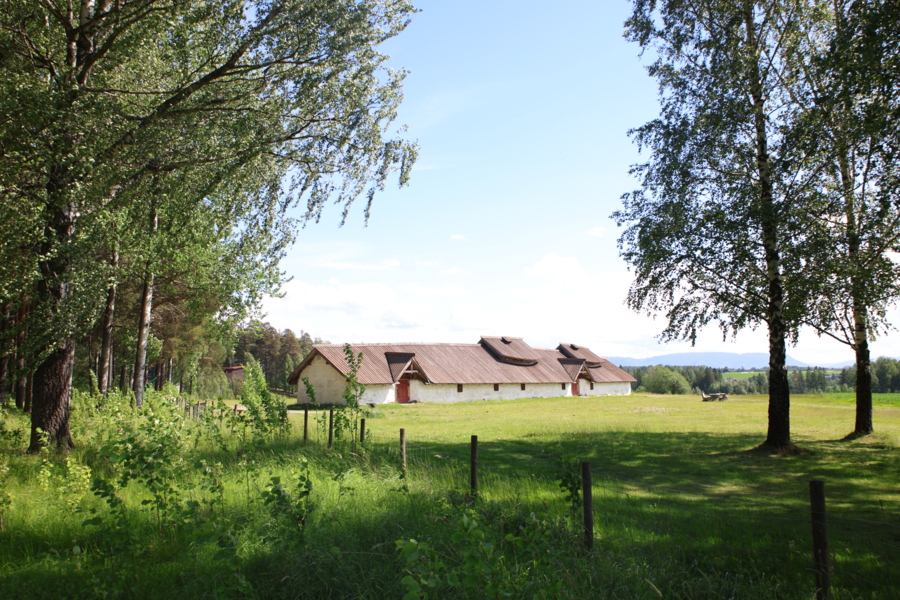
An Iron Age longhouse at Veien Cultural Heritage Park. Source: Brian M. Talgo
A center of trade
Ringerike has been inhabited since at least the Late Neolithic Age, with the first permanent settlements appearing around 3000–2000 BCE. Unfortunately, however, little is known about the people who lived here prior to the Viking Age (circa 800 CE).
What remains is a collection of skillfully rendered artifacts retrieved from some of the more-than-100 burial mounds found in Ringerike. Additionally, a proto-Viking longhouse has been reconstructed based on post holes discovered during a 1995 archeological dig. The longhouse, combined with the artifacts, indicate an advanced pre-Viking Norse culture.
Later, as the late Iron Age transitioned into the Viking Age, Ringerike grew to become a central trading hub, connecting south-eastern Norway with the central mountain valley territories collectively known as Upplǫnd, modern Hallingdal and Valdres, as well as with the western coastal regions. Thanks to its direct connection with the fjords in the Drammen area (Old Norse, Drafn), Ringerike also had access to international trade through the shipping ports located there.
What’s in a name?
The name Ringerike roughly translates into English as Kingdom (or Reich) of the Rings. If that sounds like something out of Tolkien’s Lord of the Rings trilogy, you wouldn’t be entirely wrong. (More details of that in our Kings of Ringerike article, here.)
In Viking times, Ringerike was known in Old Norse as Hringaríki, (ON hringr [ring]) and ON ríki ([kingdom]) with the ‘H’ later disappearing during the 13th century. As with many geographical place-names, the actual etymology is uncertain. One theory is that Ringerike’s name is rooted in a mythical King Ring, known from Icelandic saga literature, who supposedly lived in the area around 700 CE.
Another theory states that the people settling the Ringerike area in the late Iron Age, mentioned above, belonged to a Germanic tribe called the Hringir. Both of these theories are more likely saga myth than fact, and it’s doubtful the origin of Ringerike’s name will ever be known for certain.
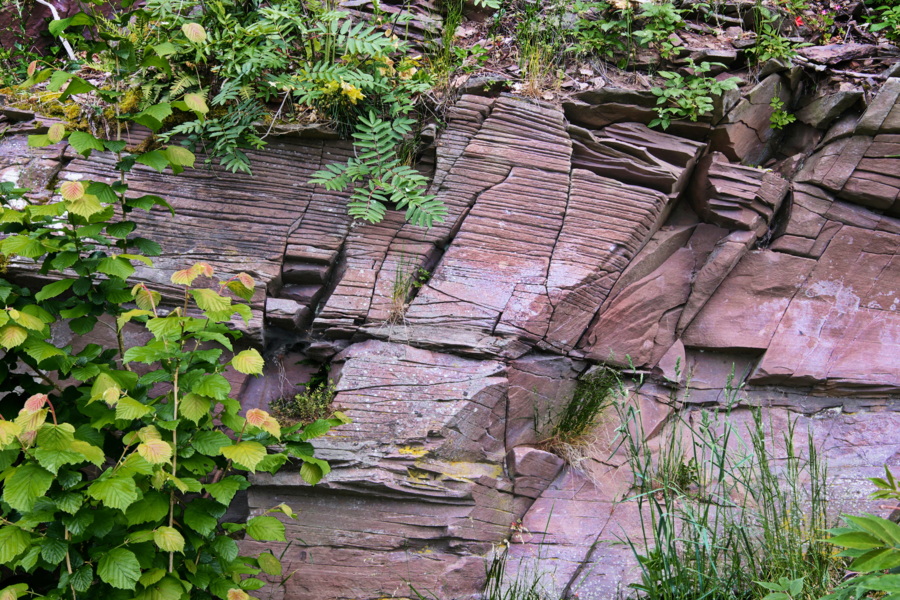
Ringerike sandstone, which was used to create a series of runestones both prior to and during the Viking Age. Source: Brian M. Talgo
Bustling industry
During the Viking Age, Hringaríki was known as a major center for high quality iron production, including finished iron goods such swords, axes, and arrowheads. The extensive forests provided timber and wood for ship and house building, and were also an excellent source for pelts, hides, furs (such as beaver and fox), and leather.
Locally produced art, woodcarving, and metal crafts done in the famous Ringerike style were highly valued trade goods. Additionally, Ringerike sandstone was transported locally to neighboring regions as a sought-after type of stone for making runestones, sharpening tools, and millstones.
Raw materials could be sent by ship to the coastal trading centers, facilitating trade with larger international markets. In exchange for their exports, Ringerike traders received in return highly prized imports, including silver, silk, glass, spices, jewelry and other luxury items.
Waterways and ways to trade
On first glance at a map of modern Ringerike, it might seem odd that an inland area would be a major center of Viking activity, as there is presently no major waterway connection between Ringerike and the open sea. Like many cultures, going back to the dawn of modern civilization, the Vikings usually established their larger settlements in coastal areas or along river routes, facilitating travel and trade.
However, during the period when Ringerike was settled and flourished as a Viking center, there was a direct route to Oslo Fjord by way of Drammenselva (the Drammen River). Although there were rapids and several waterfalls along the way hindering large ship transport, flat-bottomed boats and smaller Norse longships could negotiate the unnavigable of the sections of the river with portages over land, thus giving access to Oslo Fjord from Tyrifjord and Steinsfjorden.
Norway’s topography has subsequently changed since the Viking Age. Drammenselva, though still connected to Oslo Fjord, is no longer a navigable waterway, leaving Ringerike and both of its fjords more or less landlocked. So what caused this change?
During the peak of the Last Glacial Period, around 20,000 years ago, the glacial ice sheet covering southern Norway was enormous, with a maximum thickness of nearly 10,000 feet (3000 meters). The weight of these glaciers was so massive that it pressed down the underlying tectonic plates. Relieved of the pressure when the glaciers retreated at the end of the ice age, the landmass began to rise, and continues to do so by a few millimeters per year.
In the course of the 1,000 years that have passed since the Viking Age, the Norwegian landscape has risen by approximately 1-3 meters, depending on the area. Additionally, the sea level was 4 to 5 meters higher in Viking times.
The combined effect of these two factors has had a marked effect on modern day Norwegian river patterns and coastlines. Because of this rebound, the geographical world of the Vikings differs in certain ways as ours today, which explains why Ringerike, with a navigable waterway connection to Oslo fjord a thousand years ago, could support important Viking trading activity.
The Kings of Hringaríki
Much of what we know about the Norse kings from the Viking Age comes from the Íslendingabók (Book of the Icelanders), written by Ari Thorgilsson (ON Ari Þorgilsson, c. 1067 – 1148) and/or the Heimskringla, the 13th-century compilation of Norwegian kings' sagas (and myths) written by Icelander Snorri Sturluson (1179–1241).
In both of these works, myth, saga, and oral history are intertwined, making it difficult to differentiate between fact and fiction. It’s also worth noting that many of the so-called Norse kings are often referred to by historians as ‘petty kings’, i.e. rulers who presided over smaller areas, petty kingdoms, as opposed to an entire country or nation.
Several of these kings played an important part in the history of Norway. In particular, in the mid-9th century Halfdan the Black, took charge of large swathes of southern Norway. His son, Harald Fairhair, would then take the power inherited from his father and use it to become ruler of all Norway.
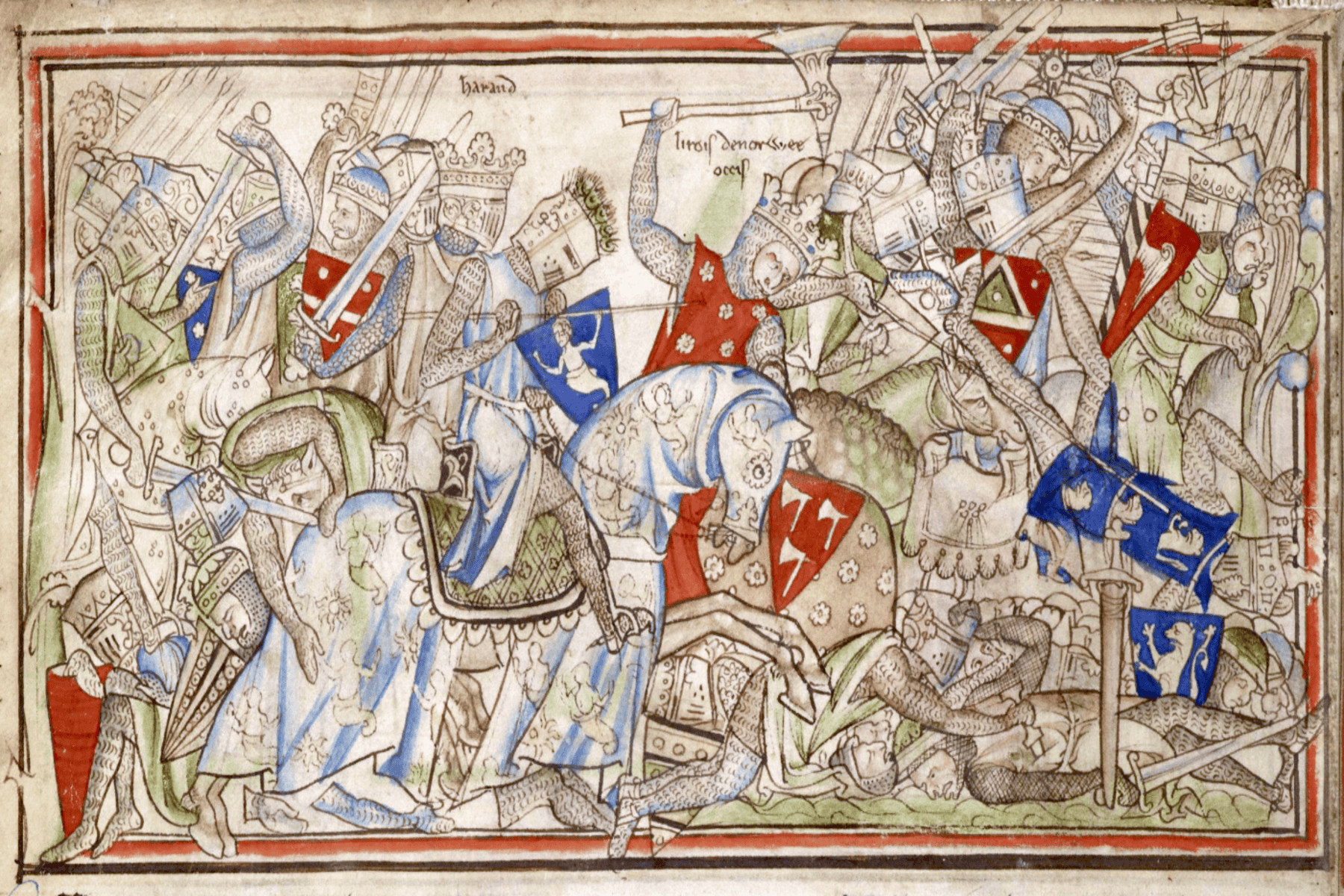
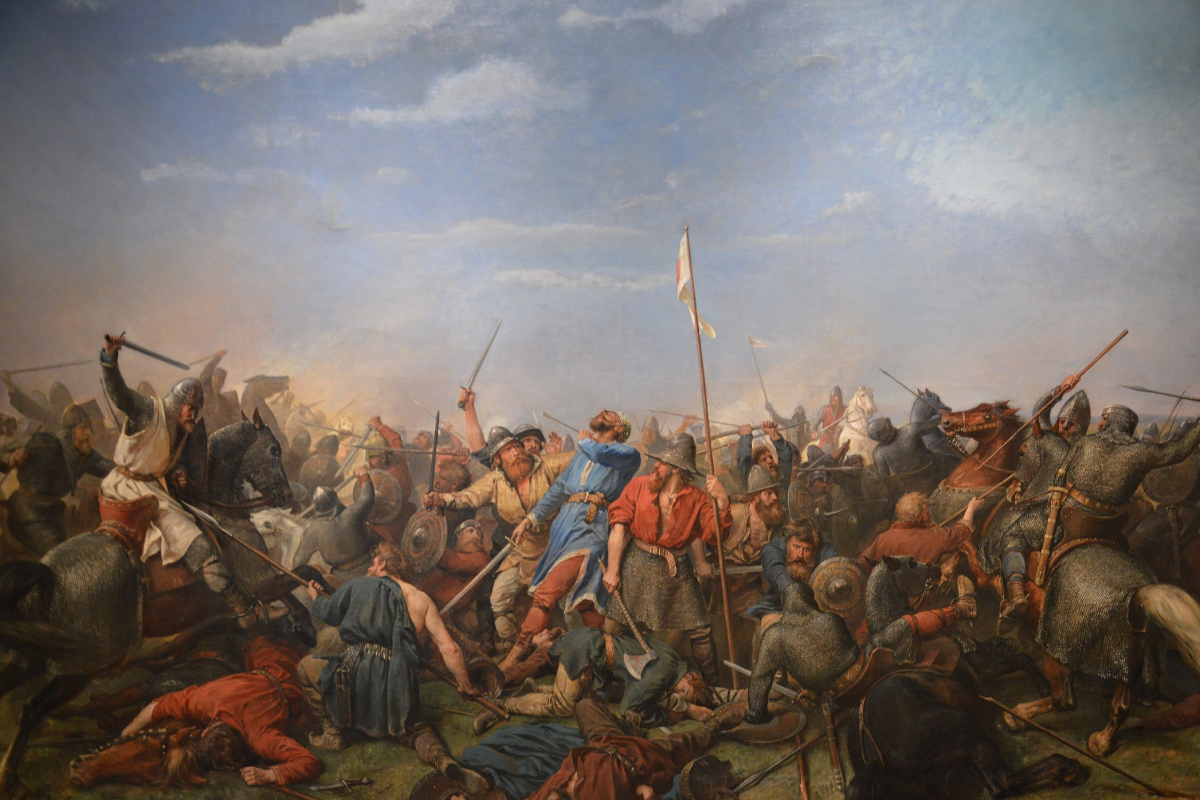
Also noteworthy is Olaf Haraldsson, known as Olaf the Holy. The son of Fairhair, Olaf played a crucial role in the Christianization of Norway. Then there is his half-brother Harald Sigurdsson, or Harald Hardrada, who is said to have been born on the Stein farm in Ringerike in 1015, and who would go on to become one of the most famous Vikings of them all.
(You can read more about the kings in a separate article, here.)
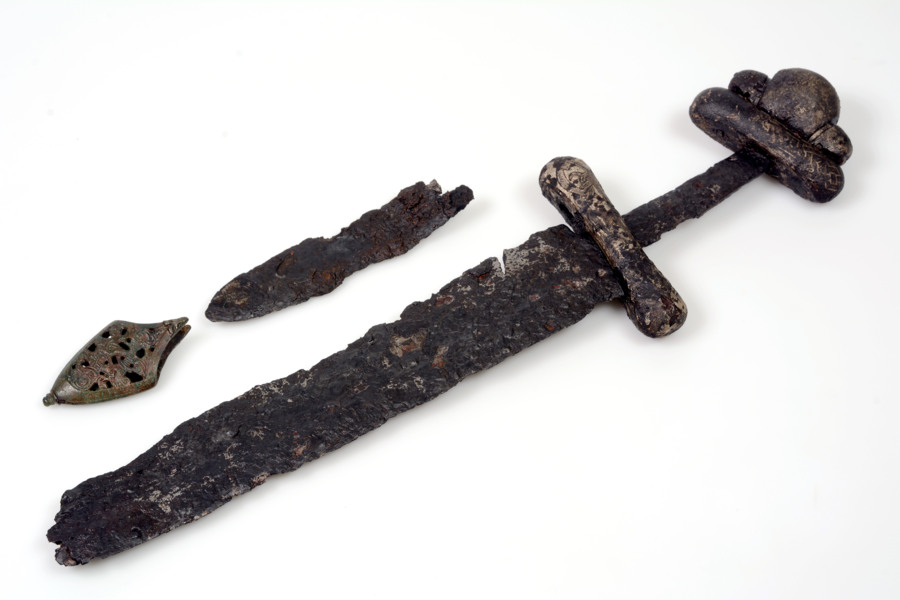
The Gjermundbu Sword. Source: Brian M. Talgo
Archaeological sites and finds in Ringerike
As I found on my journey, there are also a number of fascinating archeological sites to enjoy in Ringerike today. Perhaps the most notable is Halvdanshaugen (Halfdan’s Mound) at Stein Gård (Stein Farm), in the town of Hole. Said to be the final resting place of Halfdan the Black, the mound and the farm are also linked to Olaf the Holy and Harald Hardrada.
Then there is Gjermundbu Farm. Initially uncovered in 1943 by the local farmer Lars Gjermundbo, the property contains a large Norse burial site. The main graves have been dated to around 950-975 CE and contain fragments of various weapons, tools, dice and at least one sledge, not to mention the Gjermundbu Helmet, considered to be the best-preserved Viking helmet ever found, and the Gjermundbu Sword, a fine example of a Peterson Type S Viking sword.
Then there are the runestones. Ringerike sandstone – a reddish-brown material common in the area, was used for centuries to erect a series of monuments. Perhaps most significant is the Hole Runestone – the oldest known runestone in existence. Dated to somewhere between 1 and 250 CE, it is roughly 300 to 500 years older than the next earliest runestones.
Also discovered in the Ringerike region are the Dynna Runestone, which depicts the Christian nativity scene, and the Alsted Runestone which is thought to have been raised in the 10th century, and provides a classic example of the Ringerike style.
Finally, we can highly recommend a visit to Norderhov Kirke (Norderhov Church), at Hønefoss. The church is still in active use today, and can be visited throughout the week. Although the current building was constructed just outside the Viking Age, in 1170 CE, it sits on the site of a Pagan ‘hof’, (a temple or ritual place) dedicated to the Norse god Njord. As such, it provides a clear link to the long history of this incredible region.
(We will be publishing a full exploration of the archeological sites and finds of Ringerike in the coming weeks.)
Visiting today
I spoke with several local historians on my visit to Ringerike, one of whom kindly took us on a personal tour of several local Viking and Iron Age sites, including Veien Cultural Heritage Park. Unfortunately, I was unable to visit the actual Gjermundbu site as it lies on private property. Nevertheless, merely looking across a field to where this grave find is located left me with a profound sense of history.
I had similar feelings while viewing Halfdan’s Mound. To be standing in a field of wheat, gazing at a massive burial mound, that may or may not be the final resting place of a famous Viking king’s head or mere inches away from many of these ancient exhibited artifacts; this was a much more visceral experience than mere photos could impart. In a sense it brought ancient history back to life, making it more real and less abstract.
There can be no question that this magical region is worth exploring. The landscape of Ringerike is dotted with archeological sites and undisturbed burial mounds – who knows what other ancient treasures may lie resting under the soil.
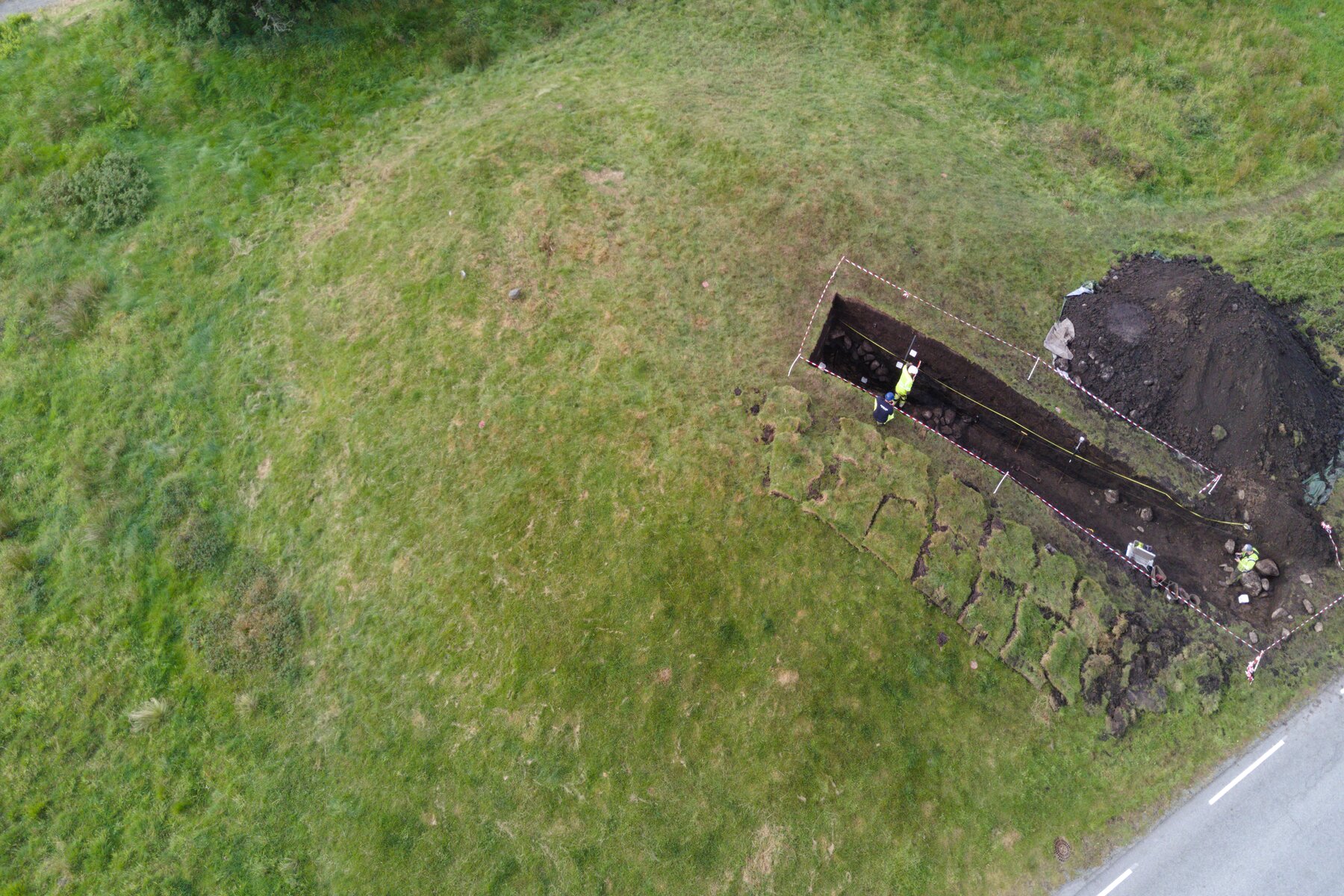
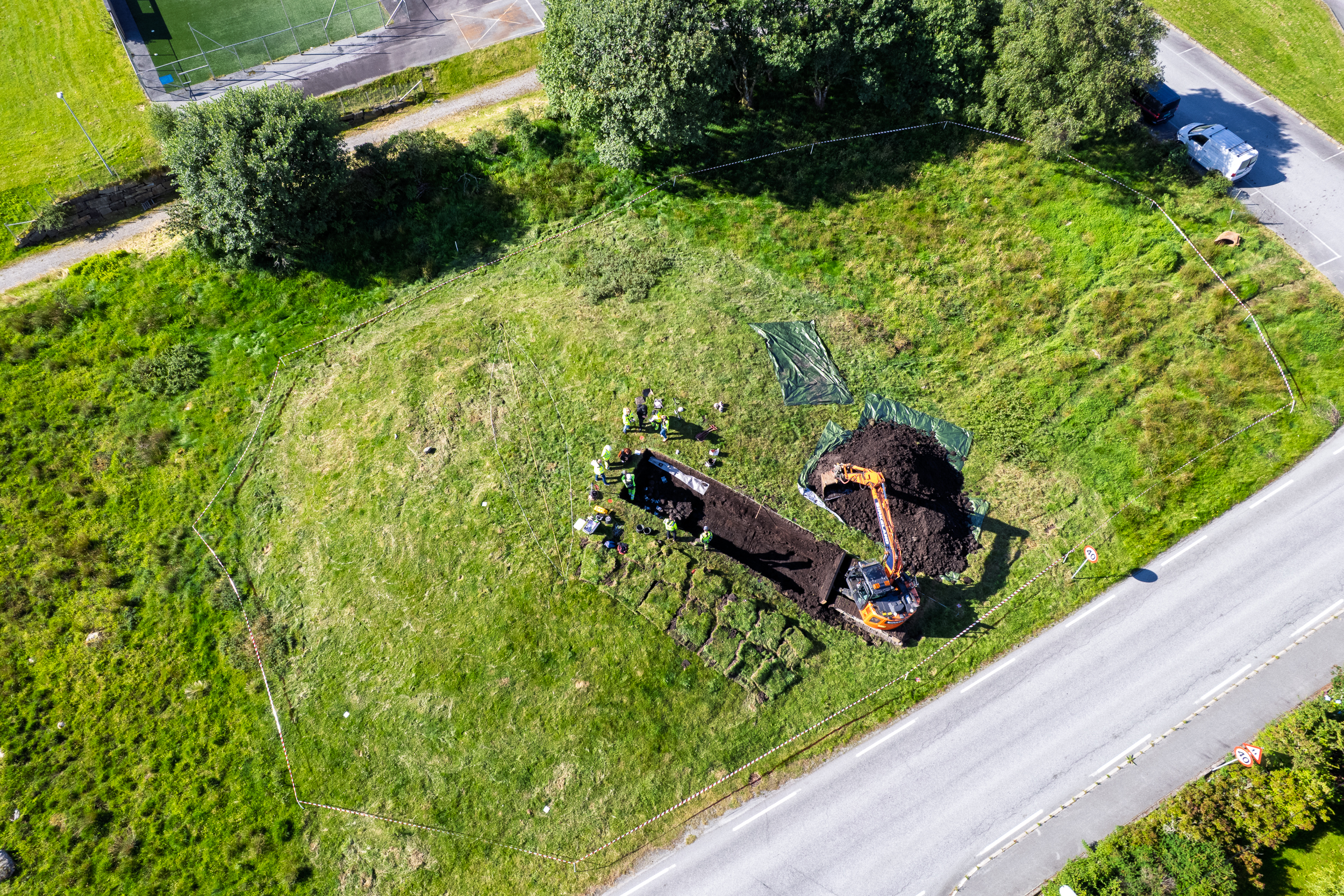
The April 10 discovery of nearly 3,000 Viking-era silver coins, the incredible Mørstad Hoard, the largest Viking coin hoard ever found in Norway, bears ample witness to this. We can surely look forward to further explorations of existing wonders and also future Viking finds in the Ringerike region.
We get to provide readers with original coverage thanks to our loyal supporters. Do you enjoy our work? You can become a PATRON here or via our Patreon page. You'll get access to exclusive content and early access.
Feel free to reach out to discuss potential stories that may be in the public interest. You can reach us via email at hello@thevikingherald.com with the understanding that the information you provide might be used in our reporting and stories.