

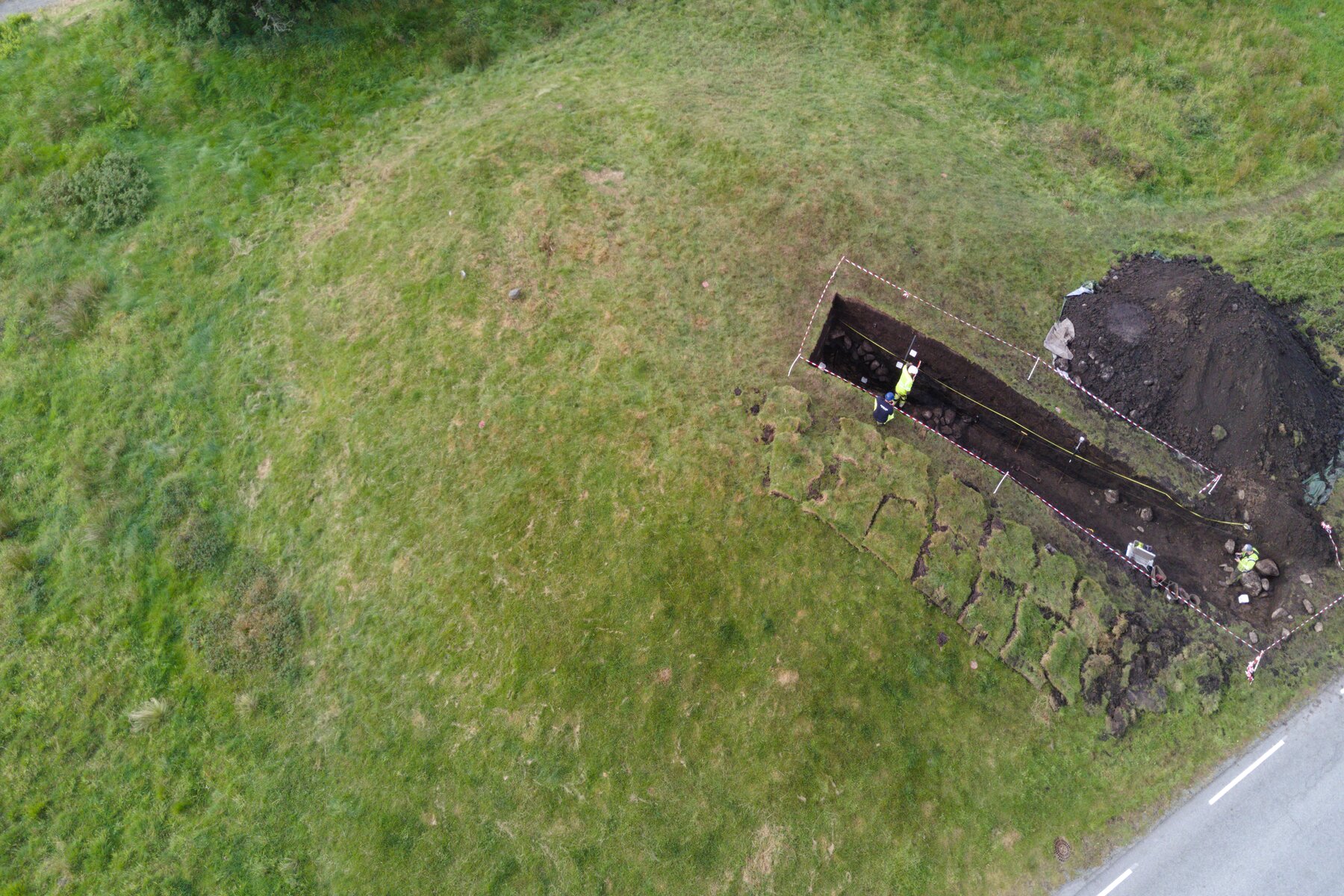
This summer, a group of archeologists reopened a 9th-century burial mound on the Norwegian island of Karmøy, close to the strait of Karmsundet. It is the first time the mound has been excavated for 124 years. The site is located just a few miles from Alvadsnes, the former manor of Harald Fairhair, the first king of Norway.
To find out more about the new excavations, The Viking Herald speaks exclusively to project co-leader Marie Kjærnet Ødegaard of the University of Stavanger. Read on for an in-depth analysis of the investigations and to find out how Grønhaug – together with the nearby ship burials of Storhaug and Salhushaugen – provides a unique insight into the customs and power structures of Viking Age Norway.
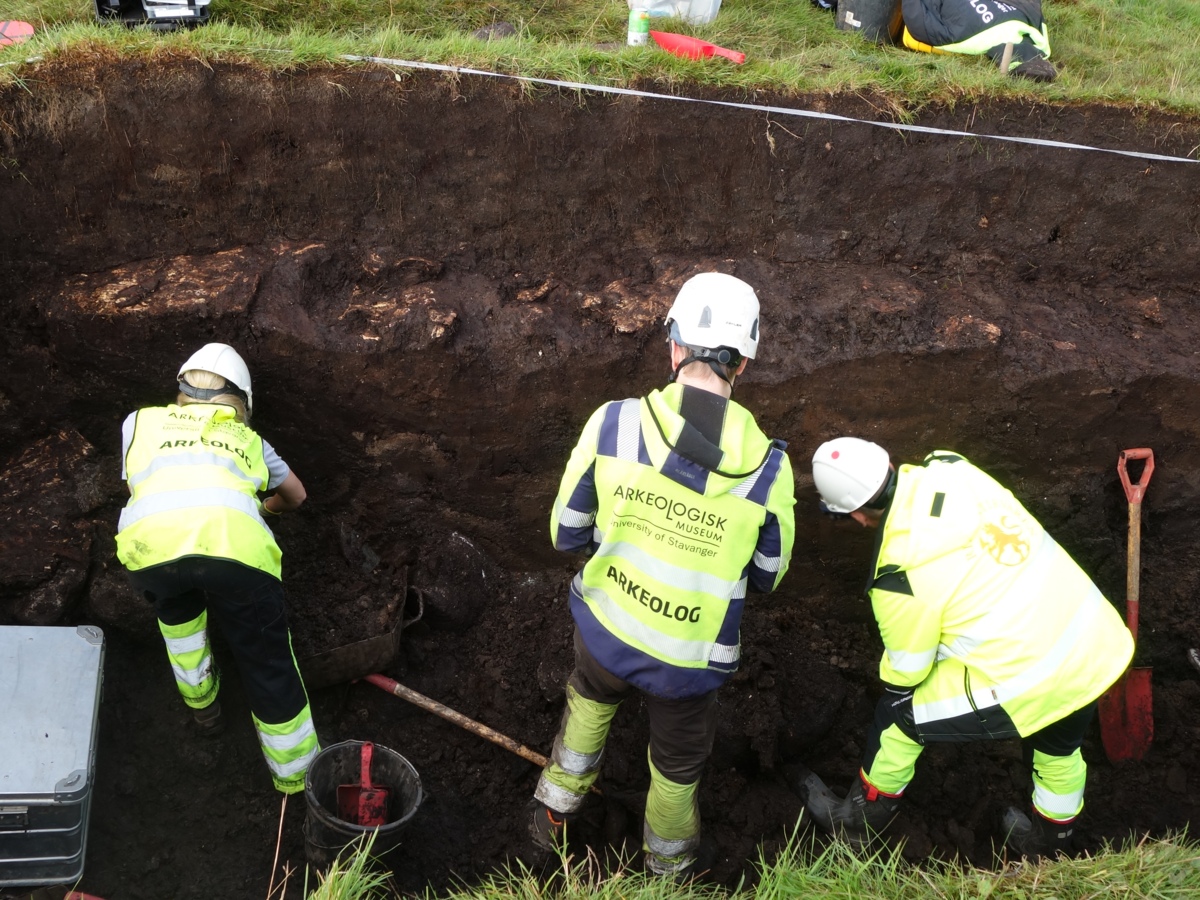
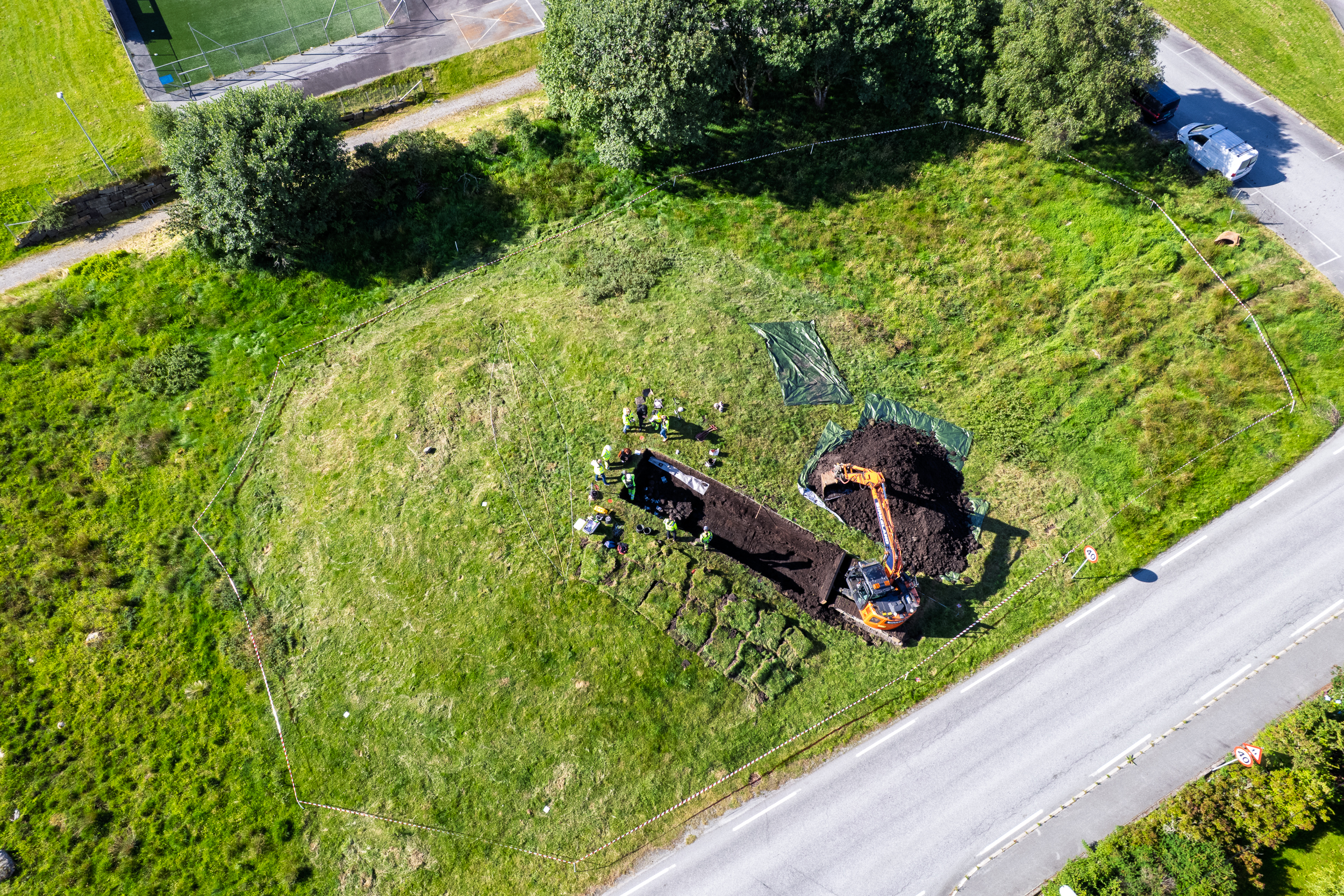
Archeologists at work in the trench. Source: Marie Kjærnet Ødegaard / University of Stavanger
A long-awaited exploration
“The excavation was commissioned by the Norwegian Directorate for Cultural Heritage (Riksantikvaren),” Marie informs The Viking Herald. “It is part of the ongoing work on ship burial sites in Norway with a possible future UNESCO World Heritage nomination.
“Grønhaug forms part of the remarkable ship-burial landscape on the island of Karmøy, close to Avaldsnes, one of the most important centers of power in Viking Age Norway. The excavation was carried out by the Archaeological Museum at the University of Stavanger in collaboration with Rogaland County Municipality. The mound had not been investigated since Haakon Shetelig's excavation in 1902, and several important questions remained unanswered.
“Our main objectives were to assess the preservation conditions within the mound and to investigate a long-standing hypothesis that the Viking Age ship burial had been constructed over an older burial monument, possibly dating to the Bronze Age.
“The excavation also gives us the opportunity to re-examine the site using archaeological methods and analytical techniques that were unavailable more than a century ago.”
Reinvestigating an ancient monument
When The Viking Herald first reported on the Grønhaug project four weeks ago, the excavation was still in progress. Now, however, Marie is able to report on the completed on-site investigations.
“The excavation has been highly successful,” Marie confirms. “It has addressed both of our principal research questions. We now have a much better understanding of the preservation conditions within the mound.
“We also found clear evidence of an older stone-built monument beneath the Viking Age ship burial. Whether this older monument dates to the Bronze Age is one of the questions we now hope to resolve through further analysis.
“It is important to emphasize that this was not a large-scale excavation of an untouched mound,” Marie adds. “We primarily reopened Haakon Shetelig's excavation trench and expanded it only slightly into previously undisturbed deposits. Despite this very limited intervention, the excavation produced a remarkable amount of new information.
“One of the most important results is that we now have samples connected to several different phases in the monument's history. These may allow us to date the underlying monument, the construction of the Viking Age mound, the birch-bark layer and the later reopening of the grave. Together, they could provide a much more detailed chronology of how Grønhaug developed and was used over time.
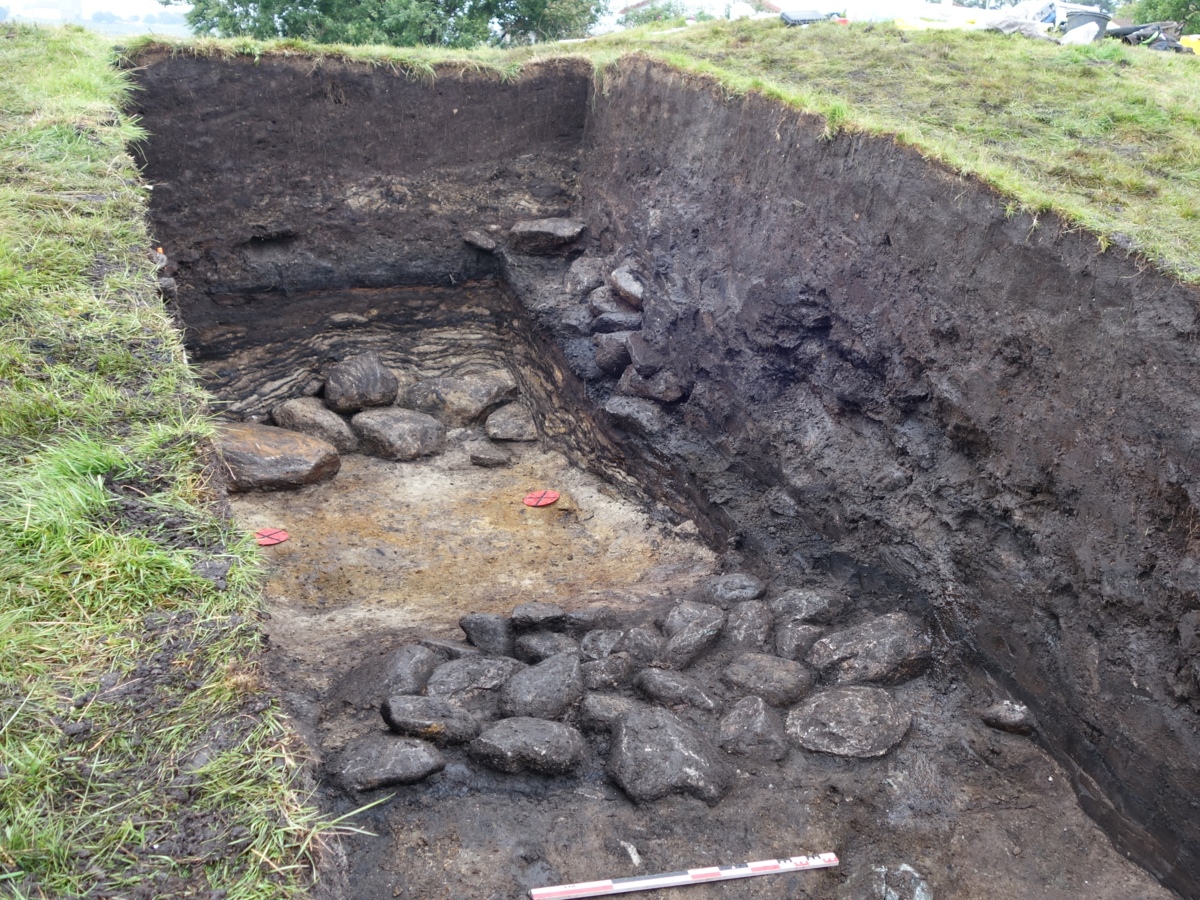
Layers of excavation at Grønhaug. Source: Marie Kjærnet Ødegaard / University of Stavanger
Bilberry, birch bark and a new date
The Viking Herald asks Marie about the highlights of the new excavations. “Particularly exciting was a remarkably well-preserved ancient ground surface sealed beneath the Viking Age mound,” Marie tells us. “Heather and (what we think is) bilberry plants were still preserved where they had been growing when the mound was constructed, in some cases with their leaves intact. This material may help us refine the chronology and perhaps even tell us something about the season in which the mound was built.
“Another important discovery was a layer of birch bark. This has previously been interpreted as connected with the later reopening of the grave, but our observations raise the possibility that at least some of it may instead belong to the original construction of the monument. New dating analyses should help clarify this.
“We also recovered substantial fragments of timber from deposits disturbed during the 1902 excavation. A specialist in Viking Age shipbuilding considers it likely that some of these pieces derive from the ship itself, and one may even be part of the meginhúfr, the heavy strengthening strake of the hull. If confirmed, this could provide new information about the construction of the Grønhaug ship.
“The ship itself has recently been re-dated. Dendrochronological analysis indicates that timber used in the vessel was felled between 854 and 867 CE, with the burial probably taking place within the following decades. We also recovered rivets, iron fragments and exceptionally well-preserved organic material.”
Illuminating the past
As Marie explains to The Viking Herald, investigations of this kind can provide archeologists – and by extension the public as a whole – with some fascinating wider insights. In this case, the burial mound can also tell us something about the history of the surrounding region, including the nearby site of Avaldsnes, where Harald Fairhair established a manor farm around 870.
“Grønhaug tells us a much bigger story than the history of a single burial,” Marie points out. “It helps us understand why Karmsundet became such an important maritime and political landscape during the Viking Age.
“Here, the sheltered coastal sailing route known as the Norðvegr narrows considerably, channelling maritime traffic through a relatively restricted passage. From the area around Avaldsnes, movement along this route was highly visible and potentially controllable.
“The Grønhaug ship dates to the mid-9th century, with the burial probably taking place within the following decades. This places the monument in an important period of political transformation along the Norwegian coast. But Grønhaug was not an isolated monument.
“Together with the considerably earlier ship burial at Storhaug, the other great burial monuments around Karmsundet and the center at Avaldsnes, it shows that powerful groups had been establishing themselves in this landscape for generations. The later development of royal power at Avaldsnes therefore took place within a landscape that already had a long history of elite presence, monument-building and maritime power.”
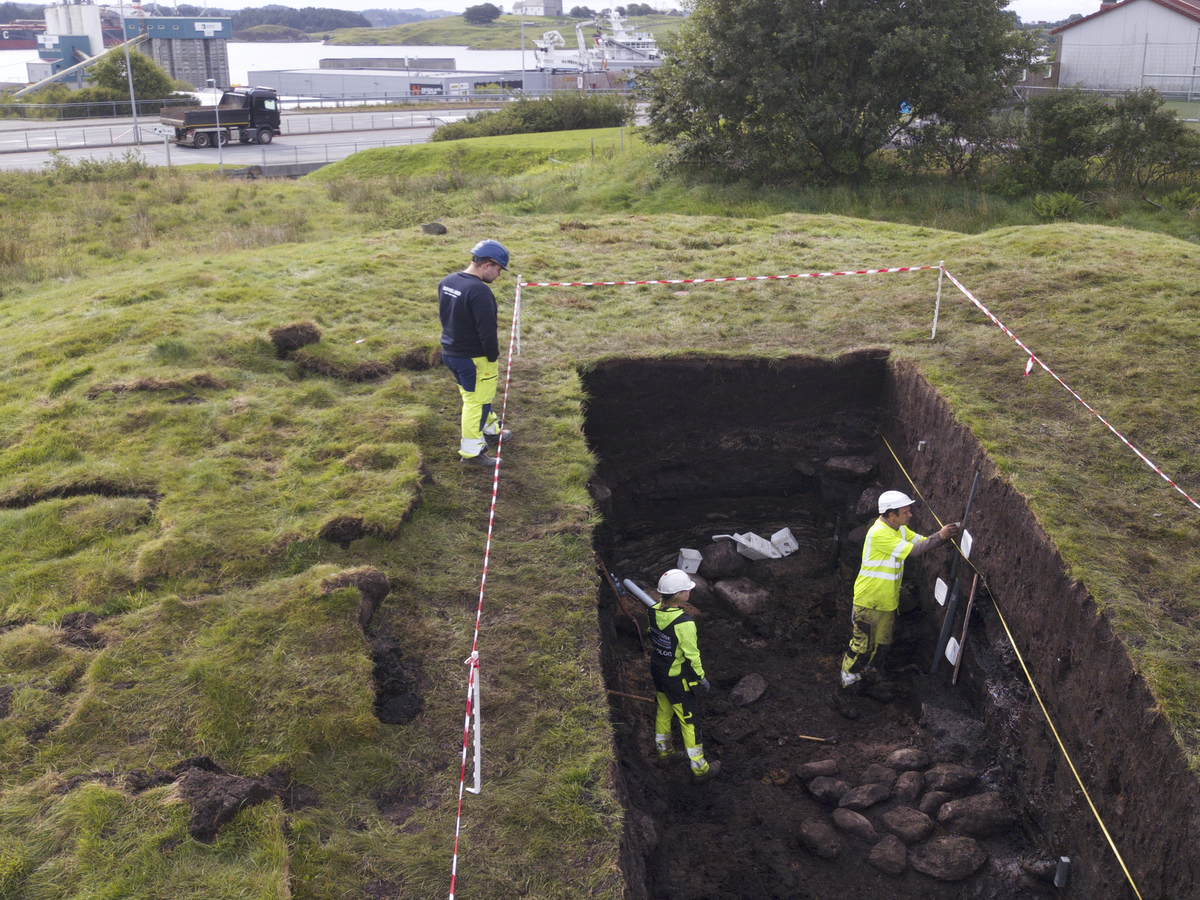
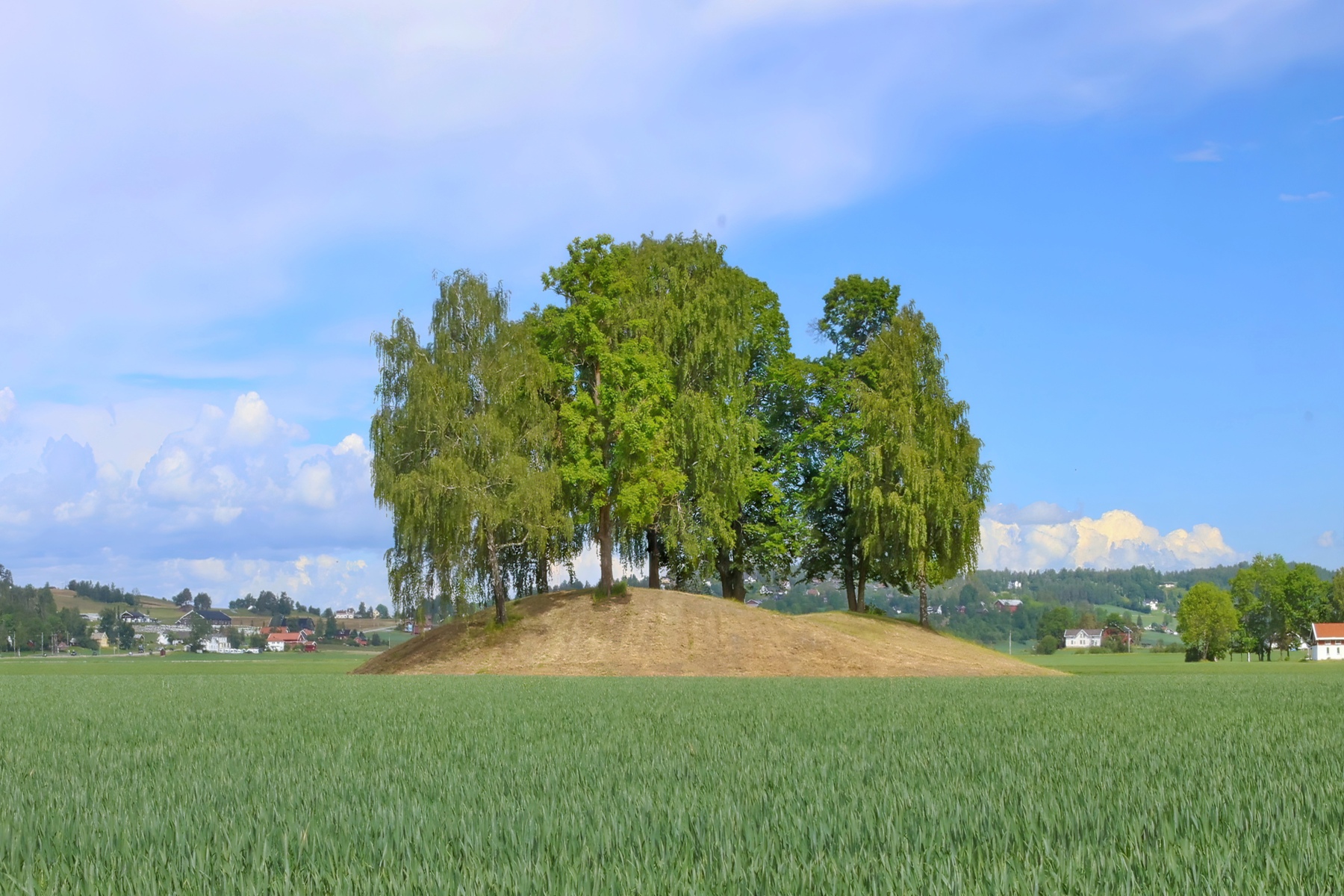
Grønhaug Burial Mound with Karmsundet in the background. Source: Marie Kjærnet Ødegaard / University of Stavanger
A message of might
As Marie explains, both the presence and the dimensions of a ship burial provide an indication of the strength of the person who commissioned it. “Grønhaug also tells us how that power was expressed," Marie explains. “Constructing a monumental ship burial required an extraordinary investment of labour and resources. Grønhaug's prominent position made the mound a permanent landmark beside Karmsundet.
“The choice of a ship was surely significant in a landscape where power was so closely connected to maritime mobility. A vessel associated with movement and connections at sea was transformed into a monumental statement on land.
“Our excavation in 2026 adds a much deeper history to this story. We found clear evidence that the Viking Age monument was constructed over an older stone-built monument, probably a burial mound or cairn. Its precise date is still being investigated, but a Bronze Age date is a strong possibility. Grønhaug lies beside the extensive Bronze Age cemetery at Reheia, so the Viking Age burial appears to have reused a place that was already part of a much older monumental landscape.
“This suggests that authority was expressed not only through wealth and maritime power, but also through relationships with older monuments, memory and the past. Seen in this wider perspective, Grønhaug gives us a remarkable long-term view of how maritime routes, political authority and monumental landscapes became intertwined on Karmøy.
“From Reheia, through the great ship burials of Storhaug and Grønhaug to the later royal centre at Avaldsnes, this strategic landscape was repeatedly used to express power. Karmøy therefore provides an exceptional archaeological setting for studying the maritime foundations of Viking Age rulership and the political transformations that eventually contributed to the formation of Norway.”
A land of ship burials
“Taken together, the excavation shows how much new information can still be recovered from a monument first investigated 124 years ago when modern excavation methods, dating techniques and specialist analyses are brought together,” Marie continues.
“Grønhaug belongs to a small and extraordinary group of monumental ship burials. Norway has famous examples such as Oseberg, Gokstad, Tune and Gjellestad, while related traditions are known elsewhere around the North Sea and Baltic. Sutton Hoo in England provides an important earlier parallel, while Ladby in Denmark belongs to the Viking Age tradition.
“What makes Karmøy exceptional, however, is not simply the presence of one monumental ship burial, but the concentration of several within the same maritime landscape. Together with Storhaug and the probable ship burial at Salhushaugen, Grønhaug forms the densest known cluster of monumental ship burials in Scandinavia. The three monuments lie only a few kilometers apart along Karmsundet, close to Avaldsnes and beside one of the major sailing routes along the Norwegian coast.
“This is what distinguishes Karmøy from many of the better-known ship-burial sites elsewhere. Oseberg and Gokstad are extraordinary because of their rich contents and exceptional preservation. On Karmøy, the particular significance lies in the landscape as a whole: several monumental ship burials, a long-lived centre of power, a strategic maritime bottleneck and a much older landscape of monumental burial are concentrated within a relatively small area.
“The new dating of Grønhaug adds another important dimension. Timber from the ship was felled between AD 854 and 867. Combined with the much earlier Storhaug burial, which dates to AD 779, this shows that monumental ship burial was used on Karmøy across several generations rather than representing a single, short-lived episode."
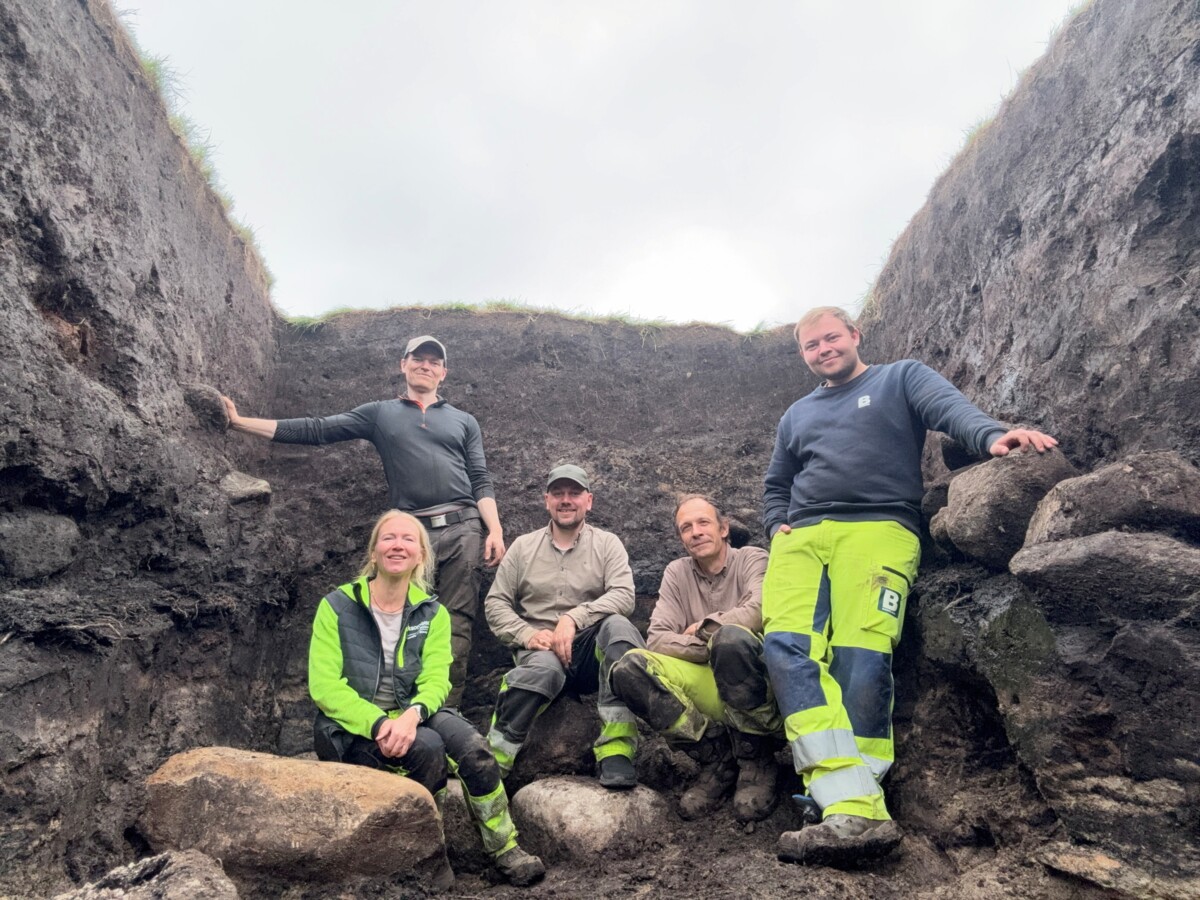
Grønhaug Burial Mound excavation team. Source: Marie Kjærnet Ødegaard / University of Stavanger
The UNESCO factor
In addition to its historical value, it is hoped that the new project will also aid Norway's bid to gain World Heritage Site status from UNESCO for its ship burial mounds.
“I believe the excavation strengthens the knowledge base for the UNESCO work,” Marie admits. “The project has achieved its primary aim of assessing preservation conditions within Grønhaug, but it also produced important new evidence about the monument's construction, chronology and relationship to an older monumental landscape.
“The UNESCO process is led by the Norwegian Directorate for Cultural Heritage. In December 2025, the Directorate recommended that The Ship Burial Landscapes of Viking-Age Norðvegr should be added to Norway's Tentative List for World Heritage.
“Seven ship-burial sites and their associated landscapes are included in the recommendation, with Storhaug currently representing Karmøy. The proposal is now part of the national process towards possible inclusion on Norway's Tentative List, which is a necessary step before a future UNESCO nomination.
“The new investigation of Grønhaug is highly relevant to that work because Storhaug does not exist in isolation. Together with Grønhaug, the probable ship burial at Salhushaugen, Avaldsnes and the older monumental landscape around Reheia, it forms an exceptional concentration of monuments beside Karmsundet. The Directorate for Cultural Heritage has itself indicated that Grønhaug may also become relevant as the World Heritage work develops.”
We get to provide readers with original coverage thanks to our loyal supporters. Do you enjoy our work? You can become a PATRON here or via our Patreon page. You'll get access to exclusive content and early access.
Feel free to reach out to discuss potential stories that may be in the public interest. You can reach us via email at hello@thevikingherald.com with the understanding that the information you provide might be used in our reporting and stories.