

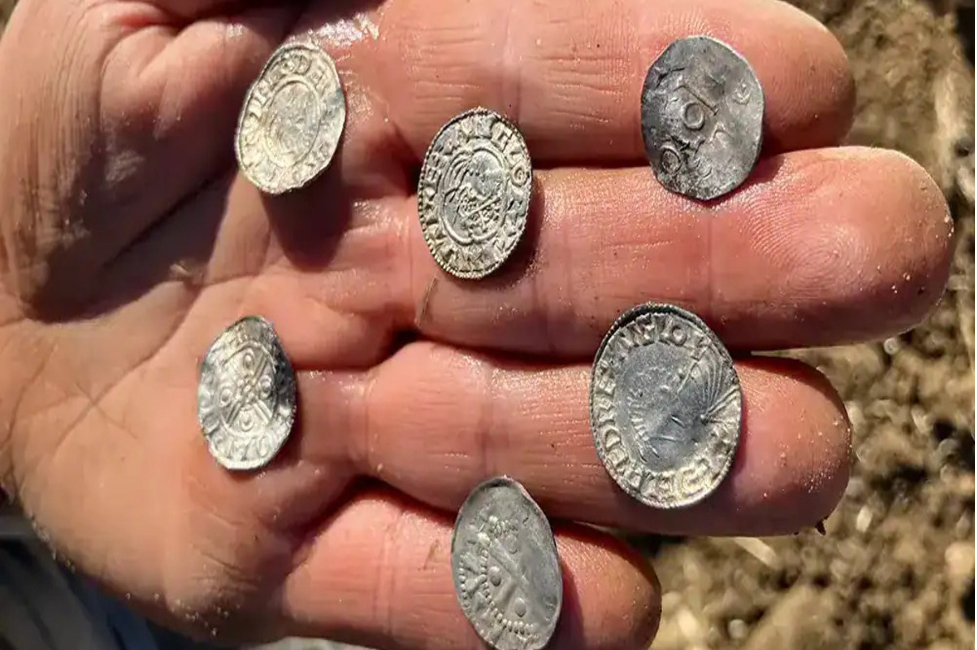
Once again, we owe a debt of gratitude to amateur metal detectorists for unearthing artifacts from the Viking Age.
Just weeks ago, on 10 April, two metal detectorists, Rune Sætre and Vegard Sørlie, found 19 coins on a farm near the village of Rena, in eastern Norway. Yet this was just the start of something even bigger. Sætre and Sørlie alerted local authorities, and archaeologists then joined the hunt for hidden treasure the next day.
These included May-Tove Smiseth, an archaeologist for the Innlandet City Council, who commented to Science Norway that “...the [metal] detectors never stopped buzzing!” Working alongside Sætre and Sørlie, Smiseth and her colleagues were able to uncovere a Viking Age hoard containing more than 3,000 coins minted in Norway, as well as Denmark, England, and Germany. The hoard is already the biggest ever found in Norway, and the archaeological dig is continuing.
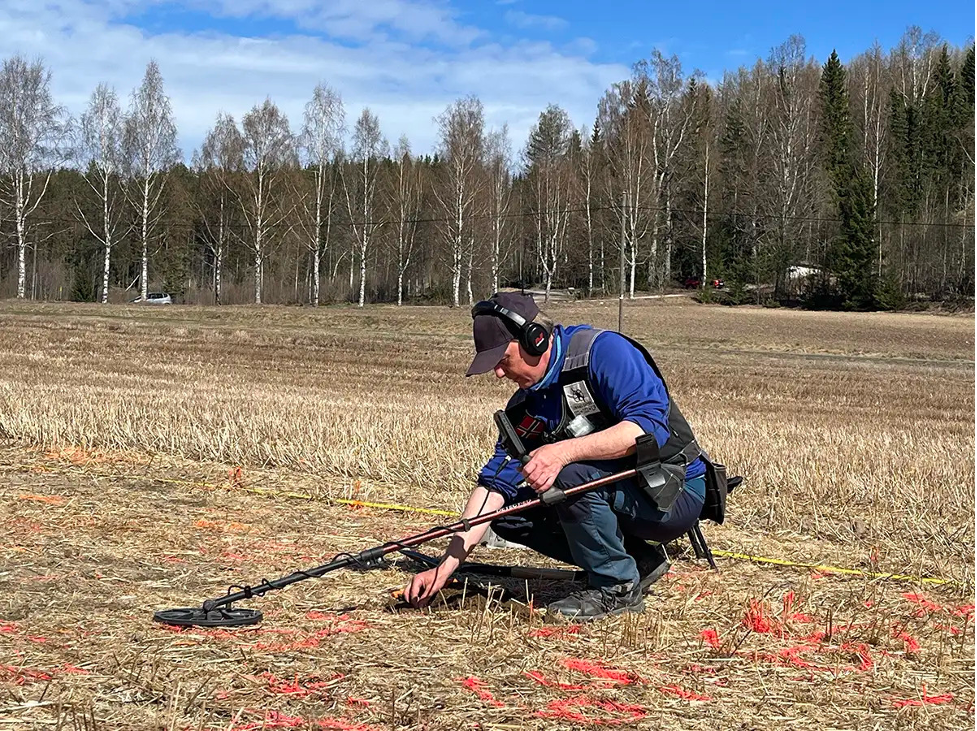
Rune Sætre, one of the two detectorists who found the hoard, checks a signal at the findspot. Source: Anne Engesveen, Innlandet County
The Mørstad Hoard
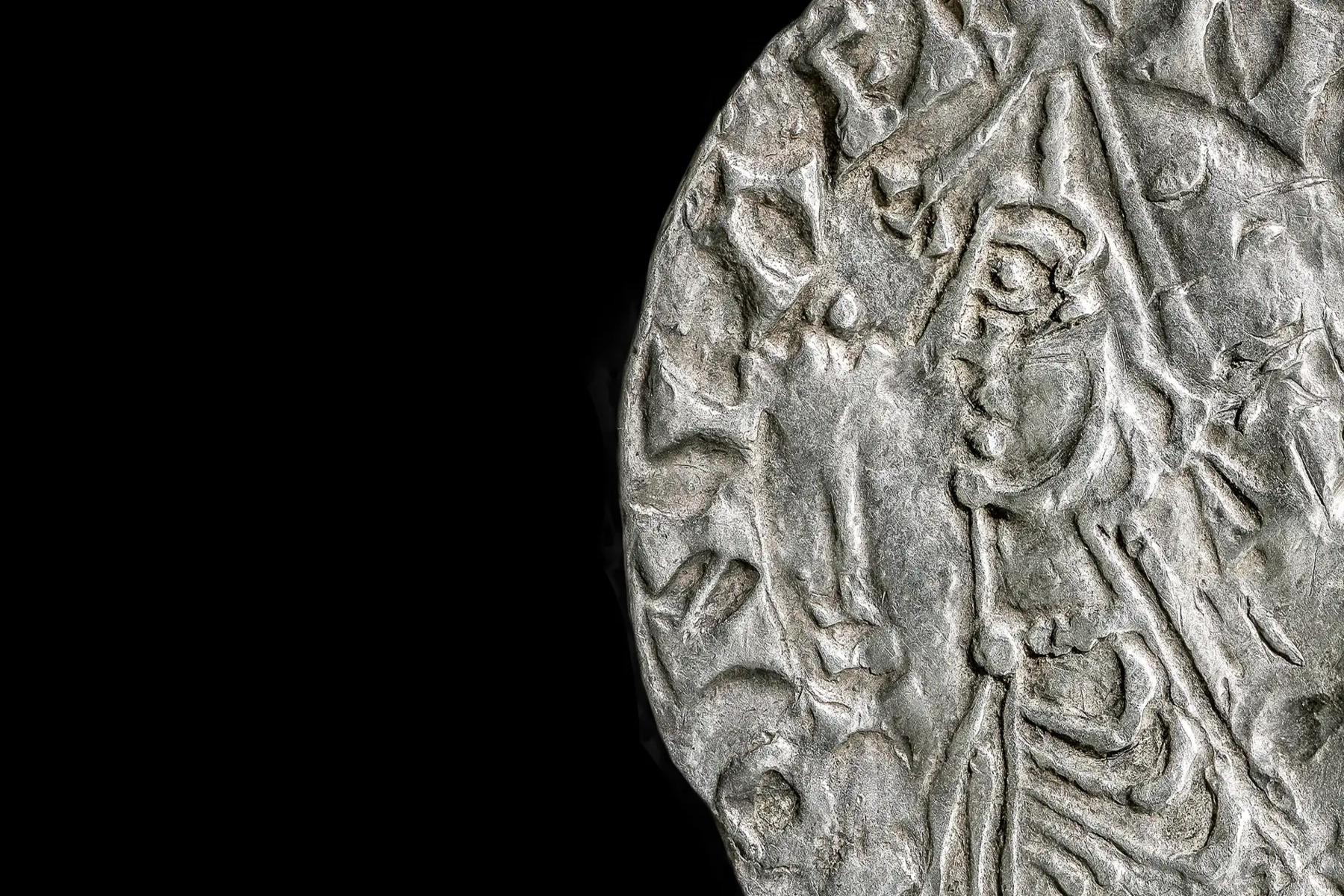
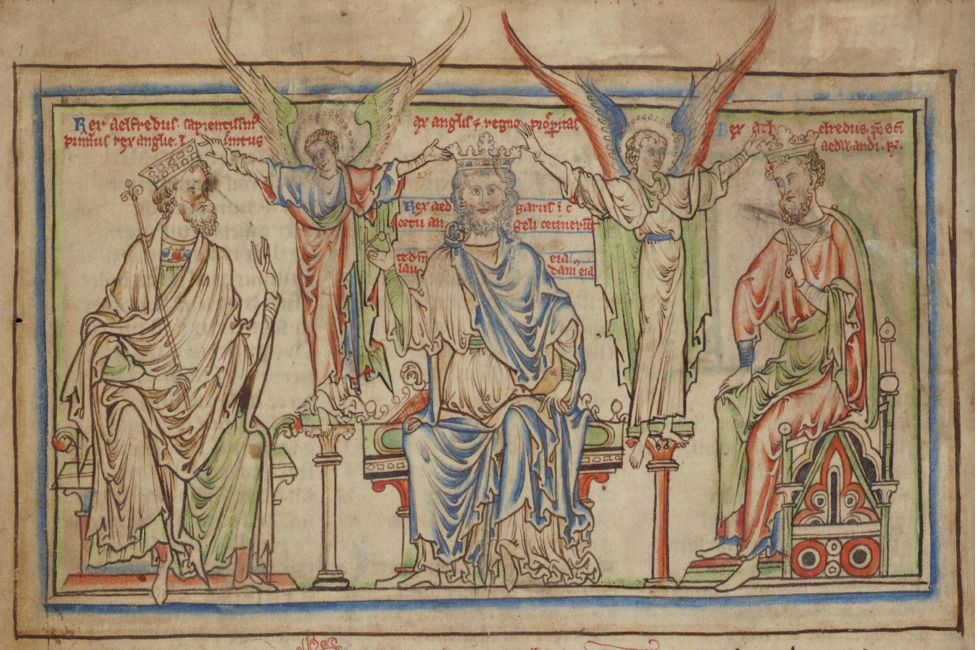
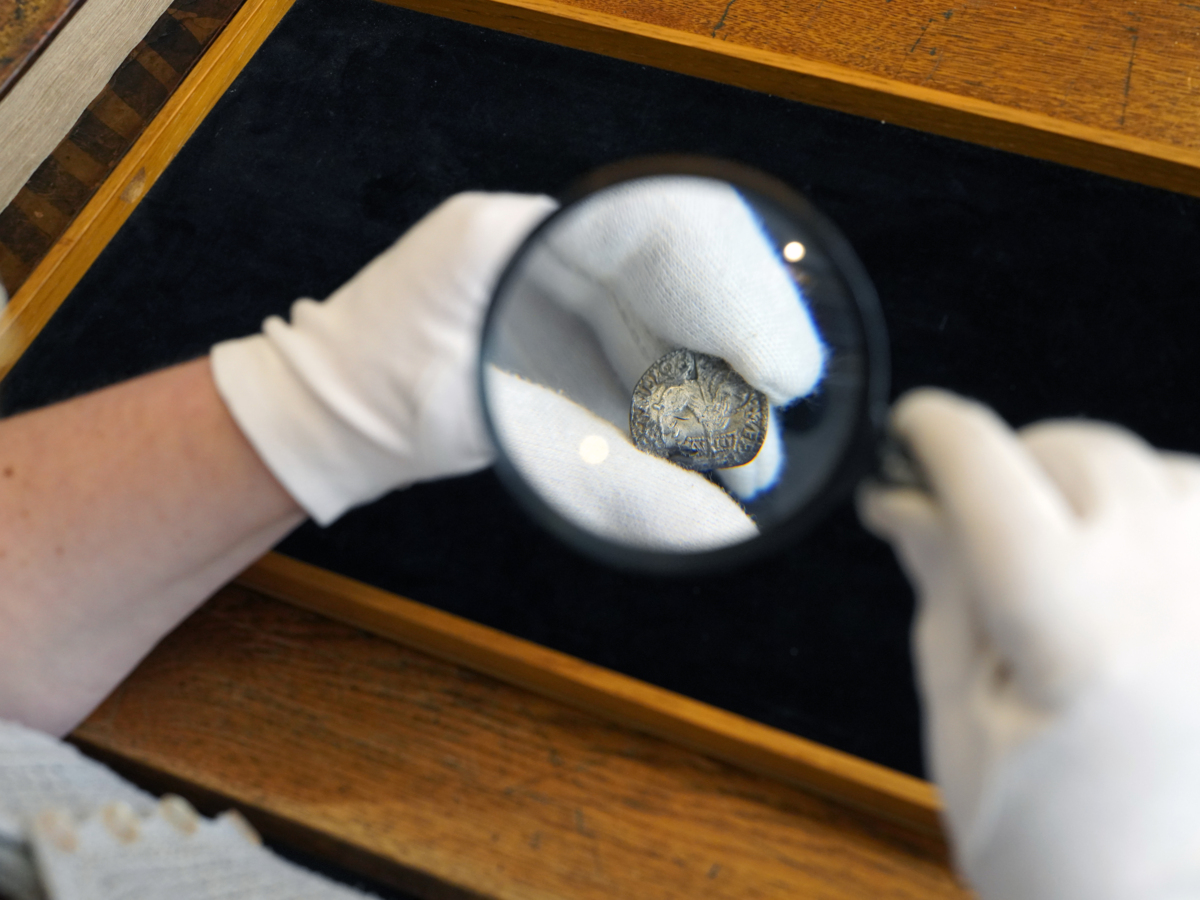
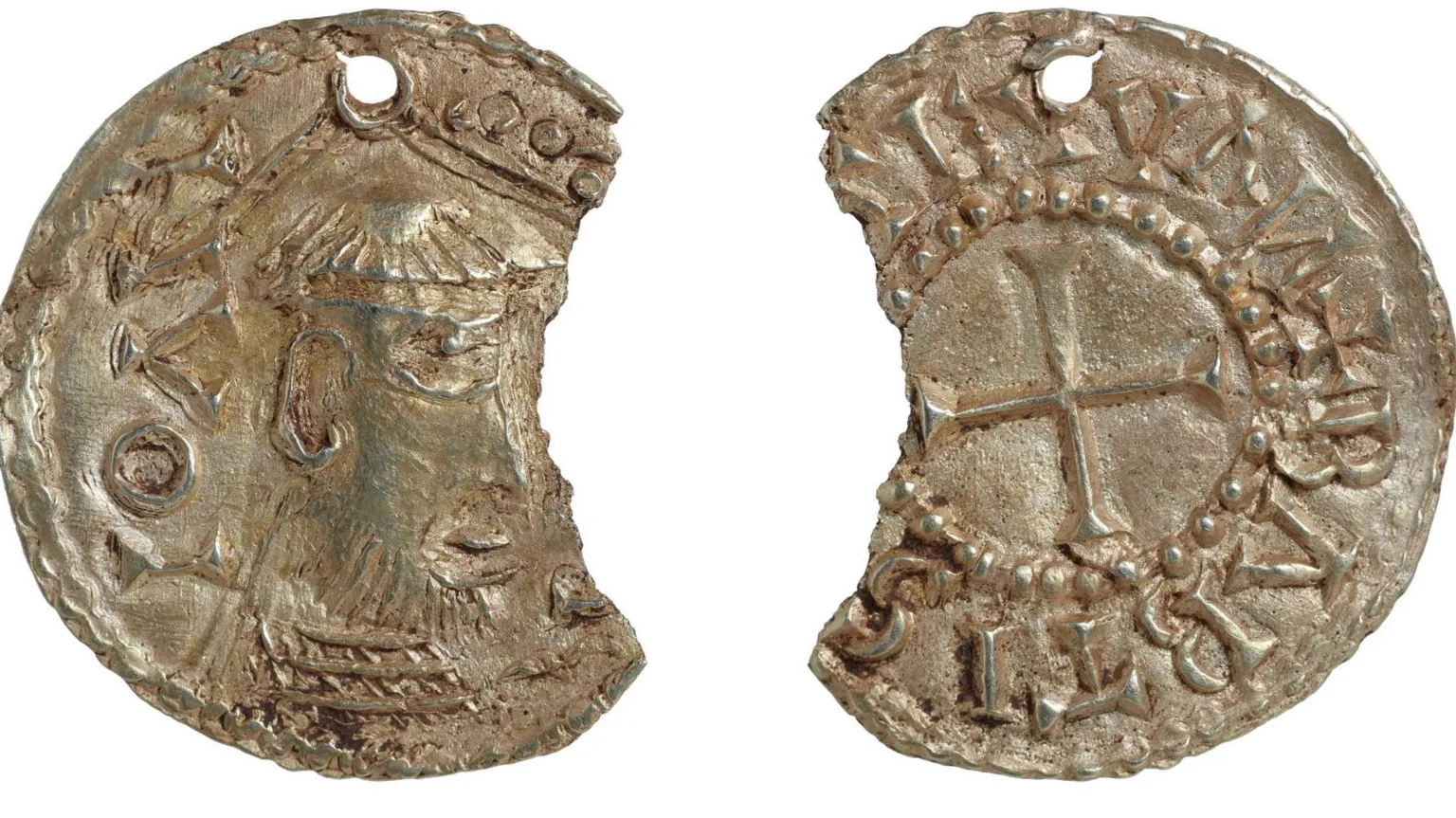
Numismatic experts from the Museum of Cultural History in Oslo have already begun analyzing the hoard. Dubbed the Mørstad Hoard (after the location of the farm) the hoard is believed to contain coins under some of the most famous monarchs of the Viking Age. These include Cnut the Great, King of Denmark, England and Norway (c. 1016 – 1035 CE), English King Aethelred II (reigned 978 – 1016, perhaps more known by his infamous sobriquet ‘the Unready’), and the Holy Roman Emperor Otto III (reigned 996 – 1002)
In a statement on the museum's website, numismatist Professor Sven Gullbekk explains the presence of these foreign coins in a Viking Hoard found in rural Norway: “The coin hoard includes coins from the 980s to the 1040s. Foreign coinage dominated the circulation of money in Norway up until Harald Hardrada (1046–1066) established a national coinage.”
It was during the reign of Norwegian King, Harald Hardrada, perhaps the most brilliant warrior of his age, and whose death at Stamford Bridge was traditionally said to end the Viking Age, that coins minted in Norway began to replace foreign “imports”.
Work ongoing, unique experience
Despite the scale of the hoard discovered so far, work is still ongoing. The archaeological team, led by May-Tove Smiseth, according to the same Museum statement, is still “working to gain an overview of the extent and context of the find. For the sake of securing the cultural monument, the find location is guarded, and access to the area is restricted.”
That means that anyone wanting to witness a bit of archaeological magic firsthand will have to wait until the hoard goes on display.
For Smiseth, however, this discovery is “unique” and the sort of thing that “one might only experience once in an entire career.” She states that, “To be present when something like this comes to light is simply a great experience, both professionally and personally.”
Proceeds of industrial production?
There are already postulations as to the origin of Norway’s largest Viking Age hoard. Jostein Bergstøl, an archaeologist and colleague of Sven Gullbekk at the Museum, points to a surprising possible source of this vast amount of wealth. Whilst Viking hoards like this are normally associated with the spoils of raids and military adventures, Bergstøl thinks this hoard may be “accumulated capital originating” from local bogs in this part of Norway.
According to Bergstøl, “From the 900s until the late 1200s, there was an enormous iron production in this area. Ore was extracted from the bogs, and the processed iron was exported to Europe.”
This may have amounted to something akin to almost industrial-scale production of natural resources, something more associated with Norway’s recent industrial past rather than the Age of Vikings.
Other famous Viking hoards
How then does the Mørstad Hoard stack up against other famous Viking Age hoards? We have written widely on many Viking Age hoards throughout the former Viking world but here are some of our favorites.
The Spillings hoard was discovered on the Swedish island of Gotland and is the largest silver hoard uncovered. Some 67 kilograms / 148 pounds worth of silver was partially uncovered live on Swedish television!
Across the North Sea, the Vale of York hoard was uncovered by metal detectorists. Buried around 927, it contained 617 coins and 65 silver and gold objects, including arm rings, ingots, and a Carolingian cup.
Finally, in Scotland, the Galloway hoard, the discovery of more than 100 gold, silver, glass, and pottery artifacts near Galloway, western Scotland, showed a cultural synthesis between Viking and Anglo-Saxon societies.
Naturally, there is still much to be learnt about the true extent and influence of the Mørstad Hoard. There can be little doubt, however, that it is set to become one of the most significant Viking Age hoards ever uncovered in Scandinavia.
We get to provide readers with original coverage thanks to our loyal supporters. Do you enjoy our work? You can become a PATRON here or via our Patreon page. You'll get access to exclusive content and early access.
Feel free to reach out to discuss potential stories that may be in the public interest. You can reach us via email at hello@thevikingherald.com with the understanding that the information you provide might be used in our reporting and stories.