

The Viking ship burial discoveries at Gokstad in 1880 and Oseberg in 1904 in Norway broke new ground in Viking Age archeology and have also helped enrich our understanding of Norse culture.
Oseberg, however, would be the last Viking ship burial mound found in Norway for over a century.
Fortunately, a new wave of Viking ship burials has been revealed over the last decade or so, thanks in part to the use of groundbreaking technology.
The archeologist Christian Løchsen Rødsrud has headed the excavations for two of these finds: at the Gjellestad site, which was discovered in 2019, and at Jarlsberg earlier this year.
The Viking Herald speaks to Christian about the difficulties and delights of archeology, the importance of technological innovation, and whether Harald Bluetooth may be responsible for plundering some of the biggest ship burials in Norway.
Learning from Gokstad
Christian is employed by the Norwegian Museum of Cultural History – which manages the Museum of the Viking Age – and has carved out a significant career in the field of Viking Age ship burials.
At the same time, his original period of study actually focused on the Iron Age: "I've been working at the Museum of Cultural History for about 25 years, but my PhD was on pottery of the early Iron Age before the Viking period," Christian tells The Viking Herald.
Fate, however, led him inexorably towards Viking ship burials. "My first major fieldwork concerning Vikings was excavating the trade and production sites at Heimdalsjordet, next to the Gokstad ship," Christian explains.
"That more or less spiked my Viking career. We excavated the production site. It was the first one that could be compared to the trading settlement at Kaupung – though it was a bit more small-scale."
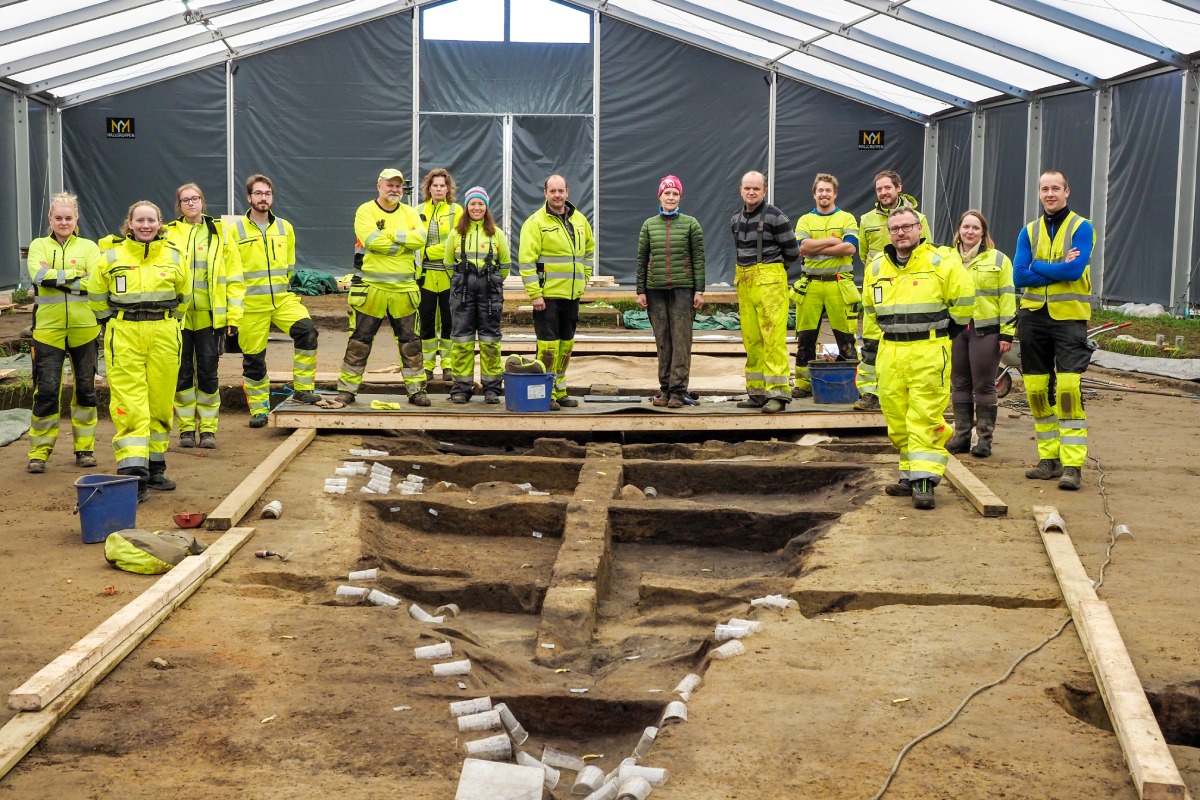
The Gjellestad site in Norway was discovered in 2019, revealing a significant Viking ship burial. Source: Museum of Cultural History / University of Oslo
A major find
Later, Christian began work on a major new find. "I later got more into project leadership," Christian continues.
"In 2019, Gjellestad came along – I headed the trial excavation. There was a ship-shaped anomaly, but we didn't know anything about what had survived and if there could be anything left."
Further excavations revealed evidence of a large Viking ship, yet the remains were precarious due to the nature of the soil.
"The situation was dire," Christian admits. "The ship was under constant attack from very aggressive fungi that were eating the wood."
It went all the way to the government, which thankfully decided to fund the research. In 2020 and 2021, we carried out digs and excavated the whole ship."
Since its discovery, Gjellestad has generally come to be considered the most significant Viking ship burial find in Norway since Oseberg and has yielded thousands of artifacts from the Viking Age.
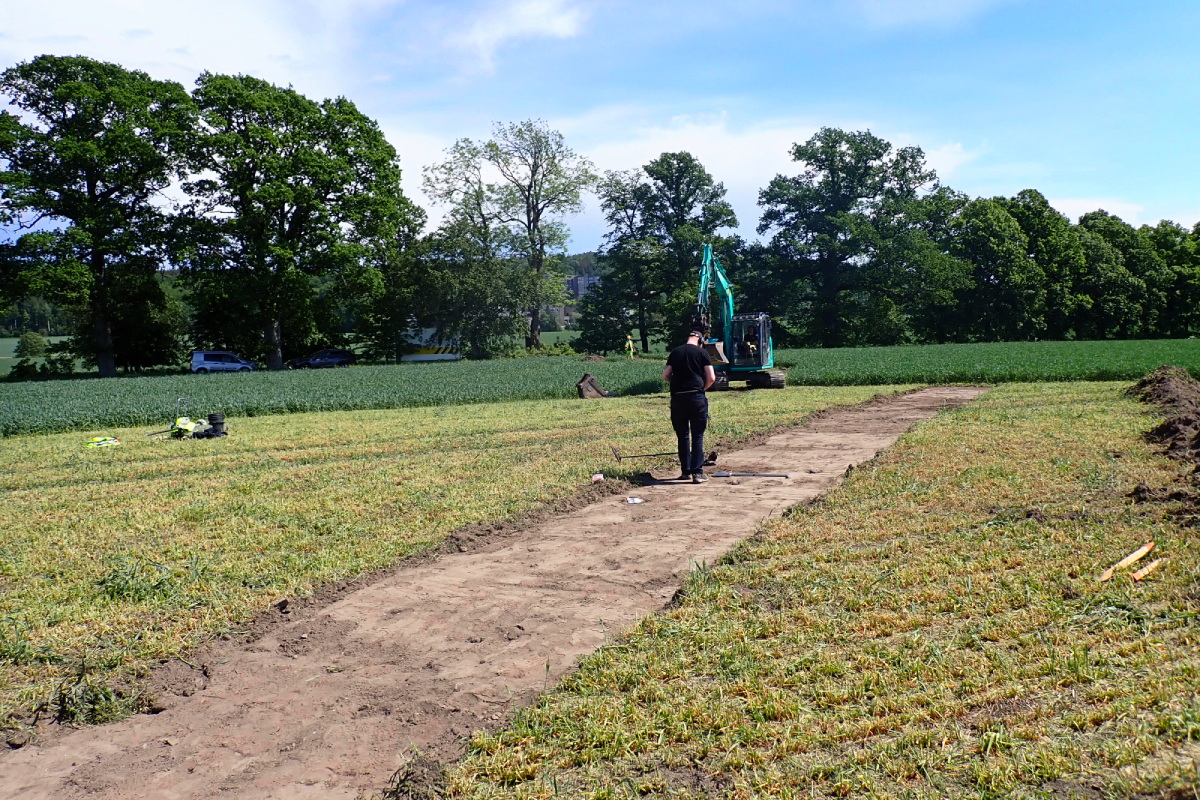
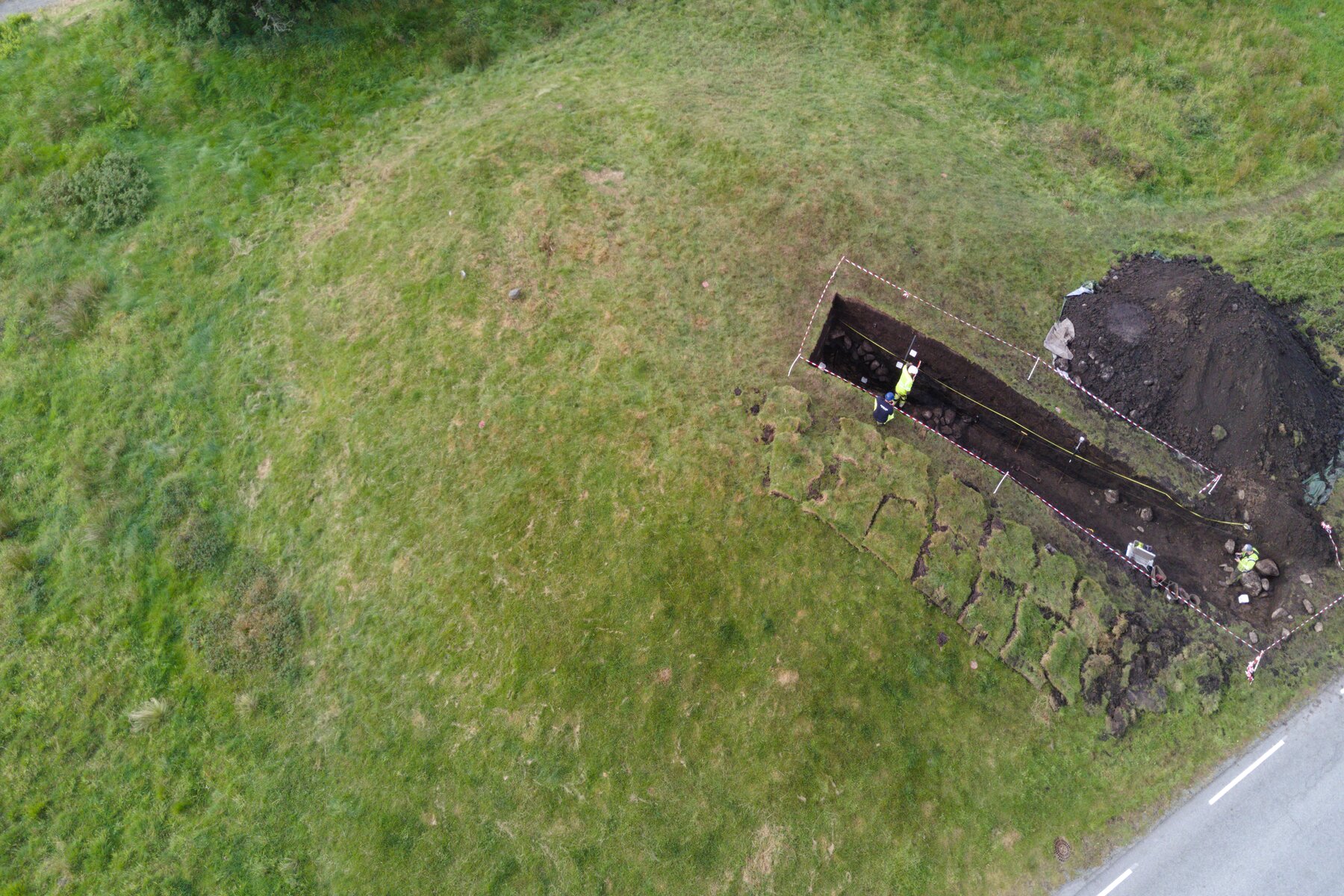
The Jarlsberg site was recently investigated, revealing evidence of a Viking ship burial, although the site was heavily disturbed by agricultural activity. Source: Museum of Cultural History / University of Oslo
Another ship at Jarlsberg
With his reputation for expertise in Viking ship burial excavation firmly established, Christian recently completed a shorter but nevertheless intriguing dig at Jarlsberg in the Norwegian county of Vestfold.
"The county archeologists were able to get some money to have a little trial excavation at the site at Jarlsberg," Christian tells us.
"A detectorist in 2015 had found two or three rather large clenched nails, or rivets. So we knew there was something there."
"The geophysics had been carried out on the same field in 2019, and we thought the nails could be related to an overplowed burial mound."
"That's what we went out to study this year. We did two weeks of excavation and came back with something like 70 rivets."
Unfortunately, the find at Jarlsberg is less well-preserved than in other instances. "It's very visible that there is nothing left of the ship," Christian reports.
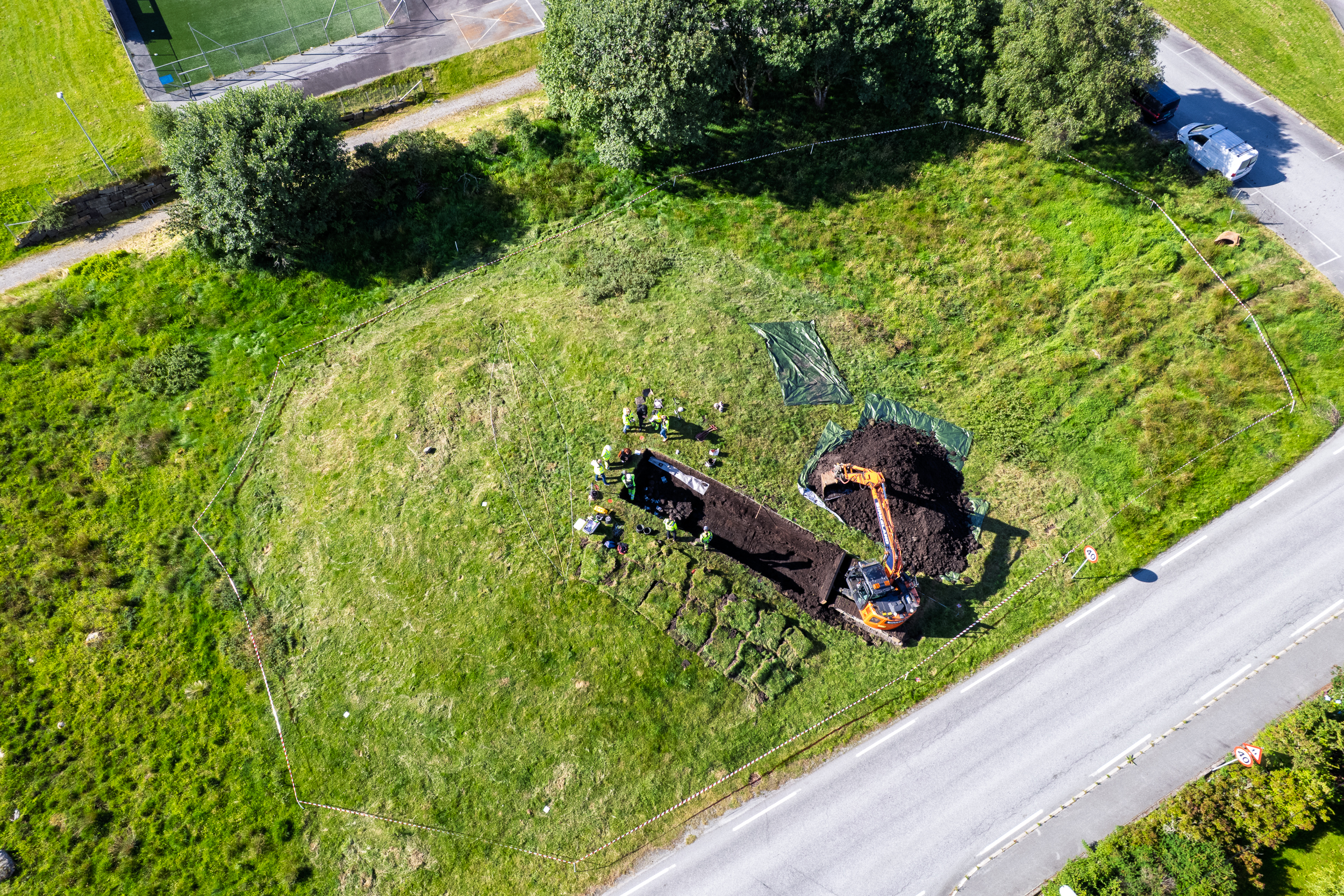
"We excavated a trench on top of a drainage ditch that went through the burial mound. We can verify that there was definitely a small mound there, and it's only 15 meters in diameter."
"This means that if this was the mound that contained the ship, which we suspect, it must have been much larger when it was constructed."
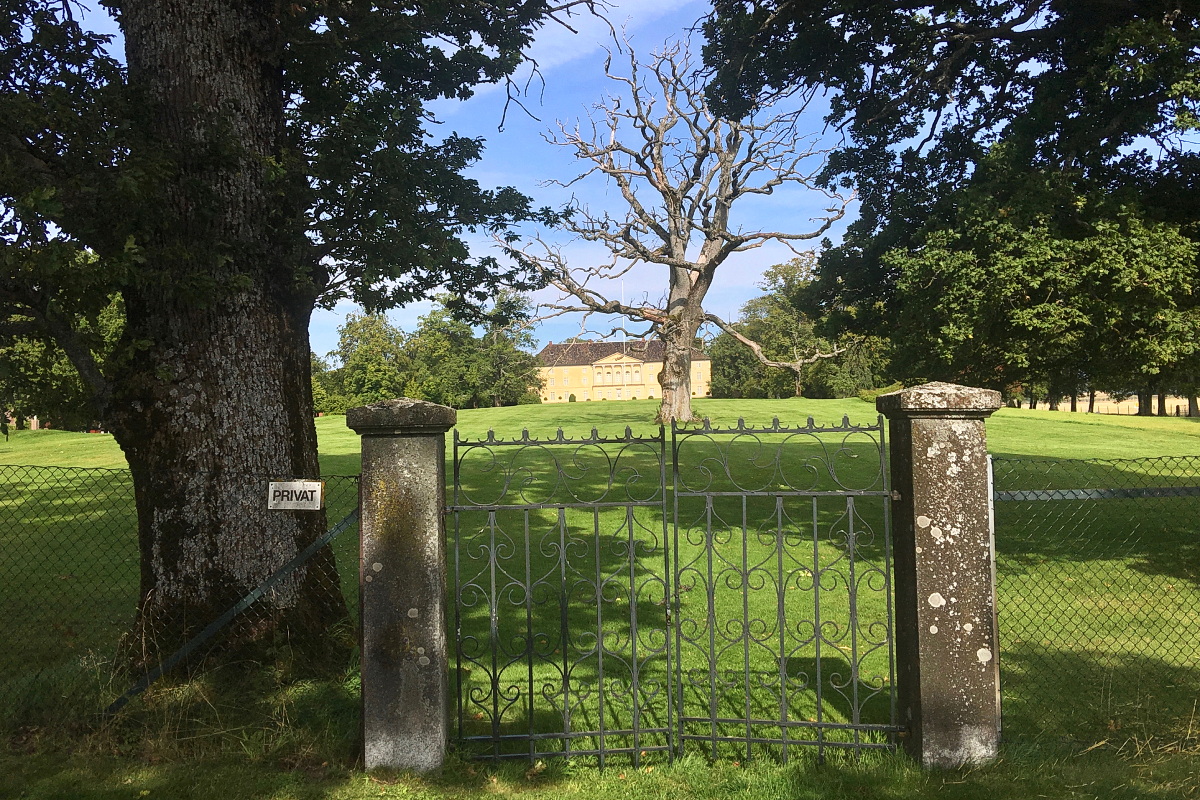
Jarlsberg Manor has long been linked to legends, including the potential burial of Bjørn Farmann, a son of Harald Fairhair. Source: Wolfmann (CC BY-SA 4.0)
A site of myth and legend
The excavation site is part of Jarlsberg Manor, the largest farm in Norway.
"The former jarls kept their own archives," Christian reports. "We know that some of the earls in the 1700s actually excavated some other mounds here, but there are no reports of any ships, though we do know that a sword was found, along with some other things."
"The main thing they tell us is that there used to be several mounds, but now there is only one," Christian explains.
"This is known as Farmann's Mound and is named after Bjørn Farmann, the son of Harald Fairhair; it is said that he was killed by his brother Eric Bloodaxe at this very farm."
Christian admits, however, that it is impossible to say whether any of the suspected burial mounds really contain the body of Bjørn Farmann.
"Several researchers have said that Farmann was buried at Jarlsberg, but it's difficult to trace a mythological figure like that," Christian points out.
"There have been a few attempts to connect prehistorical figures to burial mounds, but none have succeeded yet."
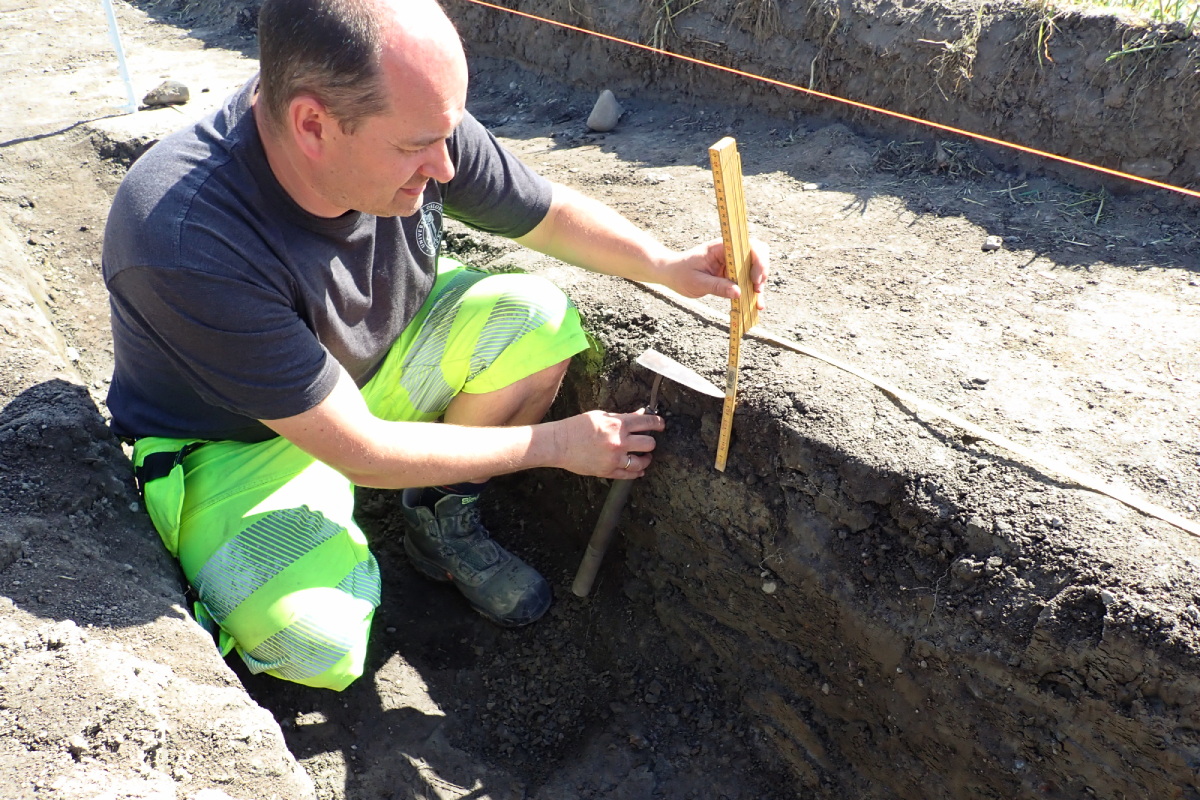
The excavation at Jarlsberg uncovered approximately 70 rivets, but the remnants of the ship itself had largely decomposed, leaving behind only traces of the original burial mound. Source: Museum of Cultural History / University of Oslo
Flattening the soil
With Jarlsberg, the next consideration is whether to return for further excavations. Unfortunately, the farmers at work in the field in the past were all too keen to eliminate the mound, not excavate it.
"The ship must have been built higher up in the mound construction, and now it's totally plowed out," Christian observes.
"In fact, the farmer at Jarlsberg even told us that his father and his father before him had actually been working endlessly to even out the surface on the field there – there were some bumps they didn't like!"
The jumbled soil means that identifying further areas of interest is far from easy. "It's very difficult when you are in a field and you have thousands of signals of iron," Christian admits.
"You can't really separate which is which, so finding the other artifacts is difficult. But now we know they are there, so it could be meaningful to go back and look for more artifacts. And if you do so, you're bound to find more nails as well!"
"We have to think a little bit more about what we can gain by doing more excavations," Christian continues.
"We know it has all been disturbed – everything has been tossed around in the topsoil. So we have to decide if it's worth going back."
"We did find some horse crampons that indicate the artifact materials from the burial should be in there, too."
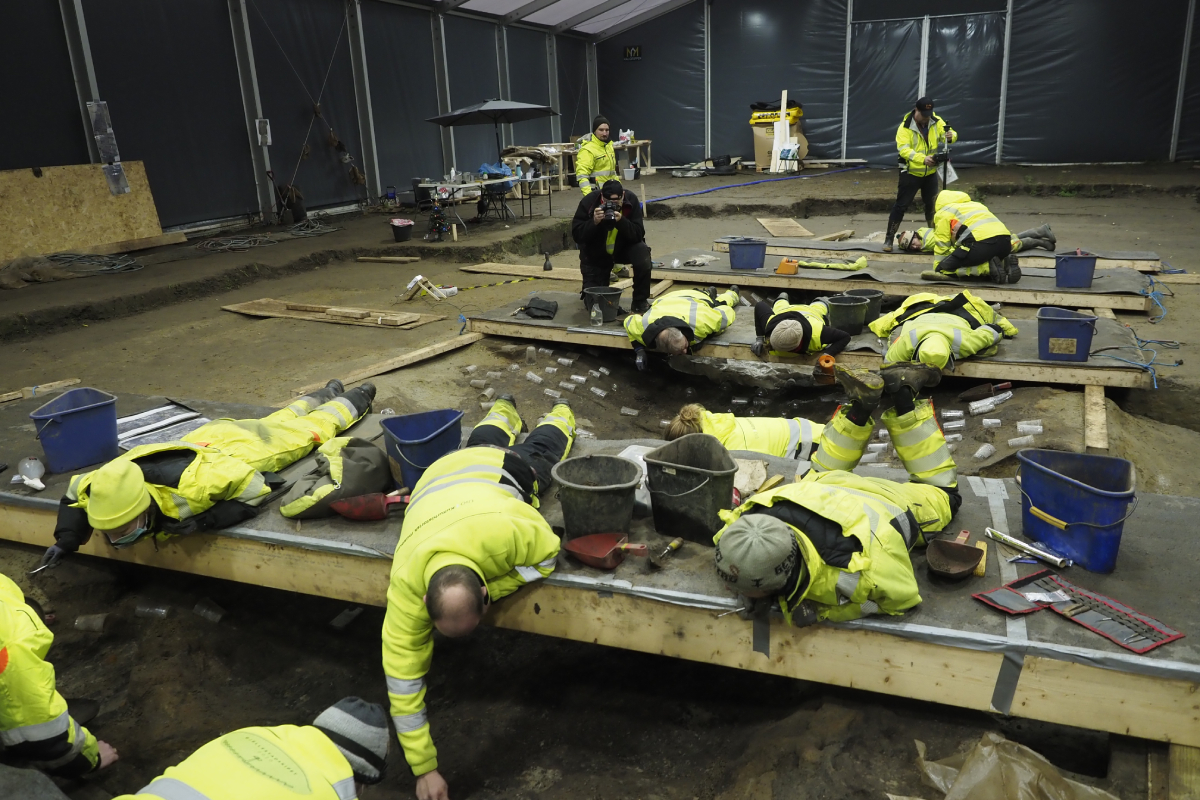
Ground-penetrating radar (GPR) technology was crucial in discovering the ship's location underground at Gjellestad, allowing archeologists to plan the excavation with precision. Source: Museum of Cultural History / University of Oslo
Technological assistance
Though the site at Jarlsberg was initially found by a detectorist, Christian tells us that the recent spate of ship burial finds in Norway is largely due to the innovative use of ground-penetrating radar (GPR), which uses radar pulses to image the subsurface.
"Burial contexts with Viking ships hadn't appeared for 100 years in Norway, since Oseberg in 1904," Christian confirms. "There have been shipwrecks, but burial mounds with ships are a very specific phenomenon and most common in Norway."
"But with the use of ground-penetrating radar, more sites have come to the surface – usually over-plowed mounds," Christian tells us.
"Quite a few discoveries have popped up over the last ten years. I would say that the four biggest ones in our history are Oseberg, Gokstad, Tune, and Gjellestad."
"Gjellestad is less well-preserved than the other three, but it has been excavated in a very modern manner, and this enables a more detailed reconstruction."
"Other recent finds have had more complicated contexts and have been plundered, over-plowed, or destroyed."
Innovation at Gjellestad
Technology has been no less vital in the dig at Gjellestad. "We are very heavily into the afterwork. It's a lot of work," Christian admits.
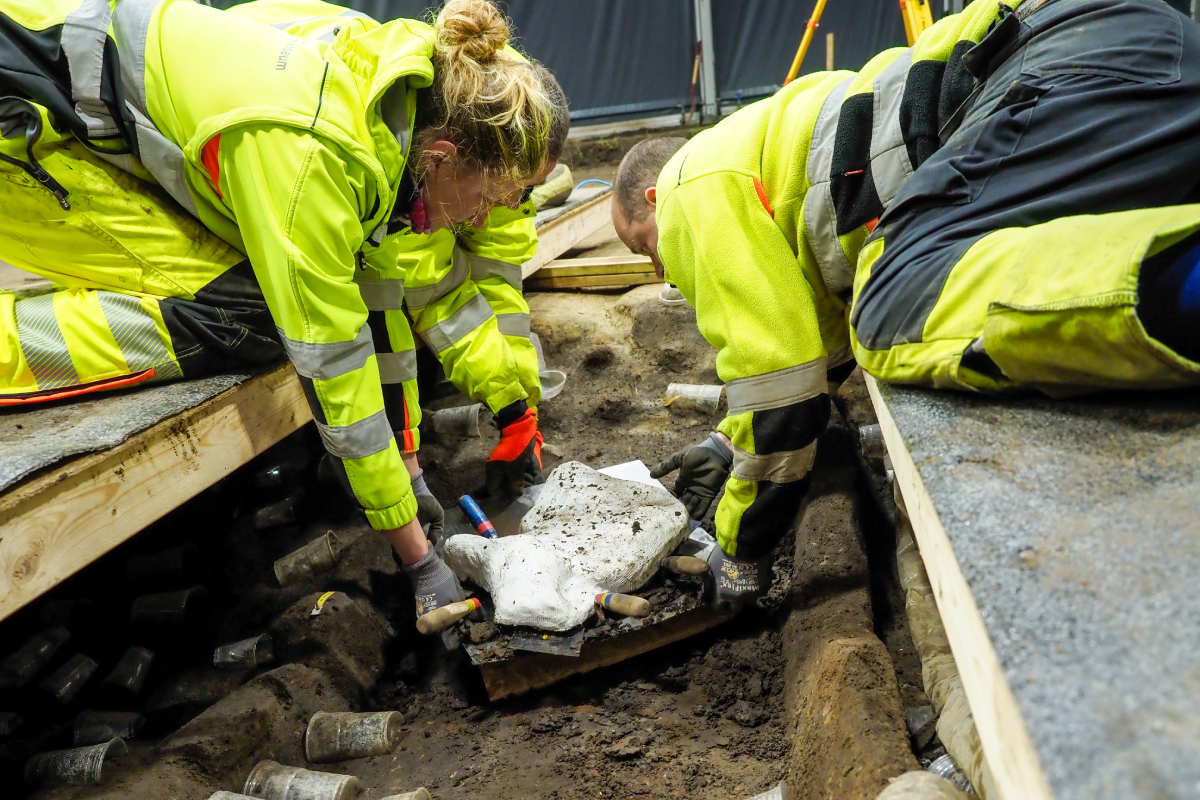
"The rivets were in situ and more or less intact, but they were so fragile. The rivets just fell to pieces when we touched them with a trowel during the excavation."
"There's a lot of soil blocks with small fragments and pieces. The mound that once covered the ship was removed around 1880, and that deteriorated the ship – the ship lost its protection."
"We actually invented a quite special way of excavating them. Every single rivet at the Gjellestad site was taken out in a soil block. We put markers in them, with georeferencing and measuring points."
"Every soil block is now being CT scanned. This means we get a georeferenced overview of the rivet without destroying it."
"These scans are then being pasted into a 3D model, which we can combine with the photogrammetry and all the measurements that we did during the excavation."
"We will then use the 3D model to do a reconstruction of the ship. It's a long process."
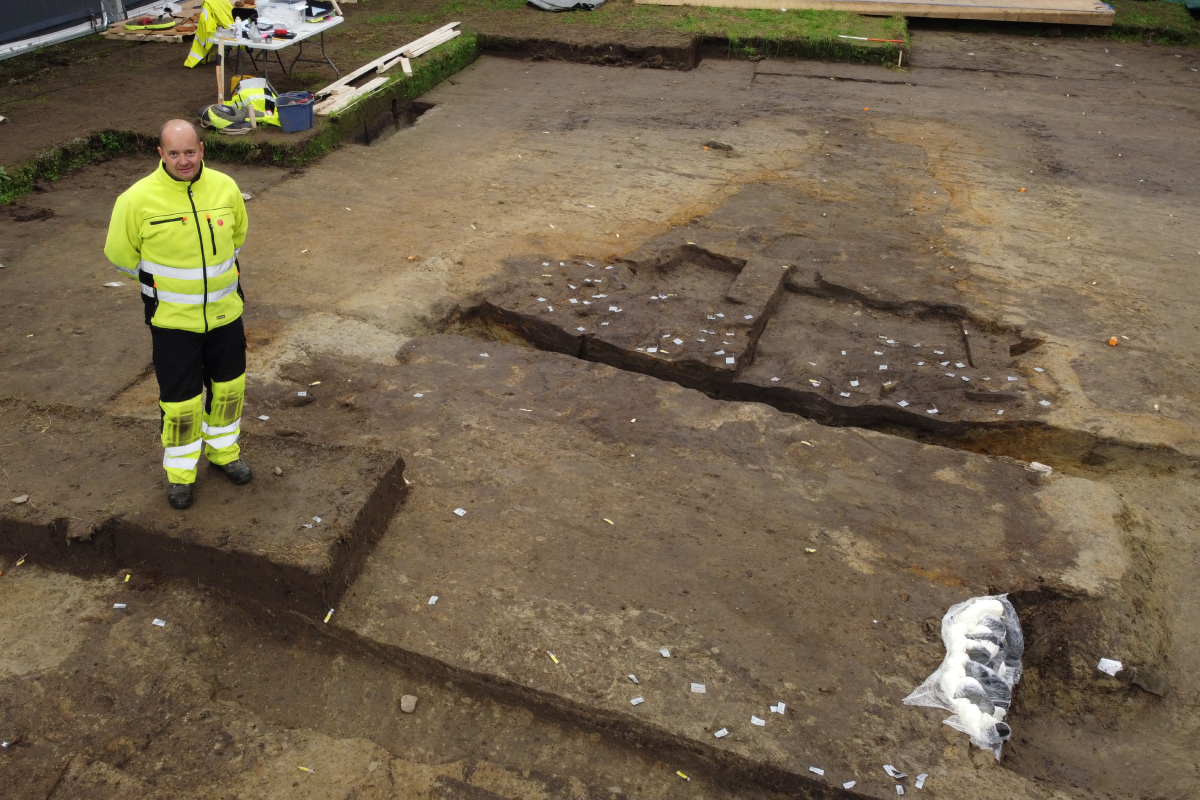
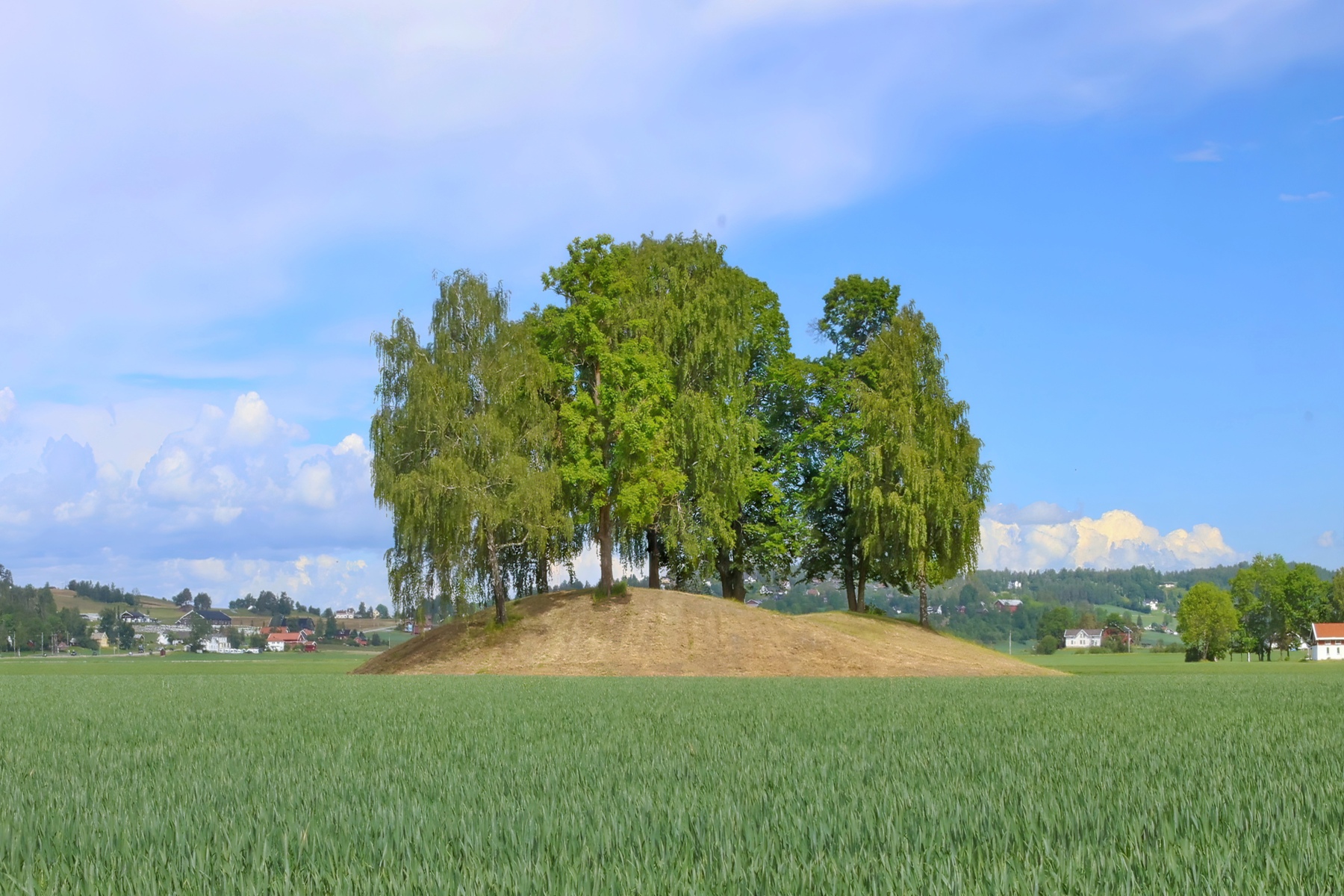
The Gjellestad site is under consideration for UNESCO World Heritage recognition due to its significance as one of the few Viking ship burials still in its original location. Source: Museum of Cultural History / University of Oslo
Plundered treasure – by Bluetooth?
Interestingly, Christian and his team also identified signs of plundering at the Gjellestad site. "We can see there was a robber trench that had been dug previously," he tells us.
"We could see it on the GPR, and then when we excavated, we could also see a very clear trench that comes down from the west and cuts into the side of the ship."
"It hits the burial chamber perfectly. In that section, everything is tossed about, and it's a great puzzle working with that part of the ship – we have around 8,000 fragments – a lot to work with!"
Christian notes that both Oseberg and Gokstad are believed to have been plundered in the years after the burial took place.
"Of course, there are still nice artifacts left in all of these three ship burials, but they clearly removed some of the more important ones," Christian says.
As an aside, he briefly accuses a Danish king of the theft of Norwegian treasure. "By the way, Harald Bluetooth is the main suspect for plundering all the ship burials in Norway!"
Working for UNESCO recognition
In addition to fieldwork and analysis, Christian has also begun working in recent years to secure international recognition of the historical importance of ship burials.
"Two years ago, I started working in a group trying to nominate Viking sites for UNESCO," Christian says.
"After some time, we decided that the Viking ship burials were the monuments we would try to nominate for the tentative list first. We sent a background document to UNESCO that is being evaluated now."
"Our group includes myself, Ole Søe Eriksen from the Directorate of Cultural Heritage, Eli Dalen from the Directorate of Cultural Heritage (retired), Sigrid Mannsåker Gundersen from Østfold County Council, Ragnar Orten Lie from Vestfold County Council, and Marie Ødegaard from the Museum of Archaeology in Stavanger."
Jarlsberg will probably not be included on the list of UNESCO sites, but Christian confirms that Gjellestad is of prime importance, as it is one of the only examples where the ship can still be viewed on-site.
"The three Viking ships of Tune, Oseberg, and Gokstad that were excavated over a century ago have been taken out of their original context and moved to a museum in Oslo," Christian explains.
"This is a unique opportunity to preserve a similar burial on-site and maintain the original context within the landscape where it once featured so prominently."
We get to provide readers with original coverage thanks to our loyal supporters. Do you enjoy our work? You can become a PATRON here or via our Patreon page. You'll get access to exclusive content and early access.
Feel free to reach out to discuss potential stories that may be in the public interest. You can reach us via email at hello@thevikingherald.com with the understanding that the information you provide might be used in our reporting and stories.