

We start our look at important Viking harbor sites with what has often been described as one of Norway's earliest market/trading towns: Kaupang.
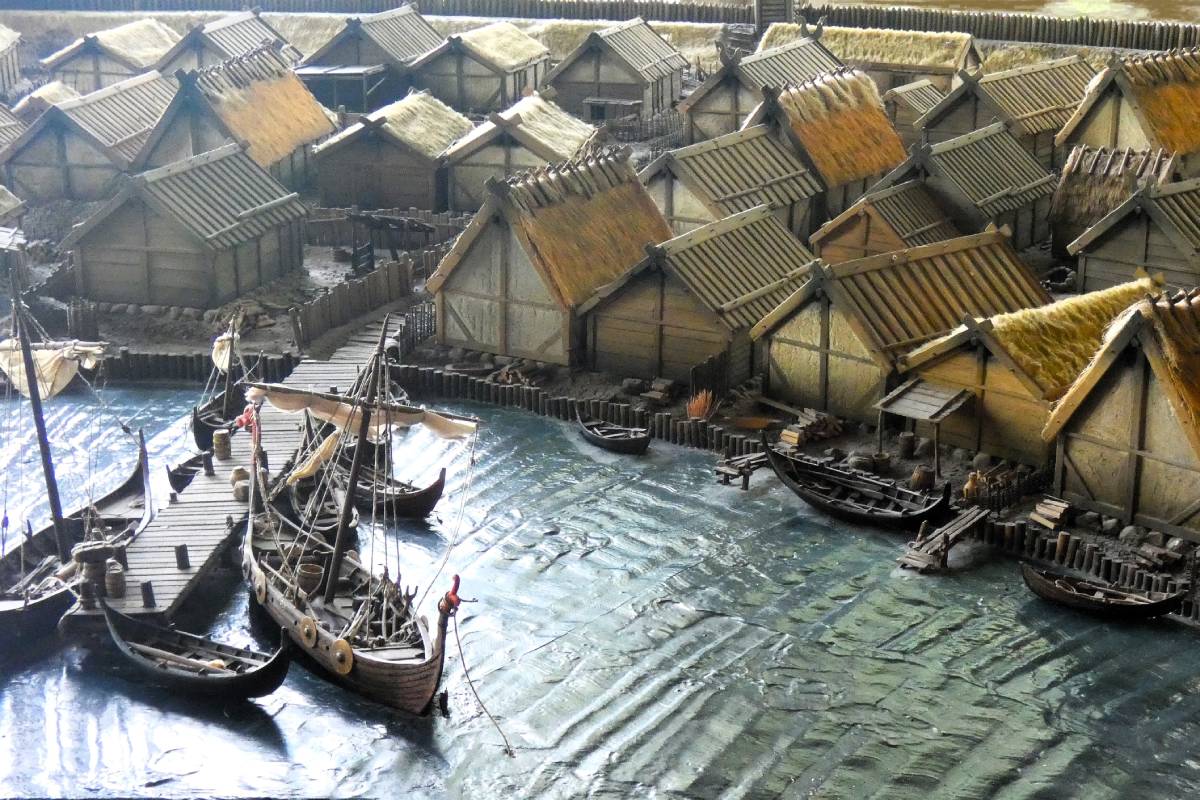
From around the early 9th century CE, an urban settlement that saw bustling economic activity sprang up on the shores of the Viksfjord, in Larvik municipality, in southeastern Norway.
From this harbor, Viking merchants, traders, and early medieval entrepreneurs had close access to the Skagerrak, the stretch of water between Norway, Denmark, and Sweden, which surely was one of the busiest straits in the world during the early medieval period.
Over the course of the past century and a half, archeological excavations have unearthed much of the Viking Age settlement, and this has led to some fascinating insights.
Whilst there is some discussion on whether Kaupang represents Norway's first true urban settlement, especially from those who reside in Norway's "oldest city," Tønsberg, there is general academic agreement that this was one of the most important economic centers in Norway for much of the early stages of the Viking Age.
Excavations have uncovered a wealth of artifacts, often reported as more than 100,000, which point to the cosmopolitan links that this harbor had with wider Viking trade networks.
Islamic coins (dirhams), pottery, and even glass beads (luxury items in the early medieval world) show that this harbor, in southeastern Norway, had links to places as far away as the British Isles, the Frankish realms, and West Asia.
This helps to highlight that, despite these vast distances from Kaupang, there was a great degree of economic interconnectedness in the Viking world.
The excavations have also uncovered more than 79 grave mounds in the surrounding area and a series of longhouses and workshops, which suggest a sizable population engaged in artisanal activities as well as commerce and trade.
As the Viking Age progressed and royal power consolidated in Norway, different trading patterns and priorities would lead to the decline of Kaupang from the 10th century CE.
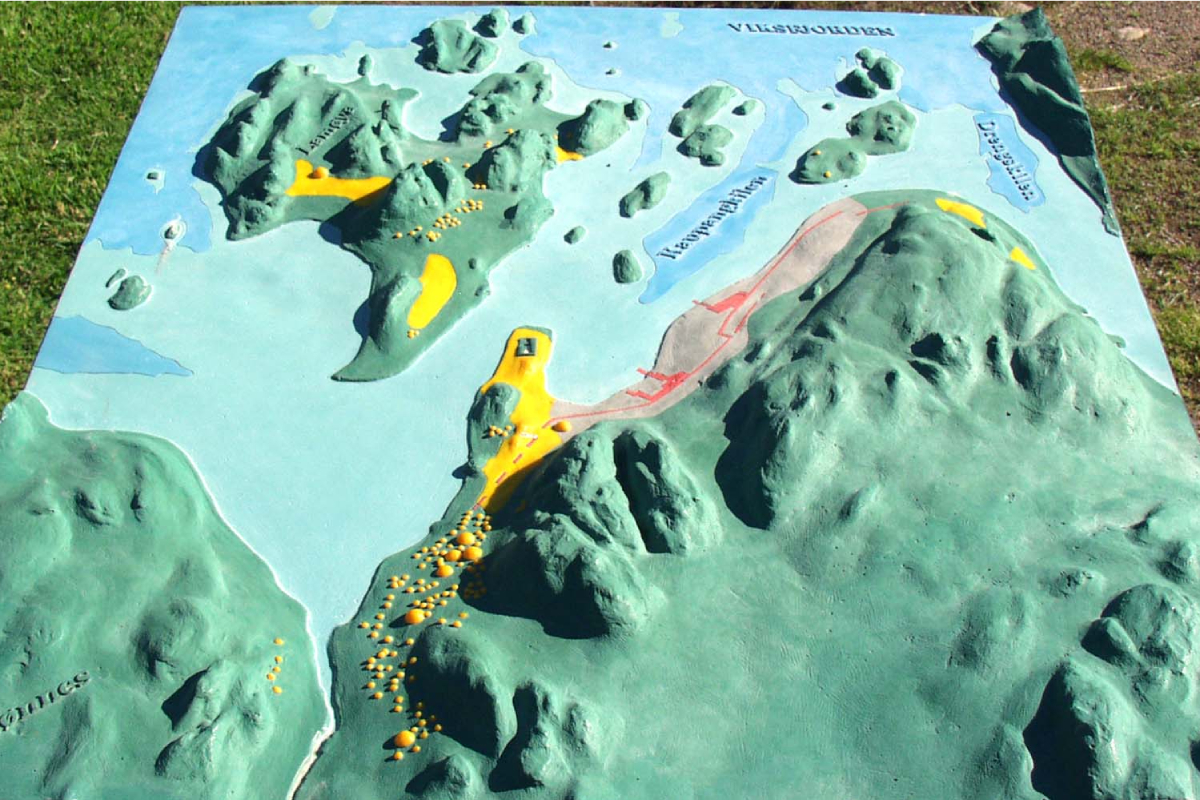
A model of Kaupang in Vestfold, Norway, depicts the settlement along the shore. Photo: © 2005 J. P. Fagerback, used in accordance with the author's licensing terms
Paviken: Bustling Baltic harbor
We know that the Swedish island of Gotland, lying smack bang in the middle of the Baltic Sea, has a fascinating Viking history.
Given its strategic location, the island became a focal point for Viking Age maritime activity, with many Viking ships that plied the Baltic waters and called in there for commerce and/or shelter.
On the island's western shores today lies the lake, Paviken. However, although Paviken is a lake today, it sat within a sheltered inlet with a navigable connection to the Baltic Sea during the Viking Age, and the area functioned as a harbor for ships to call in.
Given the harbor's strategic location, perched on the edge of a sea that was basically a Viking pond for much of the early medieval period, we find that this harbor was further enhanced by Viking merchants and traders through the construction of jetties, helping to facilitate a large degree of trade.
This allowed a steady stream of ships, from across the Viking world, to call in.
As Dan Carlsson writes about in his chapter in the 2020 book, Viking Age Trade (available on Amazon here), archeological excavations here have uncovered a curious mix of "Coins, weights and jewellery [that] point to trade with both east and west."
Similar to Kaupang, we cannot quantify exactly how big this bustling Baltic harbor was, but we can safely assume it was a significant focal point of commerce and exchange on the island of Gotland until its decline sometime in the 11th century CE.
- READ MORE: The importance of Viking trading towns
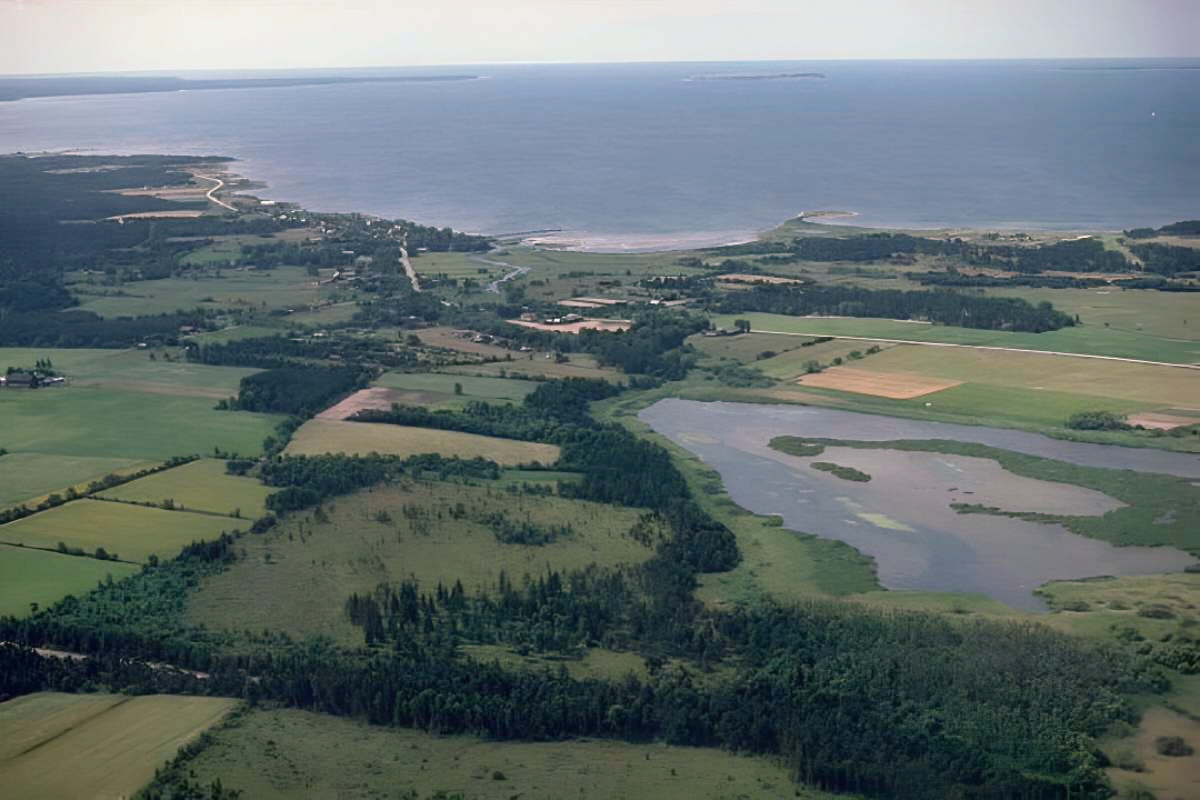
The Paviken area near Västergarn, Gotland, Sweden, seen from above. Photo: Jan Norrman / Riksantikvarieämbetet (CC BY 2.5)
Best of the rest
Further south from Paviken lay arguably the most important center of Viking commerce and trade for much of the early medieval period, Hedeby.
This trading settlement, now located in northern Germany, capitalized on the more advanced trading networks and routes that snaked across much of what is now Germany, then the Frankish realms, connecting Central, Southern, and Western Europe and beyond with Scandinavia.
Hedeby was located at the end of a narrow inlet, the Schlei, which flows into the Baltic Sea.
The inlet provided much protection. Maritime infrastructure, including canals, docks, and jetties, as well as storehouses, has been uncovered in archeological excavations, pointing to its significant size as a regional hub of Viking economic activity.
Its importance declined in the 11th century CE, and the settlement suffered major attacks in 1050 and 1066, after which it was gradually abandoned.
Another major center of Viking Age commerce was Birka, located on the island of Björkö in Lake Mälaren, Sweden. Given its position between inland routes and the Baltic, the settlement served as a key node in the wider exchange networks of the period.
Archeological evidence from Birka, including imported goods, coinage, and traces of craft production, points to long-distance contacts across Scandinavia, the Baltic region, and beyond.
Birka also remains a frequent reference point in discussions of Viking trade, since it offers an unusually rich body of material evidence for exchange, artisanal work, and early urban life in Scandinavia.
Over time, shifting routes and new political and economic priorities reduced its role, and the site declined toward the end of the Viking Age.
An important harbor was constructed on the shores of the Volkhov River, near Lake Ladoga, in what is now Russia, at the very beginnings of the Viking Age in c. 753 CE.
This was a major harbor for seagoing vessels, particularly those that could not easily traverse the smaller rivers that snake across this part of Eurasia.
Academics such as Dr. Cat Jarman and Martyn Whittock have spoken widely about this overlooked eastward direction of Viking trade and commerce.
This trading outpost, which would turn into the settlement known in Old Norse as Aldeigjuborg (now known as Staraya Ladoga), would capitalize on the rich materials, including furs and timber, that would be traded back to the Viking homeland in Scandinavia and then shipped out throughout the Viking world.
Its location also allowed it to exploit much of the river trade that connected the Baltic with the Black Sea, the Viking homeland with the Byzantine Empire, and the broader Islamic world.

Hedeby today on the Schlei waterfront, a sheltered setting that supported its Viking Age harbor. Photo: Viking Museum Haithabu
More than just a safe port
Studying the many harbors of the Viking world, whether in the Viking homeland of Scandinavia or further abroad, we can see how integral the profit motive was to the Viking expansion of the early medieval period.
Whilst Viking raids may have captured the popular imagination, we know that when a Viking ship was spotted upon the horizon by a coastal or river-bound community, it was there for peaceful and profitable purposes.
Harbors constructed by people in Viking societies facilitated maritime commerce and trade, helped to bring regions on the edges of Europe into the broader economic life of early medieval Europe, and spoke to the surprisingly cosmopolitan nature that Viking societies possessed.
For more information on Viking harbors, visit The Conversation here.
We get to provide readers with original coverage thanks to our loyal supporters. Do you enjoy our work? You can become a PATRON here or via our Patreon page. You'll get access to exclusive content and early access.
Feel free to reach out to discuss potential stories that may be in the public interest. You can reach us via email at hello@thevikingherald.com with the understanding that the information you provide might be used in our reporting and stories.