

Now that the months are getting longer and warmer, at least in the Northern Hemisphere, many tourists will make the pleasant pilgrimage to the balmy Baltic island of Gotland.
This Swedish isle, cast adrift from the mainland, has a long and checkered history that, due to its strategic position, has seen it serve as a center of European commerce, trade, and geopolitics for centuries.
Whilst the island's economy nowadays centers around trade, the recent Russian invasion of Ukraine has seen the island regain new importance, with the U.S. Marines conducting recent military exercises here with their NATO colleagues.
Yet long before all of this, the island was the epicenter of Viking activity, both economic and military, throughout the Baltic region. The island lay at a literal crossroads, albeit a maritime one, between east and west and between war and profit.
Journey with us now as we rewind the clock centuries to the early medieval period and discover the fascinating Viking history of Gotland.
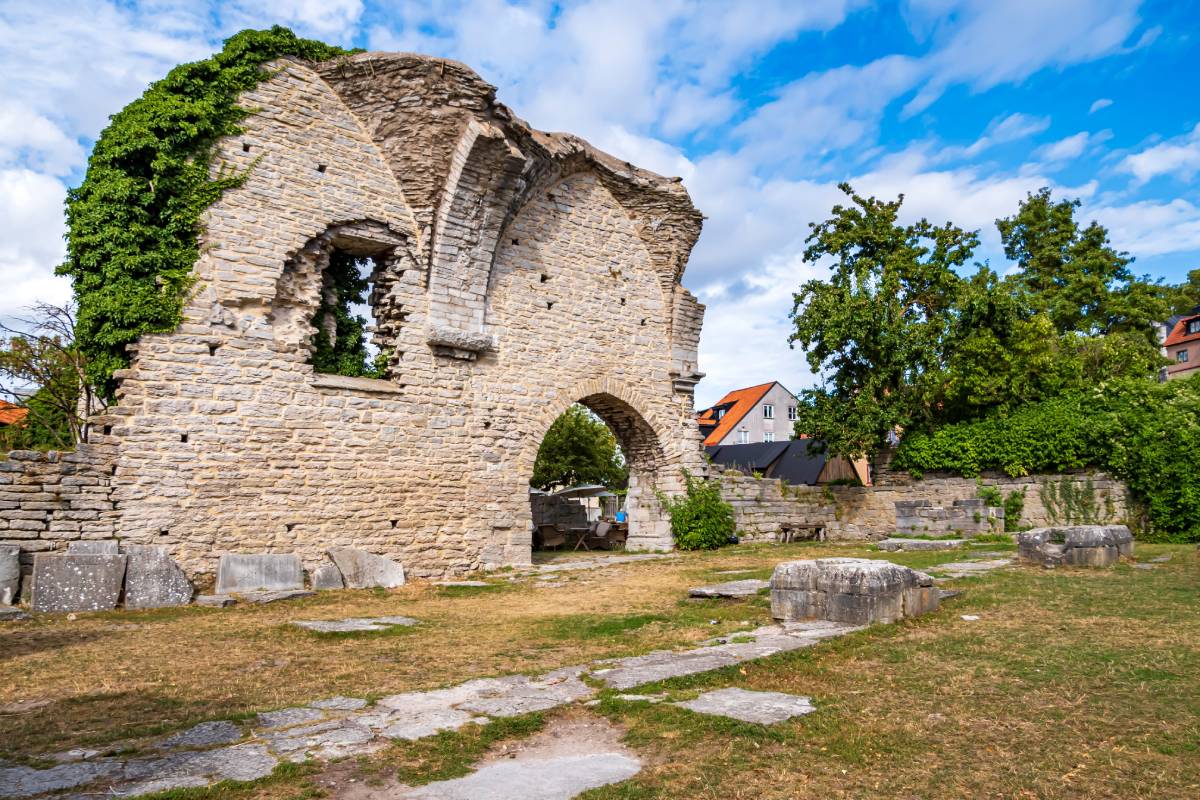
Ruins of Saint Per Church stand in Visby as the oldest stone church site on Gotland, built around 1060 on a former pagan sacred place. Photo: Nowaczyk / Shutterstock
Mythical beginnings, the Goths and Rome
Lying cozily in the National Library of Sweden is an ancient manuscript that purports to tell the entire history of the island of Gotland before the arrival of Christianity in the early medieval period.
The Gutasaga details the very beginnings of human settlement on this balmy island, said to have been settled by two servants, a brother and sister, of the Norse God of Thunder, Thor.
Despite this mythical origin, it is estimated that Gotland has seen human settlement for at least 9,000 years.
From this mythical beginning, the island then becomes associated with the Goths, the bane of the Roman Empire's latter-day existence.
According to the saga, almost a third of the population left the island to migrate to Southern Europe.
They were not Scandinavian sun seekers but became associated with the Goths, a Germanic people who migrated into the borders of the Roman Empire during Late Antiquity.
What is interesting is that the Goths of Antiquity share the same origin for their name as the Gutes, the original inhabitants of Gotland.
Furthermore, we know that Germanic tribes like the Goths migrated from Northern Europe into the Roman Empire. Could some have come from Gotland?
There is more than a slight chance that this indeed did happen.
When Rome fell, this often plunged Europe-wide trade networks into disarray. However, Rome's fall presented opportunities for many other societies and cultures in Europe during the early medieval period, especially Viking societies on Gotland.
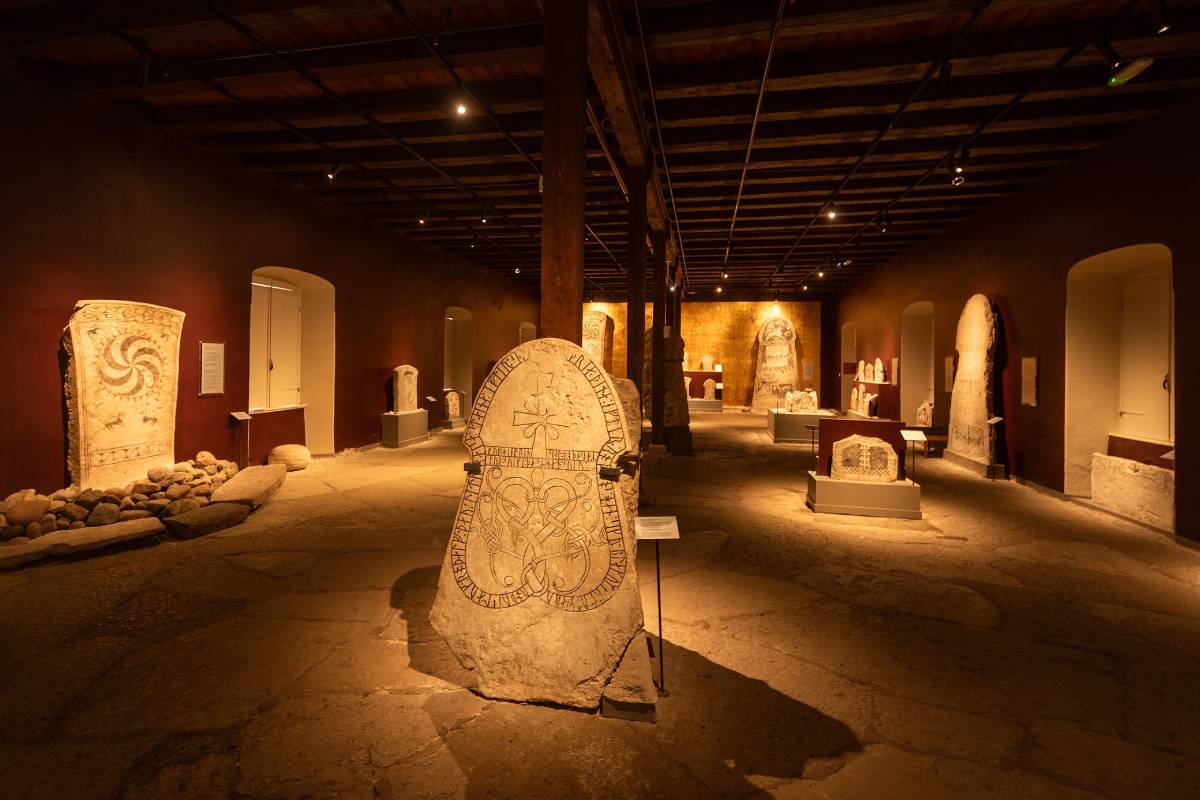
Gotlands Museum's Bildstenssalen, or picture stone hall, displays some of the island's most remarkable Viking Age carved stones. Photo: ArildV (CC BY-SA 4.0)
Wulfstan's account and Swedish control
Like so much of Sweden's Viking history, we have only mere fragments of what happened in Gotland during the early medieval period.
However, one such fragment is from a 9th-century CE wannabe travel writer, Wulfstan of Hedeby.
We do not know if he was from Hedeby, then a thriving Viking trading port; some scholars have concluded that he may have been born in what is now England (this did not necessarily exclude him from being part of a Viking society, however).
Regardless of his birthplace, Wulfstan is one of the most remarkable travel writers and chroniclers of this period.
Around 880 CE, we find that Wulfstan took a voyage to a trading center called Trusso, in an area dominated by the Baltic Prussians.
In this account, we use an online version of the 1807 English translation by Reverend James Ingram, Wulfstan mentions the lands he passes sailing there,
"... Then, after the land of the Burgundians, we had on our left the lands that have been called from the earliest times Blekingey, and Meore, and Eowland, and Gotland, all which territory is subject to the Sweons..."
So, by the late 9th century, we have the fact that the island of Gotland was under the control of the Sweons.
Now, you may ask, who are the Sweons? Well, these are, of course, the Swedes, the early medieval ancestors of today's Swedes.
Though this account should be viewed with a healthy deal of historical skepticism, it seems to back up the historical record that, by this period, Gotland had fallen under the control of the nascent Swedish kingdom.
Gotland was a valuable prize for any Viking-era ruler and later monarch to control, as we shall see.
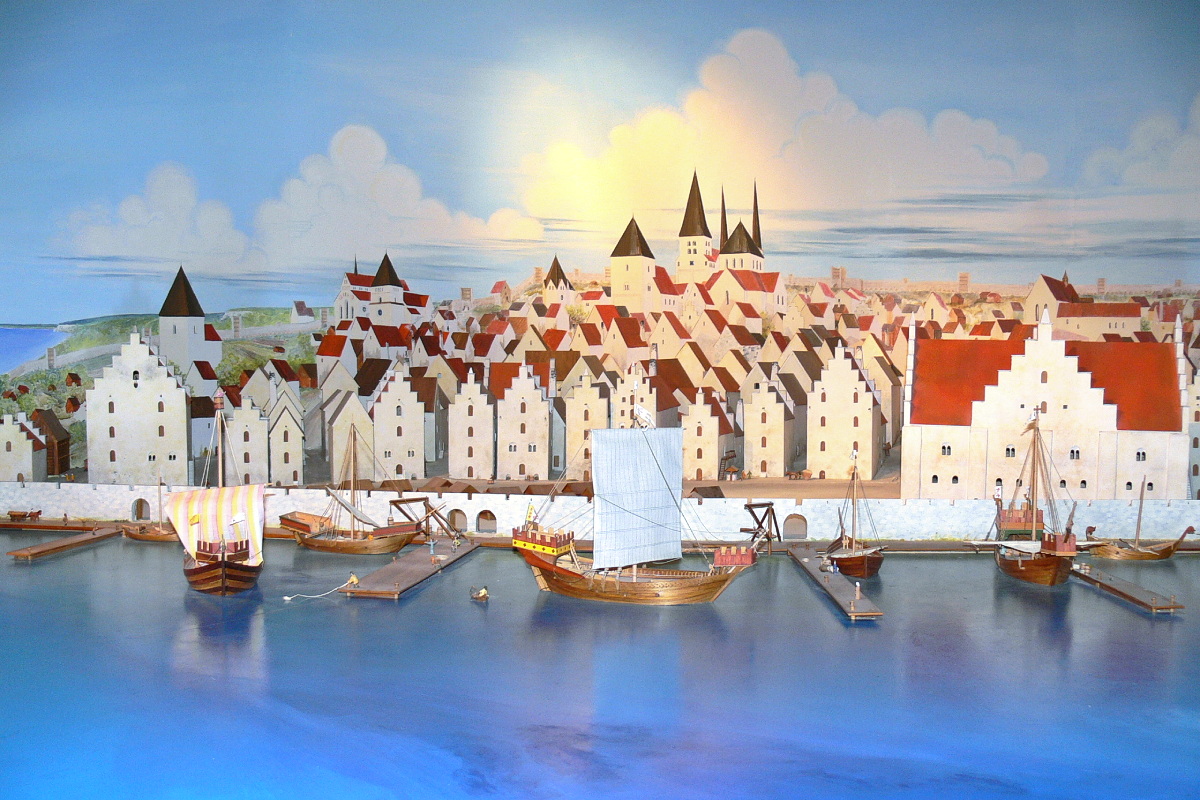
Pictured is a reconstruction of Visby harbor during the Middle Ages. Photo: Wolfgang Sauber (CC BY-SA 3.0)
Lucrative trading hub
Unlike the somewhat more warlike inhabitants of what is now Denmark, Norway, and (mainland) Sweden, early medieval Gotlanders were renowned for their less violent and more profitable qualities.
They were tremendous traders and merchants, as you would expect from people inhabiting an island that lay at the crossroads of trade routes that connected Scandinavia to larger civilizations in the south, be they the Byzantine Empire or the Islamic world.
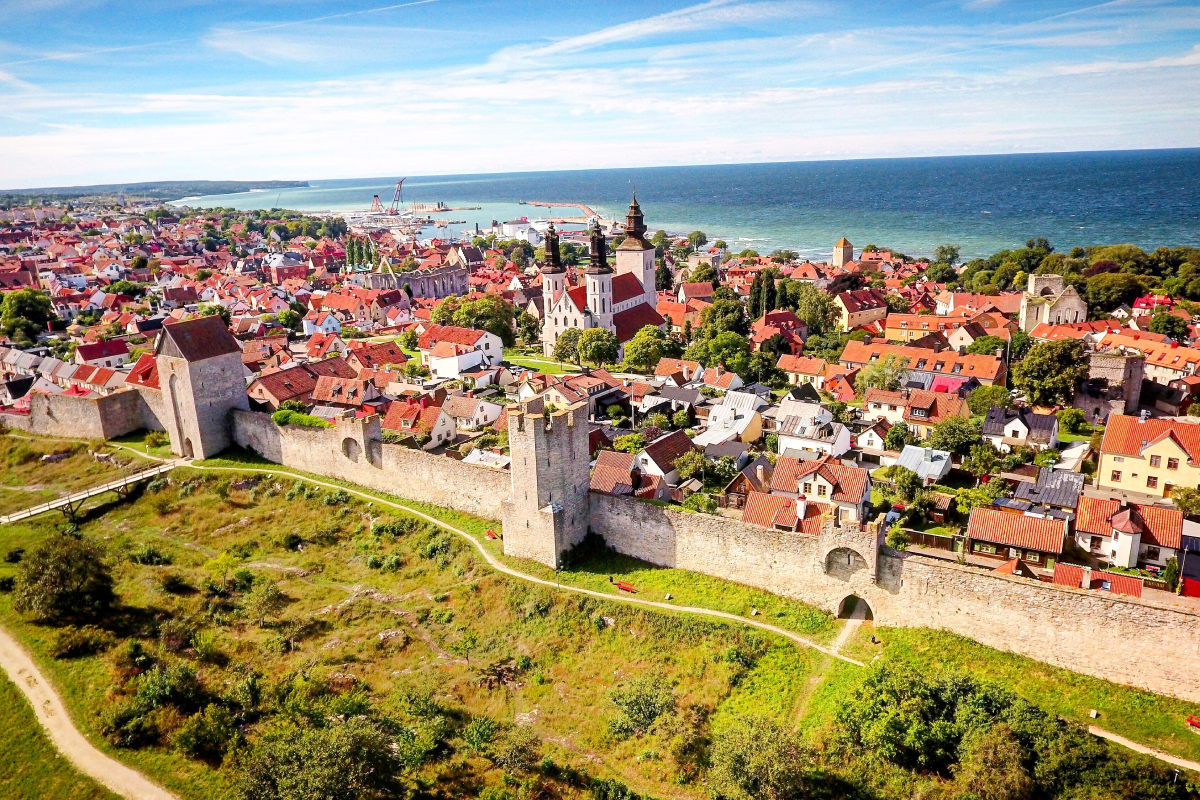
A market town, Visby, was established sometime around the turn of the 10th century CE and remains Scandinavia's best-preserved medieval town.
This market town soon became one of the most important trading hubs of the Viking world, capitalizing on its strategic position between Scandinavia and Eastern Europe.
We know that for many people in Viking societies, like Harald Hardrada, their fame and fortunes were to be made not westward but to the east.
Gotland capitalized on its strategic position and soon became wealthy with a steady stream of ships trading high-quality furs and skins from the Arctic, precious amber collected locally, iron and weapons, as well as dried fish and enslaved people.
These were sent outward to the markets and bazaars of the Islamic and Byzantine world, and Gotlanders soon started to grow rich.
These riches can be found in the silver-laden soil on the island today. Countless Viking hoards are a testament to the immense wealth that was generated during this era.
As Jonathan Shepard discusses in his chapter in the 2020 book, Viking Age Trade: Silver, Slaves and Gotland (available on Amazon here), the island houses "the single largest concentrations of silver hoards known to man," which we have written about here.
We can assume, however, that not all the wealth buried in the grounds of Gotland was acquired peacefully, but it still speaks to the immense wealth and commerce that flowed through this island.
Important medieval center of commerce
By the time Harald Hardrada was felled on a bridge in Northern England, Europe was changing. Soon, Viking raids and chieftains were a thing of the past.
The early medieval period, especially in Scandinavia, can be seen as a long but steady process of the centralization of power that would lead to the establishment of the medieval kingdoms of Denmark, Norway, and Sweden.
In these new states, the trading towns—like Visby on Gotland—soon became hugely important as bustling centers of commerce, culture, and trade.
Throughout the later medieval period, Gotland's position did not fade. Instead of connecting Viking trade with the Byzantines or Abbasids, it now saw a steady stream of commerce from the Swedish kingdom to nearby towns and cities in Northern Europe.
These northern trading towns would eventually form the Hanseatic League, of which Visby was an integral, important, and influential member.
Today, visitors can revel in the island's marvelous Viking history by visiting the local museum, which houses some of the estimated 400 runestones that are scattered across the island and were erected between the 6th and 12th centuries CE, roughly spanning the island's Viking Age.
For more information on the Viking history of Gotland, visit History Today here.
We get to provide readers with original coverage thanks to our loyal supporters. Do you enjoy our work? You can become a PATRON here or via our Patreon page. You'll get access to exclusive content and early access.
Feel free to reach out to discuss potential stories that may be in the public interest. You can reach us via email at hello@thevikingherald.com with the understanding that the information you provide might be used in our reporting and stories.