

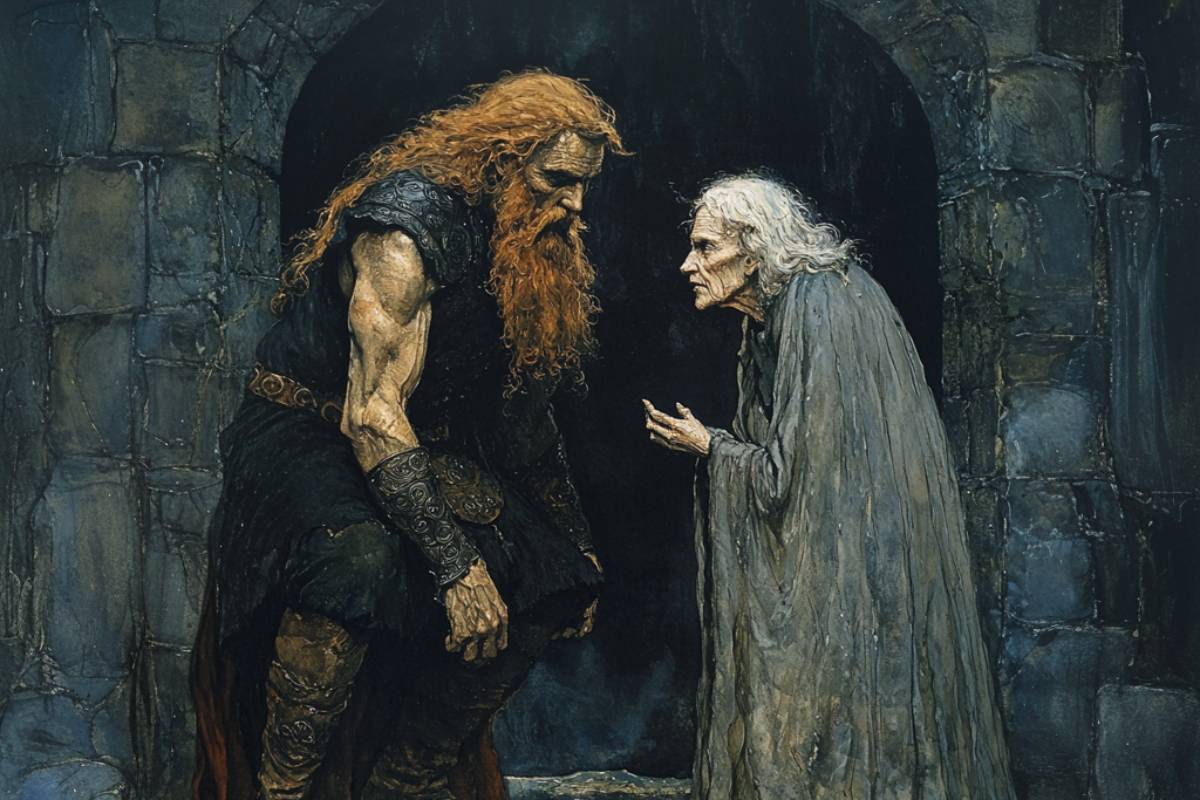
Though we moderns like to think of ourselves as the font of all wisdom, what with all our modern science and technology, smartphones and streaming services, we are, as Isaac Newton might have said, merely "standing on the shoulders of giants."
So much of the knowledge and wisdom that is available to us at the swipe of a finger has been gathered during a millennia-long process since modern Homo sapiens first emerged some 300,000 years ago.
Whilst we live in an age where the opportunities seem endless, thanks to advancements in science and technology—think life on Mars or flying cars—we must always realize that though our bells and gadgets are more modern, our ancestors were just as intelligent and wise, perhaps even more so.
If you take a quick glance at the rich tapestry of the Norse sagas, you will see how much wisdom is intertwined in these tall tales and entrancing yarns. These sagas offer timeless musings on human nature, morality, leadership, and the fragility of life.
Part entertainment, part morality lesson, and part history, in this era of constant crisis and anxiety, let us look to the Norse sagas for guidance and wisdom.
One of the best stories to offer guidance and wisdom from the Norse sagas involves the Norse God of Thunder, Thor, wrestling an elderly woman.
Let us delve into this ripping yarn and see what it can teach us in the 21st century.
Viking prose and saga
Speaking of standing on the shoulders of giants, where would we at The Viking Herald be without the 13th-century Icelandic poet and politician Snorri Sturluson?
Yes, the man who is credited with compiling—perhaps even transcribing—so much of the rich tapestry of the Norse sagas is a huge fan favorite in our offices.
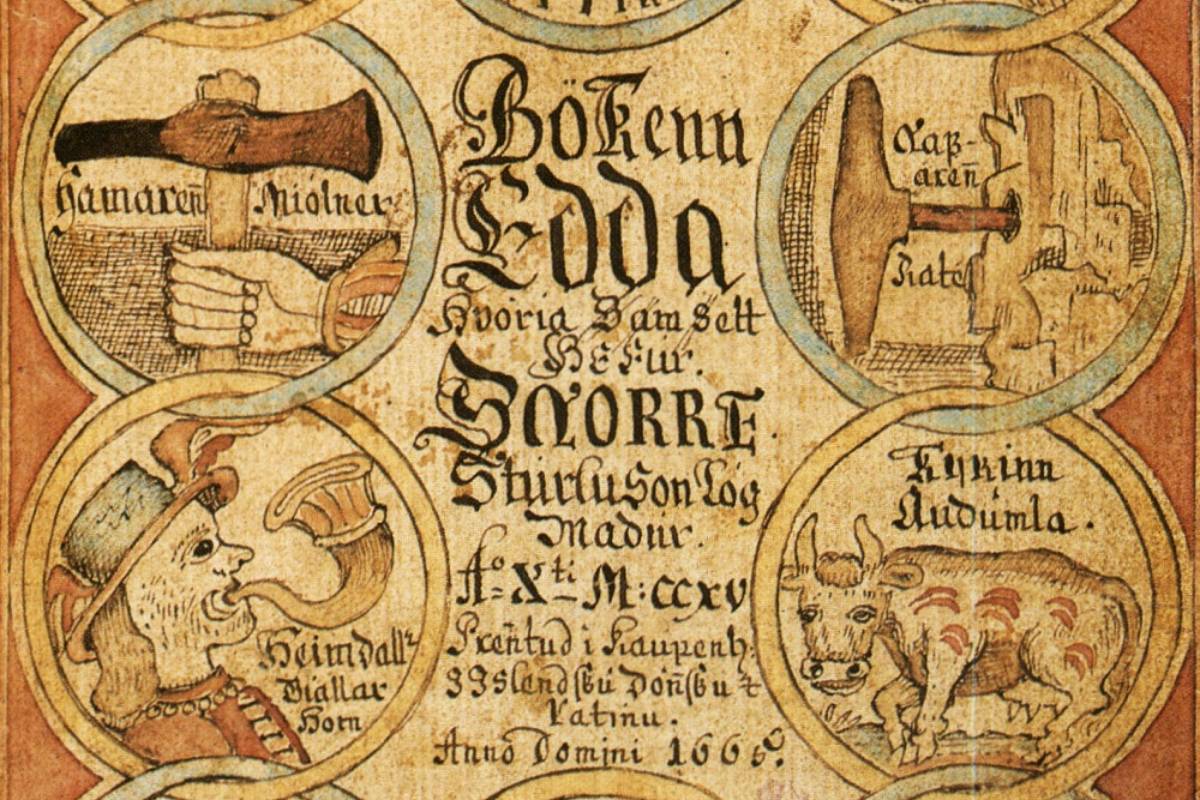
In the first part of the Prose Edda—our font of wisdom on all things Norse mythological—there is a section called the Gylfaginning (with the best English translation being something akin to The Beguiling of Gylfi).
As Jesse Byock writes in his 2006 edition of the Prose Edda (available on Amazon here), this is essentially a running dialogue between a Swedish king, Gylfi, and three figures seated on thrones in Asgard (translated into English as High, Just-as-High, and Third, but all said to be guises of Odin).
In this, they discuss the entire Norse cosmological and mythological view, from the creation to the destruction of the Norse cosmos and everything that occurs in between.
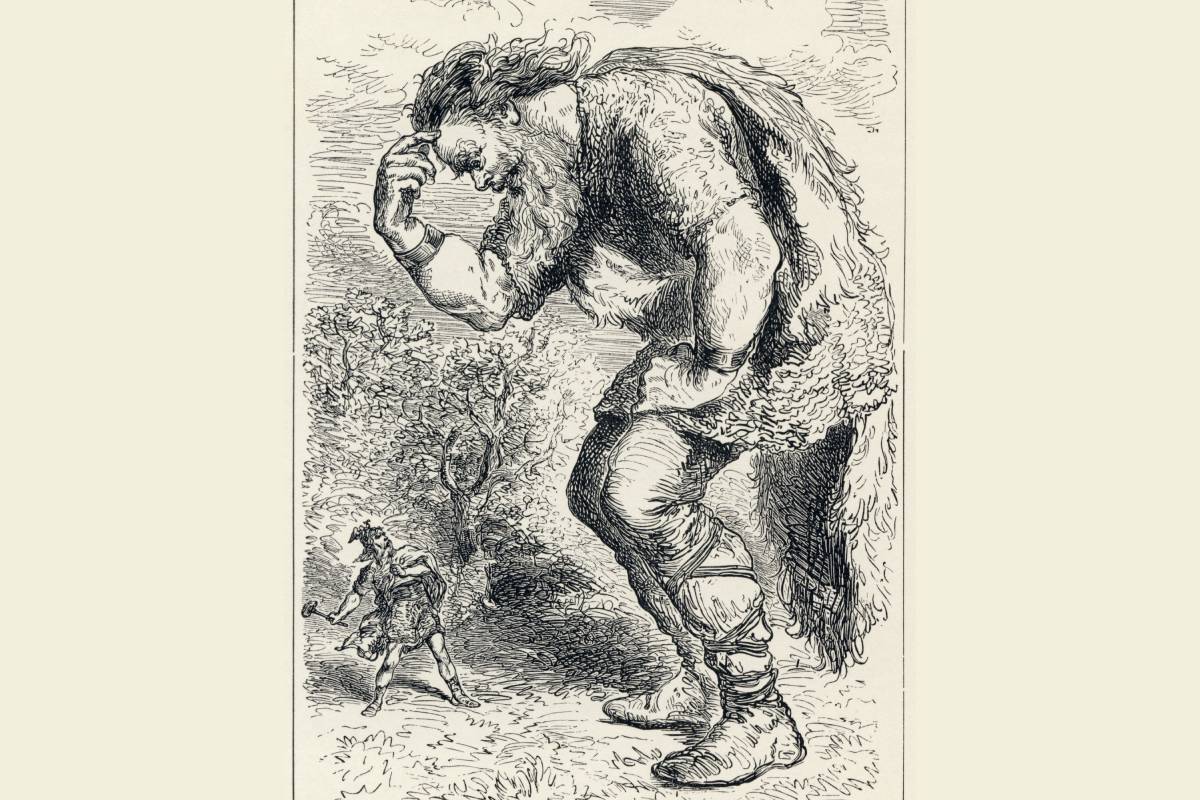
A 19th-century illustration of Thor meeting Utgarða-Loki in disguise on the way to the giant's castle. Illustration: Louis Huard (1814–1874)
A castle-bound adventure
Amongst these tales, we find one on Thor, the Norse God of Thunder. As John Lindow writes in his 2002 book, Norse Mythology: A Guide to Gods, Heroes, Rituals, and Beliefs (available on Amazon here), Thor finds himself one day in a castle with his sometime foe and always frenemy, Loki.
This is actually one of those tales where Loki and Thor seem to be on friendlier terms, for once.
The castle these two mythical beings find themselves in isn't just any old castle but one that belongs to a giant who is, rather confusingly, called Útgarða-Loki (also Anglicized as Utgarda-Loki, Utgard-Loki, or Utgardsloki).
Now, we know that giants and members of the Norse pantheon aren't exactly friends, so when Útgarða-Loki finds he has two uninvited houseguests, he challenges both to a series of bizarre contests.
Thor, being all bravado and brawn, decides that it is he who will compete in these contests, which involve fire-eating with another giant, lifting a cat (which is actually the great world serpent Jörmungandr in disguise), and attempting to drain a drinking horn (which draws water from the sea) in one gulp.
The final challenge is the most bizarre of all, as an elderly lady enters the room and wants to challenge Thor to a wrestling match.
- READ MORE: Who killed Thor in Norse mythology?
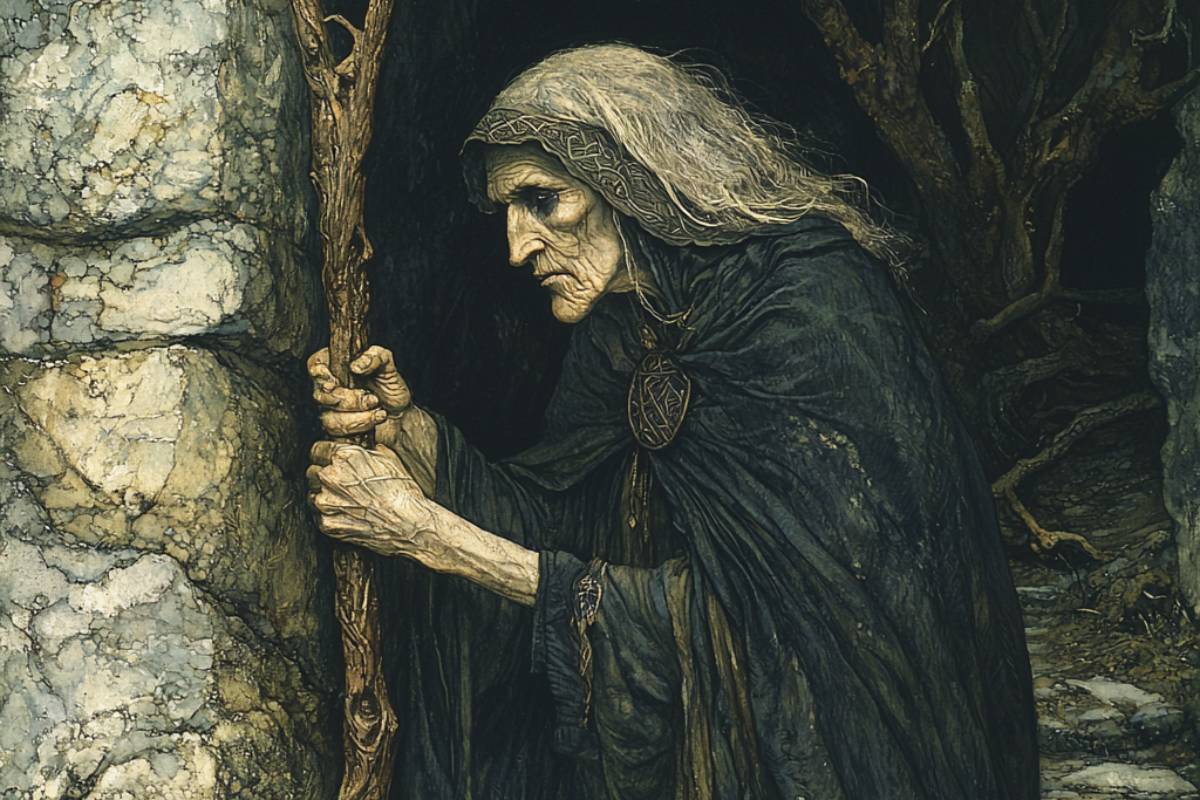
Elli, the personification of old age in Norse mythology, humbles Thor in a symbolic wrestling match. Illustration: The Viking Herald
Elderly Elli the wrestler
With Loki, one imagines, smirking from the sidelines, Thor is challenged to a wrestling duel with a frail and elderly lady named Elli.
We know little of this older lady other than that she appears to be extremely advanced in years and very frail.
Now, Thor, being all muscles and machismo, decides that this will surely be an easy challenge—that Elli is no match for the Norse God of Thunder.
As the challenge begins, Thor quickly realizes that Elli is not a normal elderly lady. No matter how hard he tries to pin her to the floor, she manages to evade him.
As the spirited duel progresses, Thor struggles with an opponent many years older and, in theory, less sprightly. Finally, Thor admits defeat as he cannot wrestle her to the ground and claim victory.
This results in a huge slice of humble pie being deliciously dished up to Thor, as he realizes that, though he may be the Norse God of Thunder and Lightning, he cannot wrestle an elderly lady to the floor.
So then, why is this wrestling match between a Norse god and a would-be pensioner a great lesson in hubris and humility?
- READ MORE: The Hávamál – Odin's advice on living wisely
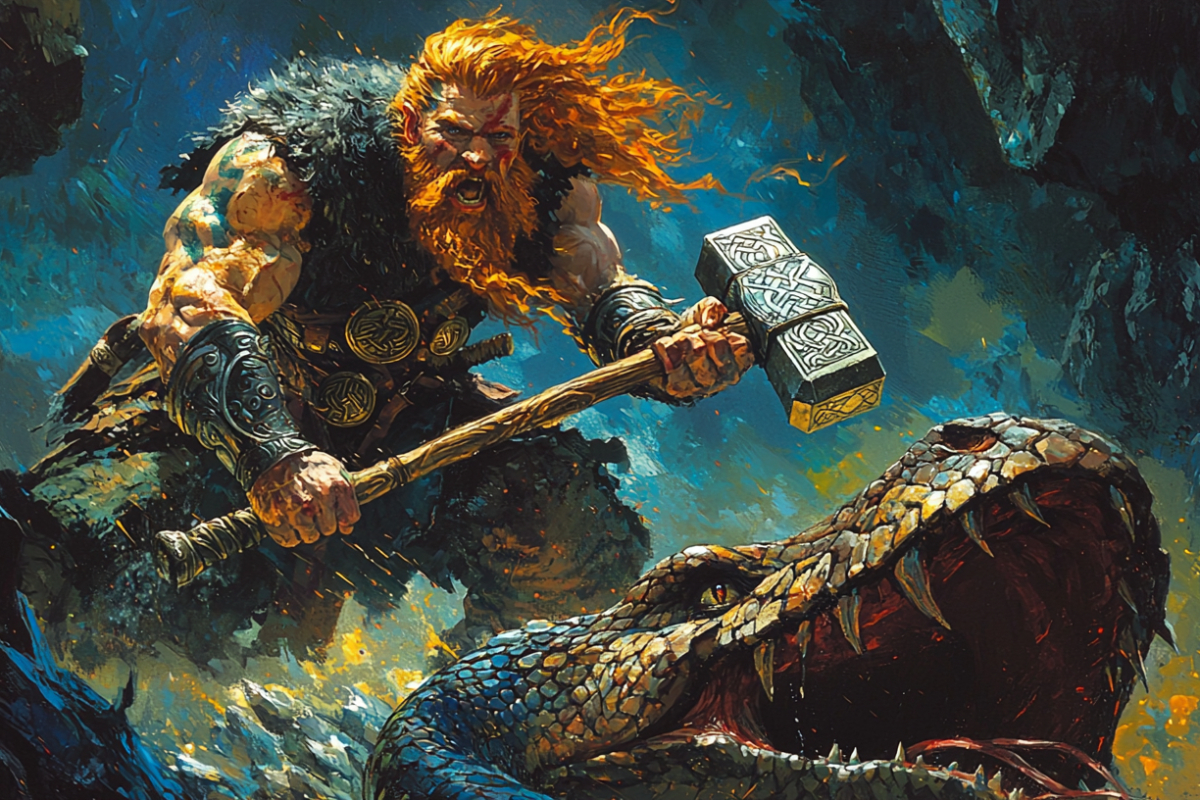
The story from Gylfaginning reminds us that even Thor, with all his strength, cannot conquer old age. Illustration: The Viking Herald
Dishing out some Viking Age wisdom and guidance
Though this is an ancient tale—one can imagine people from Viking societies regaling each other with it on a cold winter's night—there is a lesson for all of us living centuries after it was first told.
First, to Thor's opponent. We find out that Elli is an Old Norse term for "old age," which is a cunning quip.
It means that, despite being a Norse god full of brawn, bravado, and mythical qualities—and despite his best wrestling efforts—Thor truly cannot defeat old age. Not even a powerful god, imbued with legendary and mythic qualities, can claim victory over this opponent.
Aside from this tale being centuries old, it offers profound wisdom. It reminds us that even the mighty can suffer humiliation and that hubris can underpin one's downfall.
Furthermore, it reminds us of the inevitable force of aging, which spares no human, not even the Norse God of Thunder. It can also teach us about the limits of our physical strength and not to treat people or situations at face value.
To seek profound wisdom, one only has to open the pages of the Norse sagas—yet another reason to get stuck into these entertaining and educational tales that have enthralled audiences for centuries.
For more information on how best to explore Iceland using the Norse sagas, visit Lonely Planet here.
We get to provide readers with original coverage thanks to our loyal supporters. Do you enjoy our work? You can become a PATRON here or via our Patreon page. You'll get access to exclusive content and early access.
Feel free to reach out to discuss potential stories that may be in the public interest. You can reach us via email at hello@thevikingherald.com with the understanding that the information you provide might be used in our reporting and stories.