

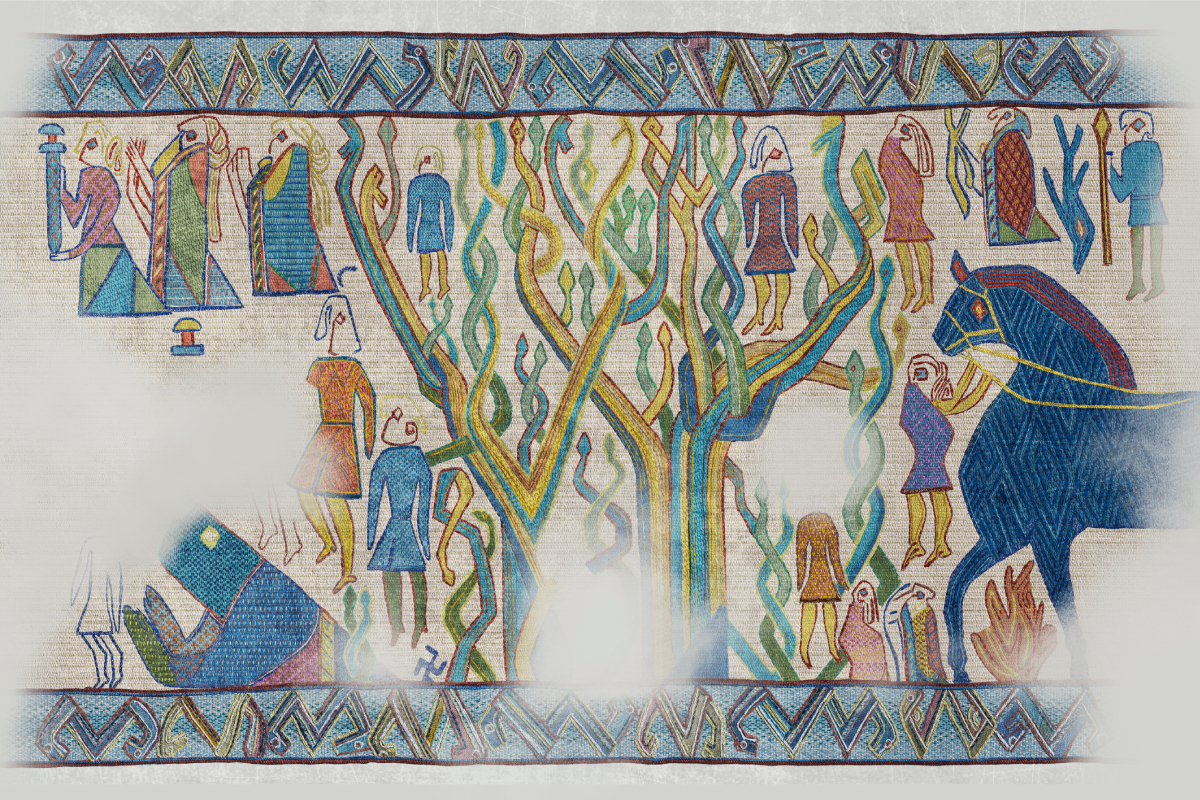
The excavation of the Oseberg ship burial in 1904 was a landmark moment in Viking Age archeology.
The ship itself, of course, was the most widely celebrated discovery. This 9th-century Viking vessel stretched 71 feet (22 meters) in length and displayed all the artistry and shipbuilding craft of the era.
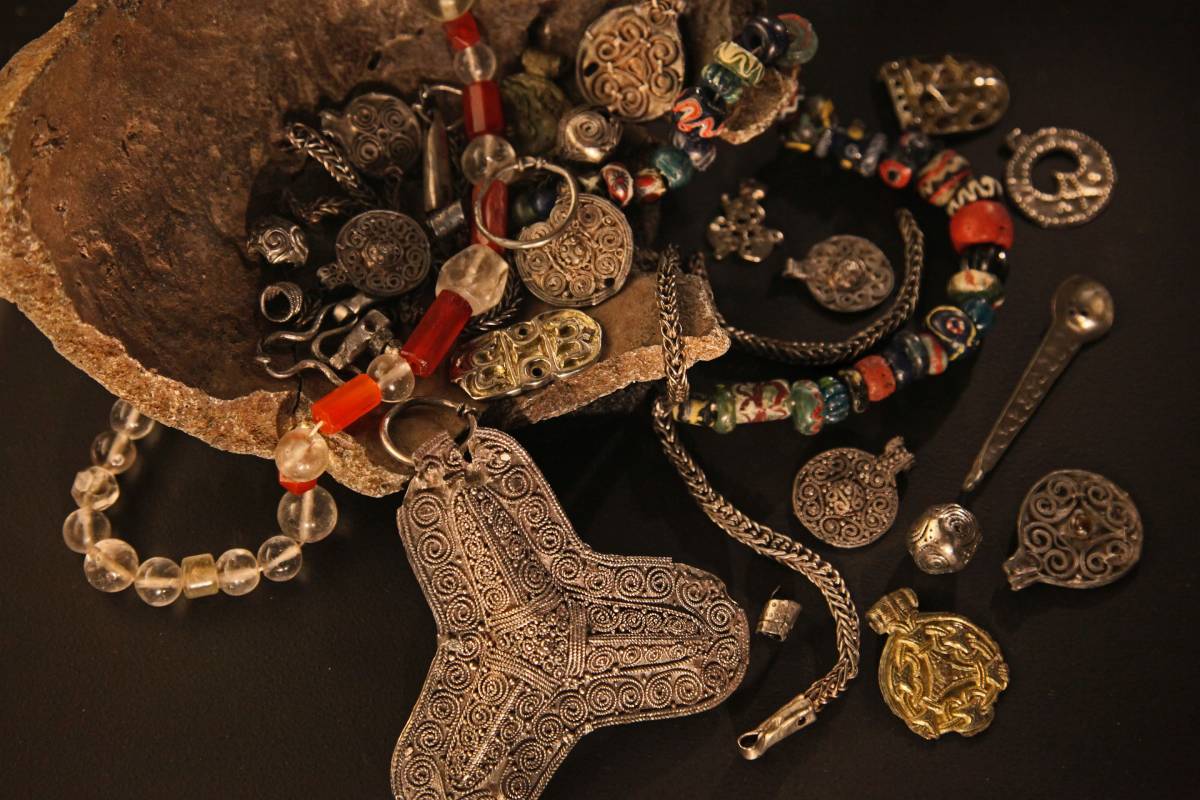
Yet there were also a number of other fascinating artifacts unearthed, including decorative sleds, wooden chests, jewelry, a "Buddha bucket" that sparked debate about Viking-Asian connections, and a series of elaborate ornaments.
One especially intriguing find, however, comes in the form of around 80 textile fragments that have come to be known as the Oseberg tapestries.
With input from Marianne Vedeler, who has written two books on the subject, Silk for the Vikings (2014) and The Oseberg Tapestries (2019), The Viking Herald explores this mysterious set of textiles.
Layers of meaning
Together with the other grave goods found at Oseberg in eastern Norway, the tapestries were buried in approximately 834 and remained sealed off from the world for over a thousand years.
Yet while much of the wood and metal from the burial site was remarkably well-preserved, the textile fragments had suffered severe deterioration.
Marianne Vedeler, an archeologist at the Museum of Cultural History and the University of Oslo, has been heavily involved in the restoration and interpretation of these fragments for much of her recent career.
"The Oseberg grave is such a complex construction, with many layers of meaning," Marianne tells The Viking Herald. "I became interested in the Oseberg textiles for the first time when I was given some notes on the subject by the late researcher Anne Stine Ingstad."
"The tapestries from Oseberg are the oldest surviving storytelling tapestries in Scandinavia. They represent a unique glimpse into a complex storytelling tradition in a society where texts did not yet have a position."
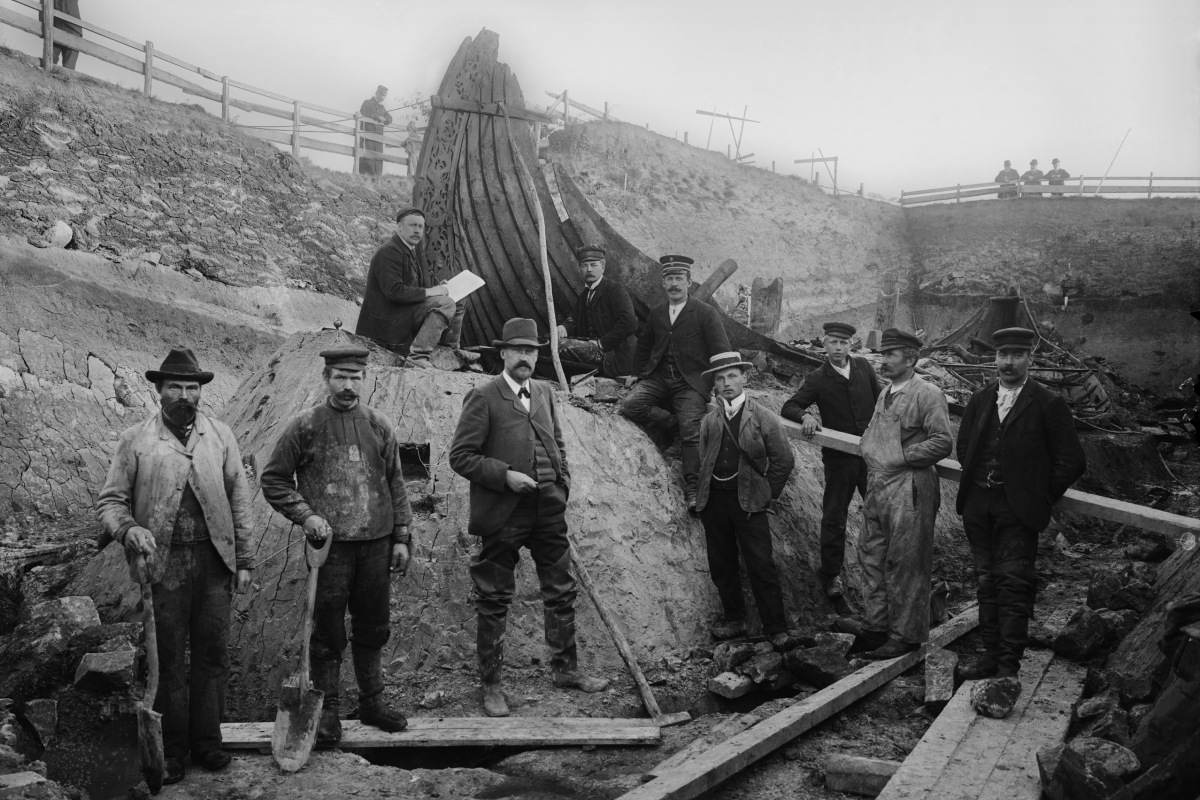
The 1904 excavation of the Oseberg ship burial in Norway revealed a stunning Viking ship and an array of grave goods. Photo: Museum of Cultural History
Rare and precious insight
Indeed, the Vikings were clearly great storytellers, as attested by their rich mythology.
However, our understanding of their inner world is largely limited to stories passed down orally through generations and recorded centuries later. The relatively limited imagery presented in motifs preserved in more durable materials, such as iron and stone, offers only partial insights.
Yet despite the significant degradation of the Oseberg tapestries – made from wool and an unidentified plant-based material – experts were still able to make out key details in some of the more complete fragments.
Now, a major ongoing project, TexRec – Virtual Reconstruction, Interpretation, and Preservation of the Textile Artifacts from the Oseberg Find, is helping to further illuminate our understanding of these fascinating objects.
Project members – including Marianne Vedeler – are dedicated to unearthing the elusive truth of the textiles through painstaking analysis.
The main research is focused on fabric analysis, virtual reconstruction, and interpretation of the tapestry fragments, though the team is also committed to identifying conservation strategies and education.
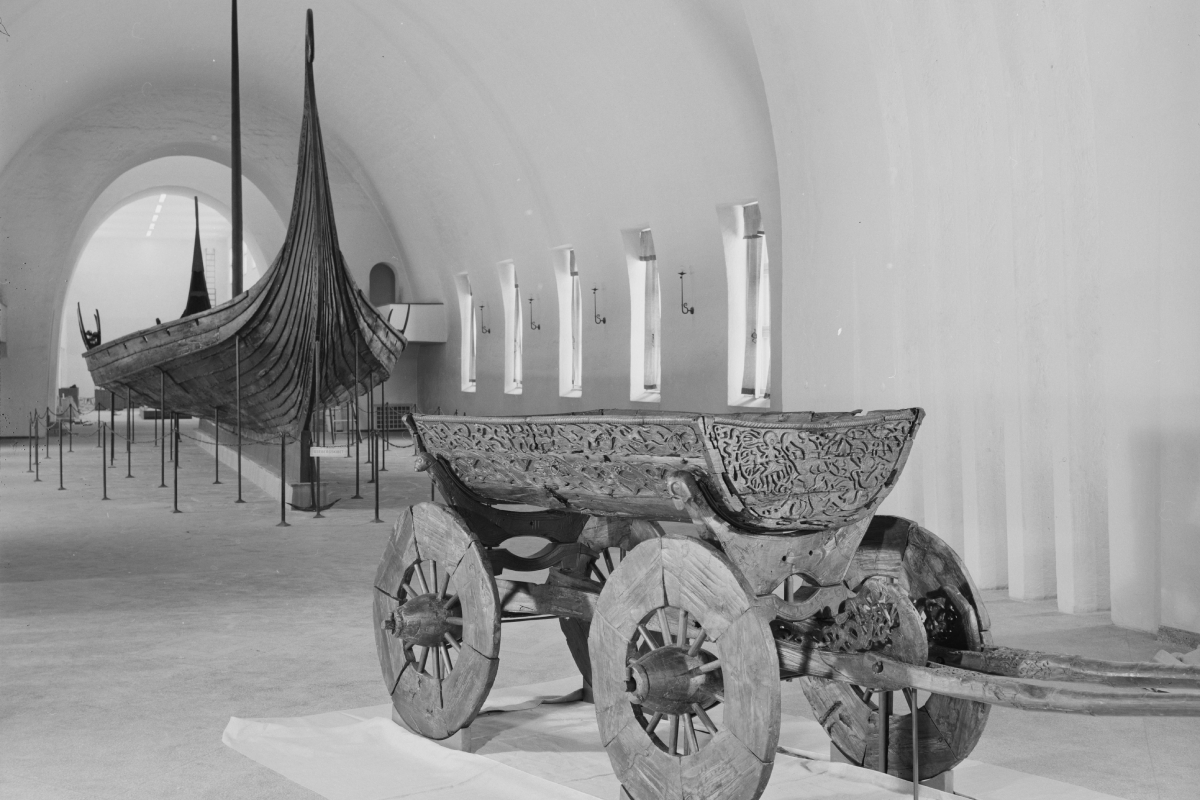
Among the finds in the Oseberg burial were four intricately carved sleds, a large ornate wagon, wooden chests, jewelry, and ornaments. Photo: Jac Brun (1921–1995)
Animals, violence, and processions
Both earlier and more recent analyses have enabled us to develop a general understanding of the contents of the tapestries.
Some of the clearest motifs include animals, humans, ships, and houses, while there are also many references to violence, with battle scenes, warriors in animal form, and hangings.
As Marianne indicates, there is also a possible funeral procession that could reference the burial of the two women found at Oseberg.
"Two of the largest and best-preserved tapestry fragments seem to depict a solemn procession with people and animals moving towards the left of the picture," Marianne explains in the introduction to her book.
"The central element in this scene is two covered carriages drawn by large horses. Male and female figures walk between the carriages, many of them carrying spears or other objects. Narrow tablet-woven bands were attached to the upper and lower edges."
"These fragments have been interpreted in different ways. One suggestion is that this is an illustration of an actual event, a depiction of a funeral procession – perhaps the Oseberg funeral ceremony itself."
"However, the images may just as well be depictions of a myth or an idealized ritual procession."
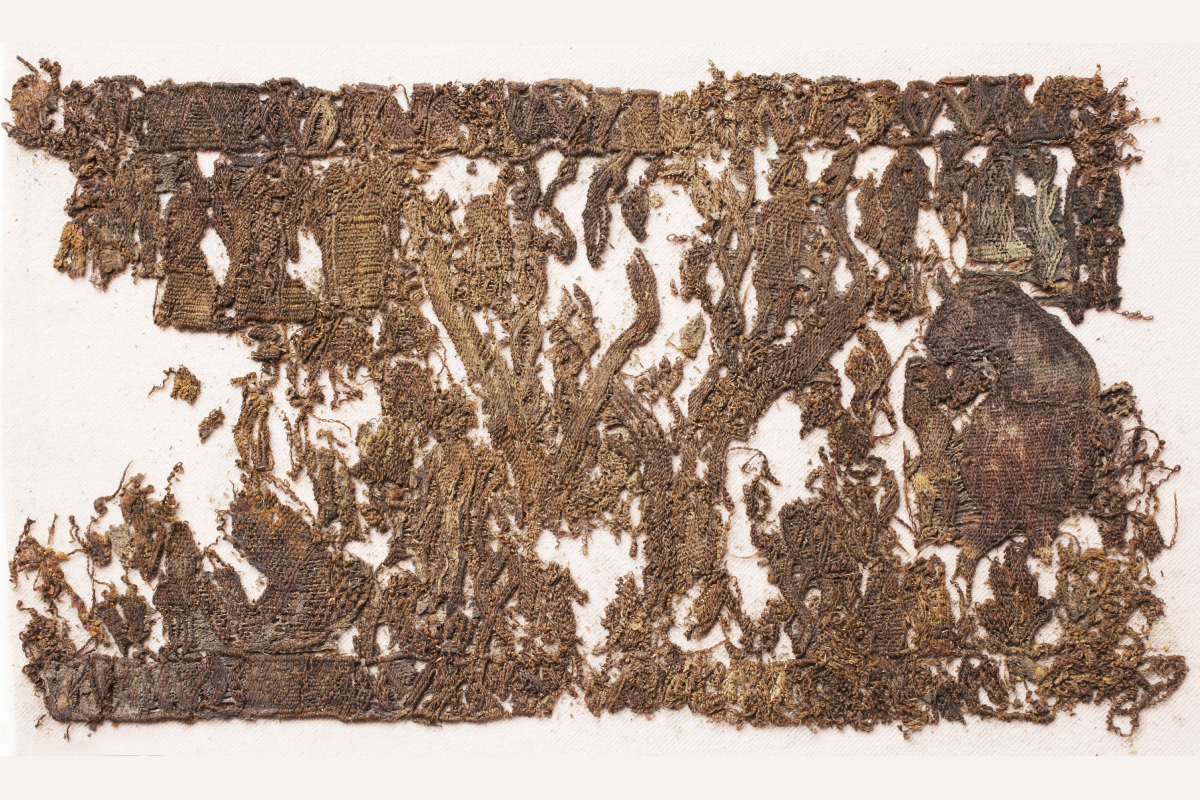
This fragment shows an enormous tree with hanged men and possibly highlights the importance of sacrifice in Viking culture. Photo: E. Holte / Museum of Cultural History
Dangling from the World Tree
Marianne believes another fragment may represent Yggdrasil or the World Tree, which is central to Norse mythology.
"It displays an image of an enormous tree with a dozen hanged men swinging from the branches," Marianne comments to The Viking Herald.
"The tree seems to have several roots. The tree is an important symbol in the Poetic Edda, where the immense ash tree Yggdrasil is the center of the world."
"In times of crisis during the Viking Age, the world order could be restored by sacrificing animals or humans."
"The tree is central to the myths concerning sacrifice, which are rendered in various Scandinavian sources. It is both the center of the world and a place where humans and animals can be sacrificed to the gods."
"In the Poetic Edda, Yggdrasil is described as spreading its branches over the world from a base of three roots. It reaches over all men, gods, and spirits."
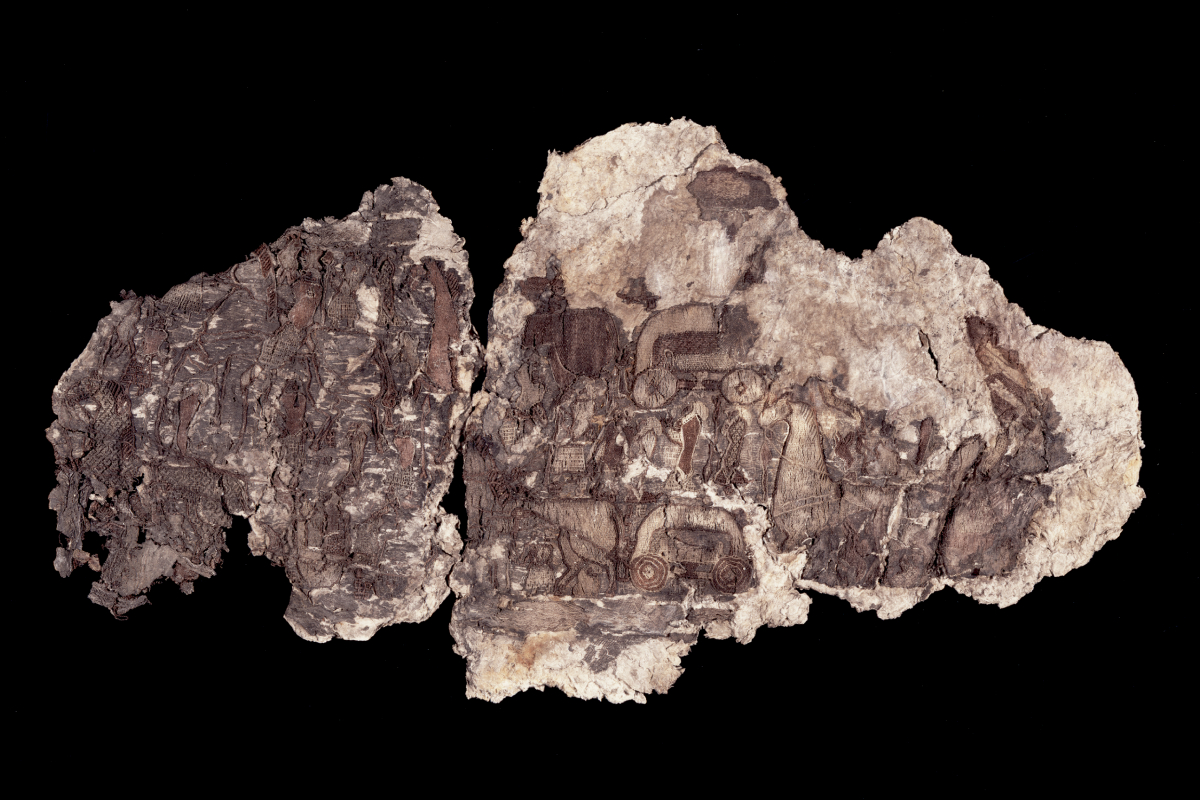
The TexRec project aims to group the fragments together to create larger images and reveal how the tapestries may have been composed. Photo: Museum of Cultural History
Exploring the limits of our knowledge
Marianne stresses that any interpretations of the Oseberg tapestries are limited by the incomplete nature of the works, their poor overall condition, and our fragmentary understanding of Viking Age art.
In her own work, Marianne has often employed more conventional methods of analysis, spending many hours studying the fragments under a microscope.
The current project also includes the development of software that could help group the fragments together to produce larger images, as well as attempts to recreate some of the techniques used to make the tapestries.
The hope is that, eventually, a more cohesive picture will emerge of how the tapestries may have fit together.
"We are still struggling to find a way to uncover how the individual scenes on the tapestry fragments have formed coherent narratives," Marianne admits.
"I think that research will be going on for quite some time, and the same goes for finding the original colors."
We get to provide readers with original coverage thanks to our loyal supporters. Do you enjoy our work? You can become a PATRON here or via our Patreon page. You'll get access to exclusive content and early access.
Feel free to reach out to discuss potential stories that may be in the public interest. You can reach us via email at hello@thevikingherald.com with the understanding that the information you provide might be used in our reporting and stories.