

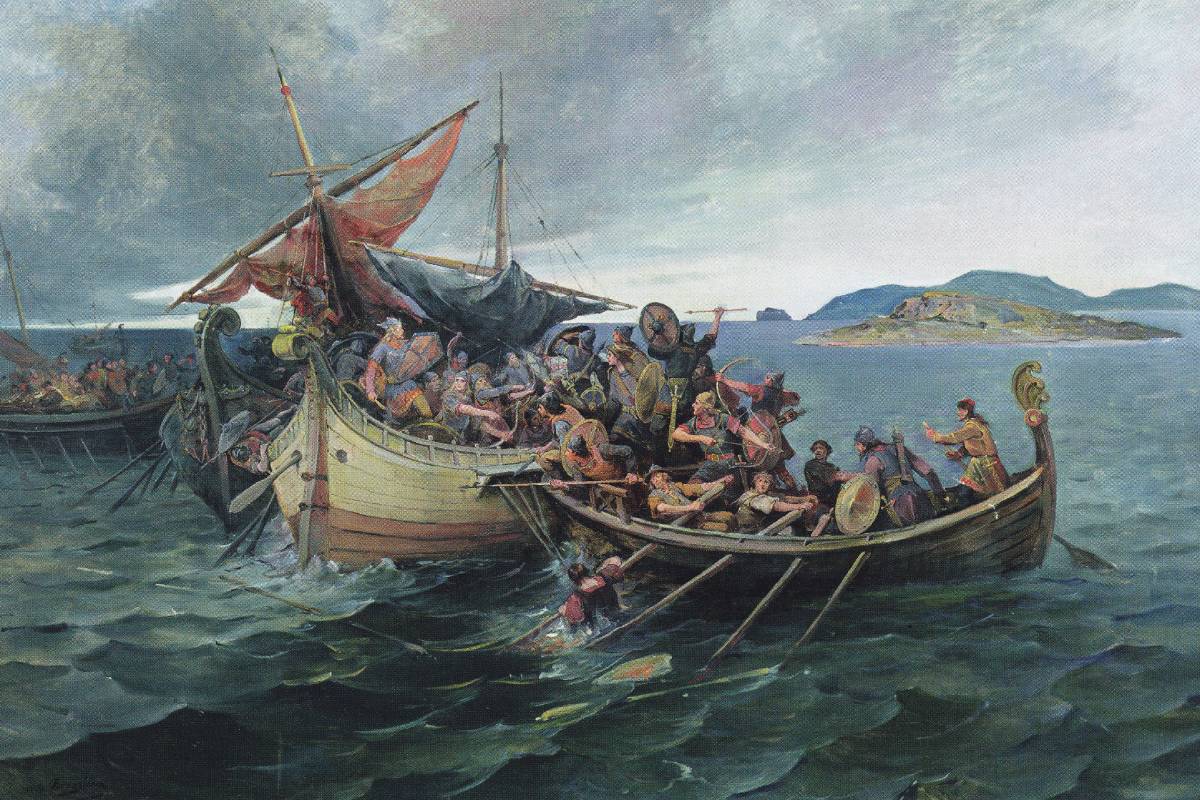
We recently did a poll in The Viking Herald offices and, without any doubt, our favorite bunch of mercenary warriors from the Viking Age were the Jómsvíkings.
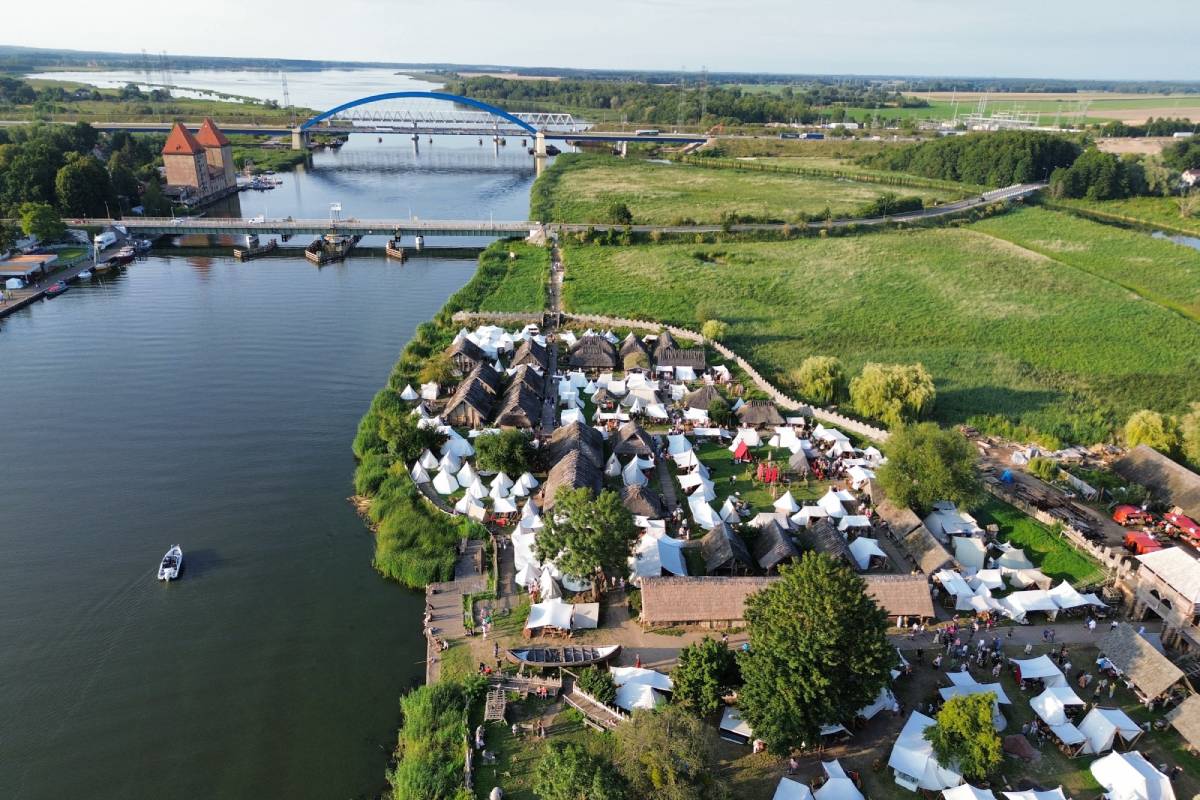
These were said to be an elite, mercenary horde of warriors, famed for their martial discipline and code of honor, that operated from a stronghold on an island in the Baltic Sea throughout the Viking Age.
Whilst they were said to have a strictly disciplined warrior fraternity and, with this ideal of controlled and professional violence, could be likened to early medieval versions of Spartan warriors of Ancient Greece, they largely operated as a law unto themselves.
Their changing political alliances saw them become involved in the violent politics of the age and were key players in several semi-legendary battles, including Hjörungavágr and Svolder.
Ultimately, it was their unruly independence and violence, including raiding much of the Baltic Basin, that saw them become a thorn in the side of Scandinavian rulers.
They were said to have been finally suppressed by King Magnus I of Norway, who allegedly destroyed their fortress in 1043 CE. Their legend, however, lived on in later medieval accounts, including their eponymous saga (albeit one with multiple versions), the Jómsvíkinga saga.
Multiple versions but a unique style
There is no doubt that the Jómsvíkinga saga is an important part of the Norse literary canon, albeit perhaps not as well known as the more popularly appreciated sagas.
Like these other sagas, it should not be treated as a straightforward historical record despite its containing many historically verifiable characters and events.
That is not to say that it is a complete work of fiction, though many of the characters and events are the stuff of legend, lore, and a fair sprinkle of artistic license. This blend is similar to that of the other sagas and is what has popularized it for generation after generation down through the centuries.
What is unique, however, about the Jómsvíkinga saga is its literary style. As Sirpa Aalto notes in her 2014 article "Jómsvíkinga Saga as a Part of Old Norse Historiography," published in Scripta Islandica, it is the "style of the saga that has been problematic for scholars. Jómsvíkinga saga has been classified as a 'political saga', 'not quite [a] kings' saga', 'a cross between a kings' saga and a legendary saga' and even a 'colonial saga.'"
The Jómsvíkinga saga is thus a quixotic mixture lying somewhere in the middle between fact and fiction, kingly historical record and ripping high drama.
Aside from its genre-bending nature, the saga exists in several editions with differences in emphasis, tone, and events in each. These multiple versions run the course of the latter medieval period, from the initial 13th-century CE version, which is incomplete, to its most modern incarnation, a late 16th-century Latin translation.
Each of these versions reflects the shifting attitudes of the era in which it was transcribed, with the Jómsvíkings running the full gamut of interpretation from heroic underdog defenders of honor, in the earlier versions, to little more than predatory pirates, thorns in the sides of "good" Christian Scandinavian rulers, in the later versions.
Yet permeating throughout each of the versions of the saga is the presence of the culture of a warrior fraternity. The Jómsvíkings are not only a band of warriors, brothers in arms, but are often depicted as a vision of order and discipline in a world of instability and violence.
PLEASE NOTE: The rest of this article is only available to our paid Patreon subscribers.
The topic was selected by our Patrons in a weekly poll. Support The Viking Herald on Patreon to read the full article and help choose future topics.
If you would like to learn more about Patreon and why we have decided to restrict access to some content, please take a look at this article.
Feel free to reach out to discuss potential stories that may be in the public interest. You can reach us via email at hello@thevikingherald.com with the understanding that the information you provide might be used in our reporting and stories.