

The archeologist Steve Dickinson believes he may have discovered the final resting place of the influential Viking leader Ivar the Boneless. In our conversation, Steve identifies several promising leads, including historical records, site inspections, and artifacts that point to a possible ship burial.
Coningeshou: The King's Mound
As Steve recounts to The Viking Herald, his first lead for the Cumbrian site came during a period of historical research.
"About two years ago, I was looking at some medieval documents on the west coast of Cumbria," Steve begins.
"I found it in the documents for a priory – they were written in Latin, but this Norse name kept popping up – Coningeshou. The word Coningeshou derives from the Old Norse word for the King's Mound. I looked at the place-names of the west coast to see if I could find whether such a site existed. It did."
Although Ivar the Boneless is described in later sources as born in Scandinavia, those sources also place much of his adult life in campaigns across England and Ireland, in part as revenge for the death of his father, Ragnar Lothbrok.
In the Icelandic sagas, Ivar gives specific instructions for his burial and asks to be placed in a mound on the English coast at a site exposed to attack.
The sagas also attribute a prophecy to Ivar: as long as his bones guarded the shore, no one would successfully invade the land. Later tradition further claims that William of Normandy broke this "spell" by exhuming and burning Ivar's body before he conquered the country.
Steve believes the Cumbrian site is a strong candidate for the burial ground described in the sagas. "There are two main sources for the Ivar the Boneless link to the mound I found," he states.
"One is a 13th-century Icelandic saga, admittedly written down much later than the 9th century CE, when Ivar was around. The saga relates that Ivar was buried in a mound in England on a boundary. This fits the location of our mound exactly."
"The other sources come from Ireland and England," Steve adds. "He was one of the principal leaders of the Viking Great Army in England. According to 9th-century Irish annals, his home kingdom was a place called Laithlind."
"Scholars have previously located this in Norway or in Scotland, but there's really good evidence, again from a close reading of the Irish annals, that Laithlind was West Cumbria."
"The name actually means Lake Marshland, which also fits perfectly with the kind of context that we have over here in Cumbria, and the Lake District region."
- READ MORE: Born of legend – The sons of Ragnar Lothbrok
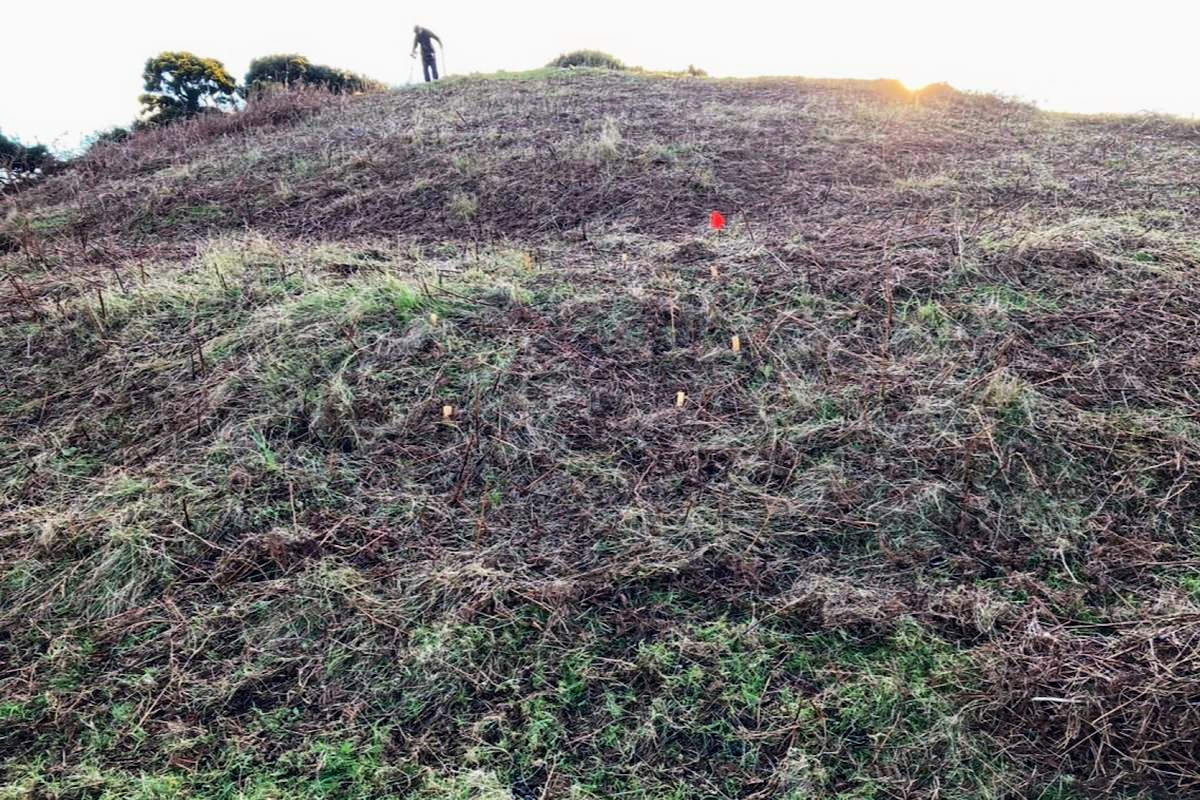
Metal-detector work on the King's Mound in Cumbria recovered ship rivets, roves, and lead weights. Photo: Steve Dickinson
Inspection time
The priory was established in 1135, while Cumbria is known to have had a significant Norse population. Indeed, even today, many of the place-names in Cumbria are of Norse origin.
If the local people referred to the area at this time as Coningeshou – a Norse term – the name may reflect Norse-language influence and a local tradition that associated the mound with a "king."
That, in itself, cannot establish a burial, but it does help explain why Steve treats the site as worth closer inspection.
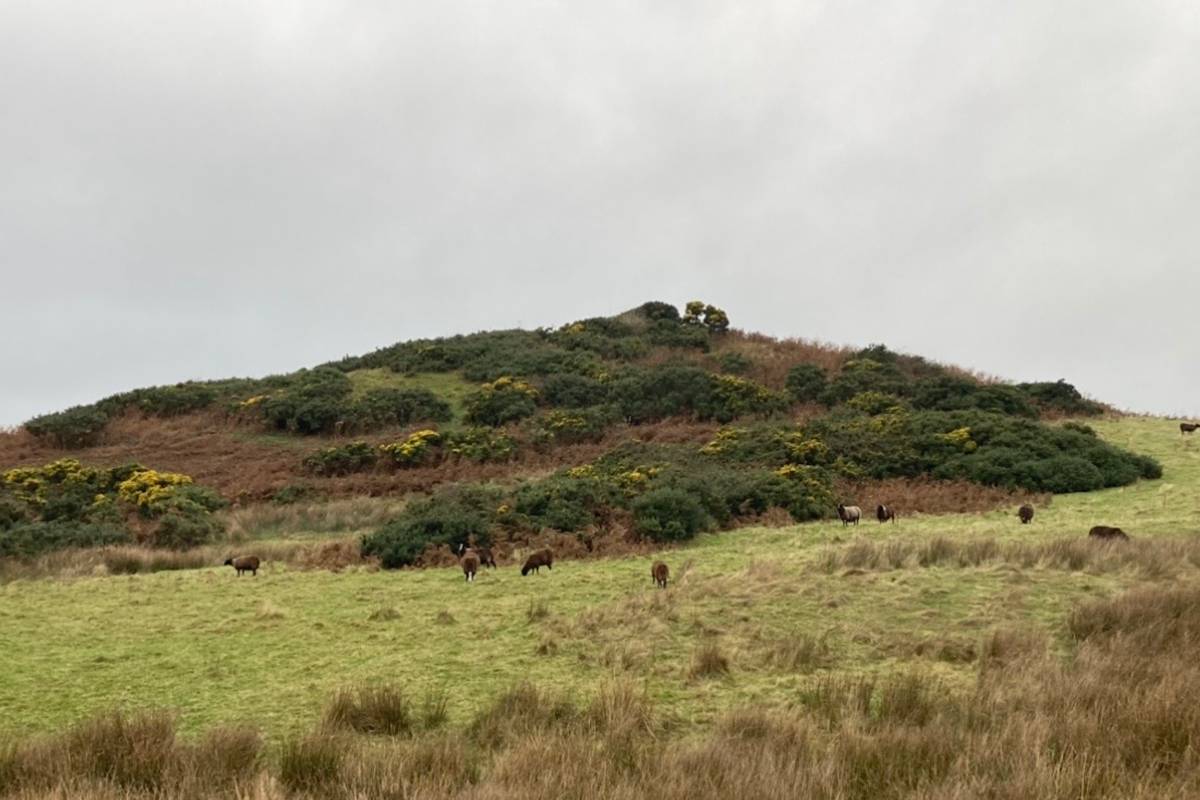
Naturally, the next step was for Steve to inspect the area himself. "It's a fascinating site," Steve asserts. "About half of it is covered in gorse, which is probably one of the reasons why nobody's recognized it before."
"I talked to the landowner, who happens to be half-Danish and is very cooperative about what we've been doing."
"He told me he had put a hole into the mound in the 1980s with a mechanical excavator and found that the composition of the upper part of the mound was something like industrial-grade sand. This is very unusual."
"My ears pricked up at hearing this. The mound itself and the sand within it sit atop a boulder clay promontory. So the composition of the mound is completely unlike anything that's part of the natural geology."
"It's completely alien, sitting there on this promontory overlooking this huge stretch of coastline. It looks directly over the Irish Sea to the Isle of Man, which is perfectly visible from it on a clear day."
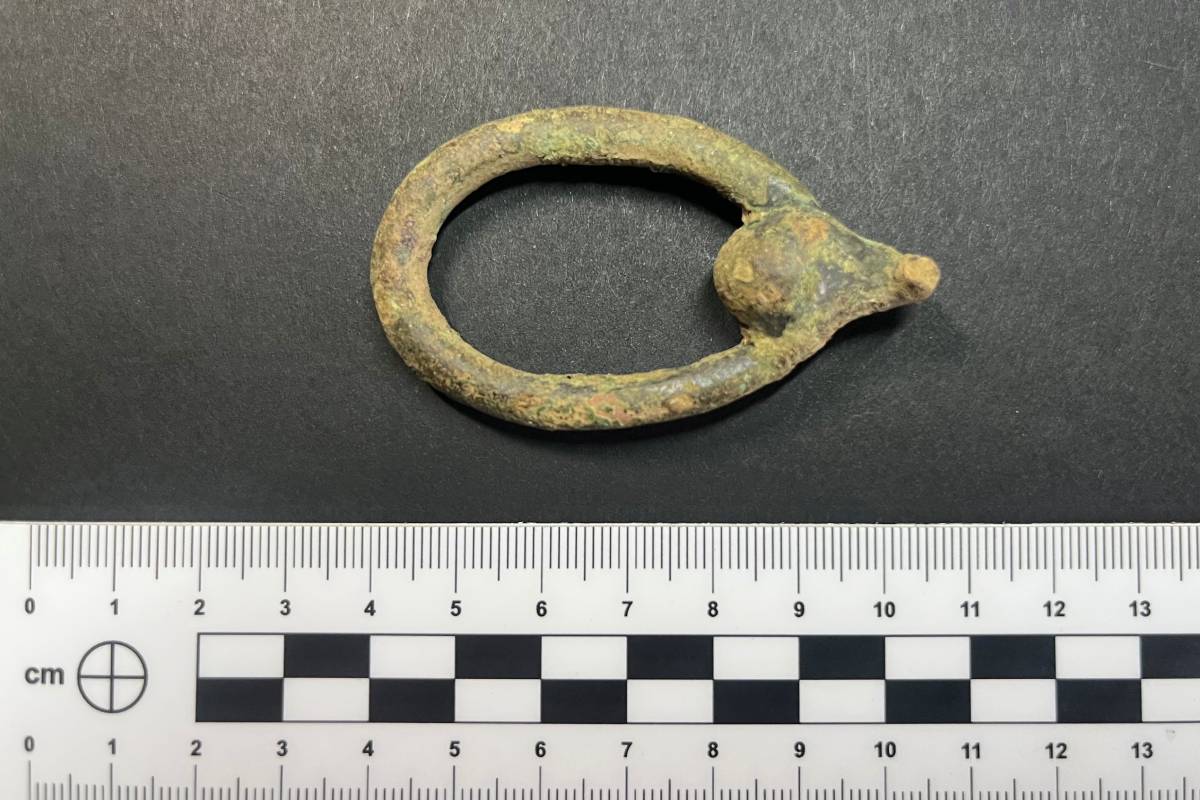
A bronze dog harness loop recovered from a smaller mound near the King's Mound in Cumbria, England. Photo: Steve Dickinson
Visits and rivets
Encouraged, Steve decided to ask for a second opinion from an expert in Viking burials.
"We were lucky enough to get Christian Løchsen Rødsrud, who's the director of the Gjellestad Viking ship burial in Norway," Steve tells The Viking Herald. "He came over last summer with a couple of his colleagues, and they were all completely blown away by the site."
"We were talking about other monumental mounds, of which there are around 15 with ship graves in them in north-west Europe. They're often positioned in very prominent locations in relation to fjords and seacoast and so forth. And ours is just the same."
Steve and his team have also been able to identify some other signs of activity that could indicate a ship burial and the presence of Norse settlers.
"Whatever's buried in the mound is under about 10,000 cubic metres of earth, so we're not going to get at it very easily," Steve admits. "But the metal detecting surveys have already produced some remarkable finds. We have identified ship rivets and roves, and also some lead weights."
"These could be related to the weighing out of the Furness Hoard, a significant Viking silver hoard that was found by detectorists near the site."
There also appear to be some other smaller mounds grouped around the main one. "They pop up on the LiDAR images of the area," Steve explains.
"These smaller mounds are nowhere near as large as the biggest one, but some of them are maybe 14–15 metres across. Some of them are also boat-shaped."
"You get lots of satellite mounds at other major Scandinavian ship burial sites like Borre, near Oslo. I asked the landowner whether there was any particular kind of reason to have these odd structures in his field, but he said no."
Metal detectors have unearthed other interesting artifacts in these smaller mounds.
"We found part of a bronze dog harness," Steve tells The Viking Herald. "There are similar dog harnesses at the Gokstad ship burial in Norway, and also at Ladby in Denmark."
"We've found iron horse buckles and also a rivet punch, which is a dead ringer for ones that are still used today by shipwrights."
"They are using similar punches at the Sutton Hoo boat reconstruction project, which is happening at the moment. This one is very rusty, but you can still make out the rivet impressions at one end of it."
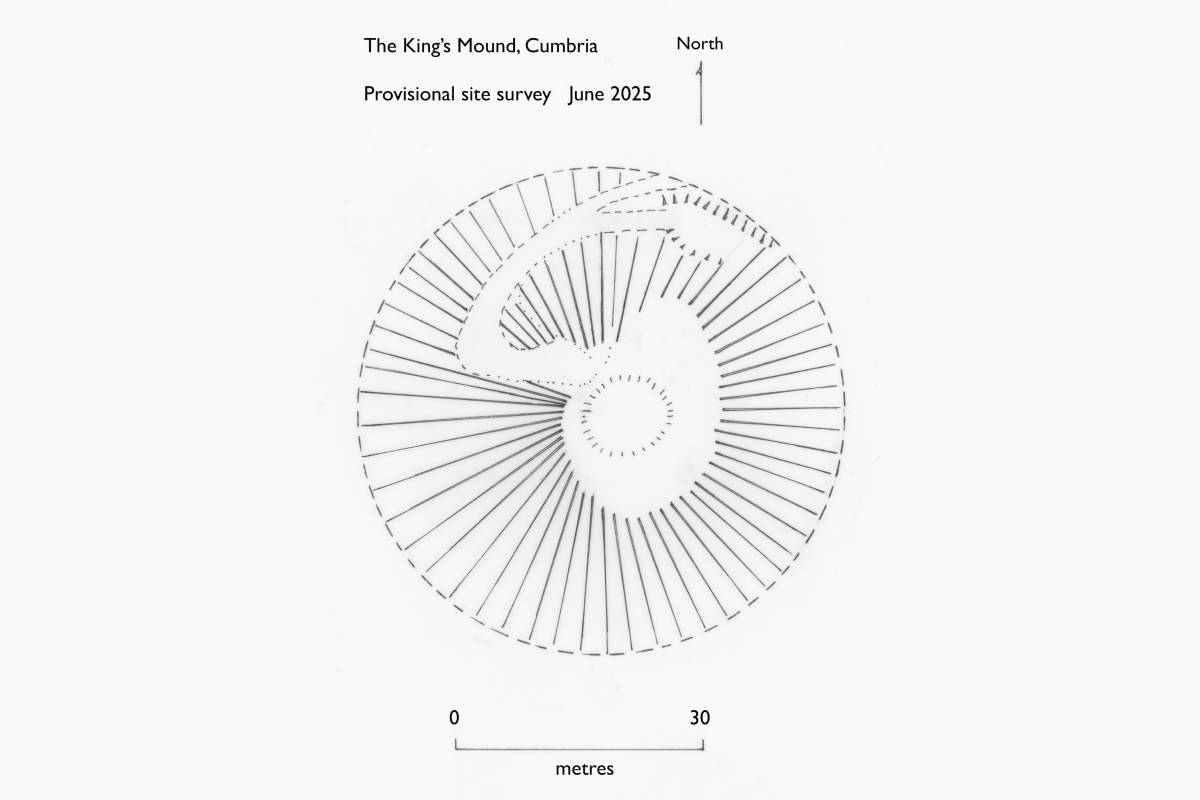
Diagram of the King's Mound showing its outline, orientation, and scale in metres. Photo: Steve Dickinson
The Cumbrian Viking project
As part of his efforts to attract funding and further investigate the site, Steve has been establishing the Cumbrian Viking Project.
"We would like to investigate the site further, first using ground-penetrating radar (GPR) and geophysics," Steve informs The Viking Herald. "GPR should enable us to work out the composition of the mound, what it's constructed of, and what's buried inside it."
"The preservation conditions are great for metalwork, but I don't think any of the organics, like the wood of a ship, would have survived," Steve admits.
"It's a bit like Sutton Hoo – there was no wood; they just traced the ship by its rivets in the sand. So I suspect our preservation conditions will be very similar in this mound."
"But to get a full picture, I think there will have to be some kind of trenching of part of the mound at some point – the Norwegians agreed with me on this. There's no other way, even with all our sophisticated technology."
"The other inspiration for the project is the amazing Scandinavian heritage we have in Cumbria, as evidenced by a lot of Scandinavian place names all across the landscape."
"We want to try to involve the Cumbrian community in reconnecting with that."
"It's a thousand years ago, but every time I've gone out to talk to people locally at events and give lectures about this, I've got really great feedback from the audience. There's obviously something in it that is chiming with people here in the local area."
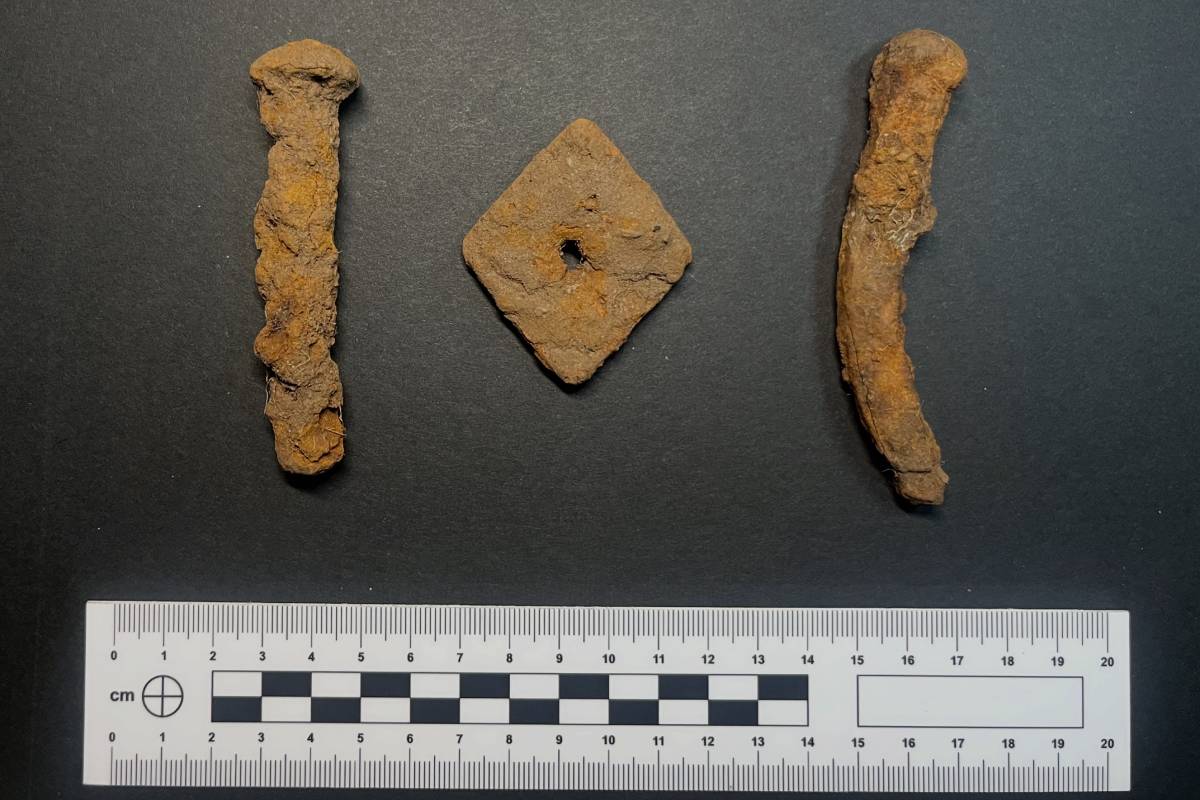
Ship rivets and a rove recovered during the King's Mound surveys, cited as possible evidence for a ship burial. Photo: Steve Dickinson
Fit for a king
As even Steve acknowledges, it will probably never be possible to conclusively demonstrate that the site is the burial place of Ivar the Boneless.
At the same time, he is confident that they will be able to confirm the presence of a major Viking ship burial.
"It's taken quite a while to get to the point where we're at now, but the future is looking really interesting," Steve states. "Bit by bit, we're starting to understand it in more detail."
"The mound and its location point in a specific direction. A ship in it would have its stern facing inland and its prow looking out towards the sea. That's a feature of a number of other monumental ship graves."
"We think we can locate the stern of the ship quite well. The other parts are harder because of the gorse, but that's coming off this year. We're going to do the radar survey, so that will give us a lot more information."
There remain, of course, other competing theories on the final resting place of Ivar the Boneless, but Steve is not convinced.
"I reckon previous archeological estimates as to where Ivar could have ended his days were wrong," Steve argues.
"It was thought he might have been buried at Repton in Derbyshire. This was the site of a Viking encampment excavated in the 1970s by Martin Biddle and Birthe Kjølbye-Biddle."
"But that was mainly based on a gravedigger's tale from 1686 of having discovered a giant in a burial there."
"Of course, there will be no hard evidence left for us to analyze, like a body or a skeleton, that would tell us whether that could have been Ivar or not."
"But still, some lines of rivets in the sand – as they found at Sutton Hoo – would absolutely convince me."
"I think Ivar would have much preferred being a Viking sea king, ranging over the Irish Sea, attacking Dunbarton Rock on the Clyde. He would have wanted to have ended his days in a ship under a mound. The mound faces the sea, and it's a remarkable sight."
We get to provide readers with original coverage thanks to our loyal supporters. Do you enjoy our work? You can become a PATRON here or via our Patreon page. You'll get access to exclusive content and early access.
Feel free to reach out to discuss potential stories that may be in the public interest. You can reach us via email at hello@thevikingherald.com with the understanding that the information you provide might be used in our reporting and stories.