

It was people from Viking societies in what is now Denmark who helped shape medieval English society through a combination of control, conquest, and cross-cultural exchange.
Early bloody beginnings
A quick glance at the map and you will see that the distance from East Anglia, in the east of England, to southern Jutland, in Denmark's south, is capable of a short sail. In the early medieval period, this voyage was perhaps around 3–4 days long, albeit with favorable conditions.
These voyages famously took place in part following the withdrawal of Roman legions from the then province of Britannia during the late 4th century CE. Hordes of Angles, Jutes, and Saxons, tribes hailing from the Jutland peninsula and northern Germany, arrived to plunder, pillage, and seize power.
The local Celtic Britons and Gaelic populations were still alive and kicking (when they weren't being subjugated or sliced in two by their new overlords), and it was this heady mix of cultures and people, the invaded and the invaders, that helped to forge Anglo-Saxon England.
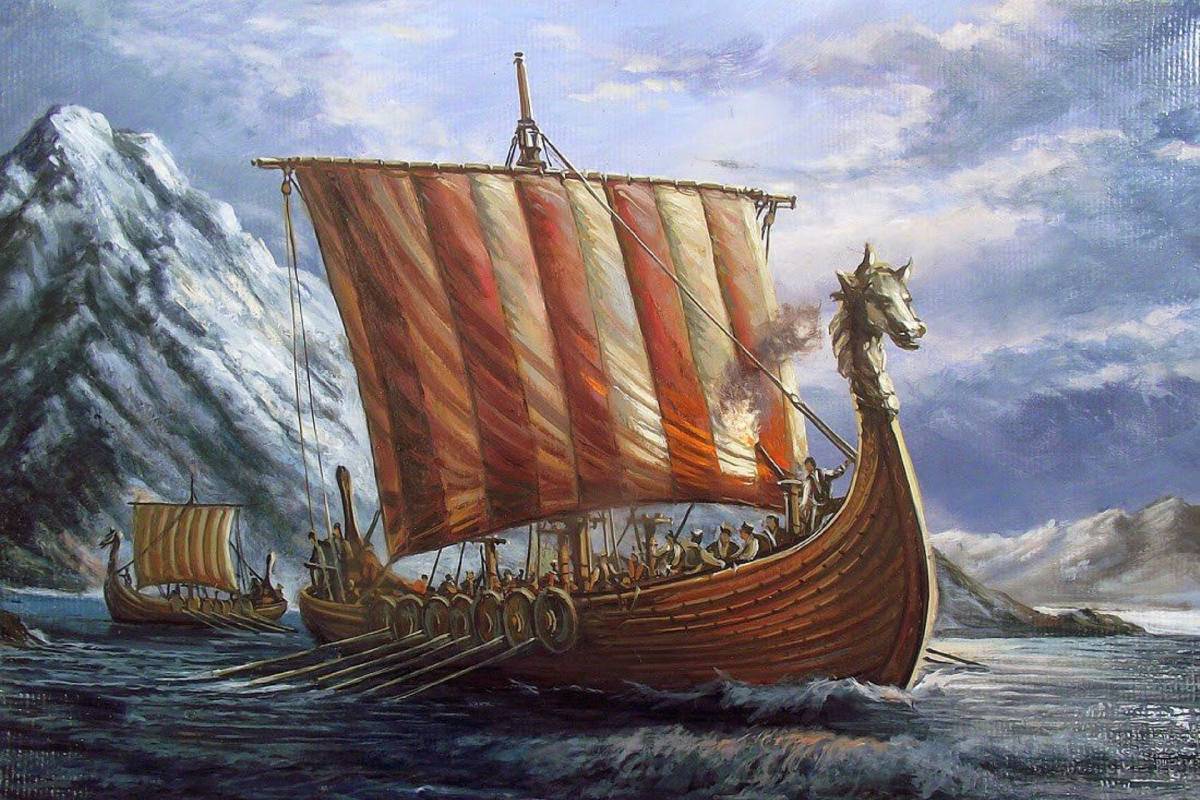
Yet by the mid-8th century CE, it was a new set of invaders who set sail from the Jutland peninsula to English shores. These were the Viking warriors, the seaborne wolves that came to conduct predatory and violent raids.
England's Age of Vikings had begun.
Predatory raids and Danes
The traditional story is that England's Age of Vikings began with a raid on Lindisfarne in 793 CE. However, there is now a general academic consensus that this was certainly not the first raid.
Scholars point to a 789 raid in Portland, involving three ships, where we even have the name of the first person killed on English shores by a Viking, the reeve of King Beorhtric of Wessex, Beaduheard.
Possible earlier raiding had occurred, but it certainly was by the late 8th century CE that Viking ships arrived from across the North Sea with more frequency and menace. We will never know the exact ethnic or cultural makeup of these early Viking raids, but it is likely that many warriors from what is now Denmark were aboard.
From the late 8th to mid-9th centuries, Viking warriors sailed across the North Sea to launch countless waves of predatory raids against often defenseless and isolated coastal or river-bound communities. Targeted particularly were the southern and eastern coasts of England, with Anglo-Saxon communities throughout the kingdoms of Mercia, Northumbria, and Wessex affected.
These lone (sea) wolf attacks followed a similar pattern: loot was plundered, innocents were enslaved, and death, destruction, and havoc prevailed. Ultimately, though, these were just predatory raids with little strategic organization or planning.
This would change in 865 CE.
PLEASE NOTE: The rest of this article is only available to our paid Patreon subscribers.
The topic was selected by our Patrons in a weekly poll. Support The Viking Herald on Patreon to read the full article and help choose future topics.
If you would like to learn more about Patreon and why we have decided to restrict access to some content, please take a look at this article.
Feel free to reach out to discuss potential stories that may be in the public interest. You can reach us via email at hello@thevikingherald.com with the understanding that the information you provide might be used in our reporting and stories.