

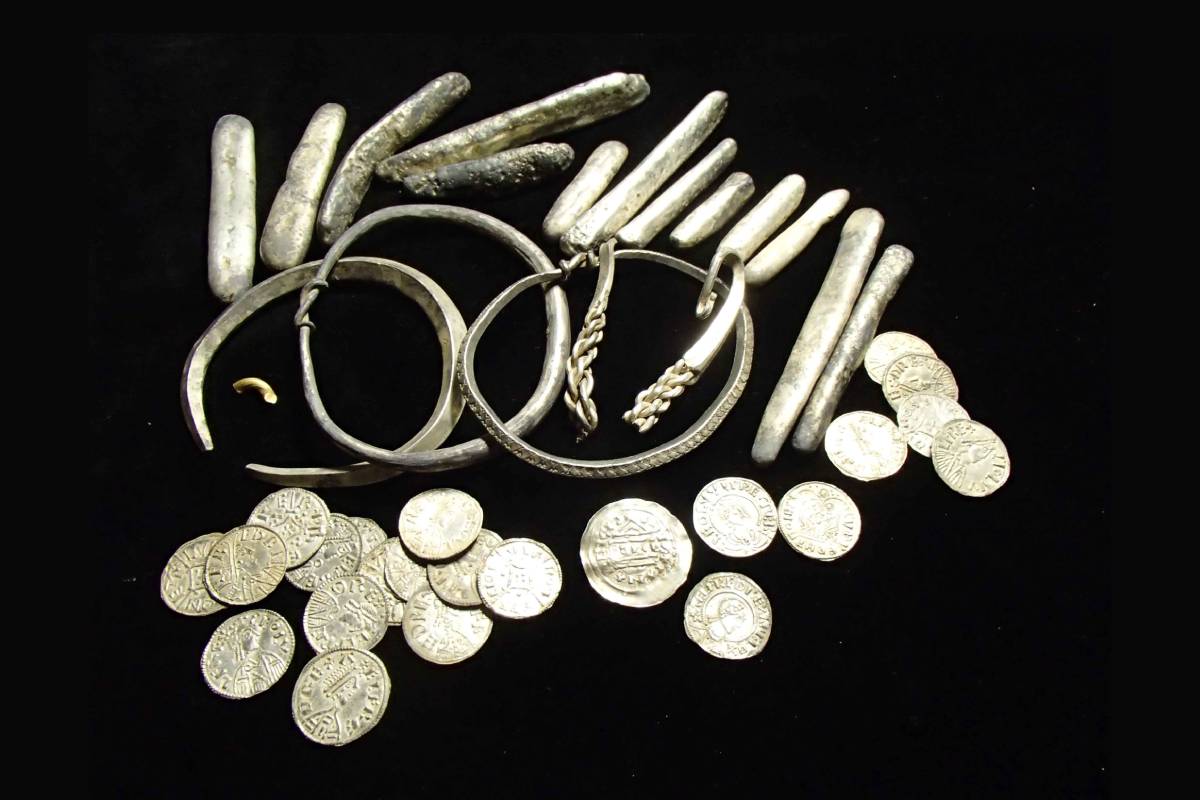
From 865 to 878 CE, Anglo-Saxon England succumbed to a series of invasions by Viking warriors.
The traditional story, if we are to believe the rich tapestry of the Norse sagas, is that a great Viking army invaded the British Isles partly in retaliation for the death of the legendary Ragnar Lothbrok.
This famed Viking warrior, who was said to have led a devastating attack on Paris, met his end at the hands of Ælla, King of Northumbria, following an unsuccessful raid.
Lothbrok was unceremoniously cast into a pit full of snakes, but not before he bellowed that his sons (he had five) would be his retribution. Some months later, a huge Viking force, described in the Anglo-Saxon Chronicle as a "Great Heathen Army," invaded, led by his sons, Ivar the Boneless and Ubba.
The archeological record appears to support many aspects of this tale. It has been confirmed that from the middle of the 9th century CE, people from Viking societies ramped up their presence in Anglo-Saxon England and switched from predatory raids to larger forces bent on conquest and settlement.
We cannot be exactly sure of the numbers involved, but it remains clear that there was no singular army. What occurred was more a series of smaller forces that may have linked up to fight battles, then gone their separate ways to raid and ravage.
Archeologists have uncovered several of the camps that these raiding and invading forces used throughout what is now England. What they found has shaped our understanding of the Viking presence in England and its subsequent conquest and settlement.
READ MORE: Born of legend – The sons of Ragnar Lothbrok
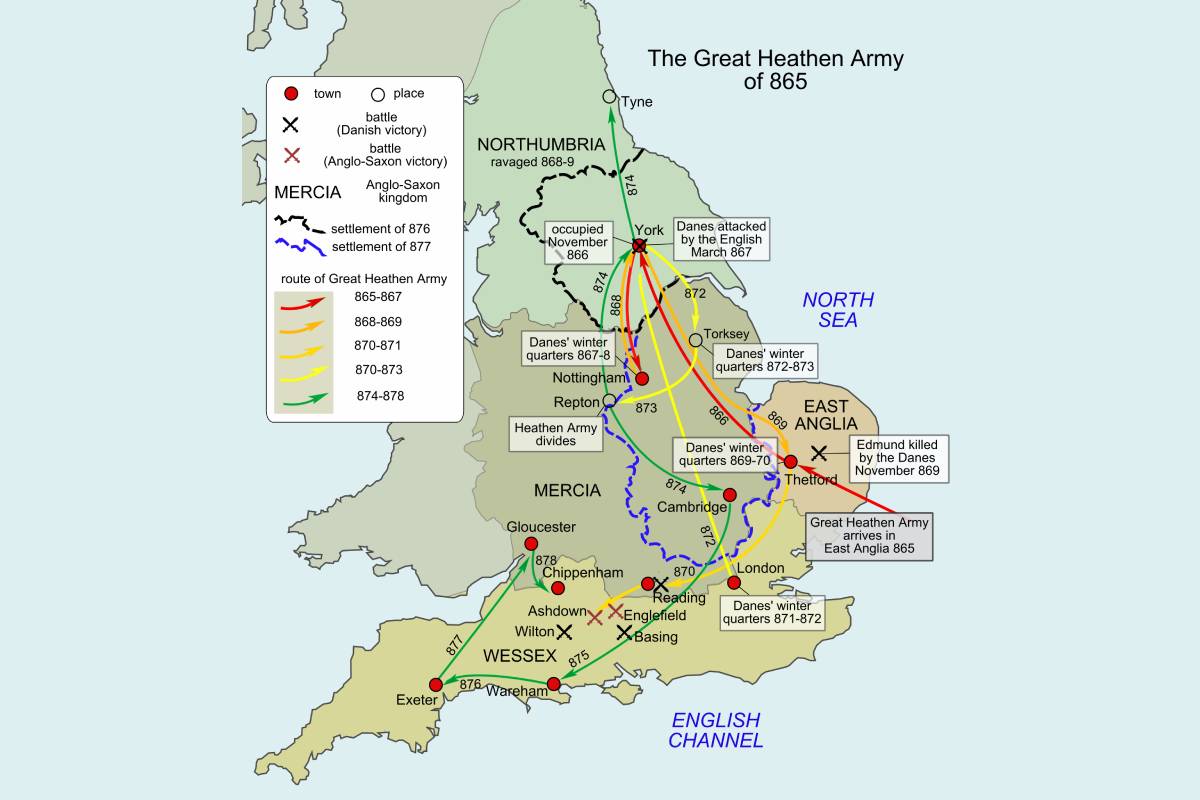
Movements and campaigns of the Viking Great Army across England, 865–878. Source: Hel-hama (CC BY-SA 3.0)
A great archeological footprint
We know now that this "Great Heathen Army" was not great in number, nor a singular army, nor truly all "heathen" (it was likely that some of the Viking warriors were Christian or were joined by local warriors who were Christian too).
However, it was "great" in the sense that it left a large archeological footprint all over England.
More than 50 sites throughout England have been identified in a recent study as having been visited by Viking forces during their almost decade-and-a-half-long reign of blood and terror.
However, the two largest—and believed to have been major camps—are found in the heart of the English Midlands, in Torksey and Repton.
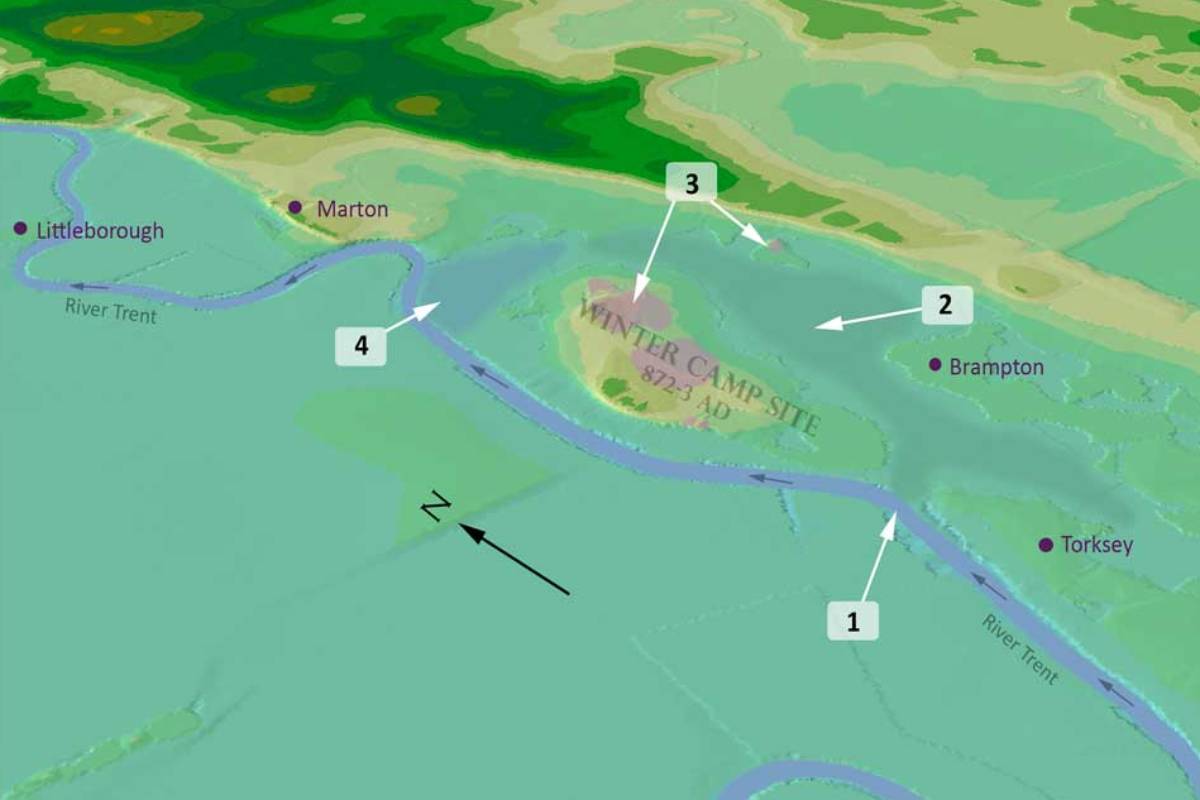
Map of the Viking winter camp at Torksey with key river channels and access routes. Source: Society of Antiquaries of London, 2016 (CC BY 4.0)
Torksey, Lincolnshire
The largest site, which was a base camp for the Viking forces, has been unearthed at Torksey in Lincolnshire, right in the middle of England, in the very heart of what would become the Danelaw.
This was not a mere temporary camp to overwinter but a large camp that could have housed potentially thousands, including women and children, camp followers, as well as merchants and craftspeople.
Excavations have unearthed semi-permanent structures including hearths and pits, and a recent catalog by the British Archaeology Data Service has detailed an extensive list of more than 3,500 artifacts found at the site.
The catalog explains how, among these many artifacts, were "dirhams, silver English pennies, Northumbrian copper-alloy pennies, known to numismatists as stycas, silver and gold hack-metal and ingots, copper-alloy ingots, copper-alloy and lead weights, lead gaming pieces, and mainly copper-alloy dress accessories, as well as evidence for metalworking."
With its large size—spanning more than 55 hectares (135 acres)—and a wealth of artifacts, including those used for metalworking and trade, we can safely say that this was no mere location to spend a winter but rather a large and complex base of operations for Viking warriors and their kith and kin.
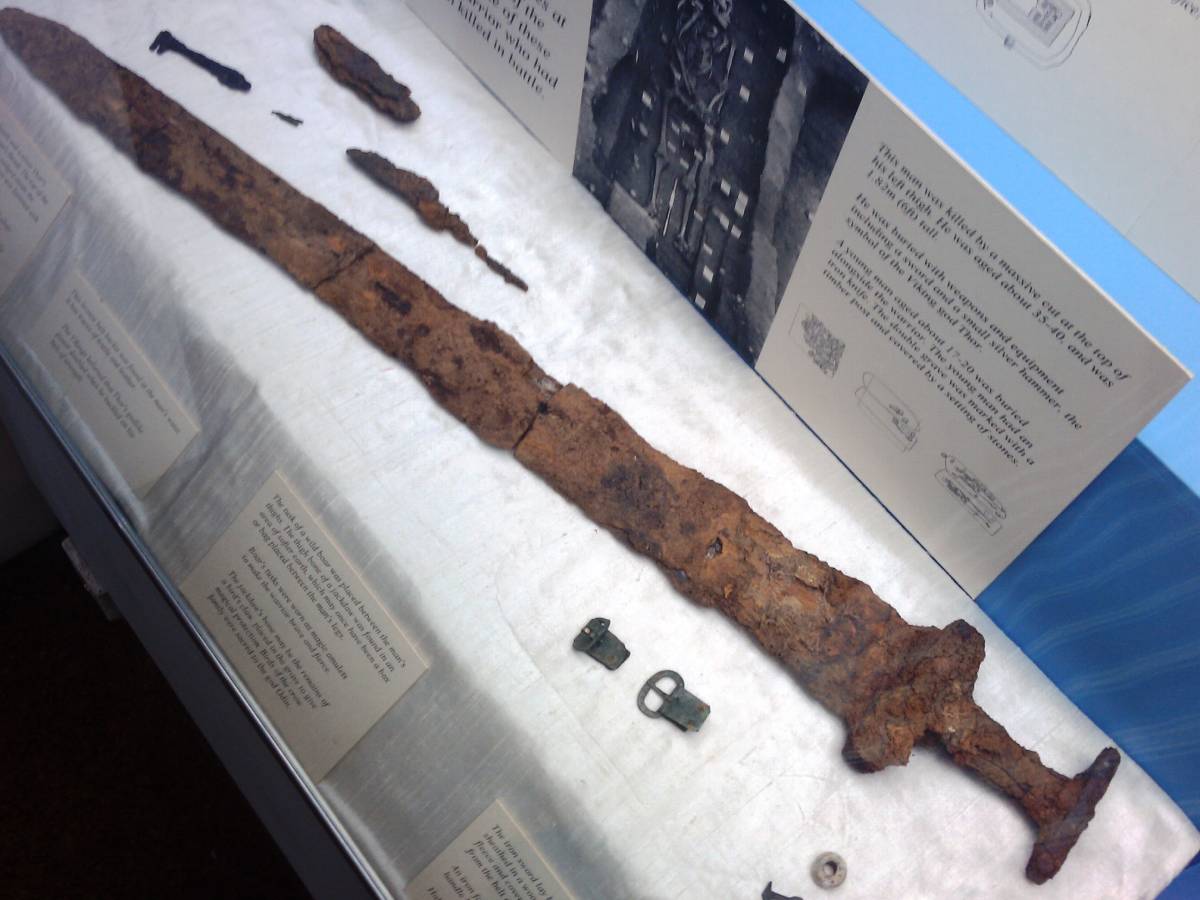
Excavated sword from a Viking grave at Repton, one of the most important Viking Great Army sites in England. Now in Derby Museum. Source: Roger (CC BY-SA 2.0)
Repton, Derbyshire
Another major Viking camp was found in the region some 60 miles (100 kilometers) further south near the bucolic village of Repton, in Derbyshire.
Lying right in the heart of the Anglo-Saxon kingdom of Mercia, excavations in Repton have revealed a huge "D"-shaped earthwork, including what appears to be a defensive ditch.
Grimly, further work has also uncovered more than 264 individuals, many of whom were probably fallen Viking warriors, under a huge burial mound.
Like Torksey, this campsite also has a wealth of artifacts speaking to the site's lively presence. Grave goods of Scandinavian origin have been uncovered, along with the buried warriors, as well as gaming pieces, battle-ax fragments, nails, and tools to repair ships.
These all speak of the importance of this camp, where ritual burials took place, as well as metalworking and possibly ship maintenance and repair, too.
The site has seen two sets of archeological excavations: one that took place in the 1970s and 1980s and a second, between 2016 and 2023, that was led by famed bioarcheologist and Viking historian Dr. Cat Jarman.
These recent excavations revealed that one in five of the bones unearthed among the 264 individuals buried were women, and the remains of five children were also uncovered nearby.
There has been speculation that these young individuals may have been part of a ritual burial sacrifice, similar to what 10th-century CE diplomat and travel writer Ibn Fadlan witnessed among Volga Vikings.
The excavations also led to more scientific analysis, specifically strontium isotope analysis, which found "they show diverse origins among those buried" across Northern Europe.
These excavations led Jarman and her colleagues to publish a 2018 paper in the journal Antiquity stating that the archeological work undertaken here "fully supports the hypothesis that the Repton charnel contains the remains of members of the Viking Great Army."
Archeology yet again proved that medieval chronicles have more than an element of truth in them.
Unlocking the past
Archeology has been instrumental in uncovering some of the hidden mysteries that the Viking armies of the mid-9th century CE left buried deep beneath the English soil.
It has transformed our understanding of these Viking forces as not mere predatory raiders but as a multifaceted community involved in cultural exchange, commerce, and trade as well as military exploits and warfare.
The analysis of the Repton and Torksey camps helps to shine a light on the very early days of the Viking presence on English soil, which would last until the mid-11th century CE.
For more information on the Repton archeological dig, visit the BBC here.
We get to provide readers with original coverage thanks to our loyal supporters. Do you enjoy our work? You can become a PATRON here or via our Patreon page. You'll get access to exclusive content and early access.
Feel free to reach out to discuss potential stories that may be in the public interest. You can reach us via email at hello@thevikingherald.com with the understanding that the information you provide might be used in our reporting and stories.