

We here at The Viking Herald are indebted to the nameless scribes who compiled the Anglo-Saxon Chronicle.
The Chronicle can be thought of as a family of texts, which span a huge range of English history, from the invasions of Julius Caesar in 55 and 54 BCE until, in some versions, the mid-12th century CE.
However, the focus is very much on the Anglo-Saxon period of English history, during what we call the early medieval period.
We now believe that the Anglo-Saxon Chronicle was first transcribed sometime during the late 9th century CE in the court of the illustrious Alfred the Great.
Whilst the Chronicle does record historical events, not every entry, or indeed every event described, may necessarily be historically verifiable. There is indeed much historicity in the Chronicle, but there is also a bucketload of entertainment and exaggeration, too.
As Thomas A. Bredehoft writes in his 2001 book, Textual Histories: Readings in the Anglo-Saxon Chronicle (University of Toronto Press), by studying the Chronicle, we can see its "interest not only as a record of historical events but also as a record of the development of historical writing in Anglo-Saxon England."
This, in our opinion at The Viking Herald, only adds to the charm of reading this literary creation of the early medieval period.
It should be stressed that much of the Chronicle is little more than political (and later religious) propaganda shaped to portray the Anglo-Saxons, and later English, in the best light.
Over in the darkness lie the antagonists for much of the Chronicle, early medieval Europe's most feared warriors, our beloved Vikings.
Yes, people from Viking societies, specifically the warriors that became the scourge of Anglo-Saxon England, not only feature heavily throughout much of the Chronicle, but their depiction slowly changes over time, from little more than cartoon villains to grudging acceptance of Anglo-Saxon England's new overlords.
We look at three entries from the Chronicle that help us understand the complex relationship that Anglo-Saxon England had with people from Viking societies.
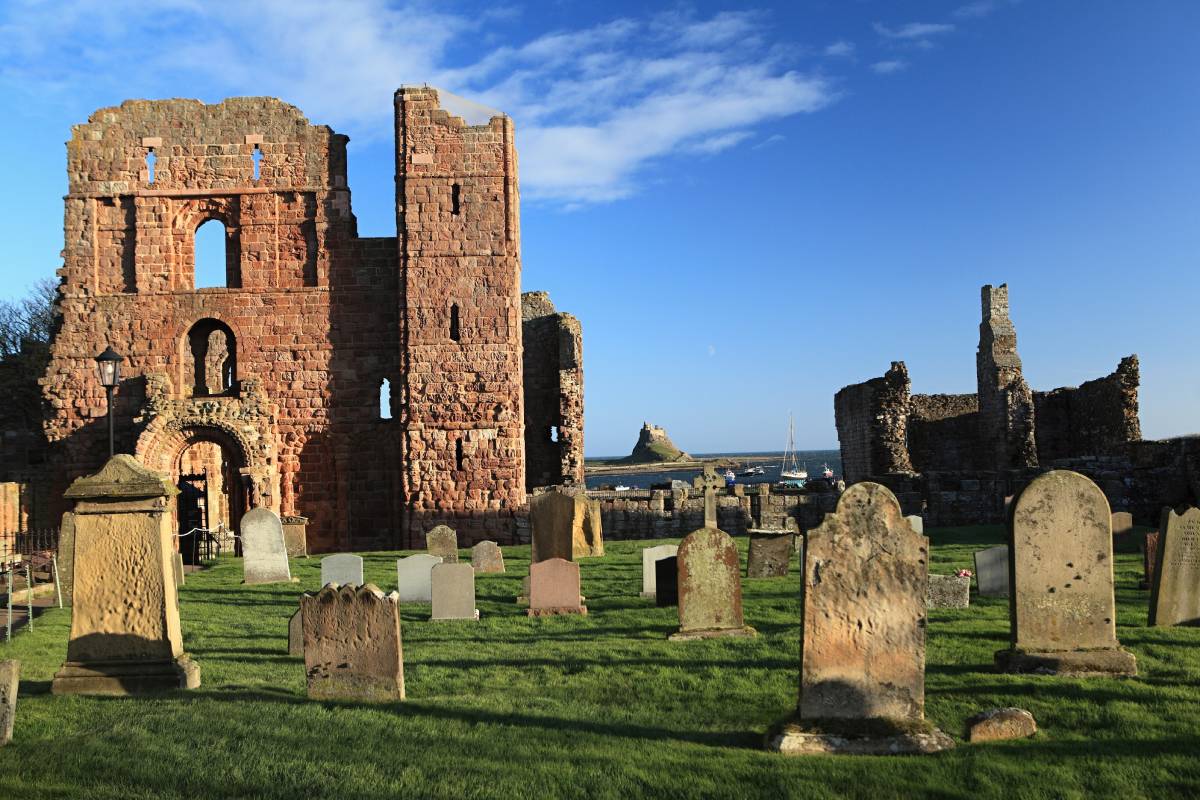
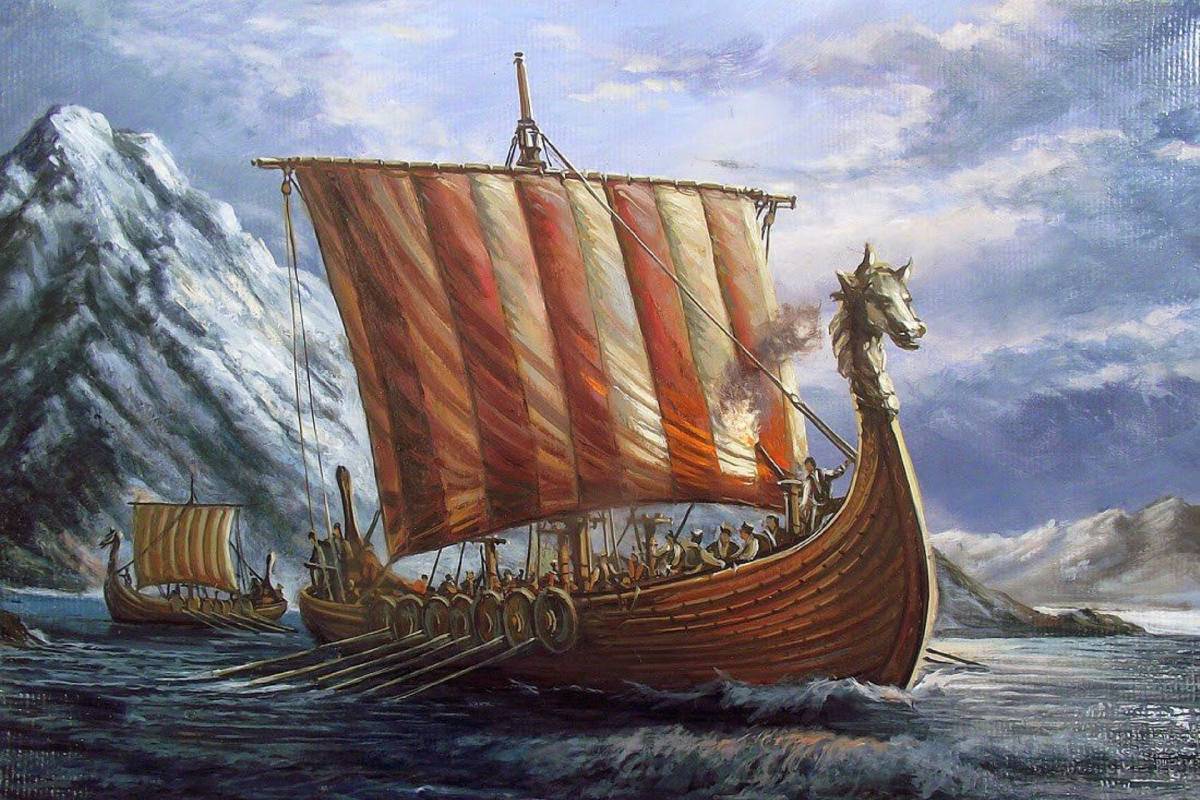
The Lindisfarne raid once stood as the classic “start” of the Viking Age, but it now sits as the most famous early raid, not the first. Photo: Martin Cígler (CC BY-SA 3.0)
An apocalyptic raid
"This year came dreadful fore-warnings over the land of the Northumbrians, terrifying the people most woefully: these were immense sheets of light rushing through the air, and whirlwinds, and fiery dragons flying across the firmament. These tremendous tokens were soon followed by a great famine, and not long after, on the sixth day before the ides of January (8 January) in the same year, the harrowing inroads of heathen men made lamentable havoc in the church of God in Holy-island, by rapine and slaughter." [Entry for 793 CE]
The entry for the year 793 CE (we use an online version of the 1996 modern English translation by J. Giles and J. Ingram) is one of the most famous for us lovers of early medieval history.
This was, for centuries, seen as the beginning of the Viking Age, albeit a date that is heavily Anglocentric. We know now that this was not the first Viking raid, nor even the first Viking raid on the coast of what is now England.
An earlier attack recorded in the Anglo-Saxon Chronicle, often dated to 789 CE near Portland (Dorset), predates Lindisfarne, but the raid on Lindisfarne is surely the most famous event of the early stage of the Viking expansion.
Here, the language used by the chroniclers is interesting. The Viking raid on Lindisfarne is foreshadowed by apocalyptic signs – fiery dragons and sheets of lightning – all likened to a supernatural sign that the world was coming to an end.
Though it would die a long and slow death, the raid at Lindisfarne did signal the beginning of the end of a world, that of Anglo-Saxon England.
By the time the Vikings stopped raiding, Anglo-Saxon England had been transformed beyond recognition, from the heptarchy to a nation carved up by the Vikings and finally wholly invaded, conquered, and subjugated by the Normans.
This entry paints the Lindisfarne raid as a theological event – surely the good Christian Anglo-Saxons must have been sinful to bring such "lamentable havoc" upon them.
Here, the emotional impact of the raid is examined more than a historically verifiable blow-by-blow eyewitness account.
Lightning, dragons, and famine foreshadow this apocalyptic event caused by "heathen men," that is, warriors from Viking societies who were most likely adherents of the Old Norse religion.
The Vikings themselves only make a brief appearance at the end of this entry, but the emotional impact and shock here are delivered through the apocalyptic signs signaling God's ire.
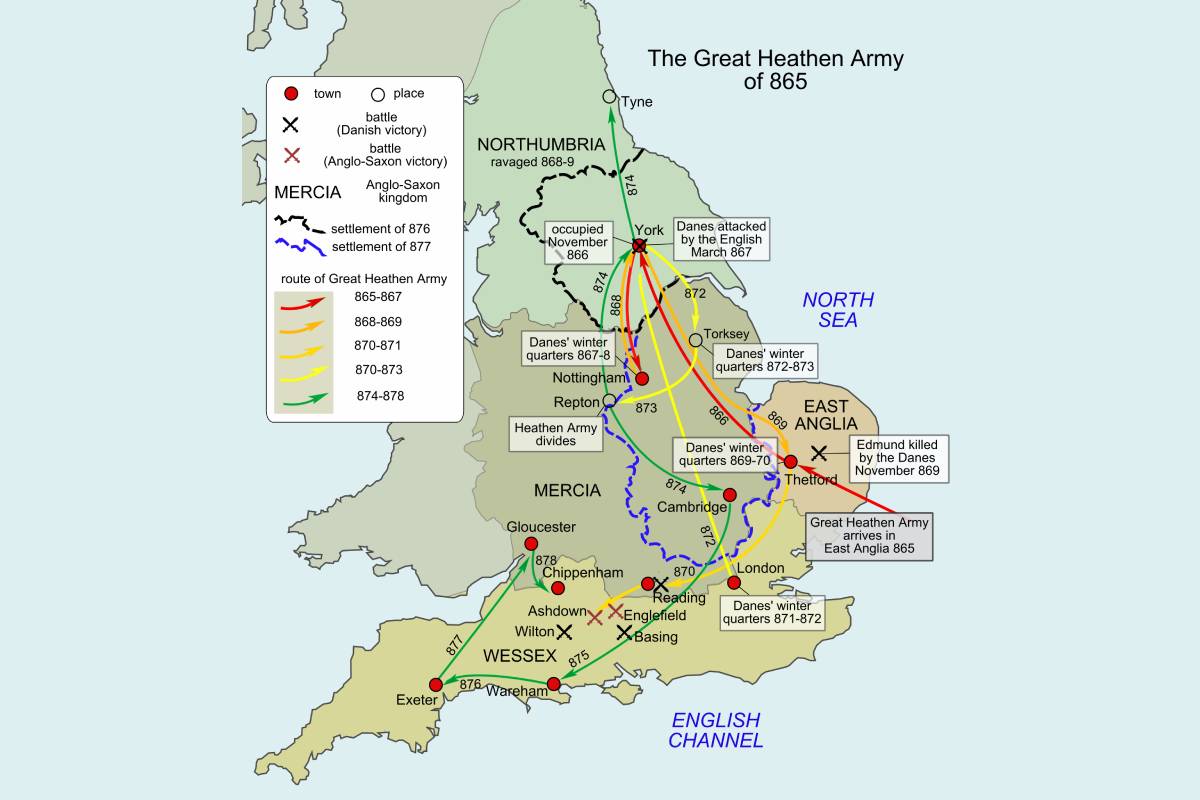
Route map of the Great Heathen Army, which shaped the wars Alfred later faced. Source: Hel-hama (CC BY-SA 3.0)
Battles and negotiations
The next entry comes from 878 CE, almost a century after Lindisfarne.
"This year, about mid-winter, after Twelfth Night, the Danish army stole out to Chippenham, and rode over the land of the West-Saxons; where they settled, and drove many of the people over sea; and of the rest, the greatest part they rode down, and subdued to their will;–ALL BUT ALFRED THE KING. He, with a little band, uneasily sought the woods and fastnesses of the moors... In the Easter of this year, King Alfred with his little force... and there fought with all the army, and put them to flight... Then the army gave him hostages with many oaths that they would leave his kingdom. They told him also that their king would receive baptism... King Guthrum, attended by some thirty of the worthiest men that were in the army, came to him at Aller... and there the king became his sponsor in baptism..." [Entry for 878 CE]
Time had not been kind to Anglo-Saxon England. From infrequent raids to frequent raids, to downright invasion, the decades since Lindisfarne had seen much of Anglo-Saxon England set ablaze by Viking warriors.
The only Anglo-Saxon resistance was centered in Wessex and, as this entry states, the Vikings even forced its ruler to flee into the woods with "a little band" (perhaps a partial inspiration for the legend of Robin Hood and his merry men hanging out in the woods of Nottingham Forest).
By the time of this entry, the Anglo-Saxon English had decades of lived experience with people from Viking societies.
These people, from across the North Sea, were not just a bloody occasional occurrence but now very much a military presence throughout England.
Given the upward trajectory of Viking power in England, especially following the recent invasions of Vikings (who are sometimes referred to as the Great Heathen Army), the entry deals with the grim reality of the Viking presence: violence, subjugation, and war.
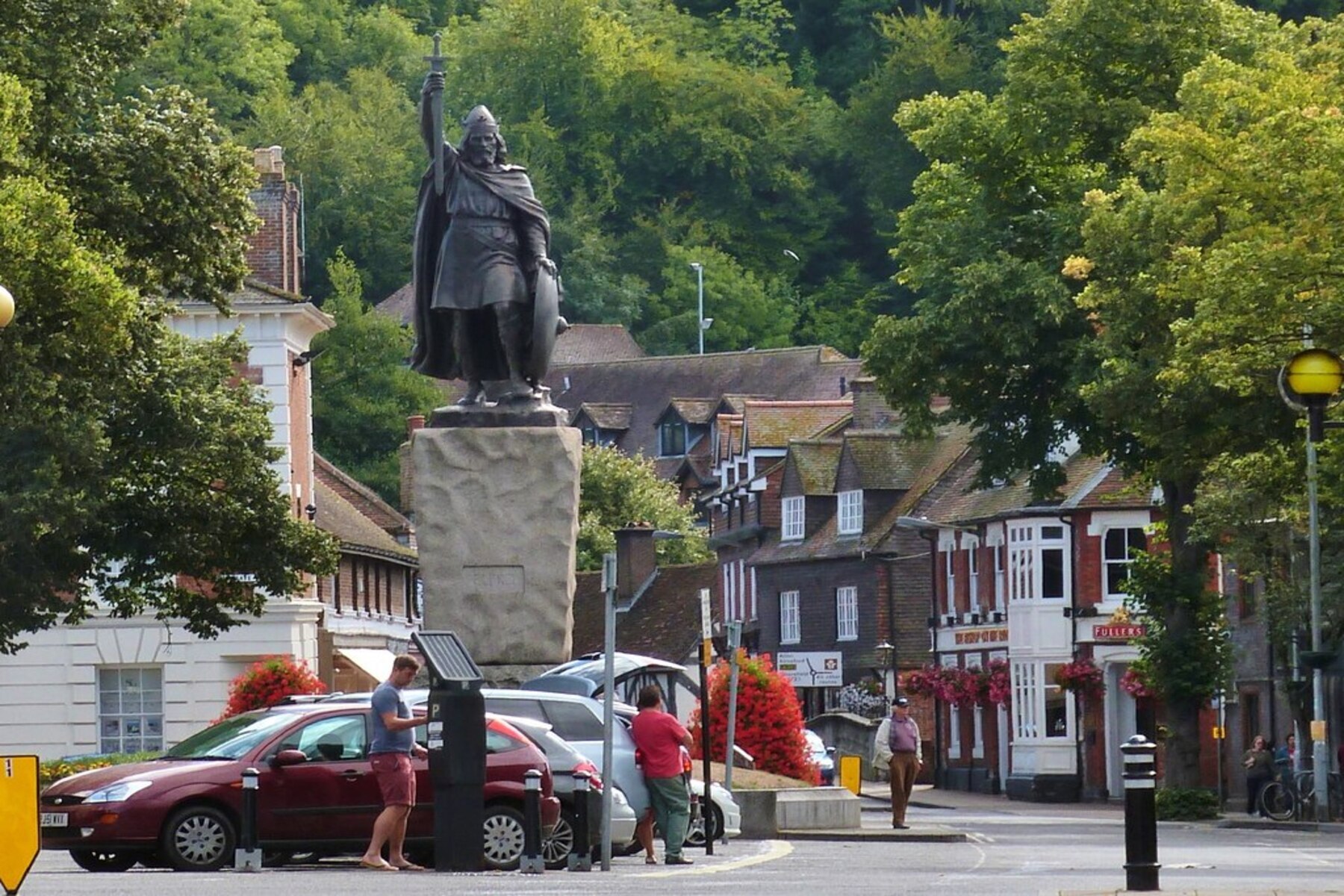
A glimmer of hope is offered through Alfred the Great, the King of Wessex, the holdout of Anglo-Saxon England. The battle that saw Alfred's "little band" put the Vikings "to flight" is, of course, the much-celebrated Edington.
Interestingly, unlike later medieval accounts, the description of this battle, where Wessex was able to reverse decades of military losses against the Northmen, is rather understated, and its significance downplayed.
The understatement, however, is significant: here the Viking presence throughout Anglo-Saxon England, and their military presence across Wessex, is presented as a grim reality.
Furthermore, whilst King Alfred beats them on the battlefield and forces concessions, including Guthrum's agreement to accept baptism, the Vikings here are presented as warriors and rulers, with their leader, King Guthrum, even named.
Despite a minor military setback, this entry presents the Vikings as armed, deadly, dominant, and powerful. Exactly what you'd expect of overlords.
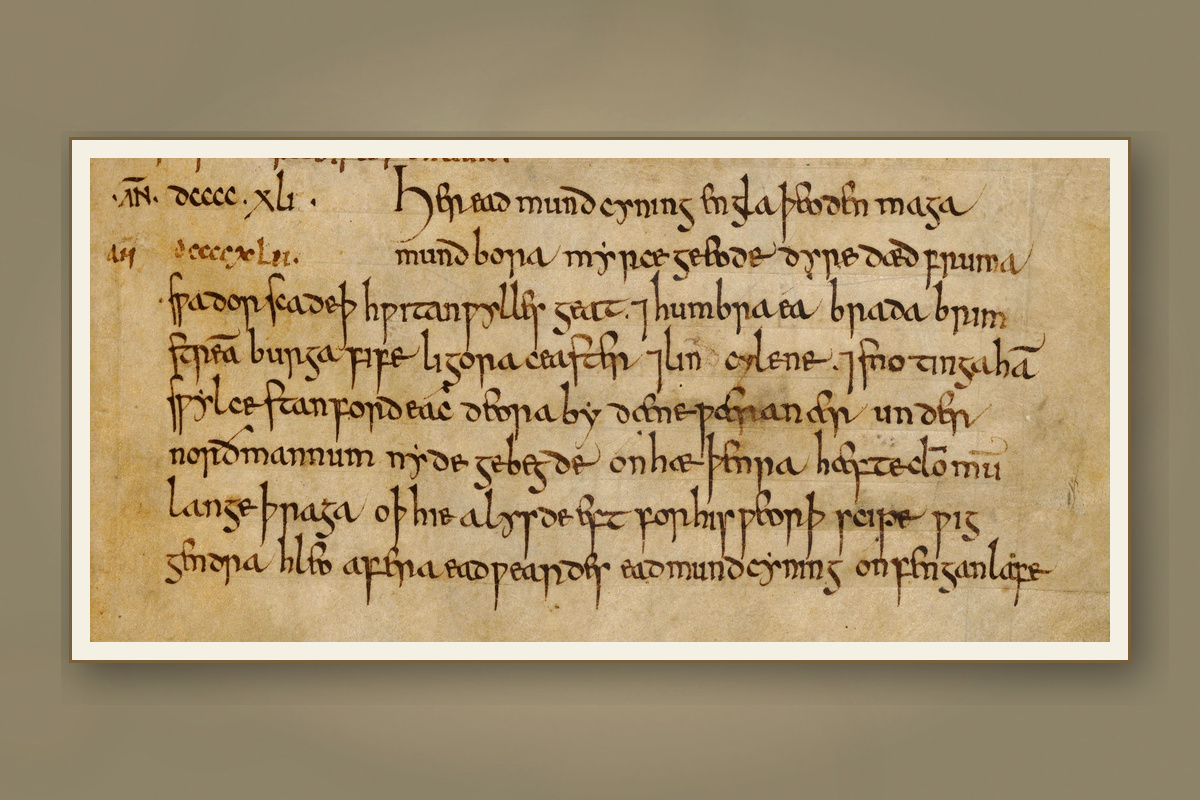
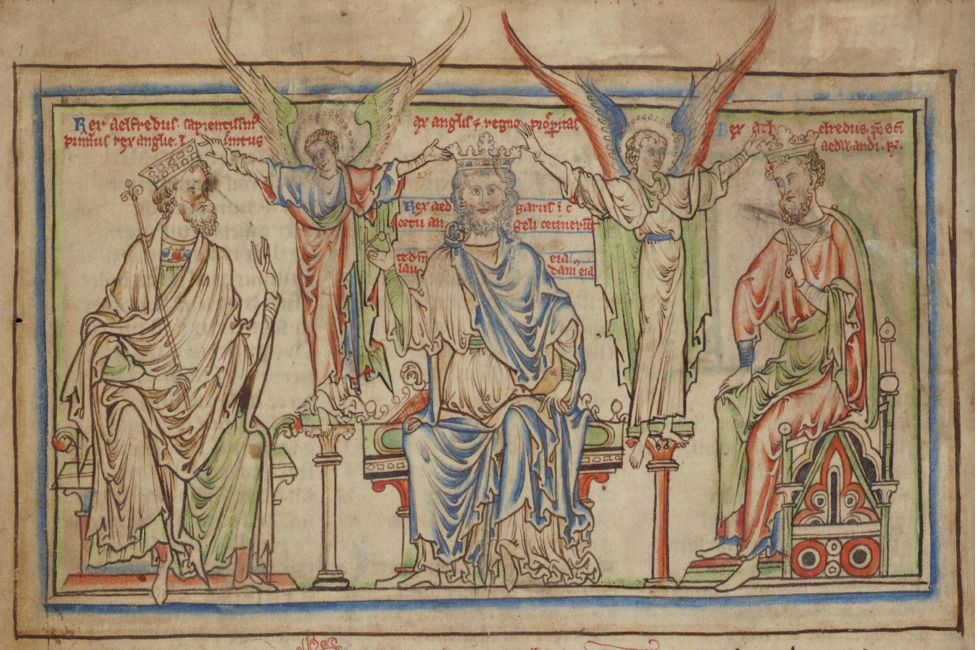
The Anglo-Saxon Chronicle survives in multiple manuscripts like this one, compiled and copied by English scribes. Source: Public domain
The end of an era?
"...King Ethelred died ere the ships came. He ended his days on St. George's day, having held his kingdom in much tribulation and difficulty as long as his life continued... There had Knute the victory, though all England fought against him... This year King Knute took to the whole government of England, and divided it into four parts: Wessex for himself, East-Anglia for Thurkyll, Mercia for Edric, Northumbria for Eric..." [Entries for years 1016 and 1017 CE]
This entry, which covers some of the events in the years 1016–1017 CE, is our final look at the changing relationship between the English and people from Viking societies (or, more correctly, their brethren who were born in the Danelaw).
Others may point to 1066 CE as the end of the Viking Age, but here at The Viking Herald, we like to think outside the box.
The death of one of the last major Anglo-Saxon kings, Æthelred, saw Cnut, a Viking warrior and the king of Denmark and Norway, seize the English throne.
In many modern discussions, Cnut is treated as an early example of a ruler styled "King of England" rather than "King of the English", a distinction often linked to how authority over territory and subjects was expressed in this period.
Though the House of Denmark would rule England for only the next 2 and a bit decades, it saw England become permanently forged to the Viking heartland of Scandinavia through Cnut's rebuilding of his father's creation, the North Sea Empire.
In the entries for these two pivotal years of English history, the tone the Chronicle uses here is at its most resigned. Gone are the positive spins of Anglo-Saxon kingship from yesteryear, with Æthelred's death and reign presented in a much more realistic, albeit depressing, light.
His reign was a continuous crisis, and he died before any heroic last stand against Cnut.
Conversely, Cnut here is seen as a legitimate ruler of England. He takes government, albeit by force, and divides it amongst his minions, but the Chronicle uses the normal language of succession and rule.
In the space of a little more than a century and a half, Viking warriors have gone from signs of God's wrath to ruling and governing England in their own right.
Chronicles the changing attitudes of Anglo-Saxon England
In the span of these three entries from the Chronicle, we can see how the anonymous authors, Anglo-Saxon scribes, have changed their perceptions and views of people from Viking societies, particularly the warriors who flooded England.
From a bloody nuisance and a "lamentable havoc", through the grim reality of having to negotiate with Viking rulers, to the resigned acceptance and recognition as monarchs of England, the Anglo-Saxon Chronicle reveals a clear evolution of attitudes towards people from Viking societies throughout the early medieval period.
From omens and punishments to an uncomfortable political reality, these three entries help explain the Viking history of England, making it a valuable source of information for us centuries after the last Viking ship sailed to England.
For more information on how Anglo-Saxon England viewed itself, visit Current Archaeology here.
We get to provide readers with original coverage thanks to our loyal supporters. Do you enjoy our work? You can become a PATRON here or via our Patreon page. You'll get access to exclusive content and early access.
Feel free to reach out to discuss potential stories that may be in the public interest. You can reach us via email at hello@thevikingherald.com with the understanding that the information you provide might be used in our reporting and stories.