

Whilst we all here at The Viking Herald simply adore history, we are not blind to the sometimes-infantile debates within the subject we love. For so long in the West, history was seen as reserved for the armchair experts, Oxford dons, and those of an elite, dare we say, “superior” standing. Luckily, for we mere intellectual mortals; the past few decades have seen the winds of change blow into this study.
A whole new generation of scholars and thinkers has helped revolutionize how the world sees history. These ‘winds of change’ are the new and fresh perspectives each scholar brings and how many of them have devoted their time and effort (academic blood, sweat and tears) to often overlooked areas of study. Part of this new wave are several influential scholars, like Dr Cat Jarman or Dr Eleanor Barraclough, whose research spans everything from bio-archaeology to literary analysis, from trade routes linking Scandinavia to South Asia to the importance of everyday items from Viking societies.
Along with those esteemed ladies, popular historians and communication whizzes like Dan Snow (he of the Dan Snow’s History Hit podcast fame) or Dr Eleanor Janega and Matt Lewis (from the podcast Gone Medieval) have also helped spread Viking history, legend and lore through their podcasts and videos of the social media age.
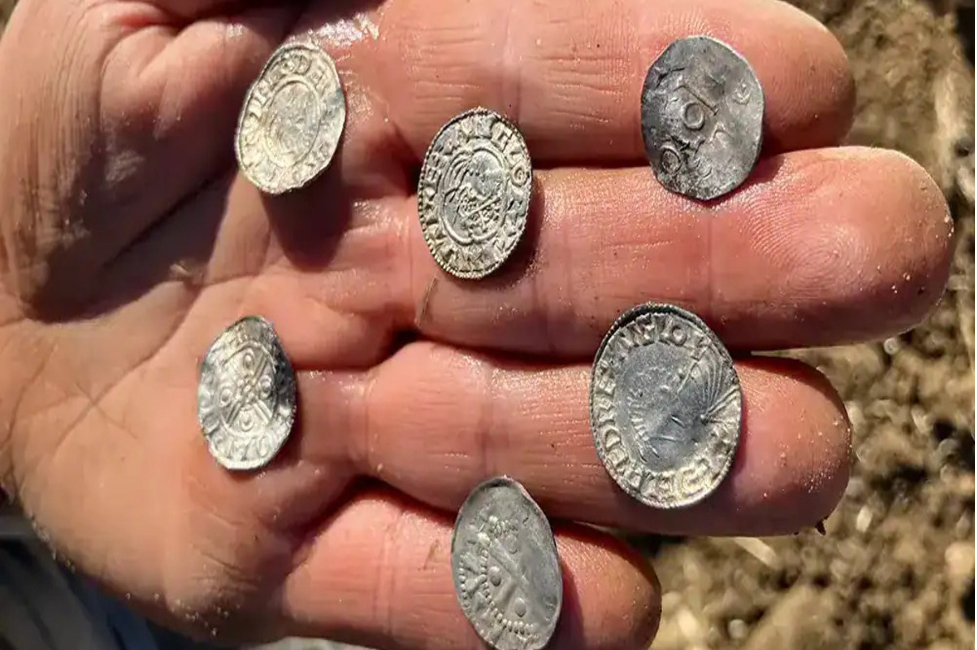
Yet it is not just those with tertiary education or a global audience that have helped revolutionize the study of Viking history. Metal detectorists, once the bane of some stuffy Oxbridge and Ivy League types, have in recent years uncovered a wealth of archaeological treasure (both literal and metaphorical) from the Viking past.
In fact, news broke recently of a metal detectorist in England who had uncovered a coin that could challenge the traditional history of the Christianization of people from Viking societies. This coin was uncovered in a bucolic village that was once at the very center of political struggles in early medieval England.
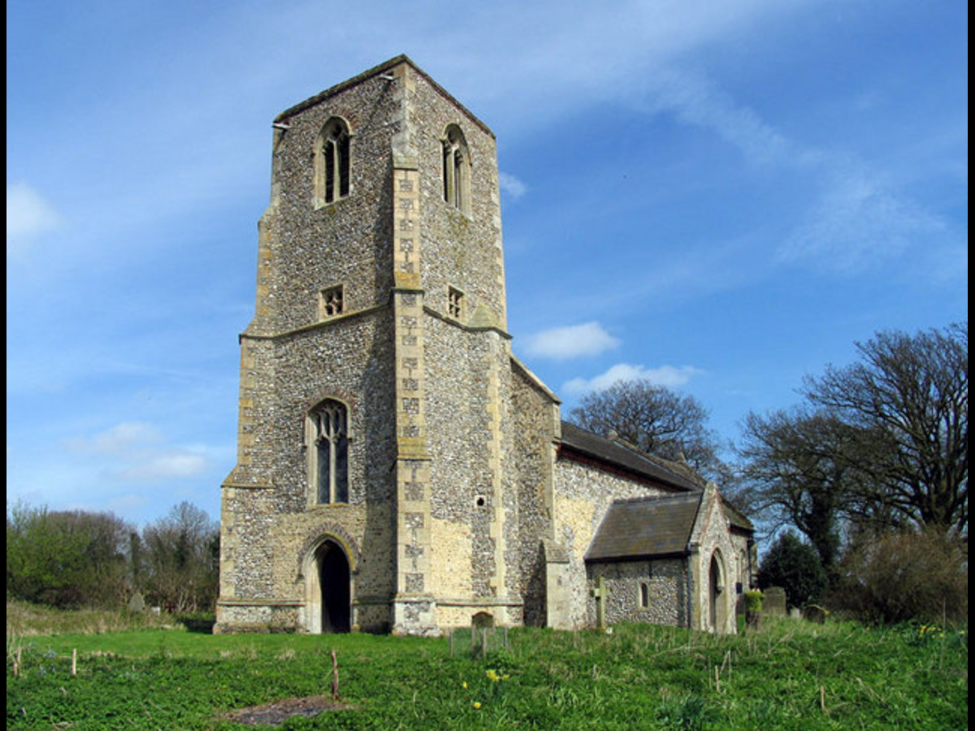
St Peter's Church, Dunton, Norfolk. Source: John Salmon, Wikimedia
The bucolic village that hides a great Viking past
The village of Dunton lies in Norfolk, on the eastern edge of England. From England’s eastern flank, the next piece of solid landmass gazing upwards across the North Sea is the west coast of Norway. Nowadays, with a population of little over a hundred people, the village is your classic example of English country life, ripped from the pages of some P.G. Wodehouse novel.
However, more than a millennium ago, this region of England was part of the Anglo-Saxon Kingdom of East Anglia, and a little less peaceful. This kingdom was one of the seven polities that made up what modern historians call the Anglo-Saxon heptarchy – early medieval England before the Vikings arrived.
From the late 8th century CE, this region, along with several other Anglo-Saxon petty kingdoms, fell prey to numerous Viking raids and attacks. Decades of predatory raids built up to a large-scale (for the time) invasion in 865 by what we call the Great Heathen Army, a group of Viking warriors who were neither that great in size (possibly only numbering a few thousand), never a singular army, and not necessarily all “heathen”. Following this Viking invasion, a huge swathe of Anglo-Saxon England, including the former Anglo-Saxon Kingdom of East Anglia, fell under Viking control, which would become known as the Danelaw.
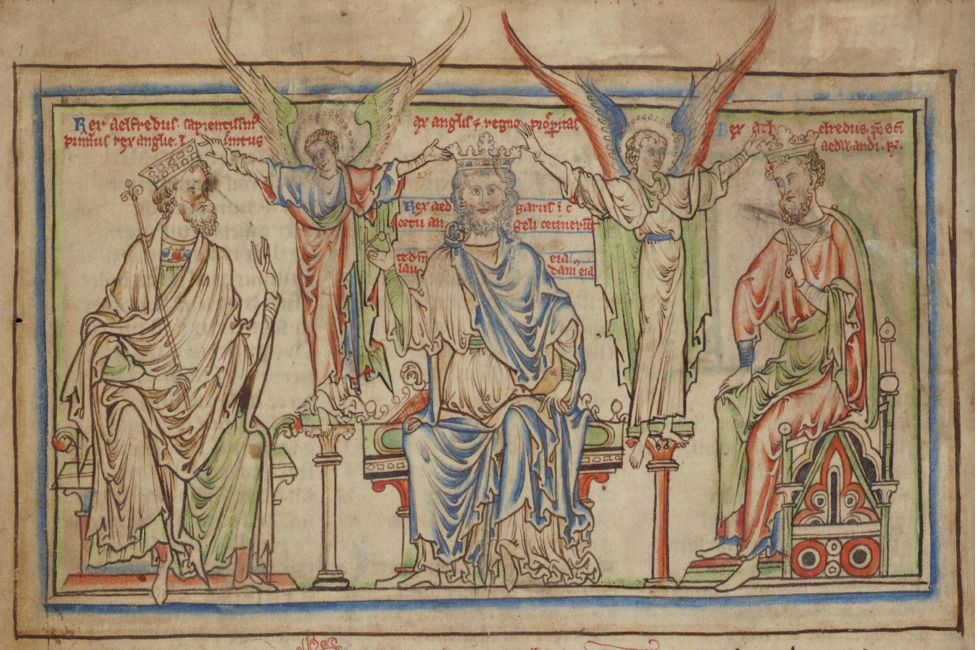
Despite its present bucolic nature, the village of Dunton once lay at the epicenter of these great political and social changes undergoing early medieval England. A largely Anglo-Saxon population had, from the late 9th century half a century of Viking control and influence, before Edward the Elder reclaimed this region for Anglo-Saxon England in 918.
A coin like no other
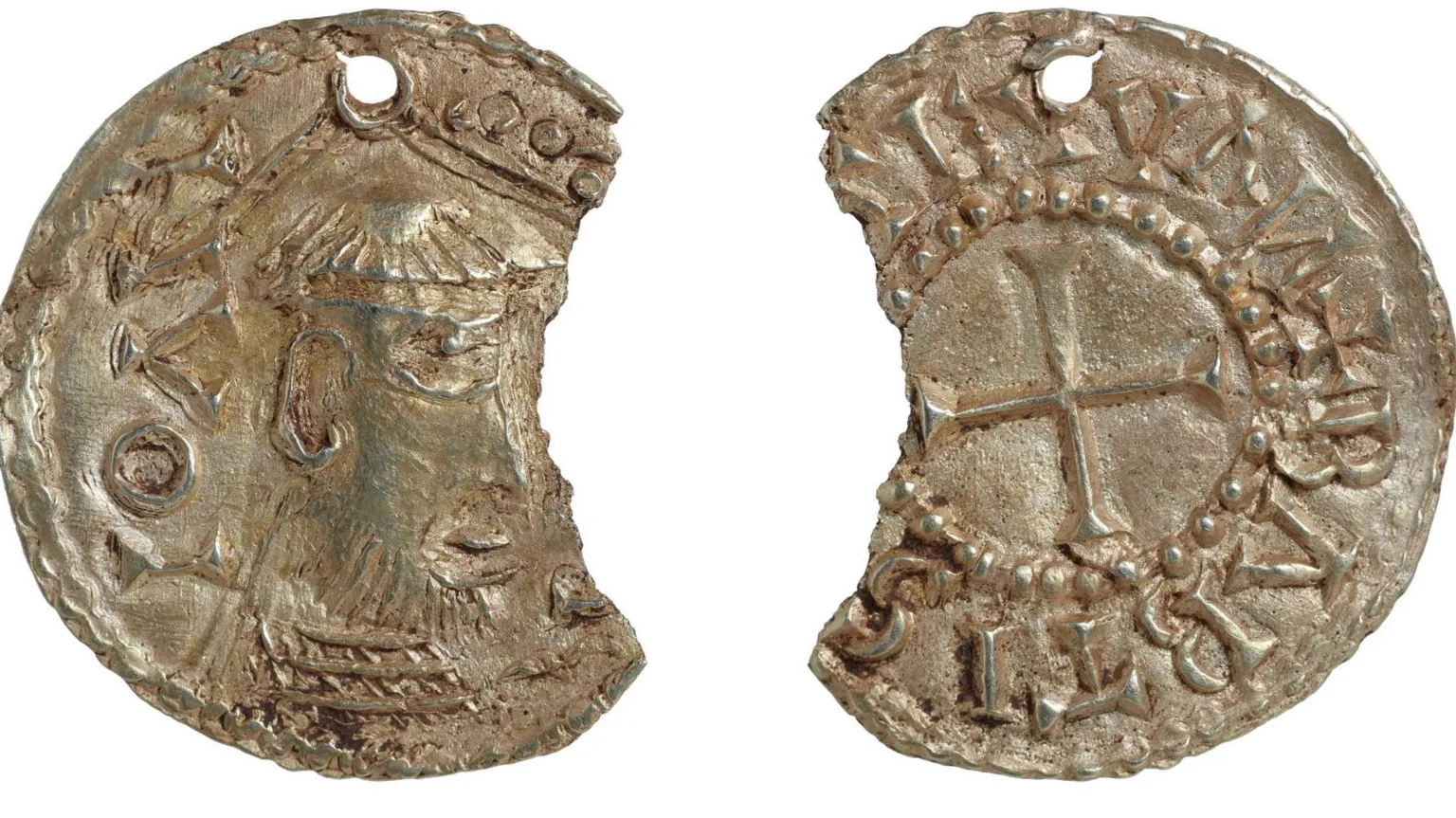
When a local history lover uncovered what the BBC has described as an, “incomplete pierced gold imitation solidus coin”, it was no surprise that it should date from the mid-9th century, and also have a potential Norse link. Imitation solidus coins at this time were typically made by Scandinavians, and the Vikings roamed the region in this period.
What was unusual, however, was the image marked upon the coin. Normally, coins or pendants like this may depict a ruler, a cross, or perhaps the likeness of Jesus Christ. However, this Viking era coin depicted neither but a saint, John the Baptist.
John the Baptist was famously the cousin of Jesus Christ, introducing the saviour – according to numismatist Simon Coupland – “to a wider public by baptizing him in the River Jordan, and after that, his wider ministry began.” Many coins from this era have been discovered in England bearing God or even Jesus’ image, but the discovery of one featuring John the Baptist is highly unusual, especially given it was discovered in a region that was once heavily Viking-controlled. So could this find point to an early Christian influence among some Scandinavians in England?
Earlier than we thought?
It should be noted that Christianity was not completely unknown to people from Viking societies as it had been introduced to Scandinavia from the British Isles and further south in the continent centuries before. As Birgit and P.H Swayer write about in their 1993 book, Medieval Scandinavia: From Conversation to Reformation Circa 800-1500, this early history saw, “some Scandinavians…[have] contact with Christians and their church…even before the collapse of the Western Roman Empire.”
Yet despite this earlier relationship between Scandinavia and Christianity, the discovery of a coin pendant in an area that was dominated at the time the coin pendant was fashioned, by people from Viking societies, raises several questions.
As the numismatics expert Simon Coupland told the BBC, “…these imitations of gold solidus tend to be made by Scandinavians, who are not Christian at this point - so what are they doing depicting John the Baptist?” The Christianization of Scandinavia, and thus Viking societies, did not really reach its crescendo until centuries after this era in the 11th century. Yet this coin pendant seems to hint that Christianity may have taken its hold on at least some Norse societies much earlier.
The discovery of this unusual coin could also mean a deeper level of Anglo-Saxon interaction and influence on people from Viking societies than previously thought. Whilst Viking warriors were tramping all over this region of England, raiding and razing, the fashioning of this coin could suggest that not all these interactions were destructive, and speaks to the possible gradual transmission of Christian ideas and practices into Viking societies.
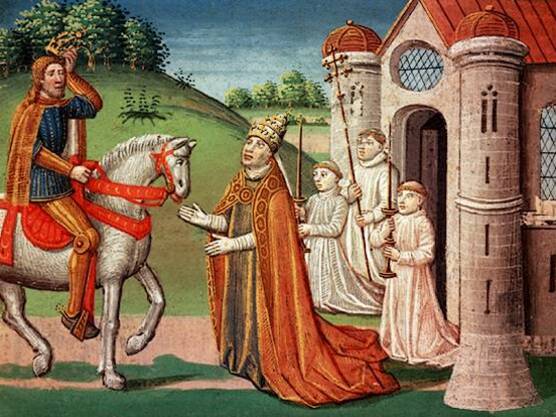
Charlemagne and Pope Adrian I. Source: Antoine Vérard, public domain
Christian knowledge and Carolingian links?
The image on the coin pendant is of wider historical interest, too. The coin features a Latin inscription that reads (in English) “John, Baptist and Evangelist.” Whilst John the Baptist is an important character in Christian belief, this pairing of John as both baptist and evangelist signals a potentially more complex interpretation.
In one interpretation, this fact could even indicate that people from Viking societies could have been more than just very recent converts and thus may have had a much longer association with Christianity, which could possibly push back the start of the Christianization of Scandinavia to decades earlier.
The coin also seems to suggest that there is a link not only with Anglo-Saxon communities, but also with those further abroad, as the style and inscription may have been influenced by those fashioned across the English Channel in the Carolingian Empire. We know that it was this area of Western Europe that first experienced the aggressive outward expansion of people from Viking societies.
As Charlemagne went about subduing much of what was called Frisia and the Saxon lands further north, he came into bloody contact with people from Viking societies. Scandinavian merchants and raiders had been coming to the region that would become the Frankish realms for centuries, but the discovery of the coin pendant may speak to the more developed interconnectedness of early medieval Europe.
If were to take these assumptions one step further, we could imagine a situation where a Scandinavian elite, ruling an Anglo-Saxon region, commissioned the minting of a coin or the construction of a pendant with inspiration from the Carolingian Empire. Or, perhaps, a person from a Viking society decided to fashion this coin into a pendant possibly hinting at their strong Christian faith, centuries before the widespread adoption of Christianity in Scandinavia.
In this scenario, what connected Anglo-Saxon England, Viking Scandinavia and the Carolingian Empire, vastly different cultures and people, was the unifying power of religion, specifically Christianity.
Closer cross-cultural contact
Hats off then to the humble metal detectorist who struck literal and metaphorical gold with their discovery of this unusual John the Baptist coin pendant. Found in an area that was dominated by people from Viking societies for an extended period, the coin is just another example of how sometimes the biggest archaeological discoveries are found in the most unassuming of places.
The coin, though small in size, is of great significance as it could speak to much closer interactions between people from Viking societies and Anglo-Saxon Christians than what was previously thought.
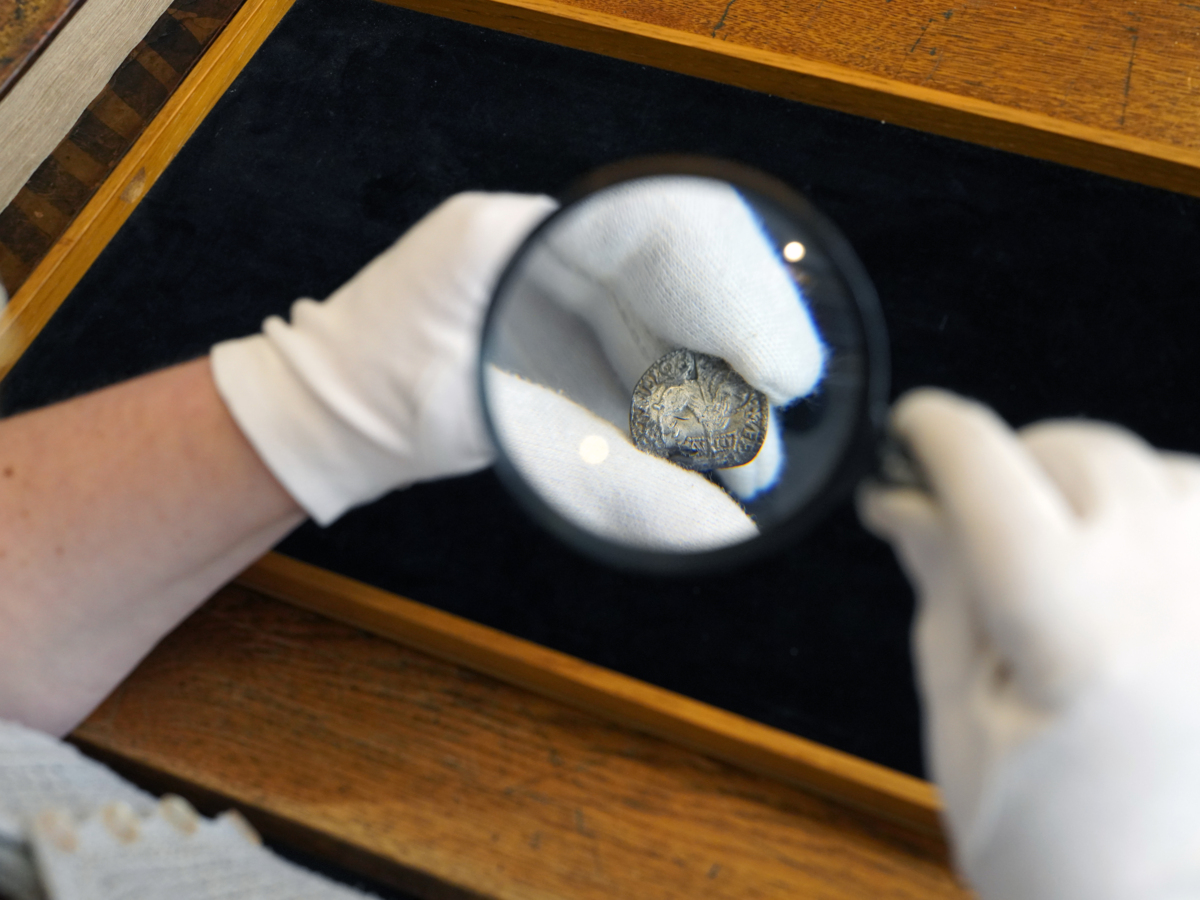
For those wanting to see this groundbreaking discovery up close, the BBC reports that there are plans by the Norwich Castle Museum to acquire it and put it on display for the public.
We get to provide readers with original coverage thanks to our loyal supporters. Do you enjoy our work? You can become a PATRON here or via our Patreon page. You'll get access to exclusive content and early access.
Feel free to reach out to discuss potential stories that may be in the public interest. You can reach us via email at hello@thevikingherald.com with the understanding that the information you provide might be used in our reporting and stories.