

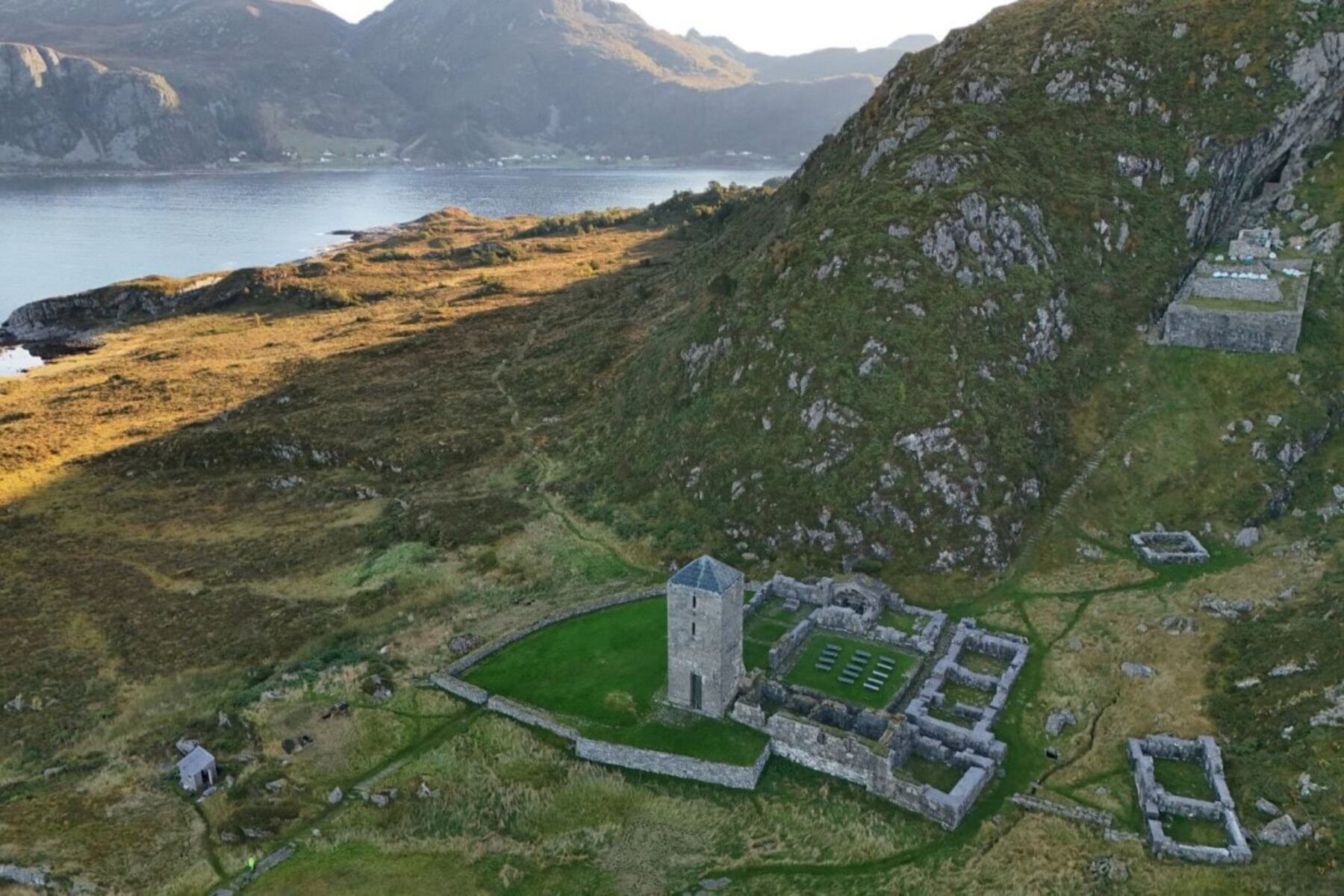
Known as one of Norway’s most important medieval sites, Selja Island, home to the Selja medieval Benedictine monastery, has been investigated by archaeologists and researchers for almost 200 years. In addition to the monastery, it is also the location of St. Sunniva’s church and other unidentified medieval ruins.
Due to the legend of St. Sunniva, it has been a unique Christian pilgrimage site since the Middle Ages. However, despite lengthy archaeological scrutiny, further discoveries continue to uncover new aspects associated with the monastery/church complex.
This latest major discovery, the third since 2024, was the product of an interdisciplinary collaboration involving both traditional and digital archaeology, with Norwegian Institute for Cultural Heritage Researc (NIKU) building archeologist Regin Meyer collaborating with specialists in digital archaeology.
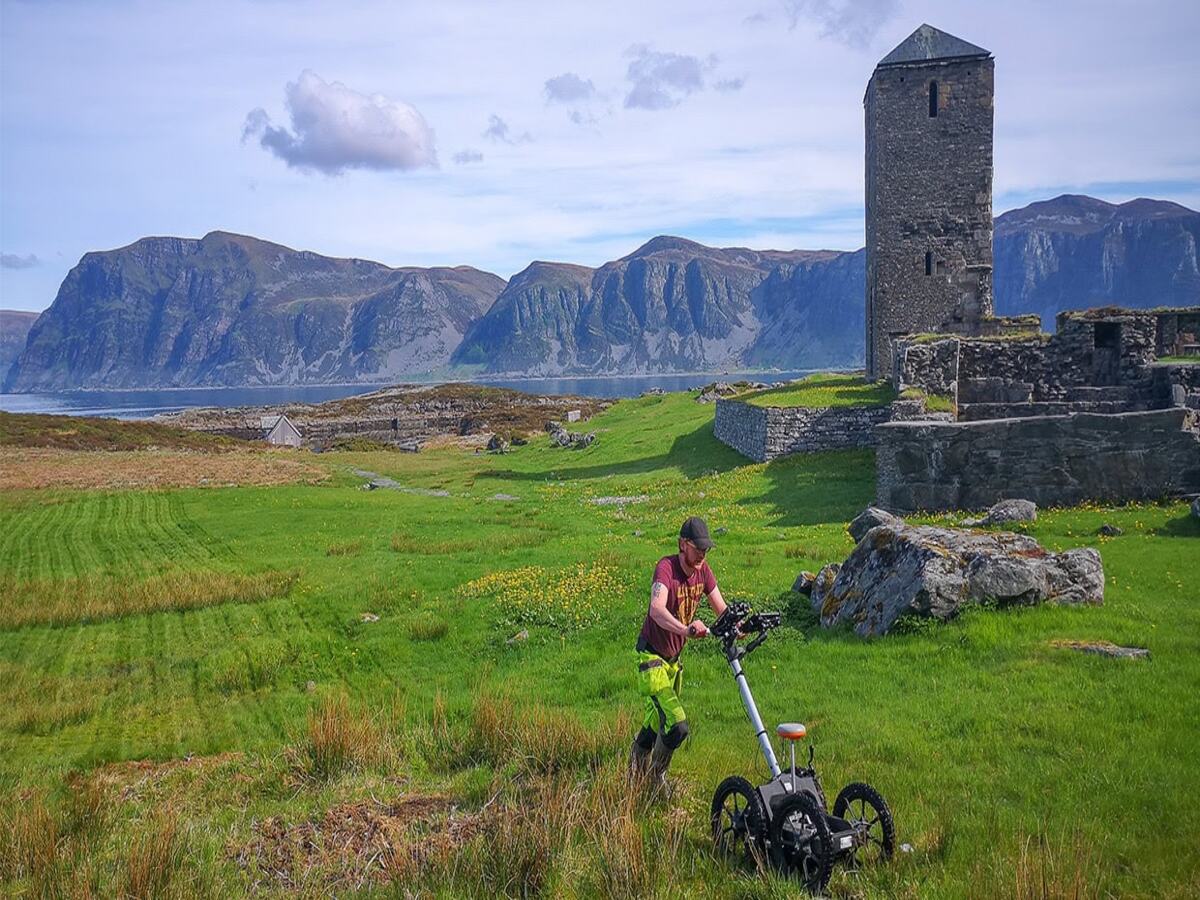
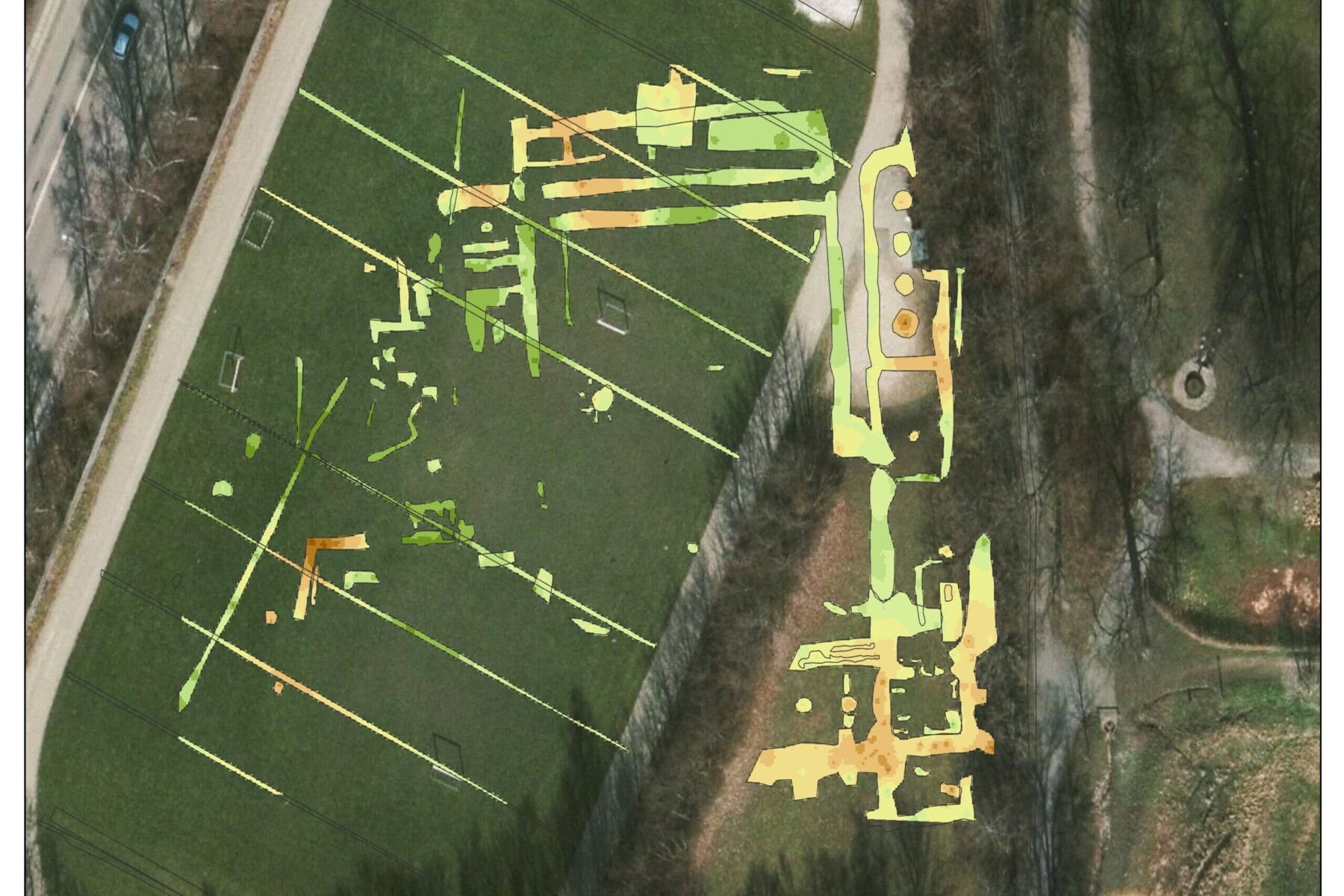
Ground-penetrating radar in Sejla. Source: Manuel Gabler, NIKU
The latest investigations
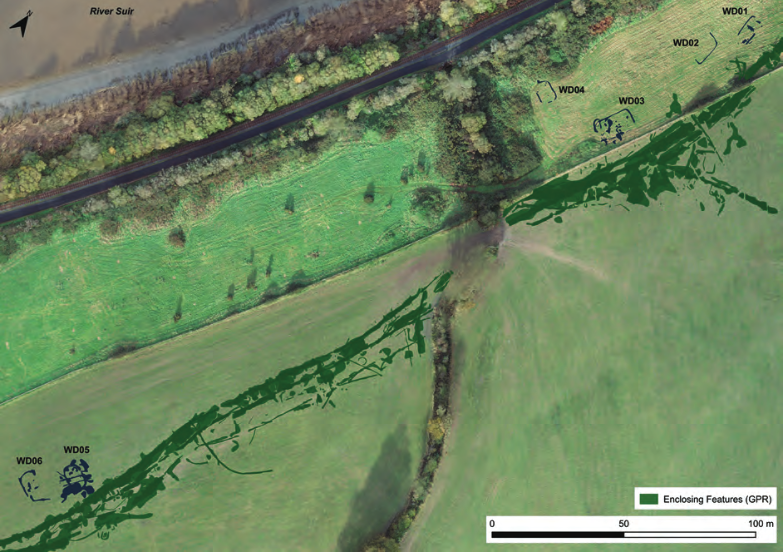
Located outside of the monastery walls, the newly discovered structure is a two-meter-wide sizable stone wall foundation. Based on ground-penetrating radar, it’s been revealed that the wall begins at the harbor and continues for about 13 meters. Currently, with most of the wall still underground, much remains to be investigated, and samples of soil and dateable material have been collected from the area.
“Hopefully, the analyses will help us understand both the date and function of the structure, and the role it may have played in the development of the site,” archeologist Meyer commented in a recent press release.
In 2024, Meyer found traces in St. Sunniva’s Church of what appear to be the remains of an earlier stone church, possibly of Anglo-Saxon origin, and which may be one the earliest stone churches in Norway. In 2025, another unknown medieval ruin was located near the monastery, signifying that there are still areas indicating habitation near the monastery that have yet to be properly investigated.
These three new discoveries have their starting points in new technology, based on a survey conducted in 2022 using ground-penetrating radar. They show that using advanced technology can facilitate re-examination of previously studied cultural and historical sites, leading to new perspectives and broader understanding.
A small island with a long and diverse history
A small, rugged island located on Norway’s central western coast, Selja has a surprisingly long and colorful history despite its size and location. It was a natural stopping place for pilgrims during the Middle Ages due to the legend of St. Sunniva, a mythic Christian Irish princess, who, according to the story, was shipwrecked on Selja in the 10th century, supposedly fleeing a cruel Viking king.
She and her companions, the so-called "Selja Men" (Seljemennene), were later martyred in the cave they were hiding in when local Norsemen came to kill them, accusing them of thievery. St. Sunniva is both Norway’s first saint and its only female saint. The remains of St. Sunniva’s Church, said to be established by King Olav Kyrre around 1068, was built in front of the cave where Sunniva and her people were said to have hidden.
The ruins of the Benedictine monastery, the dominating historical structure on Selja, both in the traditional archeology focus of Selja as well as in size, lie below the church and cave. The monastery was built by Benedictine monks in the early 12th century dedicated to Saint Alban, the first-recorded British Christian martyr (though in St. Sunniva’s legend it is claimed that the monastery is dedicated to Sunniva's brother, also called Alban). It became the seat of Norway’s first bishopric around 1068. The bishopric (along with the shrine of St. Sunniva) was moved to Bergen in 1170.
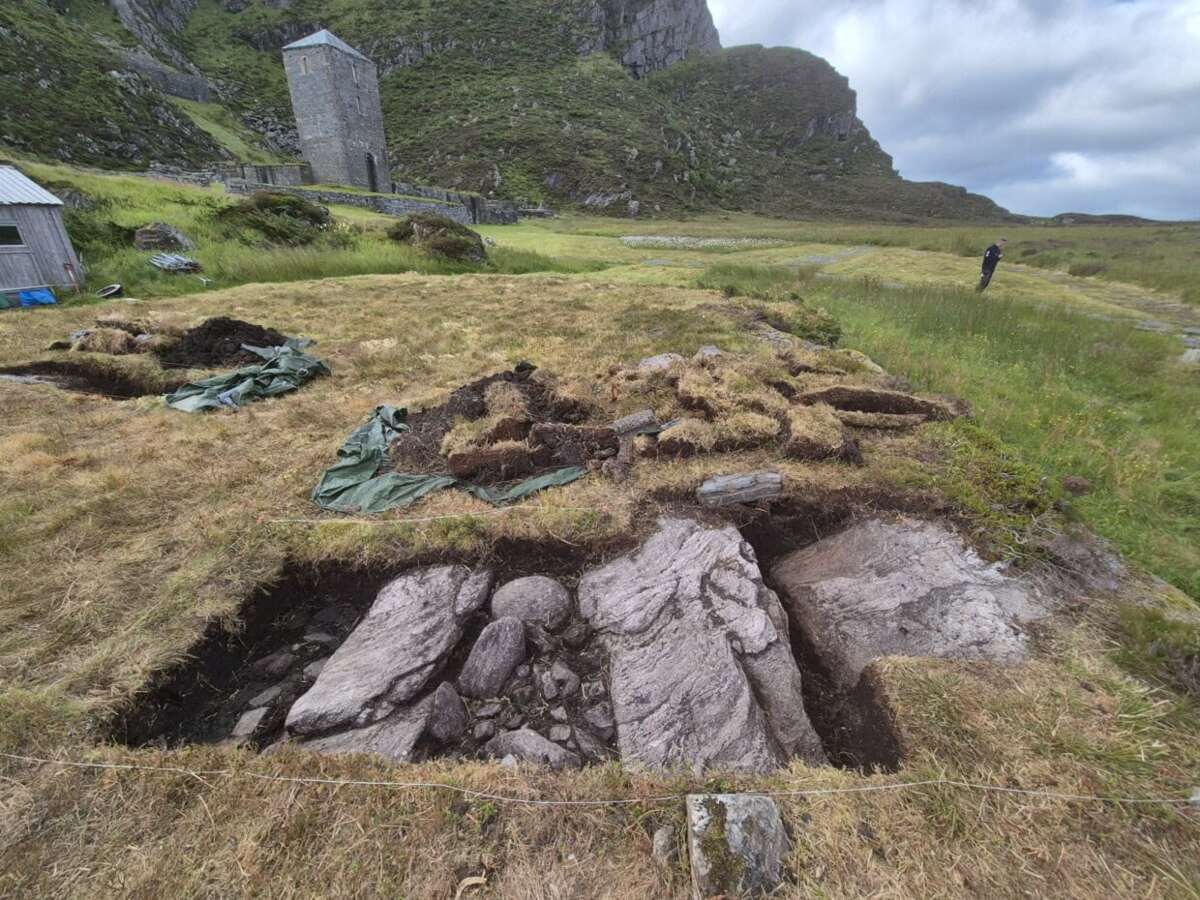
Casing walls in Sejla. Source: Regin Meyer, NIKU
Medieval Selja seen in a new light?
The current discovery contributes to an expanding and refined view of Medieval Selja. Until now, the ruins of the churches and monastery, as well as the pilgrimage aspects, have been the dominating focus of interest and research.
The recent finds indicate Selja was probably more than merely a religious center, and that there are areas of activity that have yet to be completely understood in the broader sense of life and culture on medieval Selja, thereby warranting further research.
As archaeologist Meyer says, “Selja is a good example of how even among Norway’s best-known medieval sites, important stories are still waiting to be discovered.” He hopes that further funding will allow him to continue unearthing the newly discovered walls, adding them, and perhaps the story behind them, to the other buildings and structures featured on historic Selja.
We get to provide readers with original coverage thanks to our loyal supporters. Do you enjoy our work? You can become a PATRON here or via our Patreon page. You'll get access to exclusive content and early access.
Feel free to reach out to discuss potential stories that may be in the public interest. You can reach us via email at hello@thevikingherald.com with the understanding that the information you provide might be used in our reporting and stories.