

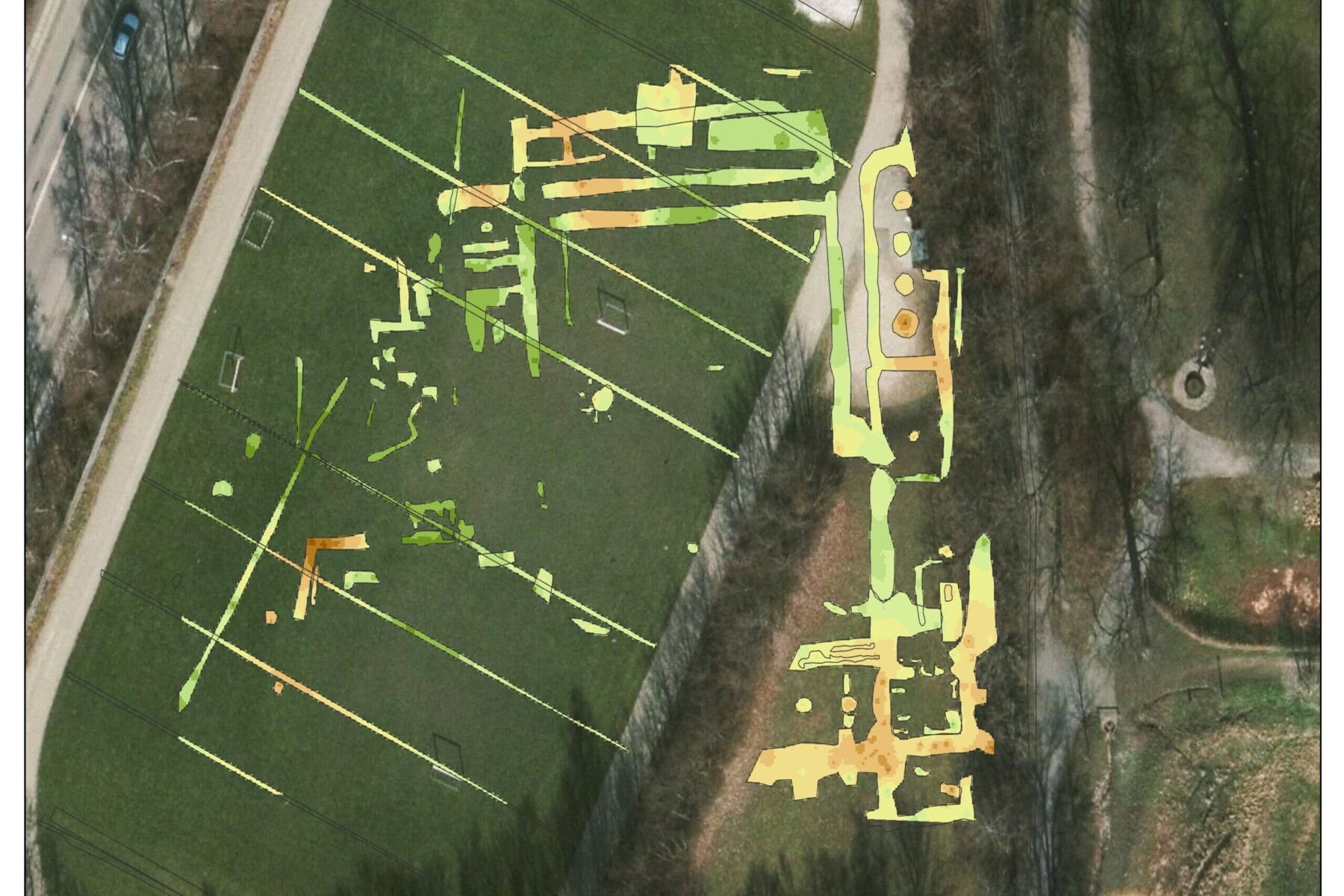
The links between soccer/football and medieval monks are few and far between. However, a joint Danish and Norwegian archaeological team has used ground-penetrating radar (GPR) to uncover the remains of a medieval monastery lying a meter under a football pitch in the Danish city of Roskilde.
An international investigation was led by the National Museum of Denmark and the Norwegian Institute for Cultural Heritage using GPR. Here, the archaeologists did not have to lift a trowel or nor disturb the local football pitch in any way. Instead, they have used the technology to map out the remains of a monastery, St. Clare’s Convent, which was thought to be completely lost.
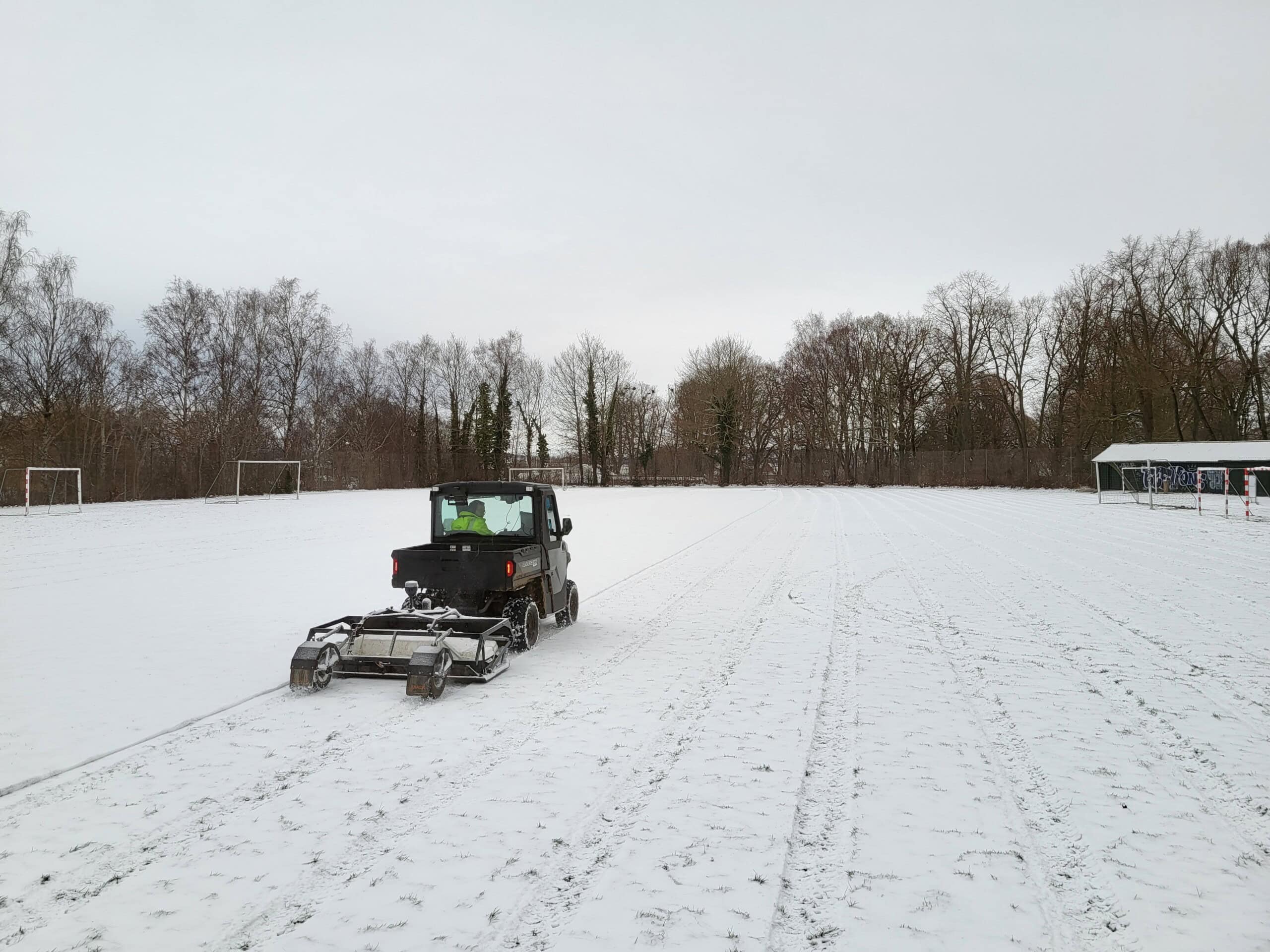
The ground-penetrating radar surveyof the sports field in Byparken, Roskilde, was conducted on a snowy day in January 2025. Photo: Jesper Langkilde/ROMU
Car park and football pitch
Similar to the discovery of English King Richard III, this archaeological find started with a car park. The archaeological investigation was part of plans connected to the possible building of an undercover parking lot in the sports fields at Byparken, in the Danish city of Roskilde, a city steeped in Viking history.
Speaking to NIKU, lead archaeologist Jesper Langkilde said that the team “...knew that St Clare’s Convent had been located here, but not how much of the complex from 1256 had been preserved.”
They then mapped the area using GPR and discovered the remains of the monastery. Much of it was surprisingly well preserved, including rooms, a cloister, and even a small church, just one meter under the pitch.
A storied convent
St. Clare’s Convent has a long history. Believed to have been built around 1254 CE, the convent is one of the city’s five medieval monasteries. Many of these date back to the early medieval period, when Christianity was introduced into Denmark during the Viking Age.
The monasteries helped Roskilde play an important cultural, ecclesiastical and religious role in the medieval history of Denmark.
Yet it is thought that St. Clare’s Convent was completely dissolved and destroyed during the Reformation in the 16th century, with 5 million bricks were shipped off to the nearby Selso Castle. Thanks to GPR, however, the remains of the convent and monastery have been uncovered by this joint Dano-Norwegian archaeological team.
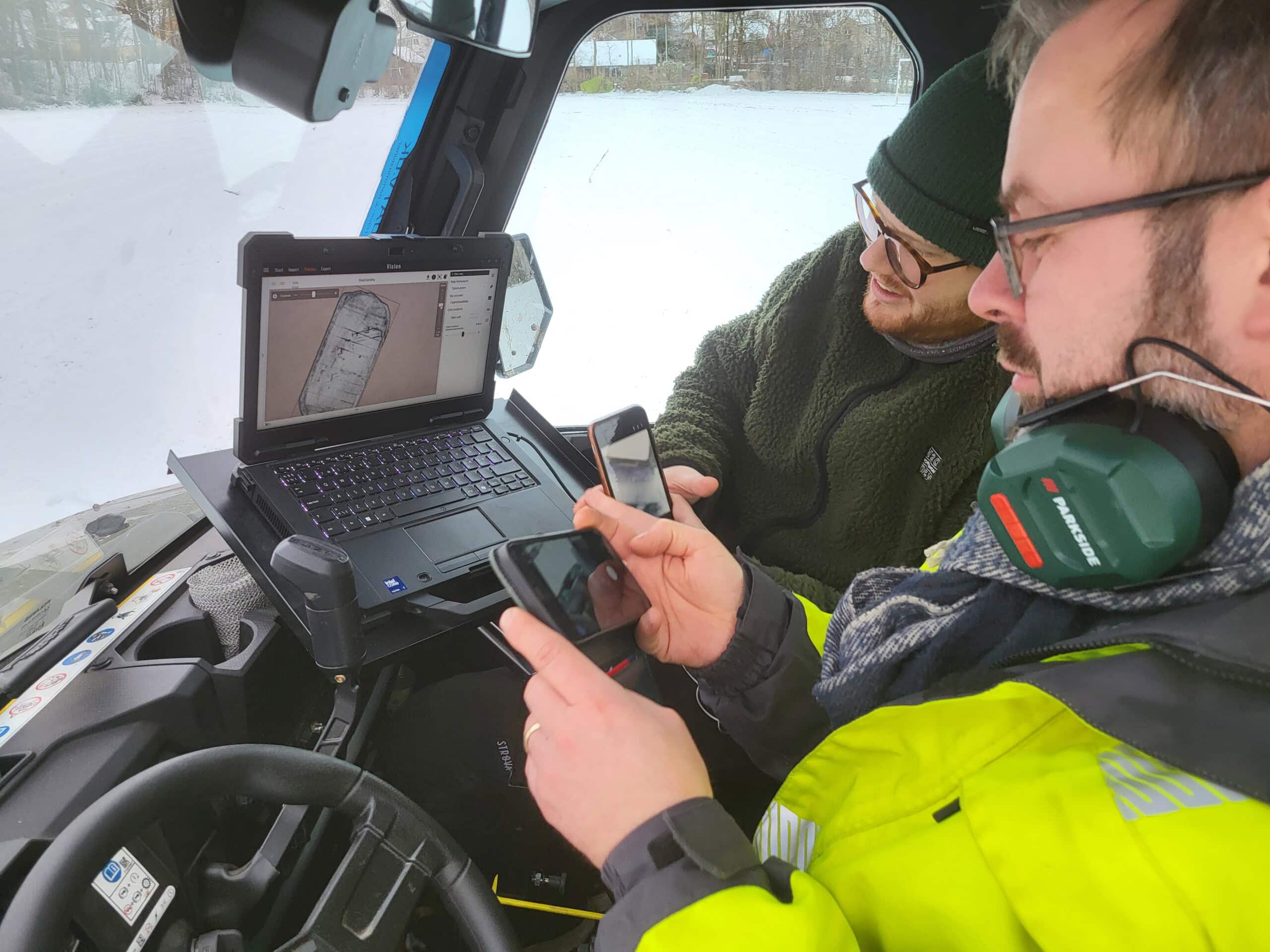
NIKU archaeologist Arne Abel Stamnes and Magnus Hjorth Jørgensen from the National Museum monitored the results in real time during data collection. Photo: Jesper Langkilde/ROMU
Cutting-edge technology that could lead to more archaeological discoveries
GPR works by sending electromagnetic signals underground, and when these signals encounter a material – in this case the remains of a wall from a room in St. Clare’s Convent – they are reflected back to the team on the ground and recorded. This data is then compiled to create detailed images of what lies underneath.
The lead of the GPR survey, Arne Able Stamnes, spoke to NIKU of his amazement at the quality of images taken during the survey. “This is the first time I have documented such a well‑preserved monastery complex with GPR,” Stamnes commented. “In my assessment, these are among the clearest GPR results from a monastery complex in Scandinavia.”
Depending on what the local Roskilde authorities decide to do, the next step may be for the archaeological team to get their hands dirty and plan more extensive archaeological excavations.
In the meantime, local footballers can take some solace in the fact that, though they could potentially lose their pitch, their city has uncovered a slice of medieval history – surely a winning goal for Roskilde.
We get to provide readers with original coverage thanks to our loyal supporters. Do you enjoy our work? You can become a PATRON here or via our Patreon page. You'll get access to exclusive content and early access.
Feel free to reach out to discuss potential stories that may be in the public interest. You can reach us via email at hello@thevikingherald.com with the understanding that the information you provide might be used in our reporting and stories.