


Anyone who has traveled to Scandinavia, once the heartland of Viking life, knows how truly unforgiving life can be.
The brutal environment, including frozen landscapes, jagged peaks, and those long, seemingly never-ending winter nights, can make daily life a struggle, even in the 21st century.
Imagine, then, how hard life was for people in Viking societies who survived and, indeed, thrived in this harsh region during the early medieval period, long before all the creature comforts of modern life came to fruition.
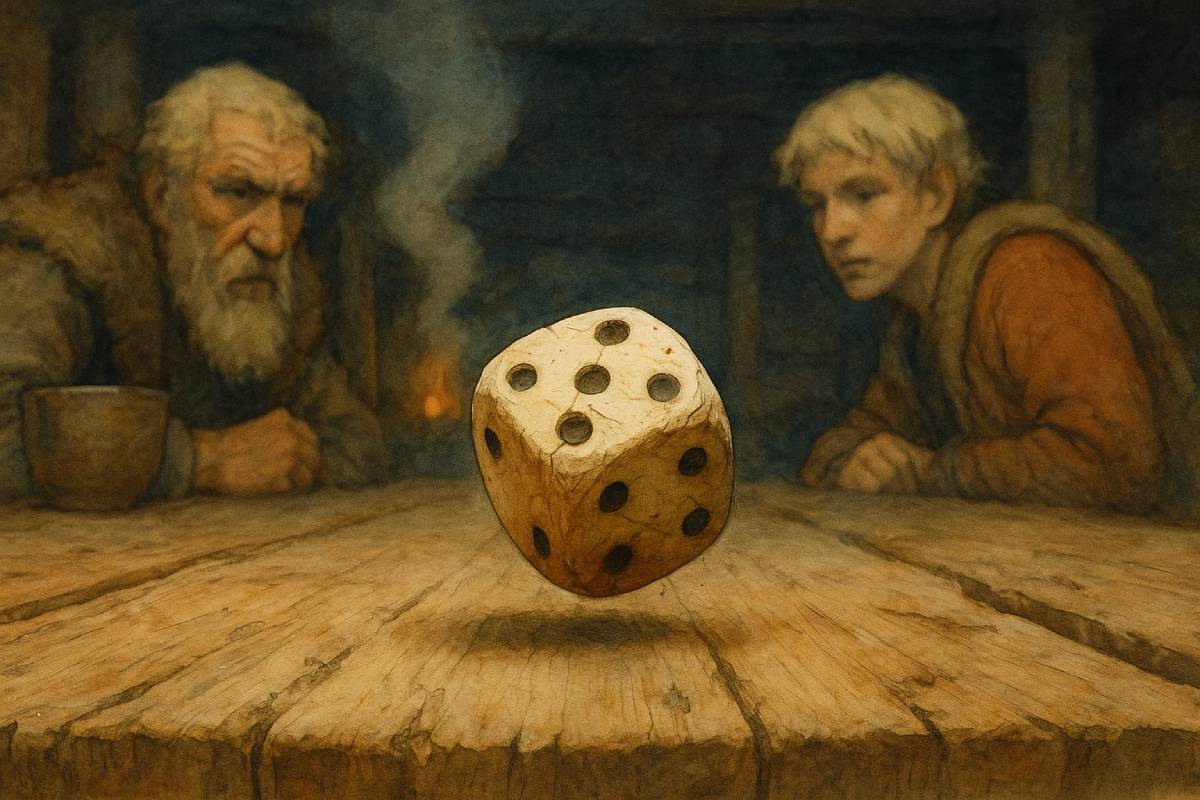
For these people, the line between life and death, between feast and famine, was often down to something as elusive and ethereal as luck. This was not the trivial sort that we know of today, when our favorite football teams score a last-minute goal, or we have a small win in the lottery.
For people in Viking societies, luck was a far more serious matter, woven into the social fabric of society and impacting personal relations and family lives.
Luck, or lack thereof, could be passed down, inherited, and could influence the lives of successive generations of family members.
This luck – which could bring fame and fortune or, without it, wreak havoc – was known to people in Viking societies as hamingja, a word that in modern Icelandic means "happiness."
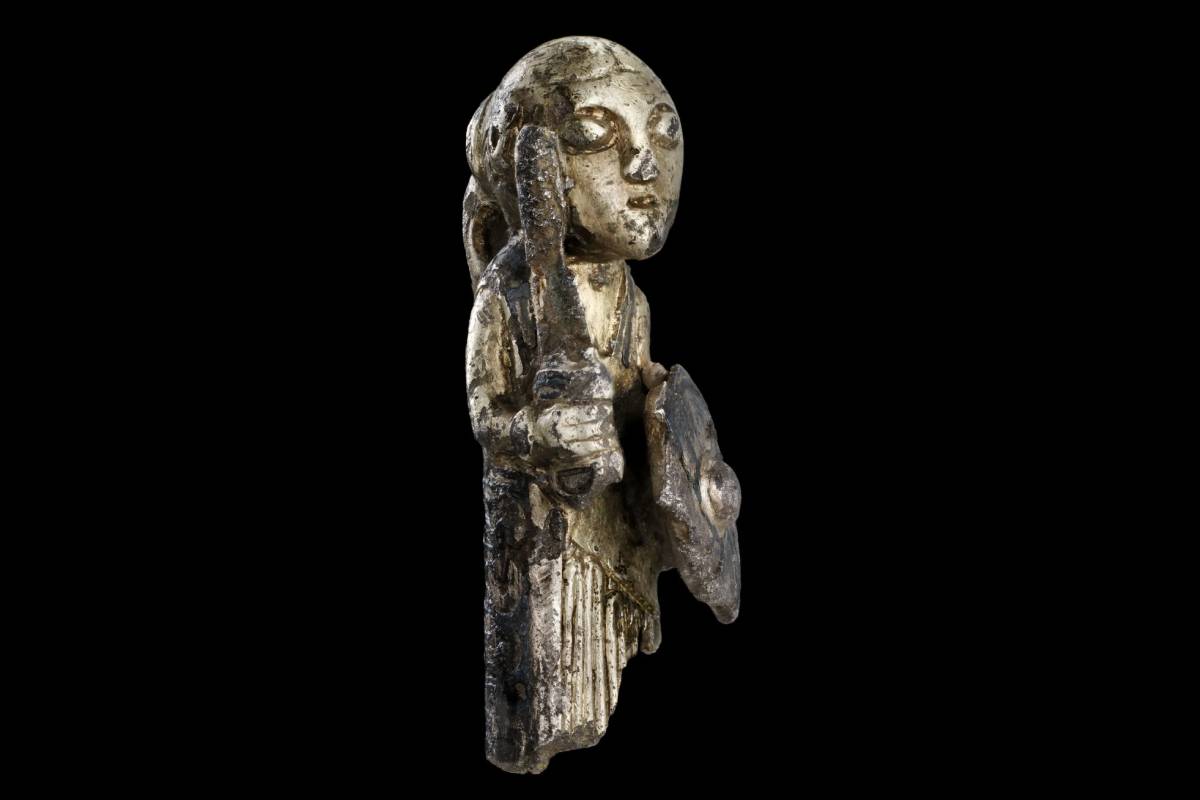
Silver figurine from Hårby, Denmark, often interpreted as a valkyrie. Photo: John Lee / Nationalmuseet (CC BY-SA)
Hamingja: A Viking version of luck
Among Norse people, luck took the form of hamingja. Many sources describe hamingja as a female guardian spirit – a presence in one's life that determines luck and happiness.
When a person died, hamingja could pass to a beloved family member, so a family carried its luck across generations. Her presence in a family's life was no accident; it was due to the character, reputation, and moral fiber of the members of the family.
Sources also describe the loan of hamingja to a friend, as when Hjalti Skeggiason asked King Olaf II of Norway, better known as Saint Olaf, to lend him his hamingja before a perilous voyage in Óláfs saga helga (Saga of St. Olaf) from Heimskringla by Snorri Sturluson.
Every act of courage or kindness was rewarded with hamingja being more present, whilst opposing actions, those of greed or wickedness, meant this female form of fortune did not smile brightly.
As Bettina Sejberg Sommer notes in her 2007 article, "The Norse Concept of Luck," in the journal Scandinavian Studies, people in Viking societies thought that "luck could not be sought or found by coincidence, one had luck that was accorded to one by fate...luck could [also] be diminished and lost..."
The social standing of families could be defined by their close relationship, or lack thereof, with hamingja and thus how lucky or unlucky they were. This societal reputation could impact every aspect of life, from marriage proposals to friendship to securing political alliances or employment opportunities.
Aside from social reputation, this luck could also be lent or shared. A lucky chieftain may, for example, wish a comrade-in-arms well on the eve of a battle, ensuring that hamingja followed the person into battle.
This luck could see the preservation of their life after the battle was fought, but also their military prowess on the battlefield.
Should they fall on the battlefield, this luck on the battlefield, especially any legendary exploits, could potentially lead to Valhalla. If they lived, this military prowess may lead to a greater share of any spoils, meaning an improved social standing and status (and coffers) for the individual and their family.
Should hamingja abandon an individual, or a family, this is a great misfortune and can last for generations. This misfortune could be brought about by bad actions or deeds and could not only affect the ne'er-do-well but also their broader family.

Engraving from 1897 depicting the arrival of the first Norse colony in Greenland, part of Erik the Red's settlement around 985 CE. Source: Internet Archive Book Images
Family and communal luck
The rich tapestry of the Norse sagas is certainly lush with examples of hamingja, but we turn to a father and son and a king for the most memorable occurrences.
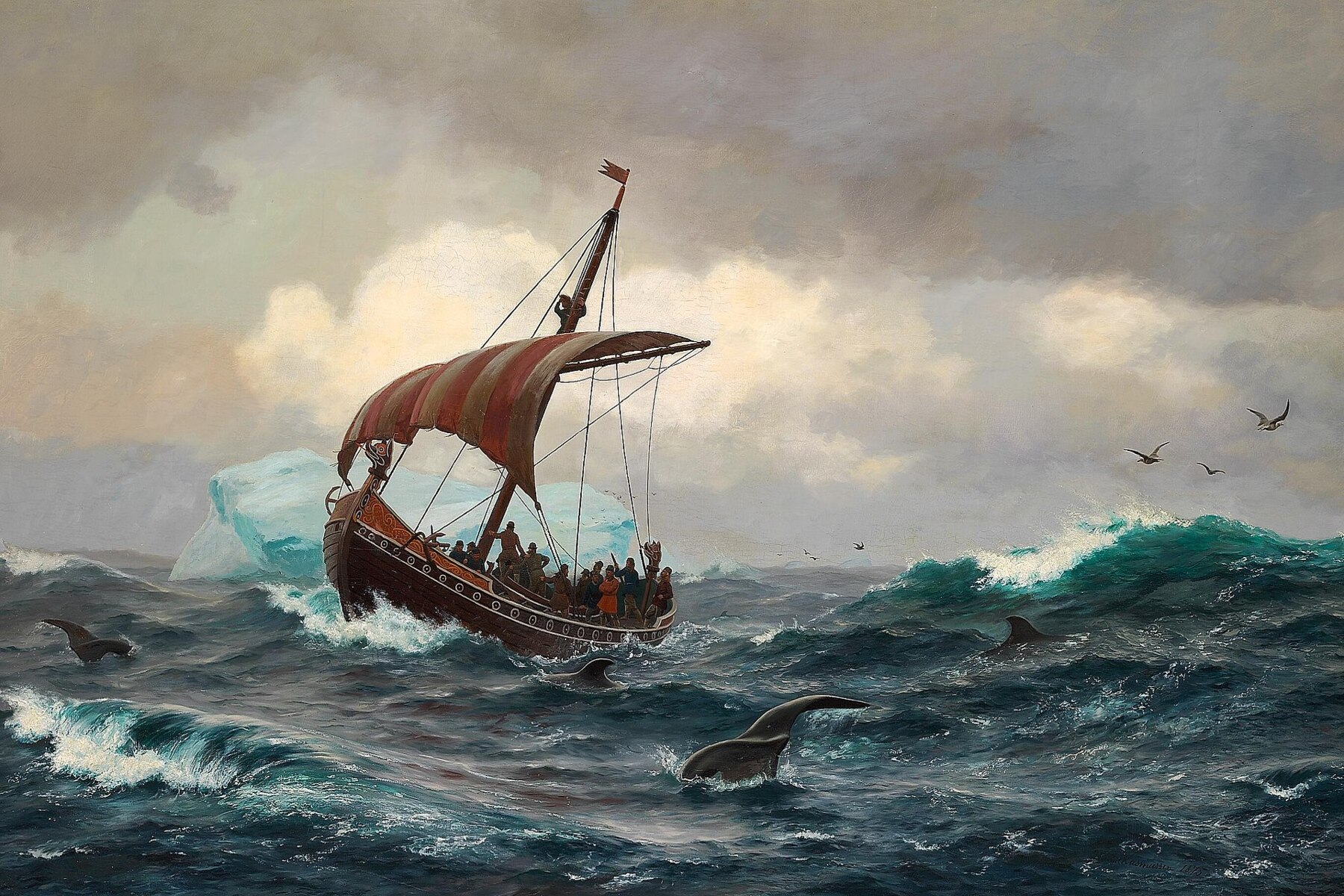
Firstly, we turn to surely the most famous and adventurous father and son in Viking history and lore: Erik the Red and his son, "Lucky" Leif Erikson. Both benefited tremendously from their hamingja – or so the sagas would have us believe.
Erik was instrumental in the establishment of Norse settlements on Greenland through his adventurous spirit, dash, and resourcefulness. The sagas, particularly the Saga of Erik the Red, present Leif's success in exploration and settlement as a continuation of his family's fortune.
This luck would lead to his successful rescue of a shipwrecked crew and, in an era when Christian priests and missionaries could be butchered alive, to the conversion of the Greenlandic settlements to Christianity.
Sometimes, luck could also be extended to a larger metaphorical family, a society itself. Turning to Egil's Saga (The Saga of Egil Skallagrimsson), we find a conversation between a character, Harek, and none other than the mighty King Harald Fairhair about luck.
Using an online version of the 1893 English translation by W. C. Green, Harek praises Fairhair's luck in not attending what turned out to be a deadly feast:
"...because on that banquet most was spent; and thou, O king, hadst great luck in matters so turning out that thy life was not endangered. The end was as was likely; thou wert very wise and very fortunate..." [Chapter 12]
Here, Fairhair's "luck" was more than just good fortune; it was a protective shield that could be traced to a mixture of ancestral favor, foresight, and wisdom. This spiritual shield has not only protected the king from harm but has also protected all those who dwell in his realm, including his family.
For people in Viking societies, luck, through the concept of hamingja, was more than just good fortune; it was an inherited strength (or, lack thereof, a weakness) that could influence and shape destinies and fates across generations.
This bound families together through time as their actions and deeds could increase or diminish their hamingja and thus bring about their rise or fall.
For more information on Leif Erikson's North American exploration, visit National Geographic here.
We get to provide readers with original coverage thanks to our loyal supporters. Do you enjoy our work? You can become a PATRON here or via our Patreon page. You'll get access to exclusive content and early access.
Feel free to reach out to discuss potential stories that may be in the public interest. You can reach us via email at hello@thevikingherald.com with the understanding that the information you provide might be used in our reporting and stories.



.jpg)