


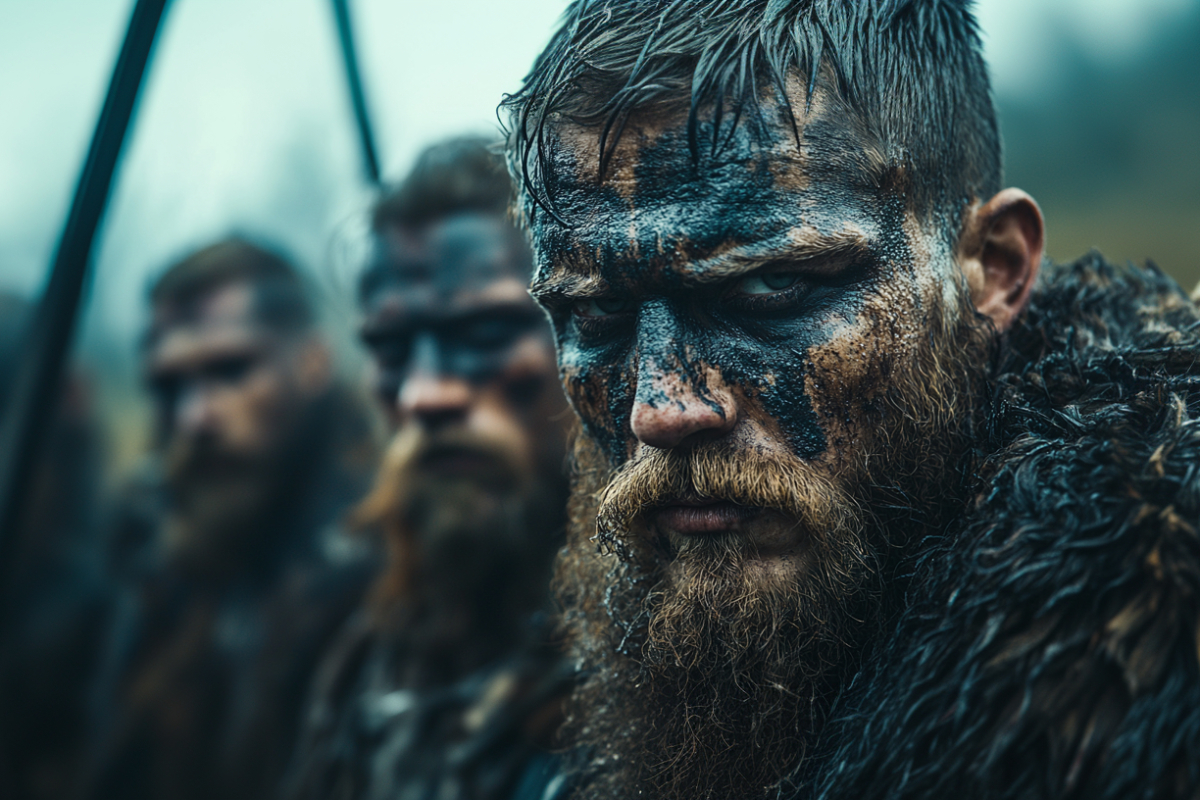
Thanks to the recent wave of popularity that Viking history is riding on, there has never been more airplay devoted to Viking battles.
Stepping outside the pages of the rich tapestry of Norse sagas, myths, and legends and jumping onto the small or silver screen, there are countless hours of Viking battle scenes that we Viking aficionados (don't call us nerds!) can marvel over.
Now, whilst this is great entertainment and makes for a climactic end to many an episode of Vikings, academics and historians often deride the supposed lack of historical accuracy in many of these shows.
We at The Viking Herald often say that you should never let the truth get in the way of a good story... or saga. It is important to remember that these shows or movies are not meant to serve as historical chronicles or records but are, after all, entertainment.
Whilst they are set in a historical period – the early medieval period – and feature people from Viking societies – many of them who were real historical figures, like Æthelstan, Harald Fairhair, or Rollo – most of the episodes, including the battles, have more than a dollop of fantastical fiction in them.
Surely, the most visually striking feature of many battles portrayed on the small or silver screen is how many Viking warriors are depicted with their faces painted. Yet how much of this is grounded in historical truth, and how much can we blame the costume department for?
Historical chronicles
One of the most devastating events of the early medieval period in Europe was the Viking expansion.
From the mid-to-late 8th century, people from Viking societies expanded outward from their homeland on the Scandinavian Peninsula to seek profit, plunder, and new lands to conquer and settle.
Whilst these people had developed a writing system by the time of the Viking raid on Lindisfarne, it was only in the later period, thanks in part to the introduction of Christianity, that they began to chronicle their own history.
As such, much of what we know of the Viking Age – from a written perspective – often comes from their enemies and victims and thus contains a considerable amount of bias.
Some of these historical texts, however biased, give us a tantalizing glimpse into the daily life of Viking warriors.
One of the most famous travelers – and travel writers – of the early medieval period was Ibn Fadlan. This 10th-century Arab diplomat, ethnographer, and scholar encountered people from Viking societies – the Rus – on the banks of the Volga River in what is now modern-day Russia.
Neil Price, in his chapter in the 2003 book Muslims on the Volga in the Viking Age: In the Footsteps of Ibn Fadlan, notes that while Ibn Fadlan's accounts are heavily biased – he clearly regarded the Rus as "barbarians," and his writings reflect a sense of cultural superiority – they still offer fascinating cultural and ethnographic snapshots.
In his travel accounts, for example, Fadlan described these people, the Rus, as being heavily tattooed with certain patterns. In fact, despite his perceived cultural superiority, he spends a lot of time praising the physical attributes of the Rus – somewhat giving off a vibe halfway between creepy and fanboy-esque.
Yet despite the descriptions of these "barbarians" and their tattoos, Ibn Fadlan does not give any account of the Rus in battle.
Perhaps some of these Rus had their faces tattooed, perhaps some even before the eve of a battle – but this is not necessarily conclusive proof that any of them painted – or tattooed – their faces for battle.
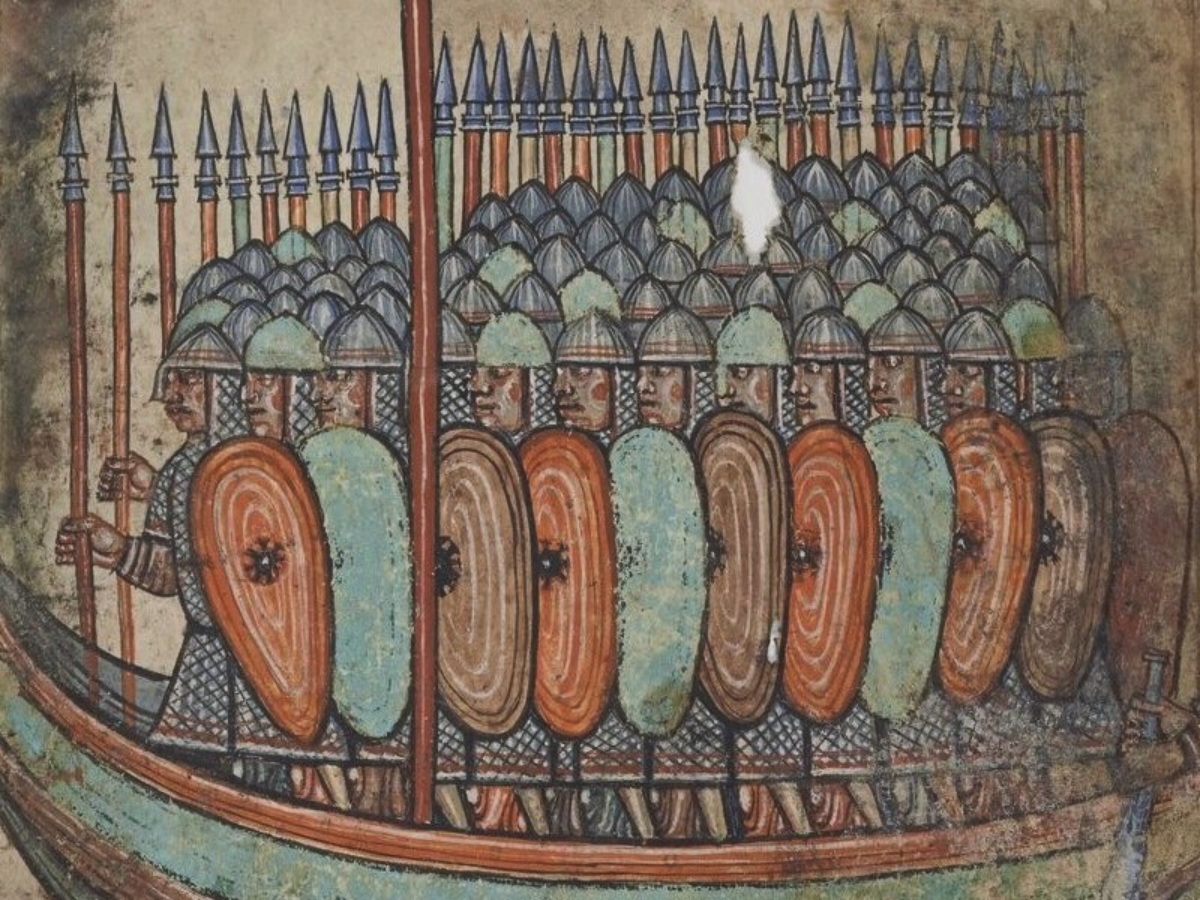
This depiction from around 1100 shows Vikings sailing a longship and attacking Guérande, as illustrated in the Abbey of Saint-Aubin in France. Source: Public domain
What does the archeological record say?
Aside from these often one-sided historical chronicles and written records, which sought to paint the "heathen" Vikings as badly as possible for posterity, the archeological record can try to fill in the gaps and silences in the written record.
There has been a wealth of Viking era battlefield artifacts uncovered, from great battleaxes to devastating swords – every sort of sharp-edged weapon possible.
Battlefields where these weapons were wielded by and against Viking warriors have also been scoured and surveyed, allowing us insights into Viking Age battles.
Furthermore, the graves of people from Viking societies, whether they were buried in a muddy ditch on the edge of a battlefield or resplendent with untold riches and transport into the afterlife, have also been analyzed and assessed.
Whilst archeology has bequeathed so much to the study of Viking history, we are still no closer to knowing if Viking warriors painted their faces as they appear in shows like Vikings.
Scouring these battlefields or graves, we have found no conclusive evidence – yet – that warriors painted their faces.
No pigments of paint or other materials associated with the production of body paint have been uncovered near Viking archeological sites, be they towns or battlefields.
This does not necessarily mean warrior face painting did not exist, but it does suggest that, if it did exist, it was certainly not widespread.
- READ MORE: A complete guide to Viking weaponry
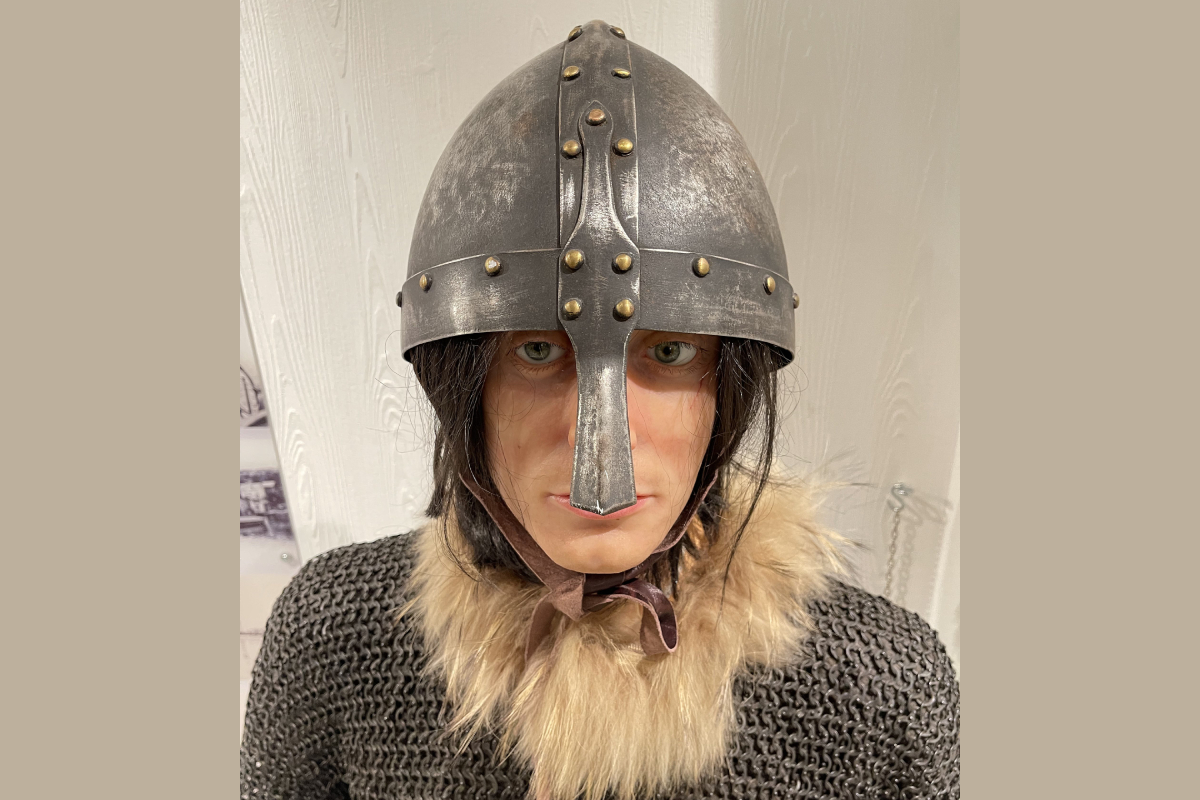
This mannequin at the Royal Norwegian Navy Museum in Horten, Norway shows how a Viking might have looked, wearing a spangenhelm and chainmail hauberk. Source: Wolfmann (CC BY-SA 4.0)
A lazy trope for "barbarian" warriors
So then, if we have only circumstantial evidence, why does every battle scene on the small or silver screen feature a horde of Vikings with their faces painted?
The answer, I suppose, is a mixture of lazy historical research coupled with historical and cultural appropriation.
We know, for example, that certain warriors of certain peoples in the early medieval period did paint their faces when waging battle, such as the Picts.
The image of a warrior with face paint has become a popular trope – a shorthand for fierce "barbarians" – seen in movies covering a huge historical period that does not necessarily include the early medieval period, including such flicks as Gladiator and Braveheart.
Let's face it, though: a horde of Viking warriors wielding axes and swords with their faces painted is visually striking.
Since movies and series are meant for entertainment, people prefer to spend their time watching something visually striking and engaging, rather than something bogged down in historical detail or accuracy.
Whilst Vikings with face paint may not be totally historically accurate, it does, however, provide the makeup department of any show or movie with a busy day of prepping and planning, so who are we to get in the way of keeping makeup artists employed?
As Martina Sprague writes in her 2007 book, Norse Warfare: The Unconventional Battle Strategies of the Ancient Vikings (available on Amazon here), so much of what happened on the battlefield when Viking warriors fought, sadly, has been lost in the murky tides of history.
Whether they painted their faces to intimidate their foes is one of those annoying questions that may remain unanswered for posterity; we may never know conclusively one way or the other.
In the meantime, should you want to dress up as a Viking this coming Halloween, it is probably best to leave your face unblemished with paint – just in case you bump into a historian.
For more information on the controversy surrounding a recent Viking-themed movie, visit The Guardian here.
We get to provide readers with original coverage thanks to our loyal supporters. Do you enjoy our work? You can become a PATRON here or via our Patreon page. You'll get access to exclusive content and early access.
Feel free to reach out to discuss potential stories that may be in the public interest. You can reach us via email at hello@thevikingherald.com with the understanding that the information you provide might be used in our reporting and stories.





.jpg)
