

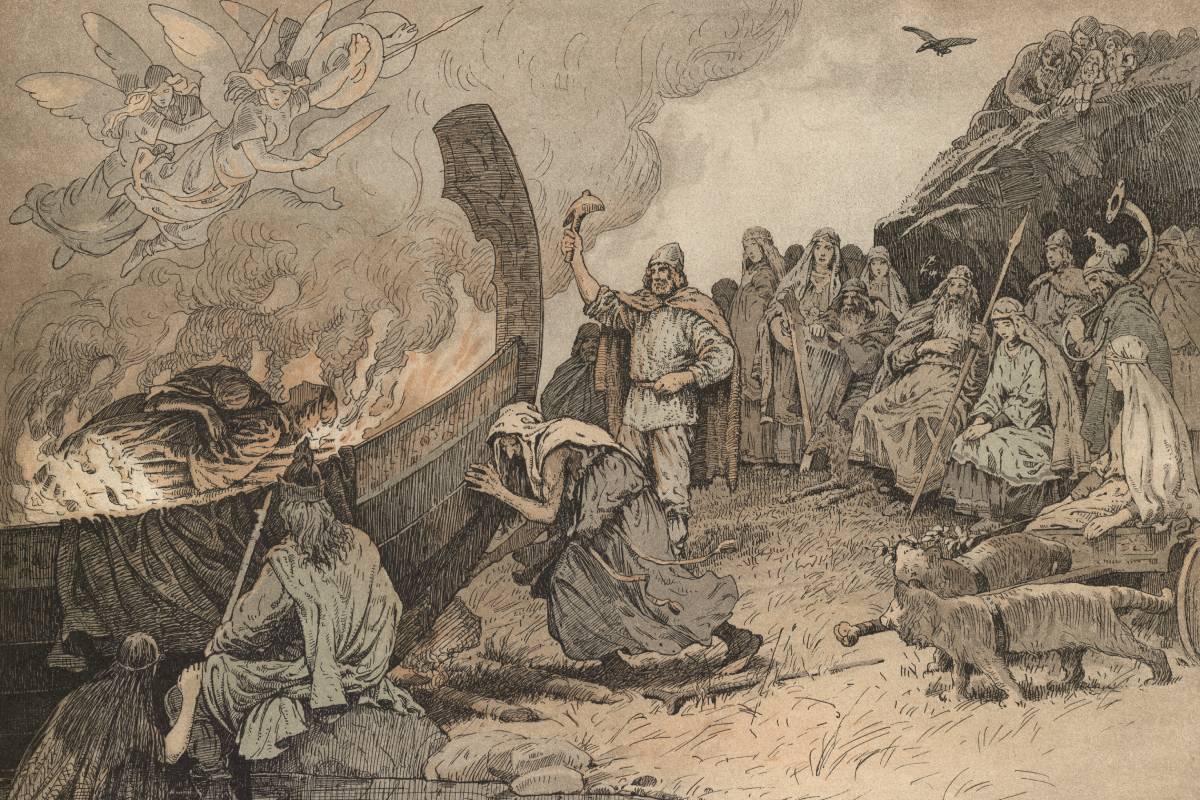
Where would we be without the organizational skill and literary flair of Snorri Sturluson?
This 13th-century Icelandic poet, politician, and man of letters is credited not only with compiling the many myths, sagas, and tales into several collections – the famous Eddas – but also with helping to commit these to paper.
Passed down from the Viking era through an oral culture, we are indebted to medieval scholars like Sturluson.
Found in the compilations and annals of the sagas, we find tales of heroic derring-do, love, lust, and – perhaps most interestingly – loss.
Deep in the Poetic Edda – a modern moniker for a collection of narrative poems in alliterative verse that scholars like Sturluson helped write down and compile for the first time – lies a tragic tale.
Whilst honor, valor, and a glorious death on a battlefield are all common themes in Old Norse poems, the poem Baldrs draumar (Baldr's Dream) is starkly different.
It tells of Odin's journey to the Norse underworld to consult a völva (seeress) about the fate of his son, the golden god Baldr.
Far from a tale of aggressive violence or warrior arrogance, this is a tale that speaks of darkness, loss, grief, and troubled psyches.
In other words, this dark and somber poem is exactly the opposite of what you'd expect people from Viking societies to regale one another with on a cold winter's night over a flagon of mead.
Let us delve into the narrative of this poem before we analyze its symbolism and meaning.
- READ MORE: What you need to know about Norse sagas
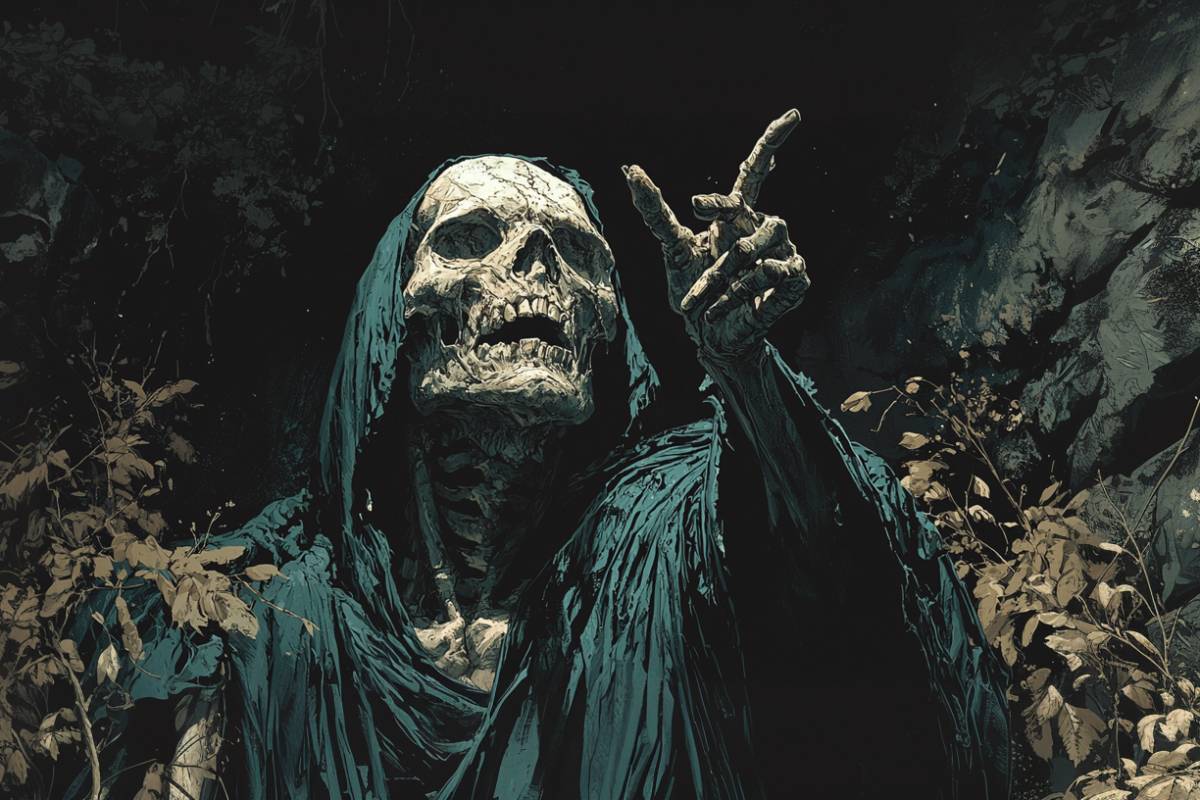
In Baldrs draumar, Odin awakens a völva from the grave to learn the meaning of his son Baldr’s ominous dreams. Source: The Viking Herald
A descent into death
Baldr, seen as the most handsome of the Norse gods, a true Viking "golden boy," is having a hard time. He begins to have troubling dreams of foreboding and horror.
Once were the gods together met,
And the goddesses came and council held,
And the far-famed ones the truth would find,
Why baleful dreams to Baldr had come.
(Baldrs draumar, Stanza 1, translated by Henry Adams Bellows)
Plagued by these night visions of his death, he seeks the counsel and advice of the wisest god in the Norse pantheon, Odin.
The mighty All-Father of the Norse gods decides to uncover the true meaning of these troubling dreams his son is experiencing.
His first destination is Helheim, the dreary Norse underworld. Now, one does not simply stroll into Hel, even as the mighty All-Father of Norse mythology, so Odin – as he loves to do – transforms into one of his many guises, Vegtamr ("the Wayfarer").
Hopping on his trusted steed, Sleipnir – albeit one with eight legs – Odin seeks out the völva's burial mound.
Then Othin rose, the enchanter old,
And the saddle he laid on Sleipnir's back;
Thence rode he down to Niflhel deep,
And the hound he met that came from hell.
(Baldrs draumar, Stanza 2, translated by Henry Adams Bellows)
Here, he dabbles in a bit of necromancy and summons her from her grave.
Then Othin rode to the eastern door,
There, he knew well, was the wise-woman's grave;
Magic he spoke and mighty charms,
Till spell-bound she rose, and in death she spoke.
(Baldrs draumar, Stanza 4, translated by Henry Adams Bellows)
Rousing her from her eternal slumber, the remainder of the poem deals with the völva's explanation of what Baldr's troubling visions mean.
He will die (the metaphorical mead is brewed, or to put it in modern parlance, "what's done is done") at the hands of his own brother, Hodr, who will be tricked – by none other than mischievous muckraker Loki – into throwing mistletoe at his golden brother, the only substance that can harm him.
His untimely death will be a great loss to the Æsir pantheon of the Norse gods, who will try to plead with Hel herself to release Baldr from this grim resting place.
"Here for Baldr the mead is brewed,
The shining drink, and a shield lies o'er it;
But their hope is gone from the mighty gods.
Unwilling I spake, and now would be still."
(Baldrs draumar, Stanza 7, translated by Henry Adams Bellows)
Finally, the völva explains that Baldr's death will, in fact, signal the onset of Ragnarök, the cataclysmic series of events that will see the entire Norse cosmos plunge into a chaotic and fiery rebirth.
To say that Odin is less than happy with these answers is an understatement, as the poem ends with Odin hurling a legendary insult at the völva.
Othin spake:
"No wise-woman art thou, nor wisdom hast;
Of giants three the mother art thou."
(Baldrs draumar, Stanza 13, translated by Henry Adams Bellows)
Zing! Not a bad insult to hurl next time you're in a heated argument.
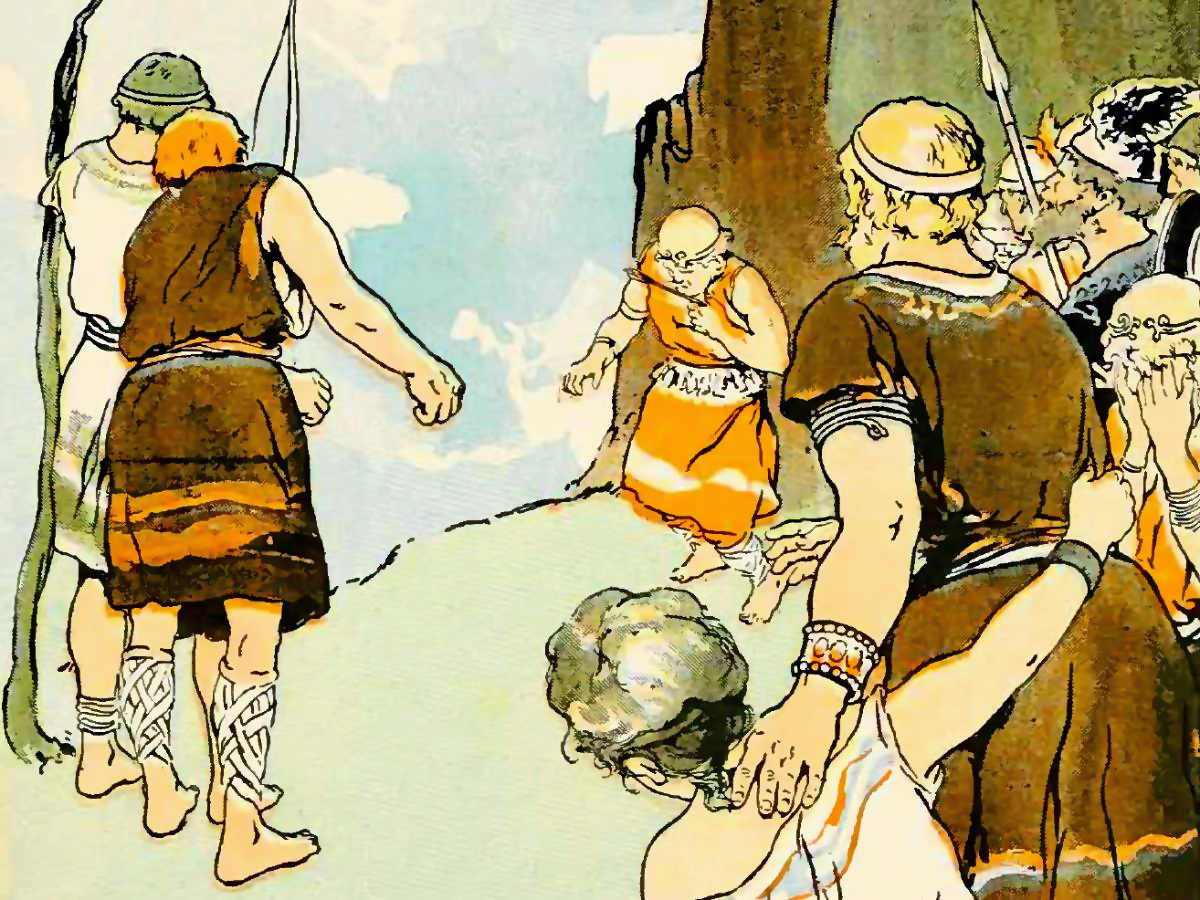
Baldr died when his brother Hodr, deceived by Loki, shot him with an arrow made of mistletoe. Source: George Wright (1872–1951)
Destruction and fate
There is, to say the least, a lot to unpack in this epic poem. From a wide perspective, the poem deals with death, fate, inevitability, and loss.
These four themes are intertwined, demonstrating how the Norse gods – magical and mighty deities – cannot prevent death or stop the series of events leading to Ragnarök.
This poem humanizes the Norse gods, especially Baldr and Odin, as they, like us, can do little to change their fate.
As John Lindow writes in his 2002 article in the Journal of Germanic and English Philology, Baldr's death leads to the cataclysmic destruction of the cosmos but will eventually bring about rebirth, renewal, and life.
Like many other medieval civilizations and cultures, people in Viking societies often saw death as a necessary fact of life.
Though tragic, it was essential to maintain the fragile harmony of the cosmos, where birth and death were inextricably linked.
There is also a deeply philosophical tone underpinning this epic poem. A tension exists between fate and free will, between self-determination and predeterminism.
Whilst Odin's journey takes him to the dreary underworld of death, his efforts ultimately affirm the inevitability of fate.
Despite being powerful supernatural deities, there is little that Baldr or Odin can do to prevent cosmically preordained events.
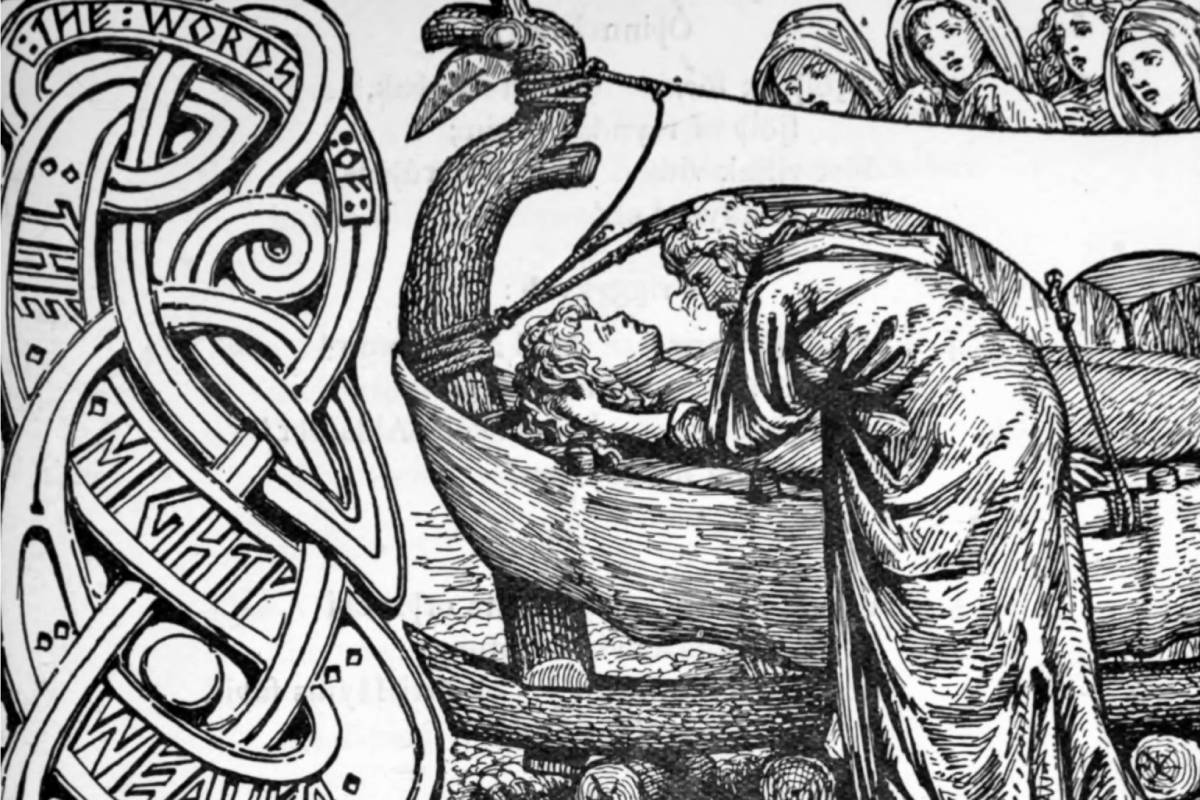
The illustration “Odin's Last Words to Baldr” reflects the deep parental grief central to Baldrs draumar. Source: W.G. Collingwood (1854–1932)
A very human tale
This poem has remained popular long after the old Norse gods stopped being worshipped and long after the last Viking ship ever set sail.
Perhaps its popularity is due to the fact that it helps to humanize the Norse gods and shows us that even the mightiest struggle with the inevitable march of death, however tragic or mistimed.
For others, as Jonas Wellendorf writes in his chapter in the 2021 book Myth and History in Celtic and Scandinavian Traditions, this is a tale of deep parental grief and lament.
Odin literally went to the very depths of existence to try and soothe his tormented son. He journeyed far and wide and consulted those with cosmic knowledge to understand what these dreams mean.
This theme of confusion over disturbing dreams links this poem with another, even older one: that of Oedipus. Another tragic tale of father and son, death and destruction, and the blurring of fate and free will, all of which are commonplace in Baldrs draumar.
Ultimately, though, this is a tale of a father doing all he can to prevent his son's death. Who among us, whether they have children or are children, would not do the same to save a loved one's life?
This is why this poem has touched something deep in the human psyche ever since it was first regaled centuries ago.
For more information on the Norse gods, visit BBC History Extra here.
We get to provide readers with original coverage thanks to our loyal supporters. Do you enjoy our work? You can become a PATRON here or via our Patreon page. You'll get access to exclusive content and early access.
Feel free to reach out to discuss potential stories that may be in the public interest. You can reach us via email at hello@thevikingherald.com with the understanding that the information you provide might be used in our reporting and stories.