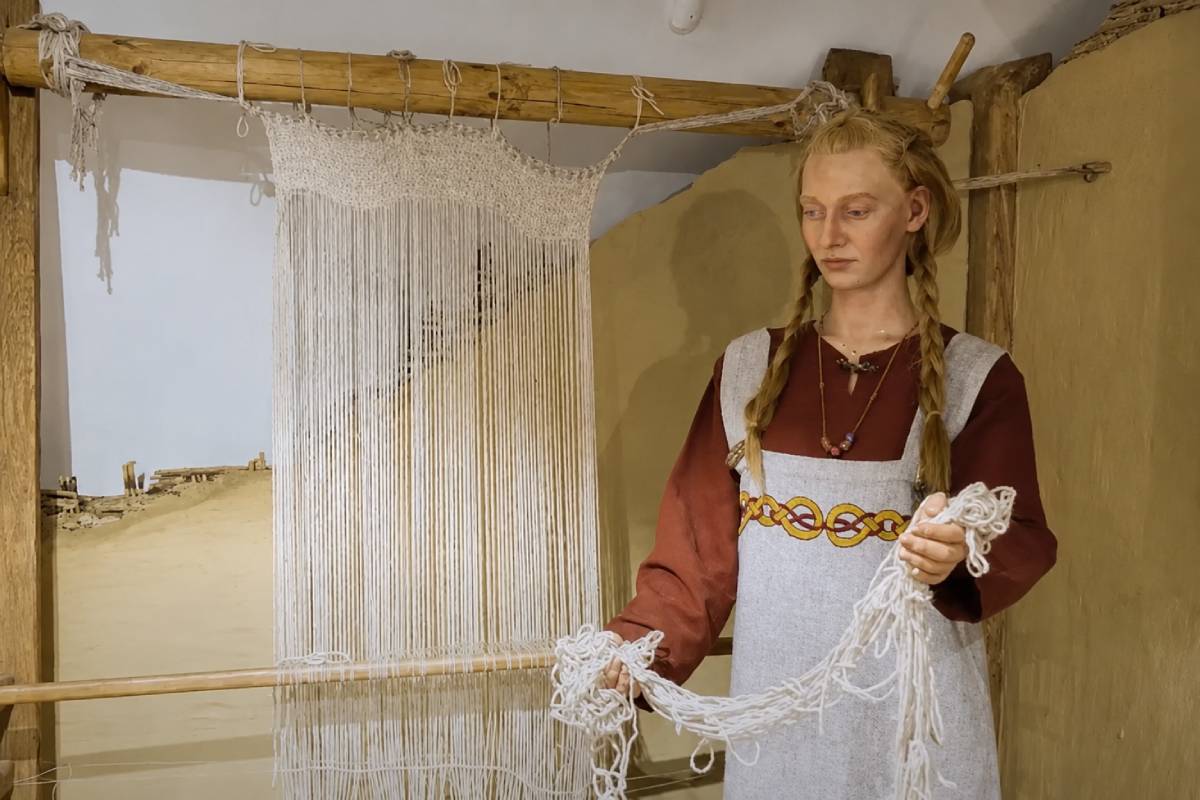


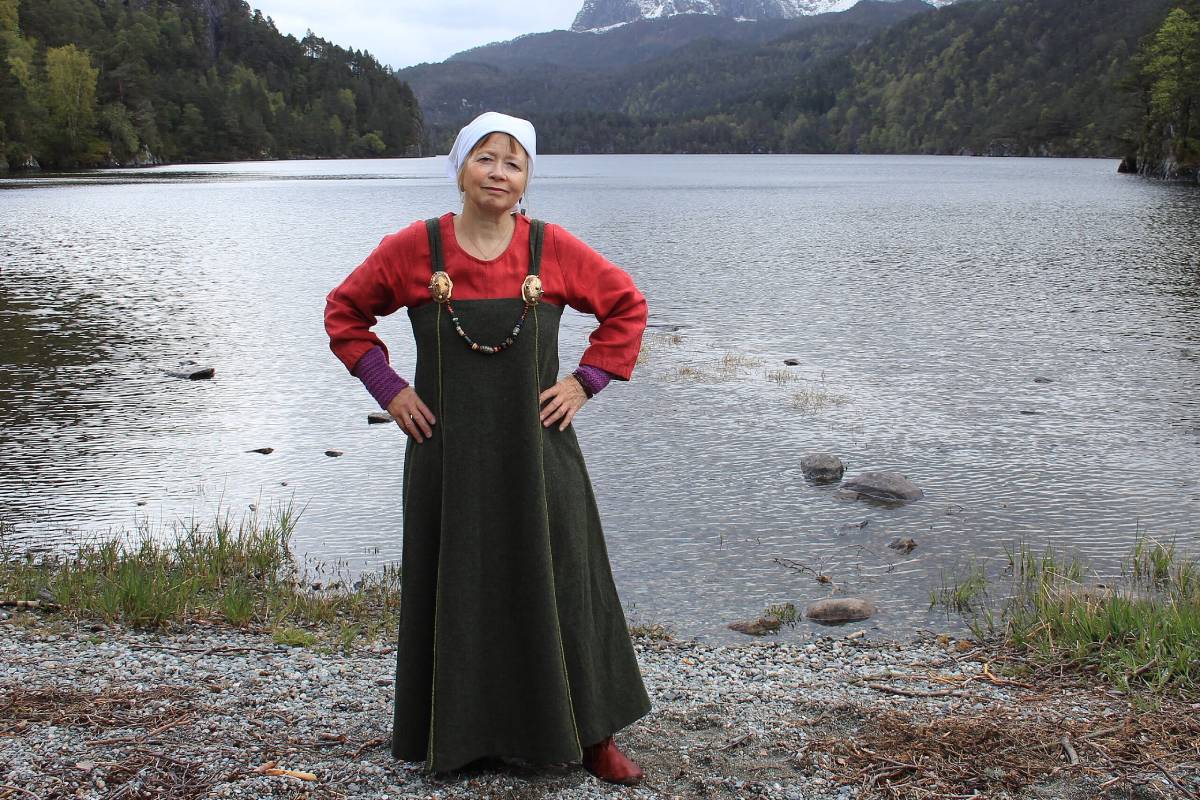
Yet the very history of Scandinavian women's fashion can be traced back to the Viking Age, where fashion was anything but disposable. Women's clothes played a nuanced role, marrying pragmatism and fashion, and helped shape societal roles and reinforce gender norms.
Fashion rules
Next time you're lying on your couch, smartphone in hand, half-bored with Netflix, and find yourself doing some impulsive online clothes shopping, spare a thought for our ancestors.
Before stores like Zalando, Amazon, and ASOS offered a wealth of items and direct shopping to your door, before the sweatshops and factories of the world pumped out cheap consumer items, many of our ancestors had to take matters into their own hands, so to speak.
Clothing, which we in the 21st century take for granted as being available with the swipe of our thumbs, was no less a necessity during the Viking Age (c. 750–1100), yet one that was exponentially harder to obtain.
There were no clothing stores – either physical brick-and-mortar ones or online – and there were no sweatshops or factories, so clothes had to be handmade.
It is only recently that historians and archeologists have cast a critical eye on the history of women's clothes during the Viking Age, a subject often dismissed as unworthy of serious analysis in the past.
Thanks to a new generation of scientists and researchers, we have gained a better understanding of what women wore in the Viking Age by delving into archeological findings, historical texts, and reconstructions.
We look at what women wore and what this meant during the early medieval period, when Vikings roamed, to understand their society better.
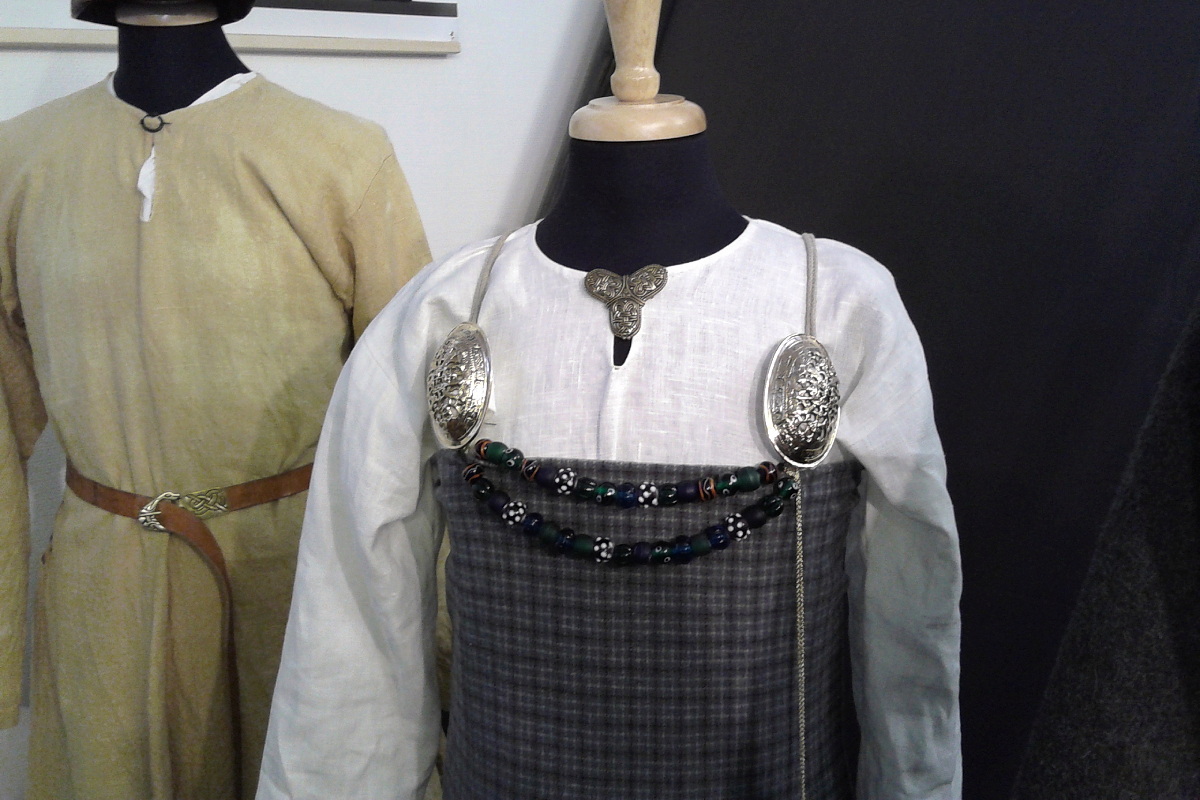
In 2012, an exhibition in Hoga, Tjörn, Sweden, showcased Viking Age clothing replicas, featuring common men's attire and a woman's dress with detailed brooches, a glass bead necklace, and a silver trefoil brooch. Photo: Ingwik (CC BY-SA 3.0)
Don't be so basic
Basic and practical garments were the backbone of Scandinavian fashion during the early medieval period for most people in Viking societies.
The first layer of clothing that women wore was a linen shift, known as a serk. This was the most basic layer worn for both warmth and hygiene. Using linen for this layer was a deliberate choice.
Though it is not as warm as wool, linen is far easier to clean, as Marianne H. Smith describes in her 2015 work Weaving Wealth: Cloth and Trade in Viking Age and Medieval Iceland.
Remember people, this was an age before washing machines, laundromats, and the widespread availability of running water!
Over this, women often wore a dress or a tunic called a kirtle. Despite being a peninsula and housing thousands of islands, Scandinavia had ample access to wool.
Kirtles were made from wool, helping to keep out the arctic conditions in winter and the temperamental weather in the warmer months. The kirtles were either short or long-sleeved, depending on the season.
Another type of dress worn was a smokkr, which was similar to an apron. It was typically worn over the shoulders and fastened with brooches that symbolized the wearer's societal status.
Some richer women might even have lined a smokkr with silk, a luxurious and highly prized item in Viking societies.
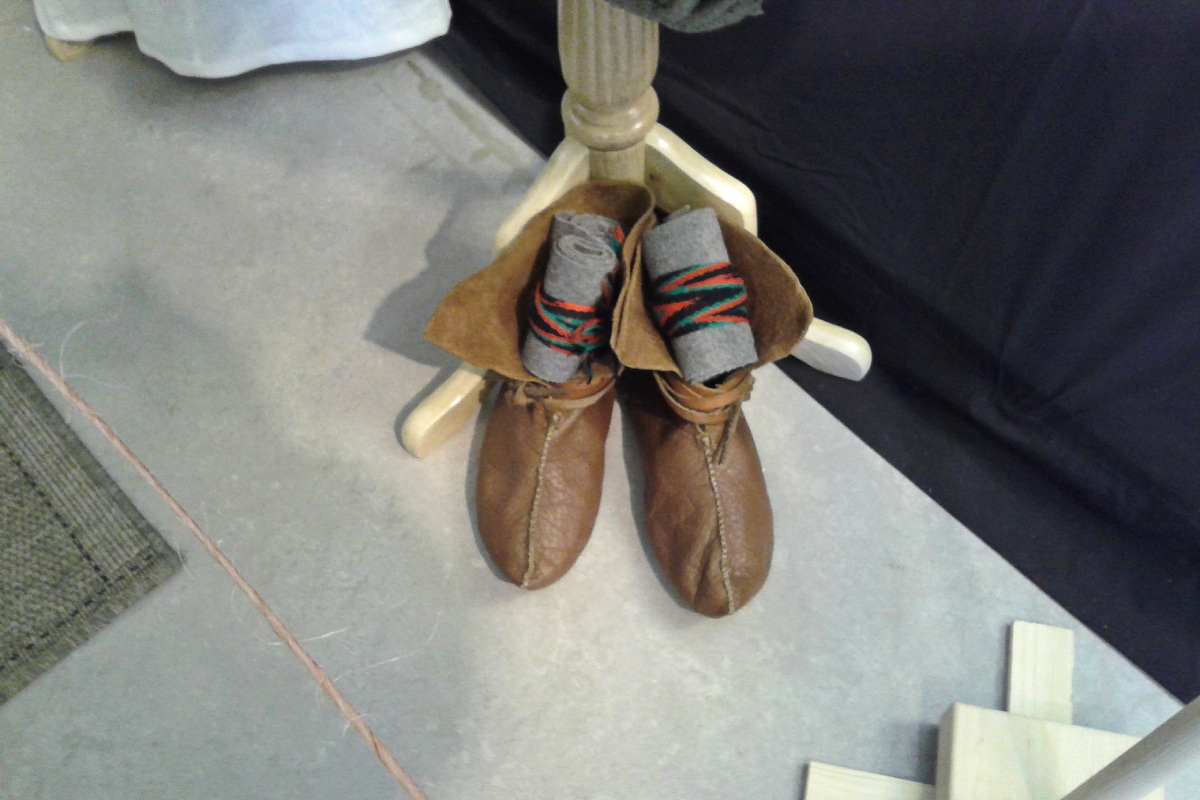
In 2012, replicas of Viking Age shoes made by Gert Alenhall, an expert in ancient clothing, were exhibited in Hoga, Tjörn, Sweden. Photo: Ingwik (CC BY-SA 3.0)
Covering heads and toes
At the extremities, clothing was also needed for warmth, protection, and practicality.
Cloaks and shawls were worn to protect against the harsh climate many people in Viking societies lived in.
Woolen headscarves or even caps could also be worn. It has been suggested that the style of headwear could denote marital status, but there is some disagreement on this point.
Further south on the body, shoes were worn and fashioned from leather and tanned using traditional (labor-intensive) methods.
These were often ankle-high to provide protection from the fields and unpaved roads that women trekked every day.
Much of the outer clothing was also fastened with a belt. Aside from being a fashionable accessory, this was also practical for attaching keys, money pouches, or even small tools.
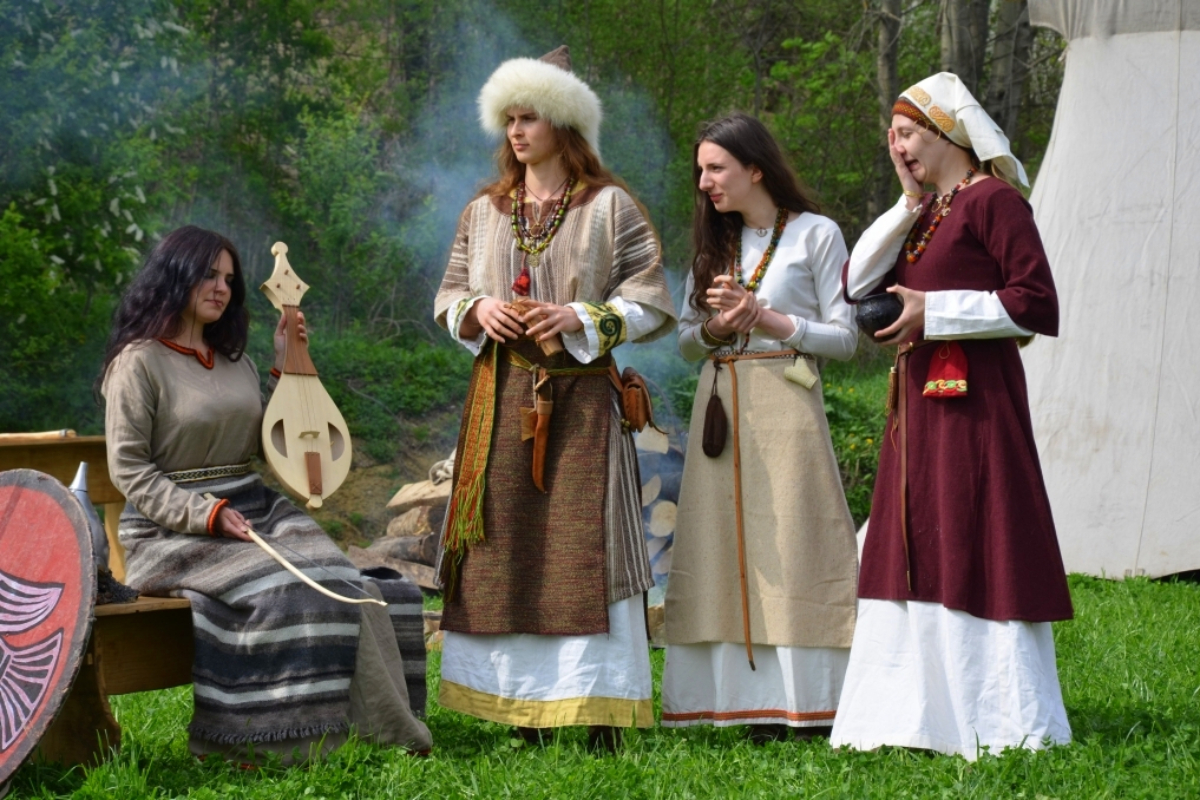
Viking reenactors spend extensive time studying and recreating authentic costumes, keeping the rich tradition of Viking Age clothing alive. Photo: Silar (CC BY-SA 3.0)
Dress to impress
Whilst much of the clothing women wore in Viking societies was practical, prioritizing function over fashion, it was also a significant marker of societal status.
Women in the Viking elite, the rich and the powerful, often wore clothing made from fine materials like linen and wool, intricately embroidered and dyed.
Accessories, from silk scarves to glittering belts and ornate brooches, often signified the marital and financial status of a woman.
Imported luxury items – from expensive jewelry to silk – were also markers of success and status.
Whilst not every woman could afford Chinese silk or Byzantine jewelry, local handmade accessories signified a lower status or income level.
Finally, the effort put into fabricating the clothes had a nuanced role.
According to the National Museum of Denmark, flax and wool were spun into thread and woven into cloth. These materials were then sewn into garments by women.
The quality of clothing often reflected the time and effort invested, the skill of the maker, and the maker's contribution to domestic chores.

Reconstructed by Tallee Savage with input from Birka experts, this image shows a possible interpretation of the clothing worn by the woman found in Grave 581, combining archeological findings with informed speculation. Photo: Tallee Savage
Specific archeological discoveries of women's clothing
Aside from buried treasure and skeletal remains, archeologists have unearthed a wealth of clothing in excavations throughout what was once the Viking world.
The early medieval trading town of Birka, arguably Sweden's first, has left a rich archeological legacy.
Alongside the recent discovery of a Viking shipyard, several graves were uncovered that contained Viking Age female clothing.
Buried in what archeologists have labelled Grave 835 were fragments of a woolen smokkr held together with large oval brooches. The remains of a handwoven woolen shawl were discovered in Grave 581.
In the neighboring country of Norway, the discovery of a well-preserved Viking ship at Oseberg in 1903 was one of the great archaeological finds of the 20th century.
The ship contained the remains of two women, at least one of them of high status, and fragments of silk and textiles, offering a compelling view into the life of the Viking elite.
The presence of silk suggests that one of these women had the means to buy this luxury item.
This silk came into her possession through an elaborate network of trade routes, the famous Silk Roads, connecting the East Asian, Islamic, Byzantine, and Northern European worlds.
Finally, in southern Scandinavia, excavations in Mammen, Denmark, uncovered the remains of what was a richly embroidered woolen garment.
Dating from the 10th century, historians believe that this was used as a ceremonial garment due to the high-quality wool used in its production, a sign of wealth and influence.
Thanks to a new breed of archeologists and historians, we now have more information on the type of clothing that women in Viking societies wore throughout the early medieval period.
The history of chic Scandinavian women's clothing has its origins in the functional and fashionable clothing that women produced throughout the Viking Age.
We get to provide readers with original coverage thanks to our loyal supporters. Do you enjoy our work? You can become a PATRON here or via our Patreon page. You'll get access to exclusive content and early access.
Feel free to reach out to discuss potential stories that may be in the public interest. You can reach us via email at hello@thevikingherald.com with the understanding that the information you provide might be used in our reporting and stories.