

For those non-linguists among us, language can, at times, seem a solid and static affair. The language I am writing in harks back to the early medieval period, when Vikings roamed the British Isles.
As anyone who has spent any time on TikTok knows, language constantly changes, evolves, and morphs. It is rarely static. As an example, English has changed from the Old English that the Anglo-Saxons spoke. It saw seismic existential change following the Norman invasion.
It then underwent a "great vowel shift" in the 15th century CE, which helped it evolve into the language that Shakespeare thrilled (or perhaps bored, if you had to study him in middle school) us all with.
Since then, with the adoption of a global mélange of borrowed words, it has evolved into the language I am using to write this now.
It is rare to have physical archeological evidence of the real-time evolution of a language. However, for the lovers of all things Vikings, we have a magnificent artifact that not only is strikingly brilliant but also shows the evolution of the written language that people from Viking societies used.
Yes, a runestone in Sparlösa, in the Swedish province of Västergötland, is etched with a mixture of both the Elder and Younger Futhark alphabet, the runic inscriptions that people in Viking societies developed and used for their written word.
Aside from this linguistic evolution, the stone bears complex imagery, including peacocks, a leopard (not native to Sweden), and a goose fighting a snake, a mix of symbols from Christianity and older Norse religious beliefs.
This also speaks to the runestone as a hallmark of evolution, though not linguistic, but of the religious turmoil that Scandinavia underwent during the latter early medieval period.
All of that has made the runestone one of the most puzzling yet underappreciated artifacts in Sweden. To help understand this enigma wrapped in granite, we begin in a church 350 years ago.
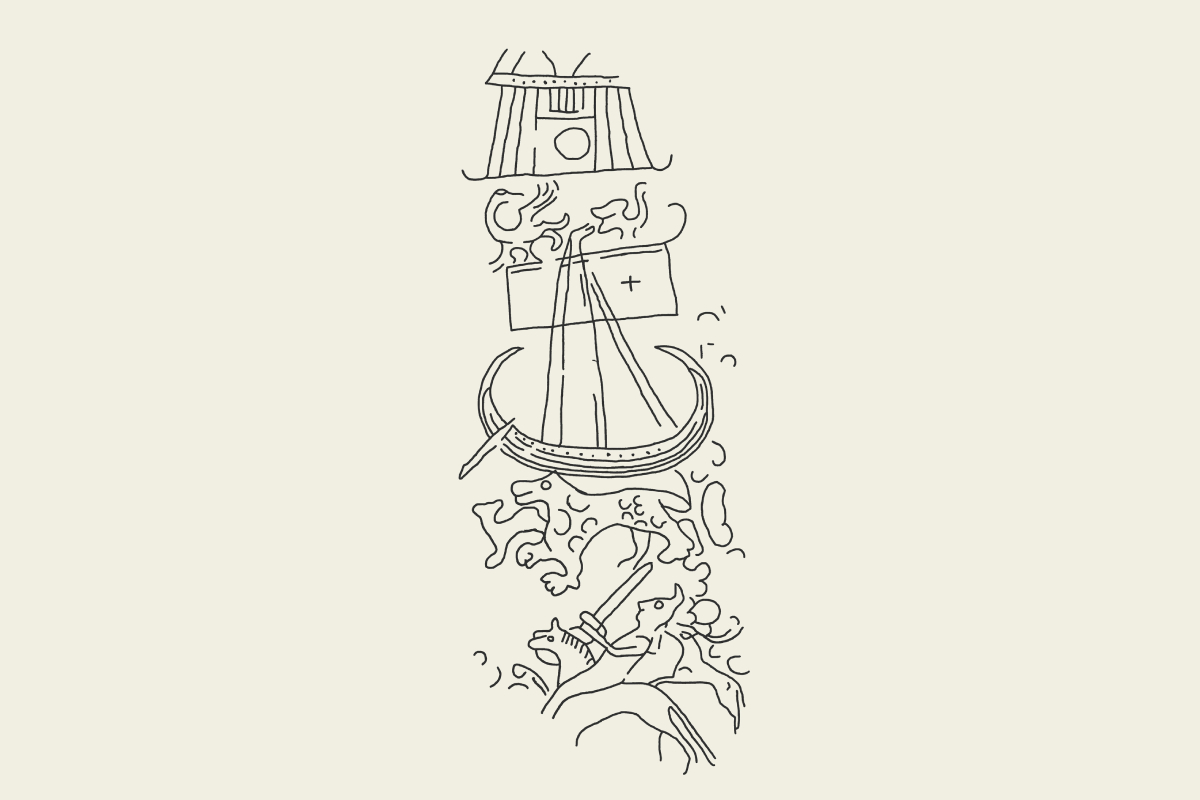
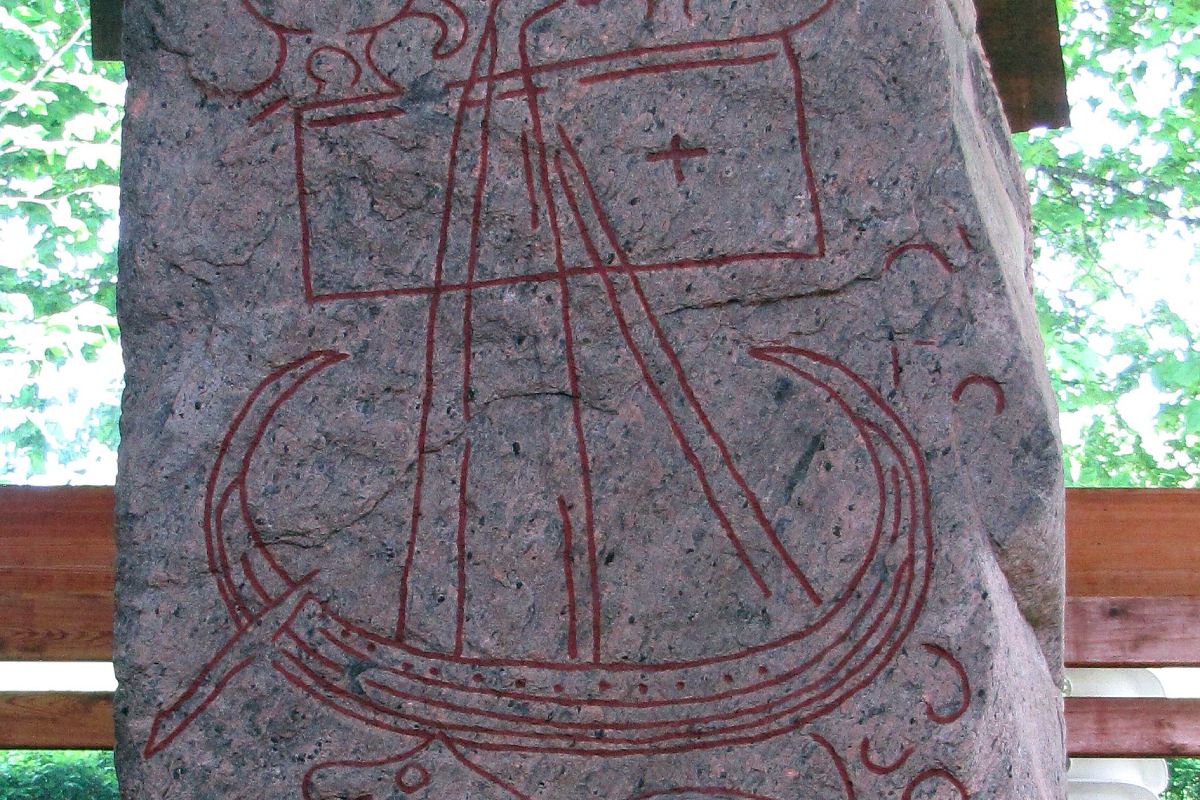
A rendering of the runestone's south side reveals scenes of battle, a stylized ship, and symbolic animals. Source: Appazphotography (CC BY-SA 4.0)
Runestone renovations
Sometimes treasure can be uncovered in the most unexpected of places. When the good folk of Sparlösa were undertaking renovations in a church in 1669, they came across an unusual piece of stone.
Centuries after the last Viking ship ever sailed, runestones—once dotted across the landscape of Northern Europe, especially Scandinavia—were relegated to construction materials. However, the good God-fearing folk in that church had unwittingly uncovered the Sparlösa runestone.
Now, the study of Viking history in late 17th-century CE Sweden was not what it is today (you'll be saddened to know there was no The Viking Herald website to bring this history to the masses!), and the runestone appears to have been left in the church wall until a fire, some years later, split the runestone in two.
It was not until 1937 that the two pieces were removed from the church wall and reunited.
It now takes pride of place in a special hall constructed for the runestone in the town of Sparlösa and helps draw Viking aficionados from the world over to this bucolic Swedish town.
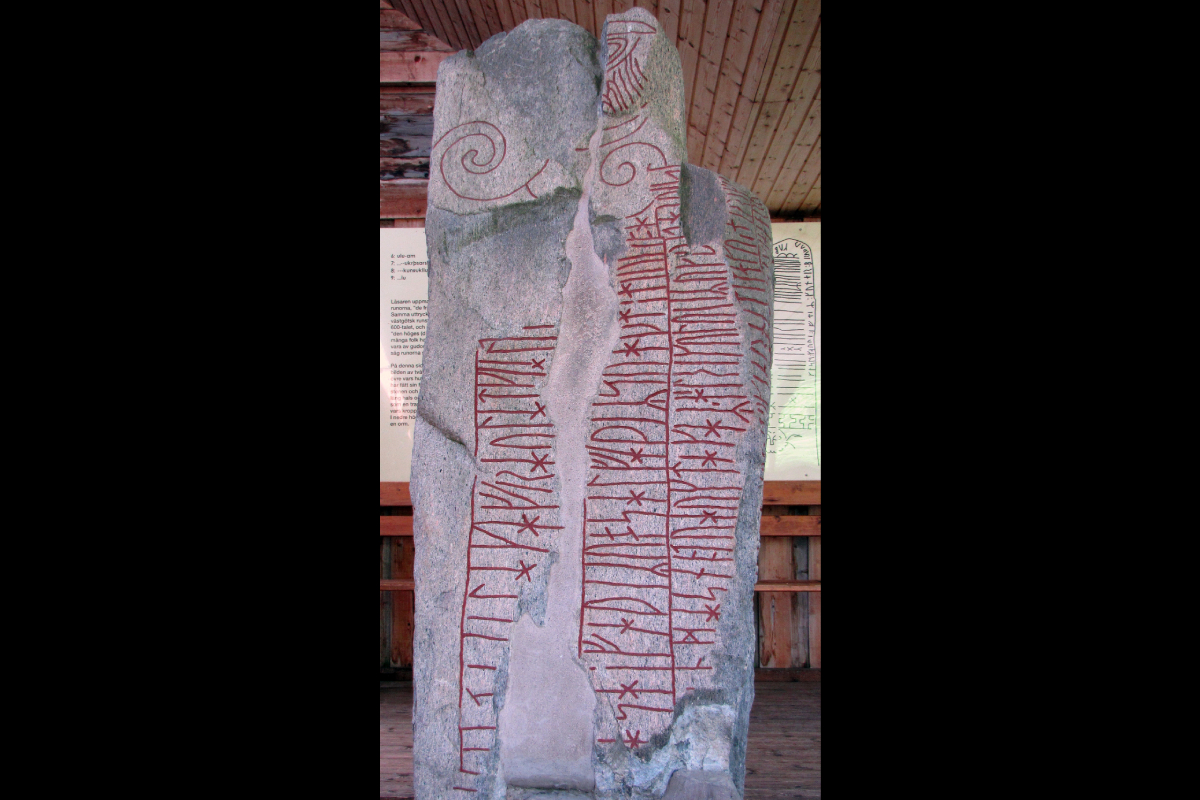
The east side inscription includes Alríkr, Æivisl, a seated father, a possible mention of Uppsala, and the phrase "nights and days." Photo: Rolf Broberg (CC BY-SA 3.0)
Unusual language and links to the Yngling Dynasty
Two features of this runestone set it apart from the roughly 1,700 to 2,500 other runestones found in Sweden. The first deals with the language. Etched on this 1.77-meter (5.8-foot) high slab of granite are several phrases, including:
"Eyvísl(?), Eiríkr's son gave, Alríkr gave..."
"... gave ... as payment. Then(?) the father sat(?) (in) Uppsala(?), the father that ... ... nights and days. Alríkr
feared(?) not Eyvísl(?)."
"that Eiríkr's boy is called Sigmarr/celebrated-for-victories. Mighty battle(?) ... in memory of Eyvísl(?). And interpret the runes of divine origin there..., that Alríkr
coloured."
"Gísli made this monument in memory of Gunnarr, (his) brother."
Historians have concluded that these messages are written in a transitional form of the runes, somewhere between the Elder and Younger Futhark.
The former is the oldest form of the runic alphabet, believed to have died out by about the 8th century CE.
The latter was in widespread use from the 9th century CE onwards after a period of transition, believed to have taken place during the 7th and 8th centuries CE—at the very beginnings of what we now call the Viking Age (c. 750–1100 CE).
Given this language, an approximate date of 800 CE has been given for the erection of this runestone. This was an era when Scandinavia, including Sparlösa, was in transition from smaller chieftainships to early kingdoms.
The use of the names Erik and Alrik is interesting, as they were both royal names associated with the semi-legendary Yngling Dynasty.
Despite this language, there is a mismatch between the written word and the imagery.
Ingemar Nordgren speaks about this in his 2009 article in the journal Pyrenae, and explains how, "the person who ordered the text [perhaps Gísli] seems to have had no idea whatsoever as to the meaning of the pictorial motif on the stone."
This could mean that the images were etched at a later date and the runestone repurposed.
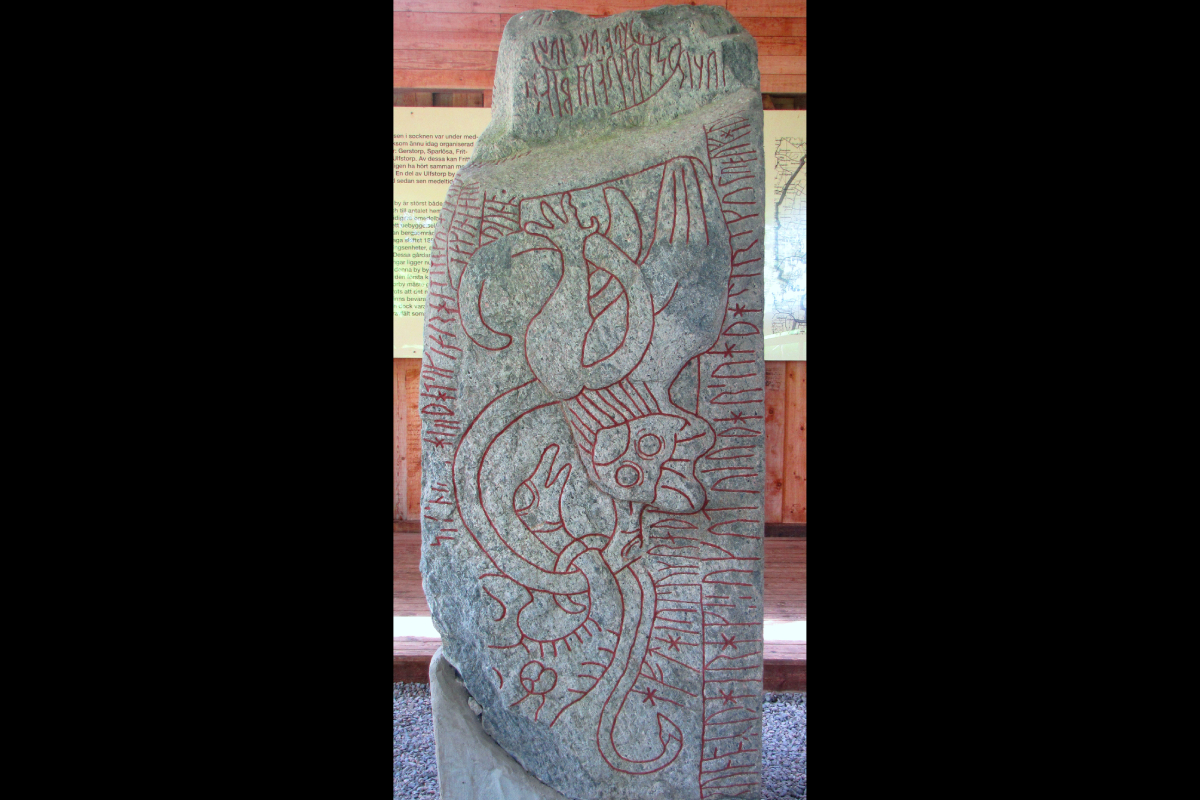
Carved on the north side are the names Sigmarr, Alríkr, Eiríkr, and Æivisl, along with a reference to divine runes. Photo: Rolf Broberg (CC BY-SA 3.0)
Syncretic imagery
It was not just the language of people from Viking societies that was in transition when the Sparlösa runestone was erected, but their beliefs too. Each of the four sides of the runestone has a fascinating mix of images etched upon it, which historians believe speak to a degree of religious syncretism.
Whilst Christianity would not gain official supremacy in Sweden until the latter stages of the early medieval period, the religion was introduced around the time the runestone was erected.
The oldest church in Sweden is believed to have been built in Birka during the 830s CE, but this new religion had likely been circulating among Viking societies in the decades before.
There are what historians believe to be several references to Arian Christianity—one of the many strands of Christianity that was evident in the early medieval period and particularly championed by the great Ostrogothic leader, Theodoric the Great.
The Ostrogoths (eastern Goths) were traditionally said to originate in what is now eastern Sweden, but historians are skeptical of this exact location for their origin.
Some of the symbols appear to show a degree of religious and spiritual syncretism between the old Norse beliefs and the newly imported Christian religion.
These include a goose fighting a snake (the snake is both a very Viking creature—think the great world serpent Jörmungandr—and a very Christian one—an animalistic depiction of Satan), as well as a man hunting a stag using a leopard, and a crescent ship marked with a cross, with two birds (probably peacocks) on its rigging.
The cross and peacocks are early Christian symbols, referring respectively to the crucifixion of Jesus Christ and to immortality in Christian belief.
Whilst the introduction of Christianity saw the Latin alphabet imported into Viking societies, the Futhark written script, as Einar Haugen explains in his 1991 article in the journal History of European Ideas, "persisted as a medium for native Scandinavian writings well into the Middle Ages."
This intriguing blend of old and new religious symbols—of homegrown faiths and imported ones—shows how the Sparlösa runestone speaks to a society very much in the early days of religious change.
This centuries-long process would ultimately see Christianity gain supremacy, with the Old Norse religion largely extinguished by the time the last Viking ship set sail.
A culture at the crossroads
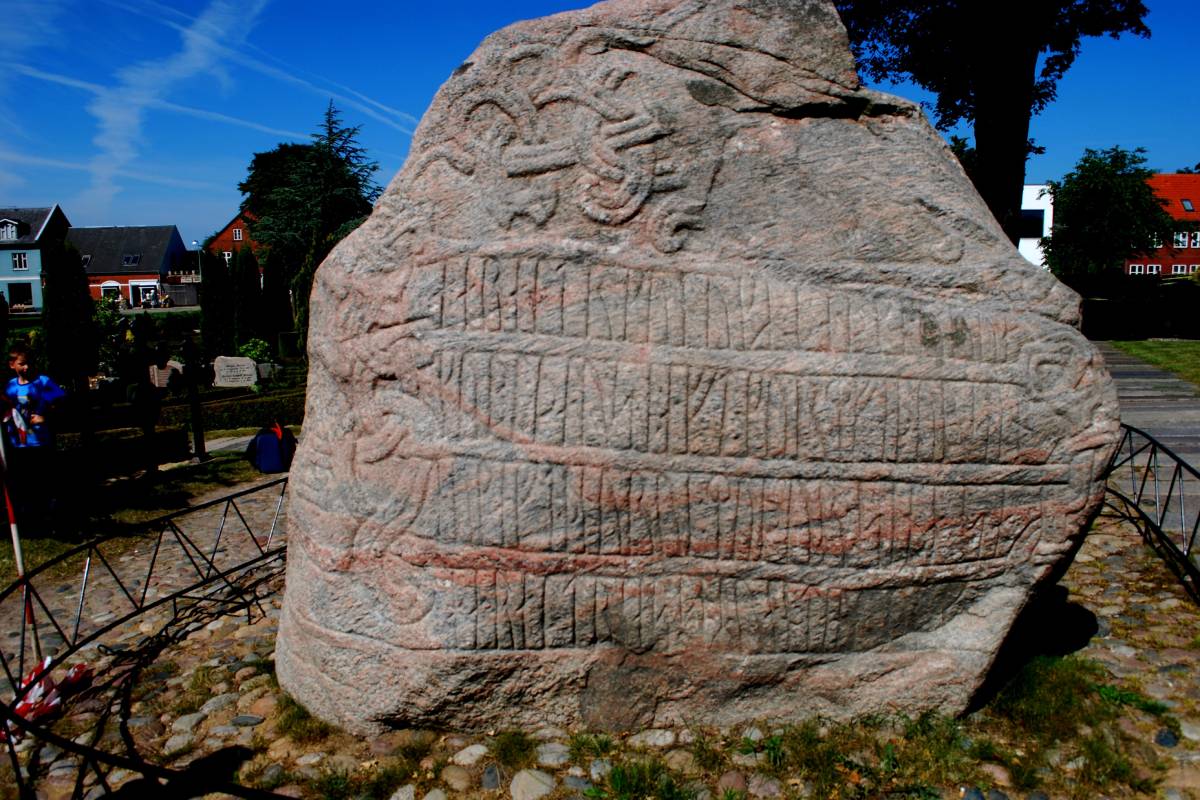
Whilst other runestones—like the ones erected in Jelling, Denmark—may get all the popular attention and spotlight, we feel it is time that the Sparlösa runestone got some time in the sun.
This runestone speaks to the cultural, linguistic, and religious crossroads that Viking societies were at during the 9th century CE. Its striking imagery and unique use of language mark it as one of the most important, yet underappreciated, artifacts bequeathed to us from the early medieval period in Sweden.
For more information on a recent "runestone discovery" in Canada, visit The New York Times here.
We get to provide readers with original coverage thanks to our loyal supporters. Do you enjoy our work? You can become a PATRON here or via our Patreon page. You'll get access to exclusive content and early access.
Feel free to reach out to discuss potential stories that may be in the public interest. You can reach us via email at hello@thevikingherald.com with the understanding that the information you provide might be used in our reporting and stories.