

This autumn, archeologists working on the Swedish island of Björkö are hoping to prove they have found the remains of a Viking Age site where Frankish archbishop St. Ansgar built a church in the 9th century.
Though St. Ansgar's building is believed to be Sweden's oldest church, its true location has never been confirmed.
A major historical site
Björkö island, located in Lake Mälaren around 15 kilometers from Stockholm, is home to the Birka archeological site.
Often referred to as Sweden's first-ever town, Birka was a major Viking Age trading hub from approximately 750 to 980 CE. At its height, Birka became one of the most important towns in Northern Europe, with goods flowing through it from all over Scandinavia, the Balkans, and the Arab world.
Birka's demise came at the end of the 10th century, probably through a series of raids and brutal attacks that led to its eventual collapse. For hundreds of years, it appeared lost to posterity.
In the late 19th century, however, archeologist Hjalmar Stolpe unearthed evidence of a major settlement on the island of Björkö.
Over the next century or so, a series of investigations revealed a wide array of finds, including Viking Age jewelry, Arabic coins, and Norse graves, including one thought to have belonged to a female Viking warrior.
Today, the island is a UNESCO World Heritage Site—together with the nearby Hovgården—and also a popular tourist attraction, with an on-site museum, visitor center, and replica Viking houses.
- READ MORE: The rise and fall of Birka

A scale model at the Swedish History Museum in Stockholm shows Birka at its height in the Viking Age. Photo: Bingar1234 (CC BY-SA 4.0)
The archbishop's church
Until now, however, one particularly notable find has eluded researchers—Ansgar's Church. Saint Ansgar was the archbishop of Hamburg-Bremen under the Kingdom of the East Franks in the 9th century.
According to the Vita Anskarii, a hagiography of Ansgar written by Rimbert, his successor as archbishop, Ansgar made two journeys to visit Birka and help spread the word of the Christian God.
Although Sweden was considered a pagan stronghold at this time, Ansgar, who was known as "the Apostle of the North," succeeded in establishing a group of missionaries on the island in 829.
The town soon became the center of Catholic missionary activities in Sweden, and Ansgar returned to Birka in approximately 852 to inspect its progress. In modern times, however, archeologists have been unable to confirm the presence of a building from this period at Birka that resembles an early Christian church.
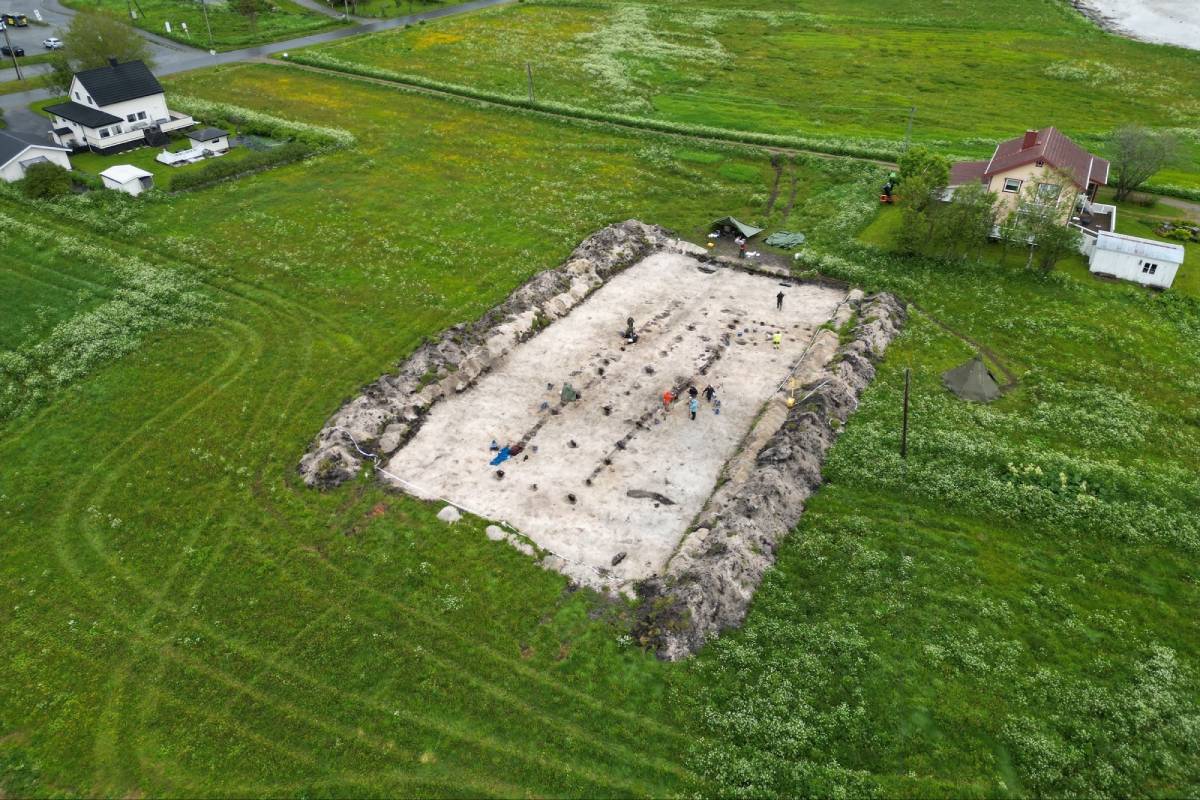
Yet in 2016, two researchers, Johan Runer and Sven Kalmring, used ground-penetrating radar to investigate a site that revealed traces of a 40-meter-long Viking Age hall and two older buildings.
In 2023, the two archeologists returned to measure the level of phosphates in the soil at the site. They found exceptionally high values, suggesting that the building was used intensely for an extended period of time.
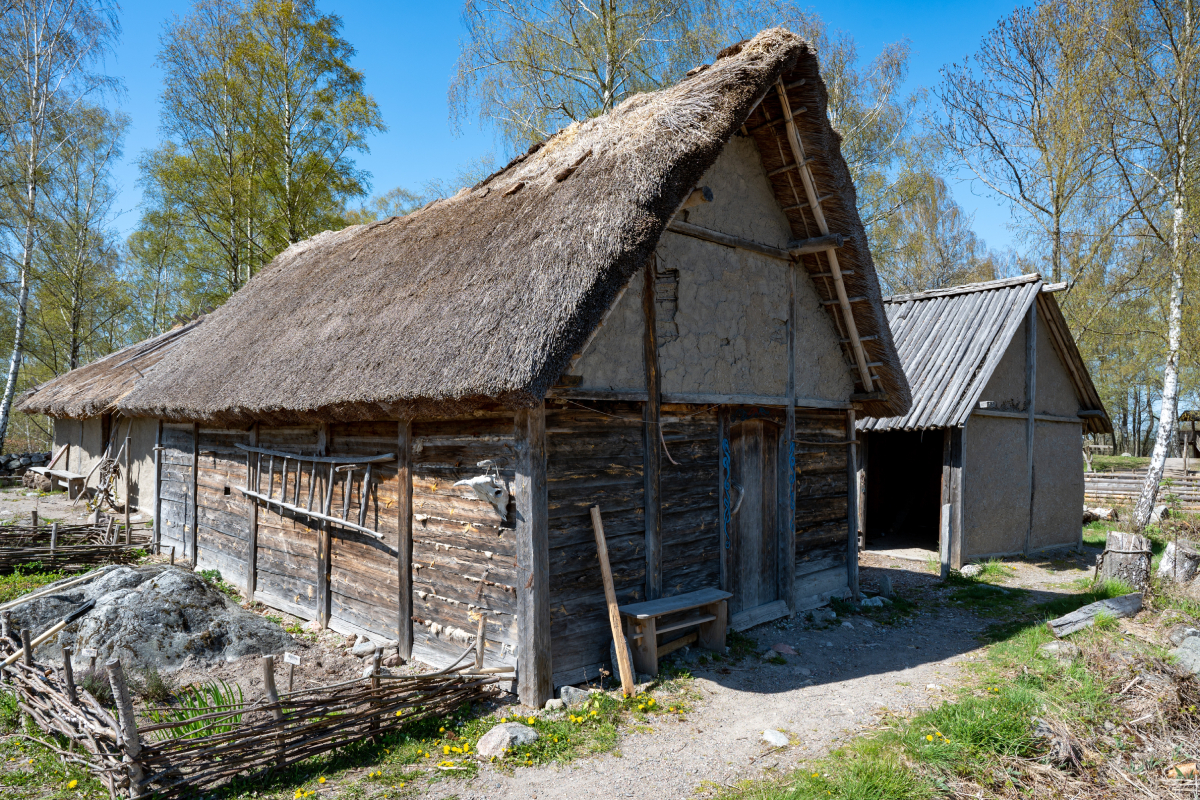
Today, the Birka site includes reconstructed Viking houses, a small museum, and walking paths across the ancient settlement area. Photo: Stemp21 / Shutterstock
A promising lead
Runer and Kalmring have theorized that the larger building is a Viking Age hall that was part of a manor farm. Similar buildings found elsewhere in Scandinavia have been shown to be connected to a "cult house," where pagan rituals were carried out.
The two archeologists believe that the manor farm belonged to the resident bailiff and that the cult house was likely demolished to make way for the church.
The connection to St. Ansgar, however, has not yet been proved, and some experts have suggested alternative sites on Björkö for the location of his church.
To more fully establish the link, Runer and Kalmring are now planning further excavations. The two archeologists are also collaborating with archeologists at the Swedish National Historical Museums to analyze soil samples and try to determine the function of the site.
It should be noted that at this point there is no guarantee that a conclusive answer will be found.
Nevertheless, it is hoped the investigations will at least reveal more about the suspected manor farm and its possible role at Birka. In turn, this could also provide further clues as to the whereabouts of the long-lost church.
We get to provide readers with original coverage thanks to our loyal supporters. Do you enjoy our work? You can become a PATRON here or via our Patreon page. You'll get access to exclusive content and early access.
Feel free to reach out to discuss potential stories that may be in the public interest. You can reach us via email at hello@thevikingherald.com with the understanding that the information you provide might be used in our reporting and stories.