

A new interpretation of a runic inscription from the Galloway Hoard indicates the treasure may have belonged to an entire community rather than a single individual.
The breakthrough on the inscription came after careful analysis by a team from National Museums Scotland (NMS) and offers a new perspective on the issue of ownership in Viking Age Scotland.
The long-standing enigma
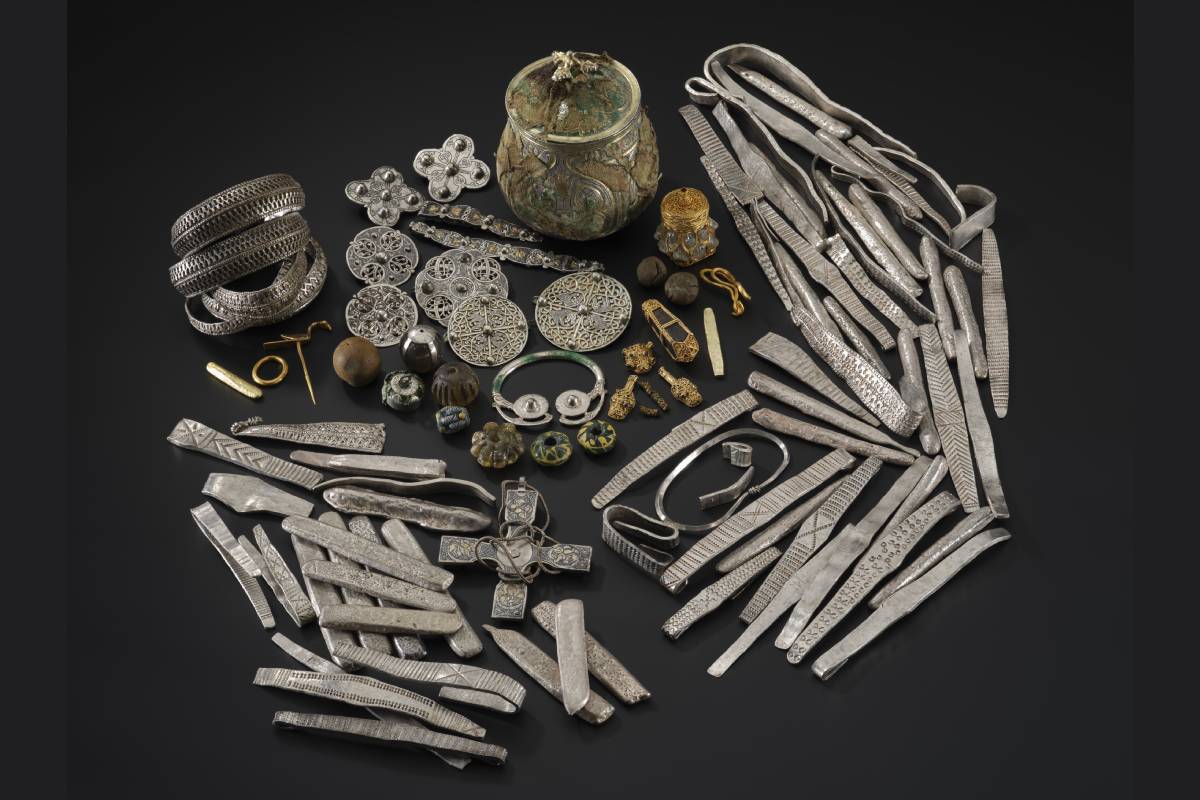
Found close to the village of Balmaghie in south-west Scotland, the Galloway Hoard is one of the most valuable Viking Age collections ever identified in the British Isles.
The hoard, dated to approximately 900, contained more than five kilograms of precious metals alongside various silks and textiles.
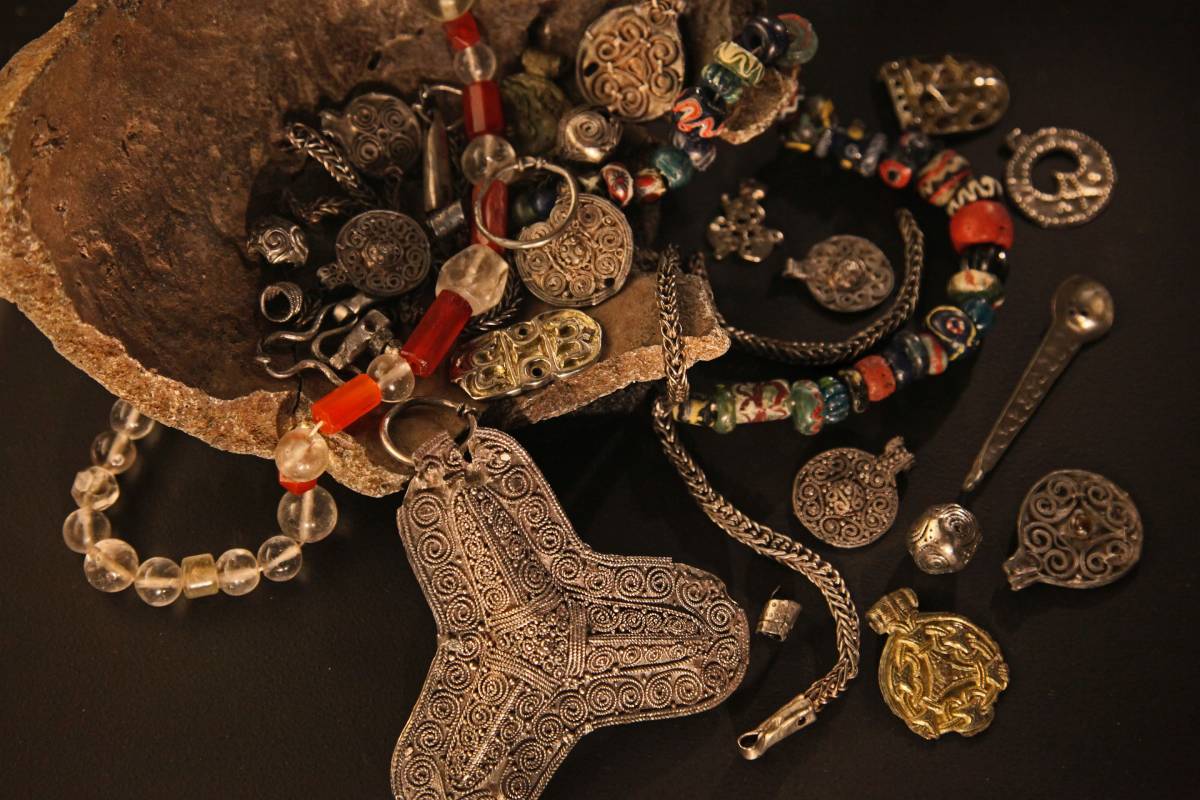
Diverse in origin, it includes artifacts from Anglo-Saxon England, Ireland, and Scandinavia, as well as an ornate lidded vessel thought to derive from the Sasanian Dynasty in Iran.
The collection also contains several silver arm rings – a popular form of jewelry in both Viking Age Britain and Scandinavia – bearing runic inscriptions in Old English.
While some of the inscriptions appear to bear the name of the owner, the longest inscription – found on the largest and heaviest arm ring in the hoard – has proved extremely difficult to decipher.
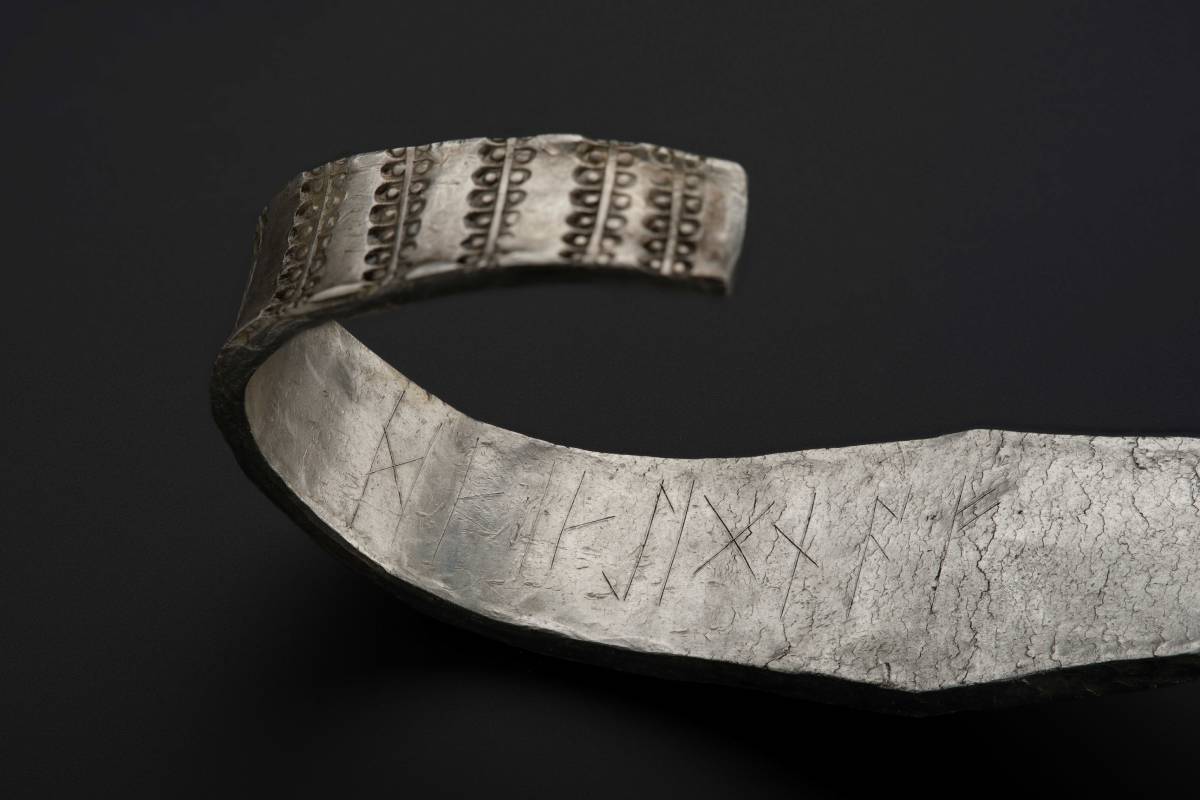
The largest arm ring in the Galloway Hoard bears a runic inscription now translated as "This is the community's wealth." Source: National Museums Scotland
The solution to the riddle?
Although the inscription was written in Anglo-Saxon runes, the sequence of runes is extremely unusual in that context.
It appears to conclude with the runic symbol "ɨ," followed by "i," yet "ɨ" is almost never used at the start of a word, especially if followed by another vowel.
The team achieved an important breakthrough when, after placing the arm ring under the microscope, they could identify centrally placed dots, known as puncts.
These dots are known to have been used in medieval manuscripts to indicate either an abbreviation or a single rune.
In this case, it would be the F-rune, "feoh," a word that can mean "wealth" or "property." This has led to a new interpretation of the inscription as a whole:
þis is higna feoh
"This is the community's wealth/property."
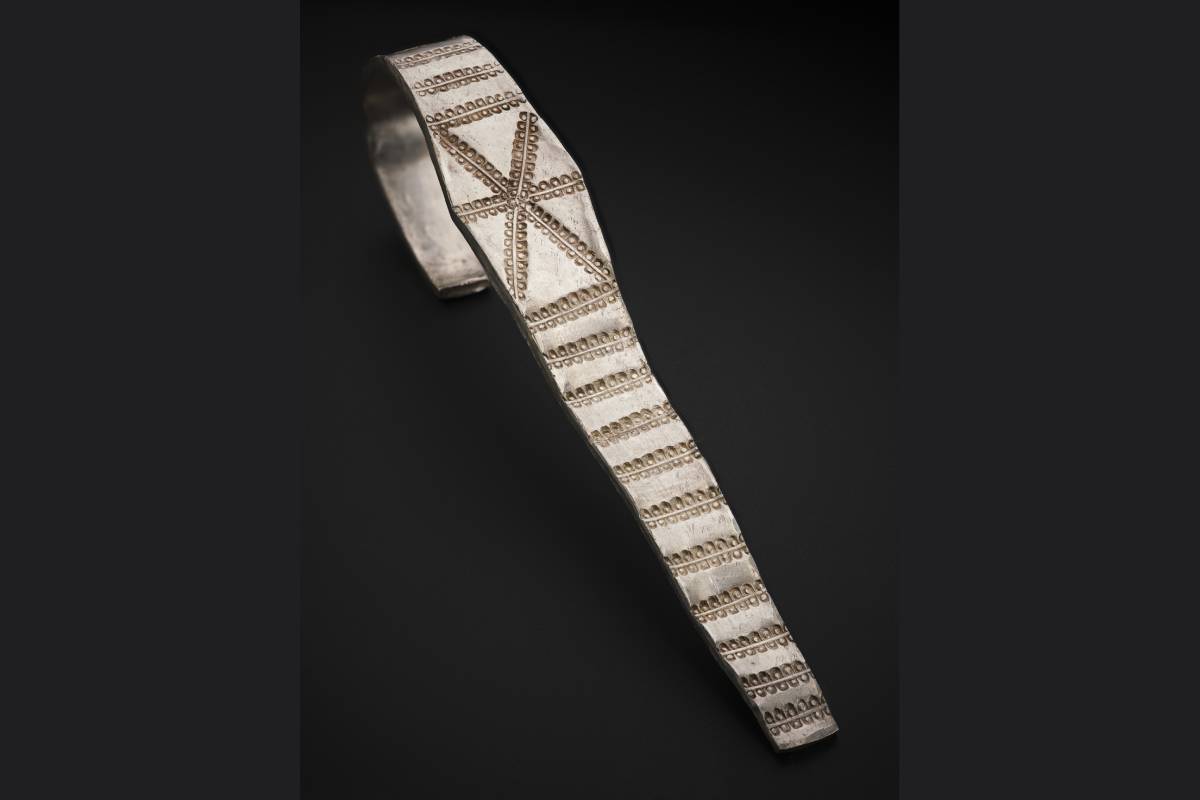
The largest arm ring in the Galloway Hoard is also the only one with a Hiberno-Norse stamped design, suggesting special significance. Source: National Museums Scotland
A treasure shared
Many Viking Age treasures are assumed to have been in the possession of a powerful local chieftain or ruler.
On the other hand, this interpretation suggests that either the arm ring itself or the Galloway Hoard may have belonged to a larger group.
Not only is it the largest in the collection, but the arm ring is also the only one decorated with a Hiberno-Norse stamped ornament, indicating it may have had additional symbolic importance.
"This is another really interesting and significant development in our understanding of the Galloway Hoard," commented Martin Goldberg from National Museums Scotland in a recent press release.
"The idea that the wealth this hoard represents would be communally held is fascinating."
"It still leaves us with unanswered questions about the circumstances in which a community's wealth would come to be buried, as well as which particular community," Goldberg added.
"Some material within the hoard, such as the pectoral cross and the rock crystal jar made for a Bishop Hyguald, would support this being a religious community."
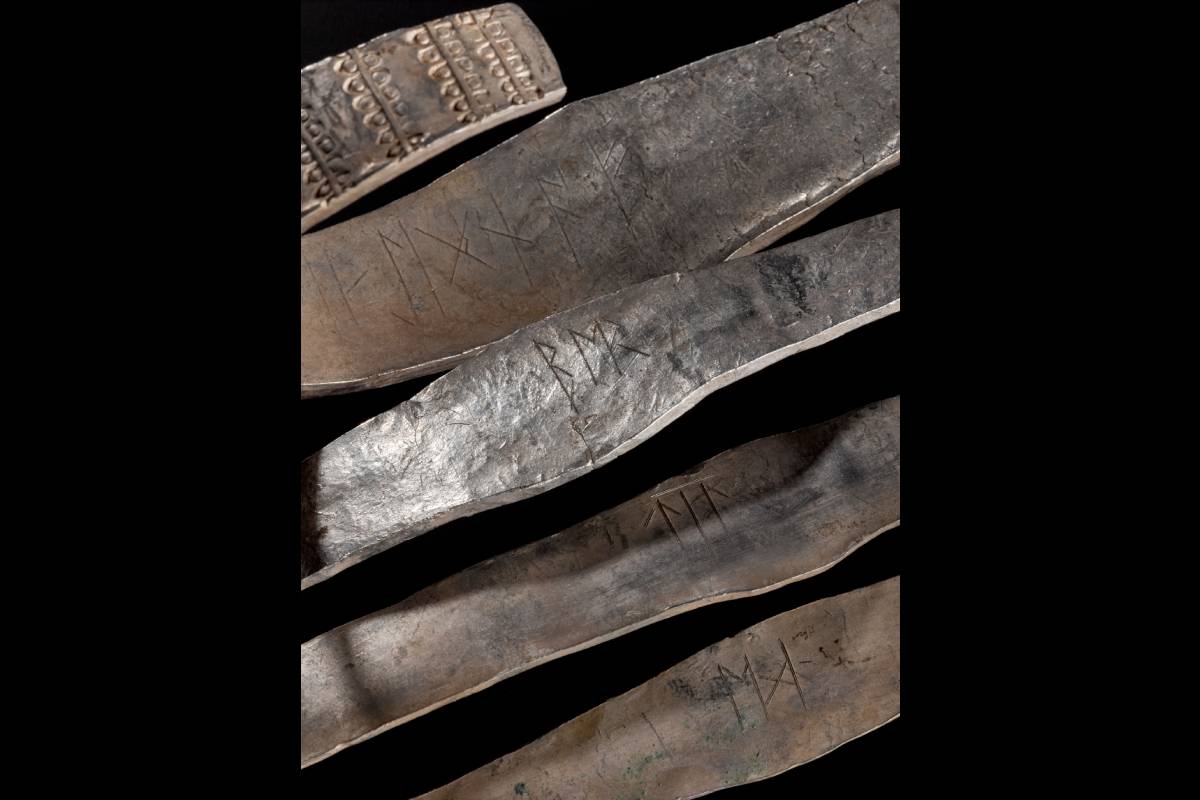
Translating the inscription was challenging, but scholars consider the new reading plausible. Source: National Museums Scotland
A compelling interpretation
In the same report, runologist Dr. David Parsons of the University of Wales indicates that this interpretation of the inscription is the most convincing explanation to date.
"This is a difficult and unusual inscription, and the proposed translation is challenging," he commented.
"There are a number of things that are technically 'wrong' when we compare them with what we know about 'correct' runic writing."
"However, if we think about both spoken and written English today, there is a huge range of regional and idiomatic variations, and if we allow for this, then it becomes possible to accept this as a plausible reading."
"In the context of what can be deduced about the Galloway Hoard, it becomes quite compelling."
The new findings are presented as the three-year research project Unwrapping the Galloway Hoard comes to an end.
It is hoped, however, that the team behind the project will have more opportunities in the future to explore the origins of the collection.
In the meantime, the Galloway Hoard can now be seen on display in Adelaide, Australia, from February 8, 2025 – the first time the collection has left the United Kingdom.
We get to provide readers with original coverage thanks to our loyal supporters. Do you enjoy our work? You can become a PATRON here or via our Patreon page. You'll get access to exclusive content and early access.
Feel free to reach out to discuss potential stories that may be in the public interest. You can reach us via email at hello@thevikingherald.com with the understanding that the information you provide might be used in our reporting and stories.