

National Museums Scotland has confirmed that one of the prized artifacts from the famous Galloway Hoard was likely produced in central Iran.
The announcement comes after the completion of a thorough cleaning process and expert scientific analysis of the lidded vessel.
The organization also confirmed that the artifact will soon be on display in a unique exhibition at the British Museum in London.
Laser cleaning reveals exotic animals
The vessel was found wrapped in textiles when the Galloway Hoard was first unearthed in 2014.
Though the item was clearly of significance, its condition had naturally deteriorated over time, and its origin remained unclear.
Now, ten years after the initial discovery, National Museums Scotland (NMS) has published striking photos and further details of the artifact.
Speaking to the NMS website, Dr. Martin Goldberg commented, "Where the surface of the vessel had previously only been viewed through X-ray scans, laser cleaning has helped to reveal further details of the design, including crowns, fire altars, leopards, and tigers."
"This remarkable imagery is unusual in Western Europe and suggests an association with the iconography of Zoroastrianism."
"This was the state religion of the Sasanian Empire, the last Iranian empire before the early Muslim conquests of the 7th–8th centuries AD."
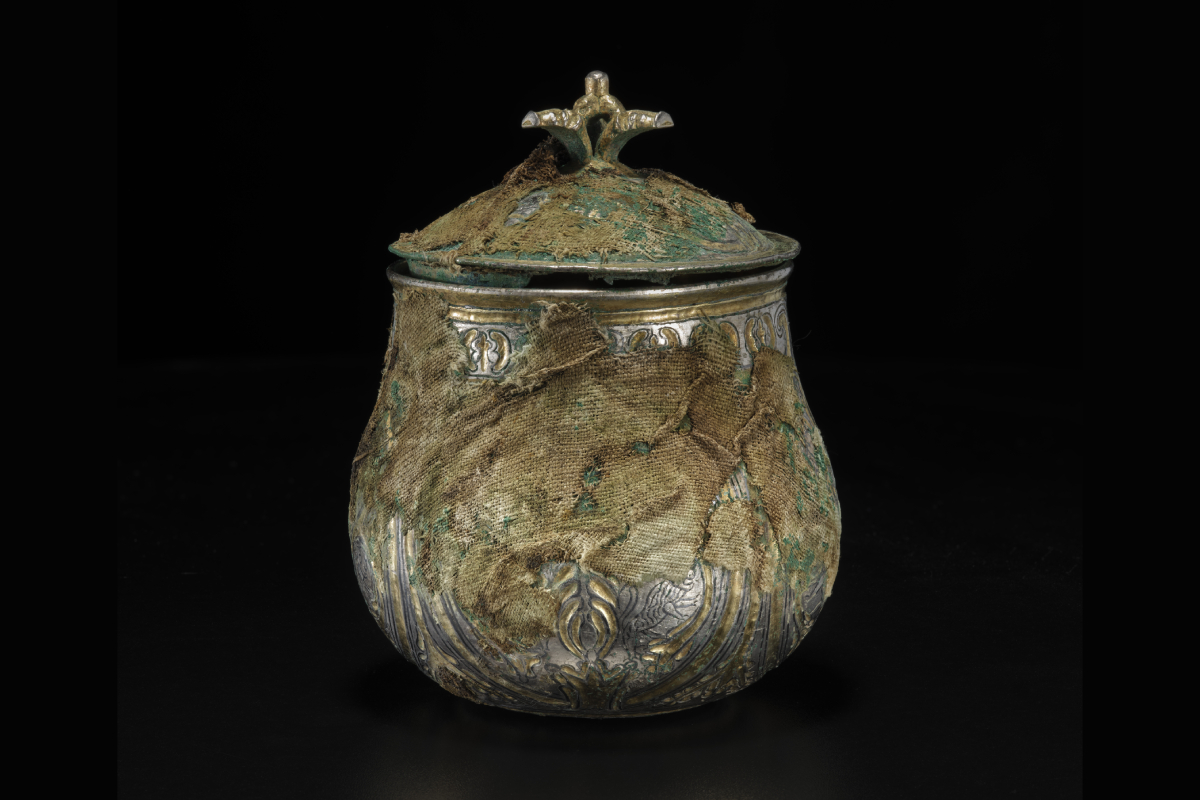
When the Galloway Hoard was discovered in 2014, the vessel was wrapped in textiles, obscuring its origins for years. Source: National Museums Scotland
Scientific analysis confirms origin
Further scientific analysis has also confirmed that the materials used to make the vessel originated in Iran.
"Taking tiny samples from both the vessel body and the niello – the black silver-sulfide inlays that outline the decoration – we assessed the provenance of the silver," Dr. Jane Kershaw, an expert on silver from the Viking Age at the University of Oxford, commented, also on the NMS website.
"It was immediately clear that the vessel was unlike any other silver contained in the hoard," Dr. Kershaw added.
"Instead, the results point to origins in the Sasanian Empire, what is today Iran. We can even go so far as to say that the niello derives from the famous mine of Nakhlak in central Iran."
"It's fantastic to have scientific confirmation for the distant origins of this remarkable object."
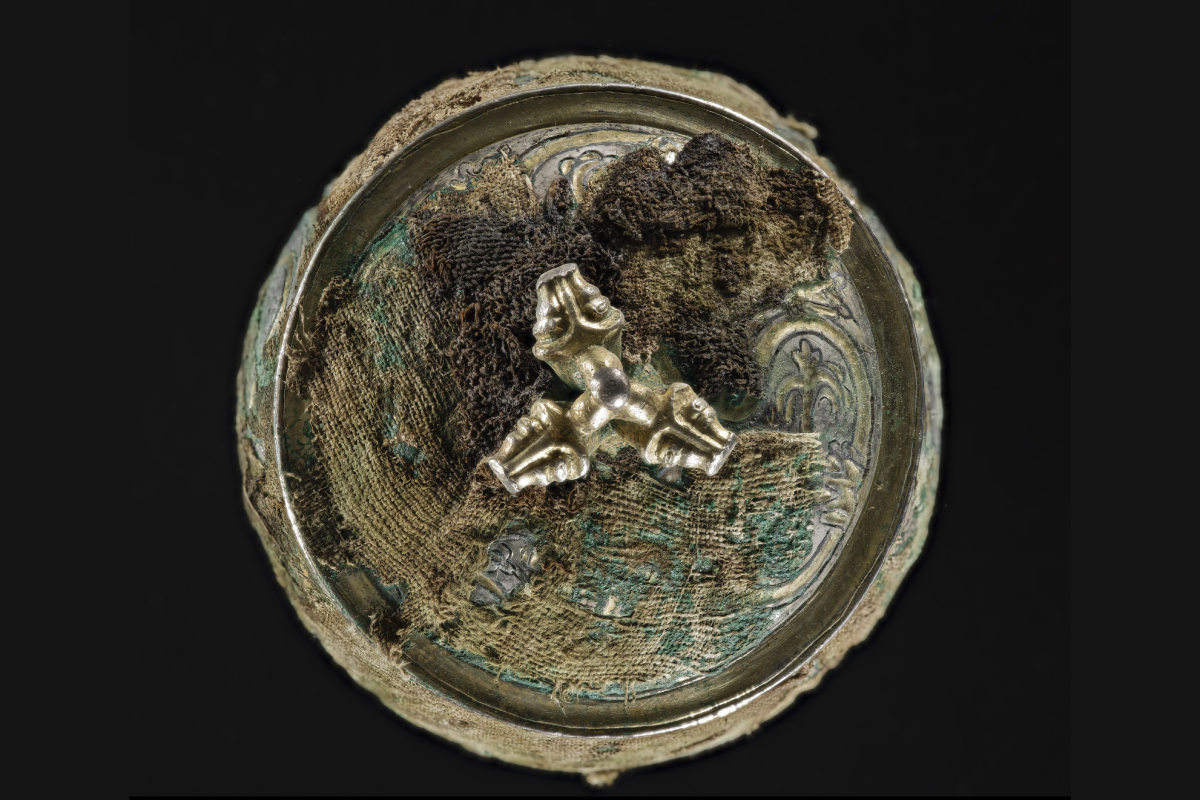
The iconography on the vessel suggests a connection to Zoroastrianism, the state religion of the Sasanian Empire. Source: National Museums Scotland
A "cosmopolitan make-up"
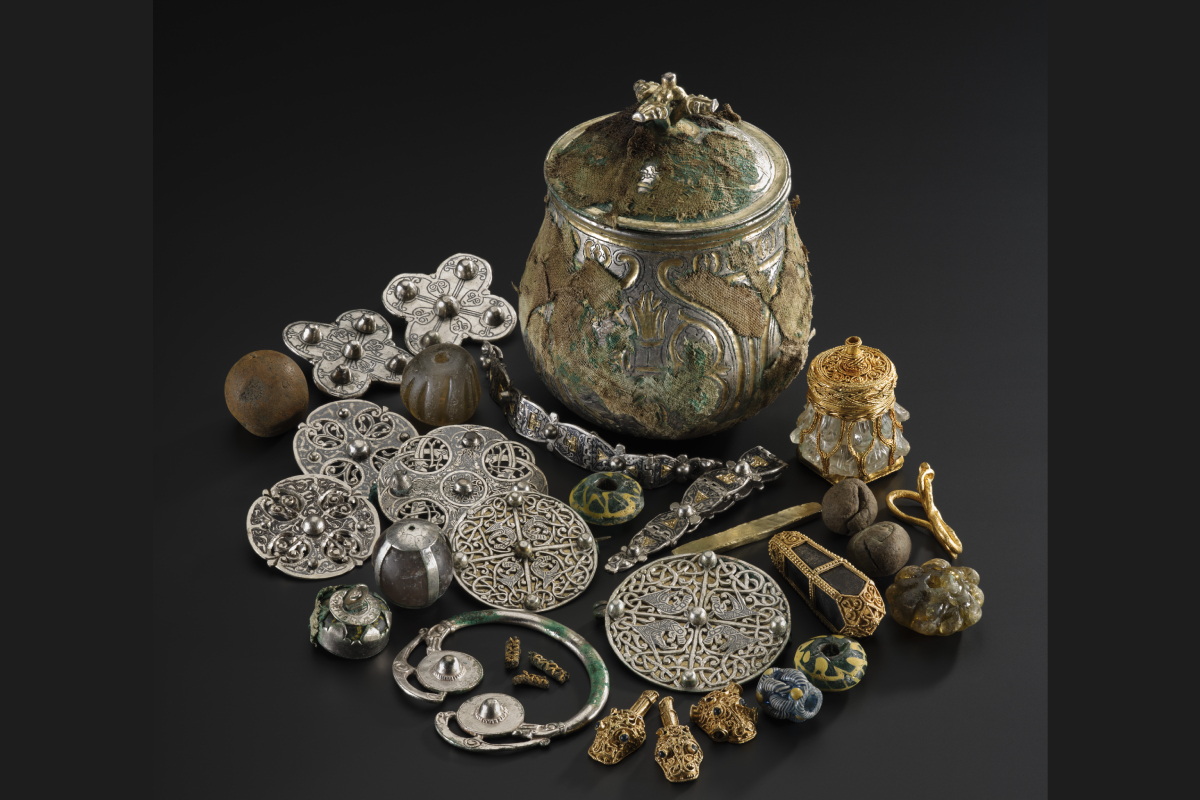
The Galloway Hoard, discovered in 2014 by metal detectorists near the Scottish parish of Balmaghie, contains a notable collection of artifacts, including a bird-shaped pin, a solid gold ingot, silver jewelry, and several other items featuring runic inscriptions.
Although the provenance of the hoard is unknown, it is believed to have been buried around the year 900, when Vikings ruled large swathes of Scotland.
Many of the pieces in the hoard have been found to originate from coins and metalwork from early medieval England that had been melted down.
The vessel, on the other hand, provides an indication of the wider trade routes of the Viking Age.
"It's further evidence of the cosmopolitan make-up of the Galloway Hoard," states Dr. Martin Goldberg.
"Some objects, like the lidded vessel, stood out from the rest, and the scientific analysis now confirms this."
"It is incredible to imagine how the vessel made its journey halfway around the known world, from Iran to this distant corner of southwest Scotland."
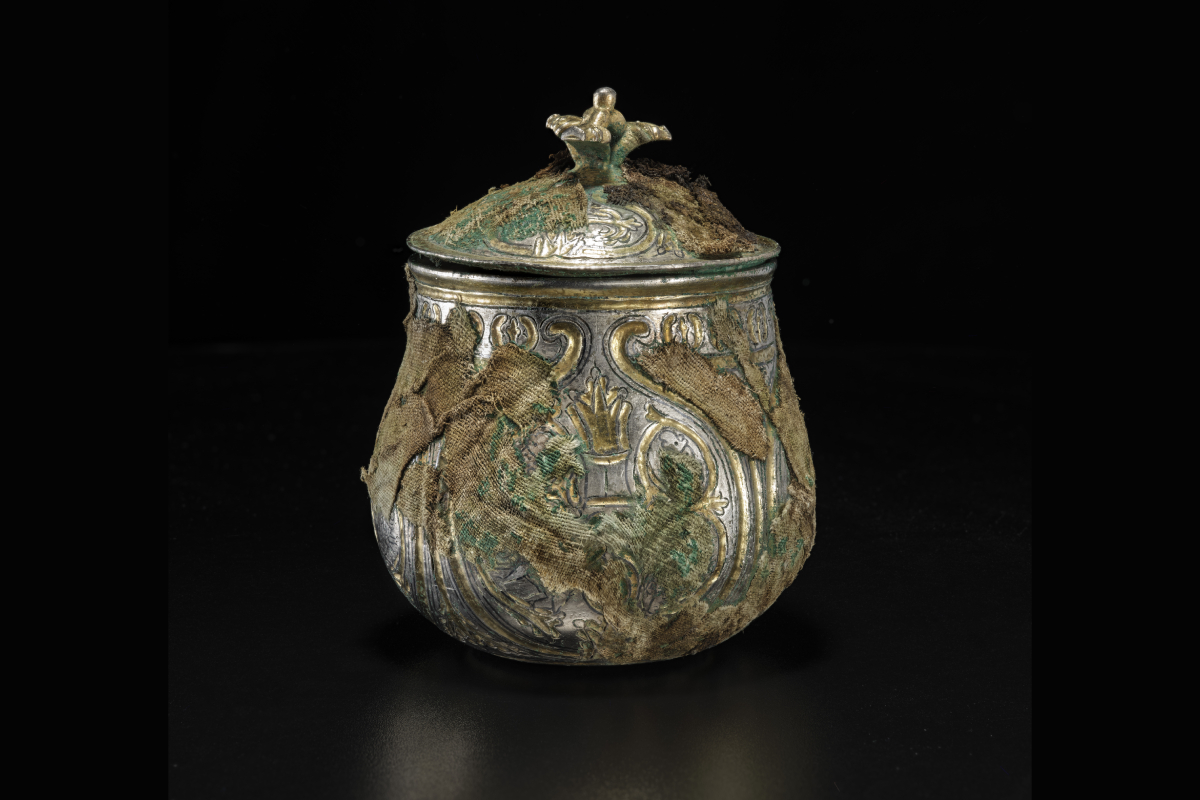
The vessel will soon be showcased at the British Museum as part of an exhibition highlighting ancient trade routes. Source: National Museums Scotland
Ready for viewing
The vessel will go on display for the first time later this month as part of Silk Roads, an upcoming exhibition at the British Museum in London.
The exhibition, which will open on September 26, 2024, and run until February 23, 2025, will explore the ancient trade routes that stretched throughout Europe, Asia, and beyond, from Ireland to China.
"We're delighted that visitors to Silk Roads will be the first in the world to see this key object from the Galloway Hoard," commented Dr. Sue Brunning from the British Museum, speaking to National Museums Scotland.
"Among its remarkable contents was Scotland's earliest recorded silk, making it a highly appropriate inclusion in the exhibition. It was, itself, a long-distance traveler on the Silk Roads' sprawling networks."
We get to provide readers with original coverage thanks to our loyal supporters. Do you enjoy our work? You can become a PATRON here or via our Patreon page. You'll get access to exclusive content and early access.
Feel free to reach out to discuss potential stories that may be in the public interest. You can reach us via email at hello@thevikingherald.com with the understanding that the information you provide might be used in our reporting and stories.