


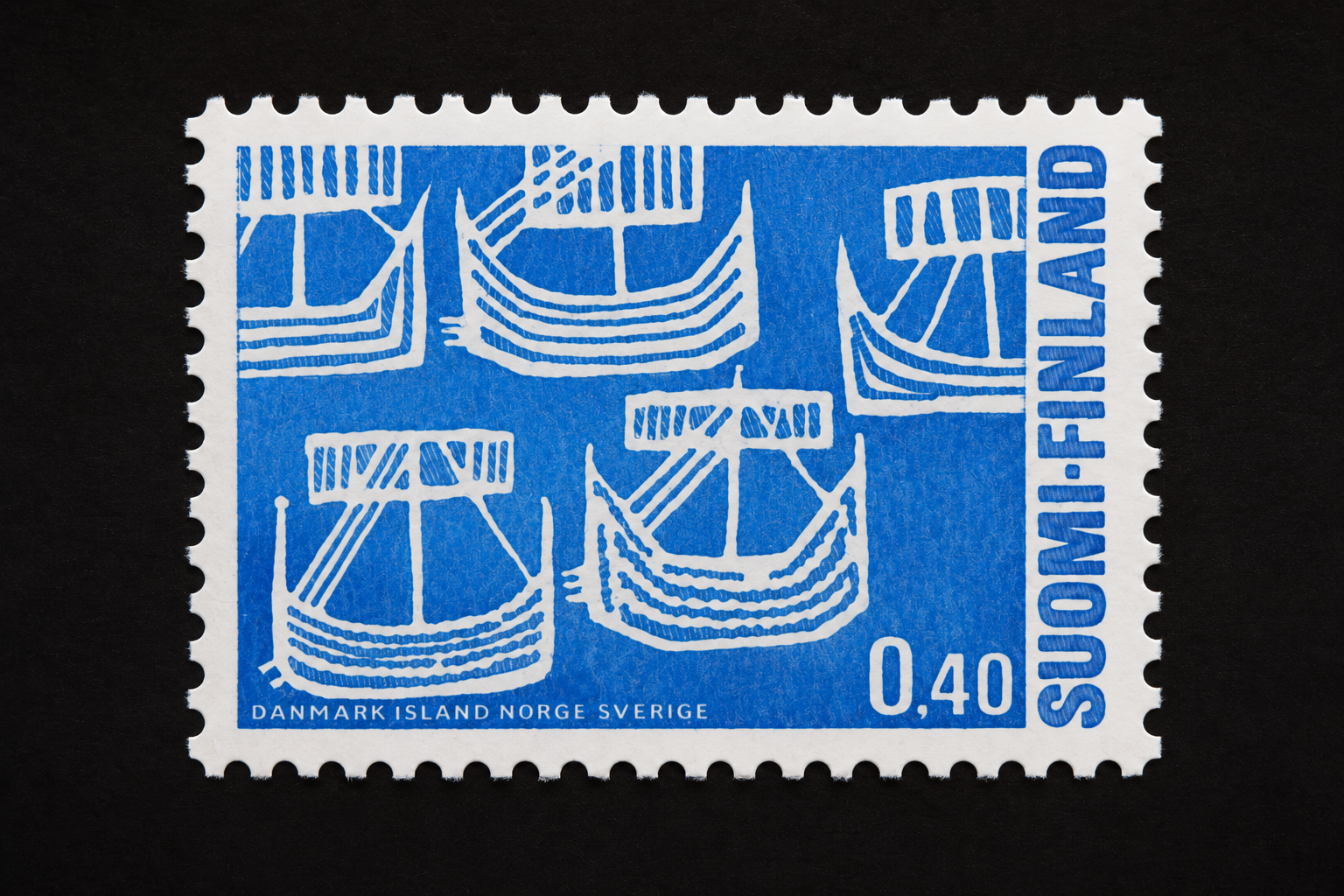
Anyone watching the current FIFA Football (sorry, "soccer" for our North American friends) World Cup has witnessed the cheeky "Viking row" of the Norwegian supporters. Here, instead of a "Mexican wave," scores of Norwegian supporters mimic the rowing action that saw many a Viking ship crisscross oceans, rivers, and seas during the early medieval period.
Any sporting game that features Norway, or its two Scandinavian neighbors, Denmark and Sweden, will see hordes (pun intended) of supporters don Viking horned helmets in a nod to their shared heritage (whilst they may be fun, they are not, as we know, historically accurate, but who are we to be party poopers?)
However, the Viking Age was never confined to the territories of modern Denmark, Norway, and Sweden. Across the eastern border from Sweden lies the Nordic nation of Finland, which, when it comes to Viking history, often gets ignored or overlooked when compared to its Nordic neighbors farther west.
Why is that, though? Why is it that the Vikings get associated with western Nordic countries and not with Finland, which shares a border with Norway and Sweden?
Well, we know that, unlike their western neighbors, Finland did not have a distinct Viking kingdom; huge parts were culturally, ethnically, and linguistically different from nearby Scandinavian communities, and Finland had no medieval champion, like Snorri Sturluson, to champion its history.
OK, so setting aside Finland's have-nots, let us look at what Finland did have during the Viking Age. We turn first to commerce and trade.
Sailing east
The raids and military expeditions of the Vikings have echoed down through the ages. A Viking raid on an isolated North Sea monastery left such an imprint on posterity that it has often been treated as the beginning of an entire age. Far less bloody, but more profitable, were the commercial exploits of people from Viking societies.
Turning to the globe, we can see that the Baltic Sea laps onto Finnish shores. In an era before cars, planes, and trains, the fastest way to ship goods or people was on water, and the Baltic Sea became the highway for Northern Europe.
Sailors from Denmark, Norway, or Sweden who traveled east used the Baltic Sea and had to navigate the waters around what is now Finland and the Åland Islands. We know that Scandinavian seafarers traveled eastward through Baltic networks that included Finland and Åland.
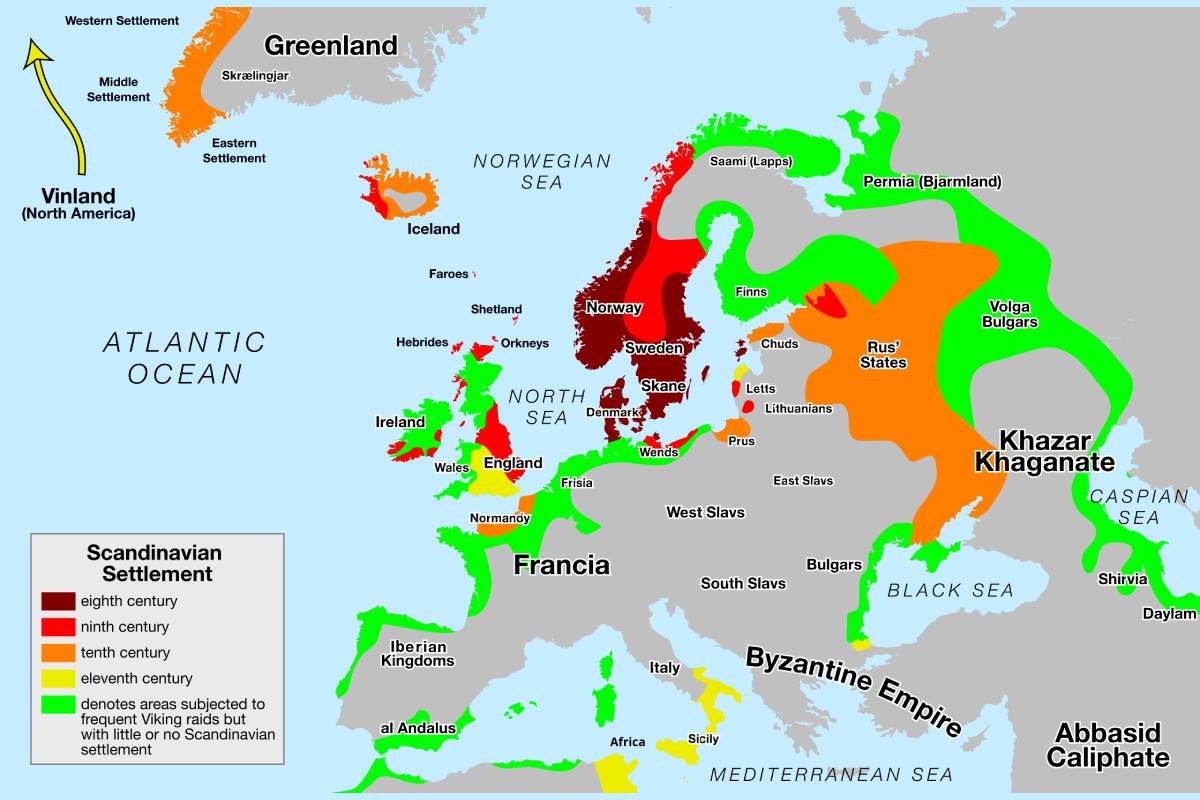
Viking and later Norman expansion across Europe, with contacts extending into areas inhabited by Finns, Sámi, and other groups. Source: Max Naylor
Strategic commercial position
Whilst they may have first come as merchants and traders, people from Viking societies soon realized the strategic importance of Finland.
Think of Finland as a sort of stopping point between Scandinavia and the further eastern settlements that popped up during the early medieval period, like Staraya Ladoga, Novgorod, and, further south, Kyiv. The Finnish coast and Åland formed part of wider Baltic networks that linked Scandinavia with Ladoga and the river routes of eastern Europe.
Finland's strategic position linked local communities to Baltic trade routes that led farther east toward the Byzantine and Islamic worlds. A scattering of islands in the Baltic that are now Finnish was once the lucrative epicenter of Finland's Viking history.
The Åland Islands: A Viking hub
Wanting to get our hands dirty now, we zoom out from the strategic view to examine the archeological evidence. The Åland Islands, now an autonomous part of Finland, consist of more than 6,000 islands between Sweden and Finland.
In recent years, there has been a wealth of archeological discoveries that have helped us to understand these islands as a hive of Viking activity during the early medieval period. As Sami Raninen and Anna Wessman write in their chapter in the 2014 book, Fibula, Fabula, Fact: The Viking Age in Finland, the archeological record is heavy, as there are "...over 400 mound cemeteries and 175 building foundations dating to AD 500–1300..." found throughout these islands.
On the island of Saltvik, archeologists have uncovered a major Late Iron Age cemetery complex, including burial mounds with weapons and jewelry.
In 2014, archeologists identified the remains of a monumental Late Iron Age longhouse at Kvarnbo. The structure bears many similarities to the great Viking halls uncovered further west, including the famous one in Lejre, Denmark.
Jomala, on the main island of Åland, was one of several important settlement areas in Viking-era Åland. Here, the island has truly embraced its rich Viking past. Aside from more Viking-era grave sites, there is a medieval church with a Viking twist. Whilst this church dates back to the 13th century CE, making it one of Finland's oldest, it is named after the patron saint of these islands, who is also none other than the patron saint of Norway and former Viking king Olaf II.
Finally, there are several communal facilities that are named after early medieval Europe's most feared warriors, including Vikingahallen, a sports hall, and Vikingagården, a community hall.
The archeological discoveries on the islands seem to point to the fact that there may have been a local Viking elite that exploited the islands' strategic position for commerce and trade throughout the early medieval period.
- READ MORE: The Viking history of the Baltic region
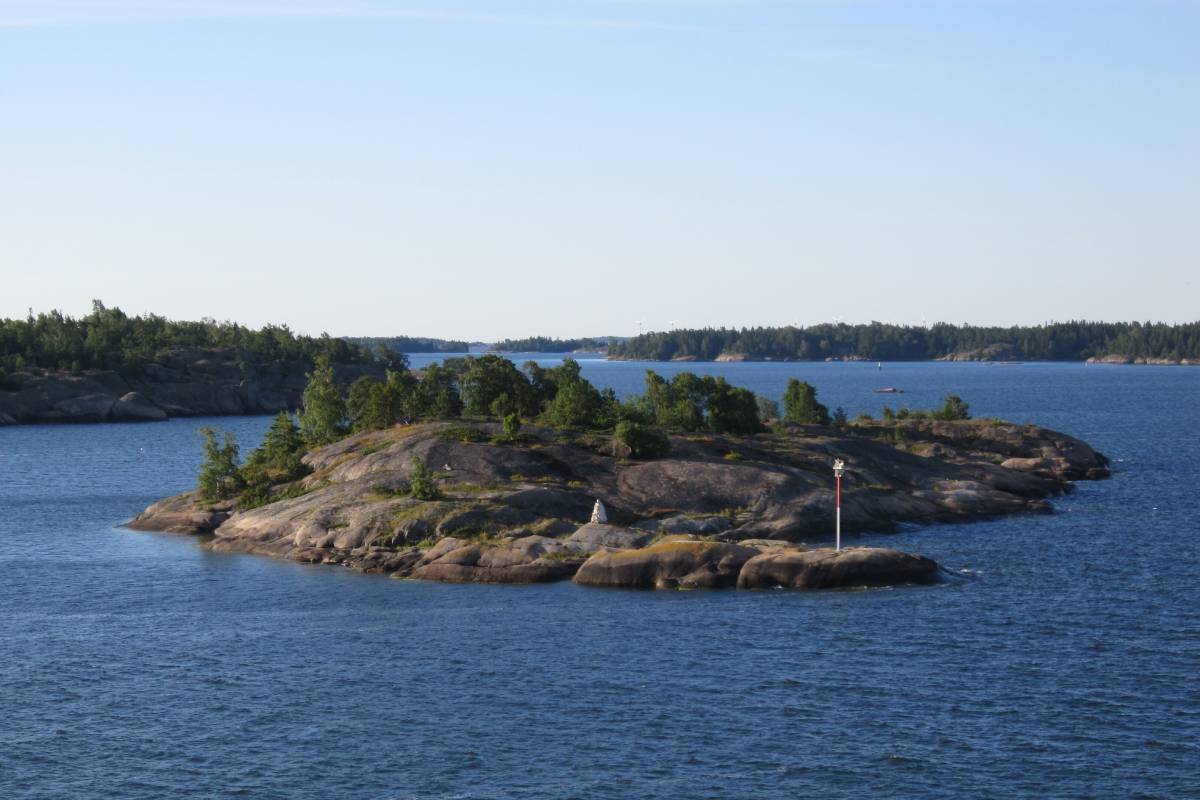
The rocky islands and narrow channels of the Åland archipelago lie between Sweden and Finland on the Baltic Sea. Image: Susanne Nilsson (CC BY-SA 2.0)
Commerce, cooperation, and cultural diversity
Whilst other Nordic countries had a degree of cultural diversity during the early medieval period (think the Sámi population in the north of Norway and Sweden), Finland had a larger number of different cultures and peoples during this age. People from Viking societies that headed east through what is now Finland encountered different cultures, languages, and political groupings.
Finnic, Scandinavian, and other Baltic communities met and interacted across the region. Here, these local communities were utilized for their geographic knowledge (especially when sailing through the many Åland Islands) and their support with military or trading expeditions.
They were also a vital source of resources for those heading further east into the many river systems that snake through Eastern Europe, as well as a first (or final, depending on which direction one was traveling) market to sell and source goods.
Whilst this relationship was often beneficial, it was not without conflict. In Scandinavia, conversion to Christianity took place during the Viking Age, sometimes under political pressure and through violence. In later centuries, the Northern Crusades brought violent campaigns of Christianization to parts of the eastern Baltic.
Why is Finnish Viking history often overlooked?
Later medieval writers, including Snorri Sturluson, shaped many of the texts through which modern readers encounter the Viking Age. Written in a Christian milieu but harking back to the very formation of the medieval Scandinavian kingdoms, the sagas deliberately feature dramatic characters and events, mostly Viking chiefs, warriors, and later monarchs.
Rather than a tale of conquest and kings, the Viking history of Finland was dominated by cooperation and commerce, which, though important, is not what later medieval chroniclers wanted to include in their heroic sagas. And it was these sagas that 19th-century CE Romantic poets and politicians drew upon when trying to define nationalism in Scandinavia.
As Finland was, during this period, linguistically and politically different (Finnish belongs to the Finnic branch of the Uralic language family and is not mutually intelligible with the Scandinavian languages) from its Scandinavian neighbors further west, it was not necessarily swept up with the Viking fever that dominated 19th-century CE nationalism in this northern region.
By looking at the archeological record and analyzing the strategic and commercial motives of people from Viking societies who raided, traded, and settled here, we can see that the Viking history of this Nordic nation is just as rich and fascinating as its western neighbors'.
We get to provide readers with original coverage thanks to our loyal supporters. Do you enjoy our work? You can become a PATRON here or via our Patreon page. You'll get access to exclusive content and early access.
Feel free to reach out to discuss potential stories that may be in the public interest. You can reach us via email at hello@thevikingherald.com with the understanding that the information you provide might be used in our reporting and stories.




.jpg)