

When Dr. Geir Grønnesby and his colleagues from the NTNU University Museum were invited to investigate the archeological site at Herlaugshaugen on the Norwegian island of Leka, many on the team expected a routine investigation.
What emerged over the following months, however, could cause historians to revise their opinions of Scandinavian seafaring in the pre-Viking era.
A land of legends
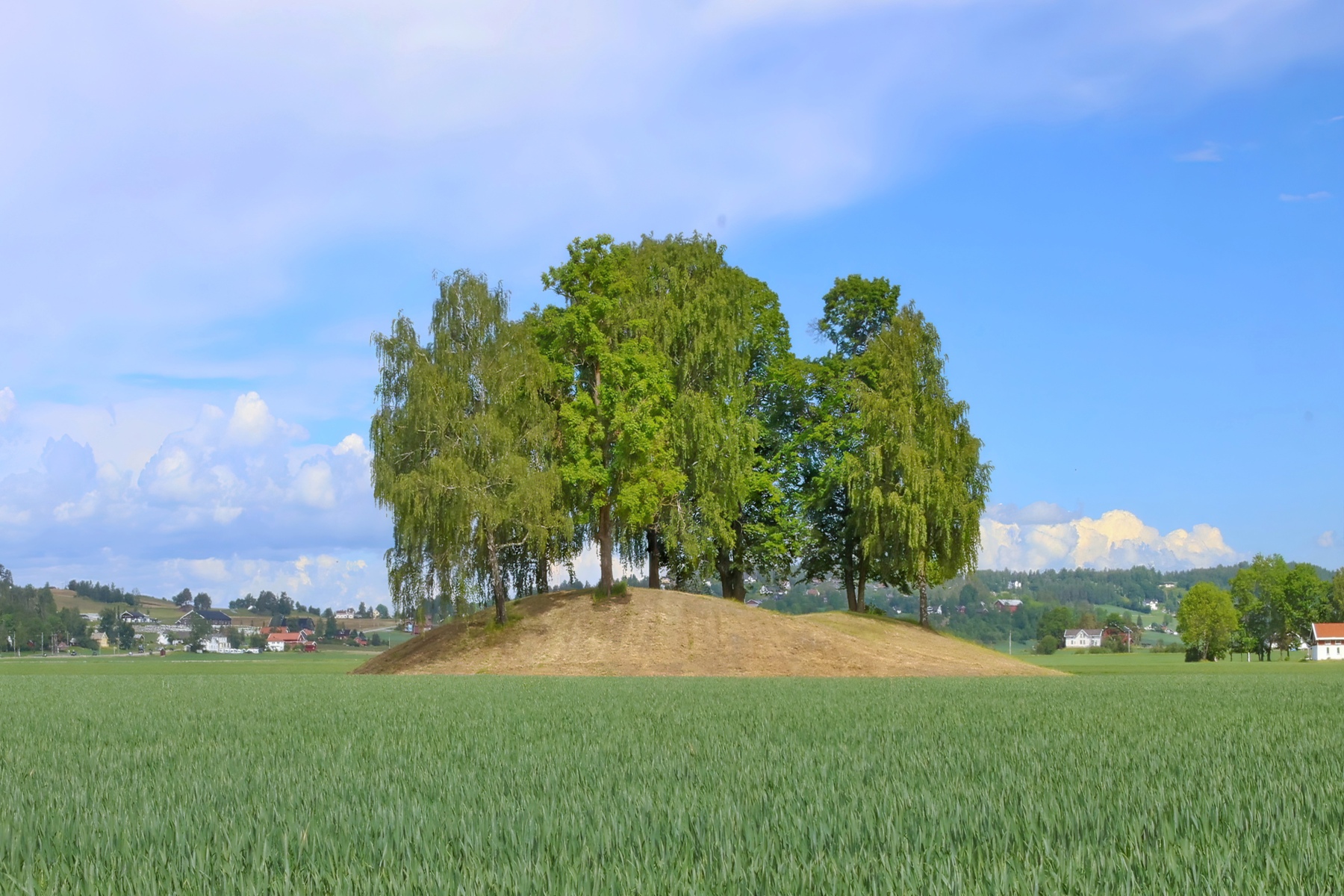
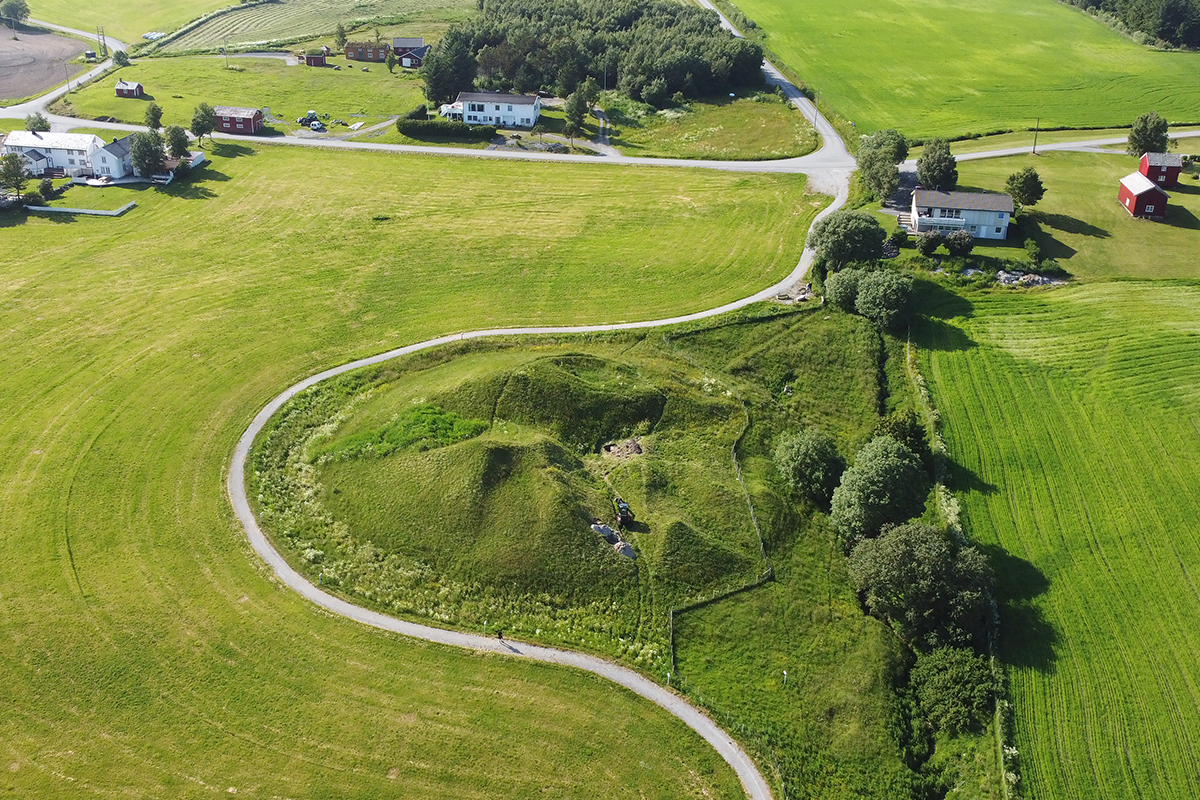
The archeological project began after the Norwegian Directorate for Cultural Heritage asked the NTNU University Museum in Trondheim to investigate a burial mound on the island of Leka known as Herlaugshaugen.
The mound received its name from a legend told in Haralds saga hárfagra (Saga of Harald Fairhair) about a certain King Herlaug.
According to the saga, when faced with the might of the approaching army of Harald Fairhair, King Herlaug preferred to bury himself underground rather than flee or surrender.
His brother Hrollaug, on the other hand, gave himself up and was rewarded with land and a title.
North in Naumudal were two brothers, kings, Herlaug and Hrollaug; and they had been for three summers raising a mound or tomb of stone and lime and of wood. Just as the work was finished, the brothers got the news that King Harald was coming upon them with his army. Then King Herlaug had a great quantity of meat and drink brought into the mound, and went into it himself, with eleven companions, and ordered the mound to be covered up.
With a diameter of more than 60 meters, Herlaugshaugen is one of the largest burial mounds in Norway. However, digging carried out at the end of the 18th century partially destroyed it.
This excavation apparently produced a wall, some iron nails, a bronze cauldron, animal bones, and a skeleton holding a sword in a sitting position.
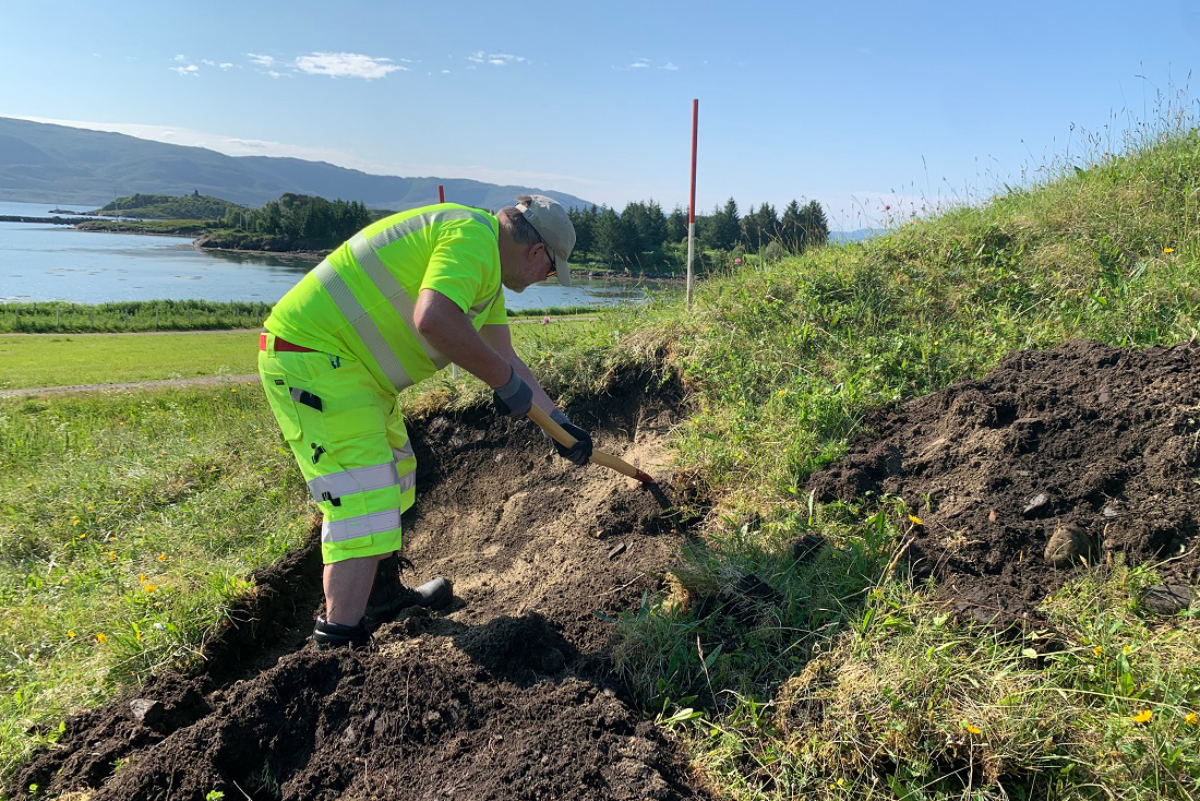
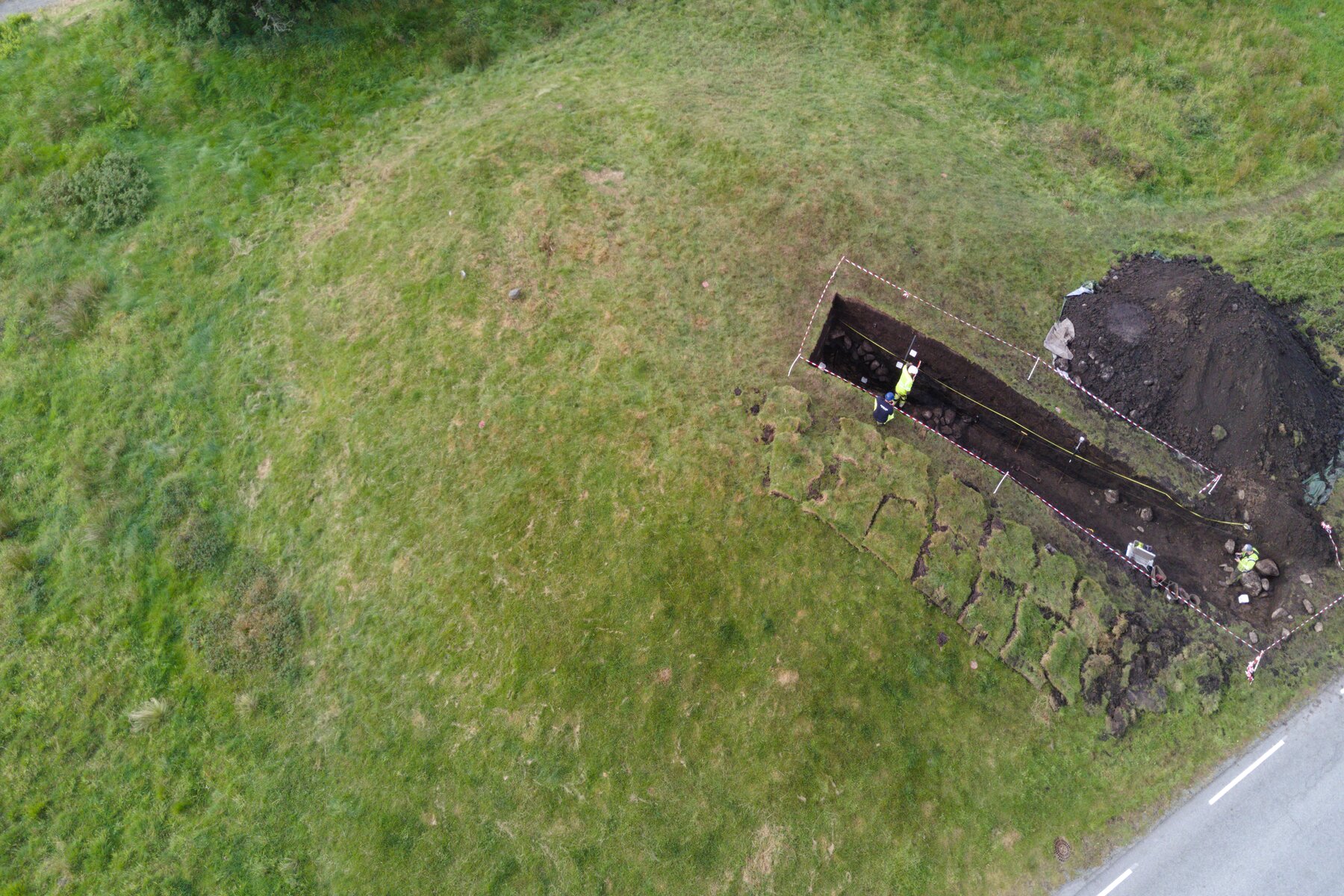
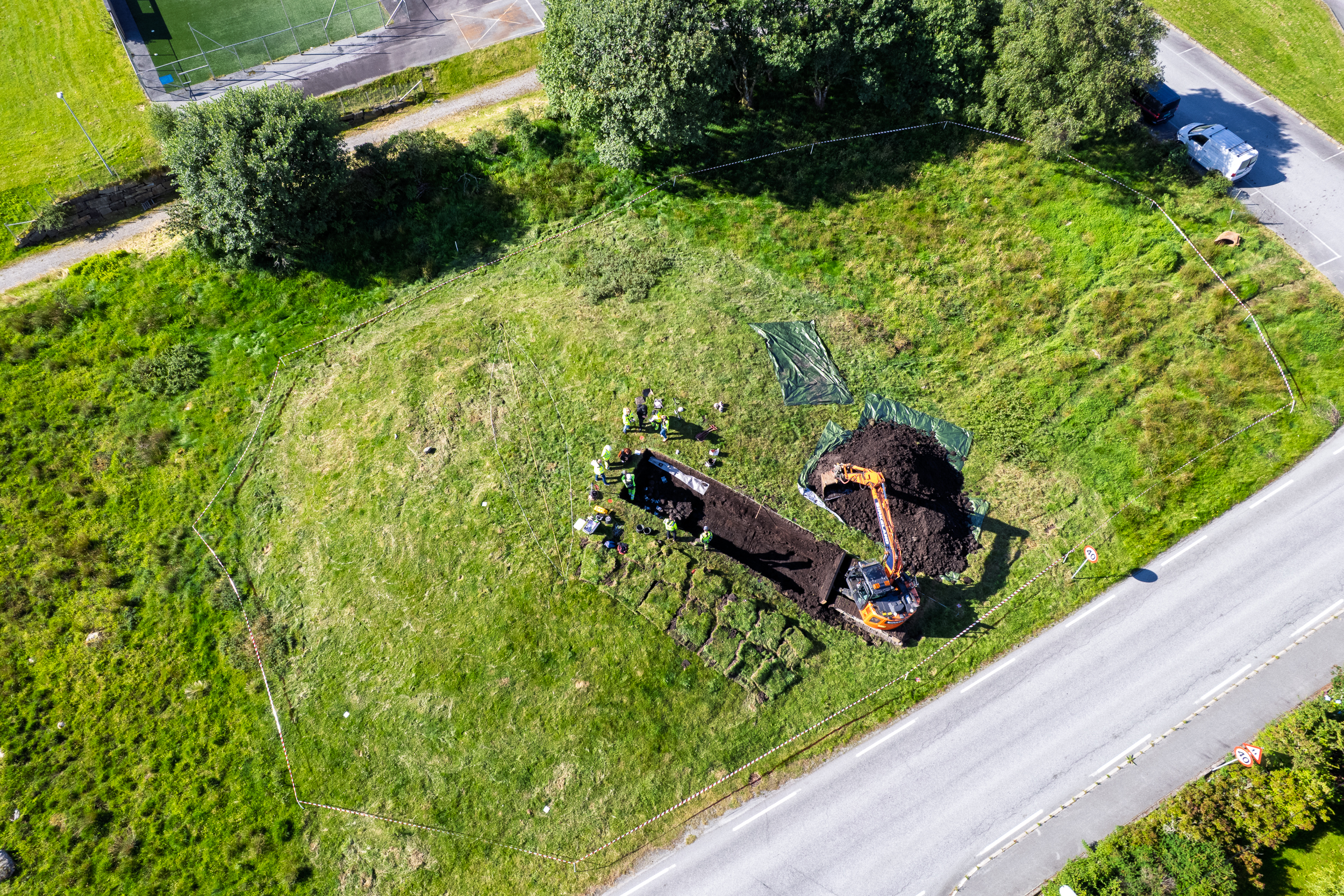
At the Herlaugshaugen site, archeologist Lars Forseth and his colleagues unearthed artifacts, including ship rivets and nails, indicating the presence of an 8th-century ship burial. Photo: Geir Grønnesby / NTNU University Museum
Breaking new ground
Unfortunately, while records show that the skeleton was once displayed as King Herlaug at Trondheim Cathedral School, none of the artifacts have survived to the present day.
However, there have long been suspicions that Herlaugshaugen could have been a ship burial site, and the museum team was assigned the task of trying to ascertain whether this was the case.
Not too long into the dig, the team discovered their first ship rivet, to great excitement.
Over the next few weeks, more artifacts emerged, including several nails and rivets, seemingly confirming that the burial mound did indeed contain a ship, though the boat itself had long since degraded into the soil.
Understandably, the team was well pleased with the uncovered artifacts. "We were, of course, delighted and felt that this was a significant discovery," Geir tells The Viking Herald.

The ship burial at Herlaugshaugen dates to around 700, which is almost 200 years before the legend of King Herlaug, who buried himself alive to avoid capture by King Harald Fairhair's army. Illustration: The Viking Herald
Perceptions of legends and history
Further investigations suggested the ship burial actually dated to around 700, some 200 years before the days of Harald Fairhair.
"What is certain is that the legend of King Herlaug did not occur during the reign of Harald Fairhair," Geir confirms.
"There may, however, be a kernel of truth in the name association since there is a local legend about King Herlo in Leka."
Intriguingly, the discovery would also appear to push back the period in which the Norse had vessels capable of traveling long distances.
The size of the burial mound suggests the ship may have exceeded the dimensions of some of the largest known boats from the Viking Age, including the Oseberg and Skuldelev ships.
"The main conclusion is that early in the Merovingian period, just prior to the Viking Age, people had a maritime competence that enabled sea travel over longer distances," Grøn explains.
"This is important for elucidating that the northern parts of Scandinavia had contact with the continent. It also sheds light on transporting goods from northern areas to the south."
- READ MORE: All you need to know about Viking ships
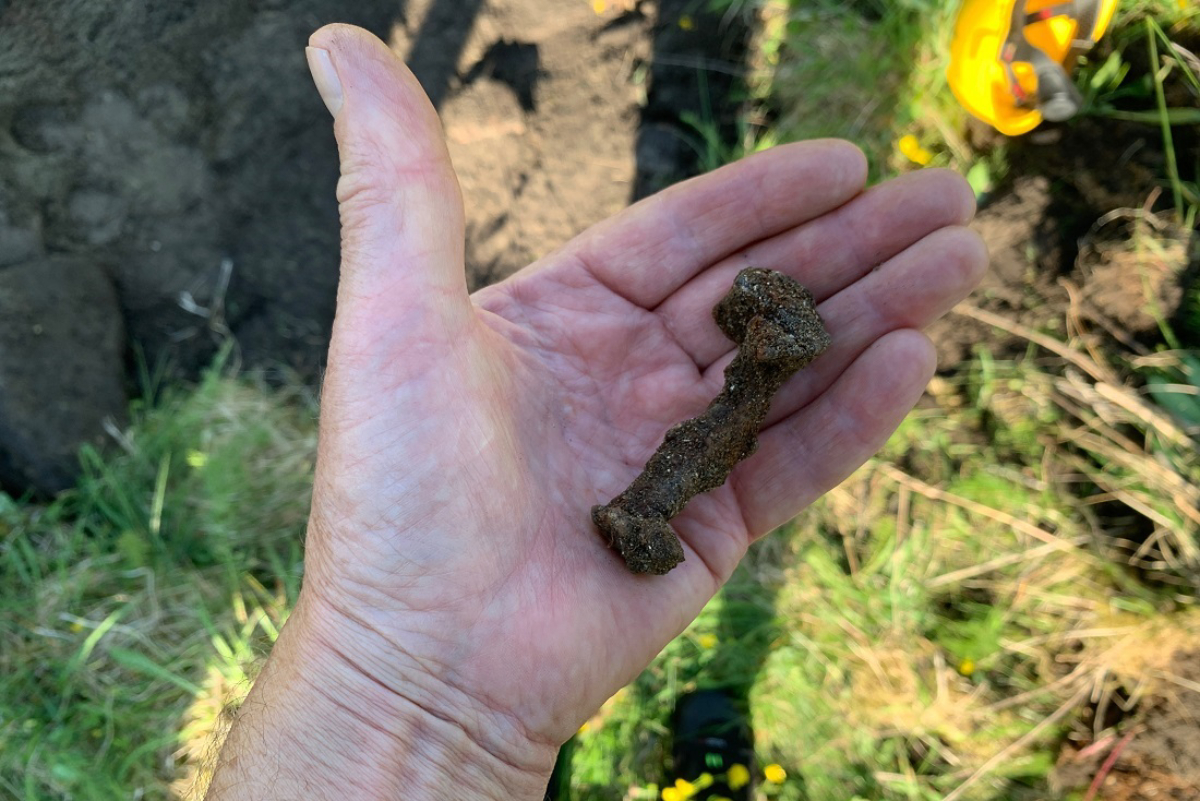
Archeologists found several rivets at the Herlaugshaugen site, which helped confirm that the burial mound contained a ship dating back to the early medieval period. Photo: Geir Grønnesby / NTNU University Museum
Echoes of Sutton Hoo
Herlaugshaugen appears to be the earliest detected ship burial in Norway and dates slightly later than the cemetery found at Sutton Hoo in England, which is believed to date to the 6th or 7th century.
The shared Germanic heritage of the Anglo-Saxons and the Norse, combined with evidence that the Norse were already embarking on longer sailing expeditions, suggests there could be a link between the two finds.
However, Geir cautions against drawing too many parallels between the two sites at this stage.
"This is an interesting question that is difficult to answer clearly," he admits. "The chronological dating of Herlaugshaugen places it between the Scandinavian ship graves and Sutton Hoo."
"Most archeological finds in the area point to the Mälardalen area in Sweden, encompassing Uppsala, Vendel, and Valsgärde. So far, however, we have no evidence of direct contact with Anglo-Saxon England."
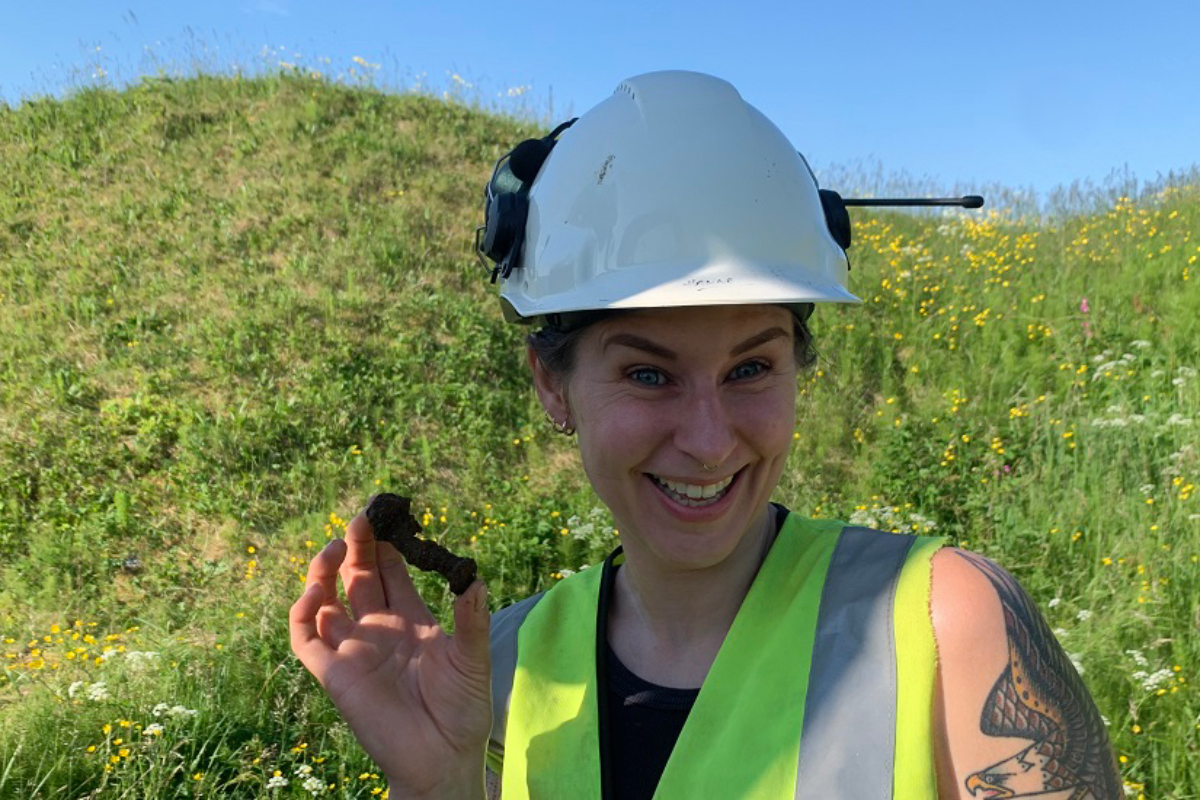
Archeologist Hanne Bryn, the field leader and chief engineer of the NTNU University Museum team, holds one of the ship rivets found at Herlaugshaugen on the island of Leka. Photo: Geir Grønnesby / NTNU University Museum
Mysteries unresolved
For the time being, work at the Leka site is complete.
"Carrying out geophysical surveys in the area around the mound may be relevant, but there are no plans to carry out further archeological investigations at Herlaugshaugen," Geir tells us.
At the same time, there are some promising areas of interest that could yet shed more light on the practice of ship burials in the pre-Viking era.
"There are otherwise many large burial mounds in central Norway," Geir says.
"We believe many of these can be dated to the same period as Herlaugshaugen, but we have little concrete evidence. We may want to do several more investigations to better understand the dating of these large burial mounds."
We get to provide readers with original coverage thanks to our loyal supporters. Do you enjoy our work? You can become a PATRON here or via our Patreon page. You'll get access to exclusive content and early access.
Feel free to reach out to discuss potential stories that may be in the public interest. You can reach us via email at hello@thevikingherald.com with the understanding that the information you provide might be used in our reporting and stories.