

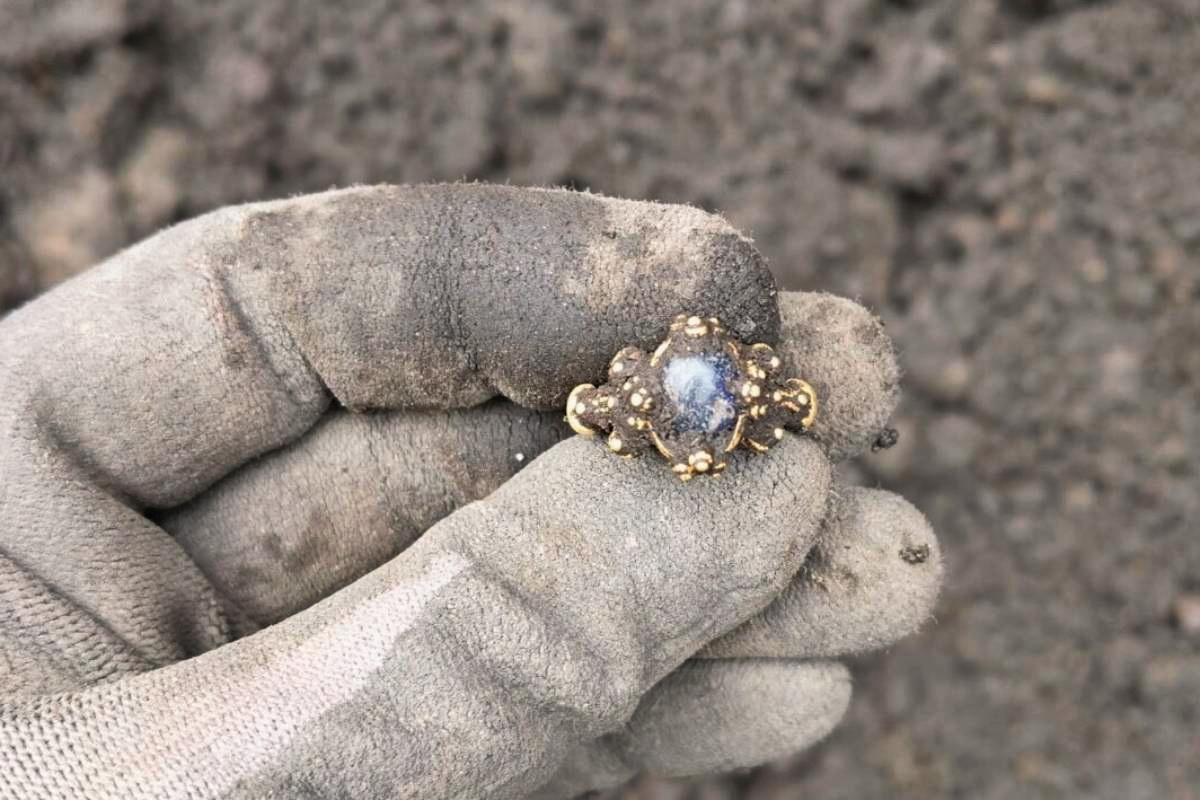
Archeologists have uncovered a striking gold ring in Tønsberg, Vestfold, Norway. Although the ring appears to date from the medieval period, it also shows stylistic similarities to some Viking Age jewelry.
A surprise delight
The archeologist Linda Åsheim was working solo on an excavation in the center of Tønsberg when she came across something that looked rather promising.
"My first thought was 'Shit, is that gold?!'" Åsheim commented in a Norwegian Institute for Cultural Heritage Research (NIKU) press release. "I was completely shaken. I had to ask the construction guys if they were messing with me."
The ring was found on a site in the very center of Tønsberg, a historic Norwegian city often linked to Harald Fairhair and located just down the road from where the famous Oseberg ship burial was found.
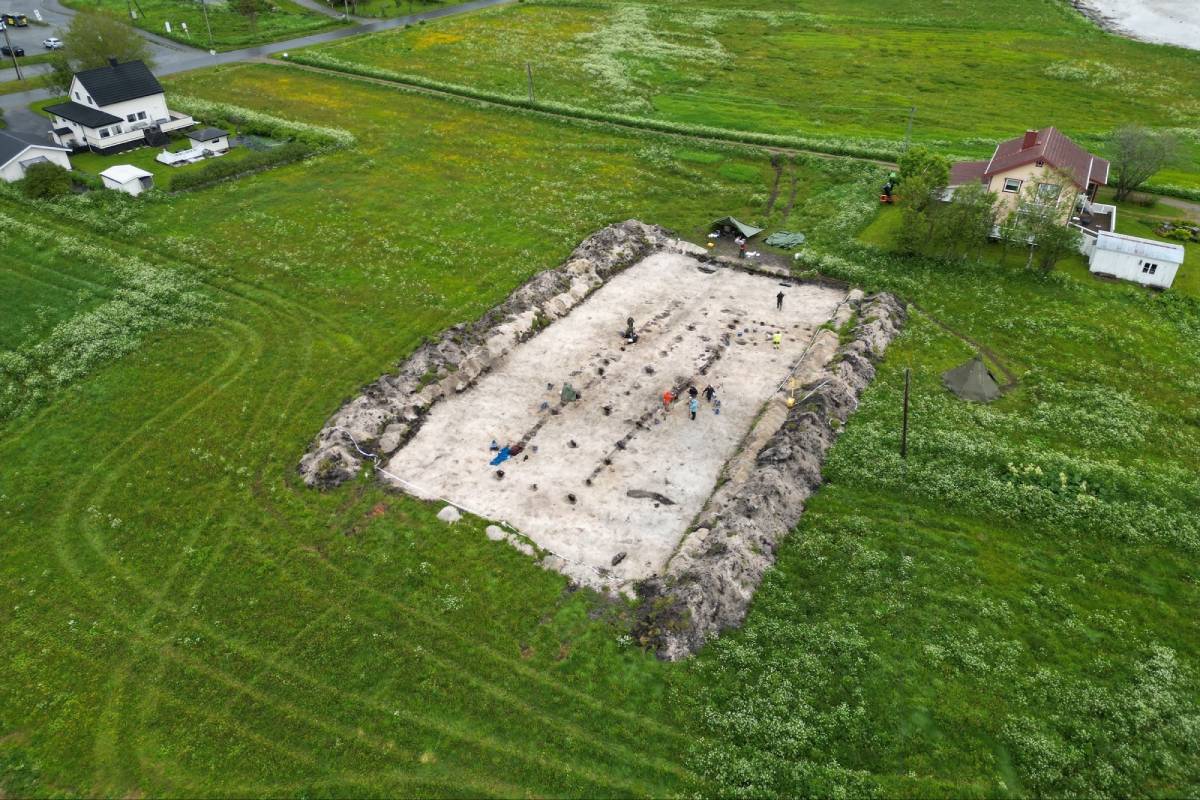
The excavations have been carried out by NIKU archeologists over the past two years on behalf of Tønsberg Municipality. The digs have also unearthed several houses and building structures.
Of course, the ring did turn out to be real gold, with a deep blue oval stone at its center. Around the edges, the ring was decorated with filigree, a technique that uses thin metal threads that are twisted, bent, and soldered together to create intricate patterns. There were also small, round balls placed onto these threads.
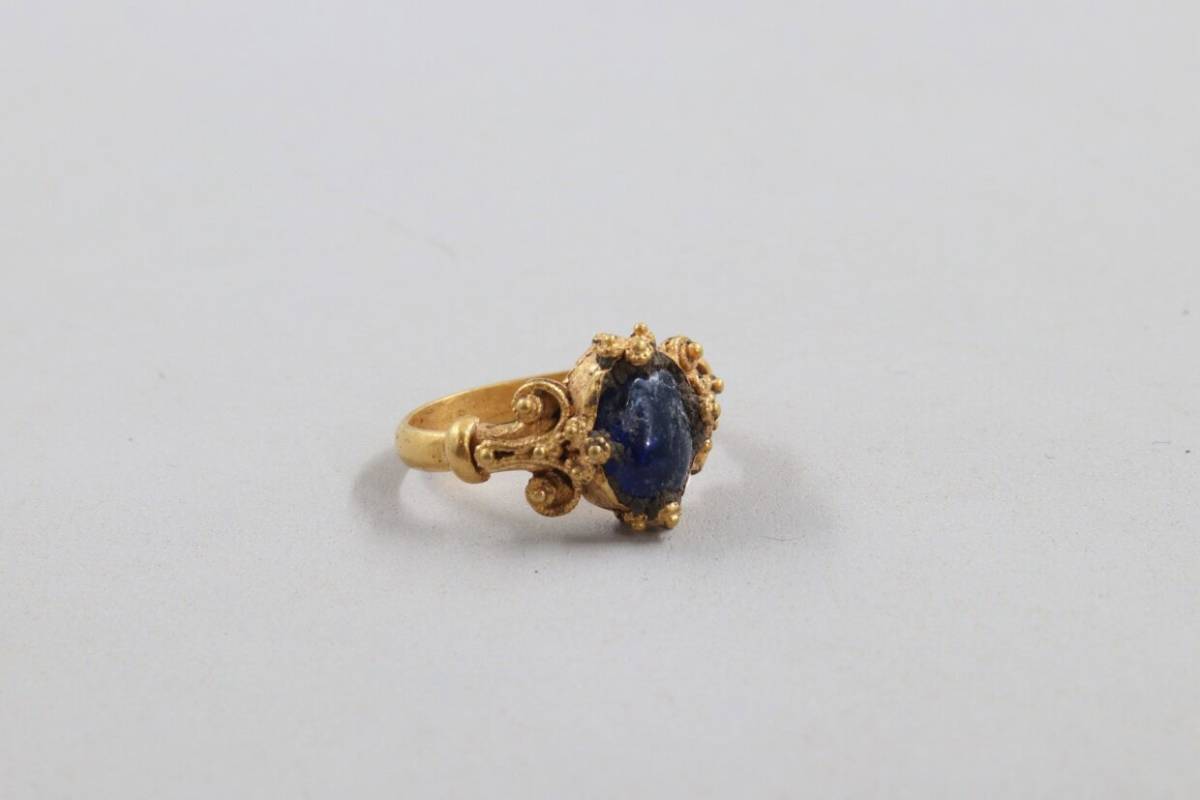
Close view of the gold ring, with filigree work and a blue stone at its center. Photo: Norwegian Institute for Cultural Heritage Research (NIKU)
Mixed origins
Neither the ring nor the layer where it was found have yet been dated. However, a spruce twig in the layer above has been dated to 1167–1269, indicating the ring may have come from the Middle Ages.
Some elements of the design, however, are similar to other pieces of jewelry found in the late Viking Age.
"The design of the spirals at the top of the ring in particular resembles other rings dating to the 9th–11th centuries," commented Marianne Vedeler, professor at the Museum of Cultural History in Oslo, on the NIKU website.
"However, the combination of filigree and granulation came to Norway in the early Middle Ages from the Byzantine area, partly via Carolingian goldsmithing."
In other words, the production technique also suggests that the ring was from the Middle Ages. At the same time, there are several elements at play in the design, and the team will conduct further investigations before establishing a more definitive answer.
- READ MORE: What it's like to find a Viking Age coin
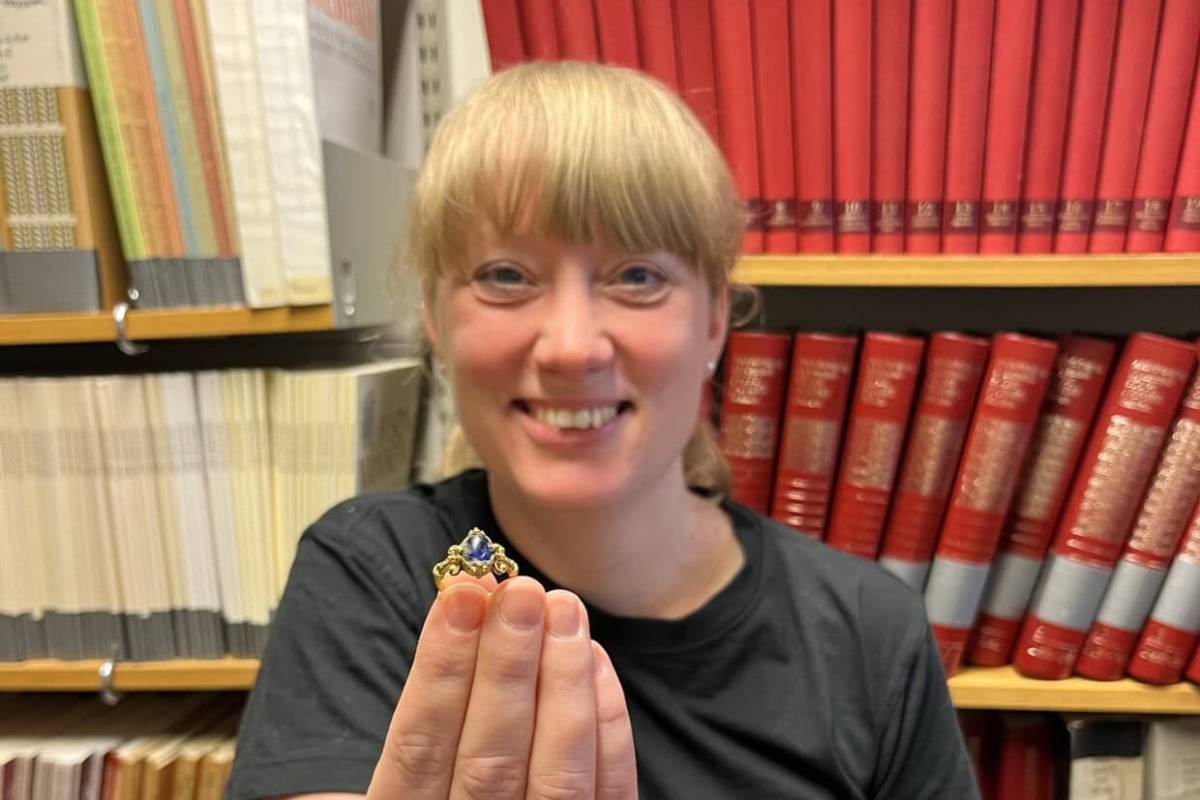
Archeologist Linda Åsheim holds the gold ring found during excavations in central Tønsberg, Norway. Photo: Johanne Torheim / NIKU
Career highlight
While there are no direct equivalents to the ring in question, Vedeler notes that there are other items that have similarities.
"From Norway, we have a finger ring with a box-set stone and filigree decoration from Ullensaker in Akershus," Vedeler commented. "It is similar, but not a direct parallel. Two rings with set stones and granulation have been found in Roskilde that are also from the 11th century."
It is believed that the item at the center of the ring is not a real gemstone, but rather an imitation of sapphire. The team believes the ring likely held some symbolic value, such as to protect against evil spirits or to indicate power or social position. In all likelihood, it belonged to a high-status woman in the town.
Åsheim has unearthed other interesting finds in the past, including several sets of runic inscriptions. Nevertheless, she considers the gold ring at Tønsberg her greatest discovery yet.
"And now I just have to quit being an archeologist," she commented. "Because I've reached the top!"
We get to provide readers with original coverage thanks to our loyal supporters. Do you enjoy our work? You can become a PATRON here or via our Patreon page. You'll get access to exclusive content and early access.
Feel free to reach out to discuss potential stories that may be in the public interest. You can reach us via email at hello@thevikingherald.com with the understanding that the information you provide might be used in our reporting and stories.