

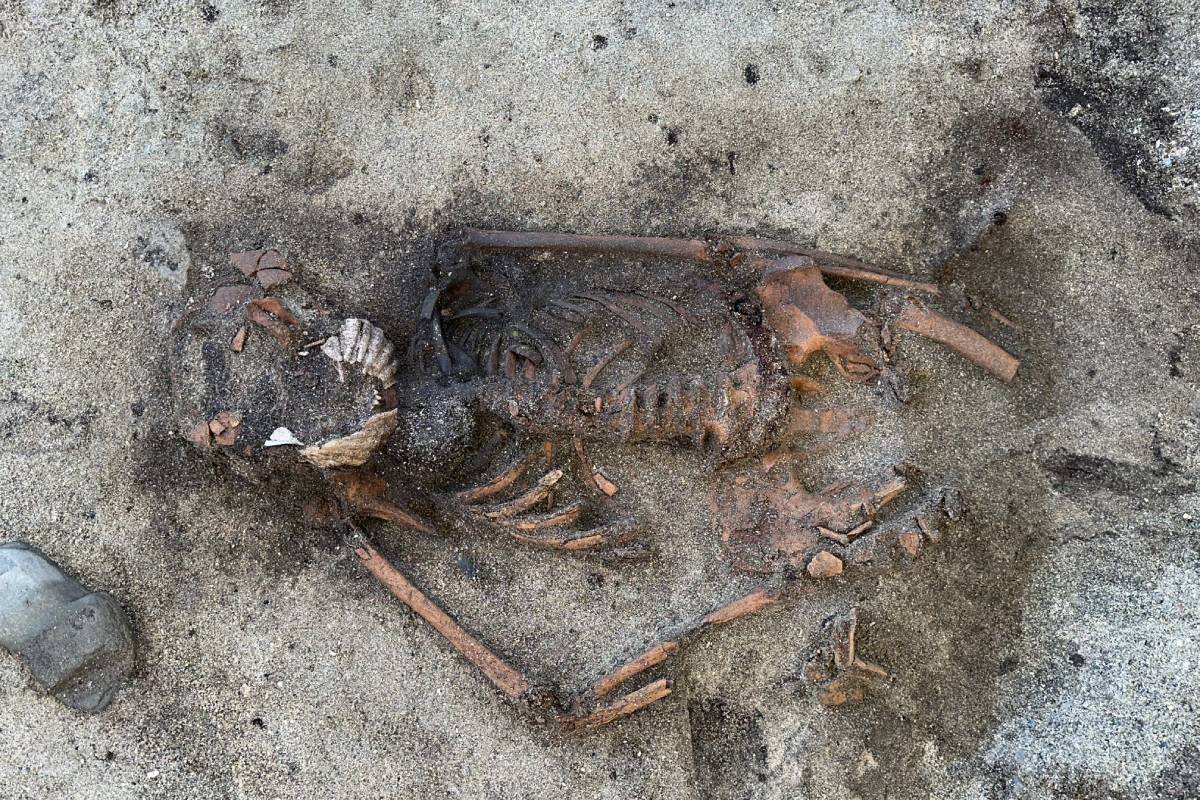
The cemetery at Bjugn in Norway has produced several notable finds, including a sword, oval brooches, and two well-preserved skeletons.
The discovery that has really caught the imagination of the general public, however, is a highly unusual example of grave goods: two scallop shells placed on the jaw of a Viking Age woman.
To find out more about what this intriguing find could mean, The Viking Herald speaks to two archeologists, Knut Harald Stomsvik and Raymond Sauvage, who led the investigations.
A promising lead
As reported by The Viking Herald, the burial site was first identified in autumn 2024 by metal detectorist Roy Søren in a farmer's field close to the central Norwegian town of Bjugn, Trøndelag County.
The history enthusiast immediately brought it to the attention of Knut Harald Stomsvik, a senior adviser and archeologist for Trøndelag County Authority.
"Roy has spent a lot of time on this field and found a lot of objects there," Knut tells The Viking Herald.
"Last year, he found an oval brooch on the field, then he saw another one in the same hole. He began to suspect it could be an intact grave, so he notified me. We agreed he should leave it intact."
"Then, in March this year, Roy found a sword and a thigh bone just a few meters away from the first find. Together, we decided this was probably part of a field with several graves, and that we should do some research on it."
"The bones indicated it could be a well-preserved grave," Knut continues. "At the same time, the soil was very thin – only 20 or 30 centimeters."
"This meant the finds were in great danger of destruction, as the farmers were about to begin plowing the land. We saw this as a crisis that needed to be solved quickly."
"I asked Raymond to apply to the directorate for permission to investigate the site. We got the money, and the excavations took place in September and October this year."
- READ MORE: A Viking history of Norway (part 1)
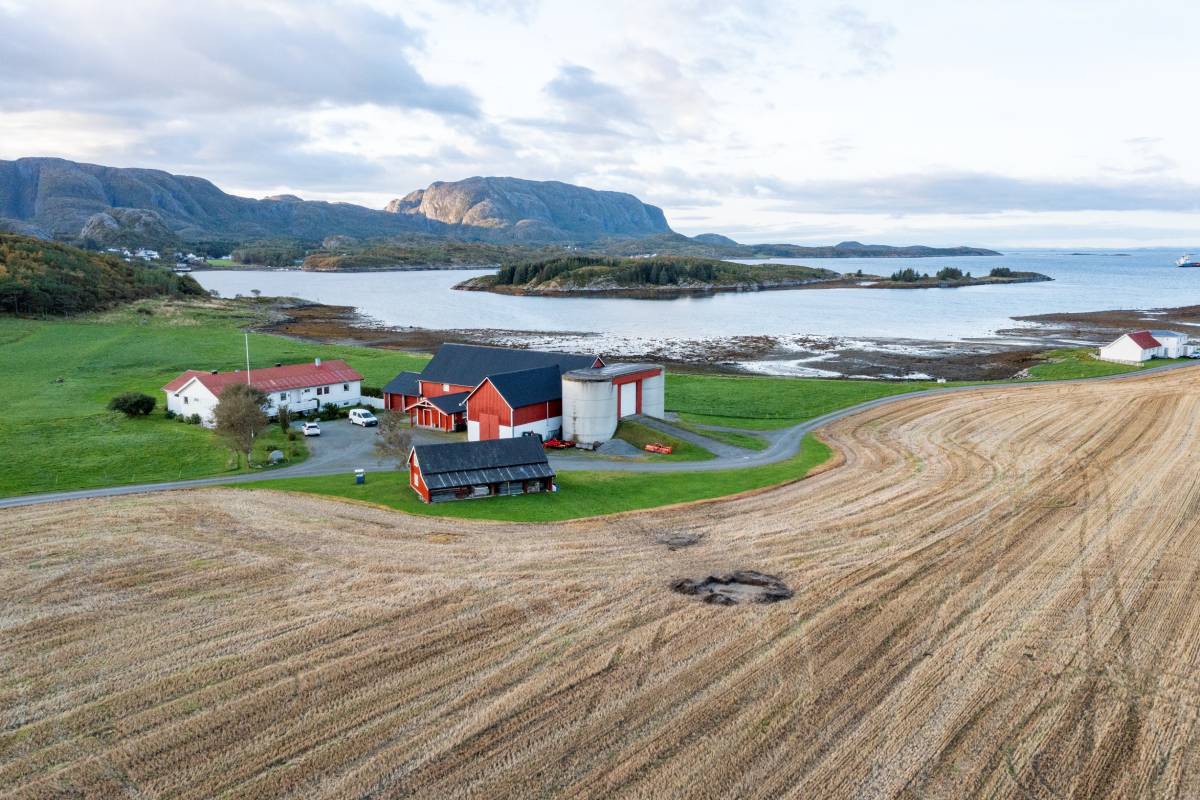
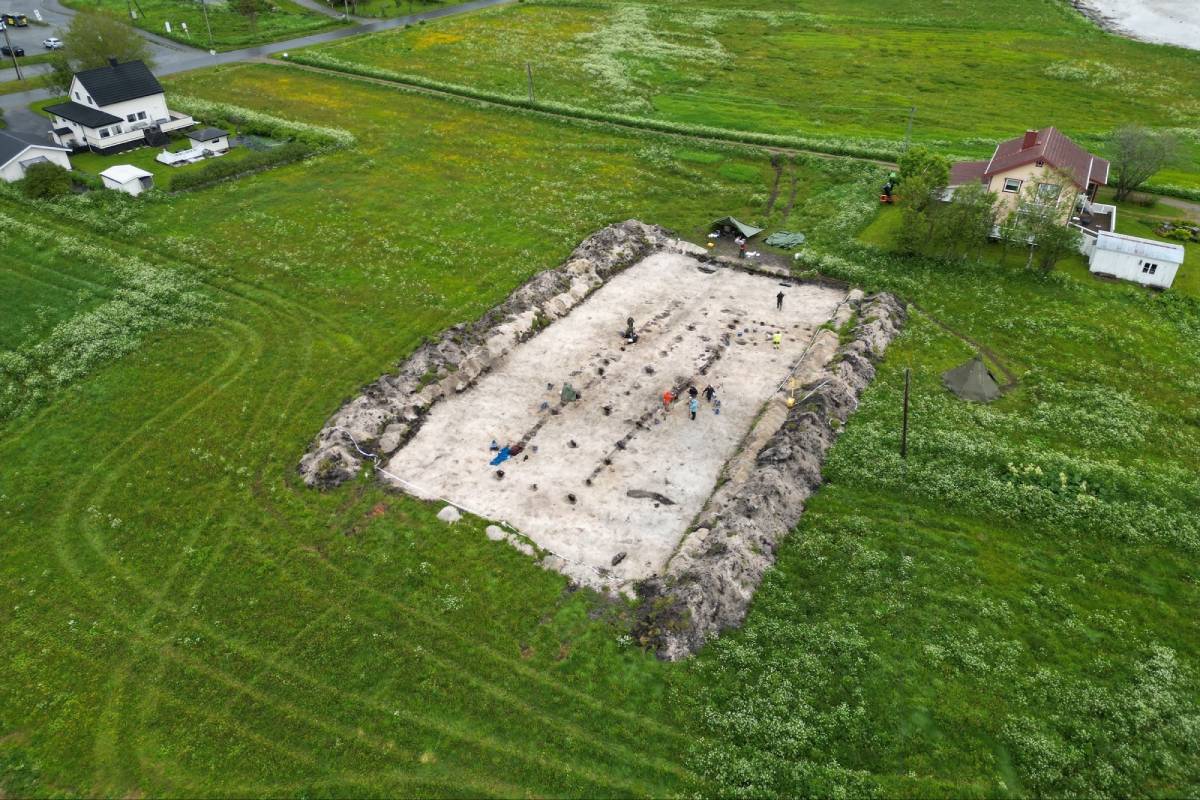
View of the Bjugn farm in Trøndelag, where archeologists uncovered two graves after metal detecting. Photo: Kristoffer Rantala / NTNU University Museum (CC BY-SA 4.0)
The first grave
Both Knut and Raymond were on tenterhooks as they began to dig.
"With archeology, you never know what you're going to get until you see what's actually beneath the soil," Raymond admits.
"But based on the information from the metal detectorist, we had very good data on what we could suspect to find, given the combination of what appeared to be grave goods and bones."
"We had also carried out a GeoRadar survey here in the spring last year, which indicated several features beneath the plow soil. We ended up carrying out two digs and finding two graves," Raymond adds.
"We opened a limited area at the site for the first grave at the end of September. We found well-preserved skeletal remains in situ and also the sword that the detectorist had identified previously."
"We estimate that it's a warrior grave from the 700s with a single-edged sword and a whetstone as grave goods."
"We could also see quite clearly the damage caused by agricultural activity – you could see the bones and the grave goods had already been moved by the plow, so the urgency to do the excavation was evident."
"At the end of the first excavation, we had an additional mission to check out the other find spots, so we opened up the place where the detectorist had found a brooch."
"This was on the last day of the excavation. We had just started packing our things away and had to do this last check when we saw that, wow, there was an in situ skeleton here too!"
"There were some very interesting observations, including what appeared to be two scallop shells placed on the face."
"But since this was the last day, we had to preserve the grave. We recorded everything, closed it up, and then I went back to the office with Knut to make another plan. In the end, we applied for more money to do a second excavation."
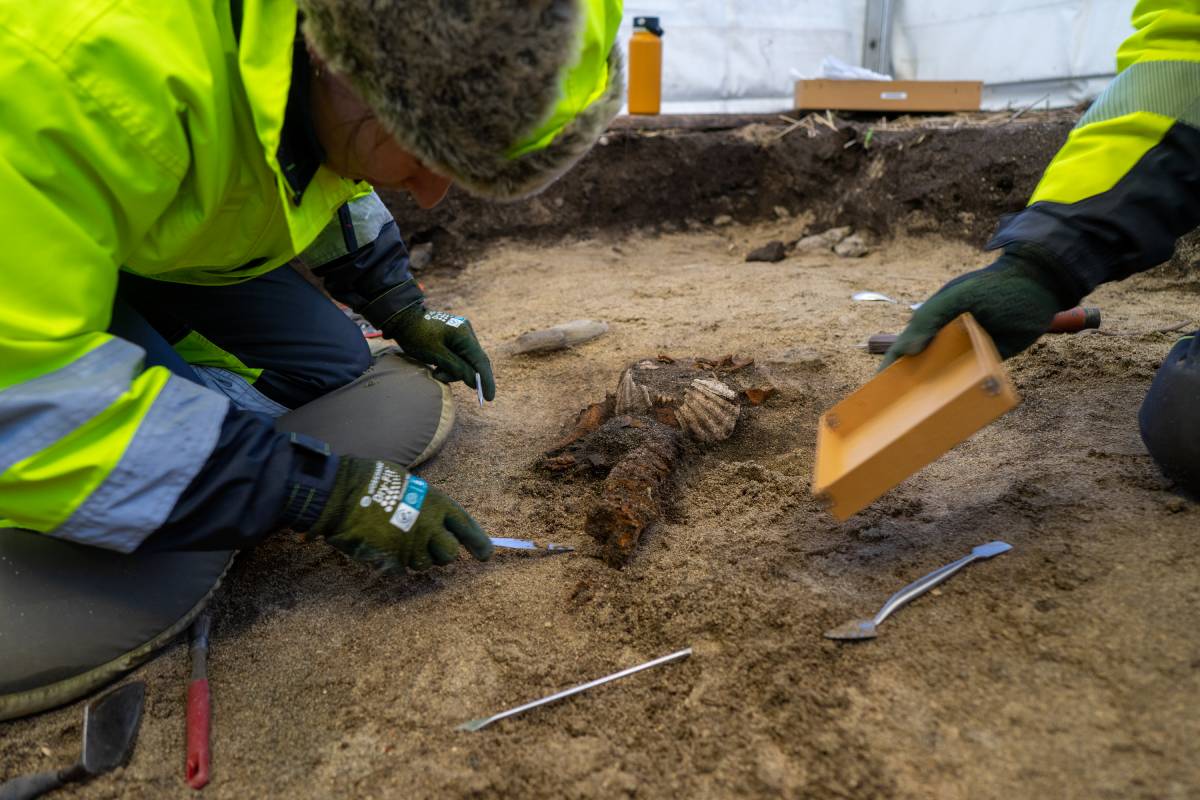
In the second grave, two convex scallop shells framed the lower jaw of a Viking Age woman. Photo: Raymond Sauvage / NTNU University Museum
Deliberately positioned scallops
When the team returned, it became clear that the second grave belonged to a female skeleton from around the Viking Age. The archeologists were struck by the unusual position of the scallop shells.
"We could see the skull very clearly," Raymond explains. "Unfortunately, the top of the face and the upper parts of the head had been destroyed by plowing, but with the lower jaw and the back of the head, everything was in situ."
"We could see very clearly how the shells had been intentionally placed around the mouth of the dead," Raymond adds.
"They were placed on both sides of the head or the lower jaw. It was quite clear very early on that they had been placed as two complete shells from two different scallops. Scallops have one flat side and one more convex one, but both shells were convex."
In other words, the people who had buried the woman had deliberately added the scallops to the burial, presumably in some kind of symbolic gesture.
"We have to do more work on reconstructing everything, but I would suggest they must have covered the mouth at least to a degree," Raymond adds.
"It was a very visual element in the burial. They had clearly been placed there intentionally as part of the funeral attire and how they presented the body in the grave."
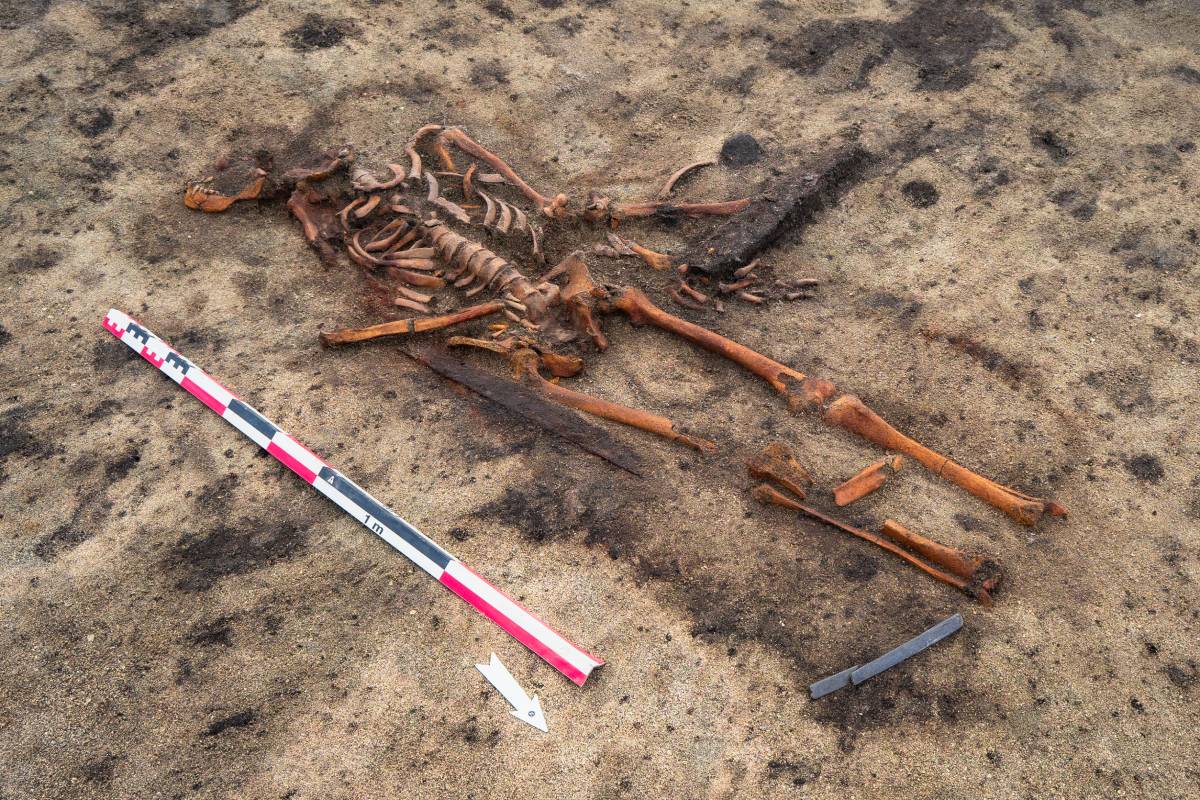
Skeletal remains and associated objects from one of the excavated graves at Bjugn. Photo: Raymond Sauvage / NTNU University Museum
For what reason?
The find has already caught the attention of the archeology community, with speculation rife as to the exact meaning of the scallops in this context. As the two experts admit, however, interpretation is far from easy.
"I've looked into the literature, and there is some fragmented information about possible scallop fragments in Iron Age graves in Western Norway, but they were all excavated about a century ago," Raymond informs The Viking Herald.
"This means there is no record of whether they were intentionally placed, how they were used, and if they belonged to the graves or were just a natural part of the subsoil."
"This means that it is the first time we can record how they have been placed and used," Raymond continues.
"This is a new way to present objects in Viking Age burials that we haven't seen before."
"As Knut has mentioned, scallops are normally related to Christian practices and particularly the Santiago de Compostela pilgrimage, where scallops were associated with St. James, and people brought back scallops with holes as reminders of the pilgrimage."
"Of course, you also see scallops as symbols in classical art, like depictions of Venus or Aphrodite as a symbol of fertility."
"However, when it comes to the pagan context of the north of Europe, we have to do more research before we can suggest anything," Raymond admits.
"It's very difficult to speculate. All we can say is that we know Viking burial rituals were often elaborate and spectacular."
"As you will know, Oseberg is a very good example of that, where they staged a large, spectacular funeral ritual presenting the dead with objects. Some have suggested it could have taken form as some kind of play, actually."
"Of course, the contents of our excavation are not as elaborate and spectacular as the Oseberg find. But still, the idea of staging the deceased and presenting the body with grave goods and clothing – I think we can view the grave in this context."
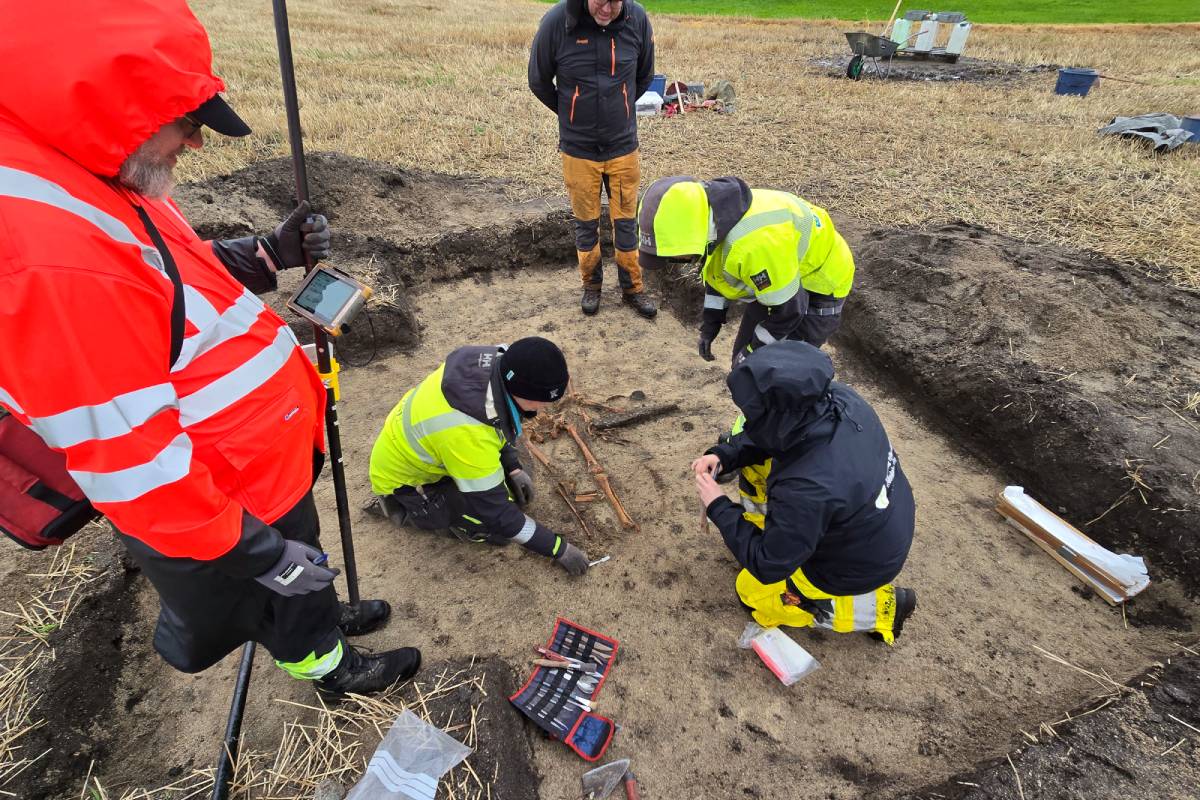
Archeologists working on one of the graves at Bjugn during excavation. Photo: Knut Harald Stomsvik / Trøndelag County Authority
Scattered bird bones
There was also one other intriguing aspect to the burial. "Under the skeleton and on the sides, we have small fragments of bird bones," Knut answers.
"We haven't had them analyzed yet, so we don't know which kind of bird, or which parts. They could either have been part of clothing or costumes, or placed there intentionally."
"I think the bones were too scattered around to have belonged to whole birds," Raymond adds. "We found them all over the grave. I would suspect we can find out more about that because it seems like there was mostly the same type of bone."
"When we have them analyzed, we can expect to see that there were bones from several individual birds."
"All in all, we will have an idea of how the body was presented, including the birds, the scallops, clothing, and brooches," Raymond informs The Viking Herald.
"All of this had some type of intention that they tried to communicate during the funeral. But we can't say what that is yet. In fact, we will probably never be able to say for certain, but we have to look more into it and at least try."
"This find is fascinating because here we have a small glimpse into practices which we know little about," Knut adds.
"Most of the graves from that period are not well preserved. Bones are quite rare, and organic remains are not that common. So it is really interesting to have a look at something that we rarely come across."
The mistress of the manor
There is also some intrigue surrounding the identity of the person found in the grave.
"We haven't got any data on the actual skeleton yet, of course," Raymond says. "Hopefully, we'll have that within half a year, and we will be able to learn more about her age, height, build, diseases, and so on."
"What we can say is that typically when we find Viking women buried with oval brooches, they are generally assumed to be married. So I would suggest that this person was probably married on the local farm here."
As Raymond points out, however, this does not mean that she was a simple housewife.
"She would have been what is called a husfrue in Norwegian, which I would translate as the 'mistress of the house.' She would have been responsible for all the daily chores in the house, but also on the farm."
"She would have been the work leader and the manager of everything that needed to be done on this farm."
In other words, the woman found in the grave would likely have held an important role in both managing the farm and shaping the local society as a whole.
"This was a large farm, based on fishing, agriculture, and trade," Raymond notes.
"You can imagine that a farm in the Viking Age was quite a big responsibility. She was probably their day-to-day leader. When the husband was away traveling, doing Viking raids or political things, she was likely the actual chief here."
"In other words, this is a high-status grave within the local community."
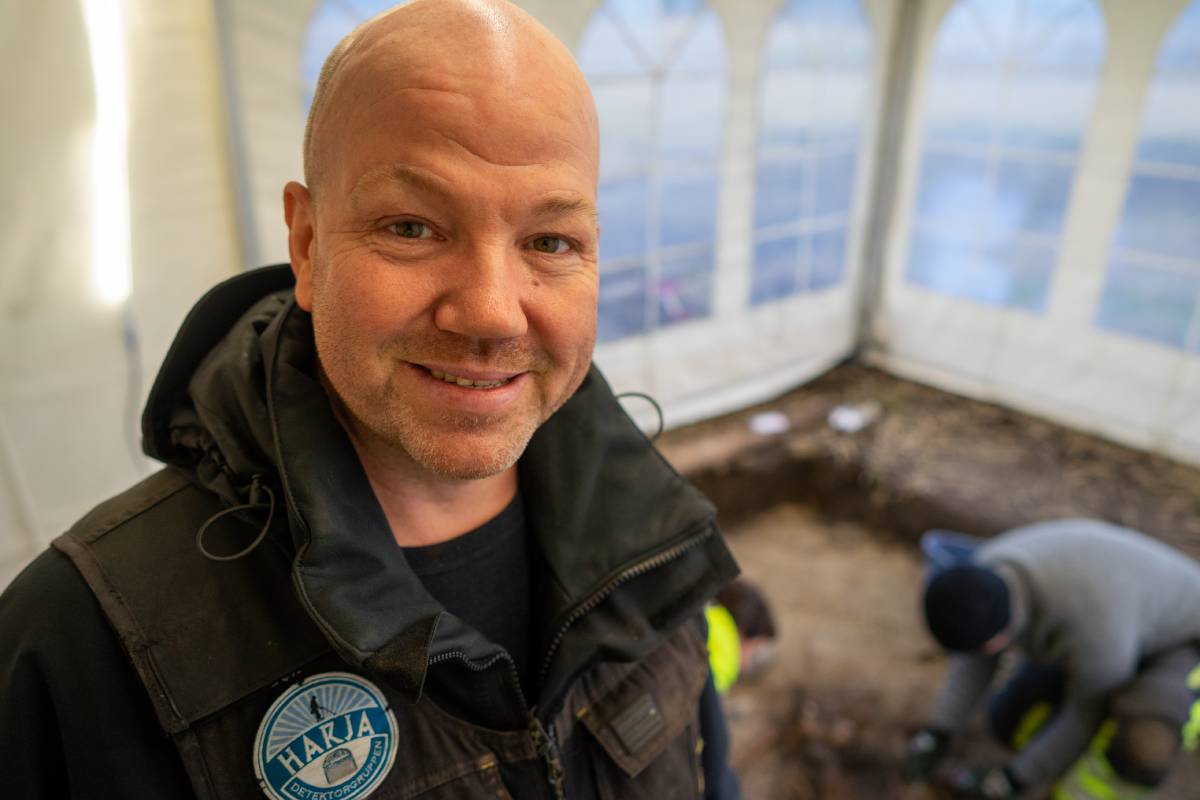
Roy Søren, the local metal detectorist who reported the objects that revealed the graves. Photo: Raymond Sauvage / NTNU University Museum
What next?
As the two archeologists hint above, there is still much exploration to be done.
"In terms of the finds that we have excavated now, there will be lab work going on for at least a year from now," Raymond explains to The Viking Herald.
"With analysis of the bones, the osteology, we will hopefully sample for aDNA and isotopes that could tell us about mobility, and if these individuals were of local origin or if they grew up somewhere else and moved into the area."
"This is a lengthy process – you have to collaborate with several partners, and it takes time."
"But we hope to arrive somewhere within the next couple of years where we can provide a more complete story of this place and these individuals. The real conundrum here is what we are going to do with the site."
"There have been a lot of finds in the same field and in the area surrounding it," Knut points out.
"There are several more brooches of different kinds and things that indicate graves. So it looks like this was a grave field or a farm graveyard."
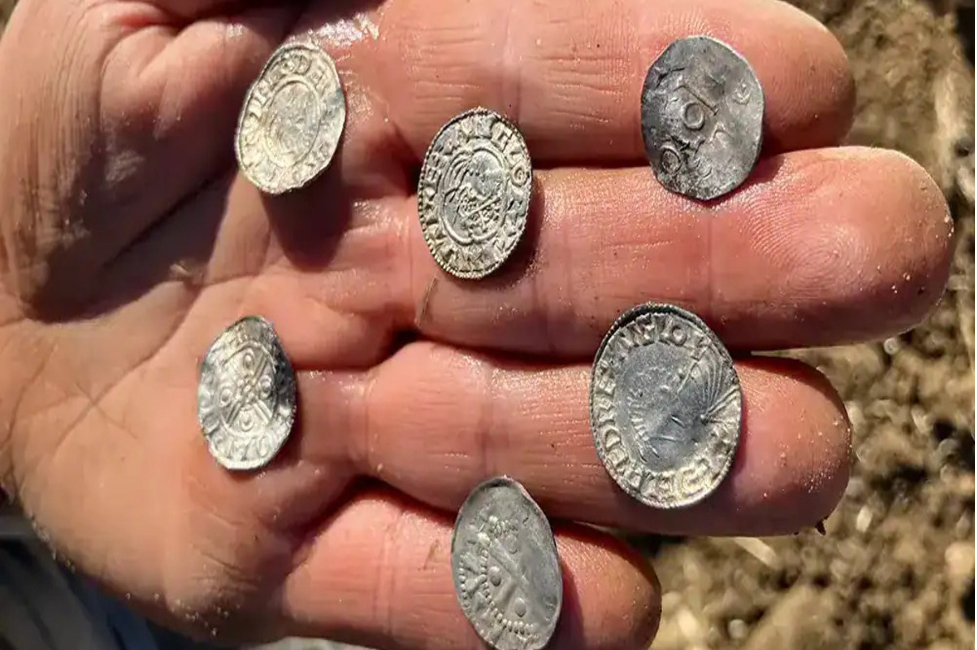
"There are also a lot of coins, both from the Viking Age and later periods. So it also looks like the site was used for trading. The detectorists go there a lot, and more and more finds are appearing. So it wouldn't surprise me if we were faced with more graves in the future."
Knut also has a final few words of praise for Roy Søren, the metal detectorist who uncovered this remarkable find.
"He did the right thing. He notified the authorities and left the finds alone – all praise to him. Metal detectorists are following their hobby, but some of them are becoming very skilled."
"They are well aware of the laws and regulations, and have very good cooperation. He actually joined us on the excavation," Raymond adds.
"He helped us with shifting topsoil and other things. We also enjoyed excellent cooperation with the landlord – without their contribution, it would never have been possible!"
We get to provide readers with original coverage thanks to our loyal supporters. Do you enjoy our work? You can become a PATRON here or via our Patreon page. You'll get access to exclusive content and early access.
Feel free to reach out to discuss potential stories that may be in the public interest. You can reach us via email at hello@thevikingherald.com with the understanding that the information you provide might be used in our reporting and stories.