

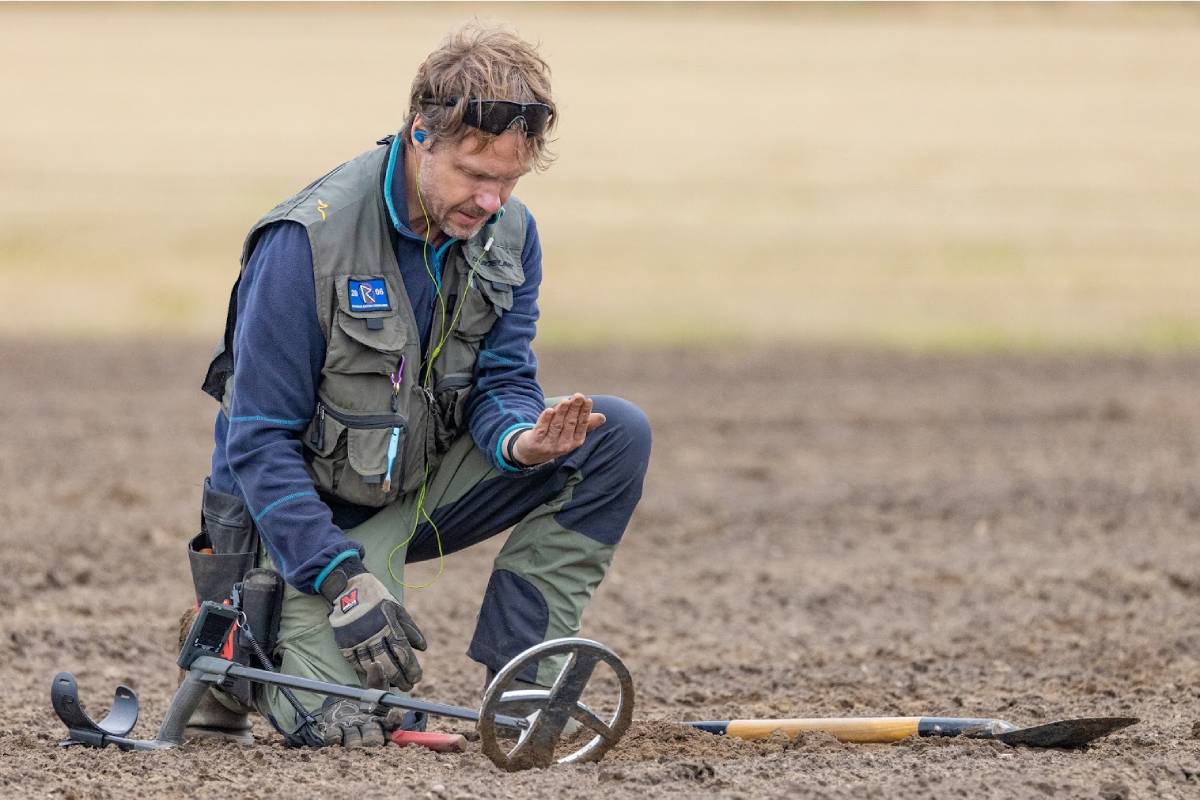
Metal detecting has exploded in popularity in recent years, while also becoming increasingly important in the field of archeology. In the UK, for example, more than 70,000 finds are unearthed by metal detectors every year.
Metal detecting is also growing in Scandinavia. As the co-founder of the Rygene Metal Detecting Club and the recent finder of a rare coin from the end of the Viking Age, Morten Eek has some unique insights into this pastime.
Two decades of passion
"I've been a metal detectorist for more than 20 years," Morten informs The Viking Herald.
"Metal detecting is a way to participate in and get closer to real-life history. As a child, I always loved history and dreamed about making discoveries."
"I was already an adult when I bought my first metal detector in the early 2000s. I was settled here in Stavanger and had met my wife, but we hadn't had children yet. Somehow, I understood that if I was going to do something about this dream, that was the time."
"I started out alone in a park in Stavanger," Morten says. "The park was very popular, but I decided to visit the sections that were not frequently visited, the woods and overgrown areas."
"There, I was able to find some simple coins that were perhaps 100 or 150 years old. I slowly learned the technique of identifying the metal, how to listen to what kind of sounds are good signals, and which ones are bad."
"The hardest part was when I started having to knock on the door of landowners to ask permission to search on their land," Morten admits.
"I really wasn't looking forward to it at all. But I soon learned that most landowners and farmers are really proud of the land and are very knowledgeable. I have ended up having a lot of good conversations."
"Some of them also told me I was not the first person to knock on their door. And so, slowly, I realized that there were a few other lonely souls like me out there doing exactly the same thing!"
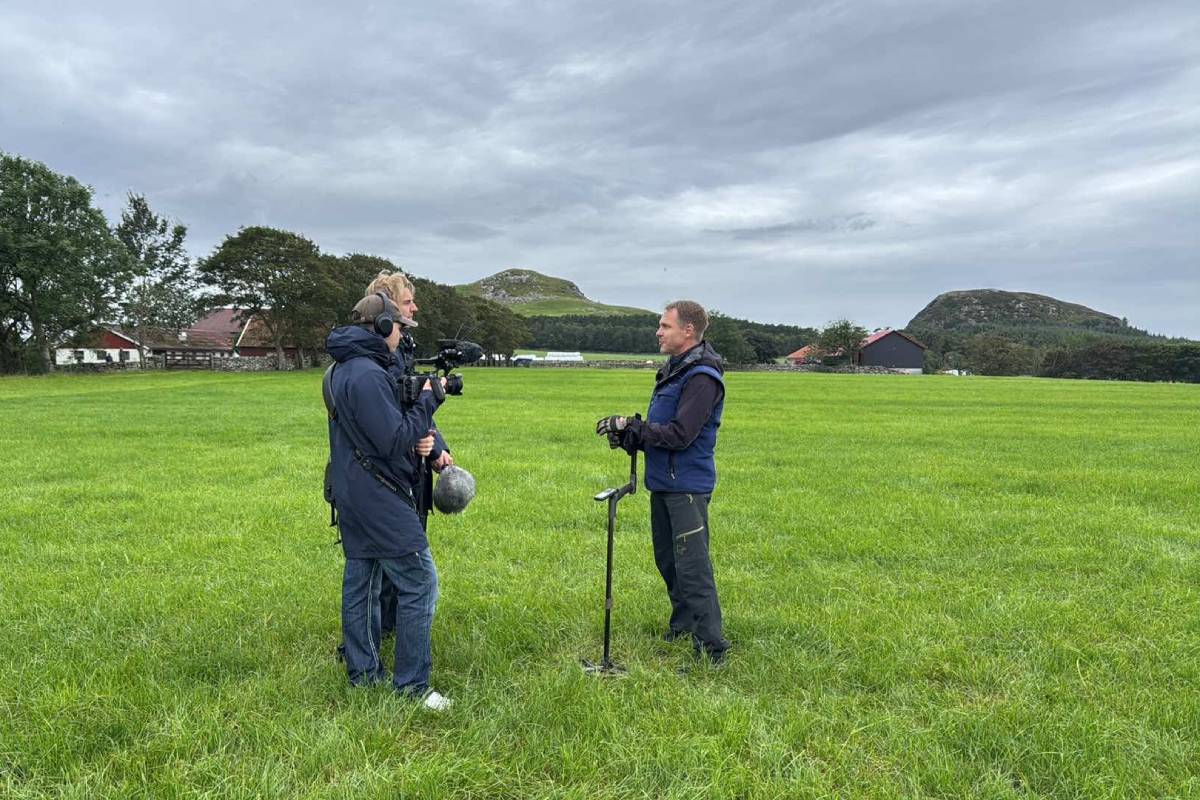
Morten Eek being interviewed by Norwegian broadcaster NRK at Utstein Abbey. Photo: Inger Lise Rettedal
Building a community
As Morten began to connect with other metal detectorists and became more aware of the local scene, he thought of a way to help people share their passion.
"That's how we formed the local club here in 2006," Morten explains. "I made contact with John Kvanli, and we decided to found the Rygene Metal Detecting Club."
"We are focused on the historical side of detecting in Rogaland, in western Norway. There are ten of us here, and we have a network of around 50 people across Norway, Denmark, and Sweden."
As well as meeting for metal detecting sessions, the members share information about the culture and regulations in different countries and regions.
"All these places have different approaches to metal detecting, and where you're allowed to do it," Morten points out.
"In Norway, for example, it's very well regulated. If the find is older than 1537, or 1650 for coins, then it's the state's property, so you are legally required to hand it in to a museum."
"The museums have begun to see the interest and the benefits over the years," Morten reports. "They gain a lot of insights from the finds that are being delivered."
"Denmark is a model for Norway—they take it really seriously and have lots of collaborations between metal detectorists and museums. I'm starting to see that approach more in Norway too, particularly among younger archeologists."
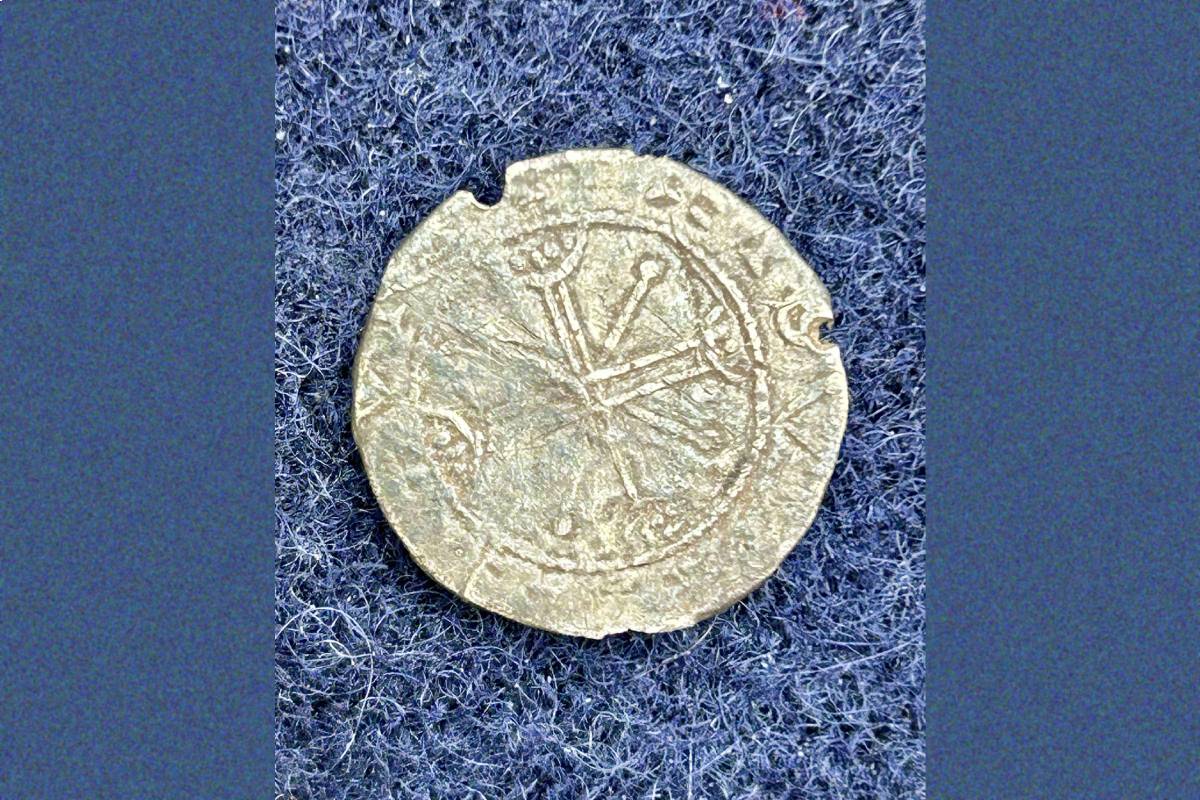
Found by Morten Eek, the Magnus Barefoot coin is notable as the only specimen of its type recorded in Norway. Photo: Morten Eek
Coin or button?
The fruit of this growing mutual relationship between archeologists and metal detectorists in Norway has never been more evident than with one of Morten's recent finds—a late 11th-century coin unearthed at Utstein Abbey on the island of Klosterøy.
"It was one of those discoveries where you don't immediately realize what you have found," Morten admits.
"Of course, everything we take out of the ground just looks like a lump of soil at first. But sometimes you know you've found something really amazing. This was not such a story."
"We went out to the abbey on an early spring day," Morten continues. "We were in an area that we had searched many times before, and I got a really good signal."
"I picked the object out and cleaned it, and I could see a coin visible on one side. It was the right size, and it was shiny... But then I turned it around, and I was so disappointed."
"It didn't look like a coin at all; it looked like a button. There was a copper alloy plate that typically indicates a worn button—we find thousands of those every year."
"I immediately showed it to one of the other guys, and he also agreed it looked like a button, so I just put it away in my pocket," Morten adds. "We carried on searching, but none of us found anything good."
"When I got home, I threw the find in this huge bucket in my basement. I put everything there that could have been something, but which doesn't seem to have any real value or purpose."
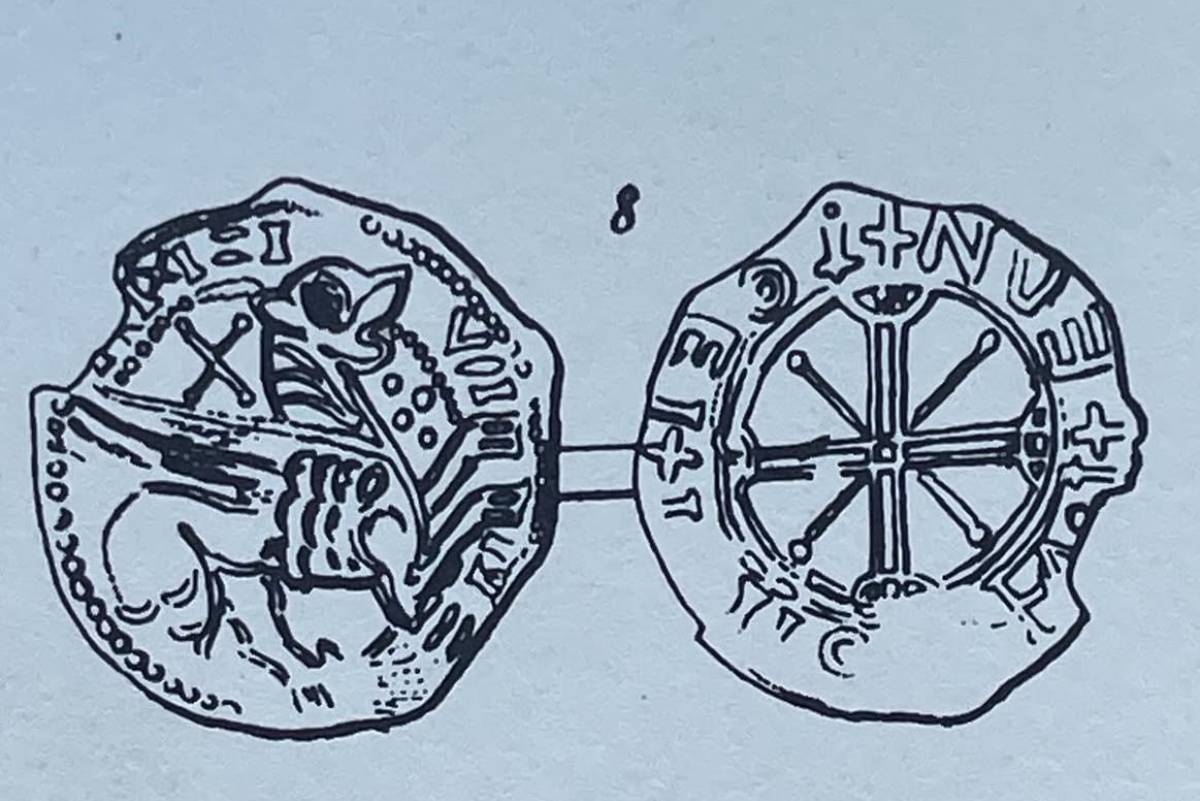
The first Magnus Barefoot coin of this type was found in the Faroes in 1865. Morten Eek's find became the fourth known example. Illustration: C. J. Schive (1792–1878)
Something special
The artifact languished in the basement for several months. "Then, during one of those really hot summer days in July, I was sitting out in the garden with my friends from the club," Morten explains.
"We were looking through some finds, and I suggested getting the bucket and just pouring it onto the table to see what was there. When I did it, I immediately spotted the coin lying there."
"It looked different from everything else; it was still shining. We passed it around, and someone else said that it looks like it really is a coin—it's just attached to something."
"We got some reference books and found a medieval coin that looked very similar," Morten continues. "Little by little, we narrowed it down and decided it was most likely a coin from the reign of Magnus Barefoot, the former king of Norway."
"Even then, we weren't sure because we could only see one side of the coin, the other was covered by the copper. We posted photos in our detecting forum for questions, views, and opinions."
"This was a Saturday, and the very next day I got a call from Linn Ramberg, an archeologist from the University of Stavanger's Museum of Archaeology. She told me I needed to come in straight away so we could take an X-ray and find out what was on the hidden side of the coin."
"I went to the museum and delivered it the following day. I think we got fast-track treatment!" Morten tells The Viking Herald.
"Only a few hours later, they had the answer. They could see it was a match for what they had expected to see. The X-ray showed the other side of the coin contained biblical iconography, a lion with wings, a griffin."
"The motif confirmed it was a really rare Magnus Barefoot coin. In fact, there has never been a similar one found in Norway, even though Magnus Barefoot was a Norwegian king."
Even then, the copper alloy and the secondary use of the coin remained a mystery. "It was discovered as a coin, but it's not a coin anymore at all," Morten points out.
"It has served some other purpose, been crafted into some other kind of thing. It may have been a piece of jewelry or some decorative element for other purposes, but we probably won't know the answer."
"To me, it looks like it has been made into some kind of jewelry, maybe an earring or a necklace. But it could also be some sort of decorative plate, or a belt."
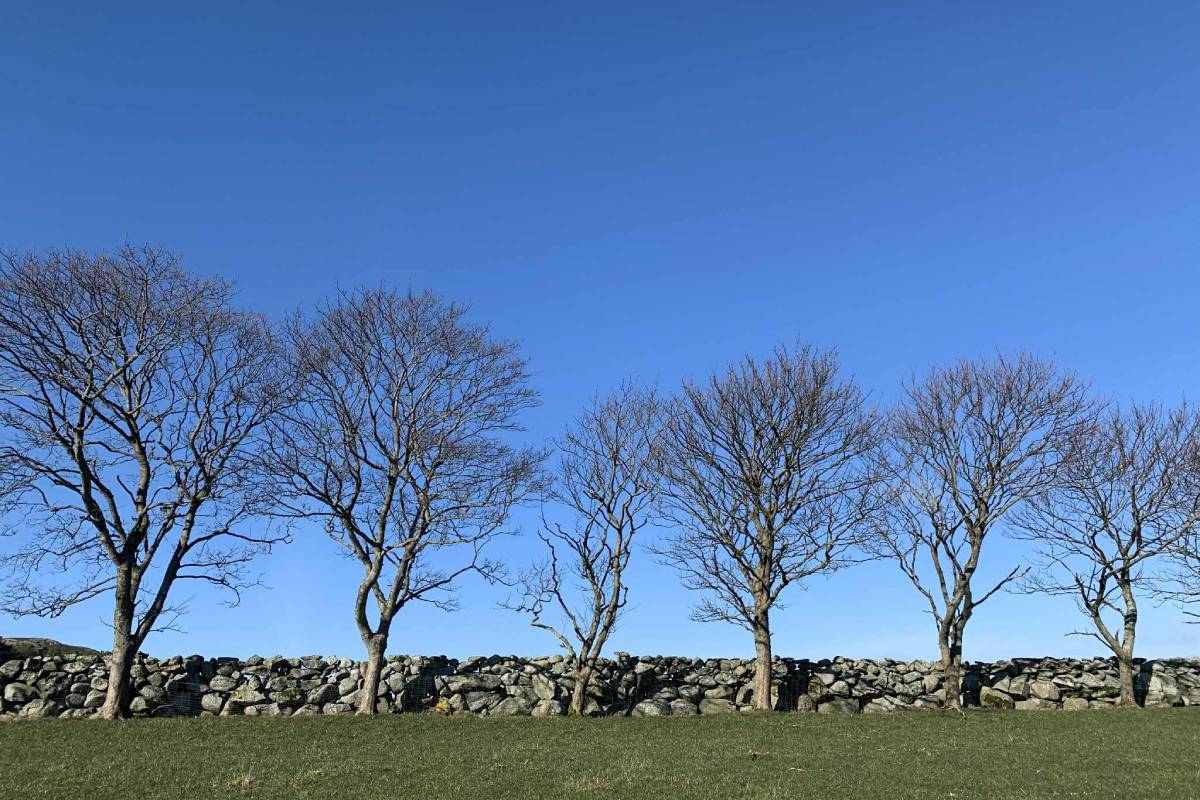
The landscape around Utstein Abbey in Rogaland, where Morten Eek made his discovery. Photo: Morten Eek
"An incredible feeling"
While uncovering a rare coin from the reign of Magnus Barefoot is certainly a highlight, Morten has also found many other artifacts over the years.
"We have been lucky to make many discoveries, including several brooches and other pieces of jewelry," he informs The Viking Herald.
"I have also found some mounts that look like they were made in the British Isles and could have been brought here by raiders or through trade. One was close to Samnäs, near Stavanger, where there were also some melted bronze and other finds."
"I think the most common theory about it is that it may have been from a relic shrine on an island or from somewhere in England."
"It's an incredible feeling to make such discoveries," Morten admits. "Especially when you immediately understand that you have unearthed something that no one else has seen for a thousand years."
"You're the first person to actually take it into your hand and brush it carefully, to study the details. Sometimes you will uncover gold plating or silver threads, beautiful craftsmanship. It's really special."
"And when you go and deliver those kinds of things and see them displayed in the museum, it really becomes something meaningful."
We ask Morten if he has any advice for aspiring metal detectorists. "It's about connecting with other people," Morten replies.
"Now metal detecting is more mainstream, and it's easier to go online and share it with other people. It also doesn't require a lot of money. A fairly good metal detector can last you five or ten years. But you do need a lot of patience."
"In 99% of all the holes I dig, I find rubbish that rightfully goes into the bin. It's about finding those really good signals—those are the moments you live for. I encourage people to have the patience and stamina to go for it though; it is very rewarding."
We get to provide readers with original coverage thanks to our loyal supporters. Do you enjoy our work? You can become a PATRON here or via our Patreon page. You'll get access to exclusive content and early access.
Feel free to reach out to discuss potential stories that may be in the public interest. You can reach us via email at hello@thevikingherald.com with the understanding that the information you provide might be used in our reporting and stories.