

From the British Isles to the Baltic, from the Iberian Peninsula to the shores of the Caspian Sea, these Viking raids changed our understanding of Europe's most feared early medieval warriors.
Some were fast and brutal. Others were tangled up in politics or state warfare.

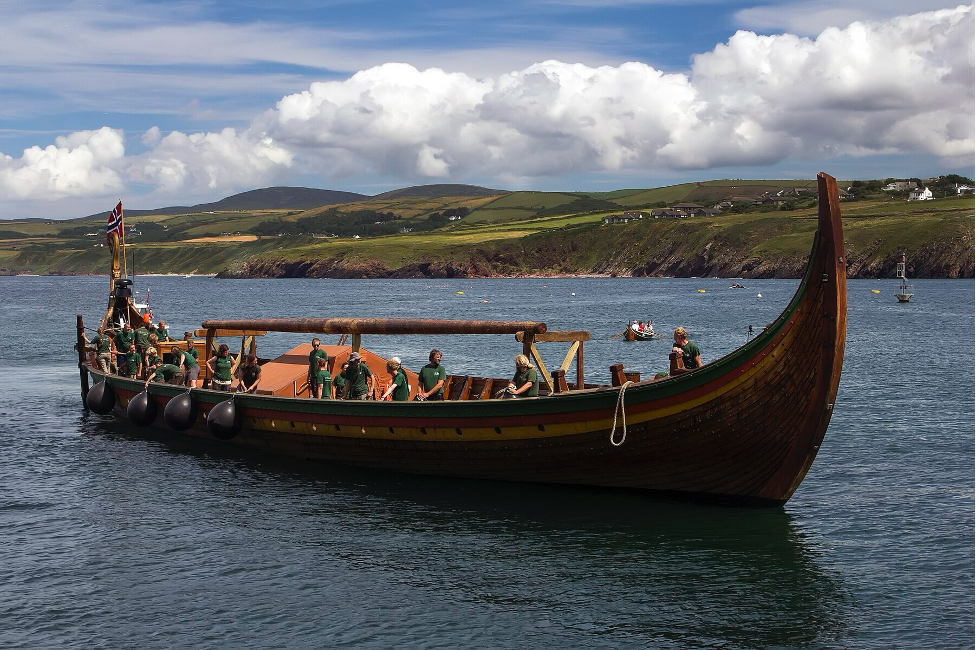
The Salme burials contained 41 fallen warriors, two clinker-built ships, and an early Viking sword. Photo: Rsaage / Wikimedia Commons (CC BY-SA 3.0)
1. Salme (modern-day Estonia), c. 750s
The traditional story of the Viking Age starts in 793 CE. This was what the present author, when knee-high and with far less gray hair, learned as the starting date of this tumultuous time in European history.
However, only recently has new evidence come to light that pushes back this starting date by at least half a century.
Near the village of Salme, on the island of Saaremaa in the Baltic Sea, road workers unwittingly uncovered one of the most important archeological discoveries of the 21st century, the so-called Salme ships.
Between 2008 and 2010, two clinker-built ships (a style favored by people from Viking societies in Scandinavia and their descendants right up to today) were unearthed alongside the remains of 41 warriors killed in battle, their animal companions (including dogs), and numerous weapons.
Skeletal and DNA analysis showed that most of the men came from central Sweden and were in their 30s. Further analysis showed that the ships, used as part of an elaborate burial ritual, were buried sometime in the first half of the 8th century.
As Jüri Peets et al. note in their article in Archaeological Fieldwork in Estonia, "The Salme ship burial is unique in all of Europe... dating from a single event... at the dawn of the Viking Age (c. 650–750 CE)."
Why these men were killed in battle is yet to be uncovered, but many historians point to this as the earliest instance of a Viking raid.
However, the discovery of the larger ship in 2010 seems to suggest that the party may have been a diplomatic mission.
Regardless, there is evidence of people from Viking societies sailing and fighting on the shores of Europe at least 50 years earlier than thought!
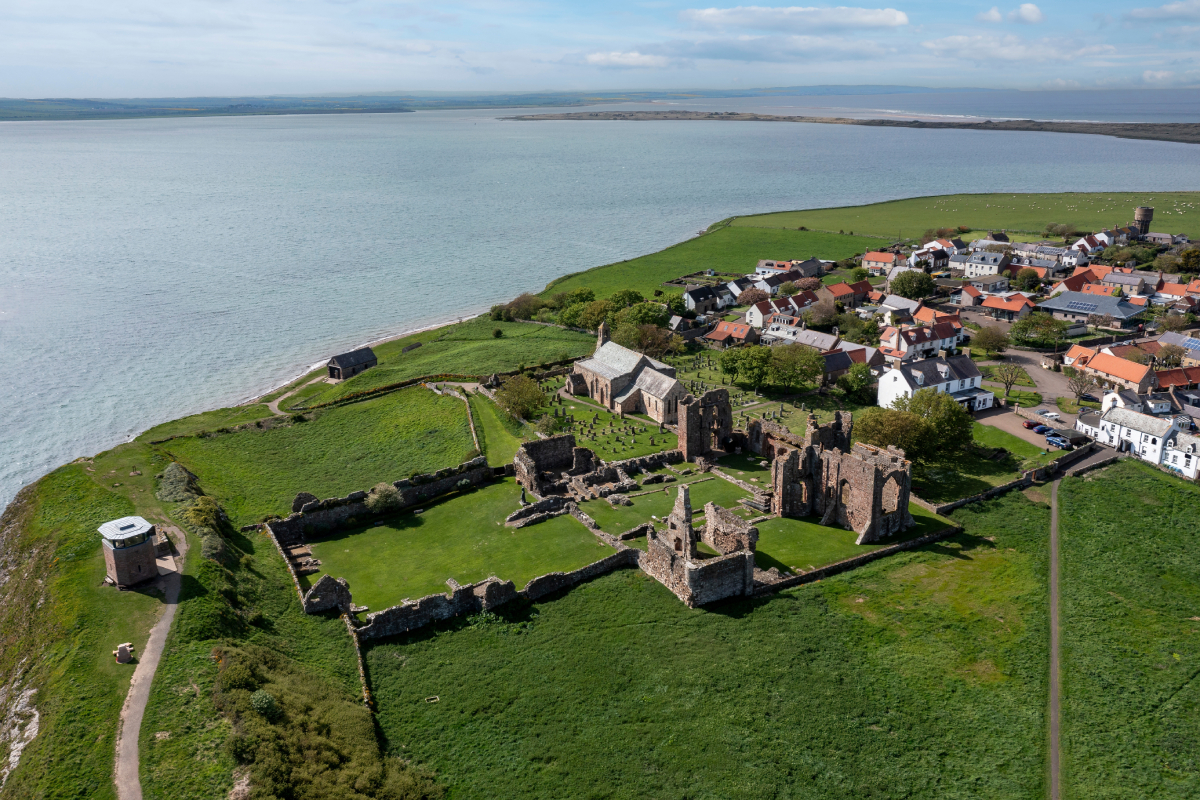
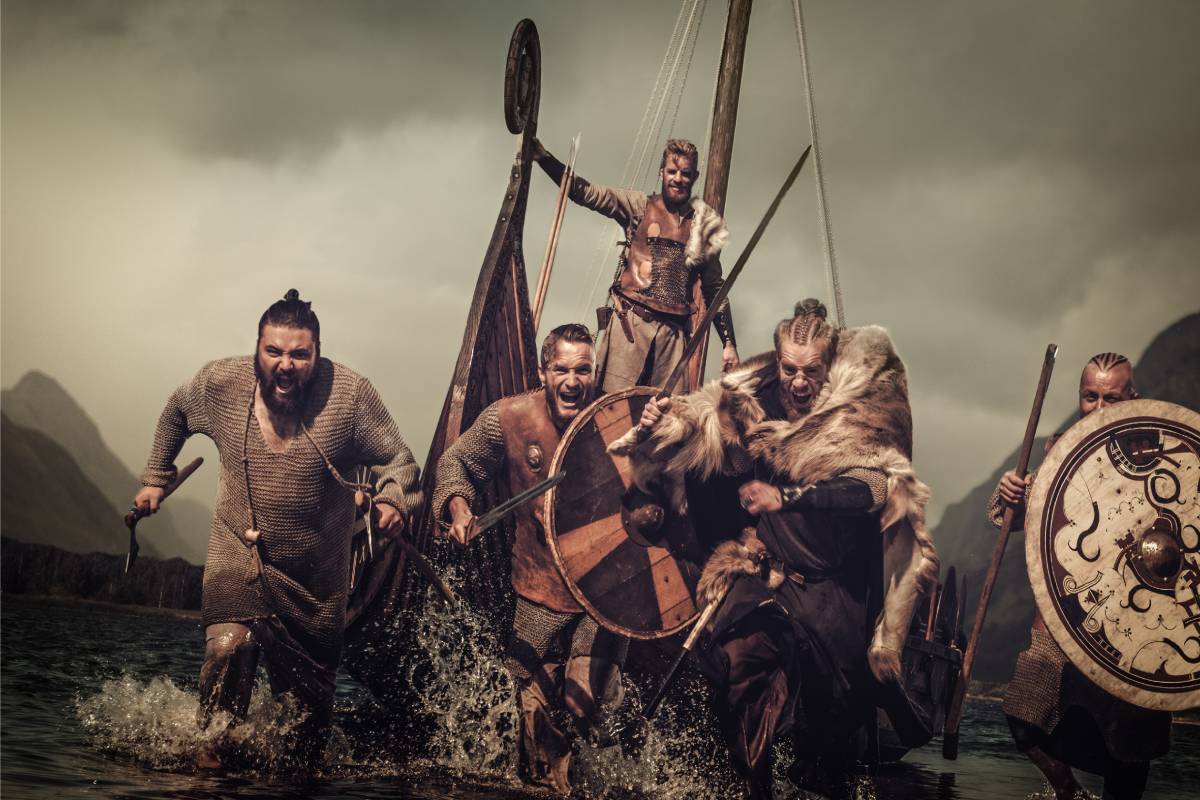
In 793, Viking raiders stormed Lindisfarne, killing priests and looting one of Britain's most sacred sites. Photo: GrahamMoore999 / Shutterstock
2. Lindisfarne Monastery, off the coast of northeast England, 793
"...never before has such terror appeared in Britain as we have now suffered from a pagan race, nor was it thought that such an inroad from the sea could be made. Behold, the church of St. Cuthbert spattered with the blood of the priests of God, despoiled of all its ornaments; a place more venerable than all in Britain is given as a prey to pagan peoples."
[Letter of Alcuin of York to King Æthelred, c. 793, often identified as Epistola 20]
These words come from a letter by an Anglo-Saxon exile in the Frankish court, a tutor to the children of the man often described as the grandfather of Europe: Charlemagne.
That tutor, scholar, priest, and key figure of the Carolingian Renaissance was Alcuin of York. What he described was one of the most epoch-shattering events of European history: the raid on Lindisfarne.
This remote monastery, renowned as a center of intellectual as well as religious life, suffered a bloody raid on June 8, 793 CE, by Vikings.
This is the Viking raid that has echoed down through the ages, and where traditional histories—especially in the Anglosphere—typically date the beginning of the Viking Age.
For moderns, the best comparison to the epoch-changing Lindisfarne raid would be something akin to 9/11. For Americans, 9/11 was seen as a bloody and violent attack seemingly out of nowhere, all done with sickeningly lightning speed.
Much of the world, and especially the United States, is still living with the psychological scars and repercussions from that fateful September day.
For those who lived through that horrible day, 21st-century history will forever be divided into pre- and post-9/11. For those who were living in Europe in 793 CE, their lives after that June 8 raid—another fateful day of blood and violence—would never be the same again.
And we have people from Viking societies to thank for that.
The raid itself was little more than a predatory attack on an isolated community in a coastal location.
This would become the very textbook definition of Viking raids during the first phase of the Viking Age (c. 750–860s CE).
Furthermore, like all future raids, the poor clerics on Lindisfarne were either put to the sword or enslaved.
This combination of death and destruction would foreshadow much of this period of European history, where countless coastal and river-bound communities would suffer Viking raids, and their populations would be murdered or sold as human chattel throughout the slave markets of Europe and West Asia.
The raid on Lindisfarne should be thought of as the quintessential Viking raid—a surprise, lightning attack, widespread destruction, and leaving surrounding communities (nay, Europe) in paranoid fear of when the Vikings would strike next.
It is for all these reasons that this attack has been chosen as the symbolic beginning of a whole new, and violent, historical era.
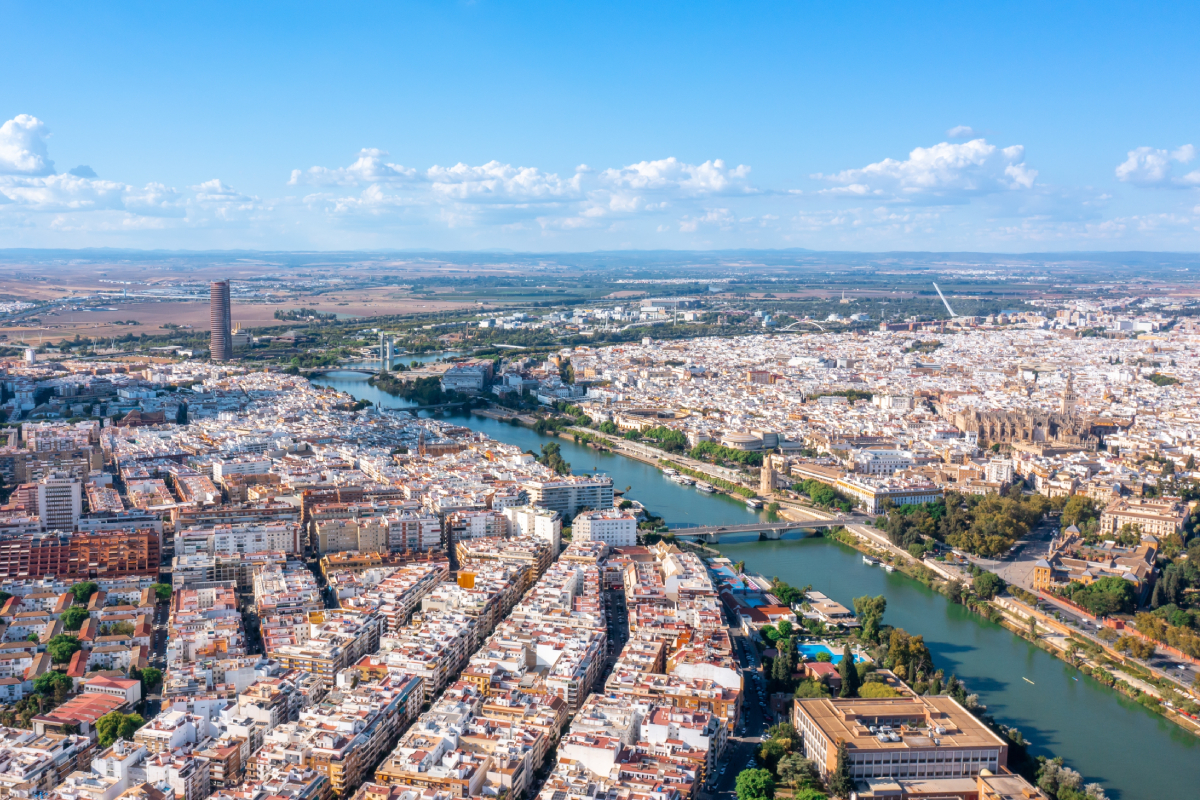
The 844 raid on Išbīliya (Seville) ultimately ended in defeat for the Vikings, with 1,000 killed and 30 ships lost. Photo: Serhiy Stakhnyk / Shutterstock
3. Išbīliya, Al-Andalus (modern-day Seville, Spain), 844
Whilst many tourists head to Spain each year for sun, sand, and sangria, the country is also a religious hotspot.
From the Camino de Santiago in the north to the Sagrada Familia in the south, Christianity is deeply embedded in Spanish life.
This may be partly due to the fact that, for much of the early medieval period, Spain was a spiritual battleground between Christianity and Islam.
As Neil Price writes in The Viking World (2008), "the potential advance of Islam... was perceived a greater threat to Christian Europe than the Vikings themselves."
This advance was to be halted by Christian soldiers throughout the Iberian Peninsula.
The Reconquista—the long campaign to return the Iberian Peninsula to Christian rule—was a defining event of the Middle Ages.
Yet despite the warfare, Islamic rule in Spain (711–1492 CE) was also a period of tolerance and cultural flourishing.
Under Muslim control, Spain became Al-Andalus, a center of learning where Muslims, Christians, and Jews coexisted and pursued enthralling intellectual and cultural endeavors.
When Vikings launched a raid up the River Guadalquivir in 844, they had their sights on the town of Išbīliya—now known as Seville, and in the opinion of this author, surely Spain's most beautiful city.
Yet despite their initial success, pillaging all that lay before them along the river and its surrounds, they became bogged down—literally. They set up a base camp in the surrounding marshes, hoping to lay siege to and capture the lucrative town.
At the time, Seville was part of the Muslim-controlled Emirate of Cordoba. Linking into the broader Islamic world, the authorities here had access to much better military organization and logistics than their European counterparts further north in, say, West Francia.
The Vikings had expected quick success—they captured much of the town within four days of their arrival on September 25. However, the citadel remained in Muslim hands.
The Emir Abd ar-Rahman II quickly organized a counterattack. Using incendiary weapons described in some sources as similar to Greek Fire—a devastating Byzantine innovation—the defenders drove the Vikings out.
According to Islamic sources, the Norse lost as many as 1,000 men and 30 ships before retreating by mid-November.
This raid—more siege than lightning strike—revealed the limits of Viking power when confronted by organized resistance and advanced military technology.
- READ MORE: A Viking history of Spain
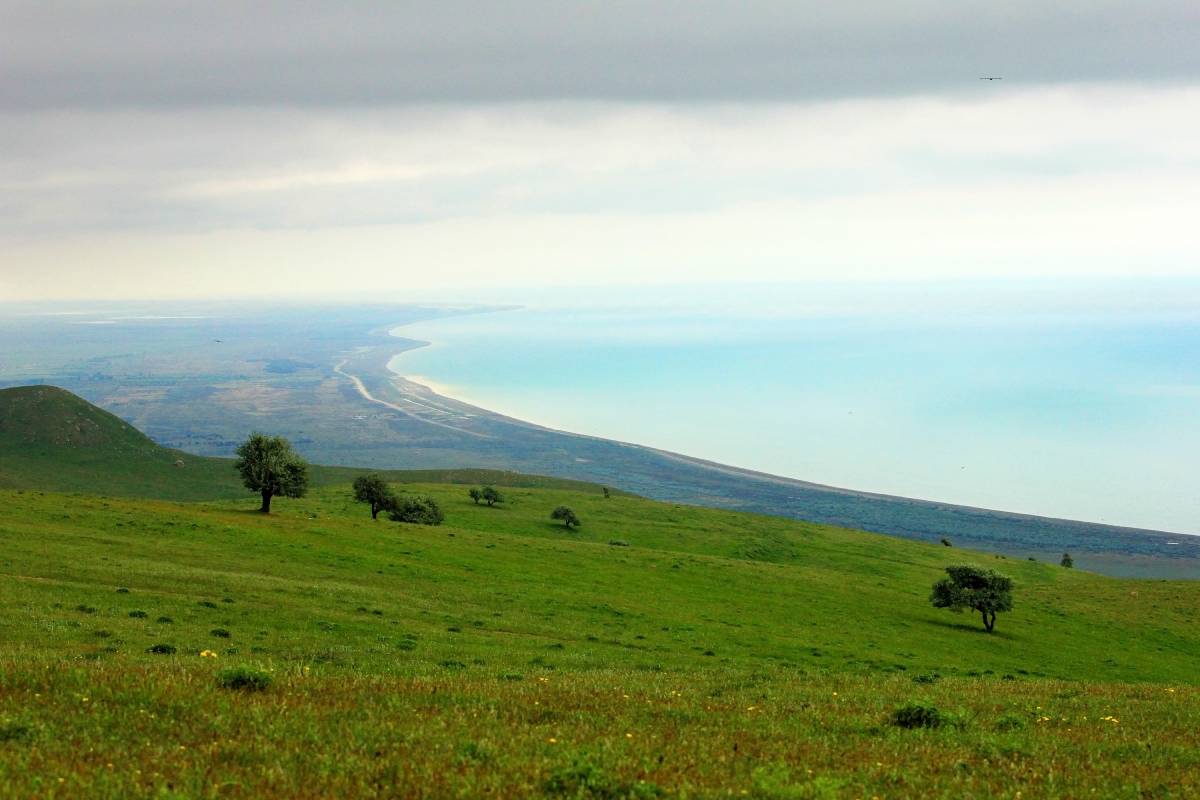
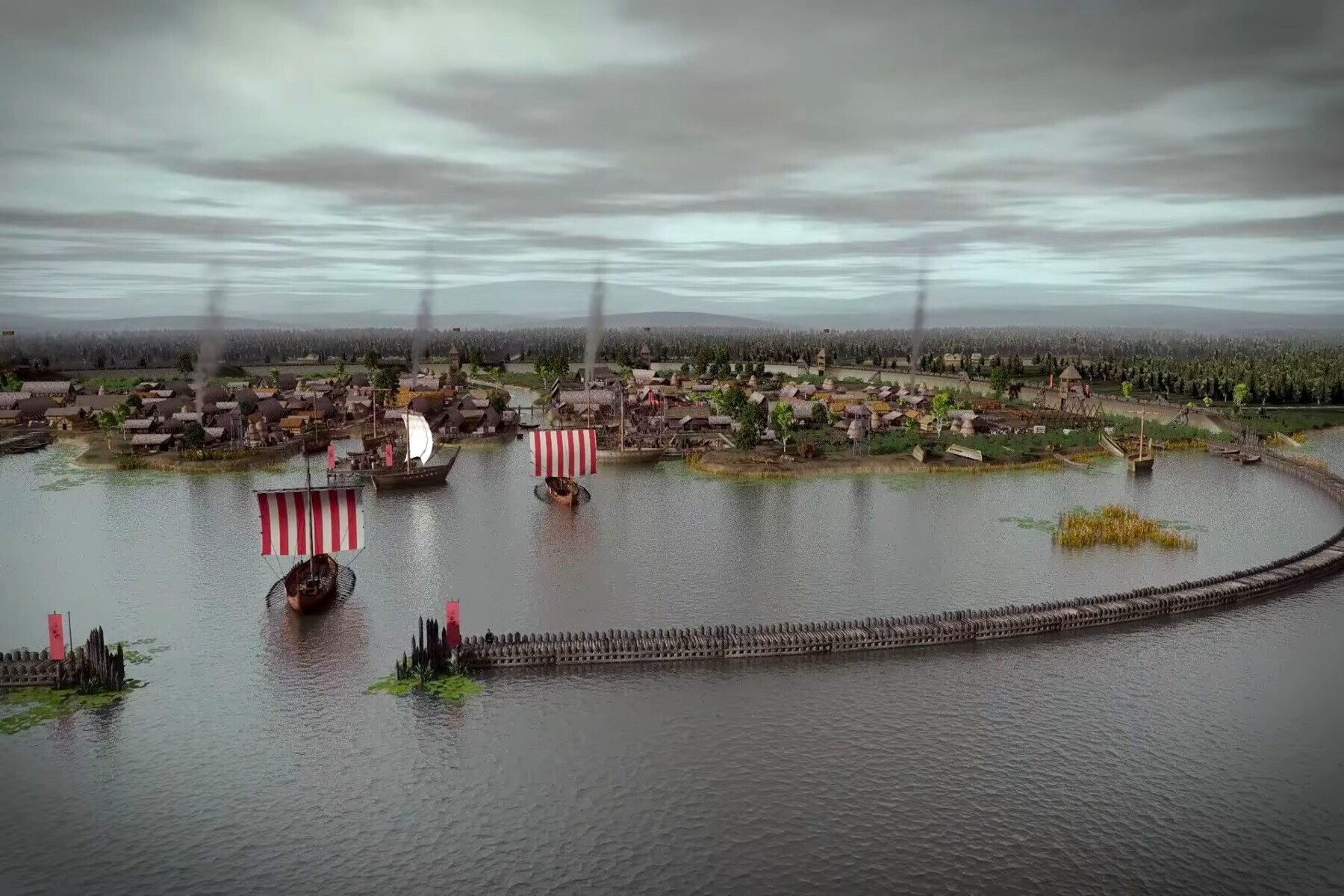
In 913, a Rus fleet of up to 500 ships attacked the Caspian region, reaching the shores of present-day Azerbaijan. Photo: MasyuraN / Shutterstock
4. The shores of the Caspian Sea, c. 913
The eastern exploits of people from Viking societies have been largely forgotten, ignored, or overlooked in the Western mind until the past few years.
A whole new generation of Viking academics and scholars has helped shift this Occidental way of thinking with new research, like Dr. Cat Jarman's famed 2020 book, River Kings.
Sadly, the eastern history of the Vikings—specifically the Kievan Rus, an early medieval polity in Eastern Europe that was established by people from Viking societies—was misused and abused by Russian President Vladimir Putin as an excuse for his 2022 invasion of Ukraine.
From the very beginnings of the Viking Age (c. 750–1100 CE), people from Viking societies headed eastward from their homeland in Scandinavia.
They utilized the many river systems that snake across Eastern Europe.
Here, they soon dominated the local population and established what we modern historians call the Kievan Rus—a multiethnic and multireligious polity that Belarus, Russia, and Ukraine all trace their ancestry back to, between the Baltic and Black Seas.
From there, Viking expansion continued further east, deep into what is now Russia.
As University of Iceland professor Þórir Jónsson Hraundal writes in an article, this often-overlooked eastern phase of Viking activity has produced a wealth of "Scandinavian artifacts... unearthed throughout what is today Russia and Ukraine, well towards the lower Volga and the Caspian Sea."
It was the shores of the Caspian Sea that these eastern Vikings would strike in the early 10th century.
The Caspian Sea, at this stage in history, was very much a frontier zone between East and West, between the Islamic world, the Rus, and various Central Asian nomadic tribes.
It was here, in 913, that Vikings—namely the Rus, descendants of those Vikings who had settled in Eastern Europe—launched a devastating raid with as many as 500 ships.
It was said that they raided and laid waste to much of the region, even as far as what is now Baku (Azerbaijan's shiny capital), some three days' journey inland.
Further Viking raids would occur in 943—if we are to believe Russian medieval chronicles—and a century later, said to be led by the noted Viking leader, Ingvar the Far-Travelled.

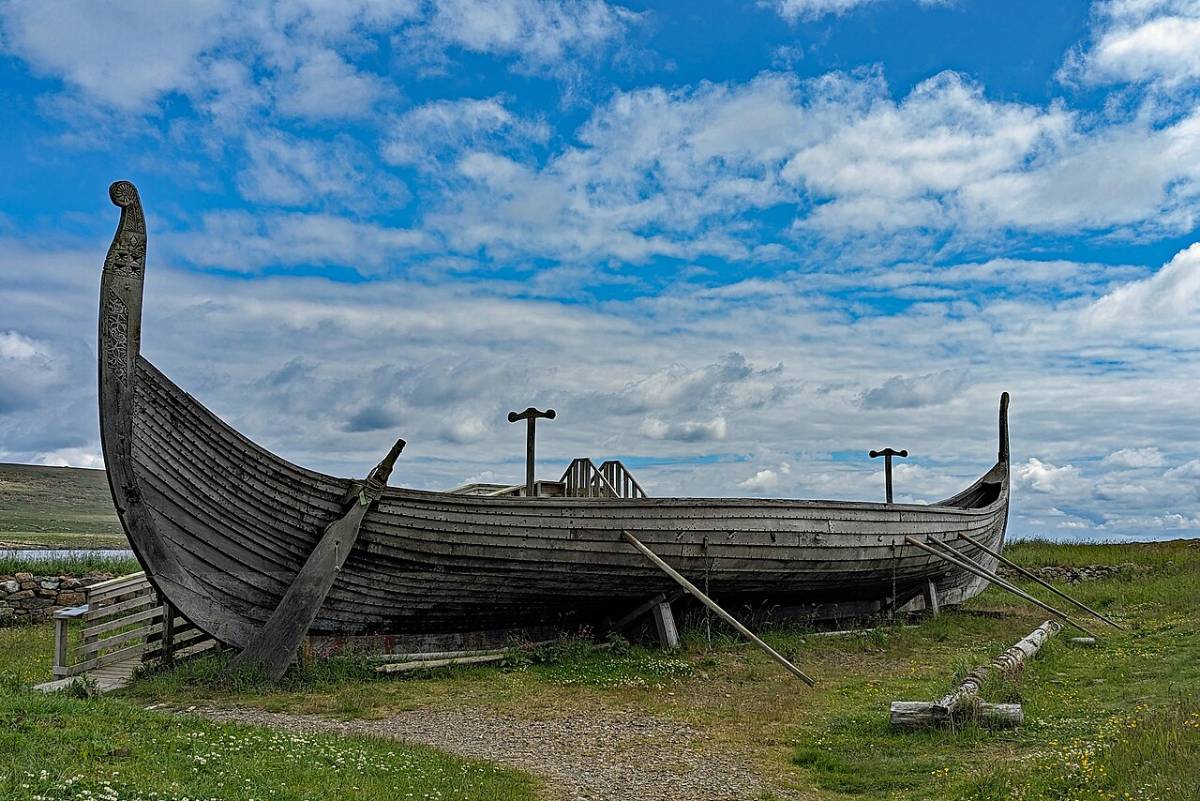
Located in the Inner Hebrides, Iona Abbey was a major religious center struck repeatedly by Viking raiders. Source: Heartland Arts / Shutterstock
5. Iona, off the northwest coast of Scotland, c. 1209–10
"...with twelve ships, [they] went on a plundering trip to the west; and they plundered the Sudreys and the surrounding islands... They pillaged the Holy Island [Iona], which Norwegians have always held sacred..."
[Bǫglunga sǫgur, trans. Dr. Ian Beuerman]
The Viking Age is traditionally said to have ended at Stamford Bridge, when Harald Hardrada was hacked to pieces in 1066. This, it was said, signaled the last Viking invasion of the British Isles.
The victor that day, Harold Godwinson, would only remain on the English throne—and alive—for a few more weeks before his bloody end at Hastings, which heralded the Norman conquests.
However, Vikings didn't simply wake up the day after Stamford Bridge and miraculously transform into medieval Danes, Norwegians, or Swedes.
This was a centuries-long process that saw much of the British Isles—especially what is now Scotland—continue under heavy Viking influence right up into the 15th century.
Iona, a lonely island off Scotland's northwest coast, had suffered a series of devastating Viking raids since the early 9th century.
Its monastery—a center of Celtic Christianity in the early medieval period—was a glittering and isolated prize that saw a steady stream of Viking ships sail by, loot, pillage, and plunder.
It is hard to pinpoint exactly when the final Viking raid occurred, but a serious attack on Iona in 1209–10 is about as good a point as any to mark the end of the Viking Age.
This area of the British Isles—northwestern Scotland and much of Ireland—had been settled by people from Viking societies centuries before and was still very much under the influence of their descendants, the Norwegian crown.
Taking pride of place on the island was Iona Abbey, which had been reorganized as a Benedictine monastery. The Columban clergy, who had established the abbey in 563, were expelled, angering allies further south in what is now Ireland.
An expedition was undertaken, with planning by both the Norwegian crown and the Catholic Church, to remind the local population, including those on Iona, who held ultimate political authority in this part of the world.
What did occur, very much as a sporadic event and not one that had been planned, was the full-scale sack of Iona Abbey in 1209.
Yet this raid blurred the line between what we think of as a Viking raid and a formal military expedition by the Norwegian crown to bring its far-flung possessions back under control.
Following the sack of Iona in 1209, the days of predatory raids by people from the Scandinavian peninsula—and their cultural descendants—were truly numbered.
For more information on just how violent Vikings were, visit LiveScience here.
We get to provide readers with original coverage thanks to our loyal supporters. Do you enjoy our work? You can become a PATRON here or via our Patreon page. You'll get access to exclusive content and early access.
Feel free to reach out to discuss potential stories that may be in the public interest. You can reach us via email at hello@thevikingherald.com with the understanding that the information you provide might be used in our reporting and stories.