


A lesser-known side of Viking history is their artistic endeavors. Whilst the popular imagination is occupied with the ravenous and bloodthirsty exploits of Viking warriors, we know that the large majority of the population never swung an axe in anger.
For those who did, this was only ever a temporary job, and many were employed daily in more peaceful pursuits.
Spanning the entire early medieval period, the Viking Age features countless intricate works of art crafted lovingly by skilled artisans.
As David M. Wilson talks about in his chapter in the 2008 book The Viking World, this artistic tradition produced wonderful pieces of "...self-confident native art," the equal of anywhere else in the early medieval world.
This "self-confident native art" has been traditionally divided into six phases named largely after archeological treasures and artifacts dug up in the past two centuries.
It should be noted, as with most artistic styles, that there is a large amount of crossover between the styles, thus making any dating more of a guiding idea than definitive.
Spanning the breadth of the Viking Age was the evolution of Viking art into several distinct phases.
The first distinct phase was the Oseberg style (c. 750–875 CE), named after its most famous example, the Oseberg ship. It featured animal motifs with slender, often intertwined bodies.
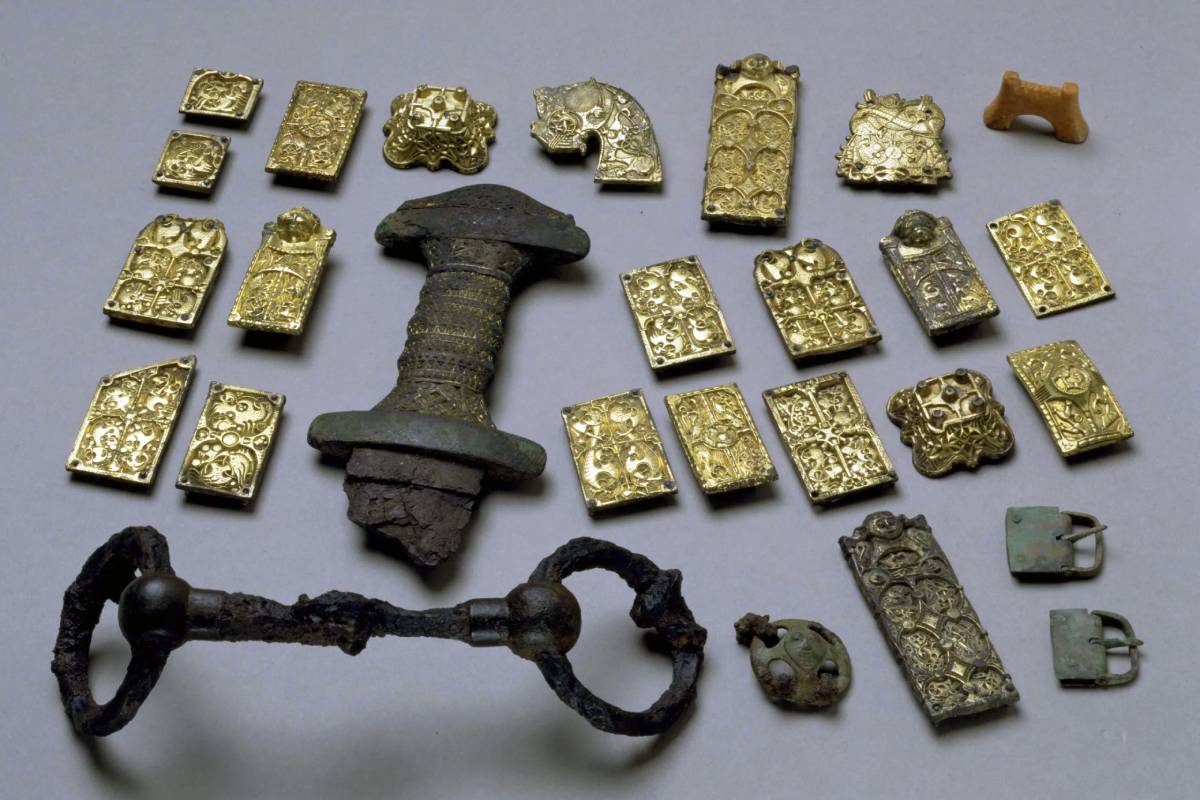
Though not widely considered a distinct phase, the Broa style (c. 800–875), named for a bridle mount found at Broa, Sweden, is often cited for its compact metalwork motifs and is usually placed within the Oseberg style.
The Borre style (c. 850–950) was named after the location of a Viking ship burial in Norway, with geometric features as its hallmark.
Following this came the Jellinge style (c. 900–975), which saw elongated animal-like motifs that were most prevalent on a range of artifacts belonging to Danish kings Gorm the Old and Harald Bluetooth.
Next came the Mammen style (c. 950–1000 ), which saw objects, like a beautifully decorated axe from this period uncovered in Mammen, Denmark, richly adorned with flowing patterns.
The following style, Ringerike (c. 1000–1075), received its name from several runestones with animal motifs found near Oslo, Norway. Delicately carved on the runestones, which bear its name and are a feature of this artistic style, are delicate yet elongated depictions of birds and lions.
Traditionally, the middle of the 11th century, the failed invasion of England by Harald Hardrada, usually signals the end of the Viking Age. Yet there was one last cultural blossoming of people from Viking societies before this age truly ended, as evidenced by a church in Urnes.
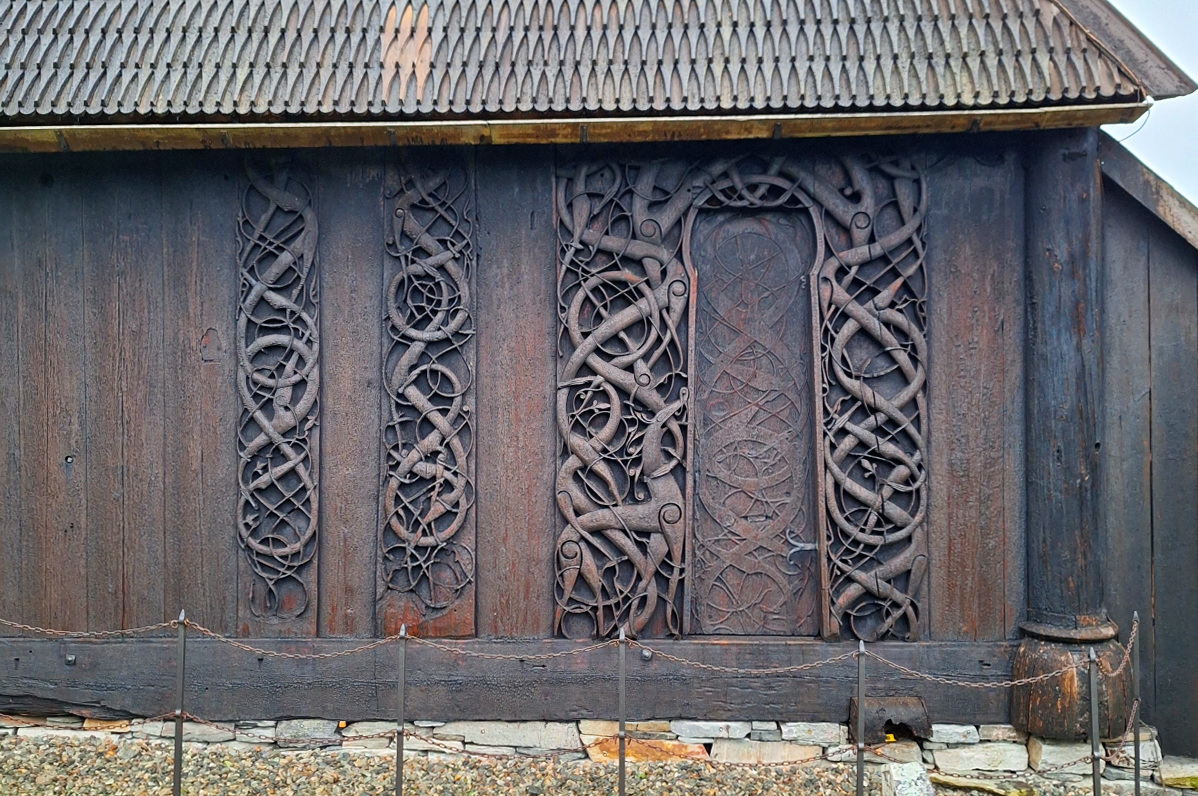
The Urnes style takes its name from the carved north portal of Urnes Stave Church. Photo: Boni Wiik / Treskjærerverkstedet A/S
The style of the Urnes Stave Church
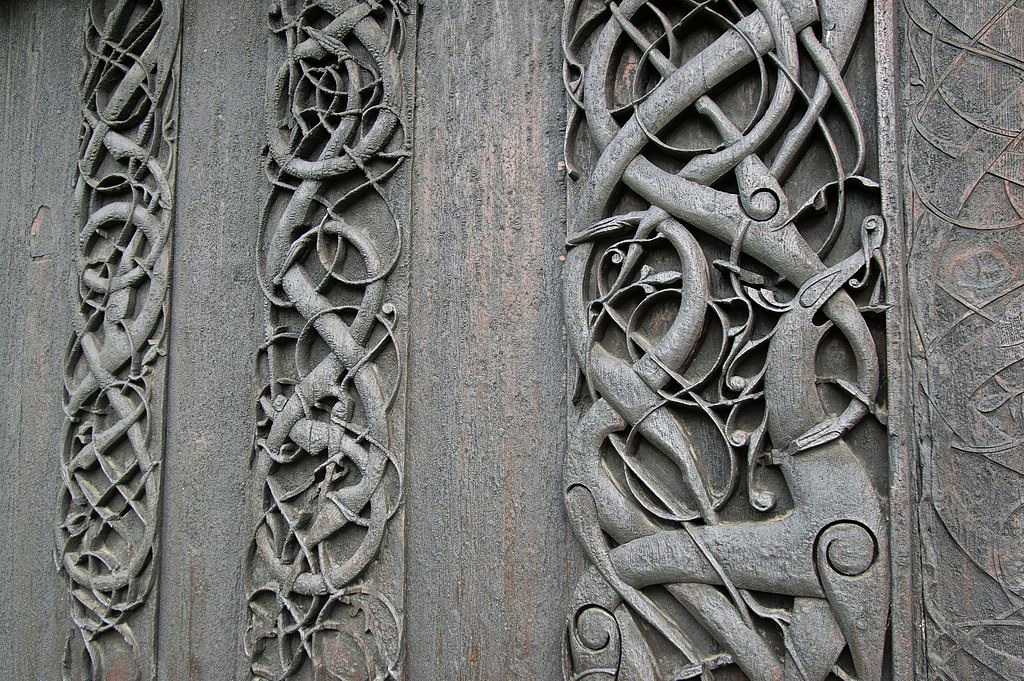
The sixth and final artistic phase of Viking art has been labeled the Urnes style. This name is derived from the designs on the northern portal of a stave church in Urnes, Norway, and spans the mid-11th into the mid-12th century CE, the dying embers of the Viking Age.
The stave church at Urnes is one of only a few dozen left standing today and combines architectural design with artistic flair, the perfect combination of form and function.
Nestled on the shores of the Lustrafjorden in western Norway, it is believed to have been constructed sometime in the early 1130s CE.
Tourists the world over flock here not just for the church's spectacular setting but for its famous ornate wooden carvings. These carvings feature a style that includes slender, interlaced animals in profile, almond eyes, tendril endings, symmetry, and Christian cross interplay.
Unlike the earlier Viking artistic styles dominated by muscular beasts and intricate knotwork, the Urnes style is a lighter, more aesthetic style. Adding to this is the more striking appearance of Christian interplay.
Given that the Urnes style appears from the mid-11th century onwards, this should be no surprise, as by that time Christianity had gained supremacy over much of Scandinavia's hearts, minds, and political elites.
Like all artistic styles, there is much variation in the Urnes style, and historians often divide it into an "early" and a "later" period, with the designs on the Urnes Stave Church belonging to the latter.
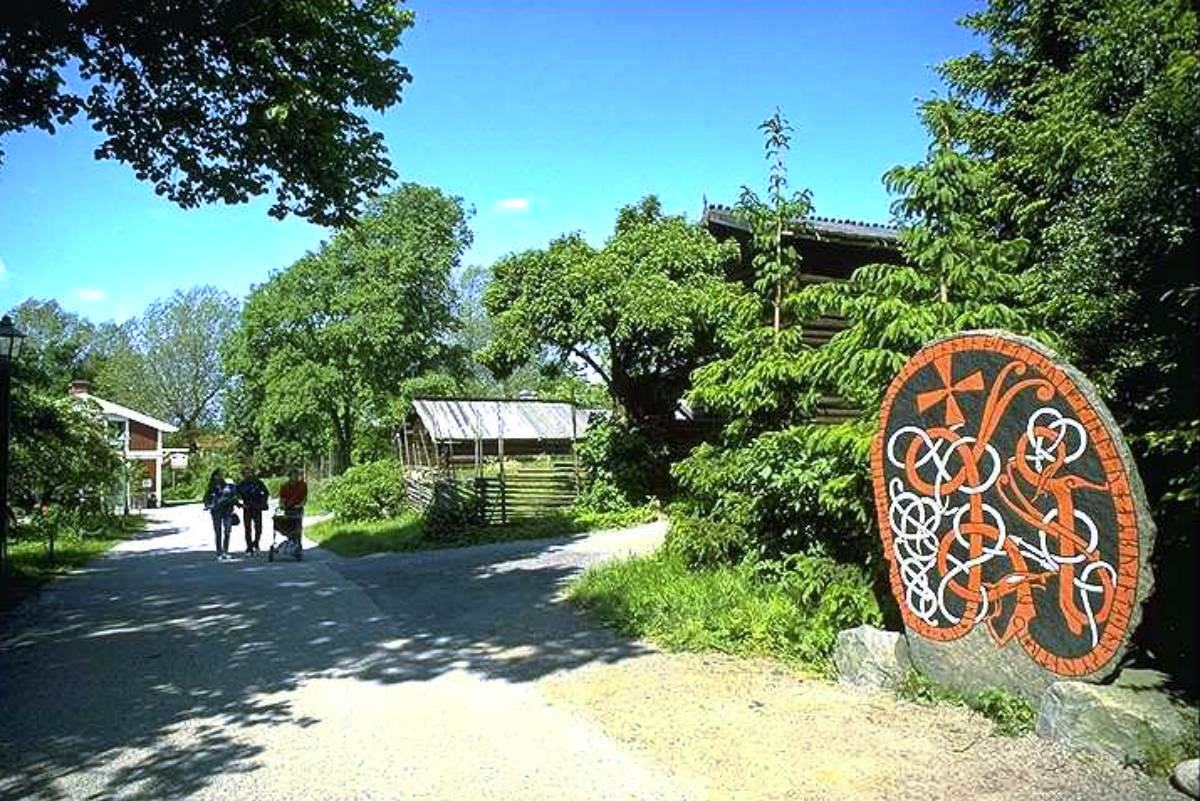
U871 is a Swedish runestone in the Urnes style, dated to the early 12th century. Photo: Bengt A Lundberg / Riksantikvarieämbetet
Famed runemasters used this style
Aside from the northern portal of the Urnes Stave Church, the Urnes style of Viking art also appears on several runestones known collectively as the England runestones (Swedish: Englandsstenarna).
There are more than 29 runestones that mention voyages or exploits of people from Viking societies in what is now England. More than 27 of these runestones can be found around the shores of Lake Mälaren, near what is now Stockholm, Sweden's capital.
Many of these runestones detail financial shakedowns in Anglo-Saxon England, i.e., the payment of Danegeld to the Viking warriors who either erected the runestones themselves or for whom the runestone was erected in their honor.
More than 20 of the England runestones were carved in the first half of the 12th century, during the early phase of the Urnes artistic style, by the famed Viking runemaster Åsmund Kåresson.
Surely one of the best examples of this artistic style is found on the runestone that historians have dubbed U871.
Colorized in 1991 to help protect it from the harsh Swedish climate, it bears not only Kåresson's signature but features slim lindworms (a sort of small forest-dwelling dragon that is found throughout many Northern European mythologies) that are interlinked with a Christian cross, a marriage of Old Norse and Christian symbolism.
A later development of the Urnes style can also be found on some of the runestones carved by another Viking runemaster, Öpir.
The runestone dubbed U Fv1976;107, found near the Uppsala Cathedral, in Uppsala, Sweden (then as now an important center of Swedish religious and spiritual life) features a thin intertwined beast circling a Christian cross.
The depiction of slender animals and Christian motifs perfectly encapsulates the culmination of the Urnes style of Viking art, the culmination of a centuries-long artistic process that spanned the entire early medieval period.
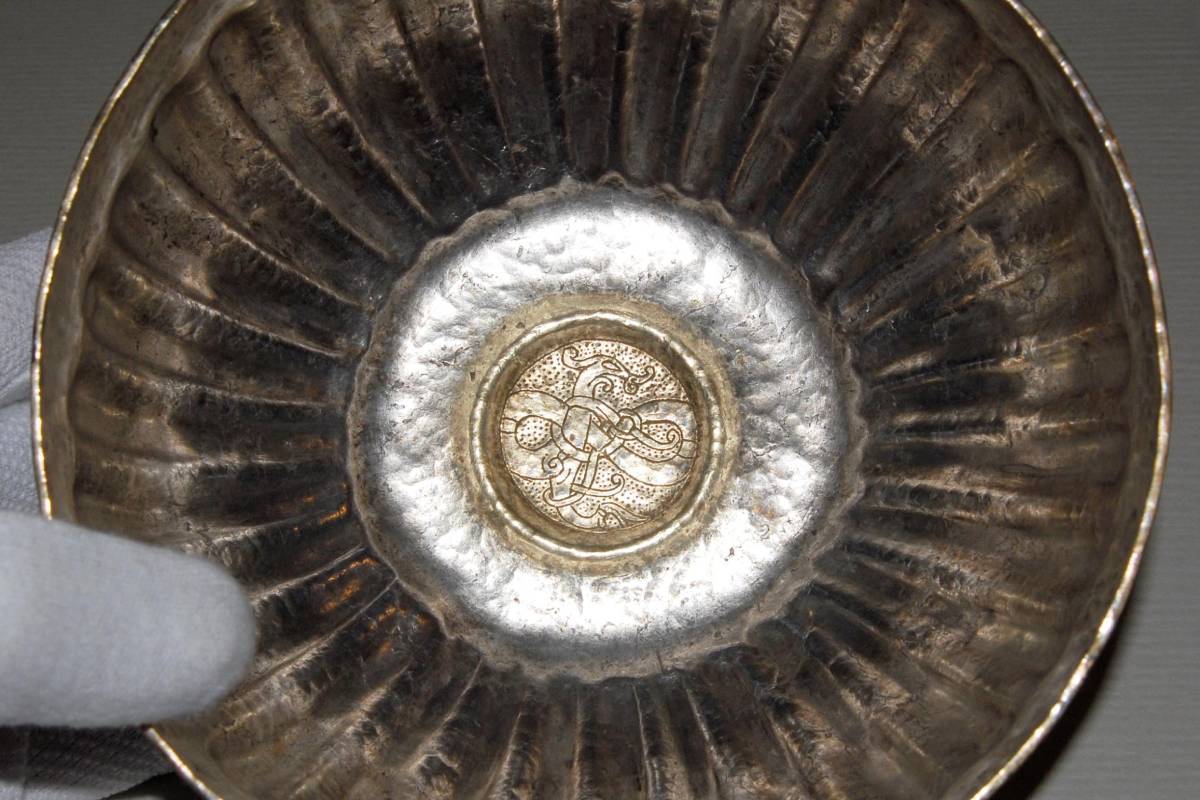
This silver bowl from Lilla Valla in Rute parish, Gotland, shows an Urnes-style engraving at its center. Photo: Ulrik Skans (CC BY-SA 4.0)
Later developments
The Urnes style of Viking art also spans the seismic evolution of Viking societies into the medieval kingdoms of Denmark, Norway, and Sweden.
Like all social developments, this was an opaque process whereby the inhabitants of, say, southern Sweden would not have woken up one day and realized that they were not living in a Viking society but in the medieval Kingdom of Sweden.
As Ozzie Fallick talks about in his article, indeed, there were "disparities between the rates and nature of unification of the Scandinavian nations," but all did ultimately centralize power in the form of a monarch.
A huge factor in this transformation, this centralization of power, was due to the growing influence and later supremacy of Christianity in Viking societies. This supremacy ultimately led to the old ways and beliefs (what we moderns clumsily lump and label as the "Old Norse religion") being snuffed out.
This supremacy of the Christian faith not only brought the former Viking societies, now medieval kingdoms, into the broader European Christian fold of nations, but also saw the importation of other artistic styles from Christian kingdoms.
The Romanesque style, developed from about 1000 CE with a mixture of Greek, Roman, and Germanic influences, soon began to appear throughout the Scandinavian kingdoms from the 11th century onward.
Some art historians tend to include a fourth phase of the Urnes style when elements of the Romanesque style were mixed into artworks.
Whilst many of the intricate carvings in this church, like the northern portal, bear the hallmarks of this last phase of Viking art, the spatial design itself owes more to the budding Romanesque tradition that was found in Norway and the former Viking world during this period.
This so-called "Urnes-Romanesque" style, which spanned much of the 12th century, was the final artistic style in Scandinavia to include even minimal pre-Christian influence and symbolism before a revival in the 19th century.
A style to mark a society in transition
The Urnes style of Viking art represents the culmination of a centuries-long artistic evolution that began deep in the medieval past.
Serving as a refined and elegant finale, it brought the long tradition of Viking artistic expression to a close. Characterized by slender, interlaced animal forms and graceful symmetry, the Urnes style embodies both continuity and transformation.
Unlike the earlier, more muscular and dynamic motifs, the Urnes style emphasized stylization and sophistication, reflecting the growing Christian influence in Scandinavia while retaining some soft echoes of pagan symbolism.
For more information on some of the upcoming exhibitions planned at Oslo's new Museum of the Viking Age, including many examples of Viking art, check their website here.
We get to provide readers with original coverage thanks to our loyal supporters. Do you enjoy our work? You can become a PATRON here or via our Patreon page. You'll get access to exclusive content and early access.
Feel free to reach out to discuss potential stories that may be in the public interest. You can reach us via email at hello@thevikingherald.com with the understanding that the information you provide might be used in our reporting and stories.





.jpg)