


Whilst their feared warriors may get all the historical headlines, we know that people in Viking societies were among the most mercantile people of the early medieval period.
By the time the first Viking raid occurred, sometime in the latter half of the 8th century, much of Europe was economically fractured following the collapse of Rome's power in the West centuries before.
Through a combination of coercion and commerce, people in Viking societies soon began to rebuild fractured economic and trade routes.
Coinciding with the traditional tale of the Viking Age (c. 750–1100 CE), one of raiding, pillaging, and battlefield glories, is an economic story just as consequential.
Raiding and trading often went hand in hand, and for many coastal or riverbound communities, one often preceded the other.
Throughout the early medieval period, goods and people flowed between Scandinavia and Viking settlements throughout the Northern Hemisphere.
Vikings, who were the great slave traders of Northern Europe, also exchanged goods with cultures and civilizations in Western and Southern Europe, as well as as far as West Asia and its surrounds.
Viking chieftains and rulers often used a combination of commerce and coercion to amass great wealth and, thus, prestige and power.
The accumulation of wealth enabled further raiding or trading expeditions in an upward spiral of profit. This ongoing flow of treasure enabled Viking expansion and more permanent settlement, especially in the British Isles.
Viking expansion in the British Isles: Knowing your Danelaw from your Danegeld
No more was there a blurring in Viking trade negotiations – between commerce and coercion, trade and tribute – than in much of what is now England during the early medieval period.
Since the mid-8th century, people from Viking societies had turned their gaze westward, across the Norwegian Sea, to the British Isles.
Finding what is now England divided into several Anglo-Saxon kingdoms, it soon became apparent that these kingdoms put up little resistance to Viking incursions.
By the mid-9th century, Viking armies came in larger numbers and soon had taken control of a huge swathe of what is now central and northern England, a region that soon became culturally and politically absorbed into the Viking world.
The Danelaw – not only saw the political accumulation of power by people from Viking societies – but also a great accumulation of wealth.
The bluntest way that people from Viking societies amassed this wealth was through the Danegeld (Old English for "Danish tax") – a tribute paid by Anglo-Saxon kingdoms, including Wessex.
As Robert Cohen discusses in his 2018 doctoral thesis, Danegeld: The Land Tax in England, 991–1162, it was essentially an early medieval version of ransom or protection money, paid in a combination of gold, silver, and goods.
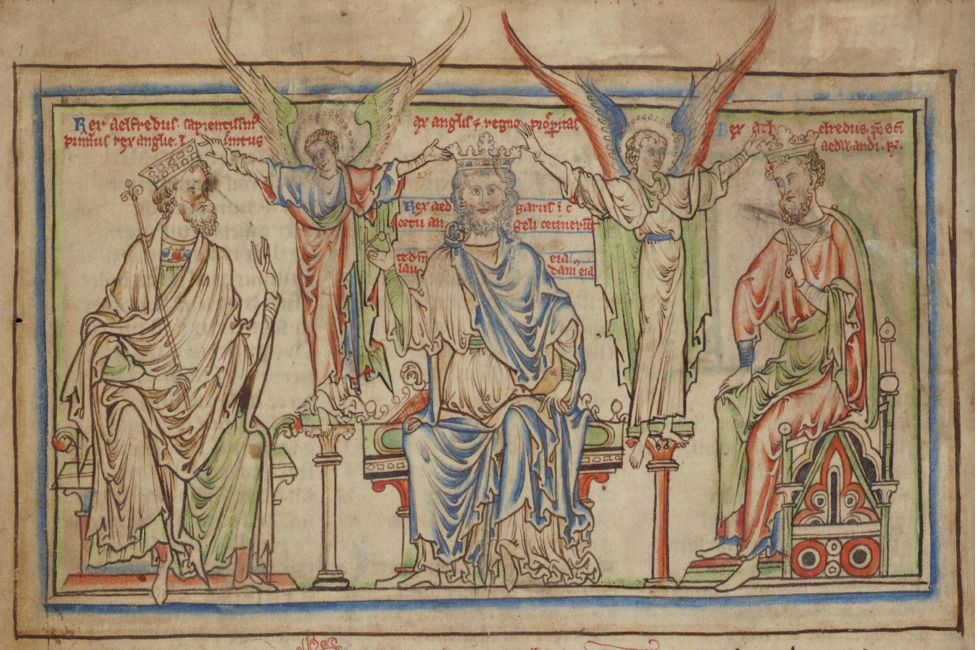
Introduced during the reign of King Alfred, it persisted sporadically until the late 11th century.
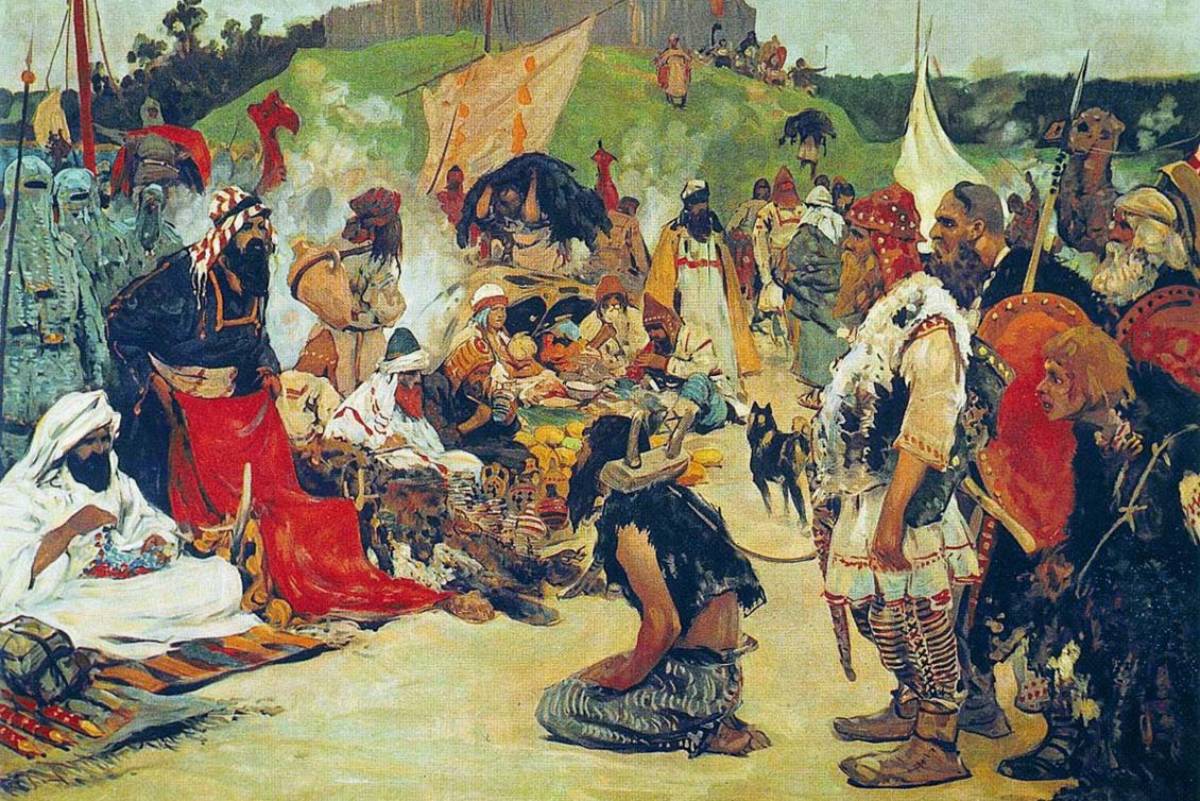
The painting “Trade Negotiations in Eastern Europe” depicts Vikings selling captives to Arab merchants. Source: Sergey Ivanov (1864–1910)
Blurred lines: Viking trade or tribute?
So, we know the military might of Viking warriors that saw them become feared all over Europe, especially in the British Isles. They were willing to extort untold wealth by the point of a sword or an axe.
We also know that people from Viking societies, when many weren't engaged in Viking raids, were also skilled traders and merchants who helped to rebuild Europe's economic networks.
There was a blurred relationship between these two methods of wealth extraction – between coercion and commerce.
People from Viking societies used both to secure wealth and influence throughout much of Europe, and especially the British Isles.
It should be noted that these two methods – coercion and commerce – were often on a vast spectrum and not mutually exclusive.
Trade with larger, more organized societies
A peaceful exchange of goods often occurred when people from Viking societies encountered larger and more organized societies.
When they encountered the Byzantine Empire or the Abbasid Caliphate, the political and economic powerhouses of Europe and West Asia during the early medieval period, they approached peacefully as merchants and traders.
They knew that any violence or coercion would provoke swift and devastating retaliation from these formidable powers.
During the 9th century, Norse merchants and traders utilized the many river systems of Eastern Europe for commercial means.
They soon found themselves journeying downriver to the Black Sea and Constantinople, the capital of the Byzantine Empire.
Initially coming as merchants and traders, people from Viking societies were later employed as mercenaries and would go on to form the personal bodyguard of the Byzantine Emperor, the famous Varangian Guard.
Whilst raiding against the Eastern Roman Empire did occur, its superior economic and military resources allowed it to fend off any Viking incursions easily.
Consequently, people from Viking societies were compelled to engage in more peaceful and profitable interactions.
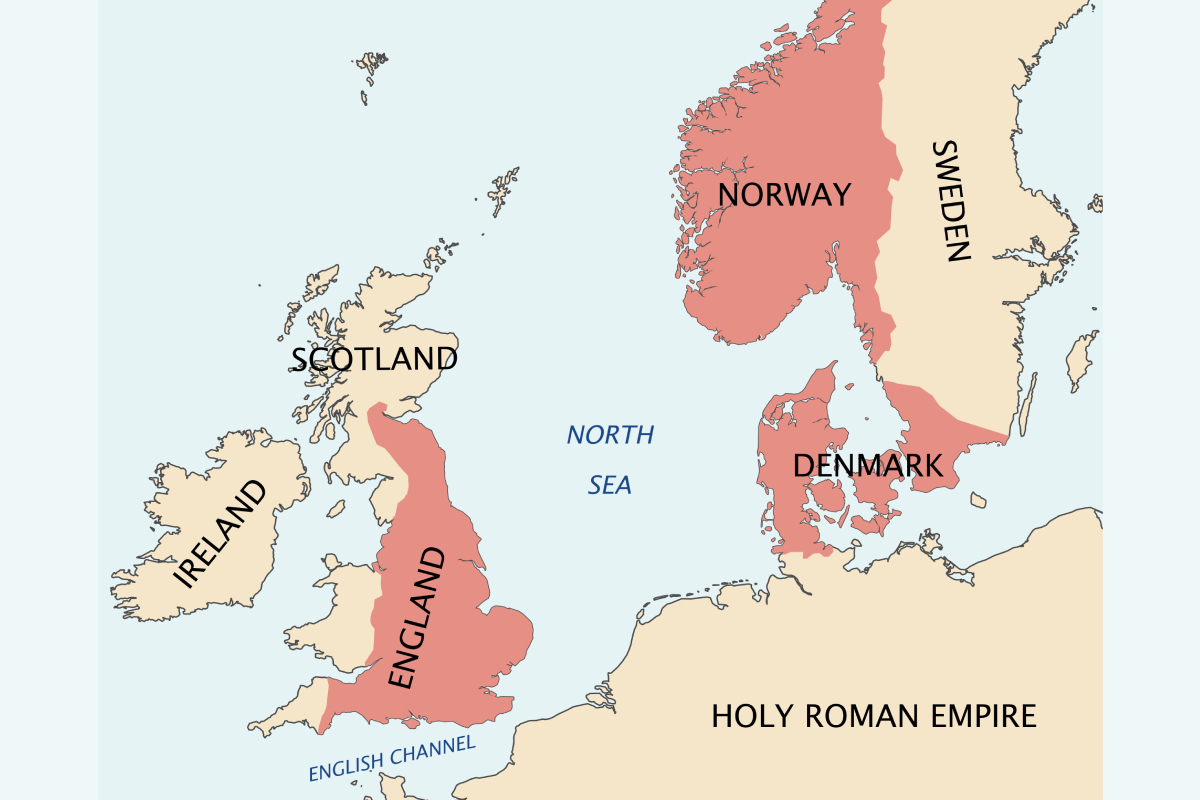
This map shows the size of Cnut the Great’s dominion from 1014 to 1035, encompassing regions like England and the Danelaw, where tribute systems like the Danegeld operated. Source: Hel-hama (CC BY-SA 3.0)
And extract tribute from the weak
When people from Viking societies encountered smaller and weaker entities, such as Anglo-Saxon England, tribute like the Danegeld was extracted.
Whilst Vikings may have framed these as "negotiations," it was essentially an early medieval "shakedown." They would begin with raids and then extract tribute for further military activities to cease.
In his 1984 article, The Collection of Danegeld and Heregeld in the Reigns of Æthelred II and Cnut, published in The English Historical Review, Michael K. Lawson examines the use of tribute payments.
He notes that Æthelred the Unready, King of the English in the early 11th century, paid an exorbitant fee of almost 14,000 kilograms (30,000 pounds) of silver to Vikings in 1007 to ward off further incursions and attacks.
Yet payment of tribute did not always mean the cessation of Viking military incursions.
Following the payment of the Danegeld in 1007, Æthelred saw his kingdom's political and religious center, Canterbury, sacked by Vikings within five years, and an important archbishop was murdered. Talk about a bad investment!
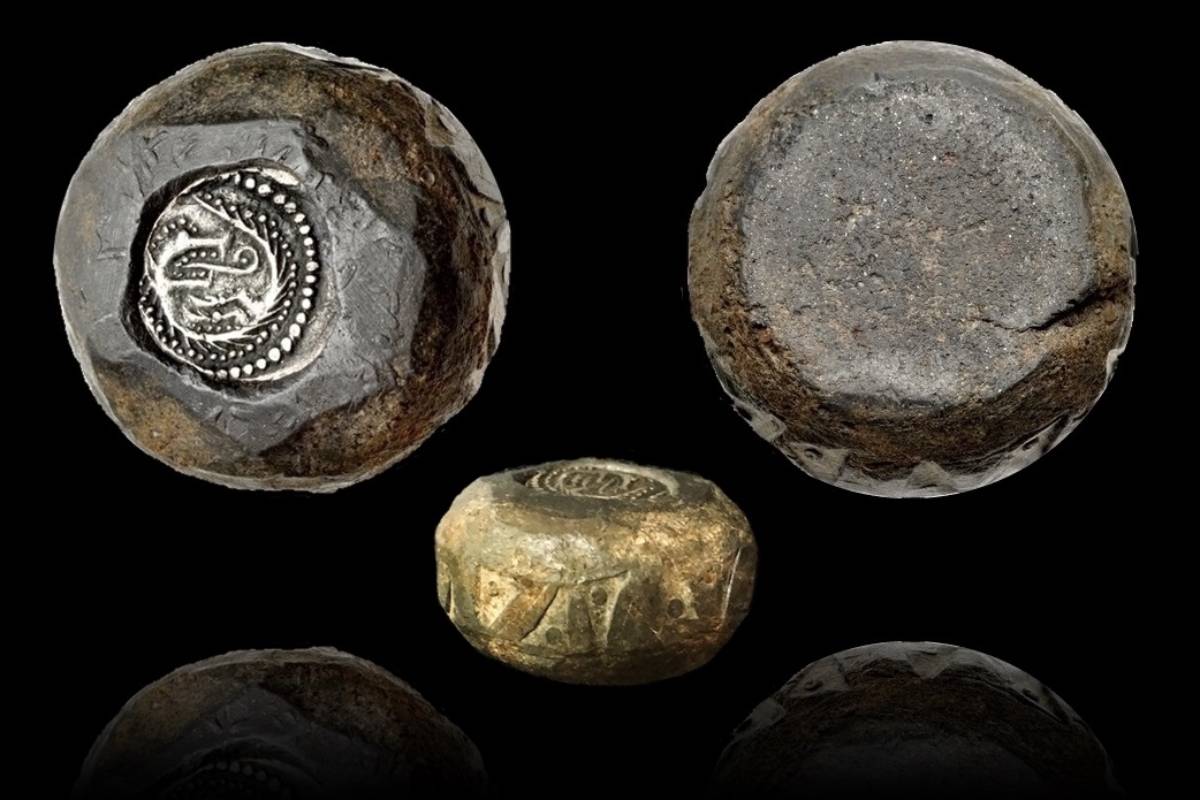
A lead coin weight from the Danelaw region, this Anglo-Saxon–Viking artifact weighs 36 grams and includes an embedded sceat. Source: EttuBruta (CC BY-SA 4.0)
Trade negotiations underpinned Viking expansion
Following the often-violent outward expansion of the Norse, beginning in the mid-8th century, their formidable reputation often preceded them.
Many communities and societies knew that if people from Viking societies showed up and wanted to trade, this was better than being at the wrong end of a pointy blade.
Vikings might show up and present themselves as mere traders (with swords) offering their "protection" for goods and merchandise. If this rather strong-armed offer was refused, then tribute was more forcefully extracted.
Merchants and traders could often be sent into a new region or area first to scout its economic potential. Should opportunities present themselves during trading missions, then it would not be long until a longship was sighted.
Finally, even if trading terms were agreed upon or tribute was paid, as was the case for much of Anglo-Saxon England, this did not necessarily mean a cessation of Viking raids or military expeditions.
Trade negotiations involving commerce and coercion underpinned the economic, military, and political success of people from Viking societies throughout the early medieval period.
For more information on how people in Viking societies revitalized Europe's early medieval economy, visit The Conversation here.
We get to provide readers with original coverage thanks to our loyal supporters. Do you enjoy our work? You can become a PATRON here or via our Patreon page. You'll get access to exclusive content and early access.
Feel free to reach out to discuss potential stories that may be in the public interest. You can reach us via email at hello@thevikingherald.com with the understanding that the information you provide might be used in our reporting and stories.




.jpg)

