

In an era where women were treated as second-class citizens, she forged an influential path between the Anglo-Saxon and Viking worlds.
Women in history: Silent or silenced?
Women have a tough time throughout the world today. In an era where many countries have supposed political and economic equity between the sexes, the reality is starkly different.
Add to that, many countries have never societally upgraded women from being treated as second-class citizens, and a few countries, such as Afghanistan, have wound the clock even further back to medieval times when it comes to gender roles and relations.
The author can only imagine (as he is a male) how hard life can truly be for women daily. If we pick up any history book, we can see that women who lived during the medieval period had their difficult lives made even worse.
In fact, the history of women has been completely ignored and silenced for so much of history, so that when we come across a historical figure who was a powerful woman like Ælfgifu of Northampton, it is a stark reminder that history is essentially "his story."
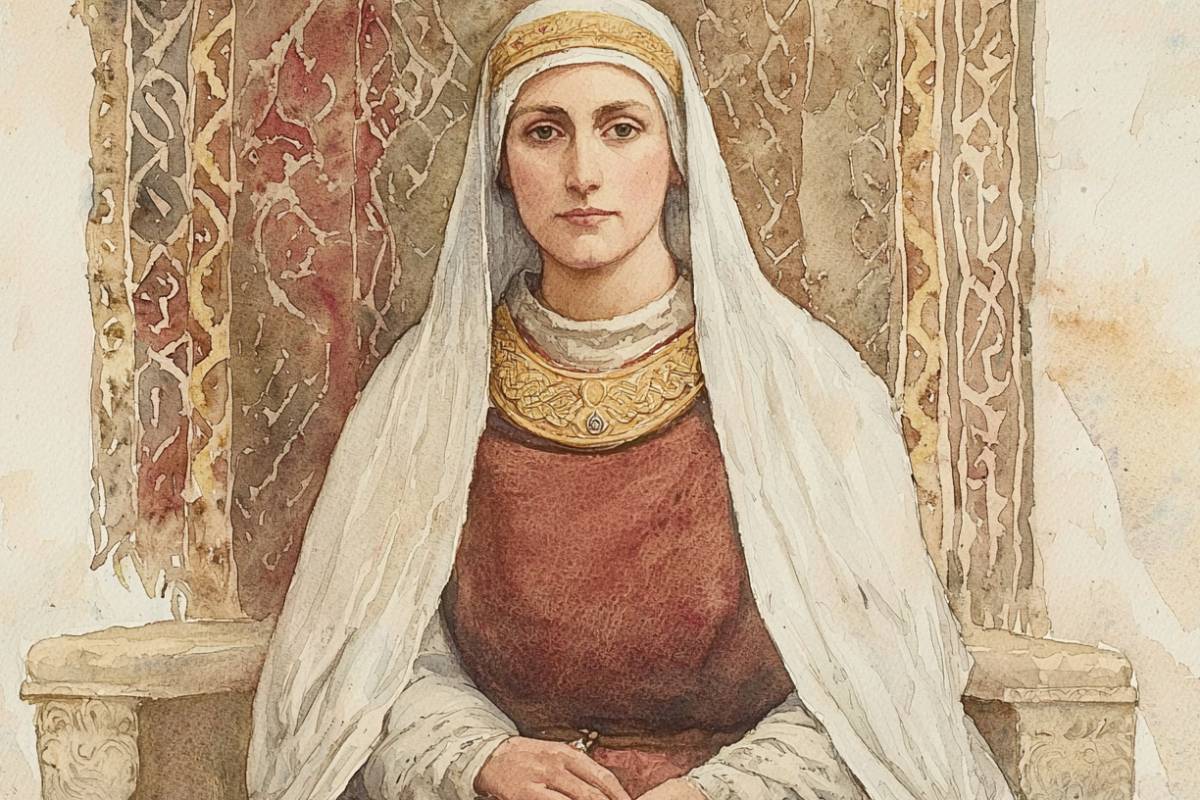
Ælfgifu of Northampton was born sometime in the late 10th century CE, perhaps around 990 CE, to a powerful Anglo-Saxon noble family in the former Anglo-Saxon kingdom of Mercia that encompasses much of the English Midlands today.
Somewhat confusingly, she was the scion of a powerful family that straddled the borderlands between the north of the Mercian area of control and the southern region of Northumbria – an important Anglo-Saxon and later Viking-controlled kingdom.
Her father was said to be a minor noble, an earl named Ælfhelm (the Anglo-Saxons loved a good name beginning with AE), and we even have the name of her mother, Wulfrun.
Yet despite her relatively privileged upbringing, her life would forever change during her teenage years and set her on a path that would see her rule over much of England and Norway before her death.
So let us wind the clock back to the 11th century CE and join young Ælfgifu amongst her Mercian family.
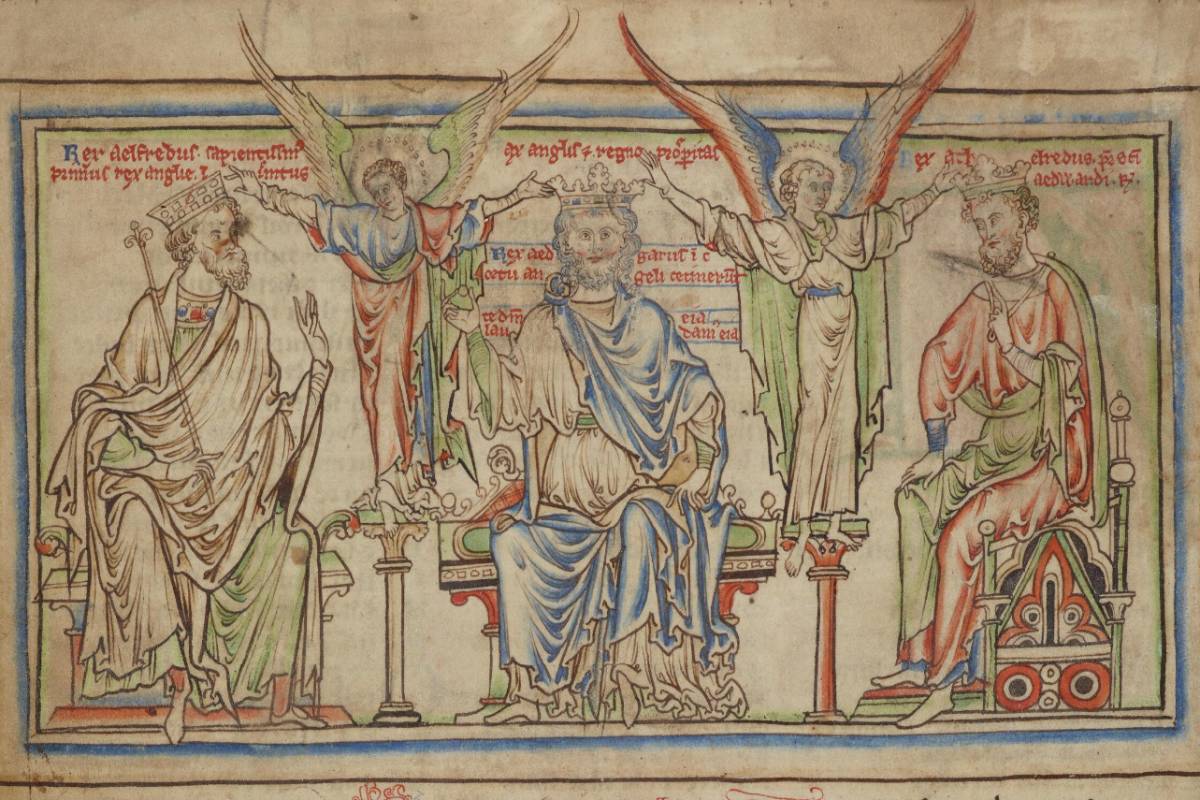
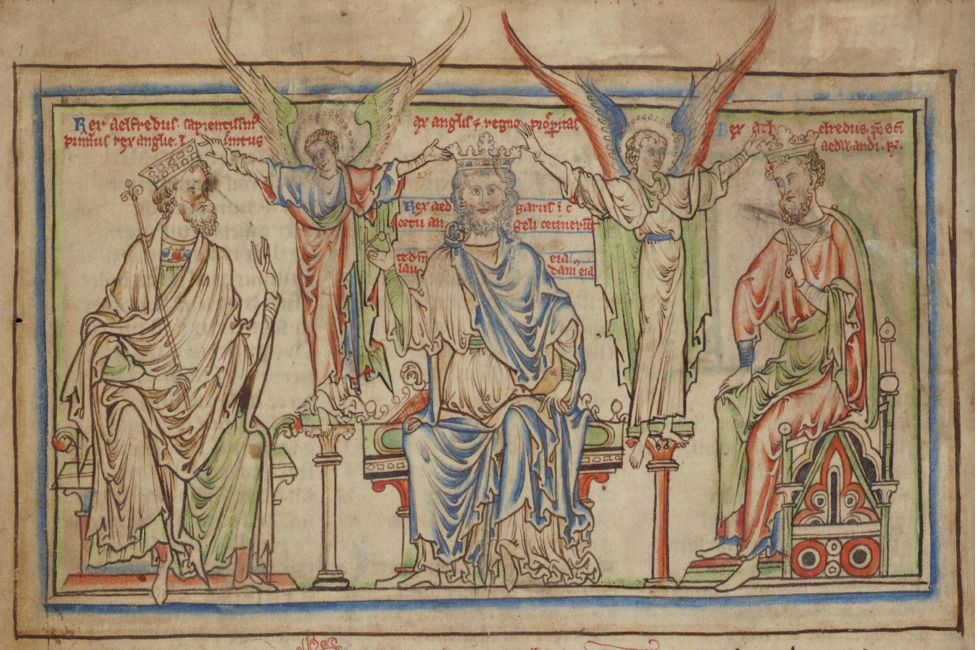
A 13th-century illustration of three Anglo-Saxon kings of England: Alfred the Great, Edgar the Peaceful, and Æthelred the Unready. Author: Matthew Paris (1200–1259)
A tricky time to be an Anglo-Saxon noble
The turn of the 11th century CE was a tricky time to be born an Anglo-Saxon noble. Despite her privileged upbringing, Ælfgifu grew up in an environment of total political instability.
After centuries of Viking invasions and conquest, the successors of King Alfred had tried, with varying success, to rule areas of what is now England.
Æthelred the Unready was crowned king of the English in 978 CE and, though he would reign for almost 40 years, his reign was not a peaceful one. As Niels Lund writes about in his chapter in the brilliant 2008 book, The Viking World, coinciding with Æthelred's rule was a series of more aggressive Viking invasions and incursions.
Much of Æthelred's England was a divided nation: nominal Anglo-Saxon supremacy, but with a large Norse minority. This division was further exploited by a ramping up of Viking incursions and raids, with Anglo-Saxon nobles becoming embroiled in the era's paranoid politics.
Young Ælfgifu was plunged into this world of danger when her father was killed in 1006 CE and her brothers blinded. Perhaps Æthelred saw them as potential power rivals or a fifth column who had been scheming with the Norse.
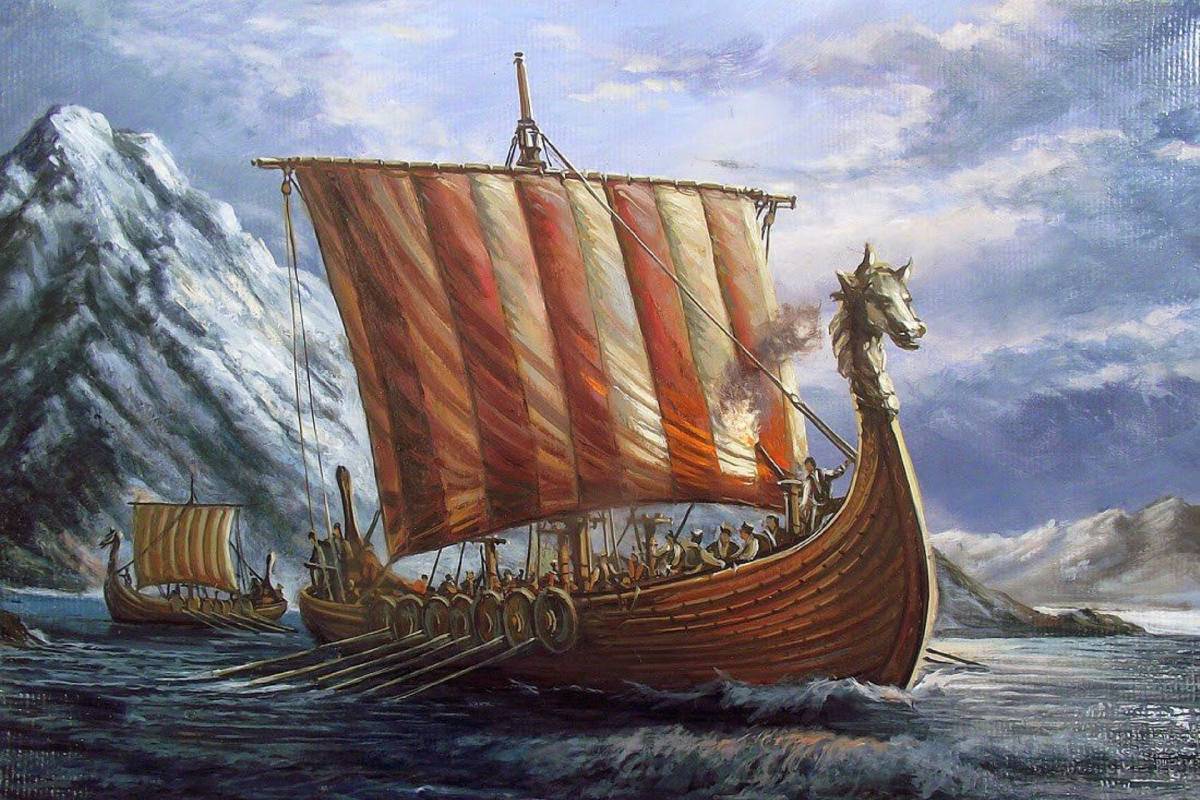
With the family devastated, worse was to come. The Viking incursions and raids culminated in the Danish king Sweyn Forkbeard's decision to invade England in 1013 CE.
Æthelred fled to Normandy, but not before Ælfgifu's family was said to be further persecuted. One can assume that perhaps the rumors were right and Ælfgifu's family may have guessed that their future lay with their new Viking overlord and that Æthelred was not a particularly strong leader.
A supposed massacre of people with Norse ancestry in his realm, the infamous St. Brice's Day Massacre, is often cited as one factor that helped intensify conflict in the years that followed.
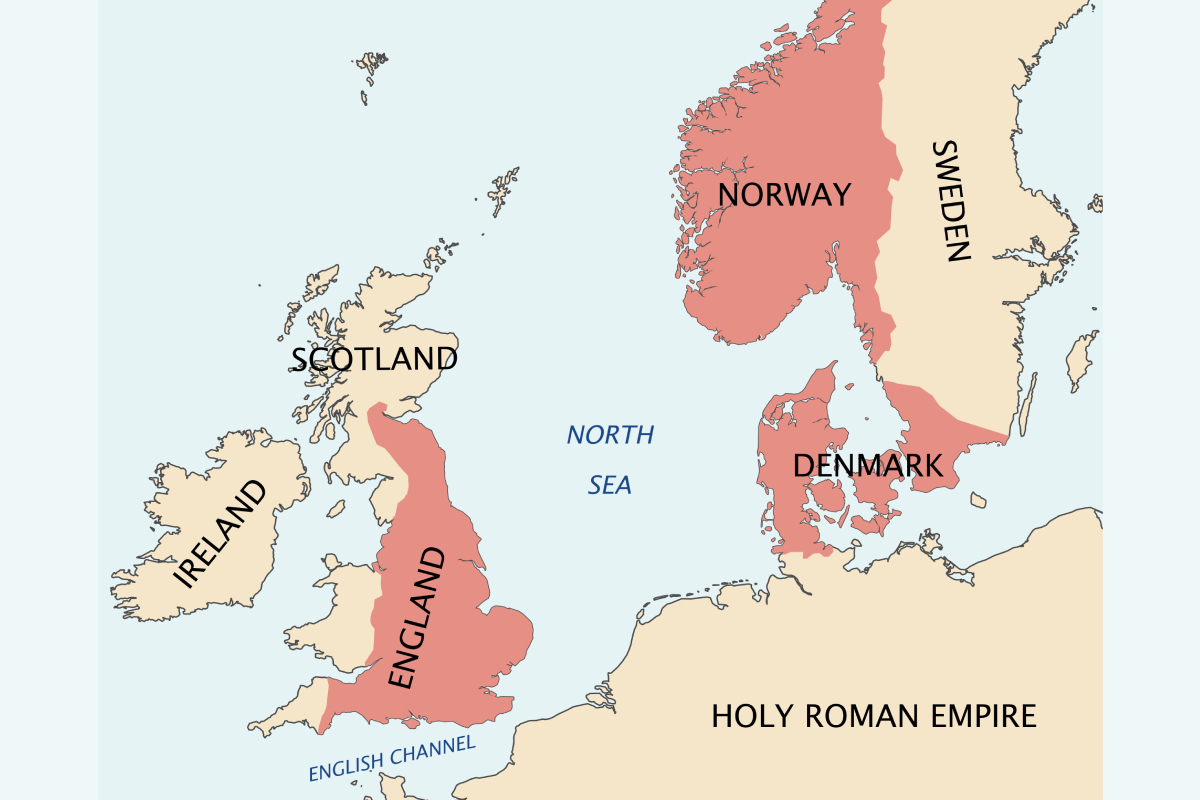
Cnut's North Sea Empire, 1016–1035, and the political world in which Ælfgifu of Northampton held power. Source: Hel-hama (CC BY-SA 3.0)
Invasion, marriage, and exile
No sooner had Sweyn Forkbeard invaded and quickly conquered England, adding it to his Danish and Norwegian kingdoms and thus helping form what we call the North Sea Empire, than he literally dropped dead.
This quick demise happened some six weeks after his acceptance as king in England. His teenage son, Cnut, now faced a foreign country, as well as a new marriage and a young son.
As Ian Howard writes about in his 2003 book, Swein Forkbeard's invasions and the Danish conquest of England, 991–1017, Forkbeard had earlier tried to win over powerful northern Anglo-Saxon nobles by marrying his son, Cnut, to Ælfgifu.
However, after the creator of the North Sea Empire dropped dead, Æthelred sniffed a chance to reclaim his throne and returned to England from exile in Normandy. He assembled a force that marched on Cnut and forced him to flee, and he left his wife and infant son, Svein, behind.
We should pause here and remember that in this era of heroism we have seen two powerful rulers flee at the first sight of an army. Cnut certainly would not win husband or father of the year for leaving his young family behind! Ælfgifu was then, as many a woman has had to do down through the ages, left to pick up the pieces.
The local elite wanted to make peace with the return of (the temporary) King Æthelred, but did not want to hand over a mother and child to be killed. Instead, they shipped her off to Denmark with her infant son, Svein.
She later gave birth to another son, Harold, who became known as Harold Harefoot, around 1015 CE.
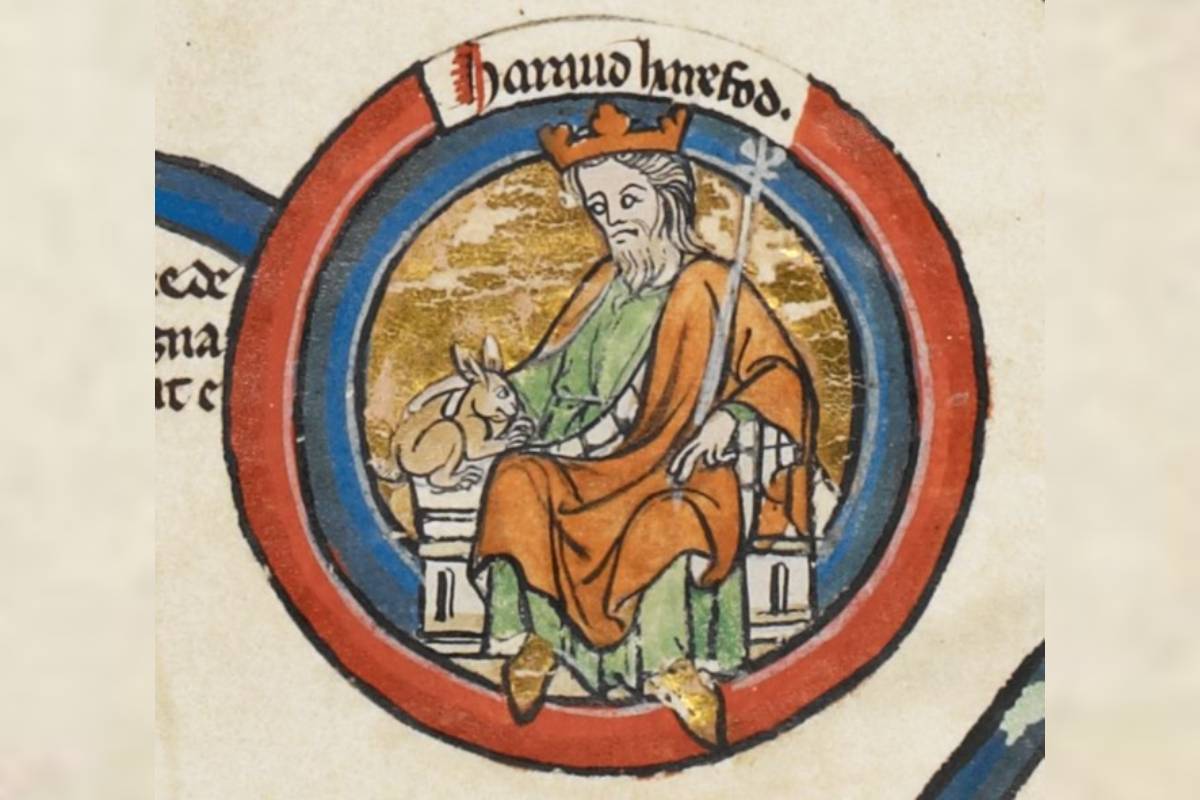
A 14th-century miniature of Harold Harefoot, son of Cnut and Ælfgifu of Northampton, from a royal genealogy manuscript. Source: Unknown author
Ruling in Denmark and Norway
During this time, it was said that she was in control of a large swathe of Denmark's Baltic possessions, ruling over it as a consort.
She was separated from her husband, Cnut, geographically, as he went about reclaiming his perceived birthright, invading and conquering England to knock Æthelred off the throne for the last time and bring the English throne back into his father's creation, the North Sea Empire.
As her husband seized England, Ælfgifu became Cnut's powerful consort as she returned from exile. Yet she was only his consort in his English realm, as Cnut had been a busy boy.
It should be noted that during this period of Cnut's English campaigns and conquest, he married again, this time to Emma of Normandy. Emma was the widow of his fallen enemy, Æthelred, but it did not appear to bother Cnut much, as she soon bore him a son, Harthacnut.
Some sources describe Cnut's earlier union with Ælfgifu as a non-Christian arrangement, sometimes called "handfasting," which may help explain how he later made a Christian marriage to Emma.
This ceremony was steeped in practices associated with Old Norse religion, and despite the birth of a son, historians have seen this as more of a political move than a personal one.
As Cnut consolidated England, Ælfgifu was shipped off again to rule over the northern part of her husband's empire, Norway. She was made regent of Norway alongside her son, Svein.
One wonders how a young Svein would have liked to have his mother rule on his behalf, no doubt quietly seething at court as most teenagers would do in his place.
Her rule in Norway was not popular, as she imposed heavy taxation, leaving Norwegian nobles as seething as her teenage son.
This type of heavy-handed rule saw the locals swing behind a potential threat to her husband's rule, Olaf Haraldsson, who returned from exile but was killed in a decisive battle at Stiklestad in 1030 CE.
For the next five years, Ælfgifu reigned over a largely peaceful Norway. We find little record of her after 1035 CE, the year of her husband's death in England.
Her son Harold Harefoot would go on to rule there from 1037 to 1040 CE, but the North Sea Empire fractured and would never be united again.
Disappearance from the records?
As for Ælfgifu, her disappearance from the historical records may indicate her death around the same time as her husband's.
She had, however, held authority in three powerful European kingdoms, Denmark, England, and Norway, not a bad effort given the absolute marginalization of women in power and politics for much of the pre-modern period.
Growing up in a politically insecure environment, you must tip your hat to Ælfgifu, a woman who successfully navigated familial loss, existential threats, and invasions, and would go on to hold authority in three powerful kingdoms.
It is about time that Ælfgifu came out of the historical darkness to bask in her role as a skilled political player in the early medieval period.
For more information on recent events on a river bearing Ælfgifu's name, visit The Guardian here.
We get to provide readers with original coverage thanks to our loyal supporters. Do you enjoy our work? You can become a PATRON here or via our Patreon page. You'll get access to exclusive content and early access.
Feel free to reach out to discuss potential stories that may be in the public interest. You can reach us via email at hello@thevikingherald.com with the understanding that the information you provide might be used in our reporting and stories.