

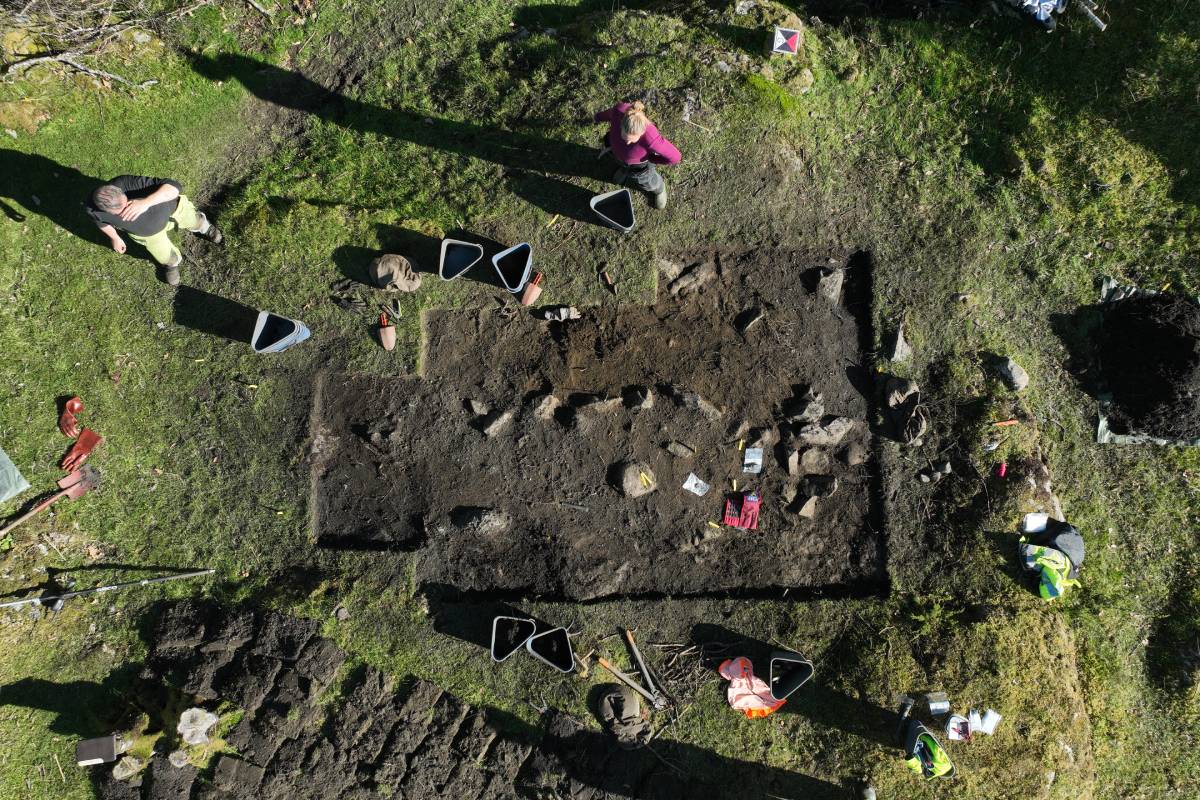
The University of Bergen has confirmed the discovery of a burial site with an estimated 20 graves on the west coast of Norway.
To date, only two of the graves have been fully excavated. Yet, they have already revealed a wealth of artifacts, including colorful beads, ancient silver coins, and two unique discoveries that provide rare insight into the role of women in Viking society.
The Viking Herald speaks to the project leader, Søren Diinhoff, about the importance of these artifacts and his hopes and fears for the future of the site.
Just below the surface
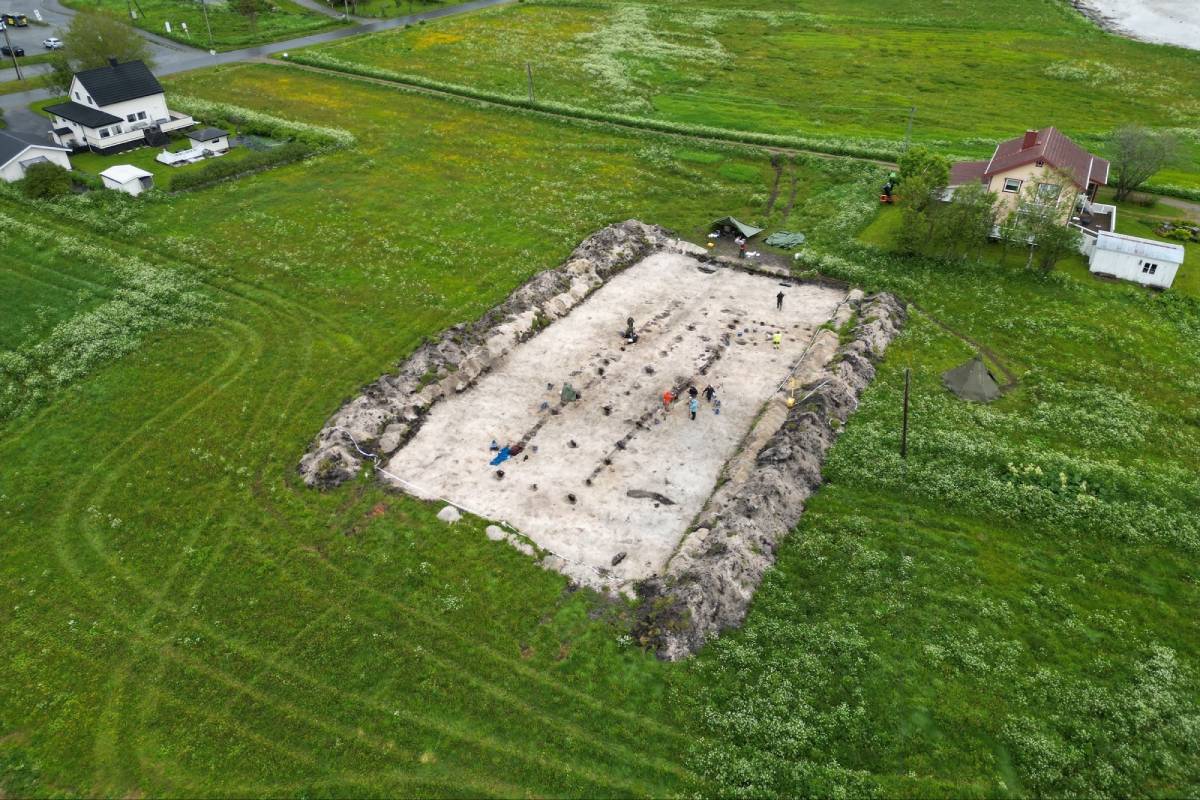
The graves at the Skumsnes Farm in the municipality of Fitjar, Western Norway, were first identified by metal detectorists in the autumn of 2023.
As Søren informs us, the detectorists immediately alerted the University Museum of Bergen, and a team was sent out to inspect the site.
Søren, who has worked for the university for some 36 years, was captivated by what they found.
"We went down to take a look at the site as soon as we could."
"The detectorists showed us where they had found signals, and it soon became clear there were graves containing metal objects all over the hilltop. We counted at least 20," Søren tells The Viking Herald.
The team received clearance to make a full excavation of two of the graves at the site, which is believed to be linked to a nearby farm settlement.
"I am actually on the way to retiring from active fieldwork, but at Skumsnes, I was very much a part of the excavation. When excavations like this come up, I get involved in the fieldwork itself because it's so incredibly interesting," Søren informs us.
"There's so much preserved in it, and it's just below the turf."
"It's not that rare to find graves, of course, but most of the ones in Norway were discovered a long time ago, and some things were overlooked, like the textiles, for example. Today, every new grave has tremendous importance."
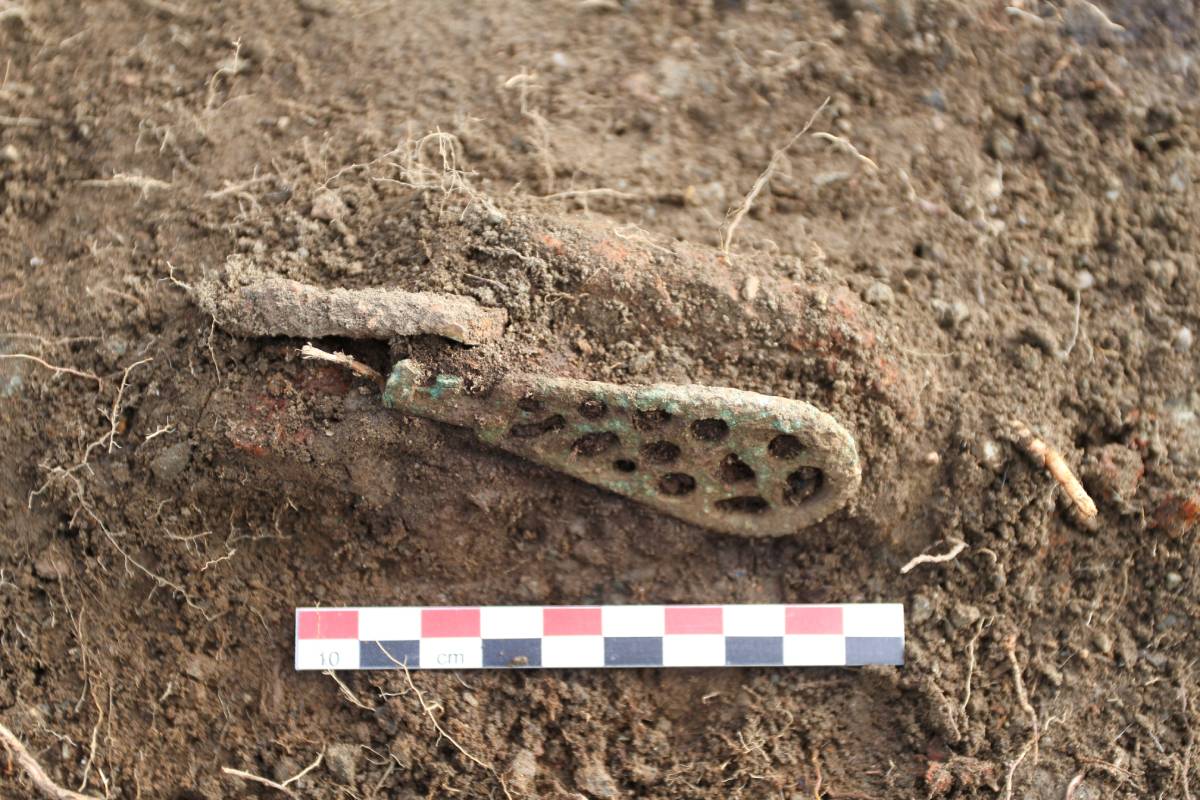
In one of the graves, archaeologists discovered a bronze key, which Soren Diinhoff says marks the woman's role as head of the household. Photo: The University of Bergen
The key to everything
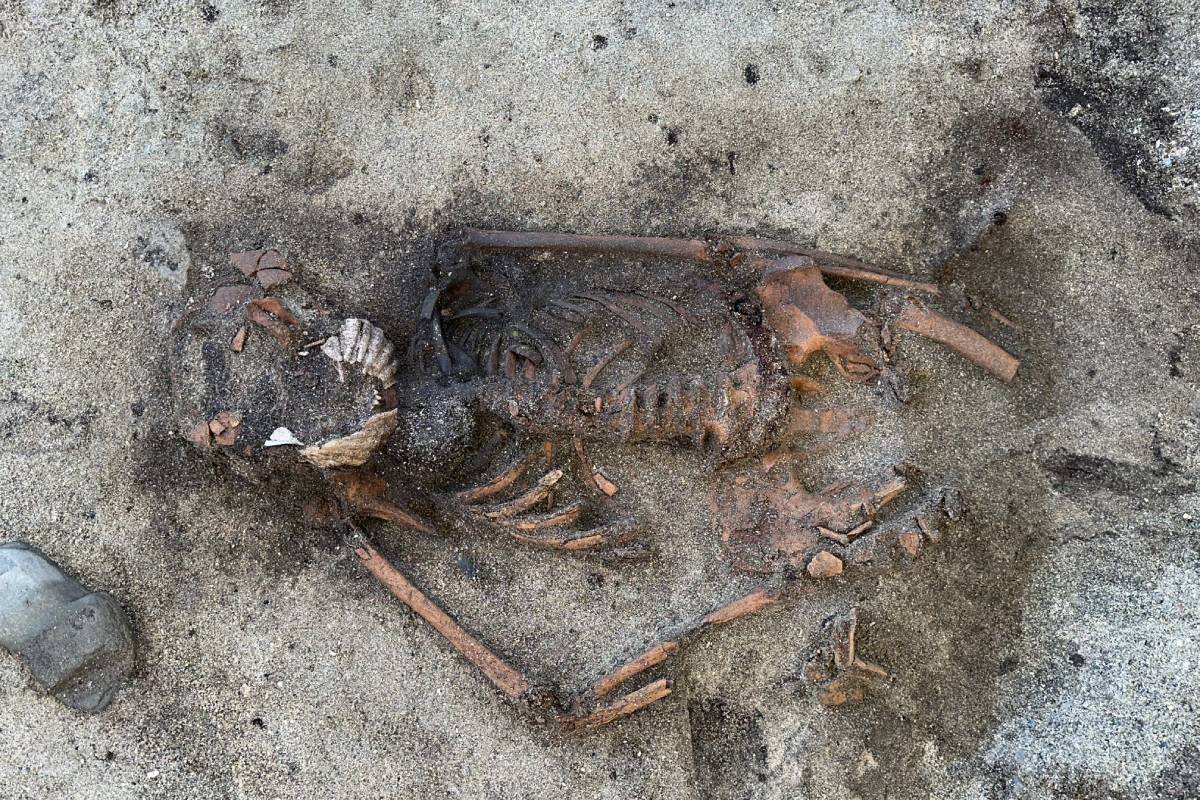
The archaeologists found that the first two graves both belonged to women.
The contents of Grave 2, which was marked by a four-meter stone setting in the shape of a boat, are particularly compelling.
The presence of rivets – metal fasteners used to fit parts of a vessel together – shows that the grave also once contained a real boat.
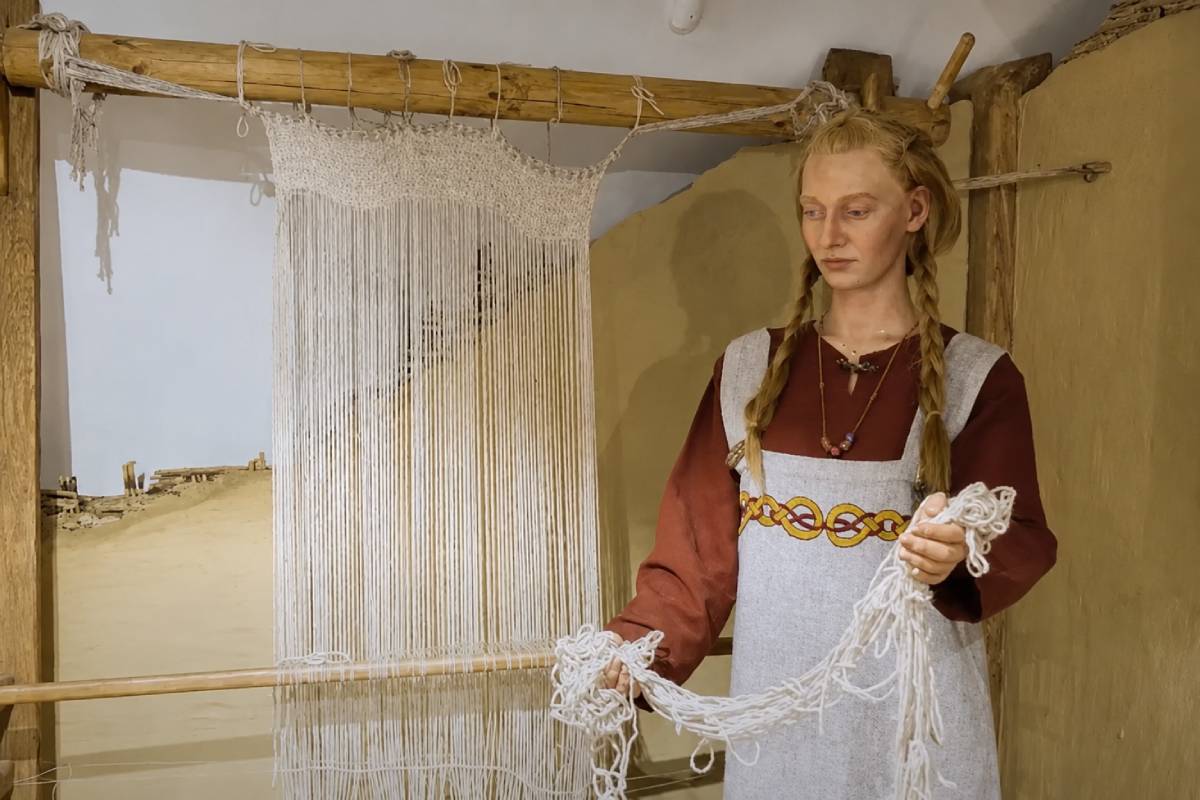
The grave goods also included several tools related to textile production: a flax hackle, a spinning stone, and a weaving sword.
Yet, as Søren explains, it is the presence of a bronze key that most clearly indicates the grave belonged to a woman of notable standing.
"This key, like most of those we find from the Viking Age, is quite primitive," Søren acknowledges.
"People ask, well, could this key actually lock a door? But that's not really the point."
"If there's a chest with a lock on it, you can still take a stone and smash it, and with this kind of key, you could probably unlock the door with a stick instead."
"But in the early medieval laws, the lock was still very significant. If the door was unlocked, you were free to enter, but if it was locked, then it was a major offense to enter."
"Whether you have a fence around your farm or a lock on your door, it has a special status – it is symbolizing something."
"The key in the belt shows that the woman was in charge of the farm household. It indicates that if you wanted to discuss anything to do with textile production, food production, or the labor force, then you would have needed to talk to her."
"With this key, she is saying, 'I am the one in charge of the household.'"
- READ MORE: Women and power in the Viking Age – A primer
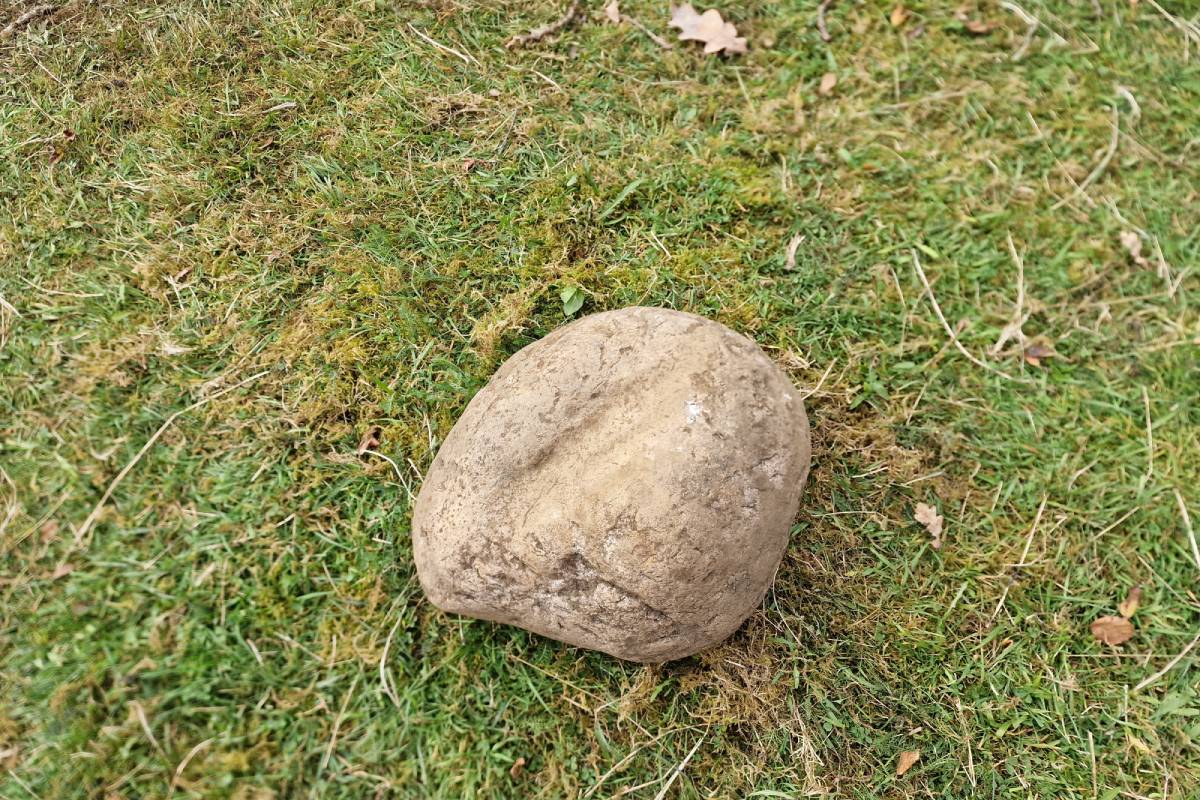
Archaeologists found a stone with a vulva carving in the ship stone setting’s center, thought to symbolize the deceased woman. Photo: The University of Bergen
The vulva stone: Full of meaning
The same grave also contained a large stone with a carving in the shape of a vulva – a common female symbol.
"I am not always convinced by finds like this," Søren admits to The Viking Herald. "But in this case, it is so clear."
"If you look at the stone setting, there is a bow and a stern shaped like a boat, and the stone is placed exactly where you would have the mast."
"This means it was deliberately placed there, and when you turn it over, it shows the sign of a vulva."
"It's more normal for graves to have the male phallus placed on them, but we have seen the vulva symbol on wood and figurines before."
"Why did they choose a stone with a carving like that and place it in the center of the boat? It's because it symbolizes a woman – that's the only logical explanation."
"I think that she was as treasured for the household as the mast is for the ship."
"We know that farms were able to produce valuable textiles," Søren continues. "We also know that in the pagan era, women had a higher social position than in Christian times."
"At this kind of settlement, the roles would have been split. There would have been some roles where the man was in charge and others where the woman was in charge."
"Everything in a grave has symbolic value. The tools also tell us that she managed textile production, too," Søren continues. "That would have been very valuable to the farm."
"It wasn't necessarily the woman herself who did the textile production, but she was highly skilled, and she was in charge of the slaves or whoever was producing them."
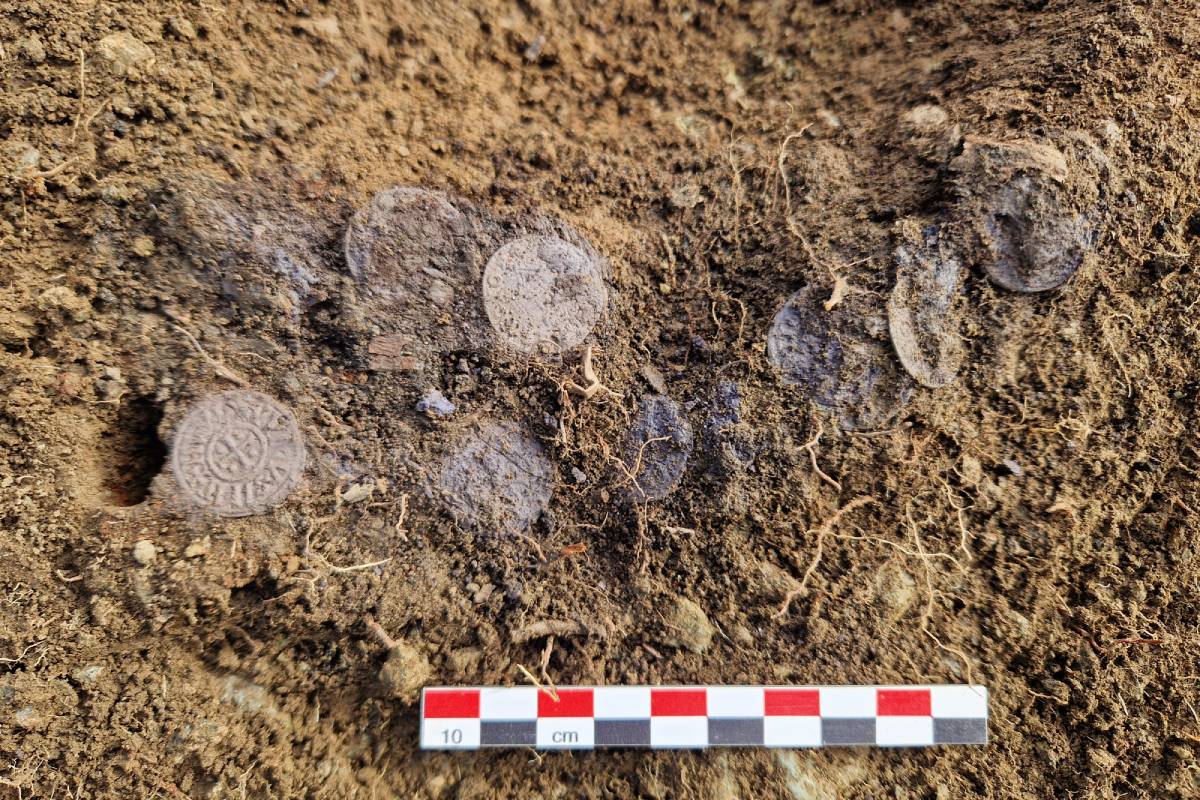
In another grave, archaeologists uncovered a necklace and silver coins, including one Hedeby and ten Carolingian coins. Photo: The University of Bergen
Signs of international trade
Grave 2 also contained a remarkable pearl necklace made with 46 glass beads of various European and Scandinavian origins.
It also held ten Frankish coins, likely from the reign of Emperor Louis the Pious of the Carolingian dynasty, and a single Hedeby coin, the first known Scandinavian coin type in existence.
Grave 1, on the other hand, held a metal cauldron and a buckle believed to be from either southern England or Ireland.
"There is an Anglo-Irish connection in the first grave and a Carolingian-Danish link in the second. So you have two female graves pointing in two different directions," Søren tells The Viking Herald.
"The larger question would be: who are these women? Does one have connections to the west and the other to the south?"
"The graves are almost contemporary, and both indicate a link with people outside of Skumsnes."
"Skumsnes may well have been a kind of hub, a place where you arrive by ship and go in to seek shelter."
"If you were going from Western Norway to somewhere like England, this is one of the places you would set off from and return to."
- READ MORE: A Viking history of Norway – Part 1
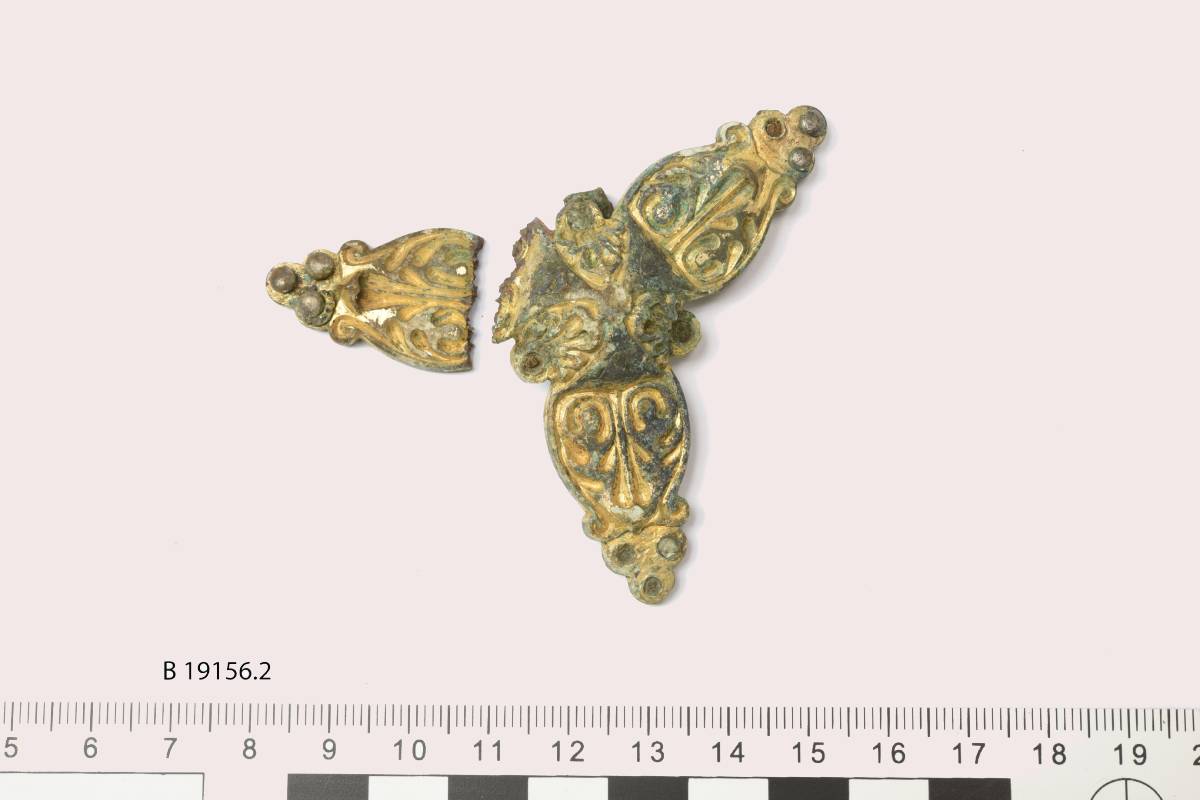
A Carolingian gilded trefoil brooch found at Skumsnes points to the site's connection to European trade networks. Photo: The University of Bergen
The farm, the grave, and the harbor
Indeed, as Søren tells us, the surroundings at Fitjar also suggest the presence of a trading settlement.
Skumsnes is situated on a hillside close to a natural harbor that offers access to Fitjarvika Bay and the North Sea, with a clear passage to Scotland and eastern England beyond.
To the southeast lie Denmark, Sweden, and the lands of present-day Germany and the Netherlands.
"There is a settlement area at the top of the hill. A farmer found artifacts at this location that have been dated to the late Stone Age. This farm has been there for 4,000 years," Søren says.
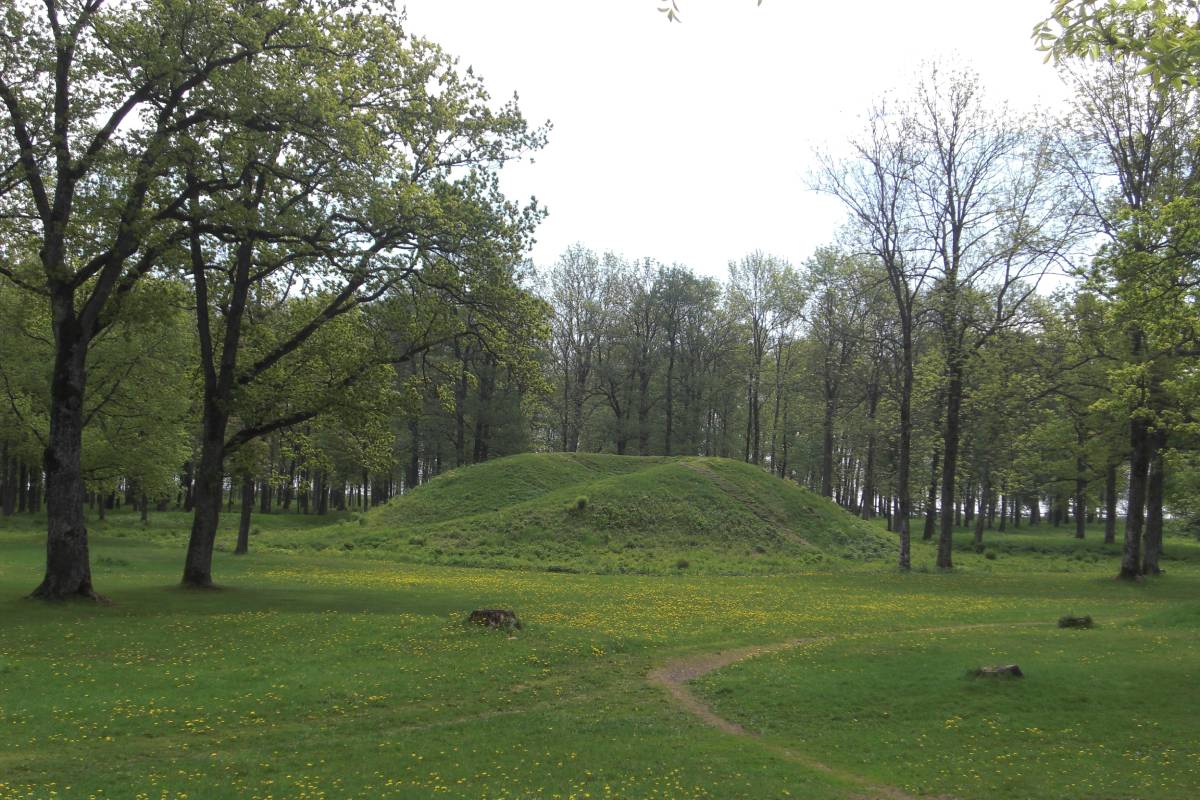
"The arable land in Norway is restricted, so you tend to stay in the same area for a very long time. The grave field is placed between the harbor and the farm at the top."
Yet, Søren believes that it is not possible to explain the richness of the graves by the farm alone. "The wealth would have depended on the harbor and trade," he explains.
"The regional king who owned this farm would likely have had contacts with England and other parts of Scandinavia. The site is part of an international network."
"We know that in this part of the Viking Age, Danes especially were very active with Ireland, Scotland, and England, and also with the Carolingian Empire," Søren continues.
"The people at Skumsnes could have traveled to different places, or they may have been part of a southern Scandinavian network."
"I think this is exactly what we are going to see in these 20 graves at the site – this international connection. And that's what makes this grave field very special."
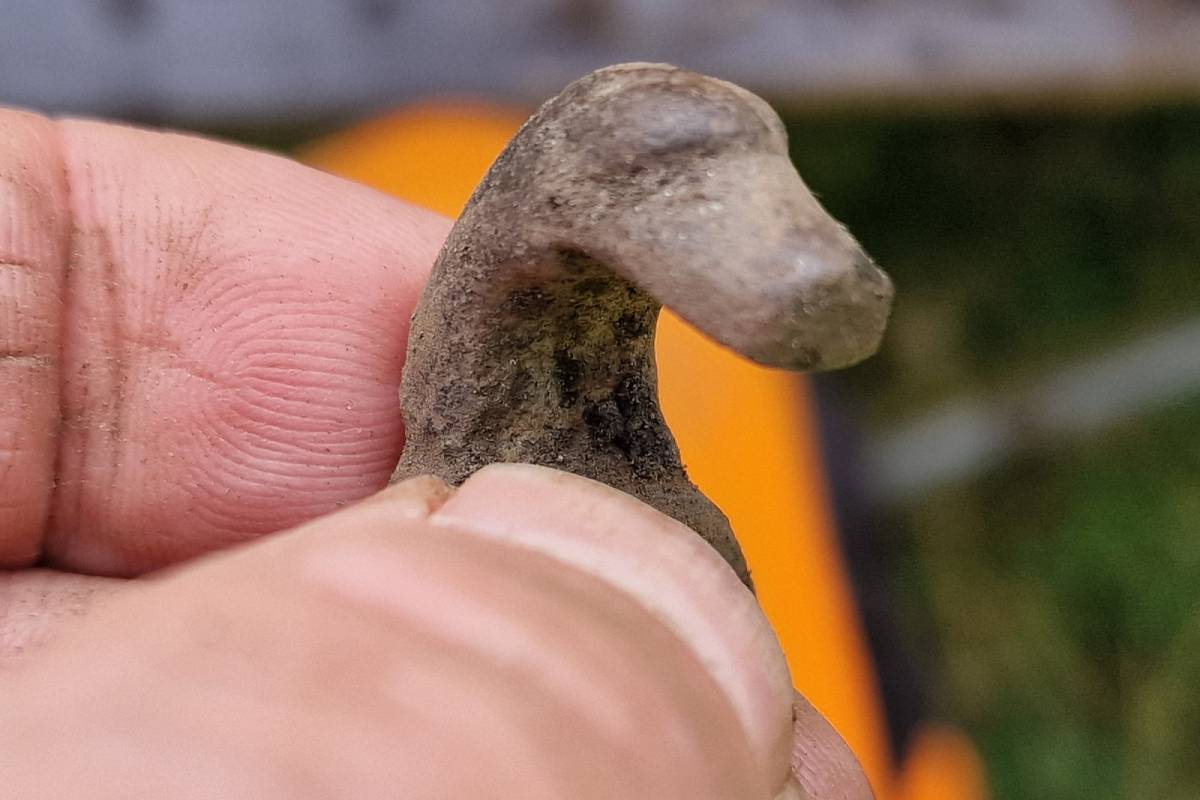
An animal-shaped bronze handle and fragments of an Anglo-Irish cauldron with enamel inlay were discovered in one of the graves. Photo: The University of Bergen
An invaluable contribution
As Søren is keen to point out, this valuable site would never have been discovered without the work of the metal detectorists.
"Metal detecting has really started up in Norway in the last ten years – it's more and more common for people to go detecting," Søren tells us.
"It also raises a lot of complications, of course. If someone finds something, then we have to do excavations, which is expensive, and some people also believe the finds would be better off in the ground."
"Fortunately, Norway is not like England or my home country of Denmark, where there is a lot of gold and profit to be had. Here, you are unlikely to find anything of significant monetary value."
"This means the detectorists tend to have a simple interest in history or prehistory, and it's easier to contact and work with them."
"If we want to have new types of artifacts in Norway, metal detecting is absolutely the way forward. We have to use it."
"There are a number of metal detecting clubs in Norway now, and instead of being the police and telling them what not to do, we prefer to cooperate with them," Søren adds.
"Yes, it is true we have to excavate things that maybe should have been left, but we also save a lot of finds that could have been gone within a few years."
"At Skumsnes, they probably got a little excited and may have dug two more holes than they should have. However, they contacted us immediately, and without them, the artifacts would have been lost."
Still under threat
Indeed, Søren believes that, in all likelihood, the precious artifacts that have now been uncovered would otherwise have disappeared without a trace in the next few decades.
"The finds at Skumsnes were just ten centimeters beneath the turf," Søren notes. "This means that if the farmer had decided to let cattle graze in this area, they would have been destroyed."
Unfortunately, there is still no guarantee that the remaining 18 graves at Skumsnes will be saved.
"The farmer who owns the land now is very interested in prehistory and protecting the site," Søren tells The Viking Herald.
"Both the farmer and the people here are very proud of the grave field. But later, if the farm is sold and someone else works the field with larger machines, the site will be plowed away."
"Someone could also come and plunder the whole thing in a single night."
Naturally, Søren is hoping to receive the permission and funding to return to Skumsnes with his team and continue the work.
"Time is of the essence," he tells us. "This is the only site of this quality that we know of, and it is lying out there waiting for us. Our plan is to excavate it gradually over the next 10 to 15 years."
"If we could do two or three graves every year, that would be incredible. There's treasure waiting there, beneath the surface."
We get to provide readers with original coverage thanks to our loyal supporters. Do you enjoy our work? You can become a PATRON here or via our Patreon page. You'll get access to exclusive content and early access.
Feel free to reach out to discuss potential stories that may be in the public interest. You can reach us via email at hello@thevikingherald.com with the understanding that the information you provide might be used in our reporting and stories.